
by Ava Salado
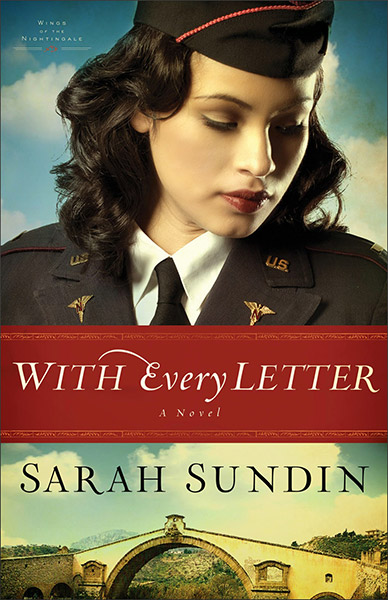
I had the pleasure of interviewing Sarah Sundin, a local, bestselling author of Christian Historical fiction (specifically WWII) and romance (http://www.sarahsundin.com/). She is the author of the Wings of Glory Series (2010, 2010, 2011), Wings of the Nightingale Series
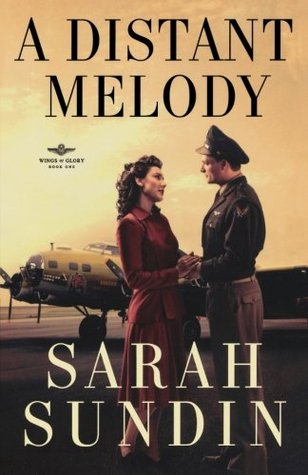
(2012, 2013, 2014), Waves of Freedom Series (2015, 2016, 2017), Sunrise at Normandy Series (2018, 2019, 2020) and When Twilight Breaks (2021). She graciously agreed to have a Zoom interview with me and homeschooler Sydney Shirley for a badge we were working on. We were working together on writing a story of our own and wanted to ask questions to a professional author.
When Shirley asked Sundin, “How did you become an author?” Sundin responded that she was originally a pharmacist with three little kids, majored in chemistry. She then says “and then I got hit with a story idea, and I just wrote it.” Sundin said that it took her ten years, and she spent a lot of time at writer’s conferences, reading books about writing, doing workshops from published authors, and attending writers groups. Sundin explained, “so I started writing in 2000, I was 34 years old, my first book came out in 2010.” Sundin then explained that “it was going to writer’s conferences that was huge because I was able to meet with editors and agents in person and um… submit my work to them and get some feedback,” Sundin then continues, “and meet with published authors and learn from them.” Sundin also said, “it did take me ten years and finally got my contract and um… been publishing a book every year ever since.”
When I asked her, “Why did you become an author?” Sundin laughed and said, “Because the story wouldn’t leave me alone, I did not plan on this, I mean I, as I said I was a chemistry major, I became a pharmacist, I like pharmacy a lot. Um… pharmacy had some really nice things because I was a stay-at-home mom with three little kids.” Sundin explained that the pharmacy lets you work only one day a week, and that’s what she did for a while. She said it was wonderful. Sundin states “and I was planning that as the kids got older that I’d be… that I’d take on some more hours at the hospital, I was working a Sutter Delta.” Sundin remarks that once the kids were in high school or college, she would work full-time, Sundin continues “that was always my plan, that was my husband’s plan and then um… God obviously had different ideas because I had this story idea, and it just would not let me go, I was, It was almost obsession right, I just had to write it, I couldn’t not write the story; it was just coming out of me so fast and um… and I didn’t know what to do with it… I… I was a chemistry major, I tested out of taking English in college, and I was really happy about that.”
She says the last time she had really taken English was in high school. “I couldn’t remember how to punctuate dialog,” Sundin said. Sundin remarked that she went in “kicking and screaming.” She continued, “I didn’t know what I was doing, I knew how hard it was to get published, and I didn’t want to waste my time just writing for me because I had three little kids at home, I had another career that I could be focusing on, and it seemed selfish for me to spend time on something… a lot of time on something like this that wasn’t going to go anywhere, and I decided from the beginning that I was either going to write seriously with the goal of being published or I wasn’t going to write at all.” She says that at her first writer’s conference it felt really “make or break,” she was really willing to say that if this wasn’t the right path “take me off of it now.” She said, “I submitted my work to some published authors, and their overwhelming feedback was, yes, you are writing at a publishable level, and you should be doing this.” Sundin said this helped her so much because she had five years of rejection letters. “All that time, just when I was ready to give up, God would give me a little something, you know something really positive, and even one of the agents who rejected my novel, she said I just love this story so much, she says I love the story, I love the characters, I love the writing, she says, um… at this time though World War Two fiction was not selling so she didn’t feel that she could find a home for it.” Sundin explained that the market eventually turned around, and historical fiction started selling again.
After this, we talked more about the book world specifically; we all know how hard it is to take on writing as your profession or even your job. You must go through months, and even years of writing, researching, and rewriting all over again. It takes hard work; we wanted to hear advice straight for a hard-working person with a lot of great knowledge in the field. I asked her, “what is the difference between self-publishing and going through a publisher?”
Sundin laughed and responded with, “there are entire books about this problem (laughs). Ok, so I am traditionally published um… this, this is the old fashion way, this has been done for hundreds of years, and that meant that I had finished my novel and then I had to send a query or a pitch which means to an editor or an agent usually, nowadays you go through an agent who then places your book with an editor, but the basic process is the same.” She then explains, “I would talk to them at writer’s conferences or send them an email, in the old days you wrote them a letter and say, I have written a book about such and such, it’s this, this genre and I think these people might be interested in it and this is why I’m a good person to write it, and then they say well that’s not for me, or that sounds interesting why don’t you send me more, that’s the query process.”
She continues, “the more is what they call a proposal, and that’s a little longer you go into some of the details about who you are and why you can write and some marketing stuff, and you send that in and if they like that they say, ok I will see your full manuscript now.” Sundin then explains that she turns her full manuscript to her editor, who is also her publisher, and she might say, ok, I like this, but the editor can’t give me a contract. So then the editor talks to the other editors, each of them have already looked at lots of novels, and then they see which of the novels fits best with their publishing houses. They then present them to their publication board; this is salespeople, vice presidents, marketers, and finance people for the company, then they all discuss what would be the best route to take. If they like it, then you get a contract, and after that, it is officially a partnership where they provide the book covers, all of the editing, and lots of marketing. Sundin says, “because I’m with a traditional publisher, I can get my books in Barnes & Noble and other book stores.” Sundin then explains more about self-publishing.
“Self-publishing has really grown in the past decade um… when I first started… when I first started going to writer’s conferences it was kind of the ugly stepchild, like, oh if you can’t get published then you publish it yourself.” She went on to add, “it’s really changed, a lot of authors have um… chosen to self-publish rather than traditionally publish, there are a lot of benefits to it, you don’t have to be approved by editors and publishing houses, and that’s really important if your story’s a little different because most publishing houses like thing that are going to sell and so there’s certain genres that sell well and others that don’t. So if your writing um… ok, actually I have a friend that wrote this book, so it’s Amish Vampires in Space, that’s the name of her book, Amish Vampires in Space and she self-published because no one going to, no publishers going to buy it, but it actually has kind of a cult following because it’s just kind of a quirky thing, and she was traditionally published beforehand. So a lot of my friends who are traditionally have chosen to self-publish in addition to traditional publishing.”
Sundin then describes that all of the traditional publishing process can take years and that rejection bothers everyone, including authors, and you have complete creative control if you self-publish; you won’t have an editor always telling you you must change this, take out this, and switch this. You can publish whatever you want to; the only disadvantage is that you must pay someone for editing, book covers, marketing, and that price can build up over time. Taking your time is very important so that you can learn what you really want to do; it took Sundin ten years to complete her first book, and she reports that that was good because it gave her time to grow and learn as an author. “ to authors who are interested in self-publishing I say, hey, make sure you, you take a deep breath, you take some time um… and learn, and learn, it’s ok to take time to learn. If you wanted to doctor, it would take you four years of college and four years of medical school, and a couple years of residency; you want to be a teacher, you gotta go to school, college for four years and a year for teaching school, so there’s, there, there’s things that you, that take time, and it takes some time to learn to be a writer to.”
With that, Shirley and I thank you, Ms. Sundin, for the amazing interview that you gave us. So many people love your books, and you inspire our community in every way. We thank you, and I hope all of you at home are also as inspired to hear what Ms. Sundin had to say as we were.
 The Lighthouse