Arts and Culture

Project Hail Mary: The Novel and Film by Andy Weir

Essay by Lucas David

Project Hail Mary has captured audiences in two very different forms—as a novel and as a film adaptation—each with its own strengths and shortcomings. While the book immerses readers in the protagonist’s thoughts, scientific problem-solving, and emotional development, the movie translates these elements into a more visual, time-constrained experience, enhancing action, pacing, and accessibility but often sacrificing depth and internal nuance. The film delivers thrilling, awe-inspiring moments that satisfy a sense of existential sci-fi wonder, yet the book builds on the foundation of The Martian, offering a more gripping, moment-by-moment journey as the protagonist pieces together the narrative. Having experienced both, it becomes clear that the book not only stands above the film overall, but also excels more fully within its own medium.

My first example is more subjective, but still worth addressing up front. While others may disagree, Ryan Gosling doesn’t feel like the right fit for Dr. Grace. In the book, Grace comes across as grounded, analytical, and relatively easygoing when not in danger, whereas Gosling’s on-screen persona—though highly effective in roles like Ken in Barbie—doesn’t fully capture that tone. As a result, the film struggles to translate the character’s original personality from page to screen.

The next detail I noticed was how the character Rocky was visually interpreted. In the movie, he is portrayed as being made of literal rock, whereas in the book he is only compared to rocks and named after the character Rocky—never explicitly described as actually being composed of stone. The film also makes him smaller than described, further shifting his presence. This change creates a tonal difference similar to the contrast between the mysterious, monolithic aliens in Arrival and the more approachable, almost mascot-like design of E.T. the Extra-Terrestrial, transforming Rocky from something strange and imposing into something more familiar and endearing.

To the movie’s credit, it does an impressive job of translating the more technical, “science-heavy” elements of the story to the screen. Like its predecessor, The Martian, it manages to strike a careful balance between accuracy and accessibility, preserving the scientifically grounded tone of the original text without overwhelming the audience. This is especially notable given how easily complex explanations can become confusing or dull when adapted visually. Instead, the film presents these ideas in a way that feels engaging and understandable, maintaining the spirit of problem-solving and realism that defines the story while still fitting the constraints of a cinematic format.

While both versions are certainly excellent at what they do, the movie ultimately falls a bit short of reaching its full potential, especially when compared to the depth and impact achieved by the book. Although the film succeeds in delivering engaging visuals, strong pacing, and an accessible take on complex ideas, it sacrifices some of the nuance, character depth, and emotional weight that make the novel so compelling. These differences highlight the challenges of adaptation, where time constraints and the demands of a visual medium can limit how fully a story is realized. As a result, while the movie stands as a strong interpretation, the book remains the more complete and effective version of the story.

Stories

concerning texas, 2026 ~ a poem

by Harper Smith

3.23.26

Imagine you are alone.

Imagine you are a person in a tiny box,

and the box is too small for you

–you are a person, after all–

but to leave that box means to leave your home,

and if there is no one to help you,

then you are on your own,

and you are building another one, all by yourself,

and you’re, like, fourteen, you don’t even know how to use screws!

let alone rewrite your life, rebuild your home, entirely from scratch, alone—

Are you picturing it?

Okay, good. 

Now picture:

They love you

and they lift you out

gently, and kindly

and they tell you it’s okay

that the box was the thing that was built wrong, 

not you

and that they will help you build a new one,

a bigger one, a better one,

maybe even a whole treehouse if you want, 

because they know how claustrophobic you get

when you are alone.

and they guide your hands to the hammer and say

‘here, like this–’

and before they can finish someone rips them away

and the nail goes clean through your hand. 

Imagine you are going to leap upwards, 

just to see if you can fly,

and there is someone waiting, 

someone who will catch you,

someone who has always caught you,

except now they can’t catch you anymore 

because he said so. 

because he said 

‘falling is safe,’

and he said

‘a hammer to the hand is better than ever leaving that box,’

and there is nothing either of you can do 

but listen, and nod. 

And so now you have two choices: 

to keep flying, and know that if you ever should fall

if you ever get swept up in the wind or feel your teeth kiss the pavement,

that no one is coming to help you, 

because helping you means punishment, helping you is a crime,

helping you means that they are falling too. 

so you can do that, 

or you can stay on the ground, 

and you can fold yourself back into that tiny little box, 

the one that they promised you you’d be rid of, 

and you can whisper ‘i didn’t even like heights, 

i just liked freedom’

and you can revel in the feeling

of the walls pressing in

while you are completely 

and utterly

alone.

Arts and Culture, News

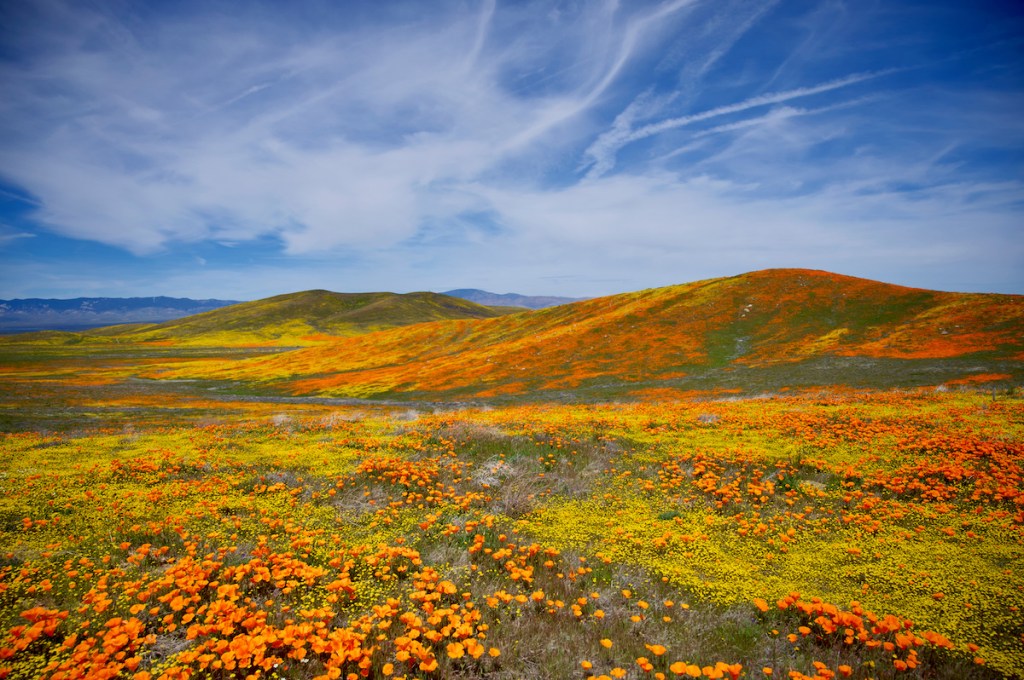
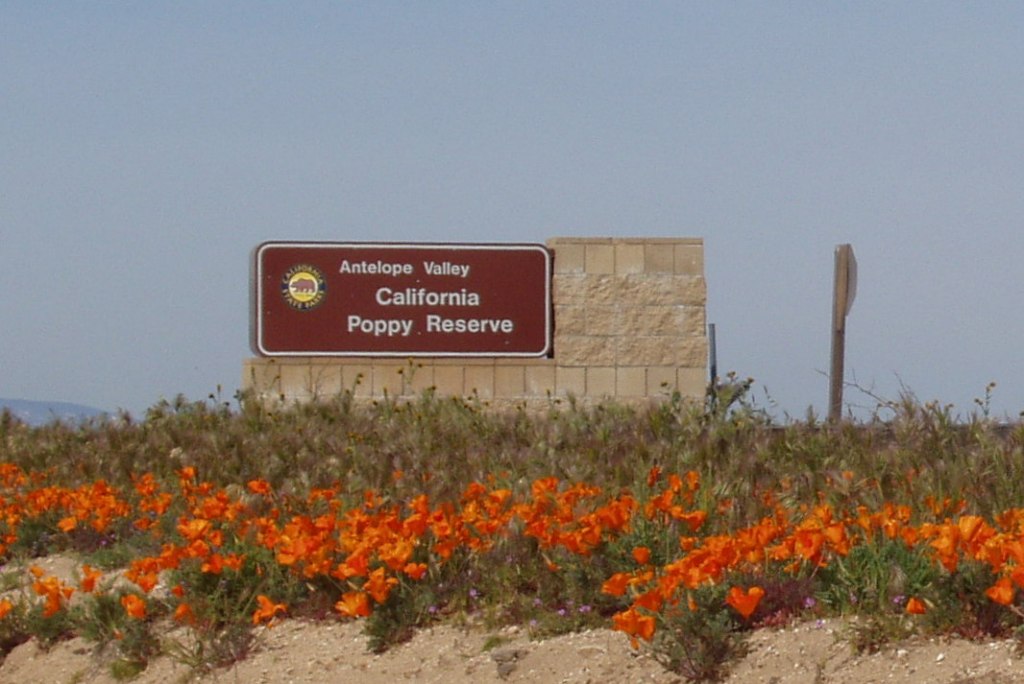
The Antelope Valley California Poppy Reserve State Natural Reserve Celebrated its 50th Anniversary!

by Ava Amara Salado

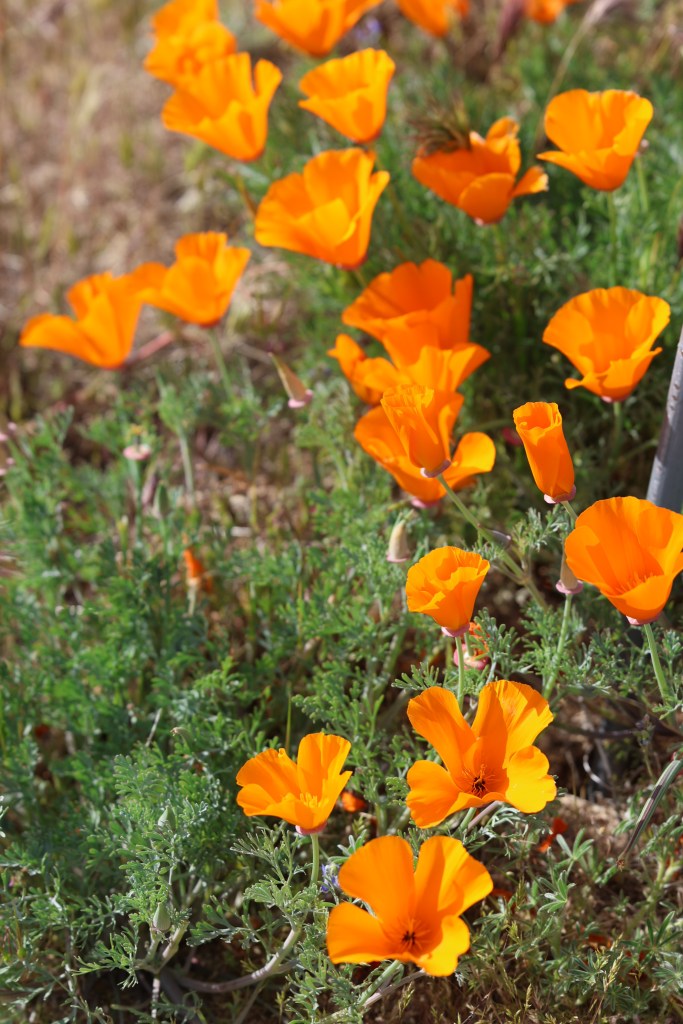
photo by Jay_Dog_Photog 

The Antelope Valley California Poppy Reserve State Natural Reserve celebrated its 50th anniversary on Friday, April 24! For now five decades, it has protected and preserved California’s unique and greatly important wildflowers, including the iconic California poppy, our state’s official flower. California State Parks proudly celebrated the milestone with a special ceremony honoring the people, partnerships, and community efforts that helped establish and maintain the over 1,800-acre reserve in the Antelope Buttes, just west of Lancaster. 

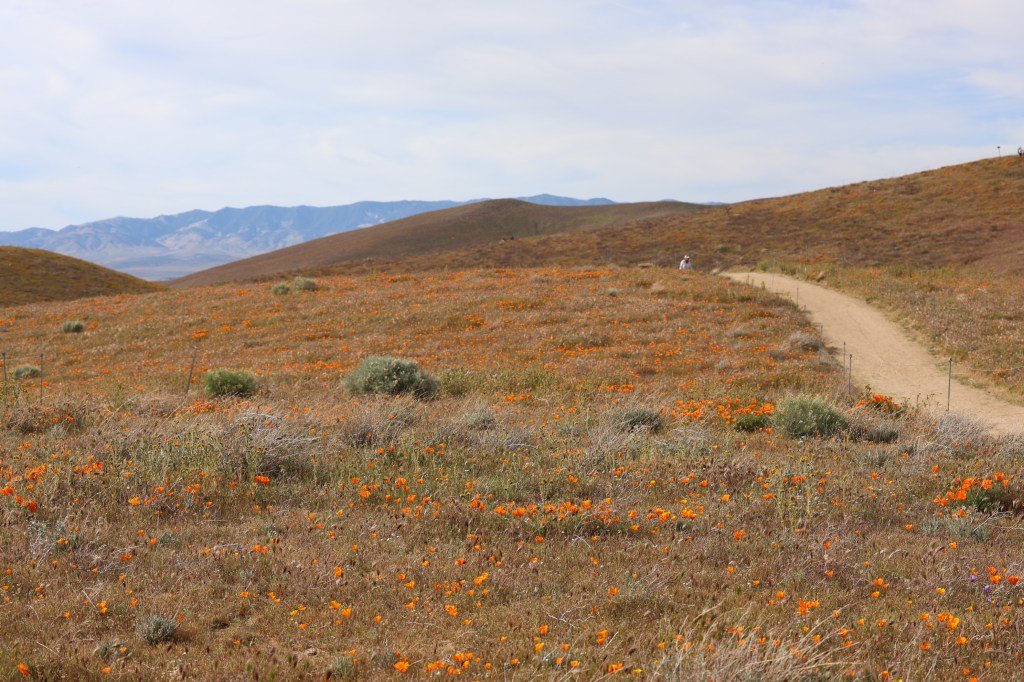
Every spring, poppies bloom in the reserve, but the best blooms depend on a number of things, such as the sun, clouds, heat, rain, and even the wind. Jean Rhyne, an interpreter at the state park, adds, “The bloom time changes every year.” “It usually happens in early April, but it can happen anytime from mid-March to early May.”

photo from Picasa

Floral “aficionados” know that the historical Antelope Valley is the absolute best place to see poppies. Even though the wildflowers didn’t fully bloom this year because of all the rain, there were tons to enjoy. Poppy season usually lasts from March to mid-April, but sadly, the Antelope Valley California Poppy Reserve announced on April 1 that the scorching weather in Antelope Valley had officially ended the poppy season. Poppies may be the defining symbol of our enduring and strong state, but even the most powerful elements of nature must live in tandem with the ebbs and flows of their environment. Poppies can sometimes be unpredictable. If it rains too much, the Antelope Valley California Flower Reserve will only have a moderate flower season. But thankfully, this spring’s weather has been even lovelyer than last year’s.

When to visit?:

If you can, plan your visit on a sunny midmorning for the finest view.

Where to look?:

There are eight miles of paths in the reserve. Most people only walk the 3.3-mile South and North Loop trails and make a quick stop at the Tehachapi Vista Point, but the best displays aren’t always there. Rhyne says that the best place to find out where the most flowers are blossoming is to stop by the visitor center, which normally opens in early March. People who come to the park may see how beautiful this reserve is and walk or ride their bikes on eight miles of paths that go through rolling hills and seasonal wildflower displays. There is also a paved path that is easiest for wheelchair users. 

What to do?:

The Jane S. Pinheiro Interpretive Center has displays about the plants and animals that live in the area and a gallery of Pinheiro’s botanical paintings. The center is open from March 1 to Mother’s Day from 10 a.m. to 4 p.m. on weekdays and 9 a.m. to 5 p.m. on weekends. The non-profit Poppy Reserve Mojave Desert Interpretive Association runs an introduction film and a gift shop (who doesn’t like a gift shop?)

Lets Protect our Poppies!

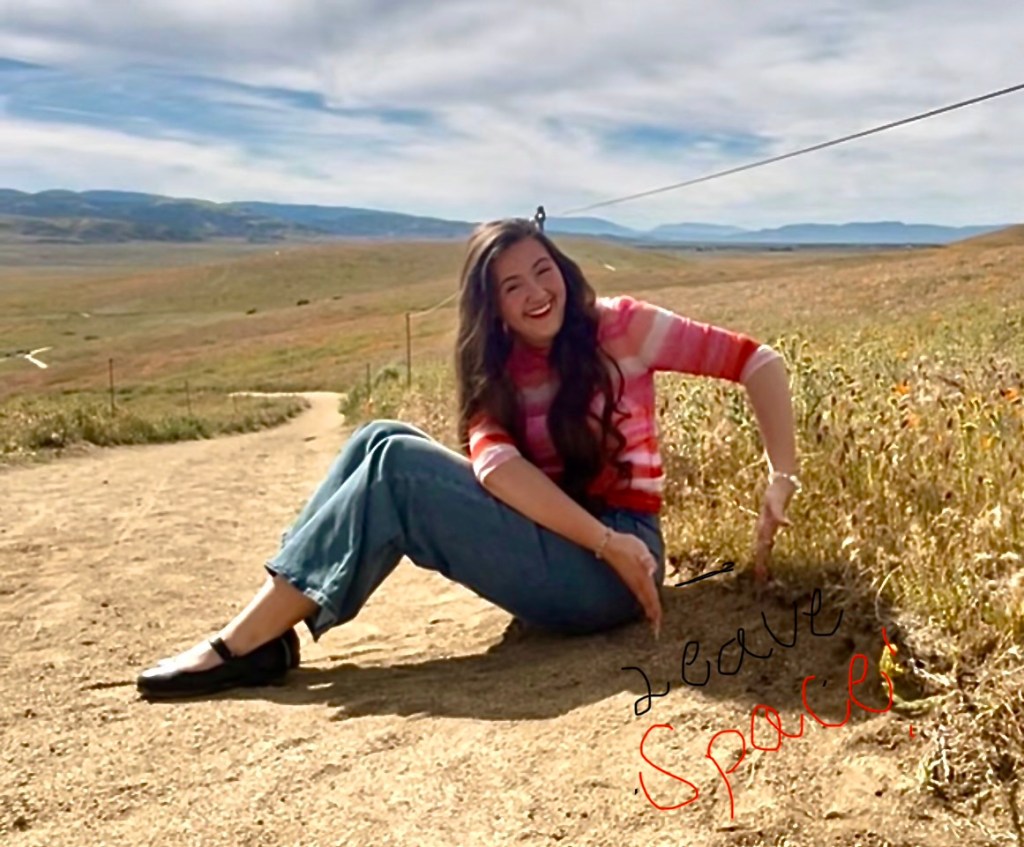
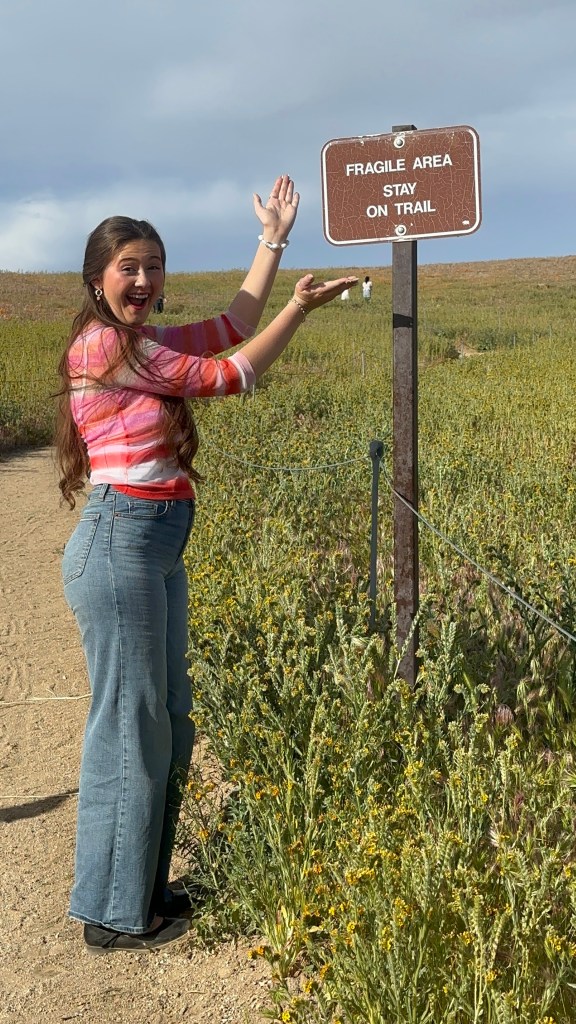
During popular “super bloom” occurrences, tourists sadly harm California poppies greatly. Much damage has been done because of the large number of people who want to take pictures, especially in Southern California regions like Lake Elsinore and the Antelope Valley California Poppy Reserve. People often ignore notices and walk, sit, or lie right on the delicate poppy patches. “Flower angels” (lying down and moving their arms, akin to “snow angels”) is one example of popular “photo ops” that can cause (and inspire) the danger of our amazing California native flowers. In addition, walking off the assigned trail can harm plant roots, which ends up killing many wildflower types, leaving scars in the ecosystem for years. Illegal picking of flowers (outlawed in California Penal Code 384a) is still a widely held practice. Not to mention the sheer number of visitors (often more than 100,000 on weekends!) forces overcrowding responsible for habitat harm. So, if visiting, please remember the National Park Service’s leave-no-trace best practices. For example:

Take pictures responsibility

Look, but don’t touch

Respect trail listings and warnings

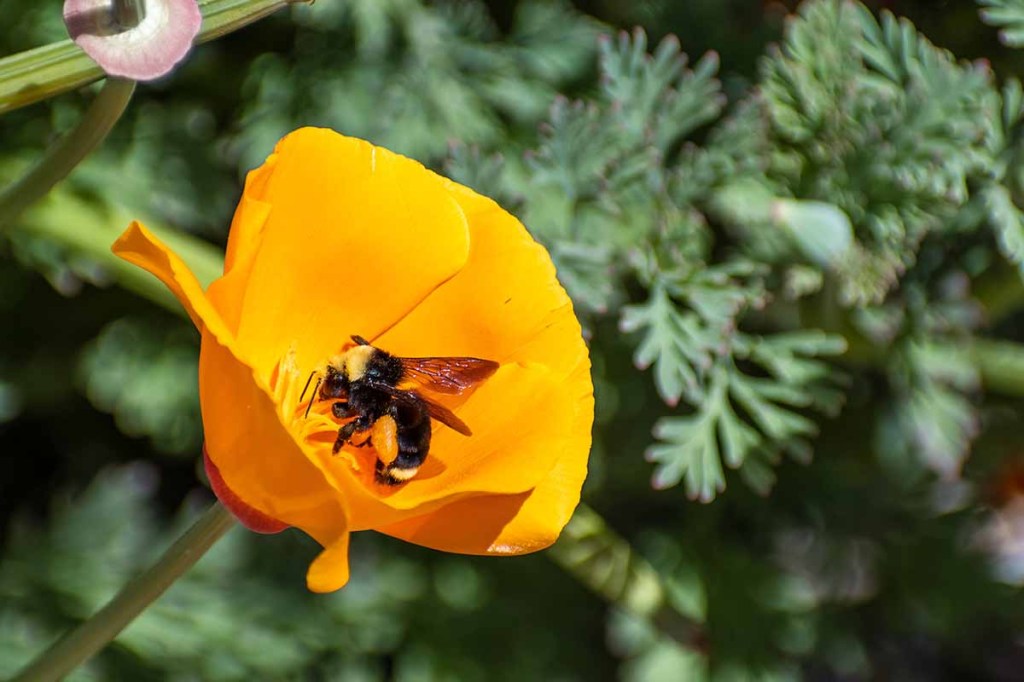
Protect the sustainability of pollinators that make California’s ecosystem as diverse as it is

photo by Gardener’s Path

And acknowledge the land

The Kitanemuk, Tataviam, and Tongva (or Kizh) peoples, often referred to as the Shoshonean bands, lived on and cared for the area where the Antelope Valley California Poppy Reserve is now located.

In conclusion, California is filled with many natural wonders for us to enjoy. Bearing in mind how to have a safe, productive, sustainable time while enjoying these wonders is essential. So please, get outside! Take a hike and enjoy our beautiful environment. Give back when you can and don’t forget to stop and smell the roses (or poppies, in this case.) Here’s to another beautiful 50 years of The Antelope Valley Poppy Reserve!

Arts and Culture, Stories

A Letter from Sighet ~ a project based on the novel ‘Night’

by Harper Smith

A bit of background: For my novel project I chose the ‘Letter from Sighet’ option. I did a lot of beforehand research, trying to pick a subject for my letter that would be interesting and provide me with more information on which groups were also marginalized during the Holocaust. During my research I came across a fact about the queer men that had been interned in concentration camps. During this time there were many places in the world where homosexuality was illegal and considered a jail-worthy crime. The Nazis, who targeted all who were different from their idealized version of a human being, captured several of these individuals–specifically, gay men–and interned them in camps along with the Jewish residents. When the Allies eventually stopped the war and freed the prisons, they and the newly recognized German states, chose not to consider queer prisoners victims of the genocide–which was a crucial status they needed to be able to apply for asylum in other states or get help for their experiences. In fact, in places such as Austria, they elected to send these men, fresh from what is considered one of the worst and most horrific events in human history, right back to prison. My letter is written from the point of view of one of these men named Imre, a queer Jewish person who is writing from Austrian prison to his lover, whom he was separated from at the beginning of the war and is not sure is still alive. I hope you enjoy my project and the story of the character I have created. Though fictional, Imre and Isadore represent the millions of true survivors who were torn from their loved ones in this horrific event of history, and I encourage you to reach out and learn more on your own. History will only change tomorrow if we are educated on the past today. 

Content Warnings: Mentions of violence and death (nothing graphic), an exploration of the trauma that came from this war. Read with caution and take care of yourselves.

March 1st, 1946

I write this letter with little hope it will reach you. I barely trust in the assurance that it will make it out of this prison alive, my words discarded lost or burned at their hands, without a glance at what I have to say, like so many promises broken. But I have to try. There is precious little left in this world that I believe is worth trying for, after all I have seen, but if there is a singular thing—if there is one light left in the darkness—I believe it would be you. 

It has been nearly five years now, since I have last seen your face. Do you still remember that fated day? They have tried to take it away from me, but I will never forget. We were a simple little place, the town of Sighet, Transylvania, nestled in the woods. The smell of salt always thick in the air, not from the ocean from which we were far, but from the mines that harvested the mineral and brought it up from the Earth. My father worked in one such mine. He was a good man, kind and warm. My mother did not work, yet she loved her sewing. Her hands, a needle and thread could make such beautiful creations we teased that she should sell them, if only to make us the richest in all the land. She shrugged these off, but I remember her smile in the candlelight. I had no siblings. They were Jewish as most families in our neighborhood were, devout and pious, brought together in our community by the grace of God. I was Jewish in the way that birds sang each morning, or that vegetables were good for you despite their taste. It simply was. I did not think much of it then–I had my own secrets, secrets that could make me hated and feared even in the eyes of God Himself, and I concerned myself no more with the matters of religious identity than a simple daily prayer that worked that kept my life afloat. 

Apologies. I did not mean to insinuate that I felt my burdens with regret. There was shame, as there was wont to be, but never regret. I could never regret you as long as I live, my friend. 

The day the foreign Jews were expelled was not one I had paid much mind to at the time. I will admit that I was selfish back then. I believed the Earth would simply continue to go round as long as I and those I loved were unharmed. So I did not take much notice when they were hauled away. I had spent the day with you, Isadore, in the fields behind your father’s mill. We were too caught up in the joyous and simple pleasures of youthful physicality to take much mind of anything at all. 

The ghettos have not stuck well in my mind, I am afraid, for it has been so long and I have been through so much as to render them a paradise compared to the places that followed. We lined up on the streets for hours those days, waiting for them to cart us away. I’m sure you remember. How you complained about the heat. They did not tell us where we were being taken, though they looked at you and I with more respect than the others. We were young–early twenties, then, isn’t it so funny to think–and fit, and we had an air of intelligence about us that perhaps inspired them to treat us as though we were human. The same could not be said for my family. They looked at my mother like a piece of meat and my father like a frail burden, though he was only sixty and she was only his. Oh, if only they could have known then, when they looked upon us! You and I were filled with more sin than they could have ever conceived, yet looking back I find only satisfaction in that knowledge. 

They took my family away before I. It was a solemn day, and I cannot deny I still shudder to think I shed no tear. If I could have known it was the last I would ever see my mother, my precious amma, my father, the stone-faced and gold-hearted miner, I would have ran into their arms like a little boy again, but I did not. Alaya and Joseph Malik, those were their names. History will not remember them as I have, for history will not remember them at all. I am told they were killed along with hundreds of others upon arrival, their very existence forgotten to the flames. It haunts my mind like a ghost, the thought of their ashes left to the wind. 

They took you away from me. I barely can picture the moment, for all I knew was that all at once, I was loaded into one car and you another. We had only interlocked hands–no kiss, no embrace, only a faint reminder of your skin on mine before being ripped away. That is all we had. 

I have not seen you since. I do not know if you are even alive. But that moment, I remember, and I shall remember for all my life.  You were warm in my hands as I held you and through all of this I have held onto that last flame of sunlight before the eclipse. 

I will mention, it was not long after I arrived that they discovered my crime. That summer, a trip we took to Austria in which we were caught together behind the bar–do you recall? The cells were cold there, but not nearly as cold as I soon learned these “camps” could be. I had forgotten, I admit, for our arrest was but a night, but they keep these things on record, you know. Any modicum of respect they had for me was gone by this point. I was spit in the face, called all manner of names–I will not transcribe them. I know that you have endured all the same. 

I will not paint a picture of the horrors I suffered to you now. In a selfish way I pray you already know, because that means that you have lived to suffer the same. Five years I spent being shuffled along those places like cattle, only left breathing because I was strong and could work, losing what it meant to be a person in the light of God more and more with every day…those years were the worst of my life. I have lost my soul to them, Isadore, and yet I cannot help but to think upon all those who have lost worse. The infants, the children, the mothers sons and daughters fed to that fire, young men torn from their mothers and their fathers and everyone they knew before they were even old enough to lift a glass…I am lucky to have survived to live in Hell another day. Any pain that I feel now is but a token I carry for all those who cannot. 

The war is over, now, as it has been for nearly a year as I write this. I have not entertained a single notion of freedom since the Allies, in form of huge, imposing Soviets, liberated our “camp”, nor did I really ever expect to. To the rest of the world, I am the lowest of criminals, set apart from the light and grace of God. Schwuchtel, they called me here, which is a word I had not heard spoken in the same fashion but have heard the heart of many times. I know what it means. I know not if they are wrong, only what they see. My crimes–a single kiss, shared with you one warm night all those years ago, witnessed by prying eyes–has granted me three years of prison time, and the revoking of my status as a victim of this war. 

Three years. What is three years, compared to those who lay dead in the snow? Their bodies ravaged by seasons of wildlife, their names never known…

I had a friend, if you could call it that, a young man by the name of Samuel. I believe he may have been nineteen? He did not know who I truly was, nor do I doubt that any connection we shared would have been lost if he had, but nonetheless I was grateful for the small things we did share. His body lies crushed among the trees somewhere, trampled by the feet of his fellows who may have once known him, left behind there to rot when we were gone. No one, not one page of history will remember him–I myself did not even know his surname, but I find comfort in at least the fact that I did know him through his final hours. What am I saying? It becomes difficult to keep my thoughts orderly when my fingers become so cold in these cells. The memories haunt me like a tide, returning forevermore. A point to say: I know I am lucky. The constraints of my predicament wear away at me anyway, and I do believe by this point that no one could expect me to be grateful. 

You must believe that I hate you, dear Isadore. After all, if not for my love of you I would be free of these cells, as free as a man can be when forced to live in his very own lie, but alas. If not for my love of you, I do believe I would have met the same fate that befell my brothers and sisters in that Hell–if not death, than a loss of oneself. Though I do not claim to be the same man I was when I left you, and at times I fear that I have lost my soul, my body, and the sanctity of my mind…but it is only the memory of your hand in mine that reassures me that if anything I have not let go entirely of my heart. There are days I feel as though I have lost the ability to love anyone at all, and I cannot lie and say that does not extend, in its own way, to you. Distant as the years have made your image in my mind, murky as my certainty at your survival had become, until one day it faded until I admit I no longer trust that you live at all. But then I remember that sweet summer night, only mere hours before our world would be changed forever by the placement of a simple, yellow star…and I feel the only spark of warmth left among the cold ashes that have consumed me. 

Are you alive, chayim sheli? Does your heart still beat, or have you become like so many, lost in the embers? Have you suffered the same fate as I, or do you walk free, in this country or another, your life your own? I have no way of knowing. I suppose it is possible I never will. I send this letter now to your aunt, in France, for I have hope to believe that she was spared from the same internment we faced. If she does not tear this letter to shreds upon its arrival, she may succeed in reaching you. If she does not, then, well, I will live as I have been. I have no reason to believe she would write me back either way, so I may continue to believe blindly in your existence no matter the true outcome. 

Write to me, Isadore, should you have survived. Write to me and tell me everything, or nothing at all. All I ask of you is to tell me that you live. And maybe one day, when I am free from these walls, I will find you again. 

Yours,

Imre Malik

Science

A Comprehensive Analysis of the Recent Shift to an Over-Reliance on Pesticides used by Farmers

by Ava Amara Salado

Farmers create a discourse community by sharing particular values and goals and by having common objectives, like maintaining the competitive market, and constantly-changing farming practices. Through a variety of platforms, such as conferences, farmer-to-farmer learning opportunities, and the vast (and helpful if used responsibly) internet, they discuss farming practices, regulations, and the many difficulties of the field. Not to mention the usually close nature of small farming communities in America. Furthermore, I have identified one key issue placed upon these farmers who are the cornerstone of our nation: the now abundant pressure and inability to avoid the over-reliance on pesticides. 

In fairness and full disclosure, productivity and agricultural output has increased due to the use of chemical innovations like insecticides (Fernandez-Cornejo et al. 1). However, we are now seeing more negative externalities as a result of its use, and, rather, over-use. These externalities include harm to aquatic creatures (via water run-off), native vegetation, animals, non-target insects (like solitary bees) and the long-term health of agricultural land (i.e. soil degradation) (Wilson and Tisdell 449). Additionally, there is evidence of higher human health concerns and even death as a result of pesticide exposure, particularly in developing nations. These issues have significant costs and impacts on farmers’ profits and lives. (Wilson and Tisdell 454-55) Nevertheless, we see farmers still use pesticides, and in most nations, in greater and greater amounts, in spite of these glaringly apparent expenses. (Hu) In this analysis, I would like to investigate this paradox and understand, within recent years especially, why farmers still apply and over-rely on pesticides in spite of their rising costs economically, socioeconomicly, agriculturally, and environmentally. Global pesticide dependence is largely a result of socio-economic structures and ineffective government policies, compounded by ever-growing global climate changes. (Hu) Transitioning to sustainable agriculture necessitates a deep understanding of the cause and effect: the reasons why small-scale, family agriculture relies so dependently on pesticides, forming a toxic-simbiotic relationship, and a realistic solution to implement a more genuine and healthy farm-to-chemical relationship for the future. 

From an outside perspective, it is very easy to make the assumption “well, doesn’t each country’s individual government mitigate, regulate, and ensure the proper and safe usage of pesticide as agriculture is of great importance to foreign and interior affairs?” The idea of this question comes with some validity. It goes without saying that agriculture is, essentially, what makes the world go around. But further, I believe there is much knowledge to be gathered when contemplating the “productivity” of government oversight when it comes to private pesticide and insecticide use. Tambo and Liverpool-Tasie’s (2024) work “Are farm input subsidies a disincentive for integrated pest management adoption? Evidence from Zambia” illustrates how “well-intentioned” government policies can actually inadvertently reinforce this worrying chemical dependence habit. Their study, primarily focusing on Zambia, demonstrates that agricultural input subsidies, (more specifically; flexible e-vouchers) significantly decreased the adoption of sustainable IPM practices while increasing reliance on insecticides and pesticides. It also explains how economic interventions can create disincentives for realistic sustainability, effectively paying these family farmers to remain reliant on pesticide-focused farming practices as opposed to natural ones. Farmers participating in the subsidy program adopted “roughly four less IPM practices” compared to non-participants. Specifically, beneficiaries were “106 percentage points less likely to regularly monitor their farms” for pests and “125 percentage points less likely to adopt preventative cultural measures,” such as intercropping and (most importantly) crop rotation. The authors distinguish between the traditional “subsidy model” (direct and constant supply of seeds/fertilizer) and the “flexible” e-voucher. In that, the e-voucher allows farmers to redeem government funds for a variety of benefits, explicitly including synthetic pesticides. This, rather unhelpful, economic intervention effectively “weeds-out” (pun intended) natural alternatives. The study indicates that farmers view synthetic pesticides as substitutes; therefore, when synthetic options are subsidized and easily accessible via vouchers, farmers are less likely to opt for safer, biological alternatives. Even under the traditional subsidy model, the heavy promotion of subsidized inorganic fertilizers creates a labor trade-off. Because applying fertilizer is labor-intensive, farmers may reduce the time spent on labor-intensive IPM practices, such as pest monitoring to rather focus on fertilizer application. The authors conclude that while these subsidies may boost short-term yields, they “inadvertently discourage the adoption of sustainable intensification practices,” potentially undermining long-term income and yield gains while increasing human health risks. In summary, the authors argue that by allowing vouchers to be redeemed for synthetic pesticides, the government effectively lowers the cost of chemical dependence while increasing the opportunity cost of labor-intensive, sustainable farming practices.

Conversely, Zhanping Hu’s 2020 journal “What Socio-Economic and Political Factors Lead to Global Pesticide Dependence? A Critical Review From a Social Science Perspective.” provides a wide-scale (or big-picture) analysis of the “pesticide trap.” Hu’s critical review effectively challenges the widely held idea that pesticide overuse is simply a technological issue, arguing instead that it is deeply rooted in these complex social and political structures around the world, such as the “productivist treadmill” (a cycle where pests develop resistance, necessitating stronger chemicals) and the commercial influence of the agrochemical industry. In developed countries, this idea emphasizes production quantity above all else, entrenching pesticides as an inseparable part of farming. In developing countries, this “trap” is caused by introducing high-yielding crop varieties that are biologically dependent on fertilizers and pesticides, effectively locking farmers’ livelihoods and labor processes into a chemical-dependent model. An inescapable cycle. To sum up, Hu’s work analyzes the “pesticide trap” as a structural issue where “technical fixes or regulatory changes will only acquire significance within the framework of serious social change”. The dependence is maintained not just by pest resistance, but by an industrial agricultural “regime”, the de-skilling of farmers, the political influence of the agrochemical industry (lobbying), and the systemic failure to promote sustainable alternatives.

Further, we must understand that farmers operate within a market system that creates a “lock-in” effect, where the immediate economic necessity of maintaining high yields forces a continued reliance on chemical inputs, even as these inputs degrade the natural populations required for long-term sustainability. Wilson and Tisdell explain that this hysteresis creates a scenario where reverting to pesticide-free methods becomes economically unviable for individual farmers due to high withdrawal costs and the risk of short-term yield losses (458). 

Farm size is a large contributor too. Based on the study of rice production in China, Yinghui Yuan challenges the simple “linear” assumption that larger farms always use fewer chemicals, instead identifying a “U-shaped relationship” between farm size and pesticide use intensity. Simply, as small-scale farms expand, pesticide costs per unit of land decrease due to “economies of scale,” this grants farmers better access to agricultural technical services and efficient application technologies that reduce waste (Yuan et al.). However, the author finds that beyond an optimal scale, “diseconomies of scale” emerge, causing pesticide use to rise again; this increase is attributed to “managerial challenges,” such as the difficulty of supervising hired labor and the inability to effectively monitor vast plots of land (think enormous farms spanning many, many acres), which leads farmers to substitute chemical intensity for labor and detailed oversight (Yuan et al.).

But what are the long term, tangible problems caused by the issues stated above and, throughout the vast time in which agriculture has dominated our ways of life, how can we understand the discourse community that farmers so heavily rely on? And further, what are the real “pluses” to pesticides? As mentioned in the introduction and in all fairness, they have caused near-before-seen productivity in agriculture in the 20th century. To further explore this, I will be examining the report titled “Pesticide Use in the U.S. Agriculture: 21 Selected Crops, 1960-2008” by Jorge Fernandez-Cornejo, the lead author of the USDA Economic Research Service. The paper, which came out in May 2014, looks at pesticide use (herbicides, insecticides, and fungicides) over the past fifty years, by giving an expansive, “big picture” view of the productivity that these biocide innovations have aided in, while also showing their “big picture” pitfalls. In addition, this paper looks at things like economic causes and new technologies (such as genetically engineered crops). Pesticide use has been a primary driver of agricultural productivity, contributing alongside fertilizers and improved seed varieties to “substantial increases in crop yields over the last 80 years” (Fernandez-Cornejo et al. 1). For instance, average corn yields absolutely skyrocketed from 20 bushels per acre in 1930 to over 150 bushels per acre by 2008, while cotton yields nearly quadrupled and soybean yields more than tripled during the same period (Fernandez-Cornejo et al. 1). Beyond raw yield, pesticides—specifically herbicides—significantly improved operational efficiency by allowing farmers to substitute chemicals for the labor, fuel, and machinery previously required for mechanical weed control (Fernandez-Cornejo et al. 15). This substitution effect is evident in corn production, where the labor required per acre dropped from 13.2 hours in 1952 to 4.8 hours in 1976 as herbicide use expanded from 10% to 90% of planted acres (Fernandez-Cornejo et al. 15). Ultimately, these inputs have reduced overall production costs while enabling the production of higher quality, unblemished (and more aesthetically pleasing) crops (Fernandez-Cornejo et al. 1). But, as with most things in this world, all is not sunshine, rainbows, and beautiful corn yields. Based on the report, the economic benefits of pesticide use are accompanied by significant potential risks to human health and the environment, arising from direct farm worker exposure, consumer contact with residues, and chemical movement into groundwater and the food chain (Fernandez-Cornejo et al. 3). By the 1960s, concerns regarding wildlife and human health prompted calls for stringent regulation, eventually leading the Environmental Protection Agency (EPA) to cancel registrations for pesticides determined to pose unreasonable risks, such as DDT, aldrin, and chlordane (Fernandez-Cornejo et al. 3). Regulatory scrutiny intensified in the 1990s and 2000s to address chronic toxicity risks—including tumors, birth defects, and endocrine disruption—resulting from long-term exposure to small amounts of pesticides in food and drinking water (Fernandez-Cornejo et al. 3, 40).

Furthermore, I want to take a moment and examine other discourse communities that are affected by pesticide over-reliance, namely for this argument, birds of prey. Birds may not chat on a Facebook group or meet weekly at a coffee shop for their protest group, “Grounds for Change”, but they create a discourse group nonetheless. So just for a moment, bear with me as I would like to go back to one particular chemical mentioned in the past paragraph; DDT. For some, this may be a recognizable name. But I feel the need to discuss and examine, because I believe the downfall of this “avian” discourse community can sum up the years of frustration and confusion that a thing like chemical over-reliance causes. And that this story can shine light and show the truth of change; the time, resources, and energy it takes to find real solutions. Moreover, the issues with DDT (dichlorodiphenyltrichloroethane) stem from its toxicity, environmental persistence, and adverse effects on wildlife and human health. DDT is an organochlorine insecticide that was determined to pose “unreasonable risks” to the environment (Fernandez-Cornejo et al. 3). A primary issue was its devastating impact on bird populations; exposure to chlorinated insecticides like DDT caused reproductive failure in birds, particularly birds of prey, which was frequently attributed to the thinning of eggshells (Wilson and Tisdell 453). Following the ban of DDT, many bird populations that had been affected by poisoning have since recovered (Wilson and Tisdell 453). Concerns regarding human safety were a major factor in the discontinuation of DDT; by the 1960s, growing concerns about human health risks prompted stricter regulation, leading the Environmental Protection Agency (EPA) to determine that DDT too detrimental a risk to warrant its continued use (Fernandez-Cornejo et al. 3). In the United States, the EPA canceled the registration of DDT in the 1970s, forcing the agricultural sector to shift toward less persistent and less toxic alternatives, such as pyrethroids (Fernandez-Cornejo et al. 3, 23). Despite these bans in developed nations, DDT continues to be used illegally in some developing countries because it is no longer under patent protection, making it significantly cheaper than newer, safer pesticide inventions (Wilson and Tisdell 450). Yet another example of a roadblock set forth for small farms to sustainably keep up. 

While the entrenched “lock-in” of chemical dependence presents a challenge, a transition to sustainable agriculture is achievable if the discourse community of farmers, policymakers, and researchers collectively reimagines the incentives and knowledge systems governing food production (Wilson and Tisdell 458). Optimism lies in the potential for policy reforms to shift from subsidizing synthetic inputs—which currently crowd out natural alternatives—toward supporting biopesticides and labor-intensive preventative measures, thereby dismantling the economic traps that enforce chemical reliance (Tambo and Liverpool-Tasie 758-60). Specifically, governments can leverage existing infrastructure, such as the aforementioned flexible e-voucher, by mandating that vouchers be redeemed for biopesticides or by offering higher subsidy amounts for low-risk crop protection products, a strategy that would actively encourage the substitution of synthetic chemicals with safer biological ones (Tambo and Liverpool-Tasie 760). This structural realignment, coupled with policies that improve land security can empower farmers to invest in the long-term observational knowledge required for Integrated Pest Management rather than relying on the short-term fix (Tambo and Liverpool-Tasie 740). Change is indeed possible. While it is essential to understand farmers’ discourse community and the reason why making a transition to a natural way of farming is ever-complicated, the facts of the case should not be discouraging. Having reasonable understanding and empathy to a problem that has been created, while still pressuring and proactively fighting for its solution are the pillars of our combined humanity. Finally, I want to look at this from a wide angle; we, as the world, are a discourse community. Often we innovate (as is our human nature) but we push things too far (as greed or misunderstanding can rightfully be blamed). But because of this innovative spirit, we always find a light. Always, even with the pitfalls of our innovation do we eventually find a solution to better a future beyond ourselves. With the knowledge and experiences shared in the farmer’s discourse community, results based, sustainable means of agriculture can continue to be studied and implemented as reasonable solutions to the challenges posed by over utilization of pesticides.

Annotated Bibliography

Fernandez-Cornejo, Jorge, et al. “Pesticide Use in U.S. Agriculture: 21 Selected Crops, 1960-2008.” Economic Information Bulletin, Number 124, United States Department of Agriculture, Apr. 2014, https://ers.usda.gov/sites/default/files/_laserfiche/publications/43854/46734_eib124.pdf?v=19040 

This report by the USDA Economic Research Service analyzes trends in pesticide application across twenty-one major crops in the United States from 1960 to 2008, utilizing a database compiled from USDA surveys and proprietary sources. Fernandez-Cornejo et al. examine the primary drivers behind these trends, categorizing them into economic factors, pest related pressures, technological innovations—such as genetically engineered (GE or GMO) crops—and regulatory changes. The authors document a period of rapid growth in pesticide use during the 1960s and 1970s. Then followed by a stabilization and even a slight decline in aggregate volume in later years, while noting a dramatic shift in composition where herbicides replaced insecticides as the dominant chemical input. The report argues that pesticides have been a primary driver of agricultural productivity over the last five decades, enabling significant yield increases and allowing farmers to substitute chemical inputs for the labor, fuel, and machinery previously required for mechanical weed control.

This source is essential for establishing the historical and economic baseline of the “pesticide trap” within, specifically, the United States. By quantifying the correlation between pesticide use and increased operational efficiency—specifically the dramatic reduction of labor hours per acre—the report provides evidence for the economic incentives that structurally entrench chemical dependence. It effectively illustrates the economic “lock-in” effect, showing how market forces and technological convenience have made chemical adoption make sense economically, even if not necessary, for producers of major crops like corn and soybeans. For this essay, the report serves as a crucial counter-narrative to purely ecological critiques, offering a data-driven explanation of the financial realities that compel family farmers to maintain high levels of chemical input despite known environmental externalities.

Hu, Zhanping. “What Socio-Economic and Political Factors Lead to Global Pesticide Dependence? A Critical Review From a Social Science Perspective.” International Journal of Environmental Research and Public Health, vol. 17, no. 21, Nov. 2020, p. 8119. https://doi.org/10.3390/ijerph17218119

In this journal Hu, a researcher from North China Electric Power University, conducts a review to analyze what certain socio-economic and political factors that drive the persistent global over-reliance on chemical pesticides. Moving beyond the technical “pesticide resistance” idea, the review uses a qualitative, tangible, and theme-oriented method to gather concepts from several social science fields.The analysis categorizes the varying complex factors reinforcing pesticide dependence into five primary and interconnected themes: the prevailing agricultural regime (e.g., the historical “productivist treadmill”), the social process of application (including farmer deskilling and poor information provision), economic analysis (including the failure of market-based techniques due to low demand), politics and governance (such as industry influence, lobbying, and weak state regulation), and the failure of alternatives like Integrated Pest Management (IPM). The core argument states that pesticide dependence is not just and simply a technological challenge but is rooted in deep-seated social and political structures.

This source is essential for providing a “macro-level”, comprehensive framework to analyze why seemingly promising solutions like IPM struggle to gain traction against common pesticides. A significant strength in this journal is its explicit and clear categorization and its strong theoretical base, including a detailed and specific discussion of economic concepts like the “lock-in effect” and external costs. The author effectively argues that mitigating dependence requires going beyond “reductionist” explanations and looking closer and deep diving on multiple commonalities on a wide scale, essentially acknowledging that this issue is not going to have a simple fix. A self-acknowledged limitation is the simplified treatment of “global pesticide dependence,” which may not fully reflect geographical limits across the world.

Tambo, Justice A., and Lenis Saweda O. Liverpool‐Tasie. “Are Farm Input Subsidies a Disincentive for Integrated Pest Management Adoption? Evidence From Zambia.” Journal of Agricultural Economics, vol. 75, no. 2, Apr. 2024, pp. 740–63. https://doi.org/10.1111/1477-9552.12582

In this particular study, authored by researchers affiliated with CABI and Michigan State University, assess whether agricultural Input Subsidy Programmes (ISPs) inadvertently actually discourage small-scale adoption of realistic sustainable pest management practices in countries across Africa. Utilizing data collected from 1,048 private/family-owned maize plots across Zambia’s major maize-producing areas, the authors employ a “control function regression approach” to address potential endogeneity bias related to farmer participation. The key finding indicates that participation in Zambia’s ISP (Input Subsidy Programmes), is negatively associated with adopting environmentally friendly and long-term sustainable strategies. Specifically, those participating in the program were 125% less likely to adopt practices like crop rotation or intercropping and 67% more likely to use synthetic pesticides. The study further notes that farmers perceive biopesticides and synthetic pesticides as, essentially, substitutes. This leading the authors to recommend leveraging subsidies to promote safer alternatives.

This recent, region-specific research is very useful for understanding how government policy can unintentionally strongly reinforce pesticide dependence. Its strength lies in its rigorous method (control function regression), which provides realistic evidence linking subsidies to reduced IPM adoption and increased reliance on synthetic chemicals. The results pinpoint the “flexible e-voucher system” as the driver of pesticide/insecticide use because it allows farmers to redeem subsidized pesticides directly and easily. This provides a critical political insight to my research: reforming the list of inputs (i.e., funding and incentivising Integrated Pest Management (IPM) practices) could shift behavior towards more sustainable strategies. A limitation to the cited research is that, due to the wide data, the analysis provides associations rather than effects and cannot actually and realistically determine the long-term impact of the program (IPM).

Wilson, Clevo, and Clem Tisdell. “Why Farmers Continue to Use Pesticides despite Environmental, Health and Sustainability Costs.” Ecological Economics, vol. 39, no. 3, Dec. 2001, pp. 449–62, https://doi.org/10.1016/s0921-8009(01)00238-5.

Regarding my topic, and my factual consideration of the issue facing my chosen discourse community, family owned, small farmers struggling in this new and brutal economic climate, this Ecological Economics analysis discusses the widely complex and interconnected nature of continued use of pesticides by farmers in spite of the chemicals recognized negative effects on the environment, human health, and sustainability. In this piece, Wilson and Tisdell, the authors, describe the detrimental effects of ongoing pesticide use, such as real ecosystem harm, the purge of helpful insects, and the human health effects in those who handle the chemicals (the farmers) and those who ingest them (the consumers). These problems are especially apparent in developing nations. By arguing that short-term financial gains, the high cost of switching, and other influential reasons outweigh the long-term negative consequences, the research ultimately aims to explain why small farmers continue to practice in this unsustainable but convenient way. In addition, I would like to add a note about the reliability of the authors and their intentions. At the Queensland University of Technology (QUT) in Australia, Clevo Wilson is a professor of economics with a focus on cost-benefit analysis, environmental economics, and the financial effects of ecotourism and natural catastrophes. He graduated from the University of St Andrews with a Ph.D. in Economics, the University of Cambridge with an MPhil, and the University of Glasgow with an MSc with numerous studies on subjects including the protection and financial advantages of wildlife-based tourism (e.g., sea turtles and whales). He commonly adjoined efforts with renowned Australian economist Clem Tisdell. He was an Emeritus Professor at the University of Queensland. He was a pioneer in a number of areas, such as the study of human values and its connection to development economics, natural resource economics, and environmental and ecological economics.

Further, this resource is a scholarly, peer-reviewed academic journal article with research information, tables, and comprehensive charts. The information gathered and referenced in the sources spans a period of at least 64 years, from 1937 to the year the article was published, 2001. I found no grammatical or spelling errors. The source seems credible, reliable, and objective. The layout of the site is uncluttered. Particularly for the target audience of the academic journal Ecological Economics, the authors’ main argument—that farmers continue to use pesticides despite high environmental, health, and sustainability costs due to systemic factors and economic “lock-in” (hysteresis)—is very persuasive. By, over the many years of the study, thoroughly documenting and recording the known negative impacts and then using certain economic and structural ideas to explain the ongoing behavior, the writers effectively make their major point.  I believe it is of substantial use to my research, but in the future, I would like to find resources that are more recent and from specifically North America. The study takes a broad look at how these issues present themselves across the world, but I would like to further find information for my analysis from studies taking place in America, and from more recent years as the economy, climate concerns, and developing pesticide toxicology shifts.

Yuan, Yinghui, et al. “Impact of Farm Size on Pesticide Use: Evidence From Chinese Rice Production.” Frontiers in Sustainable Food Systems, vol. 9, Sept. 2025, https://doi.org/10.3389/fsufs.2025.1653777

In this recent study, Yuan investigated the complex and wide relationship between farm scale and pesticide use intensity within China, a country that is critical to global pesticide consumption. The study utilizes a big dataset spanning 14 years (2004–2017) of rice farm data from the Jiangsu Province. The central finding confirms a relationship between farm size and pesticide cost per unit of area: pesticide intensity initially decreases as farms expand, but eventually begins to increase once a certain optimal scale is surpassed. The analysis suggests that increasing scale initially benefits efficiency due its economic input (for instance,the use of professional application and adoption of new machinery, etc.). However, further expansion of the research leads to “diseconomies,” such as increasing management and loss of oversight, increasing chemical dependency, and essentially a loosening of control that leads to mismanagement. This effect indicates that most sampled farms are currently on the downward slope, where a 1% increase in size is associated with a 0.089% decrease in pesticide cost.

This recently published article is invaluable for refining a structural and honest analysis, providing up-to-date and region-specific evidence on critical policy: land consolidation. The study’s use and knowledge of differing econometric methods to establish “non-linear” relationships between concepts is a significant strength. The primary policy implication is that promoting moderate farm size expansion is a viable and realistic pathway to reducing overall pesticide use in China. However, the authors note the limitations, including that using pesticide cost data cannot precisely separate changes in the actual chemical quantity from price fluctuations in the economy, and that the data combines and does not acknowledge the many different pesticide types (herbicides, fungicides, etc.).

Stories

butterfly wish ~ a poem

By Harper Smith

butterfly wish

I gave my wish to a butterfly today

it was small and just for me

I watched it lift on fragile wings

to the world, I set it free.

In turn I carry a wish of my own

from insect soul to mine

To live long and to prosper, to fly and to be

to live well, as long as she’s alive.

The things I believe are tiny and precious,

they are droplets of rain in the storm,

They are no God, they have no message

they are paperthin wings as they soar. 

They are poppies and sunsets and wildcats,

they are laughter and hairclips and friends. 

It’s the stillness I feel when my feet touch the grass

it’s my hands when I pick up a pen. 

The world we rest in, it lives and it breathes, 

and sometimes we breathe in its time.

I gave my wish to a butterfly today,

and when I turned, I saw a hawk in the sky. 

News, Science

AI Data Centers are Damaging the Environment

by Camden S.

It’s not a secret that AI, in at least some way, has found its way to affect our lives. However, did you know that the AI data centers, which are used to train and run AI models, are having a negative impact on the environment by damaging ecosystems, destroying habitats, and increasing global warming? That’s not to say that all AI is bad, and that we should stop using it all together, but that we need to stay informed to make sure that companies are taking action to reduce the damage caused by AI. With that said, why is this happening and what can you do to help prevent it.

What exactly are AI data centers?

Think of AI data centers as networks of massive computers that are used to train (create) and run the AI (for example, when you use it for something like a chatbot). Training consists of obtaining large amounts of data (such as images, videos, art, or text) then using many GPUs (Graphics Processing Units) and TPUs (Tensor Processing Units), which process the data, so after some time, you are rewarded with a model that does what you trained it to do. This is usually done in giant complexes with extensive cooling and power infrastructure to ensure that everything runs smoothly like in Microsoft’s Fairwater AI data center in Wisconsin or Amazon’s Project Rainier in Indiana.

photo by iStock.com/Hugo Kurk

How do AI data centers impact the environment?

The land for the buildings to be built on, the water to cool the hot processors, and the electricity that powers the buildings all affect the environment. The ladder two, however, are the most damaging. They can put strain on the local infrastructure, especially with their rapid construction over the past few years. Since these centers are massive, the physical construction of these centers also displaces natural habitats that can be home to all sorts of creatures, which could lose their homes. There is also the problem of noise pollution. AI data centers can greatly increase the amount of background noise for residents nearby.

What other impacts do AI data centers have?

These data centers are not cheap to build, and they need vast amounts of RAM (Random Access Memory), GPUs, and TPUs. Though, they must come from somewhere, and that sometimes means that AI companies buy most of the available supply, since it’s much more lucrative to sell to massive AI companies and strike big contracts than to individuals or even other companies for things such as phones, computers, or other electronics. There was even one time that a branch of the company Samsung did not provide RAM to another branch because they could get more money selling it outside of the company. This highlights how, because of AI, there is a massive RAM, GPU and TPU shortage that’s likely to persist for some time.

Should we get rid of all AI?

AI is here to stay, but that’s not all bad. It has allowed us to make advancements in medicine, science, and even space travel. Yet without AI, many of these recent advancements would not  have been possible. Though, when companies are incorporating AI into everything, even things that don’t require it (like an AI fridge, AI toys for children, and AI coffee makers) as well as people using AI image and video generation to make AI slop, it creates unnecessary negative impacts that could be avoided.

What can you do?

First off, try not to excessively use AI for non-productive purposes (like making dozens of meme videos that you will just delete a few minutes after they’re made). Secondly, hold companies accountable for making AI data centers more efficient so less energy and water is wasted by talking about it online and voicing your opinion. Lastly, spread awareness about the effects of AI on the environment so that everyone is educated on this topic.

Conclusion

Global warming and habitat loss are still pressing issues, but AI data centers are just one piece in a puzzle that is much bigger than just them. Furthermore,  many companies are taking measures to reduce the impact of these on the environment, but we need to make sure that this progress continues. They have the potential to lead to giant advancements in our lives, but we need to be more responsible with how we use these new tools and make sure that we prioritize stainability to preserve our planet.

Stories

The Midgard Serpent – Percy Jackson Fanfiction ~ Chapter 15

by Emery Pugh

Chapter 15

Hector

Before leaving for Grand Central Terminal, Chiron called me once again. This time, it was to the armory. He presented me with an assortment of weapons, all of which I had no idea how to use. But one appealed to me – a black Stygian Iron blade.

I frowned. “One problem – I have had practically no training.”

“You have natural talent,” Chiron assured me. “You’ll learn fast.”

I highly doubted it.

On the train, I ran my fingers over the smooth, dark metal. I’ve never felt or seen anything so in tune with me – the sword just felt like a perfect fit.

In front of me, Godric nearly jumped out of his seat. I didn’t know much about quests and monsters, but one thing was blatantly obvious: something was up, and it wasn’t good.

Godric whispered something to Sanderson, and then turned to us. “I just heard something… unusual. Keep your eyes peeled, and stay alert. Don’t worry, though – it shouldn’t be much to worry about.”

The last part didn’t sound sincere.

Then I heard it too – grrrr. A black dog head poked up from the row of seats in front of Andromeda, who instinctively drew her Celestial bronze dagger. Godric unsheathed his Imperial gold blade. Sanderson lunged for his bow and quiver. Coach Hedge hefted his baseball bat and gritted his teeth, muttering “die!” Garret put his reed pipes to his mouth, ready to play a magical melody.

Meanwhile, I sat there, completely frozen.

“Hector!” Garret hissed quietly. “Get out your sword! Quickly!”

I fumbled with the sheath and clumsily retrieved the sword, nearly dropping it.

The dog climbed on top of its seat, revealing its small shape. Its body was fully dark except for a few patches of gray, which lacked fur and looked like burn scars, and its eyes glowed a soft amber. Its claws were as sharp as a cat, and it was about as large as a domestic dog. I haven’t had much monster training, but I could still recognize it – it looked like a baby hellhound.

Everyone else sat down with sighs of relief, stowing their weapons away. The baby hellhound made no attempt to attack. It tentatively reached out a paw to me.

“It’s drawn to you,” Garret explained. “Hellhounds are creatures of the Underworld, and you’re a son of Hades.”

I’ve never seen a dog look so hideous, but I gave it a chance. Sheathing my sword, I reached towards the hellhound and took it in my lap. It squealed with delight and closed its eyes.

I stroked its head and back. The baby hellhound looked content as it drifted into sleep. I did the same, and the land of dreams took me over.

______________________________________________________________________________

Startled, I woke up, panting and sweating. Everyone else was sound asleep, except for Godric and Sanderson. They were playing chess on a miniature board to pass the time. The board was magical though, since a normal one couldn’t hover.

My memories of the dream were fuzzy – it involved that serpent, Jormungandr. He talked about destroying all demigods and something about rising sea levels. Two things that could cause a whole lot of trouble.

Godric turned to me, noticing I was awake. “Bad dreams?”

“Yeah.” I wiped a bead of sweat from my eyebrow. “It was about the serpent.”

He nodded in understanding. “Dreams and visions like those are common for demigods. So, uh, I guess you gotta just get used to it.”

Sanderson was concentrated on the chess board. Suddenly, he exclaimed quietly, “Ha! Get checkmated, Godric.”

“Flip,” Godric muttered. “I should’ve seen that.”

“Wanna play?” Sanderson offered. The pieces reassembled themselves and the board drifted closer to me.

“Sure, but I’ll lose,” I grinned. “That’s one cool chess board, though.”

“Thanks. It’s a gift from Apollo.”

Andromeda and the satyrs stirred, yawning and blinking their eyes.

“Ugh, another vision,” Andromeda complained. “More serpent stuff.”

Garret rifled through his backpack and found a few herbs. “Here, guys, take these next time you sleep. It should help prevent bad dreams, and it’ll increase sleep efficiency.”

Godric looked hurt. “Hey, where were these things when I needed them most?” He waved his hand and cracked a smile. “Nah, I’m just kidding. Thanks.”

“Got a world chess championship here, huh?” Andromeda asked jokingly.

“Not quite,” Sanderson said. “But close enough.”

“Come on, Hector!” Coach Hedge urged me on. “Beat him! I always lose, and it’s time for vengeance.”

Alas, I lost the world chess championship, but at least I made it to the endgame. Finally, I felt like I belonged somewhere with these people. I’ve been looking for a community for ages – I hope this was finally it.

Sanderson reached out his hand. “Good game, Hector. Not many reach the endgame against me.”

I shook his hand. “Good game, Sanderson. You’re pretty dang good at this game.”

“Thanks. Now, does anyone else want to lose?” Sanderson looked around with an innocent face. A ripple of laughter passed through us.

Garret leaned over to me and pointed at the hellhound. “Oh, and you might want to name your little pet there.”

I had totally forgotten about the baby hellhound. I looked at it, and it looked right back at me. Due to my powers from Hades, I knew this was a female hellhound.

I thought for a moment. “Is Charis okay with you?”

The pup barked with delight. I assumed she liked the name.

“Alright, Charis it is.” I had already started to like the baby hellhound.

Suddenly, Charis stood up and bared her fangs at a man walking through the train car. Grrrr. Whoever it was, Charis did not like them.

“Guys,” I interrupted. “Beware that man. Charis doesn’t like him.”

Sanderson frowned. “Charis? Oh. That’s your hellhound’s name, right?”

I nodded. “Yeah. She’s baring her fangs at him, that can’t be a good sign.”

The chess board folded itself up and the pieces vanished. Everyone held their weapons and scrutinized the mysterious person. He was cloaked with several layers of robes – an unbuttoned one, colored light brown, on the outside. Underneath, I could see several black cloaks. The man’s face was hidden by a brown sun hat and sunglasses. The headwear was normal, but the cloaks were unusual considering that it was in the middle of August.

I nearly jumped out of my seat when I examined his face. It wasn’t a man’s face, but instead a snake’s.

“Look at his face!” I whispered. “That’s a snake!”

The cloaks dissipated, revealing several 20-foot long King Cobras.

They hissed, and then lunged.