
The Pacific Leaping Blenny (Alticus arnoldorum) is one of a limited number of amphibious fish, a kind of fish that can leave water for an extended period of time. What makes Pacific Leaping Blennies and other kinds of Leaping Blennies so interesting, besides their head crests and reddish-orange dorsal fins, is their ability to leap around their habitats using a flicking motion of their tails!
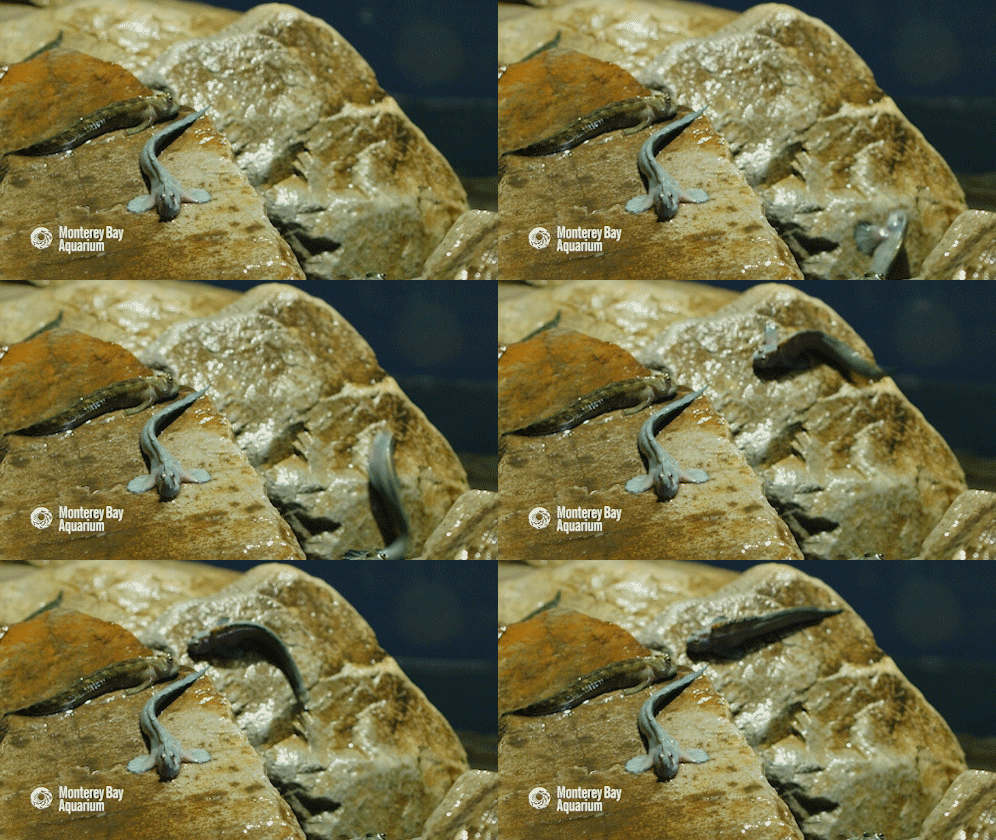
Their uncommon method of movement is especially unique, and only found in a couple of other species related to them. They are able to flick their tails up to 90° and can do so repeatedly and with a sufficient amount of strength to allow leaping several times their own body length, which is usually around eight centimeters. (or roughly three inches for us with a worse system of measurement.) They use this to leap from hole to hole in their limestone, and were likely named due to this.
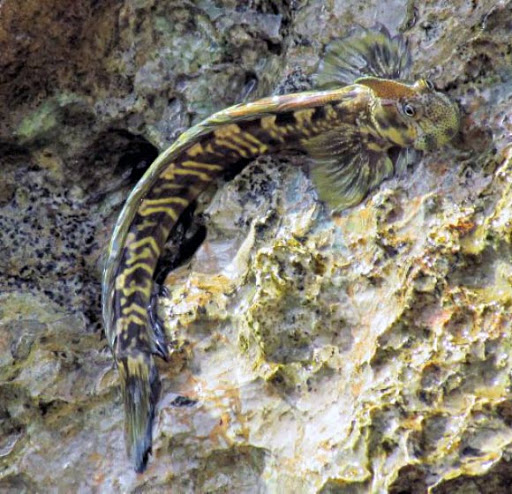
In combination with their leaping, they also have expanded pectoral and tail fins which allow them to cling to solid surfaces. The Blennies breathe through their porous skin when in the air, and their gills when in water, both of which they must keep moisturized. They are oviparous, and form distinct pairs when mating.
The habitat of Pacific Leaping Blennies is usually limestone rocks in reefs, which they are patterned to camouflage into, in such locations as Samoa, Guam, and the Marianas, Society and Cook Islands, which are in the western and southern Pacific Ocean. Blennies are most active during mid-tide, which usually lasts around two to four hours, and tend to hide in moist crevices in rocks to avoid drying out or being swept away by stronger tides during the rest of the day. When they are active, they tend not to intentionally go into the deep water and spend most of their time on the land. Their diet consists primarily of algae, which they scrape off of the rocks they live on.
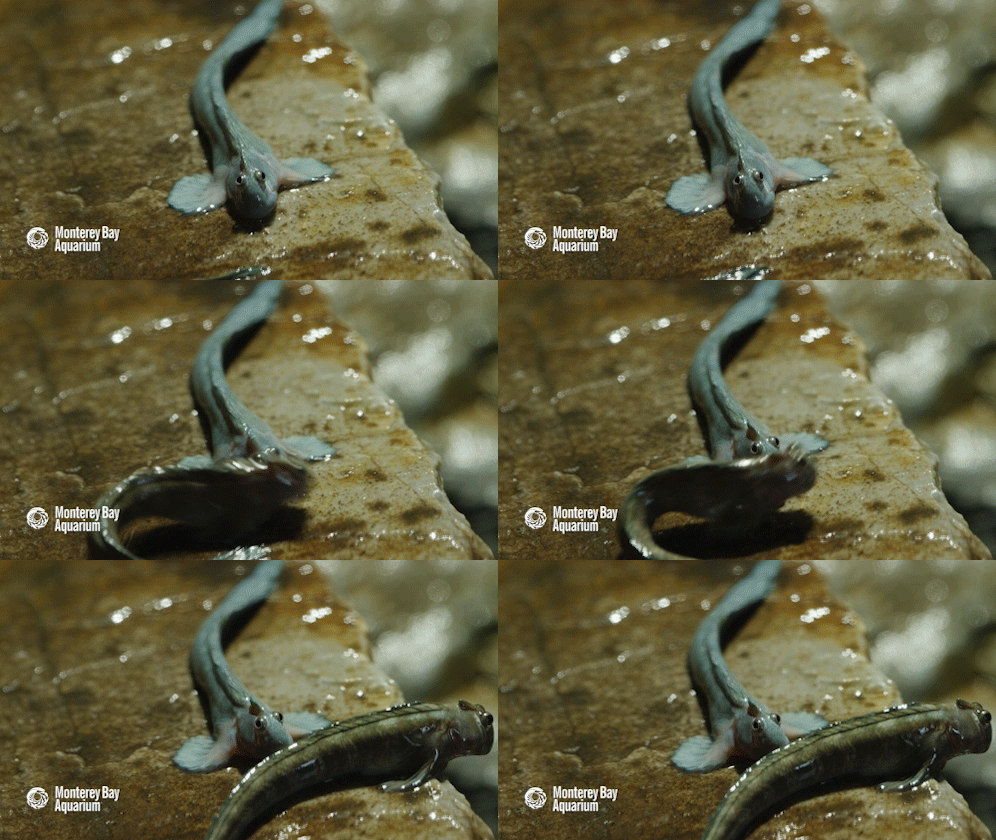
Pacific Leaping Blennies are an incredibly unique and interesting animal, a complex mix of land and sea creature. If you live in the California area and want to see one up close, visit the Monterey Bay Aquarium, which houses a small habitat of this fantastic fish, as well as a plethora of other amazing sea creatures!
 The Lighthouse