
by Sabine B.
by Sabine B.
Farmers create a discourse community by sharing particular values and goals and by having common objectives, like maintaining the competitive market, and constantly-changing farming practices. Through a variety of platforms, such as conferences, farmer-to-farmer learning opportunities, and the vast (and helpful if used responsibly) internet, they discuss farming practices, regulations, and the many difficulties of the field. Not to mention the usually close nature of small farming communities in America. Furthermore, I have identified one key issue placed upon these farmers who are the cornerstone of our nation: the now abundant pressure and inability to avoid the over-reliance on pesticides.
In fairness and full disclosure, productivity and agricultural output has increased due to the use of chemical innovations like insecticides (Fernandez-Cornejo et al. 1). However, we are now seeing more negative externalities as a result of its use, and, rather, over-use. These externalities include harm to aquatic creatures (via water run-off), native vegetation, animals, non-target insects (like solitary bees) and the long-term health of agricultural land (i.e. soil degradation) (Wilson and Tisdell 449). Additionally, there is evidence of higher human health concerns and even death as a result of pesticide exposure, particularly in developing nations. These issues have significant costs and impacts on farmers’ profits and lives. (Wilson and Tisdell 454-55) Nevertheless, we see farmers still use pesticides, and in most nations, in greater and greater amounts, in spite of these glaringly apparent expenses. (Hu) In this analysis, I would like to investigate this paradox and understand, within recent years especially, why farmers still apply and over-rely on pesticides in spite of their rising costs economically, socioeconomicly, agriculturally, and environmentally. Global pesticide dependence is largely a result of socio-economic structures and ineffective government policies, compounded by ever-growing global climate changes. (Hu) Transitioning to sustainable agriculture necessitates a deep understanding of the cause and effect: the reasons why small-scale, family agriculture relies so dependently on pesticides, forming a toxic-simbiotic relationship, and a realistic solution to implement a more genuine and healthy farm-to-chemical relationship for the future.
From an outside perspective, it is very easy to make the assumption “well, doesn’t each country’s individual government mitigate, regulate, and ensure the proper and safe usage of pesticide as agriculture is of great importance to foreign and interior affairs?” The idea of this question comes with some validity. It goes without saying that agriculture is, essentially, what makes the world go around. But further, I believe there is much knowledge to be gathered when contemplating the “productivity” of government oversight when it comes to private pesticide and insecticide use. Tambo and Liverpool-Tasie’s (2024) work “Are farm input subsidies a disincentive for integrated pest management adoption? Evidence from Zambia” illustrates how “well-intentioned” government policies can actually inadvertently reinforce this worrying chemical dependence habit. Their study, primarily focusing on Zambia, demonstrates that agricultural input subsidies, (more specifically; flexible e-vouchers) significantly decreased the adoption of sustainable IPM practices while increasing reliance on insecticides and pesticides. It also explains how economic interventions can create disincentives for realistic sustainability, effectively paying these family farmers to remain reliant on pesticide-focused farming practices as opposed to natural ones. Farmers participating in the subsidy program adopted “roughly four less IPM practices” compared to non-participants. Specifically, beneficiaries were “106 percentage points less likely to regularly monitor their farms” for pests and “125 percentage points less likely to adopt preventative cultural measures,” such as intercropping and (most importantly) crop rotation. The authors distinguish between the traditional “subsidy model” (direct and constant supply of seeds/fertilizer) and the “flexible” e-voucher. In that, the e-voucher allows farmers to redeem government funds for a variety of benefits, explicitly including synthetic pesticides. This, rather unhelpful, economic intervention effectively “weeds-out” (pun intended) natural alternatives. The study indicates that farmers view synthetic pesticides as substitutes; therefore, when synthetic options are subsidized and easily accessible via vouchers, farmers are less likely to opt for safer, biological alternatives. Even under the traditional subsidy model, the heavy promotion of subsidized inorganic fertilizers creates a labor trade-off. Because applying fertilizer is labor-intensive, farmers may reduce the time spent on labor-intensive IPM practices, such as pest monitoring to rather focus on fertilizer application. The authors conclude that while these subsidies may boost short-term yields, they “inadvertently discourage the adoption of sustainable intensification practices,” potentially undermining long-term income and yield gains while increasing human health risks. In summary, the authors argue that by allowing vouchers to be redeemed for synthetic pesticides, the government effectively lowers the cost of chemical dependence while increasing the opportunity cost of labor-intensive, sustainable farming practices.
Conversely, Zhanping Hu’s 2020 journal “What Socio-Economic and Political Factors Lead to Global Pesticide Dependence? A Critical Review From a Social Science Perspective.” provides a wide-scale (or big-picture) analysis of the “pesticide trap.” Hu’s critical review effectively challenges the widely held idea that pesticide overuse is simply a technological issue, arguing instead that it is deeply rooted in these complex social and political structures around the world, such as the “productivist treadmill” (a cycle where pests develop resistance, necessitating stronger chemicals) and the commercial influence of the agrochemical industry. In developed countries, this idea emphasizes production quantity above all else, entrenching pesticides as an inseparable part of farming. In developing countries, this “trap” is caused by introducing high-yielding crop varieties that are biologically dependent on fertilizers and pesticides, effectively locking farmers’ livelihoods and labor processes into a chemical-dependent model. An inescapable cycle. To sum up, Hu’s work analyzes the “pesticide trap” as a structural issue where “technical fixes or regulatory changes will only acquire significance within the framework of serious social change”. The dependence is maintained not just by pest resistance, but by an industrial agricultural “regime”, the de-skilling of farmers, the political influence of the agrochemical industry (lobbying), and the systemic failure to promote sustainable alternatives.
Further, we must understand that farmers operate within a market system that creates a “lock-in” effect, where the immediate economic necessity of maintaining high yields forces a continued reliance on chemical inputs, even as these inputs degrade the natural populations required for long-term sustainability. Wilson and Tisdell explain that this hysteresis creates a scenario where reverting to pesticide-free methods becomes economically unviable for individual farmers due to high withdrawal costs and the risk of short-term yield losses (458).
Farm size is a large contributor too. Based on the study of rice production in China, Yinghui Yuan challenges the simple “linear” assumption that larger farms always use fewer chemicals, instead identifying a “U-shaped relationship” between farm size and pesticide use intensity. Simply, as small-scale farms expand, pesticide costs per unit of land decrease due to “economies of scale,” this grants farmers better access to agricultural technical services and efficient application technologies that reduce waste (Yuan et al.). However, the author finds that beyond an optimal scale, “diseconomies of scale” emerge, causing pesticide use to rise again; this increase is attributed to “managerial challenges,” such as the difficulty of supervising hired labor and the inability to effectively monitor vast plots of land (think enormous farms spanning many, many acres), which leads farmers to substitute chemical intensity for labor and detailed oversight (Yuan et al.).
But what are the long term, tangible problems caused by the issues stated above and, throughout the vast time in which agriculture has dominated our ways of life, how can we understand the discourse community that farmers so heavily rely on? And further, what are the real “pluses” to pesticides? As mentioned in the introduction and in all fairness, they have caused near-before-seen productivity in agriculture in the 20th century. To further explore this, I will be examining the report titled “Pesticide Use in the U.S. Agriculture: 21 Selected Crops, 1960-2008” by Jorge Fernandez-Cornejo, the lead author of the USDA Economic Research Service. The paper, which came out in May 2014, looks at pesticide use (herbicides, insecticides, and fungicides) over the past fifty years, by giving an expansive, “big picture” view of the productivity that these biocide innovations have aided in, while also showing their “big picture” pitfalls. In addition, this paper looks at things like economic causes and new technologies (such as genetically engineered crops). Pesticide use has been a primary driver of agricultural productivity, contributing alongside fertilizers and improved seed varieties to “substantial increases in crop yields over the last 80 years” (Fernandez-Cornejo et al. 1). For instance, average corn yields absolutely skyrocketed from 20 bushels per acre in 1930 to over 150 bushels per acre by 2008, while cotton yields nearly quadrupled and soybean yields more than tripled during the same period (Fernandez-Cornejo et al. 1). Beyond raw yield, pesticides—specifically herbicides—significantly improved operational efficiency by allowing farmers to substitute chemicals for the labor, fuel, and machinery previously required for mechanical weed control (Fernandez-Cornejo et al. 15). This substitution effect is evident in corn production, where the labor required per acre dropped from 13.2 hours in 1952 to 4.8 hours in 1976 as herbicide use expanded from 10% to 90% of planted acres (Fernandez-Cornejo et al. 15). Ultimately, these inputs have reduced overall production costs while enabling the production of higher quality, unblemished (and more aesthetically pleasing) crops (Fernandez-Cornejo et al. 1). But, as with most things in this world, all is not sunshine, rainbows, and beautiful corn yields. Based on the report, the economic benefits of pesticide use are accompanied by significant potential risks to human health and the environment, arising from direct farm worker exposure, consumer contact with residues, and chemical movement into groundwater and the food chain (Fernandez-Cornejo et al. 3). By the 1960s, concerns regarding wildlife and human health prompted calls for stringent regulation, eventually leading the Environmental Protection Agency (EPA) to cancel registrations for pesticides determined to pose unreasonable risks, such as DDT, aldrin, and chlordane (Fernandez-Cornejo et al. 3). Regulatory scrutiny intensified in the 1990s and 2000s to address chronic toxicity risks—including tumors, birth defects, and endocrine disruption—resulting from long-term exposure to small amounts of pesticides in food and drinking water (Fernandez-Cornejo et al. 3, 40).
Furthermore, I want to take a moment and examine other discourse communities that are affected by pesticide over-reliance, namely for this argument, birds of prey. Birds may not chat on a Facebook group or meet weekly at a coffee shop for their protest group, “Grounds for Change”, but they create a discourse group nonetheless. So just for a moment, bear with me as I would like to go back to one particular chemical mentioned in the past paragraph; DDT. For some, this may be a recognizable name. But I feel the need to discuss and examine, because I believe the downfall of this “avian” discourse community can sum up the years of frustration and confusion that a thing like chemical over-reliance causes. And that this story can shine light and show the truth of change; the time, resources, and energy it takes to find real solutions. Moreover, the issues with DDT (dichlorodiphenyltrichloroethane) stem from its toxicity, environmental persistence, and adverse effects on wildlife and human health. DDT is an organochlorine insecticide that was determined to pose “unreasonable risks” to the environment (Fernandez-Cornejo et al. 3). A primary issue was its devastating impact on bird populations; exposure to chlorinated insecticides like DDT caused reproductive failure in birds, particularly birds of prey, which was frequently attributed to the thinning of eggshells (Wilson and Tisdell 453). Following the ban of DDT, many bird populations that had been affected by poisoning have since recovered (Wilson and Tisdell 453). Concerns regarding human safety were a major factor in the discontinuation of DDT; by the 1960s, growing concerns about human health risks prompted stricter regulation, leading the Environmental Protection Agency (EPA) to determine that DDT too detrimental a risk to warrant its continued use (Fernandez-Cornejo et al. 3). In the United States, the EPA canceled the registration of DDT in the 1970s, forcing the agricultural sector to shift toward less persistent and less toxic alternatives, such as pyrethroids (Fernandez-Cornejo et al. 3, 23). Despite these bans in developed nations, DDT continues to be used illegally in some developing countries because it is no longer under patent protection, making it significantly cheaper than newer, safer pesticide inventions (Wilson and Tisdell 450). Yet another example of a roadblock set forth for small farms to sustainably keep up.
While the entrenched “lock-in” of chemical dependence presents a challenge, a transition to sustainable agriculture is achievable if the discourse community of farmers, policymakers, and researchers collectively reimagines the incentives and knowledge systems governing food production (Wilson and Tisdell 458). Optimism lies in the potential for policy reforms to shift from subsidizing synthetic inputs—which currently crowd out natural alternatives—toward supporting biopesticides and labor-intensive preventative measures, thereby dismantling the economic traps that enforce chemical reliance (Tambo and Liverpool-Tasie 758-60). Specifically, governments can leverage existing infrastructure, such as the aforementioned flexible e-voucher, by mandating that vouchers be redeemed for biopesticides or by offering higher subsidy amounts for low-risk crop protection products, a strategy that would actively encourage the substitution of synthetic chemicals with safer biological ones (Tambo and Liverpool-Tasie 760). This structural realignment, coupled with policies that improve land security can empower farmers to invest in the long-term observational knowledge required for Integrated Pest Management rather than relying on the short-term fix (Tambo and Liverpool-Tasie 740). Change is indeed possible. While it is essential to understand farmers’ discourse community and the reason why making a transition to a natural way of farming is ever-complicated, the facts of the case should not be discouraging. Having reasonable understanding and empathy to a problem that has been created, while still pressuring and proactively fighting for its solution are the pillars of our combined humanity. Finally, I want to look at this from a wide angle; we, as the world, are a discourse community. Often we innovate (as is our human nature) but we push things too far (as greed or misunderstanding can rightfully be blamed). But because of this innovative spirit, we always find a light. Always, even with the pitfalls of our innovation do we eventually find a solution to better a future beyond ourselves. With the knowledge and experiences shared in the farmer’s discourse community, results based, sustainable means of agriculture can continue to be studied and implemented as reasonable solutions to the challenges posed by over utilization of pesticides.
Annotated Bibliography
Fernandez-Cornejo, Jorge, et al. “Pesticide Use in U.S. Agriculture: 21 Selected Crops, 1960-2008.” Economic Information Bulletin, Number 124, United States Department of Agriculture, Apr. 2014, https://ers.usda.gov/sites/default/files/_laserfiche/publications/43854/46734_eib124.pdf?v=19040
This report by the USDA Economic Research Service analyzes trends in pesticide application across twenty-one major crops in the United States from 1960 to 2008, utilizing a database compiled from USDA surveys and proprietary sources. Fernandez-Cornejo et al. examine the primary drivers behind these trends, categorizing them into economic factors, pest related pressures, technological innovations—such as genetically engineered (GE or GMO) crops—and regulatory changes. The authors document a period of rapid growth in pesticide use during the 1960s and 1970s. Then followed by a stabilization and even a slight decline in aggregate volume in later years, while noting a dramatic shift in composition where herbicides replaced insecticides as the dominant chemical input. The report argues that pesticides have been a primary driver of agricultural productivity over the last five decades, enabling significant yield increases and allowing farmers to substitute chemical inputs for the labor, fuel, and machinery previously required for mechanical weed control.
This source is essential for establishing the historical and economic baseline of the “pesticide trap” within, specifically, the United States. By quantifying the correlation between pesticide use and increased operational efficiency—specifically the dramatic reduction of labor hours per acre—the report provides evidence for the economic incentives that structurally entrench chemical dependence. It effectively illustrates the economic “lock-in” effect, showing how market forces and technological convenience have made chemical adoption make sense economically, even if not necessary, for producers of major crops like corn and soybeans. For this essay, the report serves as a crucial counter-narrative to purely ecological critiques, offering a data-driven explanation of the financial realities that compel family farmers to maintain high levels of chemical input despite known environmental externalities.
Hu, Zhanping. “What Socio-Economic and Political Factors Lead to Global Pesticide Dependence? A Critical Review From a Social Science Perspective.” International Journal of Environmental Research and Public Health, vol. 17, no. 21, Nov. 2020, p. 8119. https://doi.org/10.3390/ijerph17218119.
In this journal Hu, a researcher from North China Electric Power University, conducts a review to analyze what certain socio-economic and political factors that drive the persistent global over-reliance on chemical pesticides. Moving beyond the technical “pesticide resistance” idea, the review uses a qualitative, tangible, and theme-oriented method to gather concepts from several social science fields.The analysis categorizes the varying complex factors reinforcing pesticide dependence into five primary and interconnected themes: the prevailing agricultural regime (e.g., the historical “productivist treadmill”), the social process of application (including farmer deskilling and poor information provision), economic analysis (including the failure of market-based techniques due to low demand), politics and governance (such as industry influence, lobbying, and weak state regulation), and the failure of alternatives like Integrated Pest Management (IPM). The core argument states that pesticide dependence is not just and simply a technological challenge but is rooted in deep-seated social and political structures.
This source is essential for providing a “macro-level”, comprehensive framework to analyze why seemingly promising solutions like IPM struggle to gain traction against common pesticides. A significant strength in this journal is its explicit and clear categorization and its strong theoretical base, including a detailed and specific discussion of economic concepts like the “lock-in effect” and external costs. The author effectively argues that mitigating dependence requires going beyond “reductionist” explanations and looking closer and deep diving on multiple commonalities on a wide scale, essentially acknowledging that this issue is not going to have a simple fix. A self-acknowledged limitation is the simplified treatment of “global pesticide dependence,” which may not fully reflect geographical limits across the world.
Tambo, Justice A., and Lenis Saweda O. Liverpool‐Tasie. “Are Farm Input Subsidies a Disincentive for Integrated Pest Management Adoption? Evidence From Zambia.” Journal of Agricultural Economics, vol. 75, no. 2, Apr. 2024, pp. 740–63. https://doi.org/10.1111/1477-9552.12582.
In this particular study, authored by researchers affiliated with CABI and Michigan State University, assess whether agricultural Input Subsidy Programmes (ISPs) inadvertently actually discourage small-scale adoption of realistic sustainable pest management practices in countries across Africa. Utilizing data collected from 1,048 private/family-owned maize plots across Zambia’s major maize-producing areas, the authors employ a “control function regression approach” to address potential endogeneity bias related to farmer participation. The key finding indicates that participation in Zambia’s ISP (Input Subsidy Programmes), is negatively associated with adopting environmentally friendly and long-term sustainable strategies. Specifically, those participating in the program were 125% less likely to adopt practices like crop rotation or intercropping and 67% more likely to use synthetic pesticides. The study further notes that farmers perceive biopesticides and synthetic pesticides as, essentially, substitutes. This leading the authors to recommend leveraging subsidies to promote safer alternatives.
This recent, region-specific research is very useful for understanding how government policy can unintentionally strongly reinforce pesticide dependence. Its strength lies in its rigorous method (control function regression), which provides realistic evidence linking subsidies to reduced IPM adoption and increased reliance on synthetic chemicals. The results pinpoint the “flexible e-voucher system” as the driver of pesticide/insecticide use because it allows farmers to redeem subsidized pesticides directly and easily. This provides a critical political insight to my research: reforming the list of inputs (i.e., funding and incentivising Integrated Pest Management (IPM) practices) could shift behavior towards more sustainable strategies. A limitation to the cited research is that, due to the wide data, the analysis provides associations rather than effects and cannot actually and realistically determine the long-term impact of the program (IPM).
Wilson, Clevo, and Clem Tisdell. “Why Farmers Continue to Use Pesticides despite Environmental, Health and Sustainability Costs.” Ecological Economics, vol. 39, no. 3, Dec. 2001, pp. 449–62, https://doi.org/10.1016/s0921-8009(01)00238-5.
Regarding my topic, and my factual consideration of the issue facing my chosen discourse community, family owned, small farmers struggling in this new and brutal economic climate, this Ecological Economics analysis discusses the widely complex and interconnected nature of continued use of pesticides by farmers in spite of the chemicals recognized negative effects on the environment, human health, and sustainability. In this piece, Wilson and Tisdell, the authors, describe the detrimental effects of ongoing pesticide use, such as real ecosystem harm, the purge of helpful insects, and the human health effects in those who handle the chemicals (the farmers) and those who ingest them (the consumers). These problems are especially apparent in developing nations. By arguing that short-term financial gains, the high cost of switching, and other influential reasons outweigh the long-term negative consequences, the research ultimately aims to explain why small farmers continue to practice in this unsustainable but convenient way. In addition, I would like to add a note about the reliability of the authors and their intentions. At the Queensland University of Technology (QUT) in Australia, Clevo Wilson is a professor of economics with a focus on cost-benefit analysis, environmental economics, and the financial effects of ecotourism and natural catastrophes. He graduated from the University of St Andrews with a Ph.D. in Economics, the University of Cambridge with an MPhil, and the University of Glasgow with an MSc with numerous studies on subjects including the protection and financial advantages of wildlife-based tourism (e.g., sea turtles and whales). He commonly adjoined efforts with renowned Australian economist Clem Tisdell. He was an Emeritus Professor at the University of Queensland. He was a pioneer in a number of areas, such as the study of human values and its connection to development economics, natural resource economics, and environmental and ecological economics.
Further, this resource is a scholarly, peer-reviewed academic journal article with research information, tables, and comprehensive charts. The information gathered and referenced in the sources spans a period of at least 64 years, from 1937 to the year the article was published, 2001. I found no grammatical or spelling errors. The source seems credible, reliable, and objective. The layout of the site is uncluttered. Particularly for the target audience of the academic journal Ecological Economics, the authors’ main argument—that farmers continue to use pesticides despite high environmental, health, and sustainability costs due to systemic factors and economic “lock-in” (hysteresis)—is very persuasive. By, over the many years of the study, thoroughly documenting and recording the known negative impacts and then using certain economic and structural ideas to explain the ongoing behavior, the writers effectively make their major point. I believe it is of substantial use to my research, but in the future, I would like to find resources that are more recent and from specifically North America. The study takes a broad look at how these issues present themselves across the world, but I would like to further find information for my analysis from studies taking place in America, and from more recent years as the economy, climate concerns, and developing pesticide toxicology shifts.
Yuan, Yinghui, et al. “Impact of Farm Size on Pesticide Use: Evidence From Chinese Rice Production.” Frontiers in Sustainable Food Systems, vol. 9, Sept. 2025, https://doi.org/10.3389/fsufs.2025.1653777.
In this recent study, Yuan investigated the complex and wide relationship between farm scale and pesticide use intensity within China, a country that is critical to global pesticide consumption. The study utilizes a big dataset spanning 14 years (2004–2017) of rice farm data from the Jiangsu Province. The central finding confirms a relationship between farm size and pesticide cost per unit of area: pesticide intensity initially decreases as farms expand, but eventually begins to increase once a certain optimal scale is surpassed. The analysis suggests that increasing scale initially benefits efficiency due its economic input (for instance,the use of professional application and adoption of new machinery, etc.). However, further expansion of the research leads to “diseconomies,” such as increasing management and loss of oversight, increasing chemical dependency, and essentially a loosening of control that leads to mismanagement. This effect indicates that most sampled farms are currently on the downward slope, where a 1% increase in size is associated with a 0.089% decrease in pesticide cost.
This recently published article is invaluable for refining a structural and honest analysis, providing up-to-date and region-specific evidence on critical policy: land consolidation. The study’s use and knowledge of differing econometric methods to establish “non-linear” relationships between concepts is a significant strength. The primary policy implication is that promoting moderate farm size expansion is a viable and realistic pathway to reducing overall pesticide use in China. However, the authors note the limitations, including that using pesticide cost data cannot precisely separate changes in the actual chemical quantity from price fluctuations in the economy, and that the data combines and does not acknowledge the many different pesticide types (herbicides, fungicides, etc.).
by Camden S.
It’s not a secret that AI, in at least some way, has found its way to affect our lives. However, did you know that the AI data centers, which are used to train and run AI models, are having a negative impact on the environment by damaging ecosystems, destroying habitats, and increasing global warming? That’s not to say that all AI is bad, and that we should stop using it all together, but that we need to stay informed to make sure that companies are taking action to reduce the damage caused by AI. With that said, why is this happening and what can you do to help prevent it.
What exactly are AI data centers?
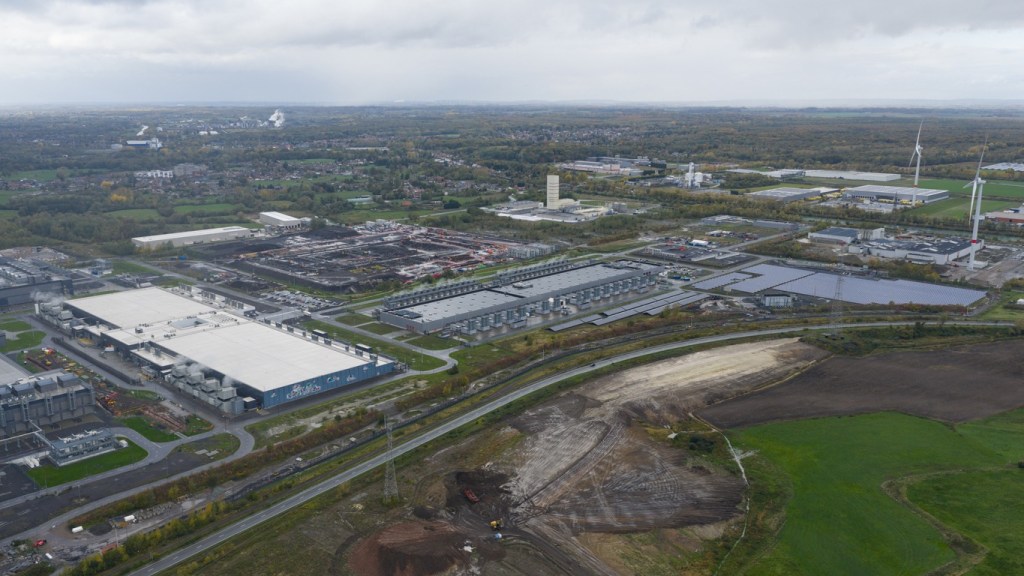
Think of AI data centers as networks of massive computers that are used to train (create) and run the AI (for example, when you use it for something like a chatbot). Training consists of obtaining large amounts of data (such as images, videos, art, or text) then using many GPUs (Graphics Processing Units) and TPUs (Tensor Processing Units), which process the data, so after some time, you are rewarded with a model that does what you trained it to do. This is usually done in giant complexes with extensive cooling and power infrastructure to ensure that everything runs smoothly like in Microsoft’s Fairwater AI data center in Wisconsin or Amazon’s Project Rainier in Indiana.
How do AI data centers impact the environment?
The land for the buildings to be built on, the water to cool the hot processors, and the electricity that powers the buildings all affect the environment. The ladder two, however, are the most damaging. They can put strain on the local infrastructure, especially with their rapid construction over the past few years. Since these centers are massive, the physical construction of these centers also displaces natural habitats that can be home to all sorts of creatures, which could lose their homes. There is also the problem of noise pollution. AI data centers can greatly increase the amount of background noise for residents nearby.
What other impacts do AI data centers have?
These data centers are not cheap to build, and they need vast amounts of RAM (Random Access Memory), GPUs, and TPUs. Though, they must come from somewhere, and that sometimes means that AI companies buy most of the available supply, since it’s much more lucrative to sell to massive AI companies and strike big contracts than to individuals or even other companies for things such as phones, computers, or other electronics. There was even one time that a branch of the company Samsung did not provide RAM to another branch because they could get more money selling it outside of the company. This highlights how, because of AI, there is a massive RAM, GPU and TPU shortage that’s likely to persist for some time.
Should we get rid of all AI?
AI is here to stay, but that’s not all bad. It has allowed us to make advancements in medicine, science, and even space travel. Yet without AI, many of these recent advancements would not have been possible. Though, when companies are incorporating AI into everything, even things that don’t require it (like an AI fridge, AI toys for children, and AI coffee makers) as well as people using AI image and video generation to make AI slop, it creates unnecessary negative impacts that could be avoided.
What can you do?
First off, try not to excessively use AI for non-productive purposes (like making dozens of meme videos that you will just delete a few minutes after they’re made). Secondly, hold companies accountable for making AI data centers more efficient so less energy and water is wasted by talking about it online and voicing your opinion. Lastly, spread awareness about the effects of AI on the environment so that everyone is educated on this topic.
Conclusion
Global warming and habitat loss are still pressing issues, but AI data centers are just one piece in a puzzle that is much bigger than just them. Furthermore, many companies are taking measures to reduce the impact of these on the environment, but we need to make sure that this progress continues. They have the potential to lead to giant advancements in our lives, but we need to be more responsible with how we use these new tools and make sure that we prioritize stainability to preserve our planet.
by Sabine B.
by Meru S.
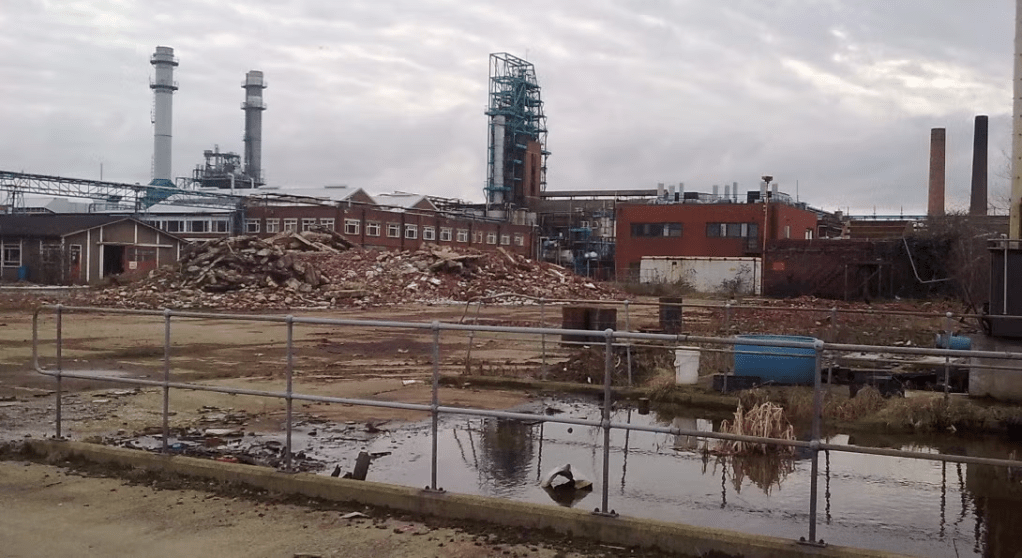
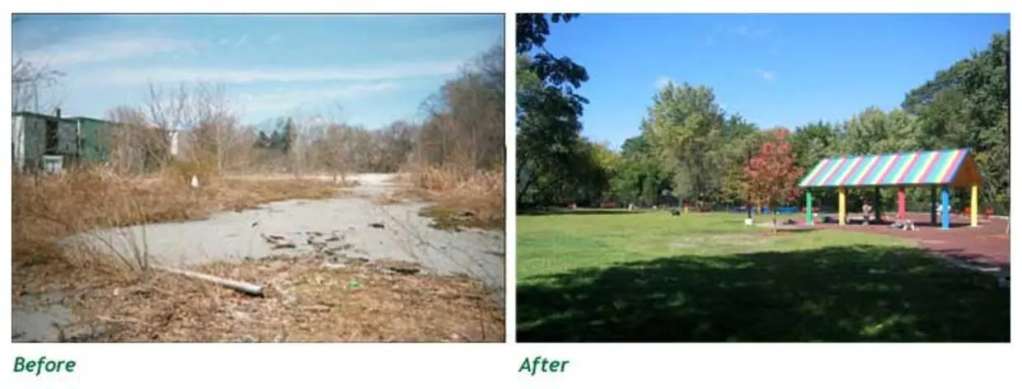
A property can be considered a brownfield and not just an abandoned building when the local city detects contaminants underground beneath the property. Additionally, it can be regarded as a brownfield even if there is only a possibility of pollutants, since in both circumstances, it would be unsafe for prolonged human activity or residence. Brownfields are generally previously occupied plots that are no longer in use.
Sites that may possibly become brownfields in the future include gas stations, industrial buildings, and older houses. Leakages in subterranean gas pipes can toxify the land around gas pumps. Similarly, chemicals can seep into the area around factories, resulting in spaces that are hazardous to residences. Homes that were built before 1978 are more likely to contain lead, particularly in the paint. Therefore, when these houses dilapidate over time and layers of paint peel and decay, it releases lead into the surrounding yards. We can prevent brownfields by repairing gas and chemical leaks, and safely renovating old homes.
Once remedied, brownfields can be redeveloped, providing environmental, aesthetic, and security benefits. After toxins are identified and eliminated, the site can be transformed into parks, shops, and other functioning premises. The decontamination contributes to the health of the environment. When new buildings are constructed, preexisting structures and roads can be incorporated into the new development, inhibiting sprawl. This process of including prior derelicts is called infill-development. Finally, brownfields are often neglected and unattractive, instigating higher crime rates in the local neighborhood and dissuading people from moving to the area, so restoring these plots restores the city’s status as well.
by Camden S.
One thing that everyone needs when making a 3D printed model is 3D modeling software. No matter if you are new to the hobby, or have some experience, a program for creating objects is a crucial tool. This article is about software specifically for 3D printing, yet can be used in a variety of applications, and this will be discussed in a bit more detail later on. But, what 3D modeling software should you use?
Tinkercad:
Tinkercad is one the easiest modeling software to learn due to its simple nature. It’s web-based, with a low learning curve, making it perfect for beginners. In Tinkercad, you use shapes to create complicated objects piece by piece by grouping them together, then cutting a hole out from the overlapping parts, like a cookie cutter. Tinkercad is primarily oriented towards younger users, but anyone can use it, especially when starting out.
Fusion:
Fusion can be seen as an older sibling to Tinkercad and is free for hobby use. It uses dimensions, which define how big each part of your object will end up, and how it’s positioned in relation to other parts. This allows for easy modification of the project later on, and to have a history of past edits that you can get back to for editing. Fusion is used by hobbyists, as well as professionals in 3D printing, and the manufacturing of many products. This software has a higher learning curve than Tinkercad; however, it’s worth the work for people who want a more powerful program.

Blender:
Blender is open source, and free to use for everyone. It uses individual points in space called vertices, with lines connecting those vertices, called edges, which you can connect to create faces. Blender is the most versatile software described in this article, and can be used for anything from modeling to animation, and even making full movies. It is able to create objects that wouldn’t be possible in the other two. For example, realistic plants and animals, or basically any organic shapes can be designed with this software. But with that comes a caveat: Blender has a very high learning curve, so the ability to use it to its full potential may take a lot of time and effort. It’s a very powerful tool, but with great power comes great responsibility.


Here are a few examples as to how each of these fundamentally work. (These are not full tutorials, so every detail won’t be included, but it should give you a good idea of how the software works.) So, let’s say you want to make a cube with a square hole on the top:
In Tinkercad you would create two cubes one bigger than the other. Take the small cube and put it on the top of the big cube half of it inside. Then select the type of the small cube as “Hole”. Lastly, group both together, this will cut the part of the small cube into the big cube.
In Fusion, start by creating a sketch on the floor plane, then create a 2-point rectangle on the sketch putting in how big each side will be. Then, finish the sketch and extrude it up and write in how tall you want it to be. Then create a sketch of the top of the cube and extrude it down and tell it how deep you want to hole.
In Blender, begin with adding a cube. Next enter edit mode and select the top face and inset it. Then extrude down.
Each software is unique and offers different tools, so I recommend trying each one to see what best suits your preferences. Happy printing!
by Sabine B.
by Sabine B.
by Sabine B.

by guest author Jonathan David
Don Petit, the current oldest active astronaut, returned to Earth on his 70th birthday from
a 220-day mission on the International Space Station. He spent many hours on scientific
research in the areas of 3D printing in space, water sanitation, plant growth and fire behavior in
microgravity. This was his fourth mission, totaling 590 days of space time. His main job on the
team is flight engineer.
In an April 28th interview at Johnson Space Center he concluded by sharing, “ I could
look out the window and just enjoy the view. But, when I’m looking out the window just enjoying,
its like, ‘Oh, Wow. A meteor. Oh, wow, look at that. Man, there’s a flasher. What’s that? And, oh,
look at that. A volcano going off? It’s like, okay, where’s my camera? I got to record that. And
part of this drive for me is when your mission is over, it’s photographs and memories.’”
Thank you for reading this article. Stay tuned for more NASA news! Special thanks to
ABC News for interview information.

