
by Ava Salado
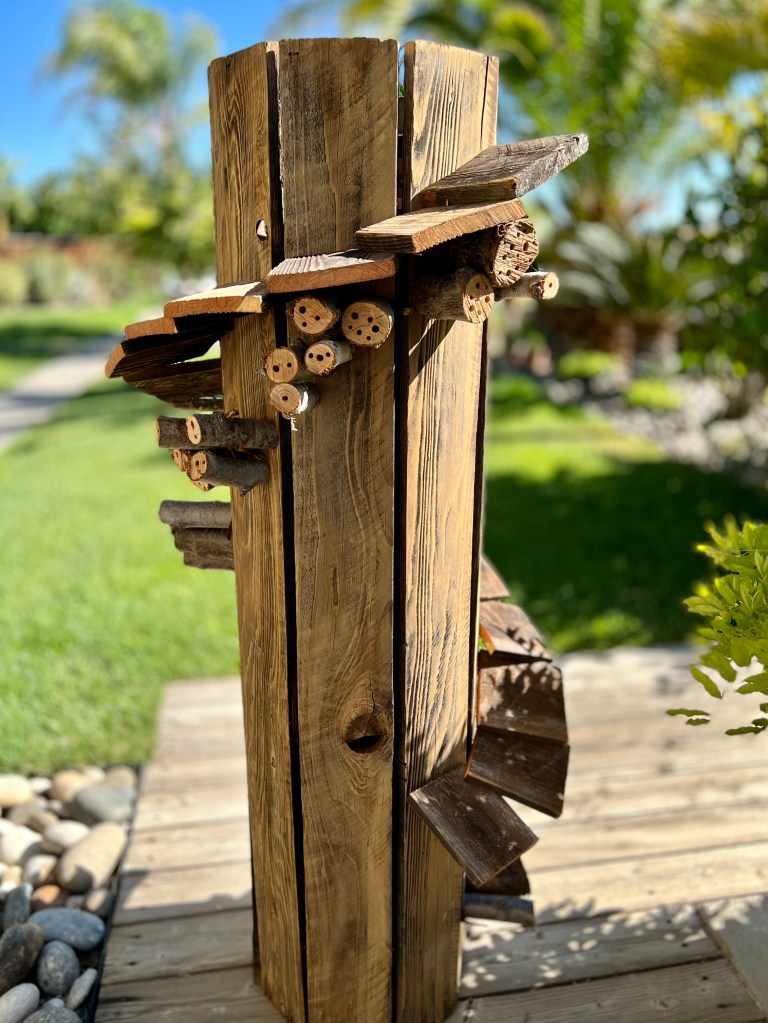
What is a bee hotel? Well, it’s basically a home where solitary bees can lay their eggs, these eggs can hatch into larvae, then emerge to pollinate your garden! Bee hotels are kind of a birdhouse but for bees. Solitary bees need a small, hollow “cave” like place to lay their eggs which will develop into babies. In a natural environment, the mama bee would find this perfect spot in downed trees, reeds, or any hole, nook or cranny a bee can fit in (and is the size to safely house their eggs). This bee hotel provides an “artificial” place to lay. They can also be known as bee condos, bee houses, or even nest blocks. Unfortunately, in today’s modern times and as we talked about in our last article, many of these resources are being taken away. So how can we all help? Make a bee hotel for your backyard. You can make a difference in your local area. Plus, you will bring local pollinators to your garden!
This sounds awesome but how do I make one? Well it is a simple, easy, and rewarding process and you don’t even need that many materials, let me show you.
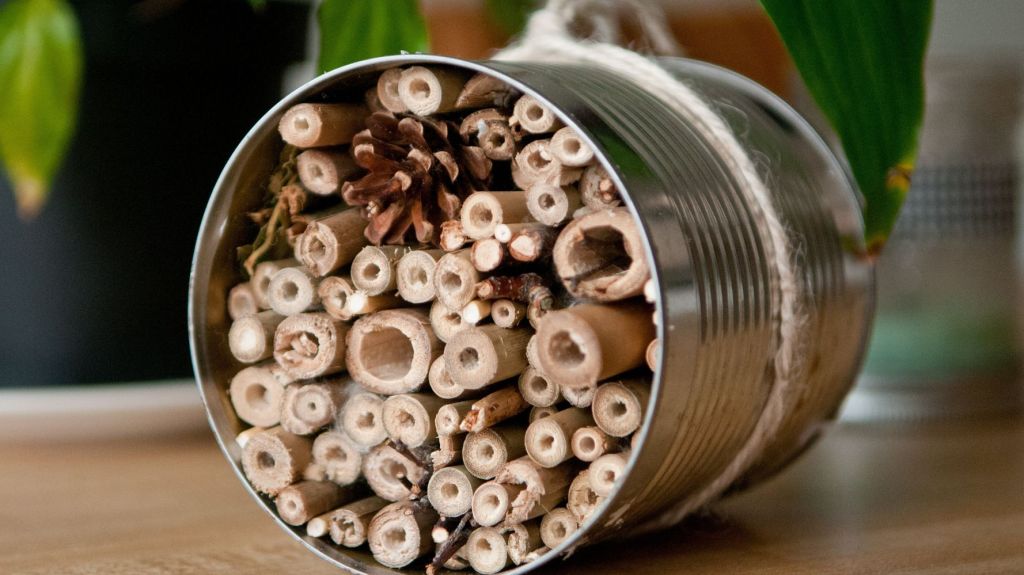
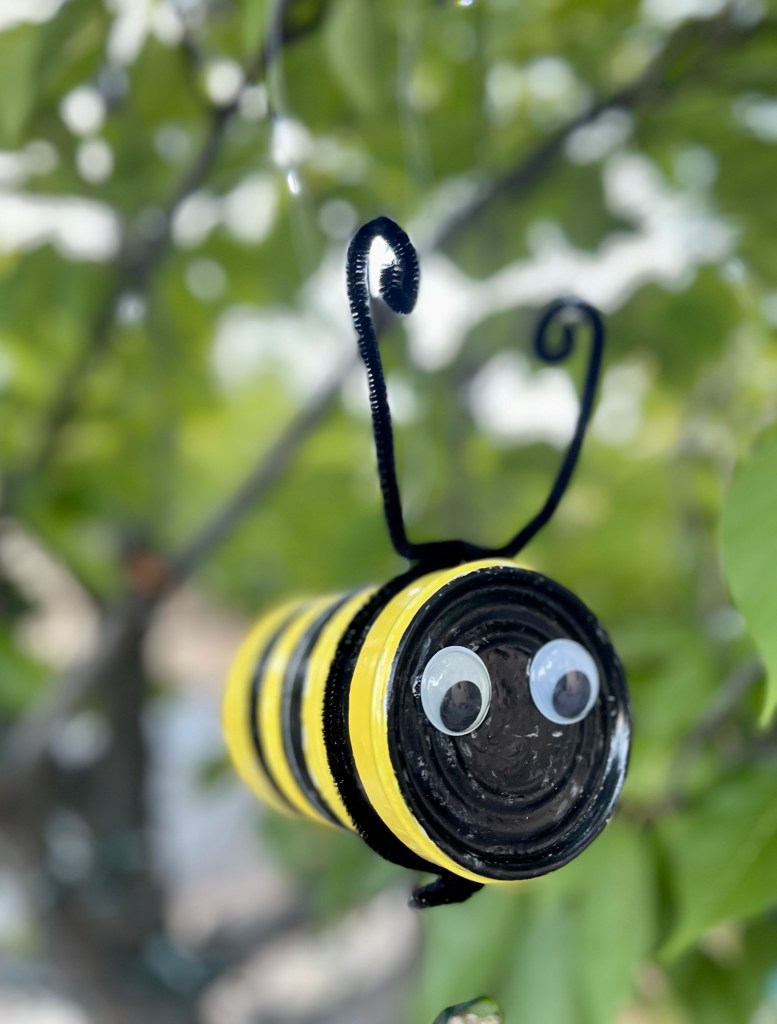
First you need a frame, you can use anything that is sturdy and waterproof. Such as a square wooden frame which can be easily created with some spare wood, or even (like the wonderful Larky parkday kids used) an empty, clean tin can.
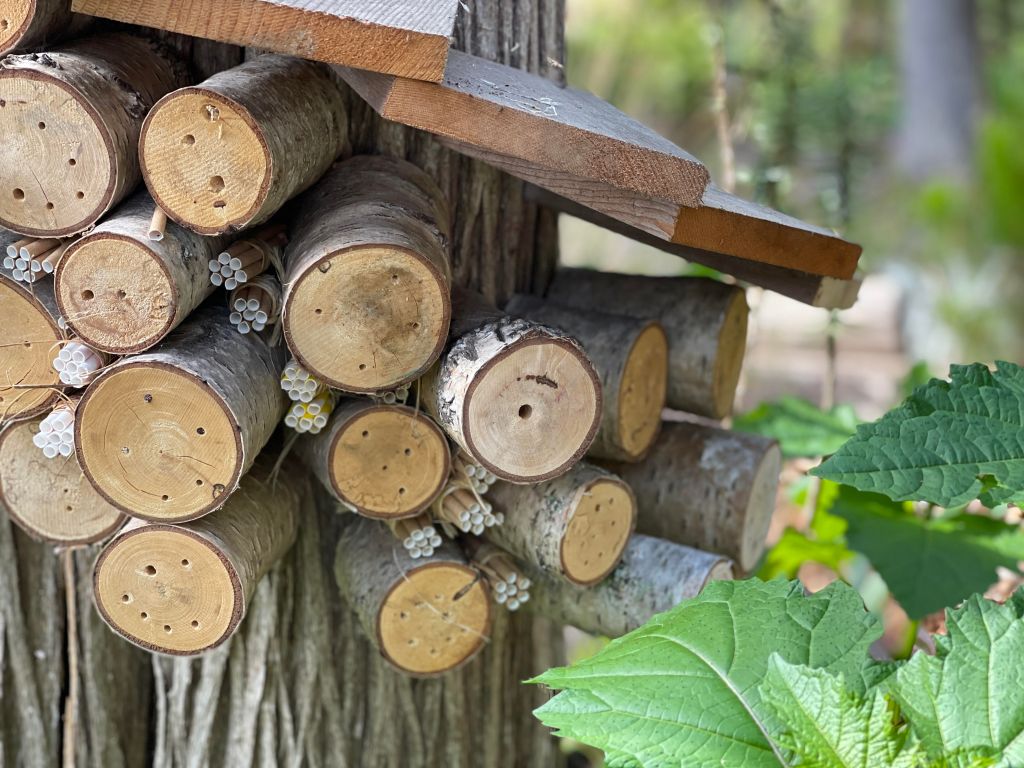
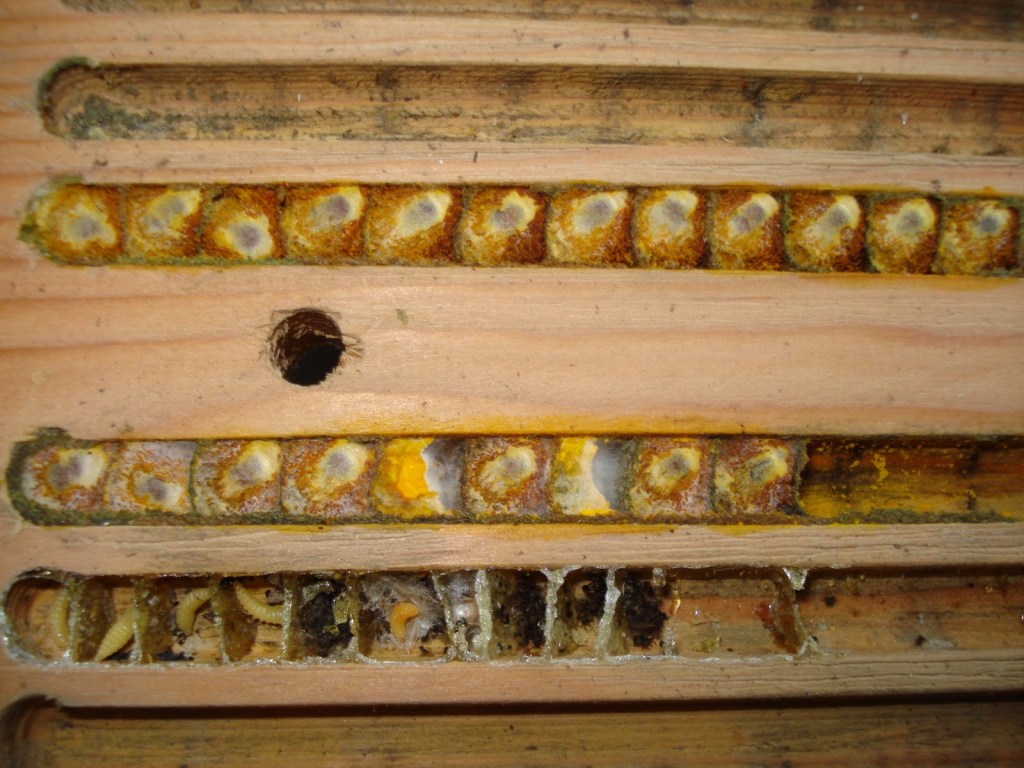
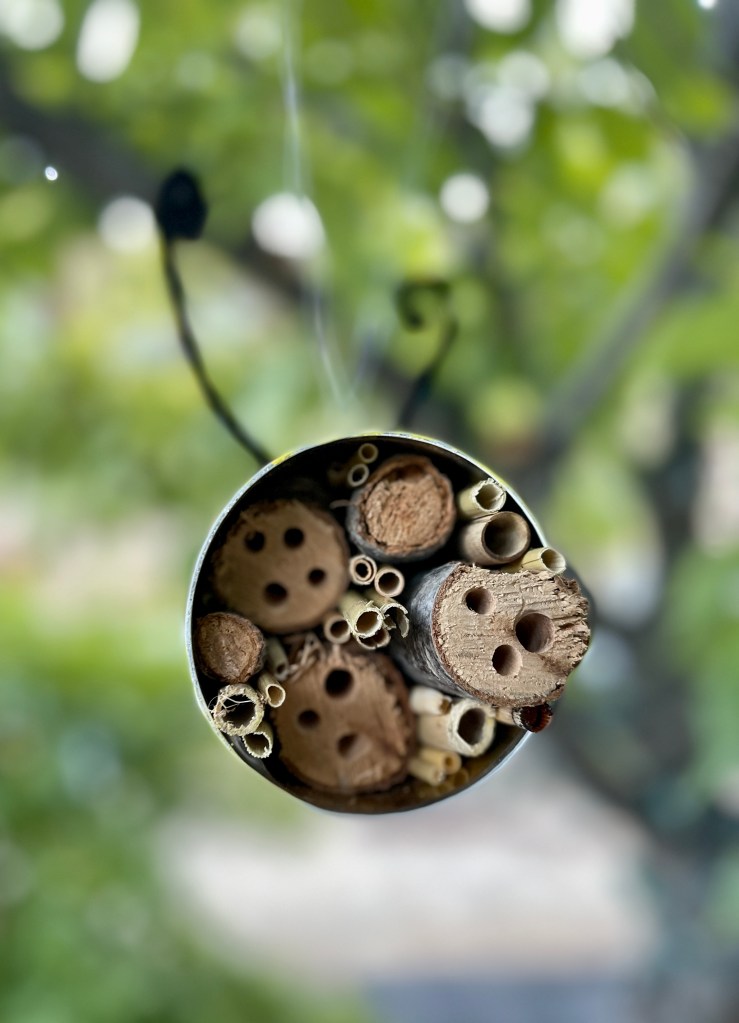
Now you need the insides (the actual place the bees will be staying). Bee hotels are supposed to mimic the natural nesting habitat of the bee, try giving a bundle of hollow reeds or stems, drill 2 mm to 10 mm diameter holes in a wooden block that are about 2 inches to 6 inches long, or even reusable paper straws. Keep in mind, if you choose using paper straws they can easily absorb moisture which is not good for the baby bee. So for their safety, retire the straws after each season once all of the babies have emerged. After that, get new straws for the next mama to find.)
Then simply attach the insides to the frame making sure they are sturdy and will not fall out or shake.
Now you have your own bee hotel. Attach at least 3 feet above the ground so that no crazy creatures get curious. And if you are having trouble with birds swooping in and pecking at the holes, consider putting chicken wire on the outside/entrances of the caves.
Here are some more essential tips:
Have a nice roof so that the entrances to the cave are protected from rain or dew. This is very important because, as I said before, if the cave is exposed to water or mass moisture, it could lead to mold, disease, and many other bad things. So, in the rainy months, I suggest storing it in the garage, patio, dungeon or any other cold dark spot. You don’t have to worry about them emerging until spring.
Make sure your hotel is not swinging or swaying in the wind, this will lead to very uncomfortable baby bees. Keep it in a non-windy and stable place.
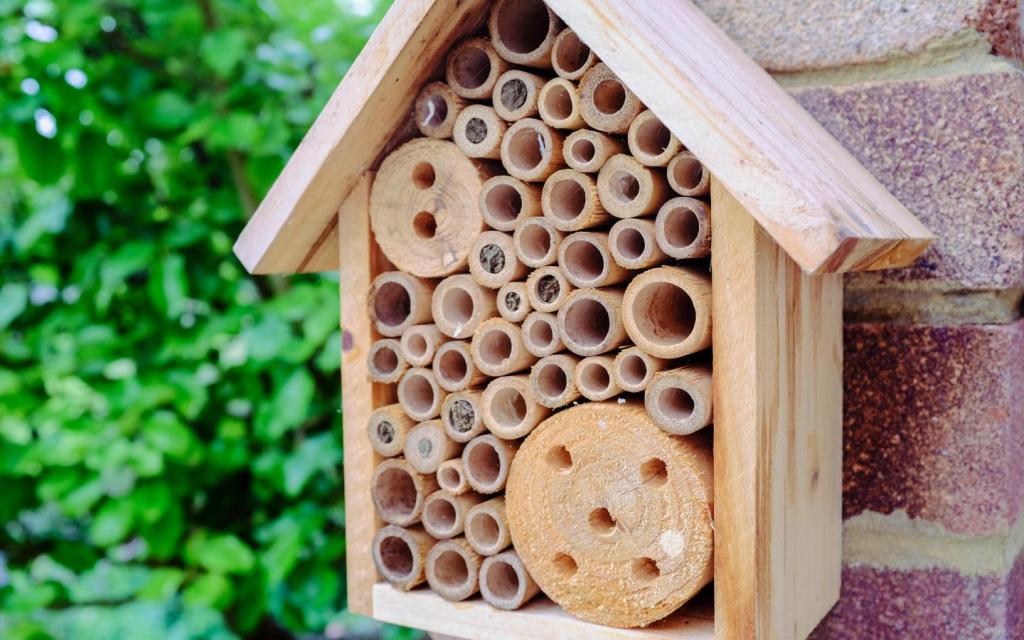
Always place your hotel in direct sunlight. Usually south or southeast facing. The babies like it warm in the spring and summertime.
Put your hotel out in early April-ish, that’s when most mamas will be looking for a place to lay. Then, by the following spring, all the babies should have all moved on to the big wide world. After they leave, clean the empty hole with a pipe cleaner or remove and replace the holes entirely.
Other than that, just be generally careful when placing and caring for your little friends. Share the care!
Now we must understand a few things. The answer for how to “Save the Bees” is much bigger and harder than just putting up bee hotels, this problem is much more complicated the world would assume. But don’t fear. By doing this you will be helping the bee population in your area. Especially if you live in a more urban space with few resources for their babies to be born. Plus, the hope that if we put bee hotels in public spaces, we could inspire anyone who sees it. The goal is to spark interest and curiosity, people will say “what is that thing?” This will inspire questions with important answers. The hope is that this fun project will inspire future generations to take further steps to save these wonderful creatures. My ask to whoever is reading this is to create as many bee hotels as possible using only recycled materials or things that you find in your backyard. Make it fun, art inspired, and creative.
My greatest hope is that by having bee hotels spread across the Bay Area, it will both restore the pollinators’ habitat, inspire kids to protect nature and inspire others to support this great cause with action to help them in the future. What steps will you take?
 The Lighthouse