by Meru S.
The Marine Mammal Center is the world’s largest marine mammal hospital, with Operations in Monterey Bay, San Luis Obispo, and Fort Bragg, California. The Center’s Main Hospital and Headquarters are located in Sausalito, California., They also have a hospital and visitor center in Kona, Hawaii — the Ke Kai Ola (The Healing Sea) Hawaiian Monk Seal Hospital, which opened in 2014 as part of the Center’s work to save the Hawaiian monk seals.
The Center rescues marine mammals such as seals, dolphins, sea lions, sea otters, elephant seals, and more. The Center works 24 hours a day, 365 days a year, responds to more than 10,000 reports annually, and has rescued more than 24,000 animals to date!
When an Operation receives a report of an animal that may be diseased, injured, orphaned, or entangled in plastic or trash, a team of trained volunteers is dispatched as soon as possible to rescue and transport the animal to the nearest facility. After an animal is transported to the hospital, it undergoes an admission exam in which the veterinarians at the Center take blood samples, check vital signs, and look for injuries or illnesses. After being rehabilitated at the Center and once the veterinarians have ensured that the patient is thoroughly healed and has the necessary skills needed to survive on its own, the patient is released back into the wild, either close to the location where it was found, or on a quiet beach that has no public access. Sometimes patients will be released further out at sea, so they will have minimal contact with humans and not rely on them for food. Flipper tags are attached to the patients before they are released. This enables the Center to track them in the wild and recognize them if they are seen again or are in need of rescue again.
In Monterey Bay and San Luis Obispo, the operations provide space for the patients to be kept for a few days before being transported to the main hospital in Sausalito. In the Fort Bragg operation, patients are immediately transported to Sausalito.
The Center keeps a list of their current and previous patients on their website along with their species and gender. Every patient is given a name. You can sign up to get patient updates via email.
Here are the names and species of some of their current and past patients:
Taxi—Harbor Seal (male)
Posh—Harbor Seal (female)
Reuben—Northern Elephant Seal (male)
Salamander—Northern Elephant Seal (female)
Southpaw—California Sea Lion (female)
Pixy—California Sea Lion (male)
Mayhem—California Sea Lion (male)
Salta—Steller Sea Lion (female)
Makoa—Hawaiian Monk Seal (female)
Giant—Guadalupe Fur Seal (female)
Paddlewan—Southern Sea Otter (male)
The Marine Mammal Center offers a Youth Crew service-learning program for high school students aged 15-18 in the San Francisco Bay Area. The Youth Crew is a year-long opportunity where students can volunteer at the Center by helping out with tasks such as recording observations, cleaning animal pens and pools, washing equipment, weighing animals, sorting fish for feeding, and managing the animals in pens.
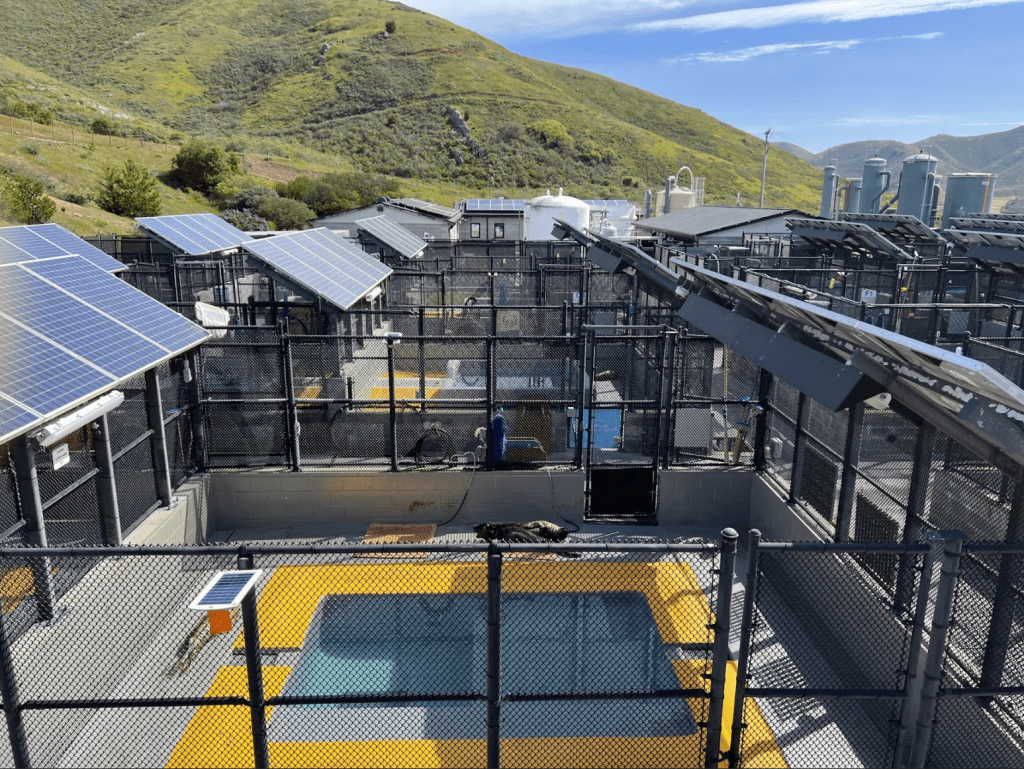
My family went on a homeschooling field trip to the Marine Mammal Center in Sausalito. We were taken on two guided tours led by staff members. First, we went on a tour of the hospital where the guide explained and demonstrated how the animals are rescued, fed, and cared for. The second tour was about the different jobs and careers at the Center. The guide of this tour talked about each job and showed us the areas where they are performed. We also got to see the rehabilitation pools in which the marine mammals are kept while being cared for. The animals are transported within the Center in ‘seal’ barrows. Every visitor is sure to be amused by the loud vocalizations of the seals. The guides shared that the way the seals move has a special term called ‘galumphing’.
If you ever notice a marine mammal in distress, please call the Center’s 24/7 hotline: 415-289-7325 (SEAL). For more information, please visit The Marine Mammal Center.
 The Lighthouse