
by Meru S.
The Hindu festival of Navarathri begins on the new moon during mid-September to mid-October. In the ancient Indian language of Sanskrit, nava means nine and rathri means night, so Navarathri translates to Nine Nights. It is also called Dussara, or Ten Days, in Hindi. During these nine nights, three legendary goddesses of Hinduism are honored.
The first three nights of Navarathri celebrate the warrior goddess Durga, who destroys the demons of greed, anger, jealousy, and ego. Goddess Durga’s victory over the demon Mahishasura, after a nine-day-long battle, is one of the reasons why Navarathri is celebrated. The next three nights are dedicated to Lakshmi, who is the goddess of prosperity and abundance in spirituality, courage, material wealth, victory, agriculture, and wisdom. During the last three nights, Saraswathi, the goddess of knowledge and learning is worshiped.
Here is a short prayer to Goddess Saraswathi in Sanskrit:
सरस्वति नमस्तुभ्यं वरदे कामरूपिणि ।
विद्यारंभं करिष्यामि सिद्धिर्भवतु मे सदा ॥
Saraswathi namasthubhyam varade kamarupini
vidyarambham karishyami siddhirbhavathu me sada
Translation:
Salutations to you, O Goddess Saraswathi, who is the giver of boons and who has a
beautiful form! I now begin my studies. Let there always be success for me.
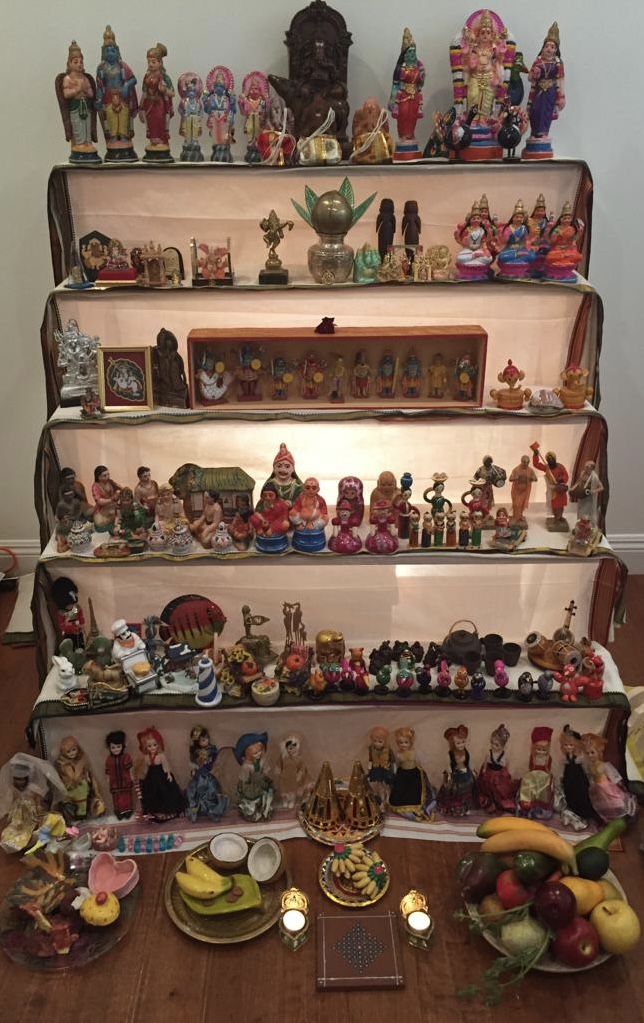
In southern India, each family builds a beautifully and elaborately decorated set of steps on which dolls made of clay, wood, or ceramic are arranged. Dolls are often passed down for generations and are many years old. The god and goddess images are placed on the higher steps, while human and animal dolls are set on the lower steps. These displays (known as golu in the South Indian language, Tamil) commonly depict weddings, rituals, ceremonies, or stories from the scriptures. Families dress up and visit each other, sing songs, and chant prayers.
In northern India, families and devotees celebrate Navarathri by visiting temples, performing traditional dances, and enacting legends of the three Goddesses. The tenth day, called Vijaya Dasami, is believed (in north India) to be the day on which Prince Rama defeated the ten-headed demon, Ravana.
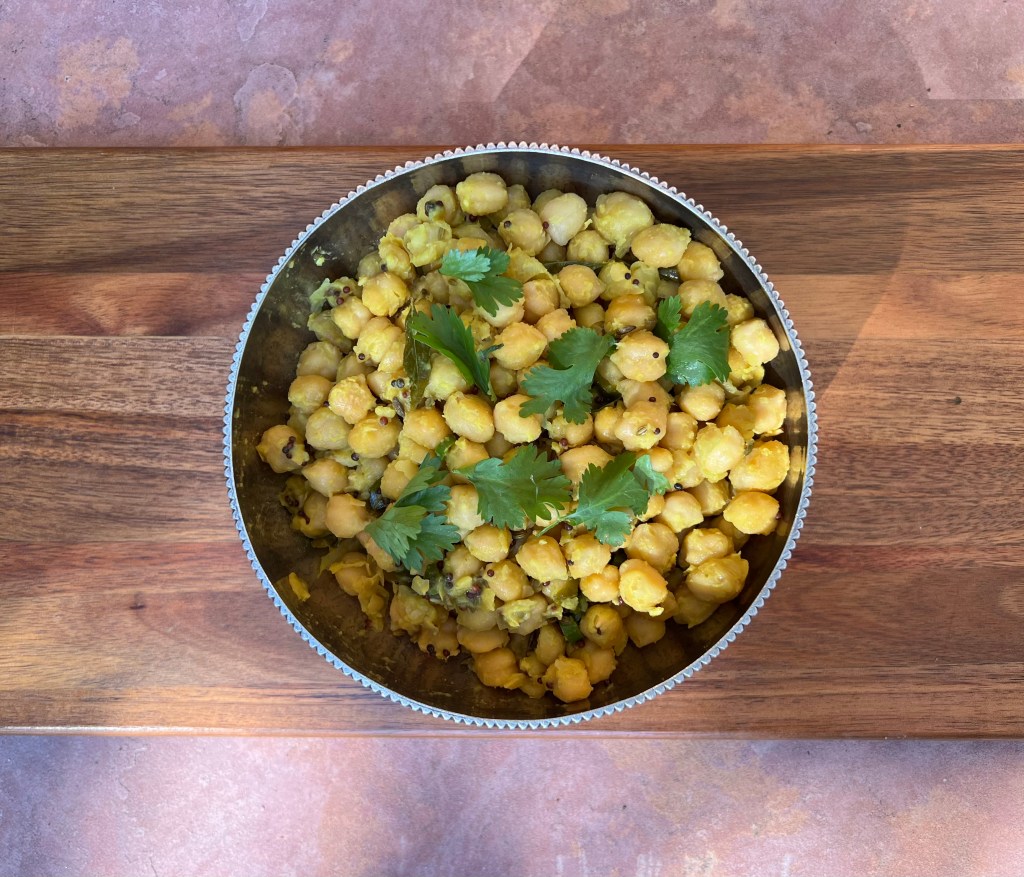
This is a recipe for Sundal, a traditional savory dish made with garbanzo beans:
Ingredients:
1 cup uncooked or 1 can of garbanzo beans
1 tbsp oil
1 tsp mustard seeds
1 tsp fennel seeds
⅛ tsp turmeric powder
1 tsp sugar
1 tsp salt
1 diced green chili or 1/4 tsp red pepper flakes.
1 small pinch of asafoetida (optional)
1 sprig of curry leaves (optional)
chopped cilantro (optional)
1. Soak the garbanzo beans in water for at least six hours, then cook them. If you are using canned garbanzo, drain them and skip this step.
2. Heat the oil in a saucepan, add the mustard seeds, and let them splutter.
3. Add the fennel seeds, green chilies or red pepper flakes, turmeric powder, asafoetida, and curry leaves. Stir, then add the garbanzo beans, salt and sugar. Mix until well combined.
4. Garnish with cilantro, serve warm, and enjoy!
 The Lighthouse