Project Hail Mary has captured audiences in two very different forms—as a novel and as a film adaptation—each with its own strengths and shortcomings. While the book immerses readers in the protagonist’s thoughts, scientific problem-solving, and emotional development, the movie translates these elements into a more visual, time-constrained experience, enhancing action, pacing, and accessibility but often sacrificing depth and internal nuance. The film delivers thrilling, awe-inspiring moments that satisfy a sense of existential sci-fi wonder, yet the book builds on the foundation of The Martian, offering a more gripping, moment-by-moment journey as the protagonist pieces together the narrative. Having experienced both, it becomes clear that the book not only stands above the film overall, but also excels more fully within its own medium.
My first example is more subjective, but still worth addressing up front. While others may disagree, Ryan Gosling doesn’t feel like the right fit for Dr. Grace. In the book, Grace comes across as grounded, analytical, and relatively easygoing when not in danger, whereas Gosling’s on-screen persona—though highly effective in roles like Ken in Barbie—doesn’t fully capture that tone. As a result, the film struggles to translate the character’s original personality from page to screen.
The next detail I noticed was how the character Rocky was visually interpreted. In the movie, he is portrayed as being made of literal rock, whereas in the book he is only compared to rocks and named after the character Rocky—never explicitly described as actually being composed of stone. The film also makes him smaller than described, further shifting his presence. This change creates a tonal difference similar to the contrast between the mysterious, monolithic aliens in Arrival and the more approachable, almost mascot-like design of E.T. the Extra-Terrestrial, transforming Rocky from something strange and imposing into something more familiar and endearing.
To the movie’s credit, it does an impressive job of translating the more technical, “science-heavy” elements of the story to the screen. Like its predecessor, The Martian, it manages to strike a careful balance between accuracy and accessibility, preserving the scientifically grounded tone of the original text without overwhelming the audience. This is especially notable given how easily complex explanations can become confusing or dull when adapted visually. Instead, the film presents these ideas in a way that feels engaging and understandable, maintaining the spirit of problem-solving and realism that defines the story while still fitting the constraints of a cinematic format.
While both versions are certainly excellent at what they do, the movie ultimately falls a bit short of reaching its full potential, especially when compared to the depth and impact achieved by the book. Although the film succeeds in delivering engaging visuals, strong pacing, and an accessible take on complex ideas, it sacrifices some of the nuance, character depth, and emotional weight that make the novel so compelling. These differences highlight the challenges of adaptation, where time constraints and the demands of a visual medium can limit how fully a story is realized. As a result, while the movie stands as a strong interpretation, the book remains the more complete and effective version of the story.
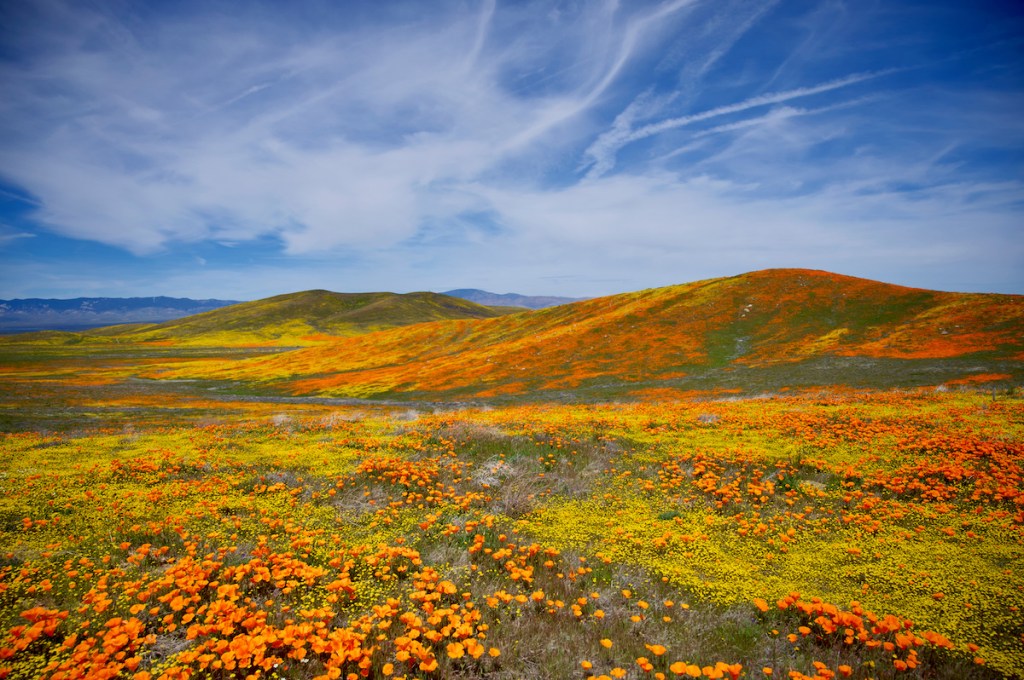
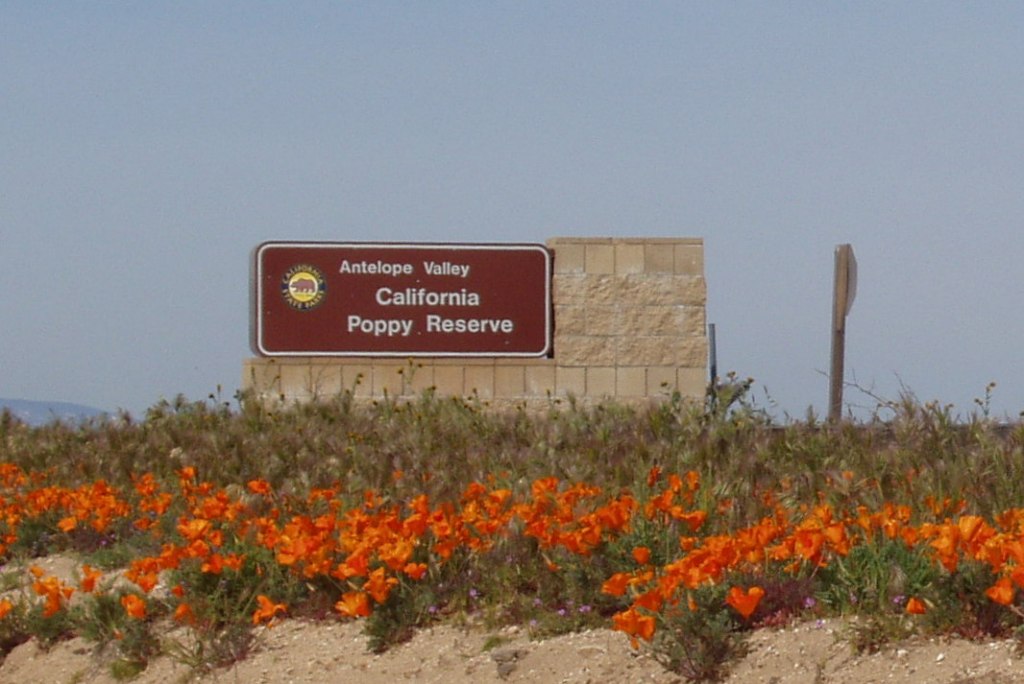
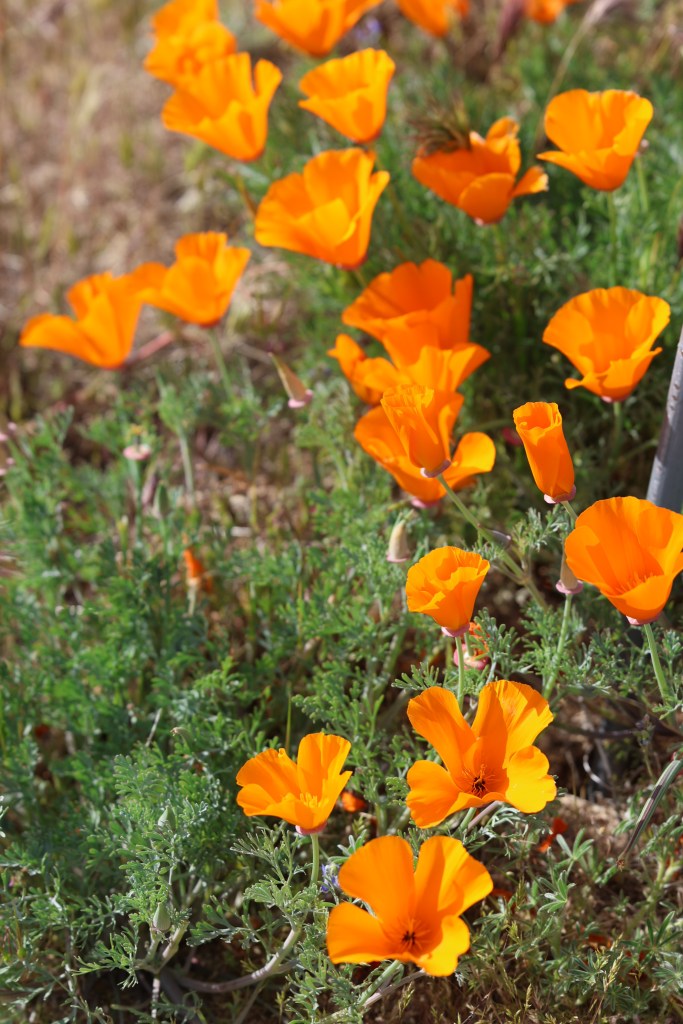
The Antelope Valley California Poppy Reserve State Natural Reserve celebrated its 50th anniversary on Friday, April 24! For now five decades, it has protected and preserved California’s unique and greatly important wildflowers, including the iconic California poppy, our state’s official flower. California State Parks proudly celebrated the milestone with a special ceremony honoring the people, partnerships, and community efforts that helped establish and maintain the over 1,800-acre reserve in the Antelope Buttes, just west of Lancaster.
Every spring, poppies bloom in the reserve, but the best blooms depend on a number of things, such as the sun, clouds, heat, rain, and even the wind. Jean Rhyne, an interpreter at the state park, adds, “The bloom time changes every year.” “It usually happens in early April, but it can happen anytime from mid-March to early May.”
photo from Picasa
Floral “aficionados” know that the historical Antelope Valley is the absolute best place to see poppies. Even though the wildflowers didn’t fully bloom this year because of all the rain, there were tons to enjoy. Poppy season usually lasts from March to mid-April, but sadly, the Antelope Valley California Poppy Reserve announced on April 1 that the scorching weather in Antelope Valley had officially ended the poppy season. Poppies may be the defining symbol of our enduring and strong state, but even the most powerful elements of nature must live in tandem with the ebbs and flows of their environment. Poppies can sometimes be unpredictable. If it rains too much, the Antelope Valley California Flower Reserve will only have a moderate flower season. But thankfully, this spring’s weather has been even lovelyer than last year’s.
When to visit?:
If you can, plan your visit on a sunny midmorning for the finest view.
Where to look?:
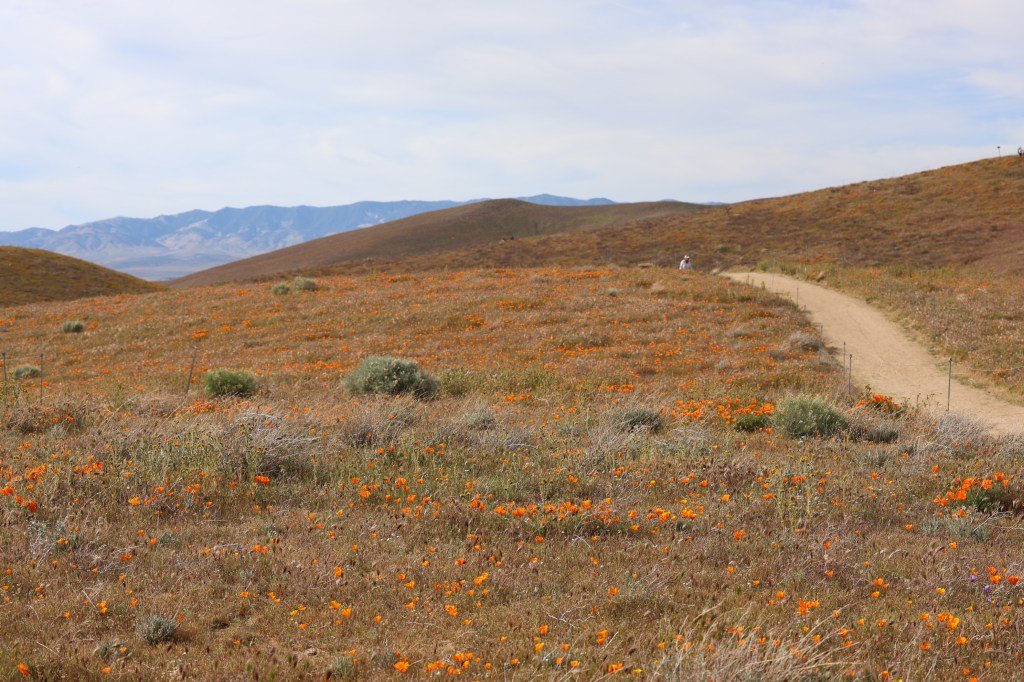
There are eight miles of paths in the reserve. Most people only walk the 3.3-mile South and North Loop trails and make a quick stop at the Tehachapi Vista Point, but the best displays aren’t always there. Rhyne says that the best place to find out where the most flowers are blossoming is to stop by the visitor center, which normally opens in early March. People who come to the park may see how beautiful this reserve is and walk or ride their bikes on eight miles of paths that go through rolling hills and seasonal wildflower displays. There is also a paved path that is easiest for wheelchair users.
What to do?:
The Jane S. Pinheiro Interpretive Center has displays about the plants and animals that live in the area and a gallery of Pinheiro’s botanical paintings. The center is open from March 1 to Mother’s Day from 10 a.m. to 4 p.m. on weekdays and 9 a.m. to 5 p.m. on weekends. The non-profit Poppy Reserve Mojave Desert Interpretive Association runs an introduction film and a gift shop (who doesn’t like a gift shop?)
Lets Protect our Poppies!
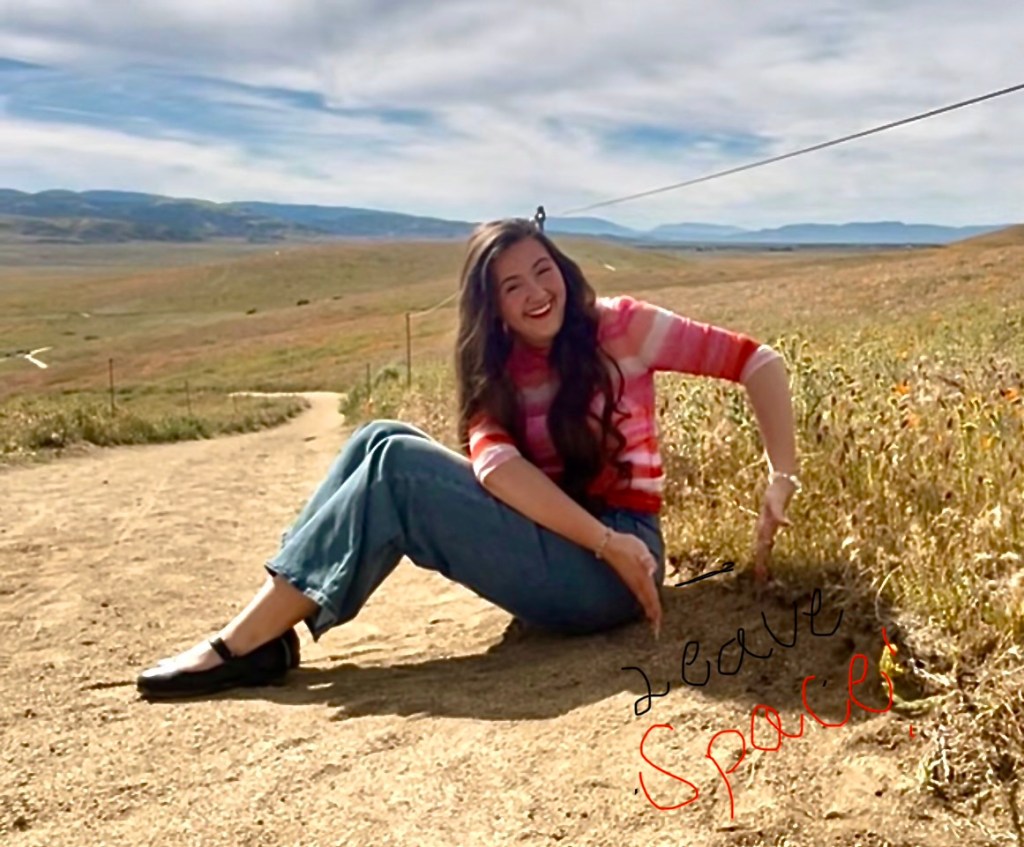
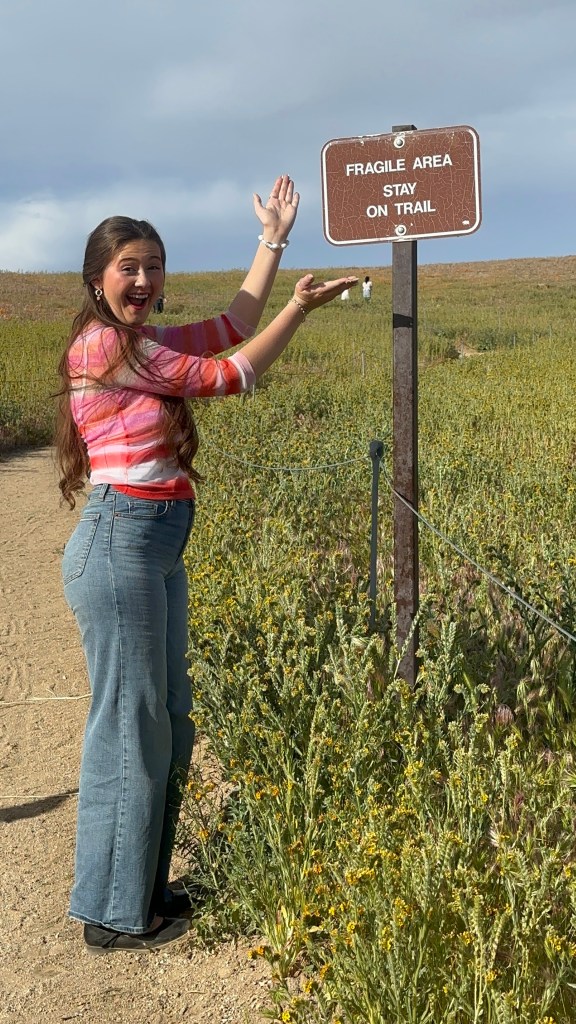
During popular “super bloom” occurrences, tourists sadly harm California poppies greatly. Much damage has been done because of the large number of people who want to take pictures, especially in Southern California regions like Lake Elsinore and the Antelope Valley California Poppy Reserve. People often ignore notices and walk, sit, or lie right on the delicate poppy patches. “Flower angels” (lying down and moving their arms, akin to “snow angels”) is one example of popular “photo ops” that can cause (and inspire) the danger of our amazing California native flowers. In addition, walking off the assigned trail can harm plant roots, which ends up killing many wildflower types, leaving scars in the ecosystem for years. Illegal picking of flowers (outlawed in California Penal Code 384a) is still a widely held practice. Not to mention the sheer number of visitors (often more than 100,000 on weekends!) forces overcrowding responsible for habitat harm. So, if visiting, please remember the National Park Service’s leave-no-trace best practices. For example:
Take pictures responsibility
Look, but don’t touch
Respect trail listings and warnings
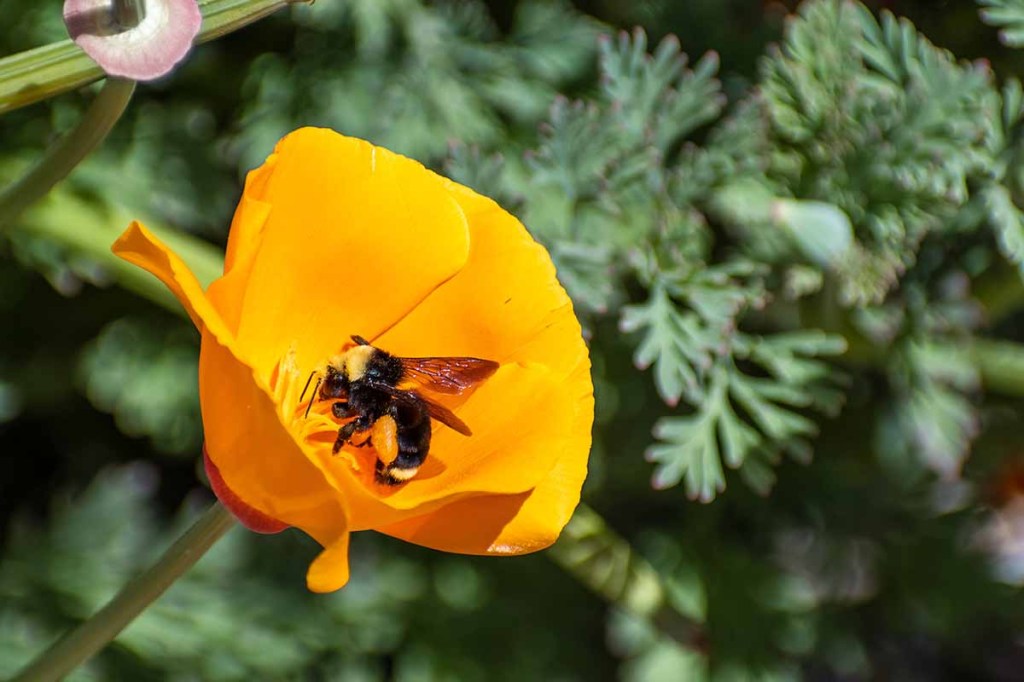
Protect the sustainability of pollinators that make California’s ecosystem as diverse as it is
photo by Gardener’s Path
And acknowledge the land
The Kitanemuk, Tataviam, and Tongva (or Kizh) peoples, often referred to as the Shoshonean bands, lived on and cared for the area where the Antelope Valley California Poppy Reserve is now located.
In conclusion, California is filled with many natural wonders for us to enjoy. Bearing in mind how to have a safe, productive, sustainable time while enjoying these wonders is essential. So please, get outside! Take a hike and enjoy our beautiful environment. Give back when you can and don’t forget to stop and smell the roses (or poppies, in this case.) Here’s to another beautiful 50 years of The Antelope Valley Poppy Reserve!
A bit of background: For my novel project I chose the ‘Letter from Sighet’ option. I did a lot of beforehand research, trying to pick a subject for my letter that would be interesting and provide me with more information on which groups were also marginalized during the Holocaust. During my research I came across a fact about the queer men that had been interned in concentration camps. During this time there were many places in the world where homosexuality was illegal and considered a jail-worthy crime. The Nazis, who targeted all who were different from their idealized version of a human being, captured several of these individuals–specifically, gay men–and interned them in camps along with the Jewish residents. When the Allies eventually stopped the war and freed the prisons, they and the newly recognized German states, chose not to consider queer prisoners victims of the genocide–which was a crucial status they needed to be able to apply for asylum in other states or get help for their experiences. In fact, in places such as Austria, they elected to send these men, fresh from what is considered one of the worst and most horrific events in human history, right back to prison. My letter is written from the point of view of one of these men named Imre, a queer Jewish person who is writing from Austrian prison to his lover, whom he was separated from at the beginning of the war and is not sure is still alive. I hope you enjoy my project and the story of the character I have created. Though fictional, Imre and Isadore represent the millions of true survivors who were torn from their loved ones in this horrific event of history, and I encourage you to reach out and learn more on your own. History will only change tomorrow if we are educated on the past today.
Content Warnings: Mentions of violence and death (nothing graphic), an exploration of the trauma that came from this war. Read with caution and take care of yourselves.
March 1st, 1946
I write this letter with little hope it will reach you. I barely trust in the assurance that it will make it out of this prison alive, my words discarded lost or burned at their hands, without a glance at what I have to say, like so many promises broken. But I have to try. There is precious little left in this world that I believe is worth trying for, after all I have seen, but if there is a singular thing—if there is one light left in the darkness—I believe it would be you.
It has been nearly five years now, since I have last seen your face. Do you still remember that fated day? They have tried to take it away from me, but I will never forget. We were a simple little place, the town of Sighet, Transylvania, nestled in the woods. The smell of salt always thick in the air, not from the ocean from which we were far, but from the mines that harvested the mineral and brought it up from the Earth. My father worked in one such mine. He was a good man, kind and warm. My mother did not work, yet she loved her sewing. Her hands, a needle and thread could make such beautiful creations we teased that she shouldsell them, if only to make us the richest in all the land. She shrugged these off, but I remember her smile in the candlelight. I had no siblings. They were Jewish as most families in our neighborhood were, devout and pious, brought together in our community by the grace of God. I was Jewish in the way that birds sang each morning, or that vegetables were good for you despite their taste. It simply was. I did not think much of it then–I had my own secrets, secrets that could make me hated and feared even in the eyes of God Himself, and I concerned myself no more with the matters of religious identity than a simple daily prayer that worked that kept my life afloat.
Apologies. I did not mean to insinuate that I felt my burdens with regret. There was shame, as there was wont to be, but never regret. I could never regret you as long as I live, my friend.
The day the foreign Jews were expelled was not one I had paid much mind to at the time. I will admit that I was selfish back then. I believed the Earth would simply continue to go round as long as I and those I loved were unharmed. So I did not take much notice when they were hauled away. I had spent the day with you, Isadore, in the fields behind your father’s mill. We were too caught up in the joyous and simple pleasures of youthful physicality to take much mind of anything at all.
The ghettos have not stuck well in my mind, I am afraid, for it has been so long and I have been through so much as to render them a paradise compared to the places that followed. We lined up on the streets for hours those days, waiting for them to cart us away. I’m sure you remember. How you complained about the heat. They did not tell us where we were being taken, though they looked at you and I with more respect than the others. We were young–early twenties, then, isn’t it so funny to think–and fit, and we had an air of intelligence about us that perhaps inspired them to treat us as though we were human. The same could not be said for my family. They looked at my mother like a piece of meat and my father like a frail burden, though he was only sixty and she was only his. Oh, if only they could have known then, when they looked upon us! You and I were filled with more sin than they could have ever conceived, yet looking back I find only satisfaction in that knowledge.
They took my family away before I. It was a solemn day, and I cannot deny I still shudder to think I shed no tear. If I could have known it was the last I would ever see my mother, my precious amma, my father, the stone-faced and gold-hearted miner, I would have ran into their arms like a little boy again, but I did not. Alaya and Joseph Malik, those were their names. History will not remember them as I have, for history will not remember them at all. I am told they were killed along with hundreds of others upon arrival, their very existence forgotten to the flames. It haunts my mind like a ghost, the thought of their ashes left to the wind.
They took you away from me. I barely can picture the moment, for all I knew was that all at once, I was loaded into one car and you another. We had only interlocked hands–no kiss, no embrace, only a faint reminder of your skin on mine before being ripped away. That is all we had.
I have not seen you since. I do not know if you are even alive. But that moment, I remember, and I shall remember for all my life. You were warm in my hands as I held you and through all of this I have held onto that last flame of sunlight before the eclipse.
I will mention, it was not long after I arrived that they discovered my crime. That summer, a trip we took to Austria in which we were caught together behind the bar–do you recall? The cells were cold there, but not nearly as cold as I soon learned these “camps” could be. I had forgotten, I admit, for our arrest was but a night, but they keep these things on record, you know. Any modicum of respect they had for me was gone by this point. I was spit in the face, called all manner of names–I will not transcribe them. I know that you have endured all the same.
I will not paint a picture of the horrors I suffered to you now. In a selfish way I pray you already know, because that means that you have lived to suffer the same. Five years I spent being shuffled along those places like cattle, only left breathing because I was strong and could work, losing what it meant to be a person in the light of God more and more with every day…those years were the worst of my life. I have lost my soul to them, Isadore, and yet I cannot help but to think upon all those who have lost worse. The infants, the children, the mothers sons and daughters fed to that fire, young men torn from their mothers and their fathers and everyone they knew before they were even old enough to lift a glass…I am lucky to have survived to live in Hell another day. Any pain that I feel now is but a token I carry for all those who cannot.
The war is over, now, as it has been for nearly a year as I write this. I have not entertained a single notion of freedom since the Allies, in form of huge, imposing Soviets, liberated our “camp”, nor did I really ever expect to. To the rest of the world, I am the lowest of criminals, set apart from the light and grace of God. Schwuchtel, they called me here, which is a word I had not heard spoken in the same fashion but have heard the heart of many times. I know what it means. I know not if they are wrong, only what they see. My crimes–a single kiss, shared with you one warm night all those years ago, witnessed by prying eyes–has granted me three years of prison time, and the revoking of my status as a victim of this war.
Three years. What is three years, compared to those who lay dead in the snow? Their bodies ravaged by seasons of wildlife, their names never known…
I had a friend, if you could call it that, a young man by the name of Samuel. I believe he may have been nineteen? He did not know who I truly was, nor do I doubt that any connection we shared would have been lost if he had, but nonetheless I was grateful for the small things we did share. His body lies crushed among the trees somewhere, trampled by the feet of his fellows who may have once known him, left behind there to rot when we were gone. No one, not one page of history will remember him–I myself did not even know his surname, but I find comfort in at least the fact that I did know him through his final hours. What am I saying? It becomes difficult to keep my thoughts orderly when my fingers become so cold in these cells. The memories haunt me like a tide, returning forevermore. A point to say: I know I am lucky. The constraints of my predicament wear away at me anyway, and I do believe by this point that no one could expect me to be grateful.
You must believe that I hate you, dear Isadore. After all, if not for my love of you I would be free of these cells, as free as a man can be when forced to live in his very own lie, but alas. If not for my love of you, I do believe I would have met the same fate that befell my brothers and sisters in that Hell–if not death, than a loss of oneself. Though I do not claim to be the same man I was when I left you, and at times I fear that I have lost my soul, my body, and the sanctity of my mind…but it is only the memory of your hand in mine that reassures me that if anything I have not let go entirely of my heart. There are days I feel as though I have lost the ability to love anyone at all, and I cannot lie and say that does not extend, in its own way, to you. Distant as the years have made your image in my mind, murky as my certainty at your survival had become, until one day it faded until I admit I no longer trust that you live at all. But then I remember that sweet summer night, only mere hours before our world would be changed forever by the placement of a simple, yellow star…and I feel the only spark of warmth left among the cold ashes that have consumed me.
Are you alive, chayim sheli? Does your heart still beat, or have you become like so many, lost in the embers? Have you suffered the same fate as I, or do you walk free, in this country or another, your life your own? I have no way of knowing. I suppose it is possible I never will. I send this letter now to your aunt, in France, for I have hope to believe that she was spared from the same internment we faced. If she does not tear this letter to shreds upon its arrival, she may succeed in reaching you. If she does not, then, well, I will live as I have been. I have no reason to believe she would write me back either way, so I may continue to believe blindly in your existence no matter the true outcome.
Write to me, Isadore, should you have survived. Write to me and tell me everything, or nothing at all. All I ask of you is to tell me that you live. And maybe one day, when I am free from these walls, I will find you again.
I close up things in the library (putting away any lingering books, cleaning up the front desk, and doing a quick sweep of the floor), then I brush off my hands and head up the secret staircase to my living quarters atop the library.
There wasn’t much to tidy up here, as I had already cleaned it this morning, so I just opened up my current read—one of the ones Songbird had recommended to me—sat before my window, and waited.
We loved to recommend books to each other, it was one of our oldest traditions. While I was slow to get to their suggestions, they never disappointed. They always found the best stories, and always knew which ones I would love.
After some time had passed, I paused my reading to open the window, something I had forgotten to do. Otherwise, they wouldn’t be able to get in. A cold autumn breeze swept into the room as I swung the window panes open. A shiver ran over me, but I was smiling, inhaling the crisp scent of evergreens and the tinge of brine from the nearby ocean.
This time of year also made me think of them: all warm reds and browns and golds, early sunsets, and honey-like sunlight—with cool and crisp breezes as invigorating and refreshing as their spirit.
Looking outside, I could see the clouds painted orange and pink, the sun beginning to fade on the horizon, coating the world in fiery orange and gold.
This was the time of day that reminded me most of them. Not just energetically, but we always called and met up at this time. Our schedules worked out best for this, for me to conjure a communication spell for us to be on calls well into the night, the moon high in the sky by the time we finished. Then, on the rare occasions I was able to visit their river town, my wagon always got me there late afternoon or dusk. In my mind, this was their time of day.
With the natural light fading more and more, I decided to light some candles. Slowly making my way around my room, I set alight each candle I came across around the space.
Fire, which burned bright and lively, like Songbird’s creativity and humor. Fire, the element of the Sun, whose warmth was that of their words of comfort and care when my worries and fears arose. Fire, which lit up my room like Songbird lit up my day whenever we called.
The candles were all burning when the sky developed to deep oranges and purples. The Moon was showing herself more, now, sharing the sky with the Sun for a few moments. I smiled.
Sun and Moon, the ancient opposites. Yet, they danced in tandem, stories of old depicting them as siblings or lovers, but always connected—always tied to each other in some way.
And in that moment, looking up at the two celestial bodies, flashes of our history flitted before my eyes, in my mind, and in my heart.
The very first time we met, we were young and both in a class of storytellers, you always making me laugh during those meetings, you reaching out first, our first message to each other outside of the group, two years of learning and talking excitedly through just our words on paper about our favorite books and shows and movies.
Our first confrontation, where I was so afraid of losing you but knowing we had to have that conversation or we could not move forward, things being even better than before after that, our first call after years of only messaging, feeling shy and nervous but oh so excited to talk with you—and before I knew it, a whole new door of our friendship was opened.
To where we went beyond knowing our favorite books and shows, to learning about our siblings and them learning about us. To learn of our other friends, crushes, analyzed our social groups and each other. Listened and comforted and offered words of encouragement through heartaches and heartbreaks. Laughed over butterfly clips breaking and candy being left in the wash, fell in love with each other’s characters, and cried over our fears and insecurities.
An ebb and flow, light and dark and everything in between. Never a friendship that was all-consuming or obsessive, but instead soft and sweet and gentle and loving and beautiful.
I smiled to myself, tears welling in my eyes as the last of the Sun’s rays faded from the sky, feeling so full of Songbird’s warmth and joy, so full of gratitude for them being in my life, so full of hope and excitement for whatever our futures held and knowing that, no matter what, we’d always have each other through it all.
It was then that a songbird flew up and landed on my windowsill. It looked to me, chirped once, then twice, before dissolving into golden sparkles. The sparkles blew into the room on a breeze and Songbird materialized in a sunburst of light in the middle of my room.
“Hi!” Songbird, you, grinned, your aura golden like the sun on grassy plains.
“Hi!” I crushed you in a hug, and it was the reunion of the day and night.
Thank you, Songbird, for being the best friend the Moon could ask for.
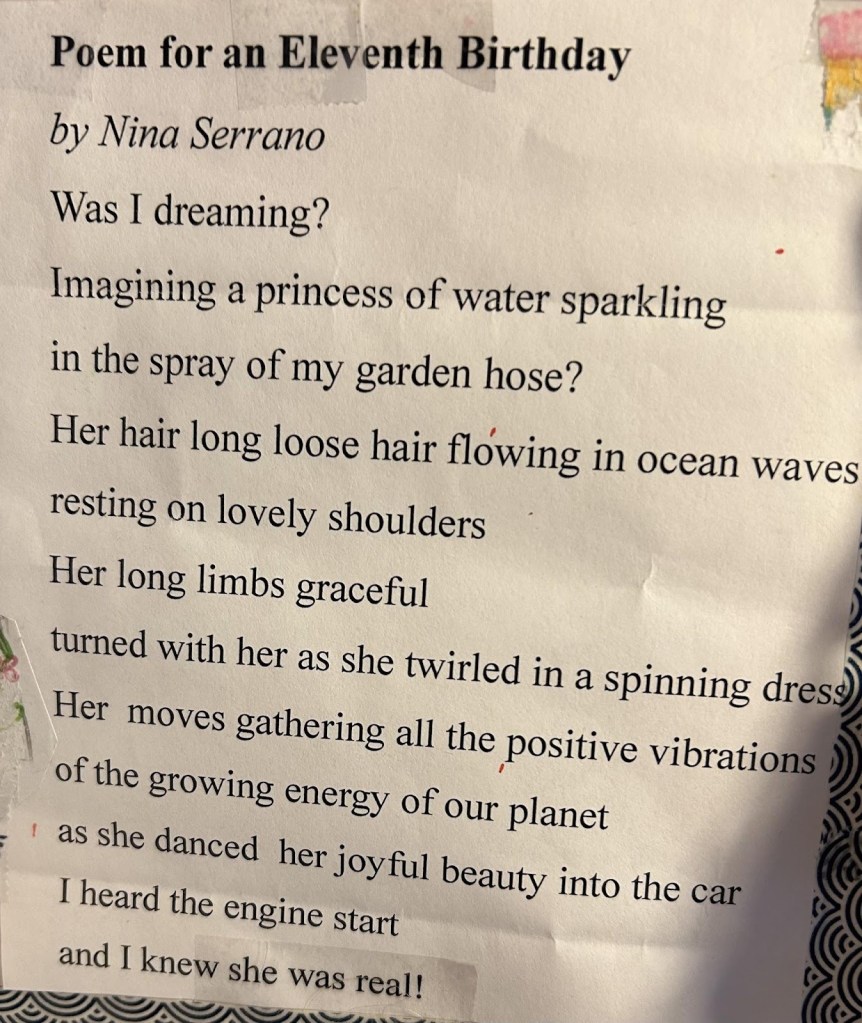
It was early afternoon, and it also happened to be my birthday. My mother and I were on our way down the driveway to our car, while the neighbor was watering her flowers across the street. I don’t remember where we were going, but it must’ve been somewhere very important, because I was decked out in my finest attire and skipping around like I owned the place, because of, you know, birthday girl privileges. We waved; she and my mom chatted a bit. I remember shouting across the street that it was my birthday, and then we said bye and got in the car and left. It was a small moment, a simple one, and one I most certainly would have forgotten if not for the fact that when I came home, my dad handed me a small piece of paper.
Something I learned after that day is that my neighbor, the sweet old woman across the street always hunched over her garden, is actually a renowned local poet and creative. I’m serious, you can look her up, her name is Nina Serrano, and she’s one of the only people I know who has her own Wikipedia page. She’s an amazing writer and activist who’s published books, poetry collections, worked on films, and co-run a podcast, but I didn’t know any of that at the time. At the time, I was a child standing in my kitchen, clutching a piece of paper that read Poem for an eleventh birthday, and not realizing that this one small act of kindness would be the thing that carried me through many of my hardest moments.
‘Strangers’ is the name of my favorite song, and it is also the title I was instantly called to when I found out about this month’s collection. It may seem like an odd title for a story about love, and maybe it is–after all, I’m sure I’ll find the rest of my peers’ pages detailed with heartwarming stories about grandmothers and pets and girlfriends, connections and friendships, rather than random people met on the street. Which, obviously, is fair. Love is generally categorized by closeness and intimacy, something that’s impossible to achieve with someone you barely know–like, say, an across-the-street neighbor that you’ve spoken to once in five years. But what if it wasn’t? What if the closest connections are actually the ones you make in an instant?
Love is in the little things. It’s how they know your coffee order without having to ask, how they’ll wrap their coat around you when they see you shiver out of the corner of their eye. It’s your best friend’s nickname for you, it’s your mom making your bed for you every day of finals week, it’s your little brother letting you spoil the plot of shows that he hasn’t even seen long past his bedtime. It’s platonic and romantic, singular and plural, it’s intimate and expansive. It’s being seen by the people who love you most, and loving the people you know well. So yes, it’s those things, a hand in yours, a secret shared, but it’s also the even littler things. Like the weary nod of solidarity between early-morning commuters on the subway, the face of the store grocer when you make her laugh as she loads your bags, the kind smile of the boy who bent down and handed you the pen you dropped. Let me ask you, have you ever been in a room where somebody is butchering something so badly that you were united in long-suffering eye contact with somebody you’ve never spoken to before in your life? That is it. That is love. Thanks to Jimmy C’s terrible choir performance in the ninth grade, you and a person you know nothing about were, for one moment, connected by something powerful: mutual understanding.
In the world we live in today, it is so easy to forget that we are all the same, really. Well, okay, not really–I have blue eyes and you have brown, I can play guitar and you know piano, not to mention all the details and imprints of our psyches that will never resemble another’s in a thousand years, but you get what I mean. There’s so many labels and categories and different types of people you can be that it makes it seem like moments like the ones I described are meaningless in the flood of it all. But I don’t think it’s meaningless at all. In fact, I’d argue it means quite a lot. We all cry. We all feel alone. We all lie awake in our beds at night wishing someone would see us for who we really are, truly, and ignoring all the people who are right in front of us waiting to be seen as well. In the same vein, we all also smile. We all love someone deeply, with the depths of our hearts, and I’m willing to bet there’s not a person reading this who hasn’t laughed so hard they’ve cried at a funny cat video even once in their lives. Try me. We are all human, perfectly, imperfectly human. We blink and breathe and stare at the stars, and we are all so alike and so different at the same time, but when it comes down to it, we are one.
It’s so easy to feel so hopeless. It’s so easy to convince yourself that nothing really matters, that your existence has no mark on anything at all, that maybe it would even be better if you vanished completely. But it does matter. You matter. If you were not here, the girl who you gave your extra piece of gum to on the train when you were twelve wouldn’t have that memory to cling to when things get hard. The people that watched you trip into a geyser at Yellowstone wouldn’t have a story to pull out at every family dinner over the years (even if that was your most embarrassing moment. I get it, trust me.) You have made a million marks on a million people that don’t even know your name, and they’ve done the same to you. Take a second and think about all the people you’ve met in your life. Take a second and remember those people who you will never see again, but who brushed up against you for one second in time and in that way, added the smallest stroke of paint to the canvas of your life. Let yourself find the strangers, and remind yourself that you are not alone.
And sometimes, maybe your story isn’t over once you’ve exited someone’s life. I haven’t spoken to my neighbor Nina since probably 2021, after exchanging a few poems with her in an effort to repay her for the beautiful one she wrote to me. She told me I was an excellent writer–Nina, look at me now! I don’t remember what I wrote; I don’t even know if she still has them. But I still see her. I saw her yesterday, getting out of her car with her husband, and we waved. She’s about 92 now, and I’m about 16, and it’s been five years but I still have that paper in the same spot on my wall. Art has come and gone around it, even a whole loft bed has framed it at one point, but it is still there. A reminder to me that, no matter what, for one day I was what made someone write something beautiful. Do you understand how special that is? I haven’t ever told her all this, but tomorrow I’m going to print out this story and walk over to her house and give it to her, because she deserves to know. I have an amazing woman living right across my street, and I’ll be damned if I let my life go by without the chance to let her know how much she changed it.
For Nina xoxo
The Cello – An Explanation By Iliana Kim
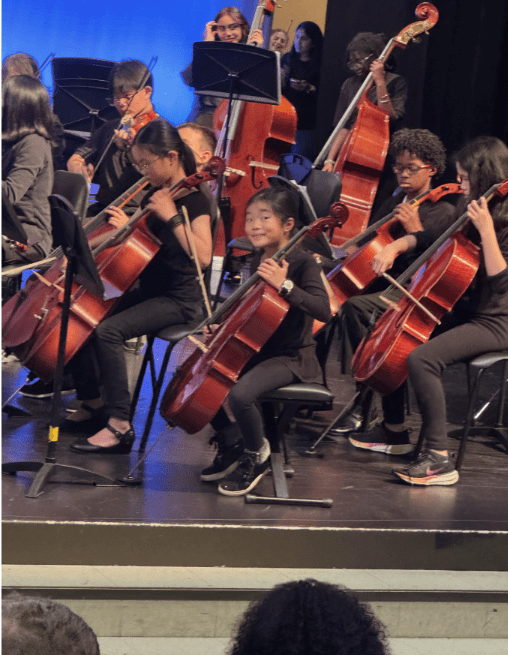
Did you know that before the endpin was invented, people had to hold their cello between their legs? The cello is usually made out of wood and is shaped like a violin. The thing is you could fit two or three violins in one cello. I was introduced to the cello when my family started listening to the Bach cello suites. I was amazed by the deep, mellow sound that it produced. I love the way the cello calms me down and I see that other people are affected that way too. I like the several ways the cello is played, like in solos, duets, and orchestras.
I think the sound of the cello can create a nice and calm environment for the people who are listening. I really like the fullness of the sound and the level of volume the cello has. The sound of a cello makes me feel like I’m floating and I think it’s very relaxing. With certain songs people could feel happier, more energetic or stronger like I sometimes do.
In the one and a half years I have practiced the cello, I have played in solos, duets, and a few orchestras.The first time I played in an orchestra I felt it was easier than doing a solo or a duet. Solos feel like one ant trying to make a rather large ant hill all by itself with no one to help. But if you are doing a duet it’s easier because it’s like making an ant hill with fifty ants. Then again it’s better to build with a hundred ants than anything else.
I hope you and everyone who reads this will get to enjoy the magical sound of the cello, whether in-person or online, as a solo, duet or orchestral performance.
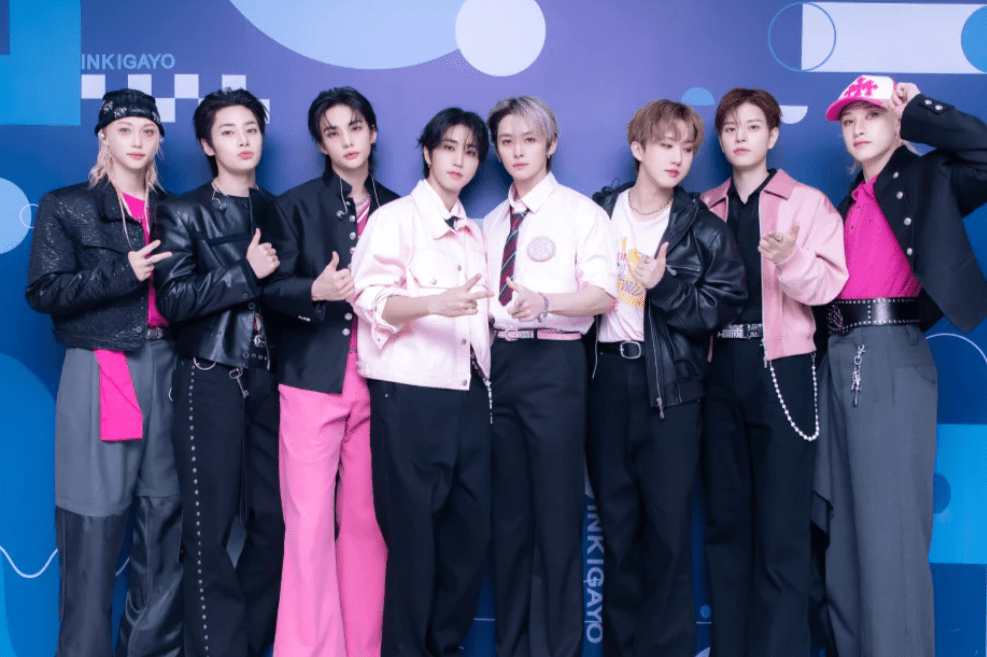
Something I love is the band Stray Kids! Stray Kids is an eight member K-Pop boy group created by renowned music label JYP Entertainment! They were first discovered through a TV show called Stray Kids, on which many K-Pop trainees competed in teams for the chance to debut as JYP’s newest band. In 2017, Stray Kids won and released their debut ep I AM NOT, beginning their rise to stardom.
The Stray Kids members are split up into three main units aka rachas; 3Racha, Danceracha, and Vocalracha. 3racha consists of Han, Bang Chan, and Changbin, and is responsible for producing and writing most of the band’s music! Dancracha is made up of the three main dancers, Lee Know, Hyunjin, and Felix. They choreographed some of the group’s dances, and Lee Know was even a back up dancer for super famous K-pop group BTS! Vocalracha is I.N and Seungmin, the main vocalists! Stray Kids used to have nine members, but their old lead vocalist Woojin left the band in 2018 for personal reasons.
Since their debut, Stray Kids have released over 300 songs and have collaborated with many popular music artists like Charlie Puth, DJ Snake, and Troye Sivan! They have also won over 100 awards including the Billboard Music Award for top K-Pop album for their 2023 release 5-Star.
Their latest project is The dominATE Experience, a movie about their dominATE tour. It will be kind of like Taylor Swift’s Eras Tour movie, but with more behind-the-scenes footage. The movie premiers in theaters on February 6th, 2026! I’m going to watch it in theaters on the 7th, and I’m so excited!
Stray Kids is an awesome group, not only because of their fun and interesting music, but because of the members’ great personalities and kindness towards fans! I think they’re all amazing people, and I hope you do too. GO CHECK OUT SOME STRAY KIDS MUSIC!!!
From left to right: Felix, I.N, Hyunjin, Han, Lee Know, Changbin, Seungmin, Bang Chan.
Thank you for reading this beautiful collection of works by these incredible guest writers and Lighthouse staff alike. We hope that their work has brought you joy in this season of love. We challenge you to openly admire and appreciate the things you love in life. The people, the places, the adventures and moments. The things that make you…you. Because, at the end of the day, love is what makes us, all gathered together in this lovely yet messy world…us. And as for the world, we must remember that we can never have too much love, understanding, and empathy for the people around us; our triumphs, our small moments, our shortcomings, those are what make us so human and those are the things that should be celebrated. So finally, say “hi!” to your neighbor, pet your cat, and treat others with the love that I know our hearts so deeply crave each and everyday.
Sincerely,
The Lighthouse Staff
“And in the end, the love you take is equal to the love you make.”
‘Tis the season of love and growth. For many, that can be quite an unsettling thought. The continuous and often subconscious pressure that one must receive a box of chocolates, a neatly wrapped bouquet of roses tied together with shiny metallic ribbon, find yourself a dinner and movie date, etc. Although well intentioned the, at times, commercialized Valentines Day can be troubling. It can make the lead up to February 14 feel like a doomsday counter rather than a season that should be filled with appreciation and kindness.
So, we at The Lighthouse wanted to offer a different perspective on the day.
Romantic love is important, it’s wonderful, it has withstood the trials of time, giving us beautiful moments in history. Some say it’s what makes the world go round, shaping the most lovely parts of life. But there are other types of love too! And that’s what we want to hear about…
Come one, come all! We welcome you to write a short story, paragraph, or even poetry about something you love in life! It doesn’t necessarily have to be a romantic sorta’ love, it could be the love of one of your passions or hobbies, your pet or family member, your best friend, your rock collection, or even your favorite food! Truly, anything is welcome!
Human desire to project themselves onto the divine is highlighted by how the most honorable roles in society are often connected to godlike qualities. Virgil’s Aeneid, written as a Roman epic for Emperor Augustus, subtly explores politics while highlighting these divine ideals. The gods are more powerful than humans, yet their behavior often mirrors mortal traits. By showing the divine as flawed reflections of humans, Virgil helps explain why people act as they do. This connection between human ambition and divine example allows readers to see their own values and flaws amplified in immortal beings.
The gods’ human-like motives are evident in their emotions and actions. Juno’s relentless pursuit of Aeneas reflects stubbornness, jealousy, and personal grudge-holding that are all too human. She acts out of emotion rather than justice, demonstrating that even the powerful can be petty or vengeful. By giving the gods these traits, Virgil emphasizes that desire, anger, and pride are universal across mortal and immortal beings. The gods, then, act as mirrors that reveal human passions in an exaggerated and enduring way.
The gods also reflect political ambition and human manipulation. Jupiter, for instance, balances the ambitions of other gods, acting like a ruler managing competing factions. Minor deities, such as Allecto and Iris, carry out secretive schemes that resemble human tactics of propaganda and covert influence. Through these examples, Virgil shows how pursuit of power often involves deception, strategy, and ethical compromise. The epic suggests that ambition is inseparable from the challenges of moral and social responsibility.
Moral inconsistency and emotional volatility further link the gods to humanity. Juno and other gods often justify their actions while breaking their own laws, showing hypocrisy and moral relativity. Their feelings can shift quickly, from rage to protection or favoritism, much like human mood swings. Neptune’s sudden change from stormy anger to calm guidance illustrates this emotional unpredictability. By portraying the gods this way, Virgil highlights the complexity of morality and the struggle to act ethically, even for the powerful.
Ultimately, the gods in the Aeneid reveal human nature on a grand scale. Their passions, grudges, and ambitions make the epic relatable, even its immortal cast members. By exaggerating human traits in immortal beings, Virgil explores timeless themes of conflict, loyalty, and moral struggle. The divine challenges Aeneas, emphasizing that heroism comes from navigating both fate and human flaws. Virgil’s brilliance lies in using the gods to humanize his epic, showing that understanding human behavior is as important as understanding the world itself.
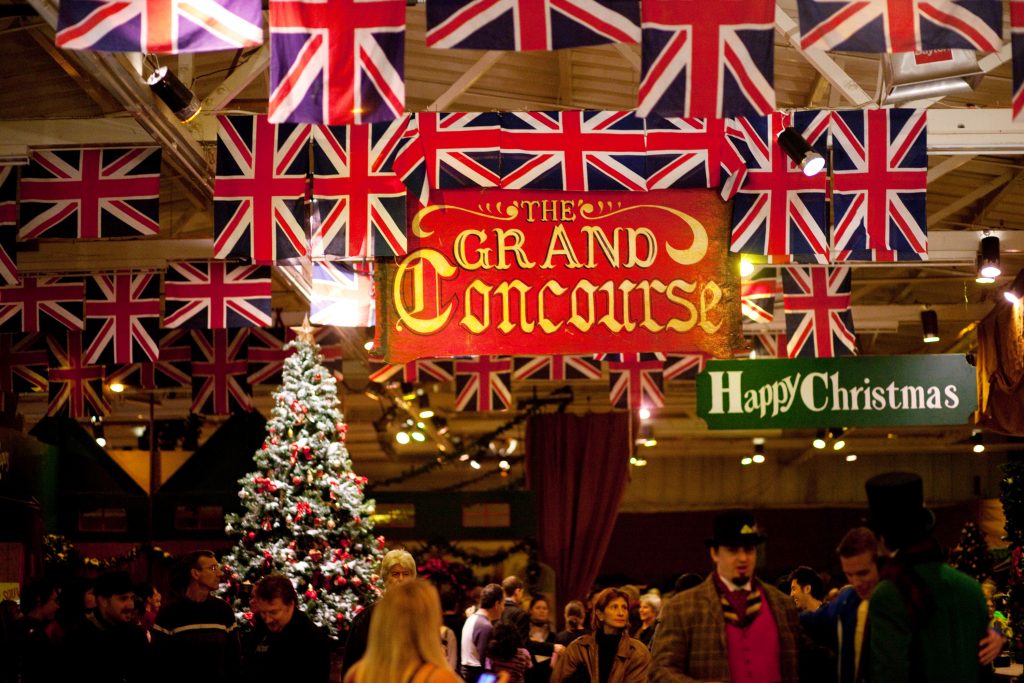
The Great Dickens Christmas Fair is taking Bay Area locals and tourists alike on a journey back to the heart of Victorian London. For just five weekends every holiday season, they graciously bring back the sights, sounds, and even scents of that beautiful period to history.
Image by San Francisco Chronicle
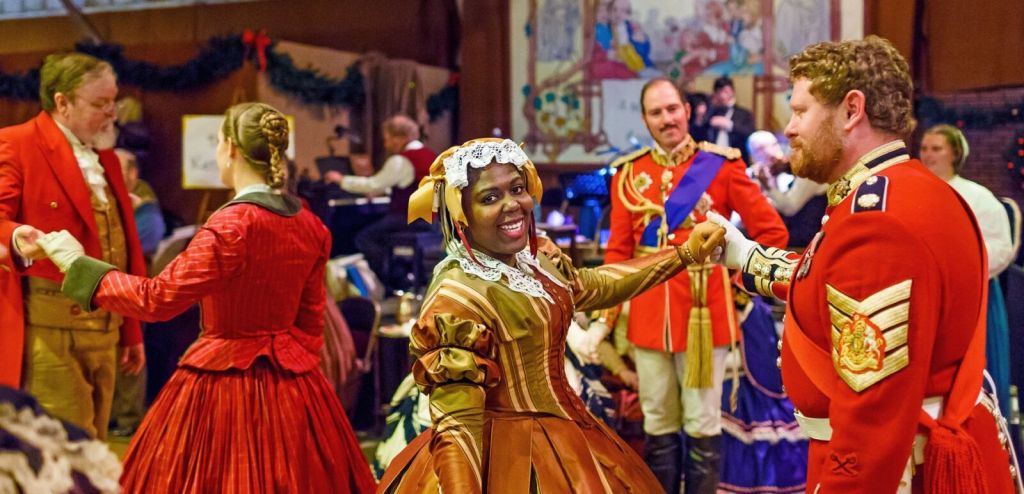
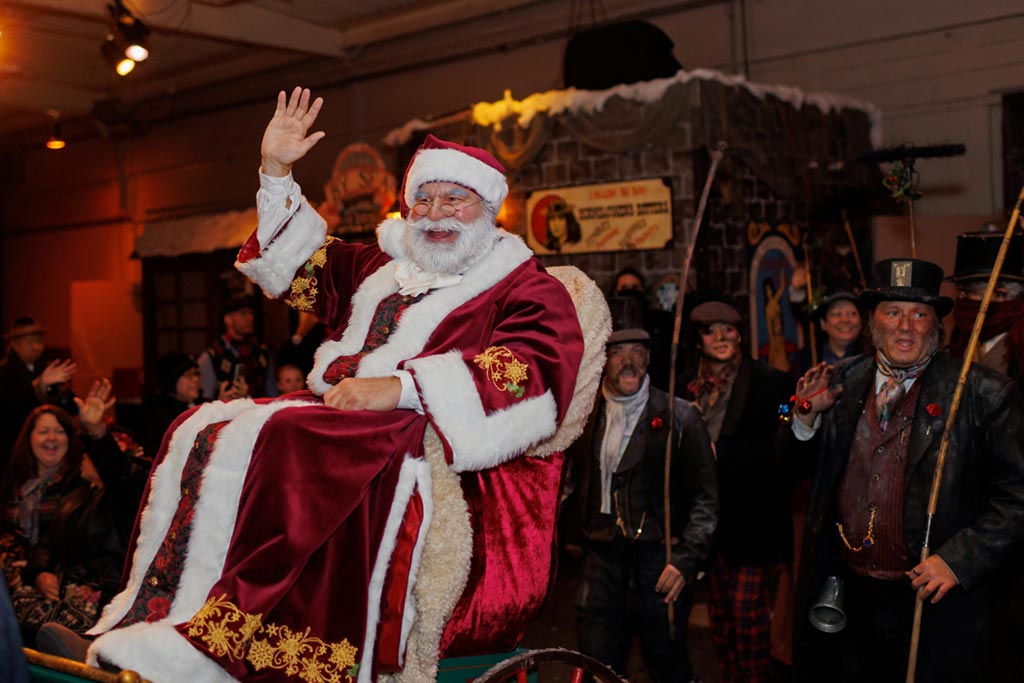
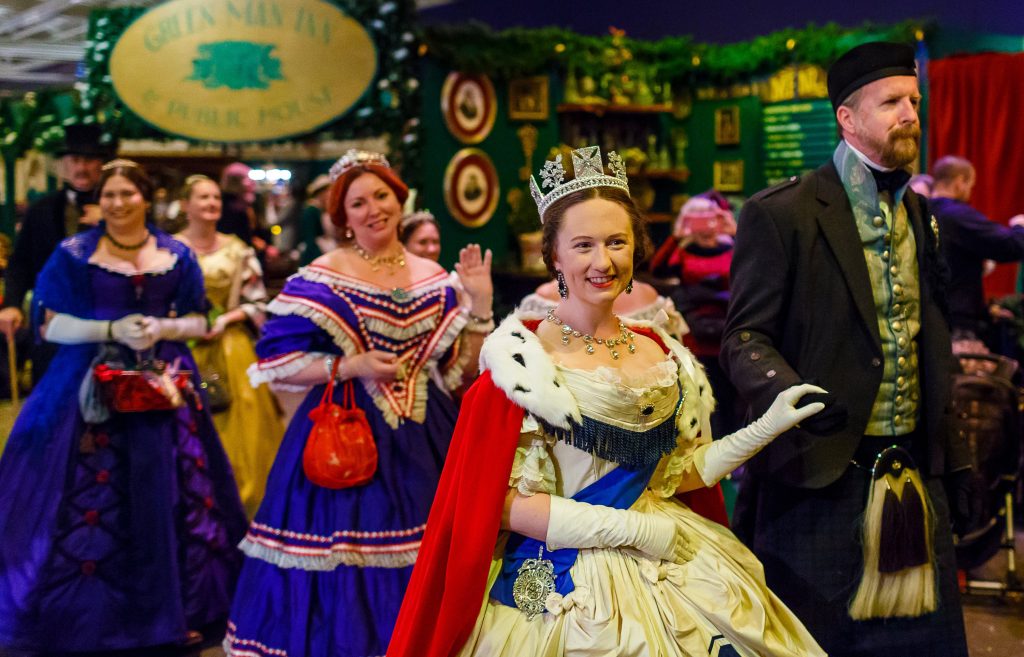
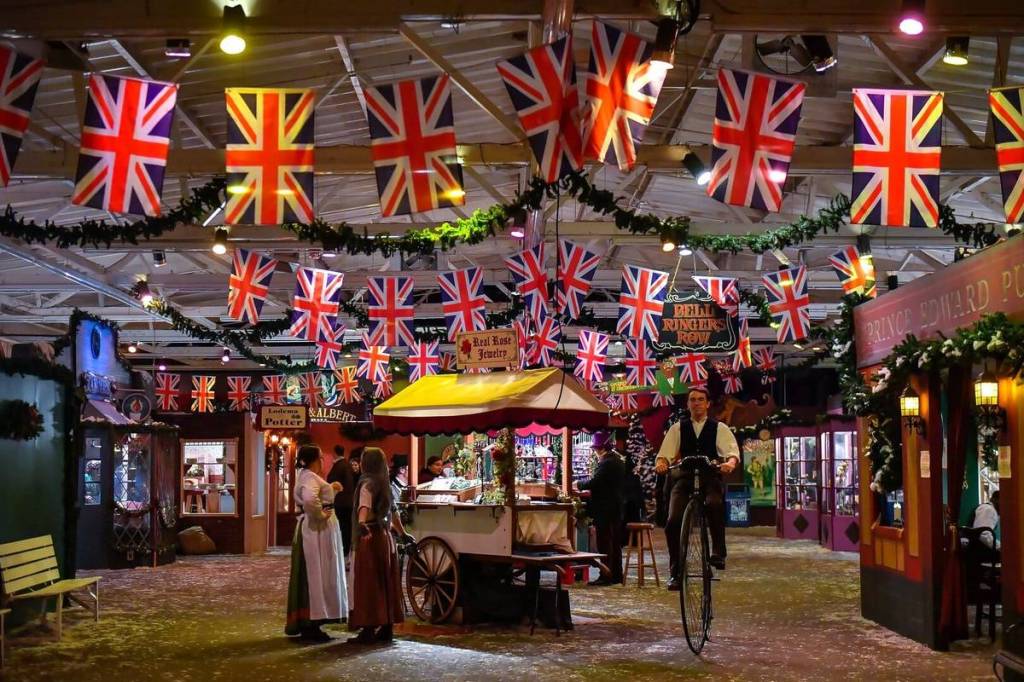
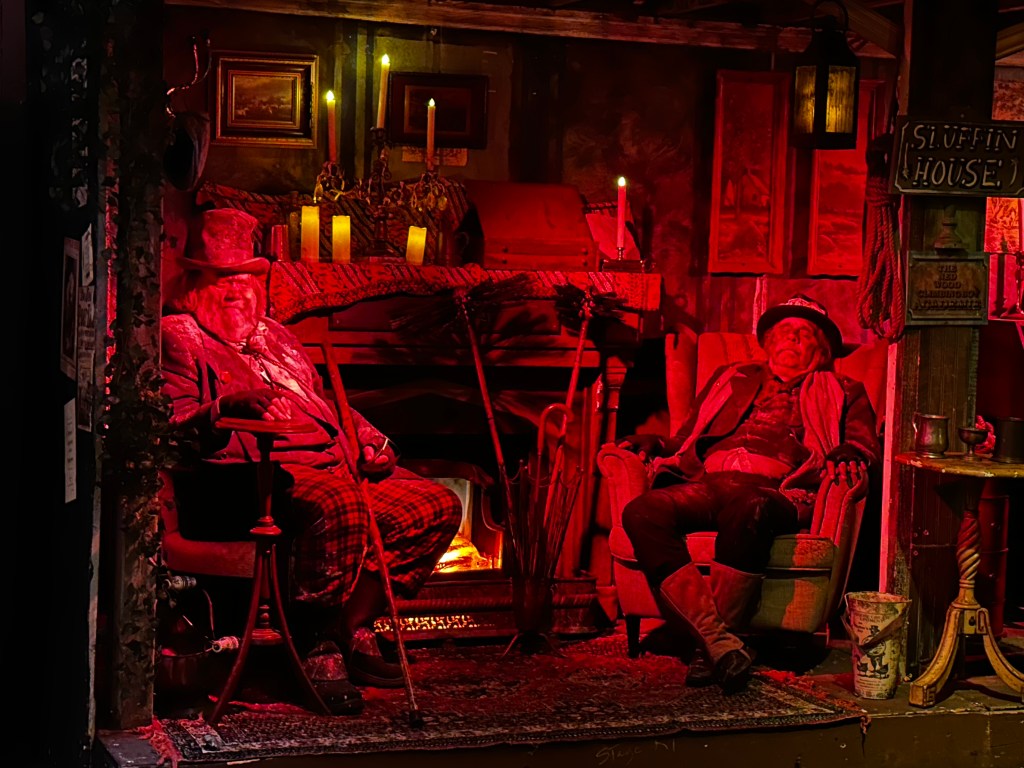
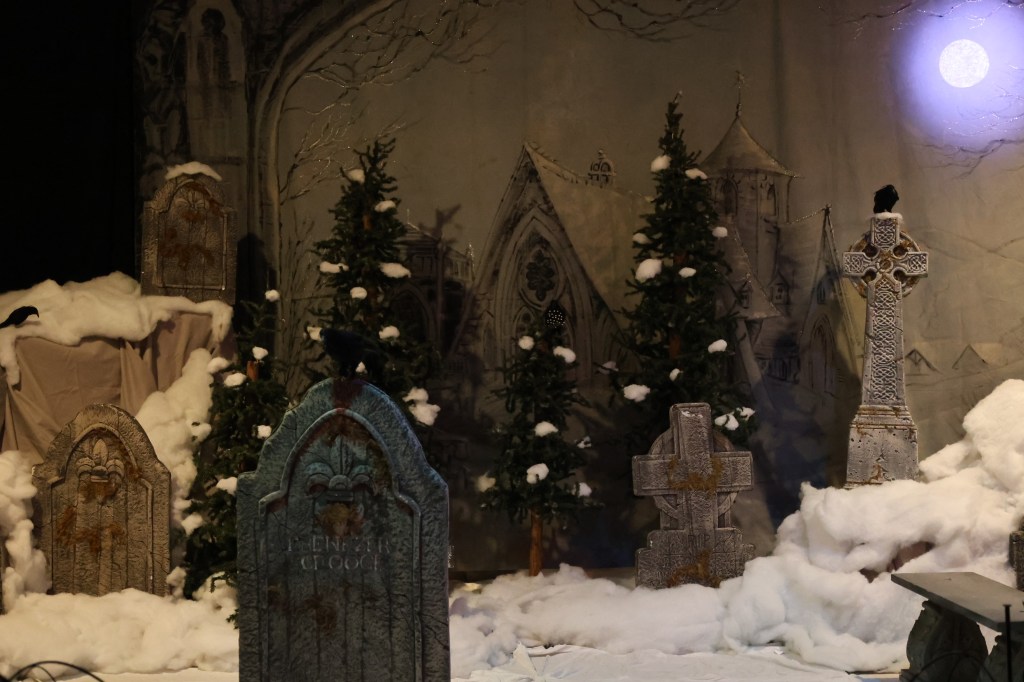
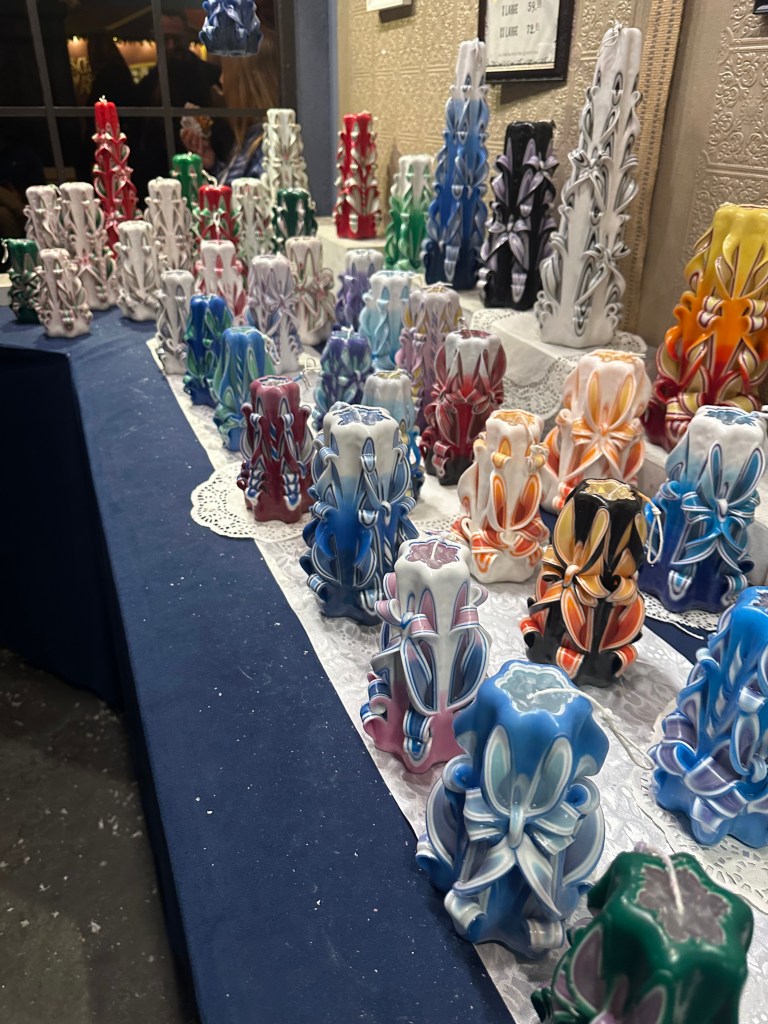
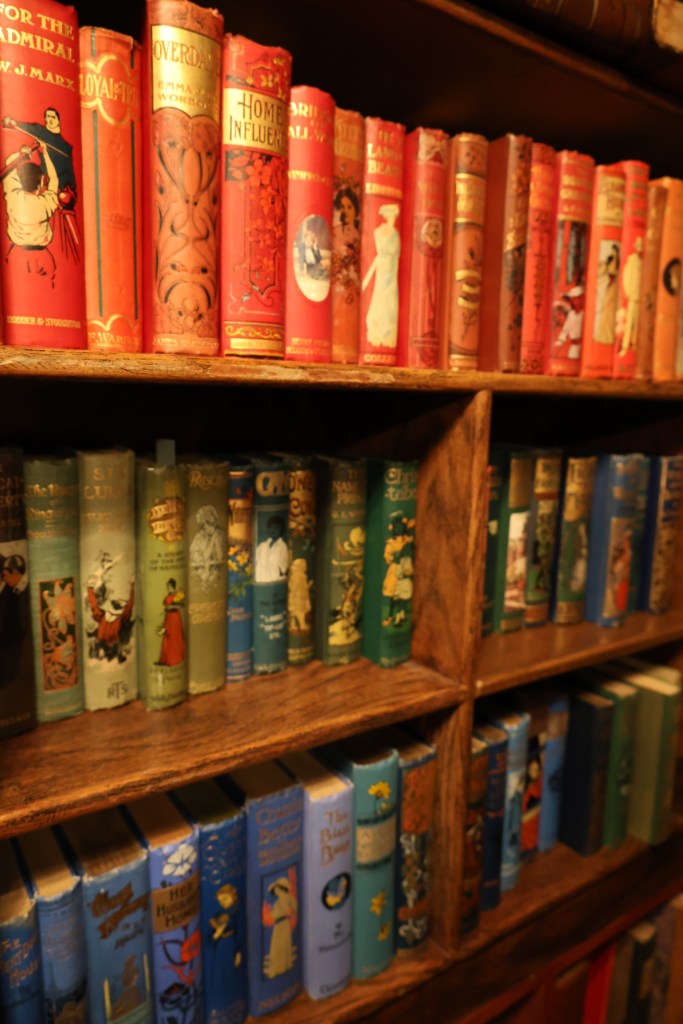
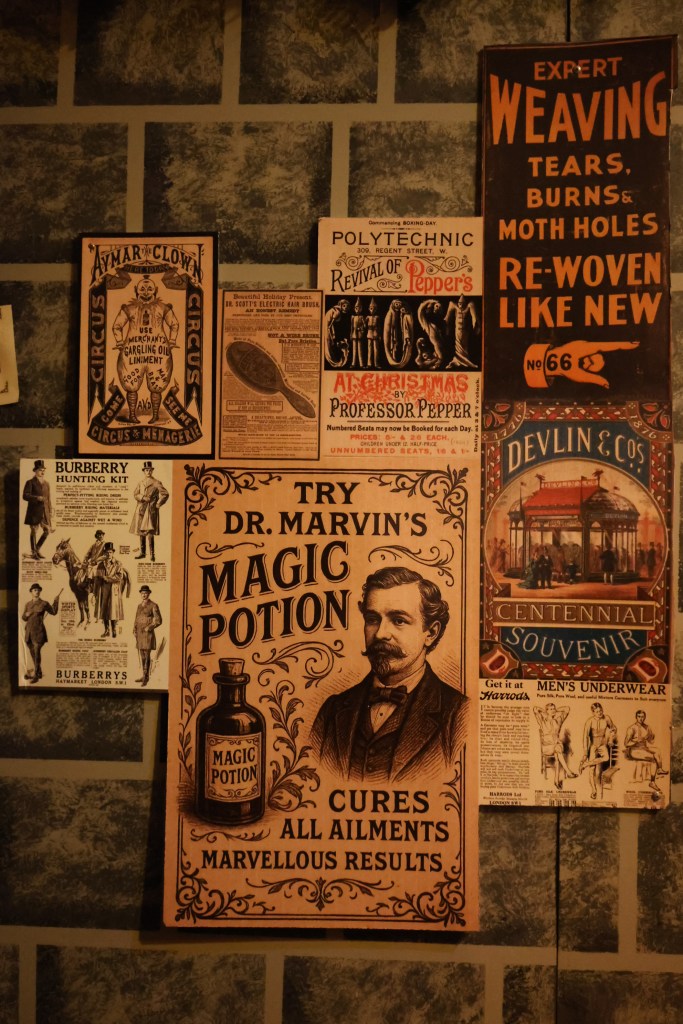
Imagine this, you stroll down narrow streets dotted with unique and authentic carnival games, English pubs with heaps of hot food being made before your eyes, and specialty shops selling handmade goods from all over. From street sellers and chimney sweepers singing carols, to characters like Ebenezer Scrooge, Bob Cratchit, Tiny Tim, the Ghosts of Christmas Past, Present, & Future, and even Mr. Dickens himself, will wander the alleys. The streets of the fair are crowded and bustling with people dressed in elaborate 1800s costumes, including sailors and seamen, businessmen, suffragists, thieves, and nobility. Numerous stores filled with presents, books, jewelry, textiles, artwork, and apparel pass by as you wind through neighborhoods and roads that have been meticulously recreated. You can smell hot, candied cinnamon almonds, pine and burnt wood, hot toddies, and musk. All of this, and just in the heart of the Bay Area, San Francisco.
Image by Fifty Grande
The fair, which has been a much beloved Bay Area institution for now 55 years, is still one of the most intricate and detailed Victorian Christmas events in the world. The Cow Palace is the site of The Great Dickens Christmas Fair, a long-standing Daly City facility that holds a variety of events, including concerts and even rodeos. It has opened its doors to the public since 1941, being the site of many of the historic conventions and moments for California. But once you enter during the holiday season, you time-travel back to Victorian London, completely forgetting that only 20 minutes ago you were struggling through thick 101 traffic.
The History
Image of Ron & Brian Patterson
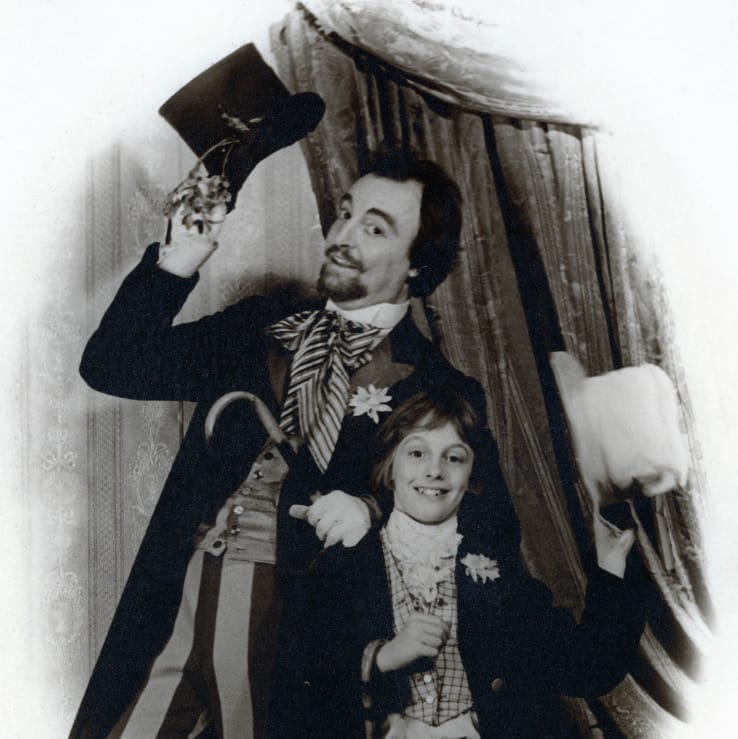
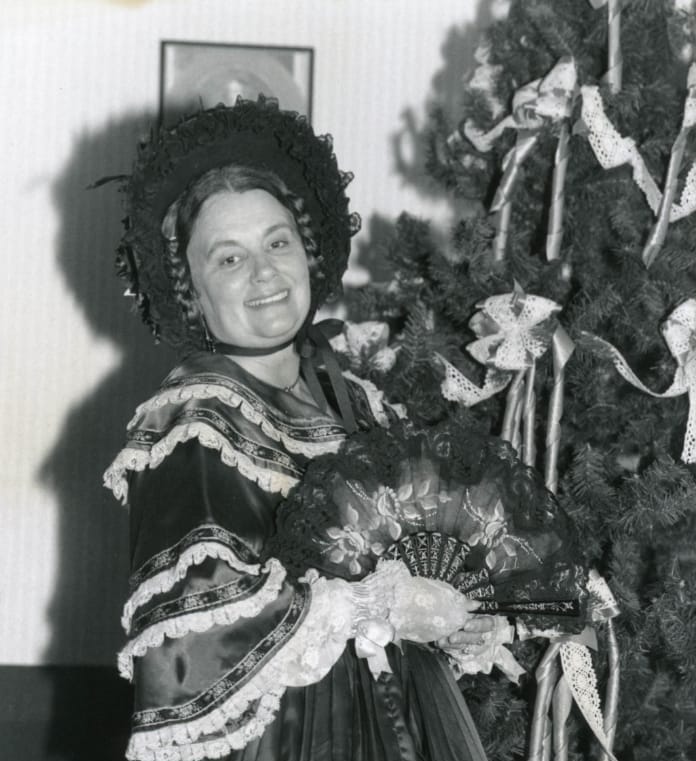
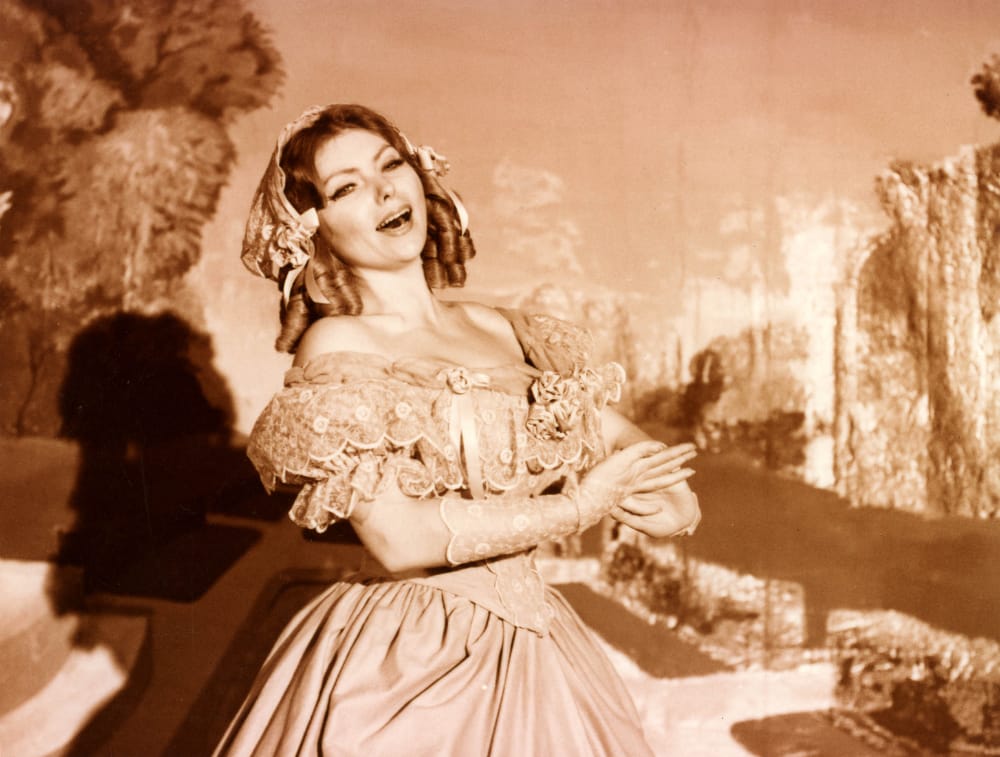
But where did this incredible tradition start? The majority of visitors to Dickens London are likely unaware of its unique origin at a very different kind of fair in Los Angeles in the 1960s; Renaissance Faires. The birth of wide spread Renaissance Faires in America were arguable all thanks to the work of Ron and Phyllis Patterson. The Pattersons, still on the high of their successes in early “novelty themed” fairs made the decision to throw a small but special holiday party at their Hollywood Hills home in the winter of 1968, for their closest friends and family.
Image by Marin Mommies
They moved away from their tried-and-true Renaissance roots for this occasion and looked to Charles Dickens’ works and late 19th-century history for inspiration. The occasion’s costumes, food, décor, and activities were so enjoyable to the Pattersons and their guests that they proposed holding the event annually, possibly on an even larger scale.
In the meantime, the Pattersons had extended their Renaissance Faire productions to Marin County in Northern California, hosting it in the historic brick warehouses along Fisherman’s Wharf in nearby San Francisco. The scenery was reminiscent of the covered marketplaces of Victorian London, and the experience served as the inspiration for an extravagant Victorian Christmas Fair open for the public to enjoy. What started out as a house party was transformed into a large indoor fair for the Bay Area community. The Great Dickens Christmas Fair (or Pickwick Comic Annual, as it was once known) soon was born. In December 1970, the Anchor Works, a historic warehouse next to San Francisco’s waterfront Embarcadero neighborhood, hosted the first Dickens Fair for only three weekends. At the time, a newspaper article poignantly compared the Fair experience to walking onto a movie set.
Image by Marin Mommies
Image by San Francisco Chronicle
The Great Dickens Christmas Fair has changed over the course of its over 50 year run because of the participation of three generations of the original Patterson family, a big multi-talented ensemble of performers and artists, and thousands of loyal patrons and visitors. The only festival of its sort in the entire globe, it has grown to be one of the most cherished and eagerly awaited yearly events in the San Francisco Bay Area!
What to Look Forward to
From traditional English pantomimes and juggling acts to music hall concerts, sea shanties, and scenes performed from “A Christmas Carol” across the venue, there is always something to see. With numerous stages and activities, you can never really be bored. You can sing along with boisterous performers at Mad Sal’s Dockside Alehouse, learn a new dance at Fezziwig’s Warehouse, or even just listen in on the goings-on of the streets. The hand-powered Adventure Carousel, “Punch and Judy” puppet shows, Victorian fairy home crafting, and, of course, a visit from Father Christmas are just a few of the magical moments that await at the fair. And you are welcome to dress the part too. Costumes that are appropriate for the time period are not necessary, but they are highly encouraged.
Image by Secret San Francisco
By inspiring the resurgence of local art, food, community, and music, the idea of living history fairs give back greatly to our beautiful Bay Area culture. We find connection in creation, and that cannot be lost. So, if you need a break from the hustle and complications of today’s world, take a trip to somewhere that brings you joy and warmth, for many that is The Great Dickens Christmas Fair. They offer a chance for playfulness, an opportunity to be both a performer and the audience, a reason for coming together to, just for a moment, emphasize the true spirit of the holiday season; connection.