
by Ava Salado
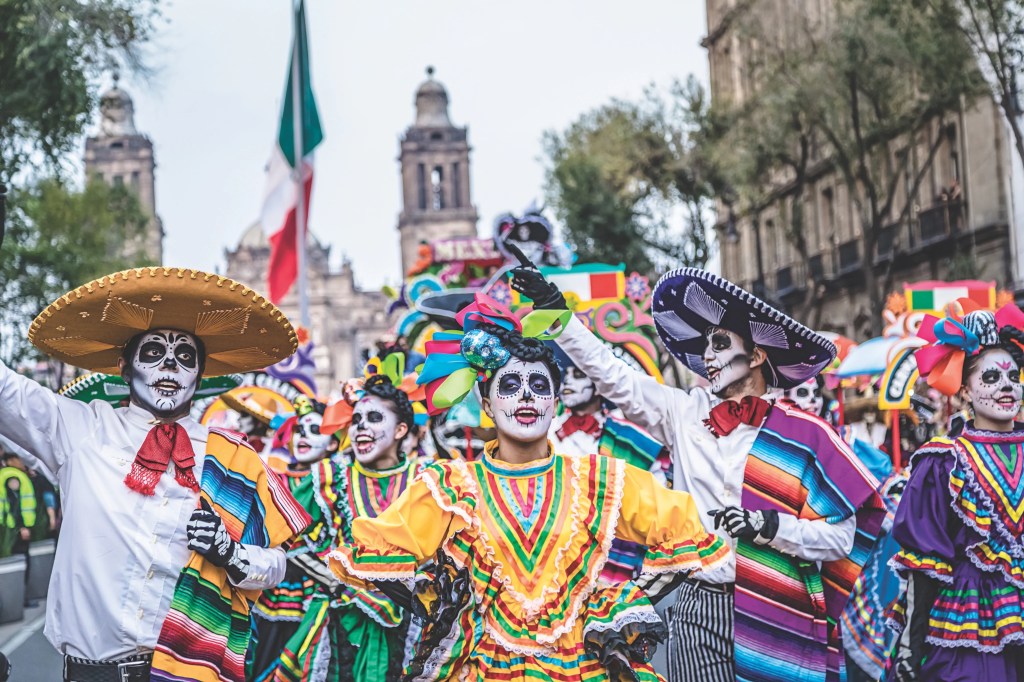
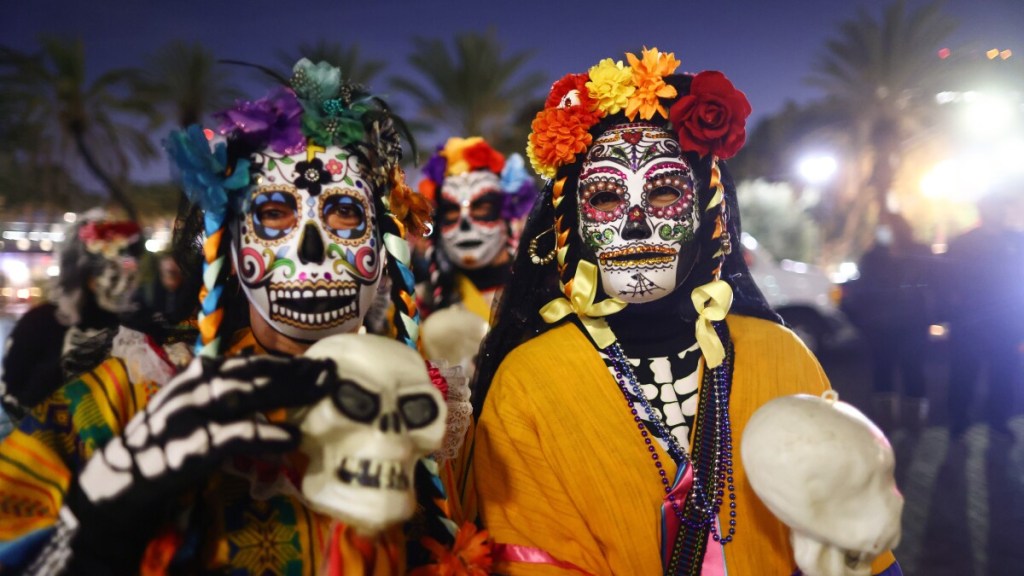
What is the Day of the Dead? We have probably all heard of it once or twice, especially around Halloween. Well, it’s actually a traditionally Mexican holiday where families welcome back the spirits of their deceased relatives for a short reunion. The festivities can include food, drinks, partying and celebration, singing, dancing, and much more
The Day of the Dead or el Día de los Muertos celebrations, usually held in modern-day Mexico and among people of Mexican origin in the United States and other countries, has its roots in pre-Columbian Mesoamerica (which dates back around 3,000 years.) The Nahua people who lived in what is now central Mexico–including the Aztecs–had a, one might say, unique outlook of the world and the cosmos. They considered death as a necessary and constant aspect of existence. It was believed that after death a person traveled to Chicunamictlán, the land of the dead. Only after nine difficult levels and stages, and a journey lasting several years, could the human soul finally reach Mictlán, its final resting place. The occasion is observed every year from October 31 to November 2. It incorporates Spanish culture, European religion, and Mesoamerican ritual. While Halloween occurs on October 31, November 2 is All Souls Day or, in other words, The Day of the Dead. According to ancient tradition, the gates of heaven will open up at exactly midnight on October 31 and the spirits of niños (children) can rejoin their families for 24 hours. The spirits of adults, like abuelas, abuelos, tías, tíos, or really anyone can do the same on November 2. (Abuela and abuelo are grandma and grandpa. Tía and tío are aunt and uncle.)
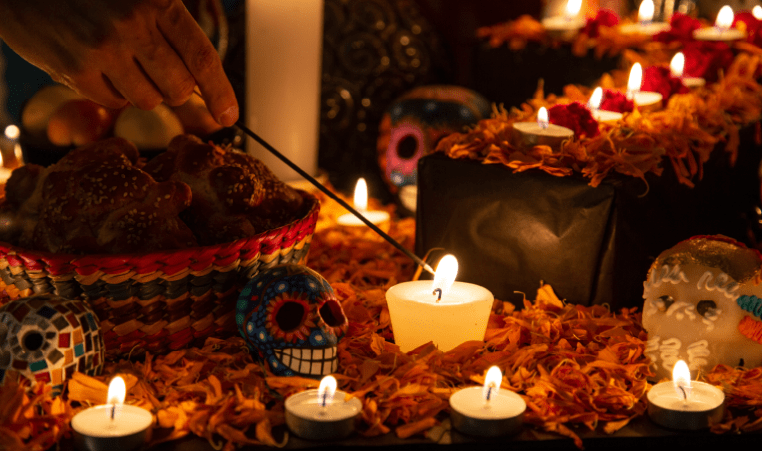
To help spirits return to their loved ones, people first construct an altar illuminated by candles or outside of their houses. Additionally, some of the deceased’s favorite foods are placed on the altar in case they grow hungry. On the altar, families also put things that were significant to the ancestors while they were living, such as a cherished book, musical instrument, heirloom, or even a child’s toy.
A huge party is then held in the cemetery. Families bring a substantial meal to consume as they sing songs, polish and repair tombstones, and communicate with their ancestors.
Even grandparents who have passed away before a baby was born could be introduced to the newborn by their parents.
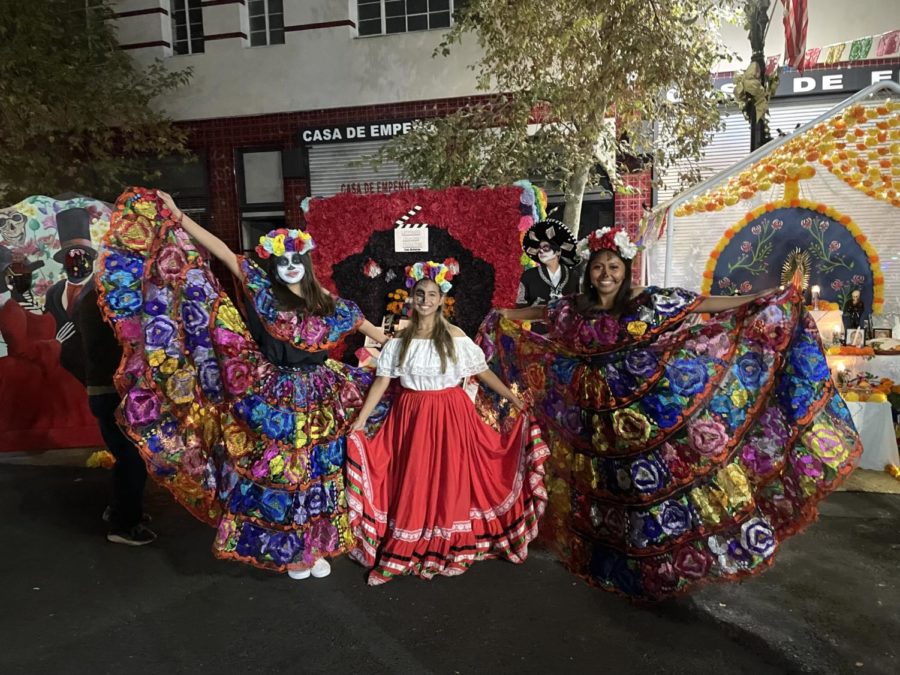
You may have seen festive photos of people dressed up in colorful dresses, suits, and make up. This is a very sacred tradition. You can get el Día de los Muertos-themed jewelry, clothes, leggings, make-up, decor, t-shirts, flower crowns and sugar skulls at basically any big box store. But however, let’s make one thing clear: el Día de los Muertos is not “Mexicans version of Halloween.” Rather, it seems to have been absorbed into the retail Halloween fixation and obsession, and has been reduced to an ‘aesthetic’ instead of a sacred Mexican cultural celebration. It should be respected as something that has been celebrated for many, many years and has so much cultural significance and importance to thousands of people (and ancestors). While the trademark colorful dresses and accessories can appear to be flamboyant fashion statements, in reality they are parts of habits and practices that date back to the time of the Aztecs over 3,000 years ago. Now, that’s not to say you should not celebrate and honor el Día de los Muertos, anyone can! But if you are wanting to buy and decorate your home with themed-decor this season, I would suggest buying from a family or personal-owned store. You can find these wonderful, authentic businesses on sites like Etsy or even at your local farmers market.
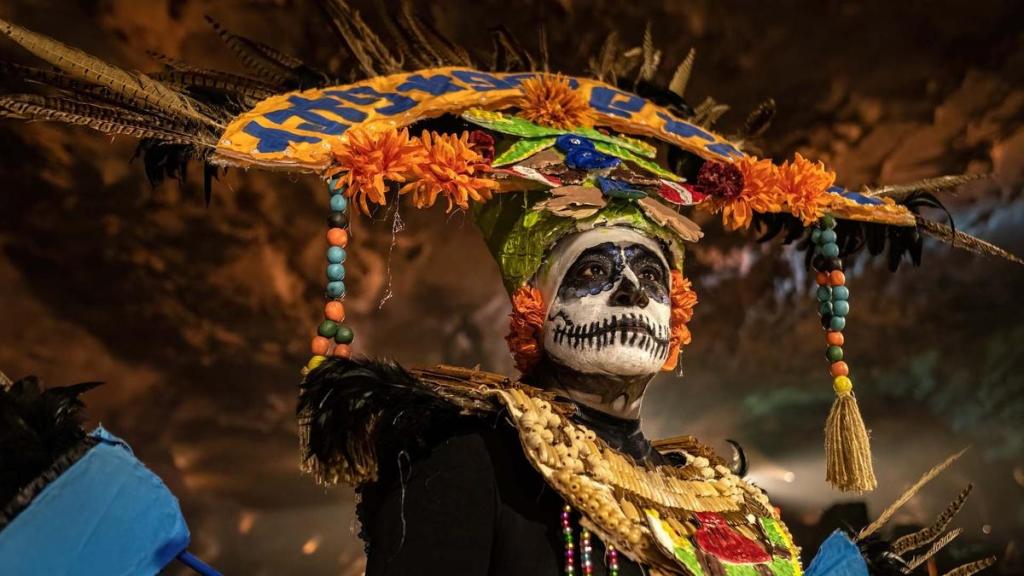
So, from me and my ancestors to you and yours, happy el Día de los Muertos!
 The Lighthouse