by Meru S.
Take a drink of water from your kitchen faucet. Have you ever wondered where that water is coming from? Clean water is essential for our everyday lives. We use it for drinking, showering, watering our gardens, cleaning our clothes, washing our dishes, and for many other daily tasks.
Contra Costa Water District (CCWD) serves cities in central and eastern parts of Contra Costa County, particularly Concord, Port Costa, Clyde, Clayton, Brentwood, Pacheco, and certain parts of Martinez, Walnut Creek, and Pleasant Hill. CCWD draws water from areas in the Sacramento-San Joaquin Delta, which contain water originally from the snow melts of the Sierra mountain range.
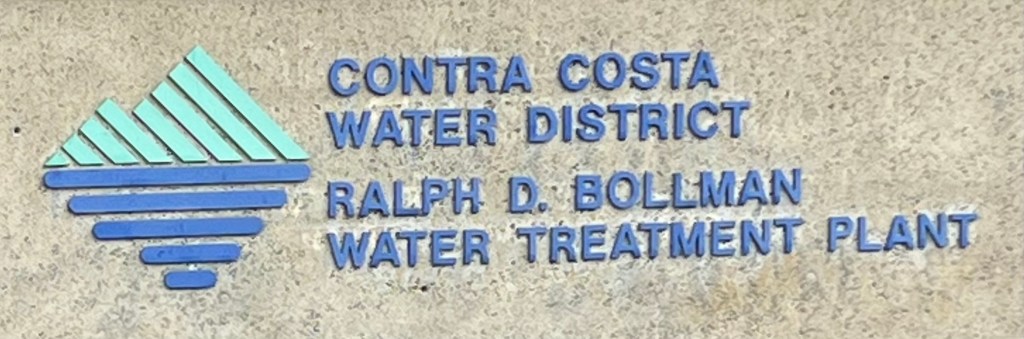
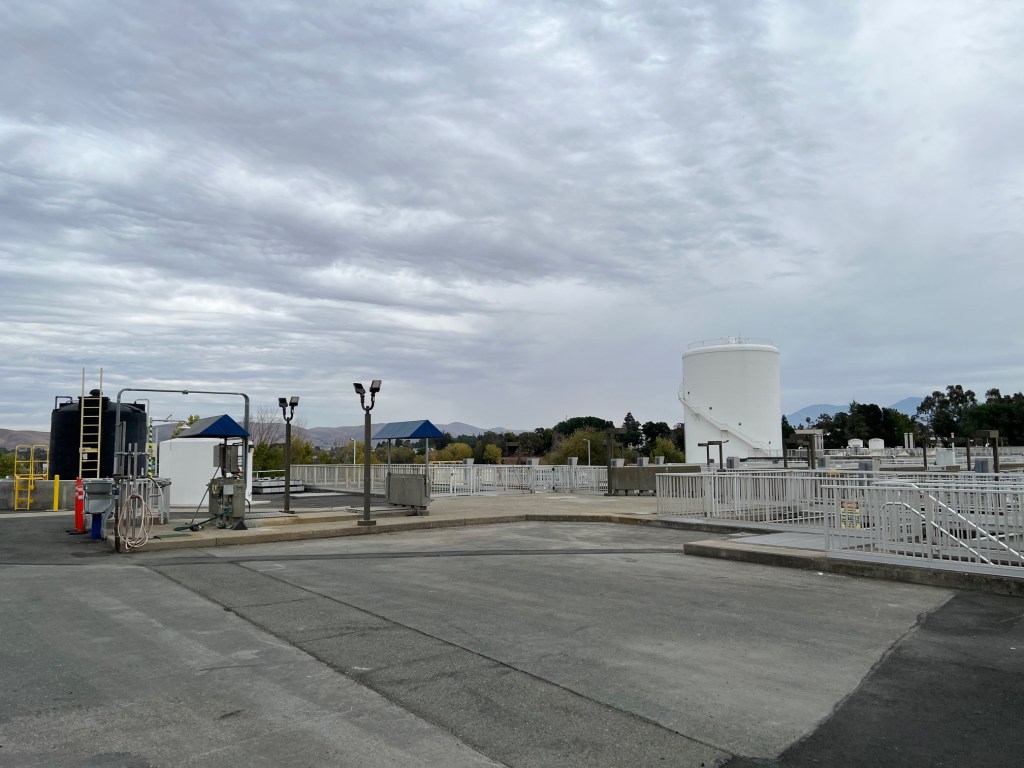
Photo Courtesy of Gayathri N.
The Process
The process of treating the water takes many steps but is completed within one and a half hours.
First, strong pumps draw just the top of the Delta water, which is the cleanest part, since most of the dirt sinks to the bottom. Liquid alum is then slowly poured in and mixed using ceiling fan-like machines that spin underwater at about six hundred miles per hour, gradually slowing down until they are almost still.
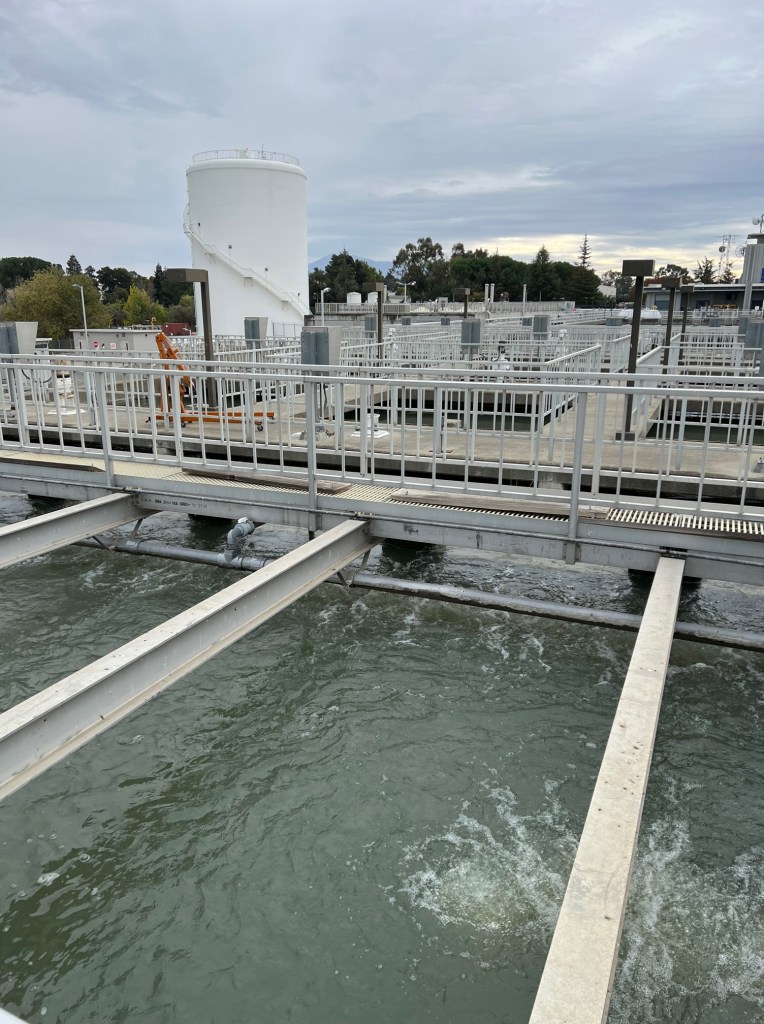
Photo Courtesy of Gayathri N.
Then, the sludge and floc (minuscule bits of dirt bound together into small clumps by the alum) are removed.
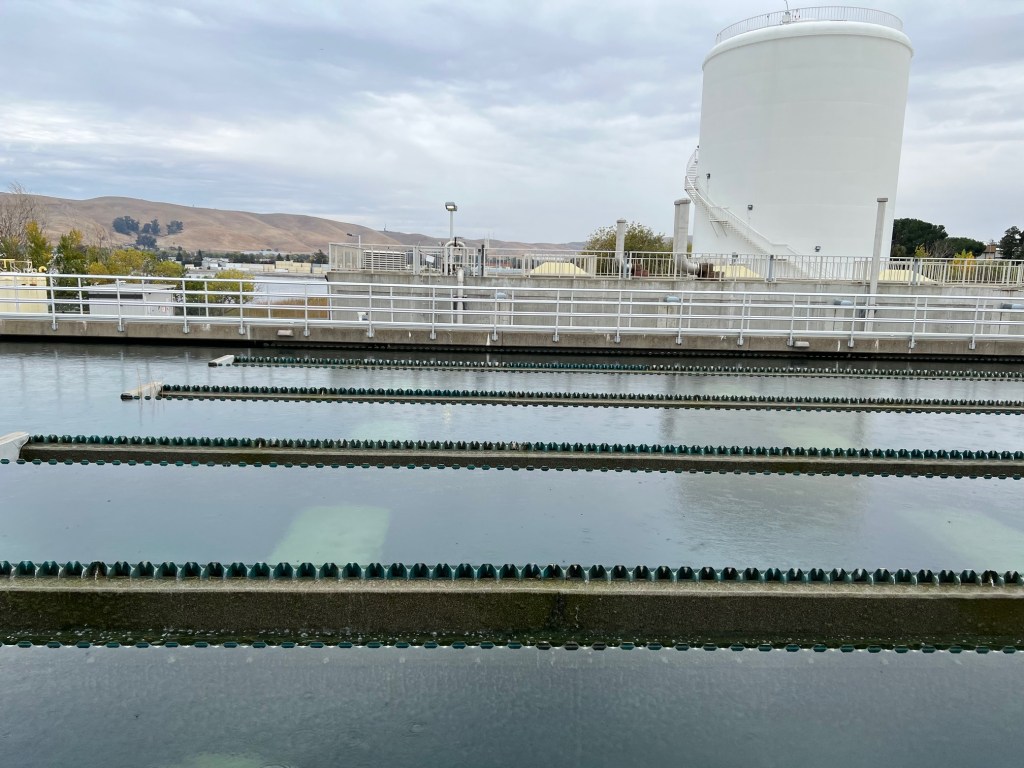
Photo Courtesy of Gayathri N.
The water now looks clear and almost ready to drink, but there are still bacteria and germs that are invisible to the naked eye. These are killed by combining ozone with the water. Next, it goes through a layered filtration system that consists of granulated carbon at the top, coarse sand in the middle, and finally small rocks.

Photo Courtesy of Gayathri N.

Photo Courtesy of Gayathri N.
Lastly, fluoride is added to prevent tooth decay, and ammonia to preserve it when it travels through pipes to thousands of homes.
The History
Contra Costa Water District was incorporated on May 9, 1936, and the construction of the Contra Costa Canal (a 48-mile-long canal which transports water to Clyde, Martinez, and Walnut Creek) started on October 19, 1937. The building of the Ralph D. Bollman Water Treatment Plant, CCWD’s first plant, began in 1966. It is named after one of CCWD’s first directors, and is located on Bates Ave, Concord. CCWD’s second plant was built in Oakley in 1992. Both of these water treatment facilities are still used today. During the winter months one facility is shut down for cleaning and repairs while the other takes over the treatment process for the county.
There are specific chemicals and gasses used in the process of water treatment. They are stored in tanks at CCWD’s water treatment plants. In the case of an emergency, responders refer to signs on the tanks for information on the chemical. You may have seen these signs on large trucks or tankers. Here is what they mean—

On a scale of 0-4 (0 being extremely low and 4 being very high), the blue diamond is the health hazard, the red is the fire hazard, the yellow is the reactivity hazard, and the white is the type of chemical or gas. In this case, the chemical is liquid oxygen, the health and reactivity hazards are very high, and the flammability is very low.
Though the water treatment itself is done by machinery, numerous people work at these water treatment plants. A number of staff members are always on-site 24/7 to monitor the various processes such as water pH levels and to be prepared in the event of an emergency.
The next time you enjoy a warm shower or a glass of cool water, remember and appreciate its journey from the mountains, through rivers, canals, treatment machinery, pipes, and to your faucets!
For further information, please visit Contra Costa Water District’s website—
 The Lighthouse