
by Camden S.
It’s not a secret that AI, in at least some way, has found its way to affect our lives. However, did you know that the AI data centers, which are used to train and run AI models, are having a negative impact on the environment by damaging ecosystems, destroying habitats, and increasing global warming? That’s not to say that all AI is bad, and that we should stop using it all together, but that we need to stay informed to make sure that companies are taking action to reduce the damage caused by AI. With that said, why is this happening and what can you do to help prevent it.
What exactly are AI data centers?
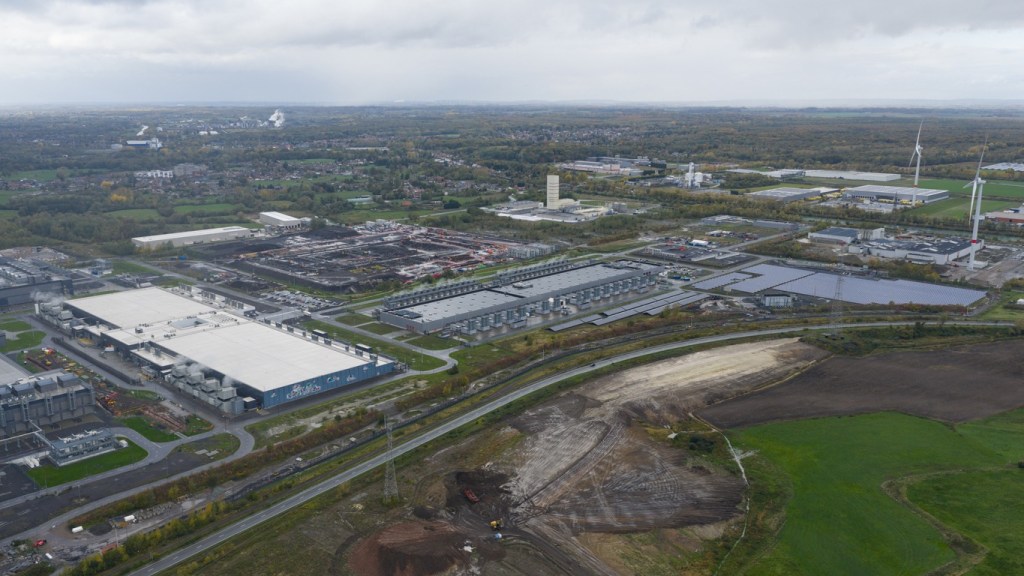
Think of AI data centers as networks of massive computers that are used to train (create) and run the AI (for example, when you use it for something like a chatbot). Training consists of obtaining large amounts of data (such as images, videos, art, or text) then using many GPUs (Graphics Processing Units) and TPUs (Tensor Processing Units), which process the data, so after some time, you are rewarded with a model that does what you trained it to do. This is usually done in giant complexes with extensive cooling and power infrastructure to ensure that everything runs smoothly like in Microsoft’s Fairwater AI data center in Wisconsin or Amazon’s Project Rainier in Indiana.
How do AI data centers impact the environment?
The land for the buildings to be built on, the water to cool the hot processors, and the electricity that powers the buildings all affect the environment. The ladder two, however, are the most damaging. They can put strain on the local infrastructure, especially with their rapid construction over the past few years. Since these centers are massive, the physical construction of these centers also displaces natural habitats that can be home to all sorts of creatures, which could lose their homes. There is also the problem of noise pollution. AI data centers can greatly increase the amount of background noise for residents nearby.
What other impacts do AI data centers have?
These data centers are not cheap to build, and they need vast amounts of RAM (Random Access Memory), GPUs, and TPUs. Though, they must come from somewhere, and that sometimes means that AI companies buy most of the available supply, since it’s much more lucrative to sell to massive AI companies and strike big contracts than to individuals or even other companies for things such as phones, computers, or other electronics. There was even one time that a branch of the company Samsung did not provide RAM to another branch because they could get more money selling it outside of the company. This highlights how, because of AI, there is a massive RAM, GPU and TPU shortage that’s likely to persist for some time.
Should we get rid of all AI?
AI is here to stay, but that’s not all bad. It has allowed us to make advancements in medicine, science, and even space travel. Yet without AI, many of these recent advancements would not have been possible. Though, when companies are incorporating AI into everything, even things that don’t require it (like an AI fridge, AI toys for children, and AI coffee makers) as well as people using AI image and video generation to make AI slop, it creates unnecessary negative impacts that could be avoided.
What can you do?
First off, try not to excessively use AI for non-productive purposes (like making dozens of meme videos that you will just delete a few minutes after they’re made). Secondly, hold companies accountable for making AI data centers more efficient so less energy and water is wasted by talking about it online and voicing your opinion. Lastly, spread awareness about the effects of AI on the environment so that everyone is educated on this topic.
Conclusion
Global warming and habitat loss are still pressing issues, but AI data centers are just one piece in a puzzle that is much bigger than just them. Furthermore, many companies are taking measures to reduce the impact of these on the environment, but we need to make sure that this progress continues. They have the potential to lead to giant advancements in our lives, but we need to be more responsible with how we use these new tools and make sure that we prioritize stainability to preserve our planet.
 The Lighthouse