A popular Easter tradition is that of the easter egg hunt when children collect plastic eggs filled with candy. These treats are said to be left by the Easter Bunny. The character of the Easter Bunny is mysterious and somewhat disconnected from the holiday he represents. What does a rabbit that hides eggs have to do with the Christian holiday celebrating the resurrection of Christ? And for that matter, where do the eggs come from? Does the bunny lay them? That’s not biologically accurate, right?
Although we don’t know the rabbit’s exact origins as a symbol for Easter, we do know that they have long been associated with fertility and springtime in pagan traditions. Eggs have also been connected to fertility. As Christianity spread, it absorbed preexisting symbols and traditions. It is possible that the rabbit and eggs we associate with Easter celebrations were symbols of a pagan spring festival, which was combined with Easter and adopted into the Christian tradition.
The Easter Bunny as we know him can be traced to German immigrants in Pennsylvania in the 1700s. Their children built nests for the rabbit they called “Osterhase.” On Easter morning, their nests would be filled with dyed eggs. This custom became popular across America. Over time the eggs were replaced with chocolate and other candies.
So that is the origin of the beloved Easter Bunny. When you’re collecting eggs next year, remember where he comes from and how he was able to bring some sweetness to your Easter morning!
Otamatones are strange instruments shaped like a musical eighth note invented in Japan that sound a bit like synthesizers. They are typically played with two hands, one to press the notes on its “stem” and the other two open and close the mouth on its “head.” It is advertised as being easy to pick up and play but difficult to master. In recent years, they have become rather popular online with the rise of Otamatone covers by TheRealSullyG and others on YouTube. However, especially given that they were invented in Japan, finding the history behind them and their creation requires a bit more of a deep dive.
Maywa Denki was an electric company owned by Hanachi Tosa. The company primarily produced vacuum tubes as a subcontract factory for Toshiba and Matsushita Electric, but the company went bankrupt and shut down due to the 1979 Oil Shock, a huge economic event with devastating effects. Fourteen years later, the name was reused by Tosa’s two sons, Masamichi and Nobumichi Tosa, as a design firm/art unit.
The two worked together on a series of three lines of products. Firstly, their “Naki” series, which are “nonsense objects” designed with a fish motif. Secondly, their “Edelweiss” series, more artistic creations but instead created with flower motifs. Thirdly, and perhaps most well known, their “Tsukuba” line, which included all of their various musical instrument inventions. The brothers performed many live shows with their instruments and inventions, creating several albums in the process.
In 2001, eight years after the founding of the art unit, Masamichi retired at the age of 35, leaving Nobumichi as the president of the company. Nobumichi continued to create artistic marvels and instruments. He earned various awards for his art and live performances, featuring in a number of expositions and events both in Japan and overseas.
2009 marked the birth of our titular hero, the Otamatone, from the creative hand of Nobumichi Tosa. The company started a new series called the “Voice Mechanics Series” with the Otamatone at its forefront. It was a near-immediate success and sold approximately 120,000 units domestically and internationally, winning itself a toy award in Japan in 2010.
Since the release of the note-shaped instrument, its success has only continued to peak. It began to catch the attention of more potential customers, especially with the popularity of Otamatone covers of pre-existing songs. The main performer of these covers, TheRealSullyG, has more than 800,000 subscribers and has inspired several other creators to follow in his example, creating their own songs with the instrument. Though its primary function is playing music, some artists also use it as a subject of photography. Today, Maywa Denki continues to release different variants of their original Otamatone in various sizes, colors, and branded characters. If you want to get your hands on one of these electronic oddities, most versions of the instrument can be found online at around $20. Whether you are a casual instrumentalist, a kid who wants to annoy their parents with its high-pitched “wah”s, or a collector of the weird, the Otamatone has something for everyone.
Much of this article was researched with the help of Google Translate, and as a result, some information may be inaccurate or mistranslated.
Due to the current circumstances with COVID-19, many places like museums and zoos cannot offer their usual experiences to visitors, and, unfortunately, many exhibits and events had to be canceled. However, some places are slowly beginning to admit guests through staggered ticket entry at 25% of their normal capacity, and visitors who can comply with the mandatory safety procedures are starting to be admitted. Additionally, some organizations offer virtual exhibits and online performances in place of visiting, and there are many great online experiences available to enjoy if you know where to find them.
The Asian Art Museum in San Francisco offers in-person visits for those who take necessary precautions, but they also have tickets for online programs and lectures available to purchase on their website. They also have thousands of images of artworks and objects in their free online collection, as well as short slideshows that are available on Google Arts and Culture.
The Monterey Bay Aquarium is not allowing visitors yet, but they are preparing to reopen soon. In the meantime, there are many fun things to explore on their website, including live cams, exhibit highlight videos, and dozens of articles about the animals at the aquarium and their stories. The aquarium is also offering free online courses for kids from PreK to twelfth grade.
The exploratorium is currently closed to the public, but they hope to reopen soon. At the moment, they are offering some free online events and virtual programs available to members. They also have free instruction pages for hundreds of fun science experiments available on their website.
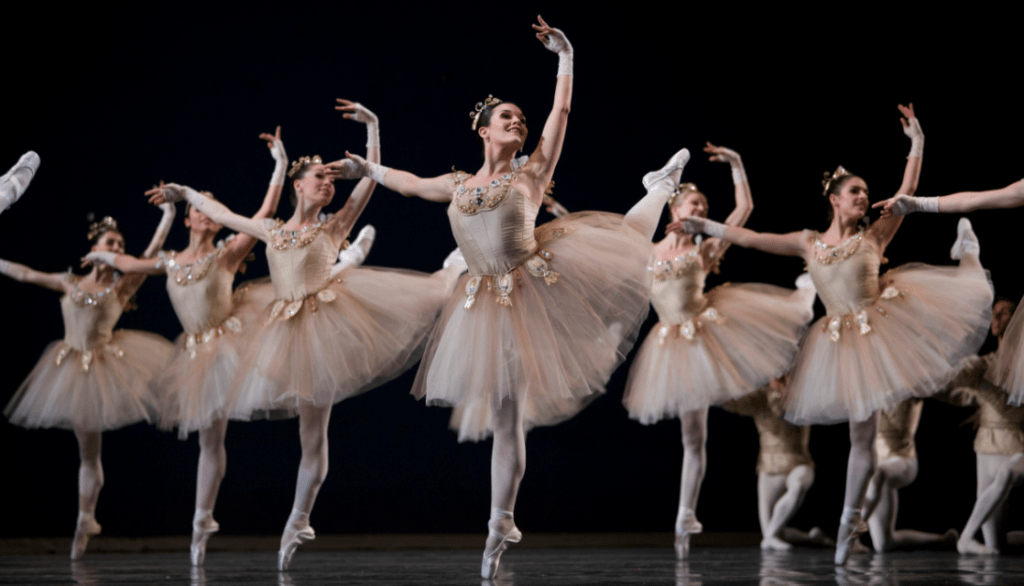
The San Francisco Ballet will not be open during their 2021 season, but they are working hard to provide digital resources to their audience. Currently, they have digital season packages available for purchase, which gives audiences access to stream various ballet performances. Available performances include Swan Lake and Romeo and Juliet. They also have a lecture series available for free on their website.
Pink and Red flowers, pretty cards, over priced chocolates and little Cupid figurines are just some of the things that you think of when we hear the words “Valentines Day”. There is much more behind those words, Valentine’s Day has a much bigger history than you may think. So what is Valentine’s Day really all about? Well “Life is like a box of chocolates. You never know what you’re gonna get” and believe me, this story is full of surprises.
There are many stories of how Valentine’s Day was started but no one really knows which one is true or even just the inspiration for the holiday. Some historians believe that it originated from
St. Valentine, a priest who served during the third century in Rome. The story goes that Emperor Claudius II thought that men would be better soldiers if they did not have families and did not get married, so the emperor made it illegal for any young man to get married.
St. Valentine saw the unfairness in the new law thus he decided to marry young couples in secret, eventually Cladius discovered what St. Valentine was doing and (did what they always did in old times) beheaded him. People in the third century had awful tempers.
One story suggested that St. Valentine was killed trying to help Christians escape cruel Roman prisons.
Another legend states that St. Valentine was imprisoned and sent the first “Valentine” introducing himself when he fell in love with a young lady, possibly his captor’s daughter who may have visited him during his imprisonment. Before his death he gave her a card that said “from your Valentine” which is now very popular in today’s romantic cards.
1. It wasn’t until the 1840s that we got mass-produced valentine cards
As we just learned, sending pretty cards to your friends and significant other has been a tradition for a long time, but the world had not gotten a mass-produced store-bought valentine until the 1840s! We have Esther A. Howland to thank for that, she commercialized Valentine’s Day cards in America.
2. America spends about 20 billion dollars on Valentine’s Day gifts each year
According to Hallmark and The National Retail federation, America spends a lot on Valentine’s Day: $2.4 billion on candy alone, $145 million on cards and $27.6 million on just their pet dogs! It has been labeled “one of the most expensive holidays in America” and it definitely shows in the numbers
3. Almost 6 million couples get engaged on Valentine’s Day
It is certainly a day of romance and not surprisingly one for showing your love to your significant other, so naturally it is just behind Christmas to be the most popular day ever to get engaged.
4. More than 8 million little conversation hearts are manufactured each year
Conversation Hearts, being one of the most popular Valentine’s Day surprises are bought and manufactured to a crazy amount: more than 8 million each year! Now that’s a lot of corny catch phrases!
So all you students out there, what are your Valentine’s Day traditions, which story of St. Valentine’s do you think is true and what do you think the holiday is all really about? The entire Lighthouse staff wishes you and your family a great (late) Valentine’s day whether you celebrate it or not, have a wonderful day!
It’s finally 2021! I’m sure that’s what we have all been saying for the last three weeks. So now that we put this speed bump of a year in the Costco parking lot of life to bed, we start on this (hopefully) less bumpy path of 2021. We come into this year with hopes for the future; for the world to get better, for people to get better, and for ourselves to be better. So, to keep your spirits up, here are some things to look forward to in 2021!
The Tokyo Olympics
Photo courtesy of International Finance Magazine
The Tokyo Olympics are still scheduled for July and August of this year, after last year’s Olympics being postponed, I am sure the world is very excited for this year’s event!
NASA’s Perseverance Rover Lands on Mars
Photo from NASA Mars Exploration Program
NASA’s Perseverance Rover was launched July 30th, 2020, and is now going to land on the face of Mars on February 18th, 2021. After the hard and dedicated work of thousands of men and women we are about to open a new chapter in space exploration!
The Queen of England turns 95
Photo from Showbiz Cheat Sheet
On June 12th, the Queen of England will celebrate her 95 birthday, she has been Monarch for 65 years now!
(Fun fact, is that the queen actually celebrates two birthdays, one for her official birth date, April 21st, and one on the second Saturday of June for the day she was coronated)
The 50th anniversary of Walt Disney World
Photo courtesy of Blooloop
First opening its doors October 1st, 1971, 2021 is Walt Disney World’s 50th year of business. Since it opened after the wildly popular Disneyland in California, anyone who goes there will surely say that this magical place is, just like its sister park, one of the happiest places on earth!
New Shows and Movies
Photo Create From Forbes
We are all anxiously waiting for our favorite shows and movies to come out, like A Friends Reunion show in March, the Fresh Prince of Bel-Air reboot on Peacock, a new season of The Mandalorian and the first Season of the Book of Boba Fett. For movies, we have a new Cinderella, Fantastic Beasts, Top Gun: Maverick, and so much more!
There are many more things to look forward to in the year, but just trying to make fun events with your family, like family games or movie nights, Nerf or Laser Tag fights, or anything that you and your family can enjoy will make your week and year so much more exciting!
The holiday baking season has begun! Winter is my absolute favorite time of year. When December rolls around, it’s hard for a baking lover like myself to keep out of the kitchen long. Holiday recipes hold a warm place in my heart, so I decided to share three of my favorites with you.
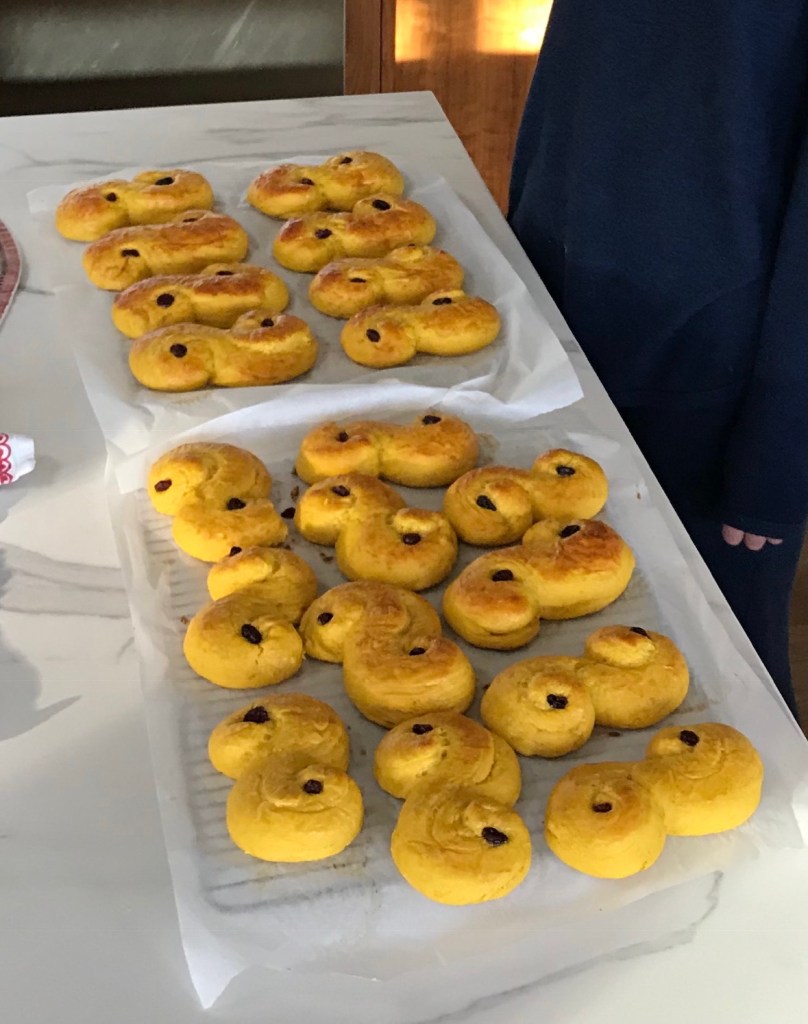
St. Lucia Buns
Image by Laurie Ruggiero
Saint Lucia Day is a Swedish holiday that takes place more towards the beginning of the holiday season on December 13, which gives you a reason to start baking early.
My family and I have celebrated Saint Lucia Day since I was five. What with wearing candles on your head and baking yummy treats, plus the bonus of my name in the title, it’s almost like getting a second birthday!
Making Saint Lucia buns is one of my favorite holiday traditions. Saint Lucia Buns or saffron buns have a bit of an unusual flavor. The saffron gives it a unique kind of sweetness that’s hard to describe. Sweet, yeasty, and golden, with a smooth, egg-washed shell and a soft, bready center, they taste and smell like happiness.
Baking Tip: You do not need to make the buns as big as you think, they grow, a lot! Aim for the amount the recipe says you should have, and they’re probably the right size.
Buttery, bite-sized spritz cookies are hard to stop eating. Add in their fun shapes and ability to suit any holiday, and they are pretty much the perfect holiday cookie. These are one of my mom’s favorite kind of cookies, which is why finding a great gluten-free recipe was important. This recipe lives up to its name. Making your own gluten-free flour blend is not necessary for this recipe, just use your favorite brand. I have found the gluten-free flour from Trader Joe’s to work well. For this recipe, you will need a spritz cookie press.
Baking Tip: It takes a few tries to get in the spritz squirting zone. If refrigerated too long, the cookie dough won’t move through the press. If not cold enough, the cookies won’t hold their shape. Find a balance that works. If the dough gets too soft, stick it back in the fridge for a bit. Any failed attempts can be put right back through the press.
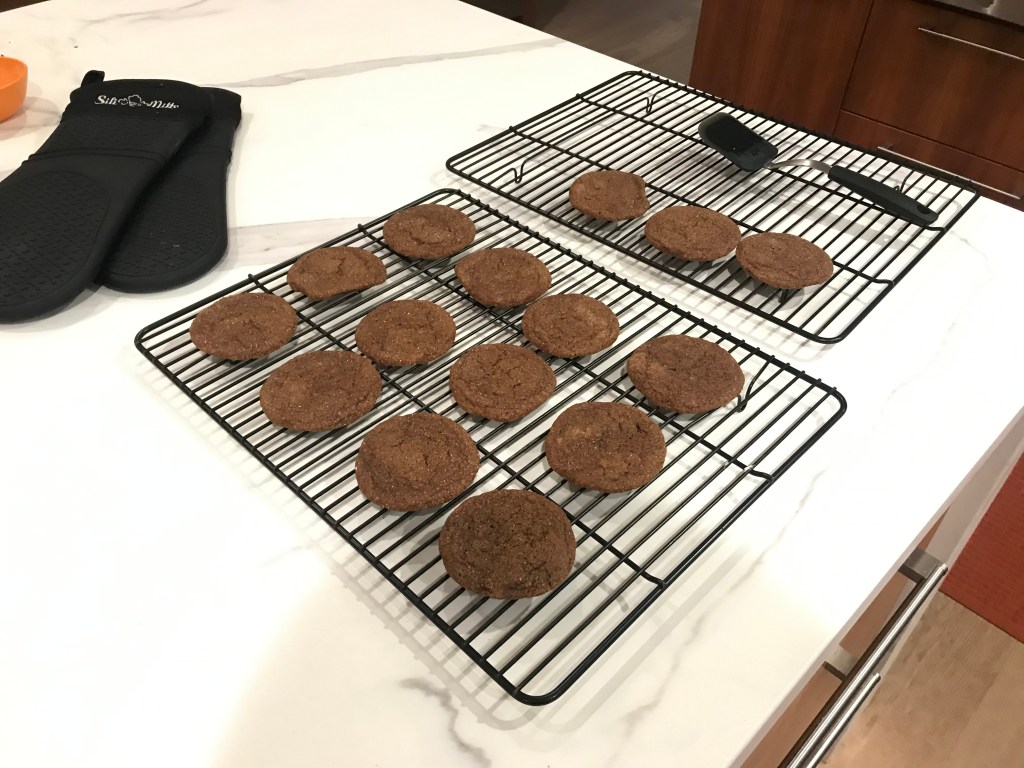
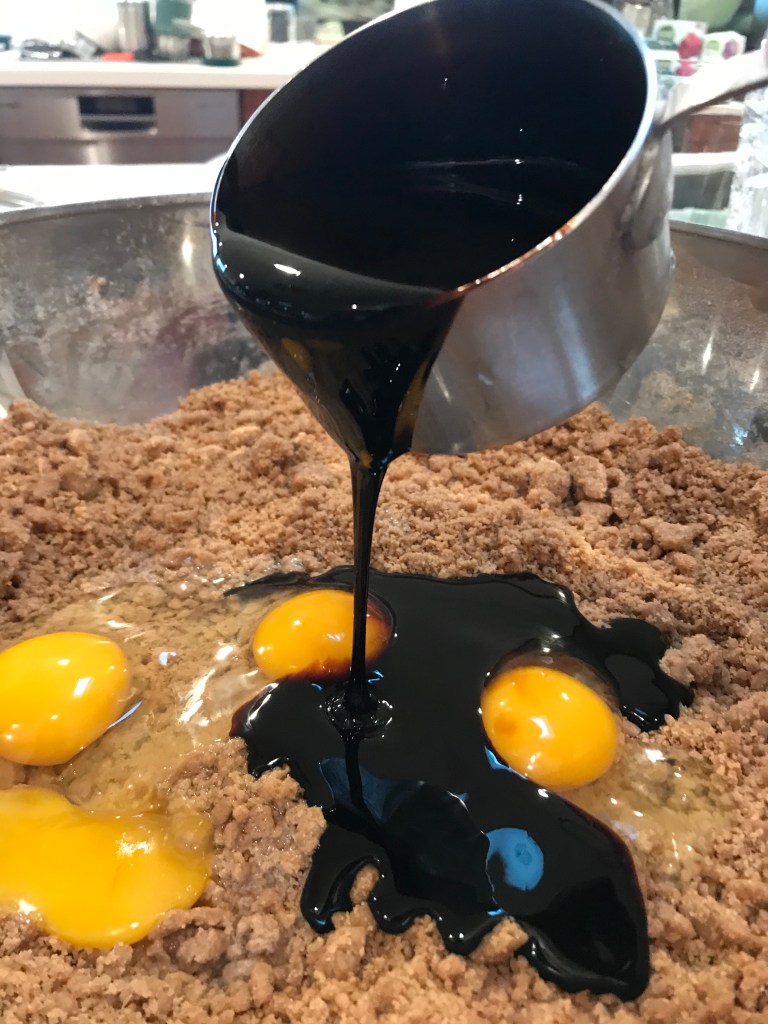
This is probably my favorite holiday recipe. Maybe it’s because I discovered the recipe on my own, or maybe it’s because I adore molasses cookies. Whatever the reason, these cookies are amazing. Chewy, sugar-dusted pillows of molasses spice perfection.
Baking Tip: When they come out of the oven, they will be very soft. You will probably think they are not cooked all the way. Never fear! They firm up considerably as they cool. I have made the mistake of baking them too long many times, so if a soft cookie is what you crave, it is best to wait.
Image by Lucie Ruggiero
The recipe: This recipe is not available online. It is in the Joy of Cooking and can be found on page 770 (in the 75th Anniversary Edition of the Joy of Cooking).
For molasses cookie lovers who have sourdough starter coming out of their ears, I recently baked this recipe with my sister. It’s a milder tasting molasses cookie than the Moldow recipe. Cakey, pillowy, and oh so soft, this may be my new favorite way to use up my sourdough discard.
It’s easy to be dismissive of “TikTok songs.” With the strange dances that go along with them and their seemingly undeserved popularity, it’s rather enjoyable to say “Ugh, this song,” when they play on the radio. But should we really be so exasperated by them? Or are they a legitimate part of this generation’s youth culture?
I too can be annoyed by TikTok songs, but this summer I just couldn’t get one of them out of my head. It was ily (i love you baby) by Surf Mesa. The song is calming but upbeat, perfect for relaxing in hot weather. I memorized the lyrics and put it on all my Spotify playlists. Imagine my surprise when my uncle played The Miseducation of Lauryn Hill, and I heard a familiar refrain.
I love you, baby
And if its quite alright
I need you, baby
To warm these lonely nights…
In 1967, Frankie Valli needed a new song. He and his band, the Four Seasons, had written hits before, but they wanted something that could give Valli a distinct identity and get him noticed. His collaborators, Bob Gaudio and Bob Crewe wrote the song Can’t Take My Eyes off of You, hoping that it was the hit they needed. They were not disappointed. The song made it to number 2 on the Billboard Hot 100.
Along with two Grammy nominations, the song was covered by dozens of artists, many of whom also made it onto the Billboard charts. In 1969, pop and jazz singer Nancy Wilson’s version reached No. 52. It’s been medlied with U2 by the EDM group Pet Shop Boys; turned into disco by Maureen McGovern; rocked to by Muse. And of course, there’s the Lauryn Hill version that I was so surprised to hear. It has been covered in almost every genre by countless artists. So when looked at in context, the fact that a version was recorded in the chill, hip-hop influenced style that is currently popular is really not that remarkable.
What is remarkable is how ily has found fame. The dreamy song was discovered by teens on TikTok and gained popularity in the background of their videos. After a quick name change to make it more searchable, the song took off. It made it into Spotify’s top 50 songs worldwide, then crossed over onto Billboard’s charts, where it eventually reached No. 23.
This illustrates perfectly why TikTok songs should be taken more seriously. Although they’re easy to laugh at when paired with the strange and silly videos on TikTok, it would be foolish to ignore their effect. TikTok has the power to rocket songs into stardom, turning them from gimmicks into real hits.
The fact that this song, which has been covered by so many artists over the last 60 years, was most recently covered on TikTok, shows that TikTok is not just for funny videos anymore. It has become part of youth culture. And, just as the niche songs of previous generations of teens were taken seriously because of their influence on mainstream pop, so must these new songs be taken seriously. Though they do not always take themselves seriously, though the teens which popularize them do so on a strange and foreign form of social media, though only around 20 seconds of the song will be recognizable due to the length of a TikTok, we must take them seriously. Because in 20 years, they will be among the most famous songs of this decade.
When it gets cold in October, I start anticipating all of my favorite autumn traditions. I love carving pumpkins, baking, and making Halloween costumes. My family’s most recently added tradition is to watch the Cartoon Network miniseries Over the Garden Wall. When the series came out in 2014, it was widely acclaimed, even winning two Grammy awards. Although it only aired on Cartoon Network once, it has amassed a cult following of dedicated fans. Since becoming available on major streaming platforms like Amazon Prime and HBO Max, the series has been more widely watched than ever before. With the show’s beautiful animation, whimsical setting, and campfire scares, it’s the perfect show to watch under a blanket with a mug of hot cider.
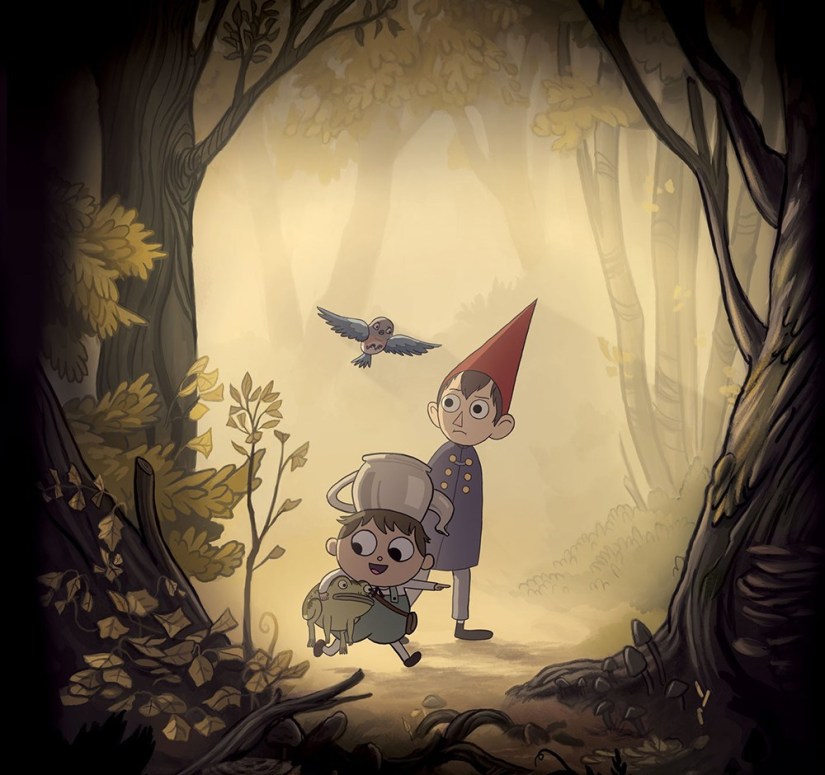
Image from IMDb
Over the Garden Wall is one of a kind. While its teen protagonist and absurd humor are similar to Gravity Falls, its tone and style are unique. The series follows brothers Wirt and Greg, who are lost in a mysterious fall forest called the Unknown. It’s the setup for so many classic fairytales, and it gives the story a dreamlike quality, as if we’ve heard it before. Over the Garden Wall is also scary in a unique way. While most episodes are ridiculous and fun, the occasional scary scenes are reminiscent of childhood fears and campfire stories. The Unknown is pretty in its autumn colors, but as the series progresses and winter sets in it feels more menacing.
The art of Over the Garden Wall is unique, too– or at least it’s unique to current entertainment. Emily VanDerWerff of the Vulture describes the style as “if Ichabod and Mr. Toad were made by Ghibli instead of Disney.” The creators drew inspiration from victorian postcards, folk art, and children’s book illustrations, as well as some of America’s first films. Episode 3 reminds me of a Charly Chaplin movie, and the Highway Man’s dance in Episode 4 is meant to mimic the look of old rotoscoped films. It’s vintage jazz and folk soundtrack, recorded by the Blasting Company, makes the setting perfect for a November binge watch (which will take under two hours since the episodes are so short).
The story of the series plays out like one of Hans Christian Anderson’s fairy tales, which makes sense since his stories inspired many of the episodes. The brothers travel through the Unknown, encountering many strange and magical people, like their talking bluebird friend Beatrice and the mysterious Woodsman. As they continue their journey they attract the attention of the Beast, a deep-voiced antlered creature who always stands in shadow. Each episode has a different cast of side characters and a different setting. Occasionally the episode will open in a new place with characters we’ve never met, leaving us to figure out how our characters got there.
The emotional conflicts of the story will resonate with teens and pre-teens, who will see themselves reflected in Wirt. His journey to becoming a better older brother to Greg is the emotional core of the series, becoming more important as the story progresses and the stakes get higher. Wirt also struggles with feeling confident and finding people who understand his niche interests. He often improvises poetry to describe his feelings, then gets embarrassed and apologizes. Over the course of his journey, he learns to have confidence and embrace his artistic nature.
Spoiler alert! Past this point, I discuss major spoilers for the show. I suggest you skip to the last paragraph if you want to go in without knowing what happens.
One of the most enjoyable parts of watching the show is obsessing over its minute details after you finish. Well-read fans have analyzed every episode of this show, finding the artistic influences for every frame and comparing it to classic works of literature. As we find out in a late series twist, Wirt and Greg are modern kids who fell into a frozen river on Halloween night, which explains their odd attire. The whole time they’ve been in the Unknown they have also been drowning, symbolized by the Unknown freezing. Based on this twist and the other episodes of the show, dedicated fans have theorized that the show is a retelling of Dante’s Inferno, with each episode corresponding to one of the circles of hell. As a project, homeschoolers could read Dante’s Inferno and then watch Over the Garden Wall and compare the two. More artistically inclined kids could study the influences for the character’s costumes, and kids who love fairy tales could compare the story to that of their favorite fairy tale.
For fall entertainment, nothing beats Over the Garden Wall. It’s immersive and mysterious, spooky in a familiar way. For kids, it will be a silly adventure that reminds them of their favorite fairy tales. For teens, it will take them back to their childhoods, while helping them gain confidence. And for adults, it will be a fantastic story that they will want to watch every fall, for themselves and their kids. I can’t wait till next fall when I get to rewatch this amazing miniseries and notice something new.
If you hear a voice within you say you cannot paint, then by all means paint and that voice will be silenced.”
Vincent van Gogh
Any person can become a watercolor artist if they wish. The only requirements are a joy in color and expressing with it, and the patience to let the paint dry.
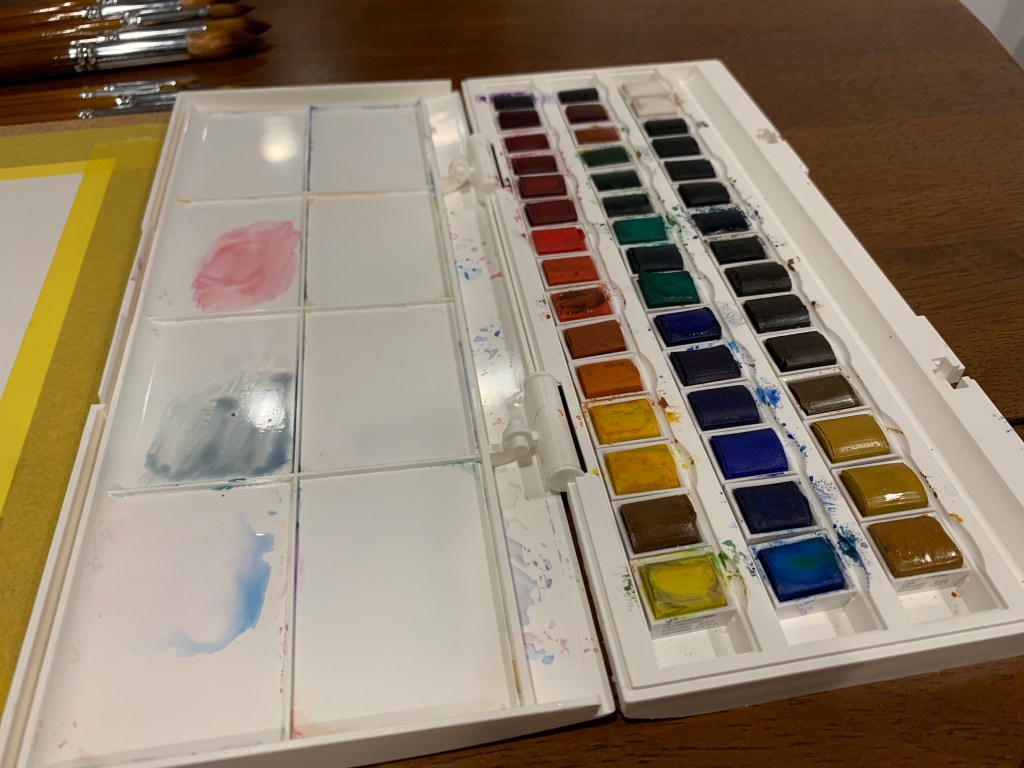
Watercolor paints commonly come in pans or tubes, and both work well for beginners. It may simply come down to what the artist has on hand. Watercolor pans are common today in kids’ watercolors. A predecessor of these pans was invented in 1780 by William Reeves, who created cakes of solid watercolor pigment. Previously, watercolor artists made their own paints or bought it in liquid form. In 1846, Winsor and Newton, an English art supply company, brought tubed watercolor paint into the mix, following the design of tubed oil paint.
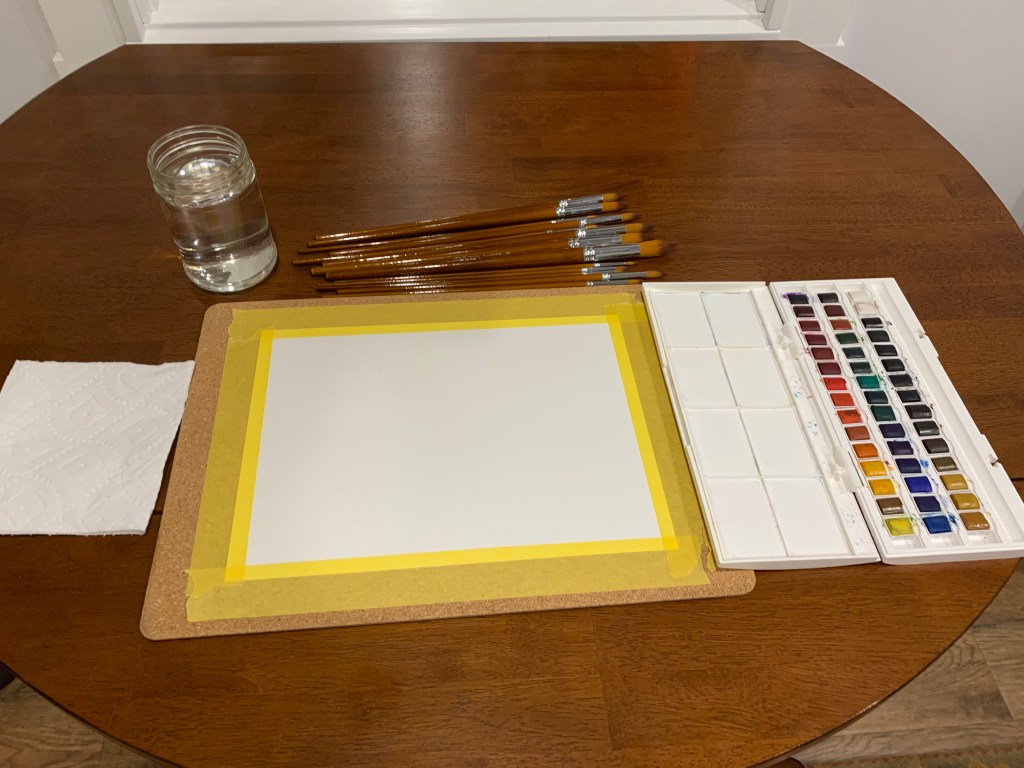
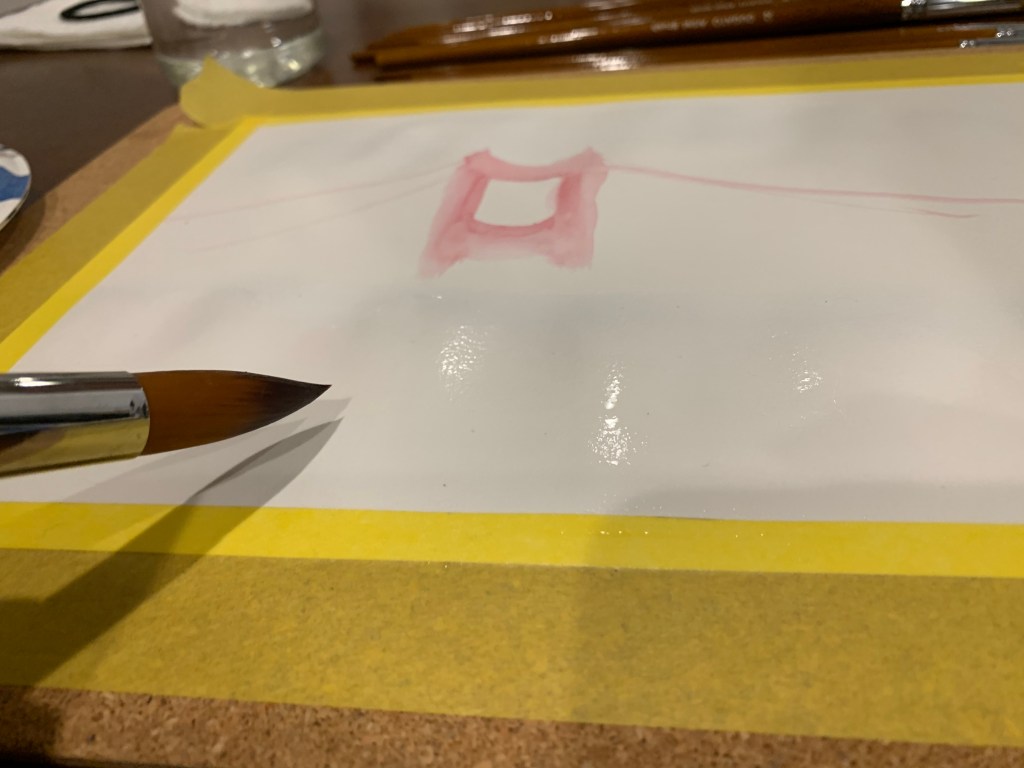
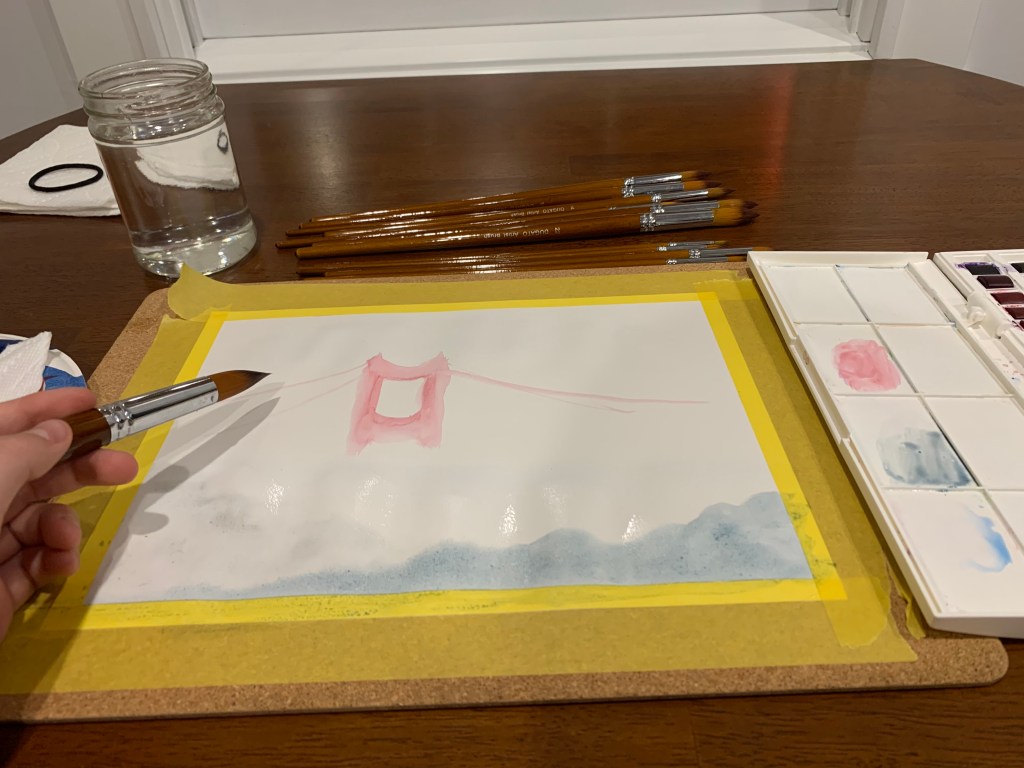
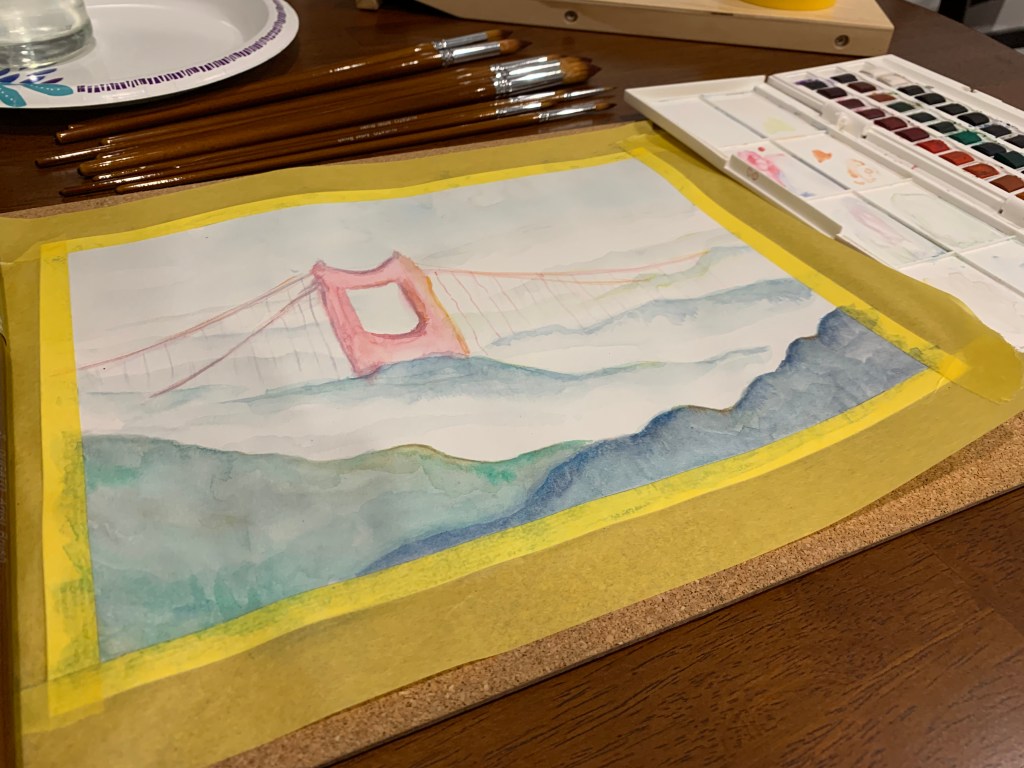
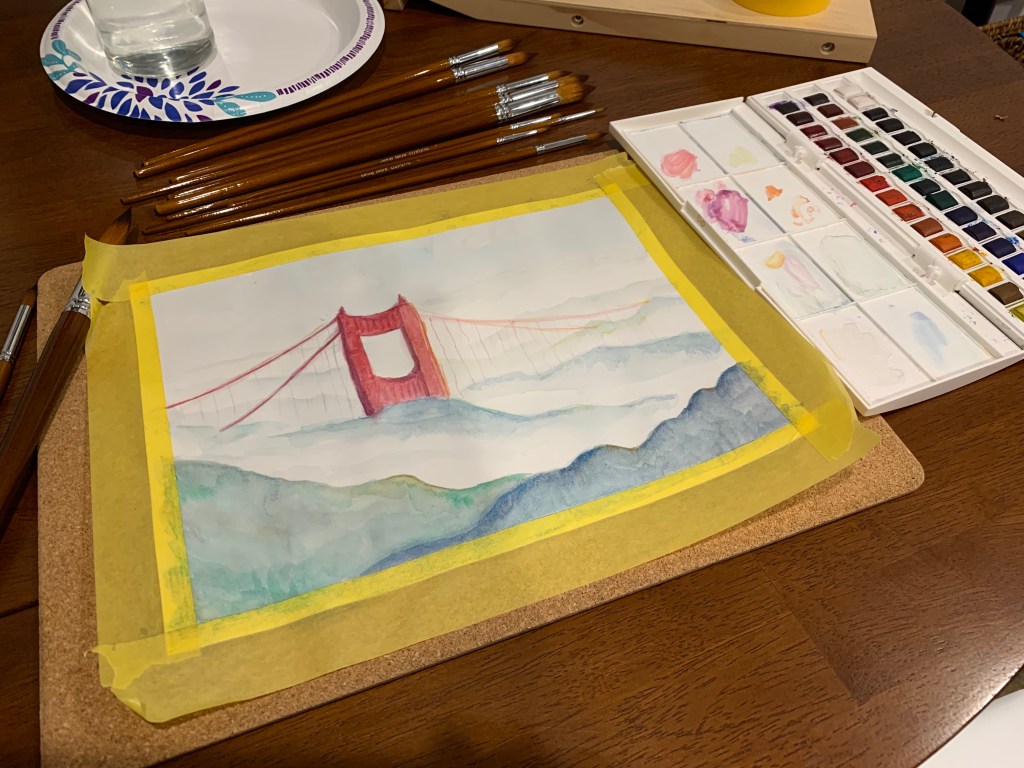
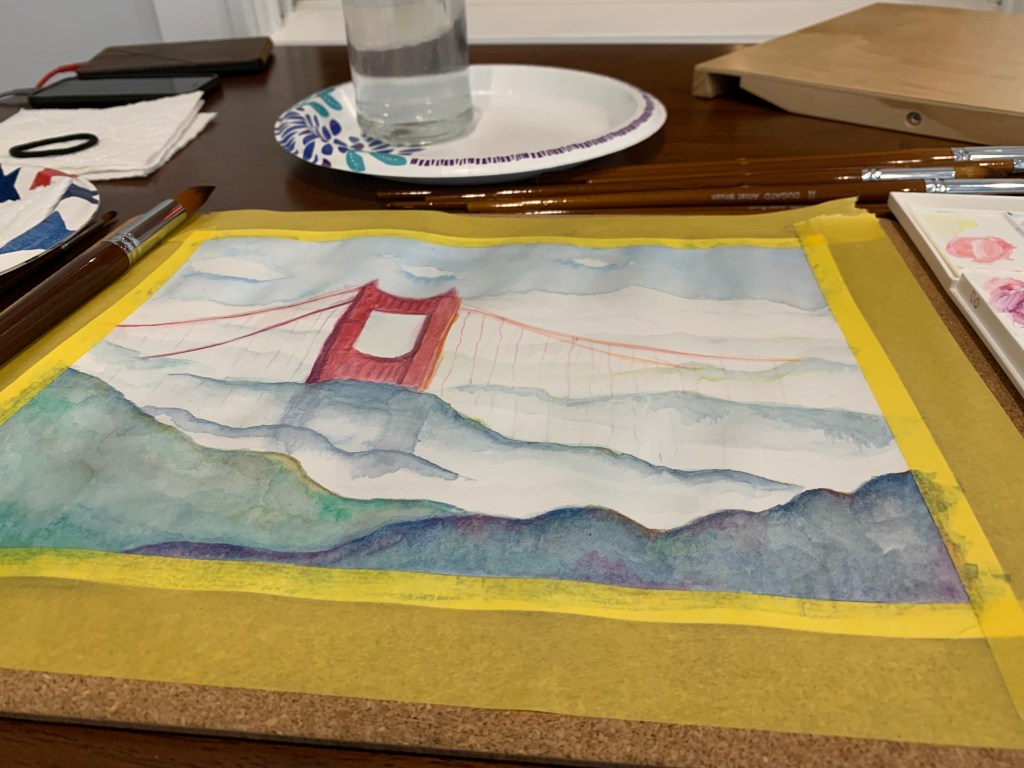
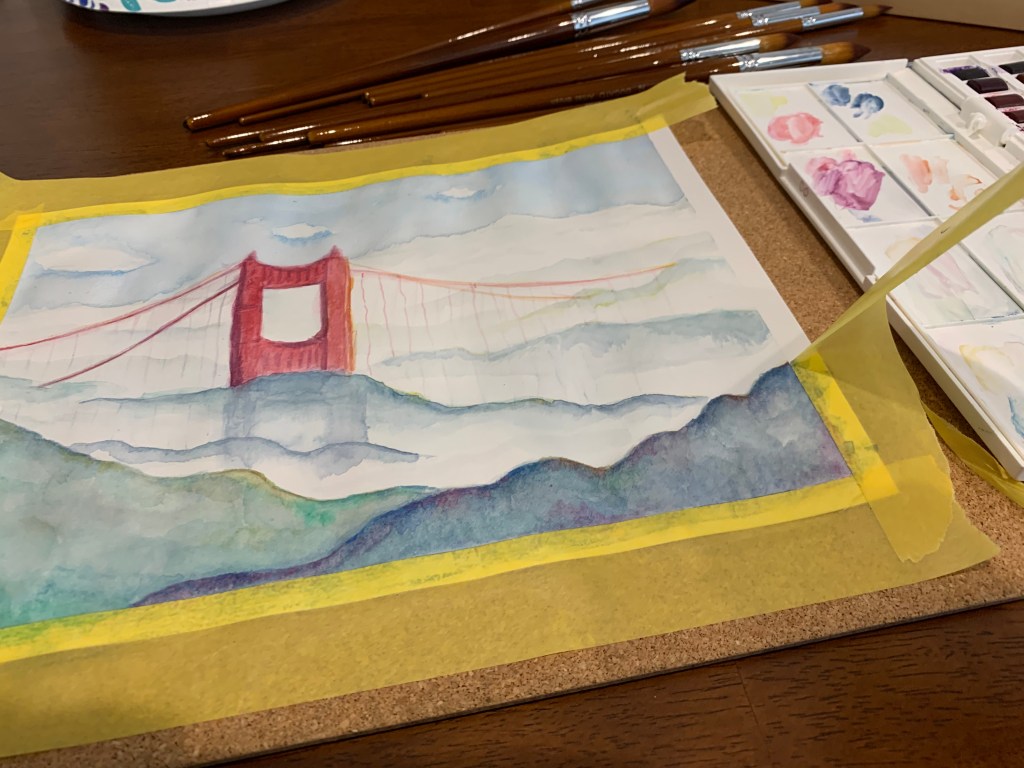
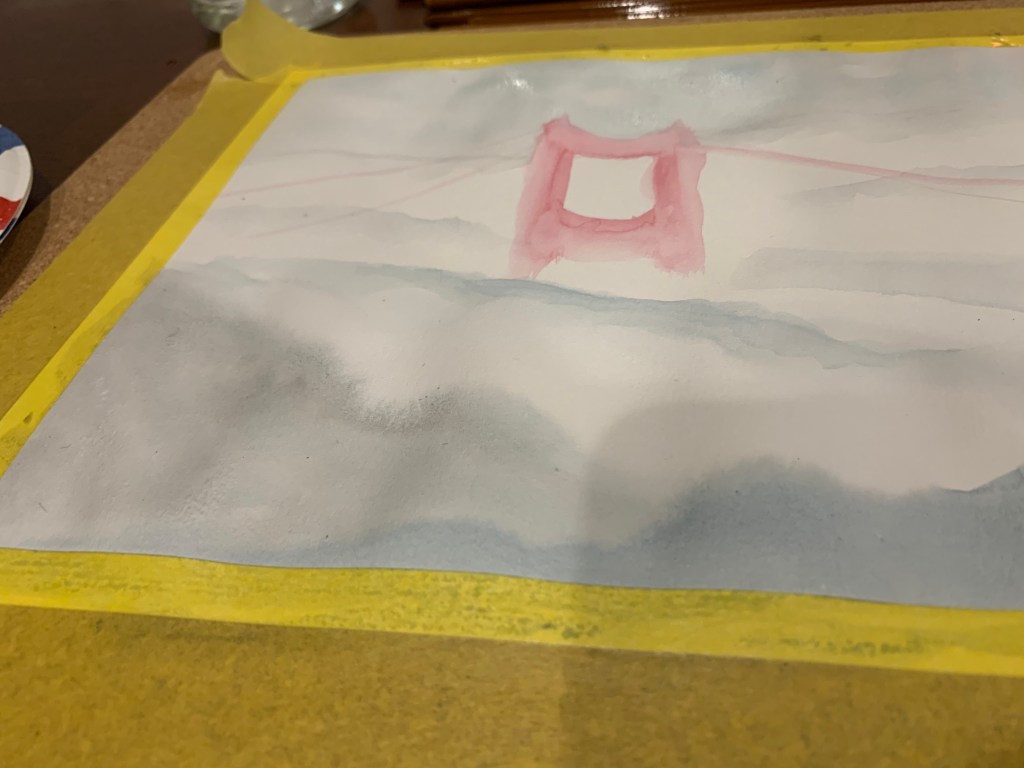
Watercolors are mostly done on paper. Watercolor paper is thick and sturdy with a rough surface to hold the paint. When wet, paper stretches. Taping down the paper helps keep it from warping when dry. Generally, the thicker the paper, the less it warps. The watercolor paper needs to be thick to hold up to repeated wetting and drying when building up layers.
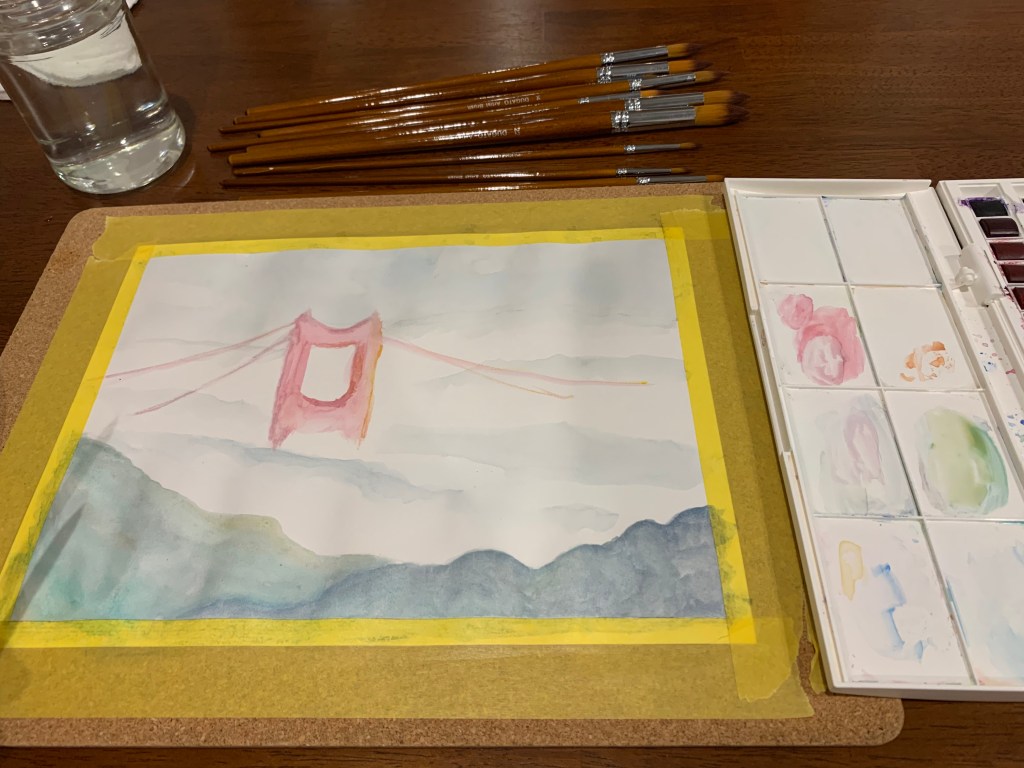
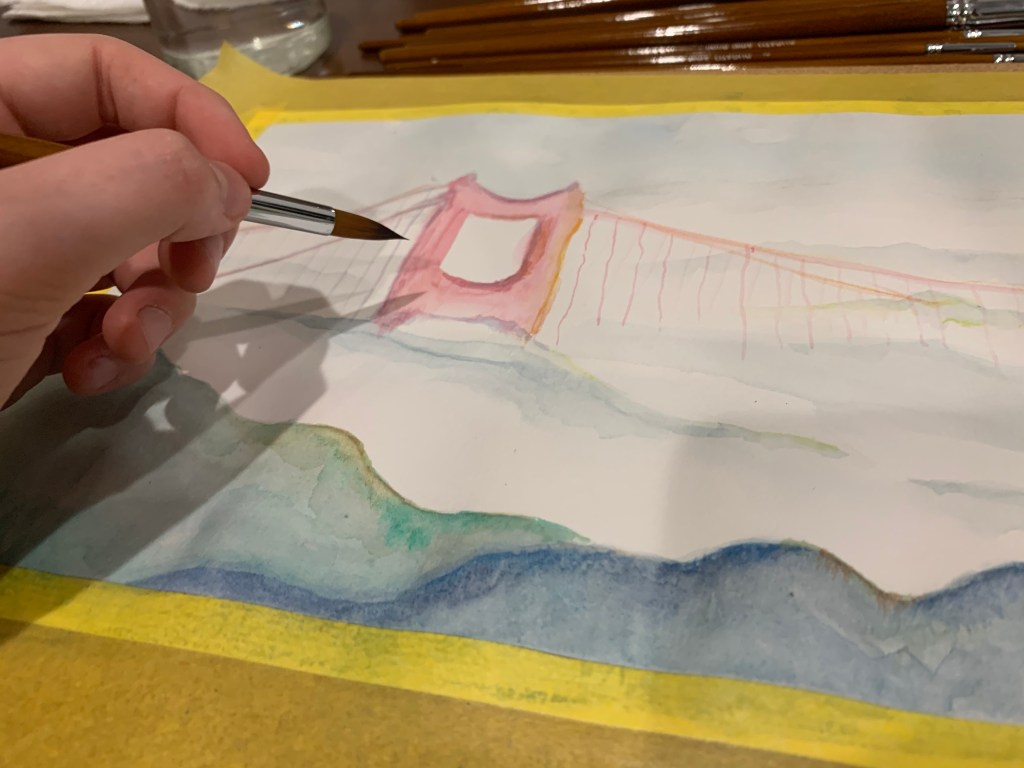
Layering is essential in watercolor painting. Each layer must dry before the next can be added. For every new layer, less paint is added, until only the darkest areas are being developed.
The first layer of a watercolor is left almost colorless. The artist then paints around them, building up the color in darker areas. This takes time and thought if the artist wishes for a specific outcome. Because white cannot be added once the paint has dried, for artists who are used to other methods, watercolor can feel counterintuitive.
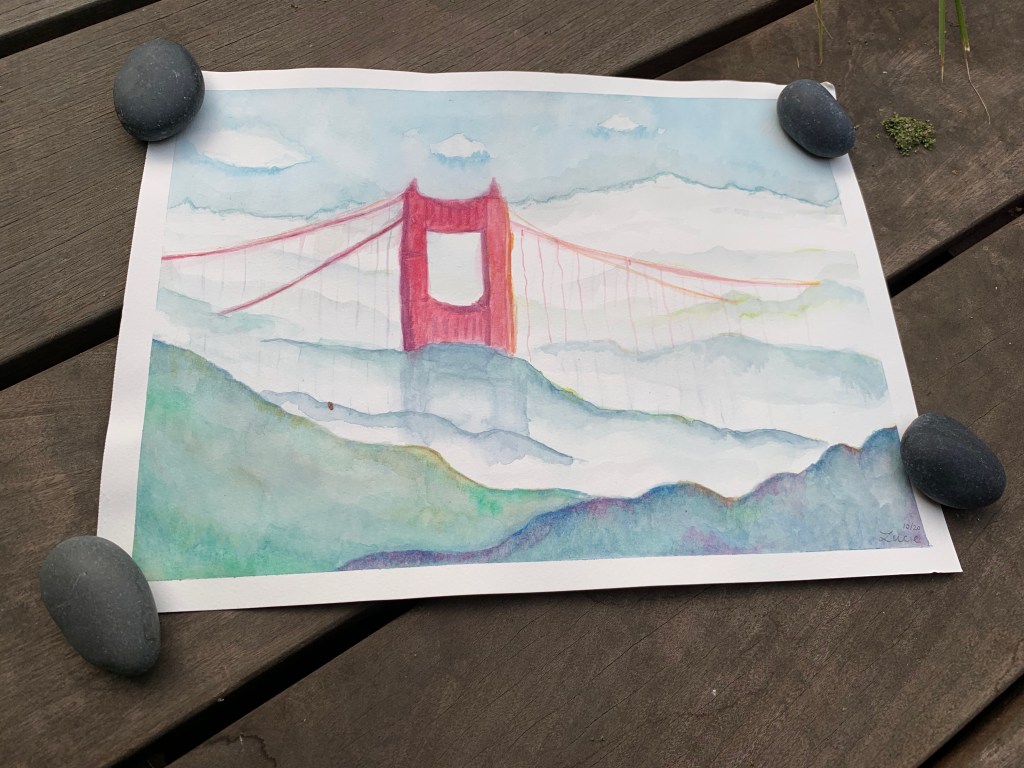
Example of wet on wet in lower half of painting (photo: Lucie Ruggiero)
When learning to paint with watercolors, two techniques are useful to start, wet on dry and wet on wet. Wet on dry involves wet paint brushed on a dry surface, while wet on wet is paint applied to a wet area of the painting or a completely wet page. Wet on dry is useful for realistic paintings. It provides clean lines and control over paint flow. Wet on wet works well for large washes of color or abstract paintings without hard edges. Wet on wet is a more loose style of watercolor, as the flow of paint is difficult to control. Both techniques can be used to produce beautiful paintings.
Georgia O’Keefe, “Sunrise,” 1916. (photo: Public Domain) via My Modern Met
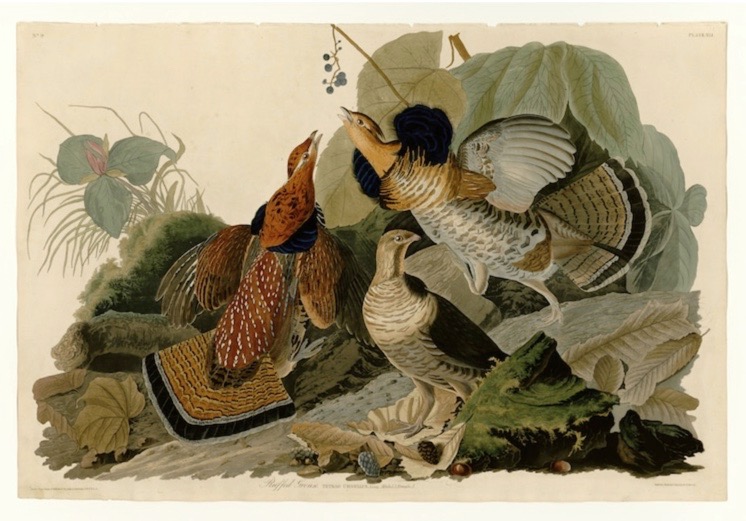
Famous examples of wet on wet and dry on wet include Georgia O’Keefe’s early watercolors and John James Audobon’s paintings. On O’Keefe’s watercolors, Sara Barnes writes, “the abstracted watercolors chronicle her artistic journey to becoming comfortable working in a less representational style.” While O’Keefe’s watercolors were abstract and loose with vibrant colors, Audubon’s paintings were highly naturalistic with a more muted palette.
John James Audubon, “Birds of America.” (photo: Public Domain) via My Modern Met
Colors create the mood and emotion of a watercolor painting. A pop of unexpected color can add dimension and flair. Sometimes colors seem to clash or give the wrong emotion, but take a step back, there may be something wonderful in what felt like a mistake. Give it time to rest. A break for both the artist and the painting helps ease the tension.
Art has changed and grown through history, given varied meanings through time and place. Perspectives on art from the past paint how people see and think of art today. Watercolor is no exception. In an essay for the Met museum, Elizabeth E. Barker writes, “The technique of water-based painting dates to ancient times, and belongs to the history of many cultures in the world.” Although the subjects and purposes of watercolors have changed over time, watercolor history is similar to the way an artist paints with it—many layers of the same thing. Each layer has the knowledge and skill of the layers behind it, slowly building to become the watercolor we know today.











 The Lighthouse