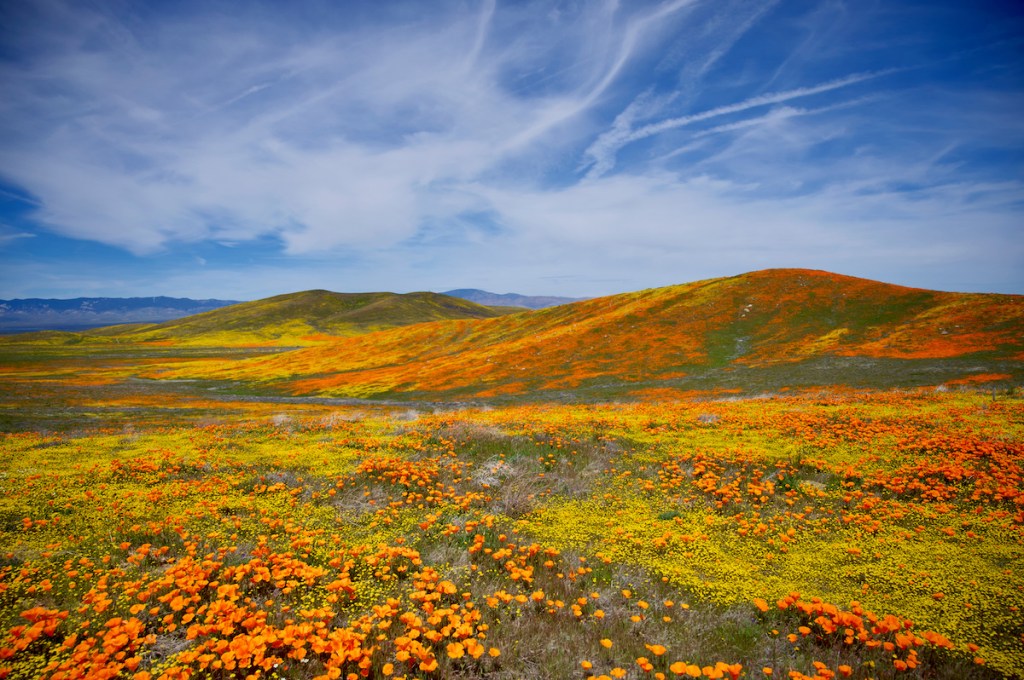
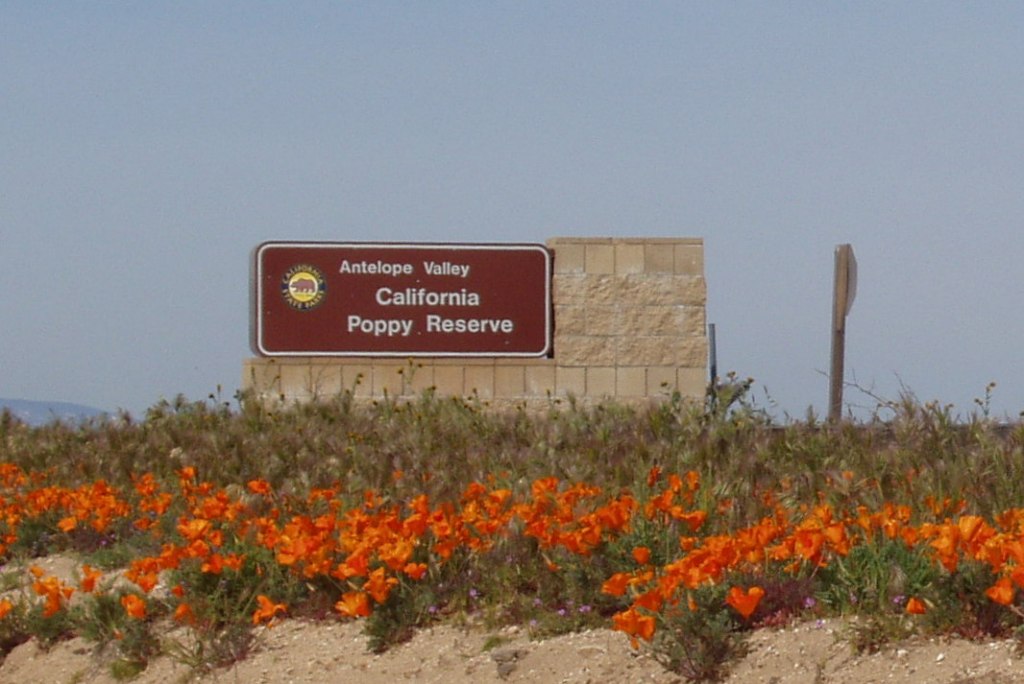
The Antelope Valley California Poppy Reserve State Natural Reserve celebrated its 50th anniversary on Friday, April 24! For now five decades, it has protected and preserved California’s unique and greatly important wildflowers, including the iconic California poppy, our state’s official flower. California State Parks proudly celebrated the milestone with a special ceremony honoring the people, partnerships, and community efforts that helped establish and maintain the over 1,800-acre reserve in the Antelope Buttes, just west of Lancaster.
Every spring, poppies bloom in the reserve, but the best blooms depend on a number of things, such as the sun, clouds, heat, rain, and even the wind. Jean Rhyne, an interpreter at the state park, adds, “The bloom time changes every year.” “It usually happens in early April, but it can happen anytime from mid-March to early May.”
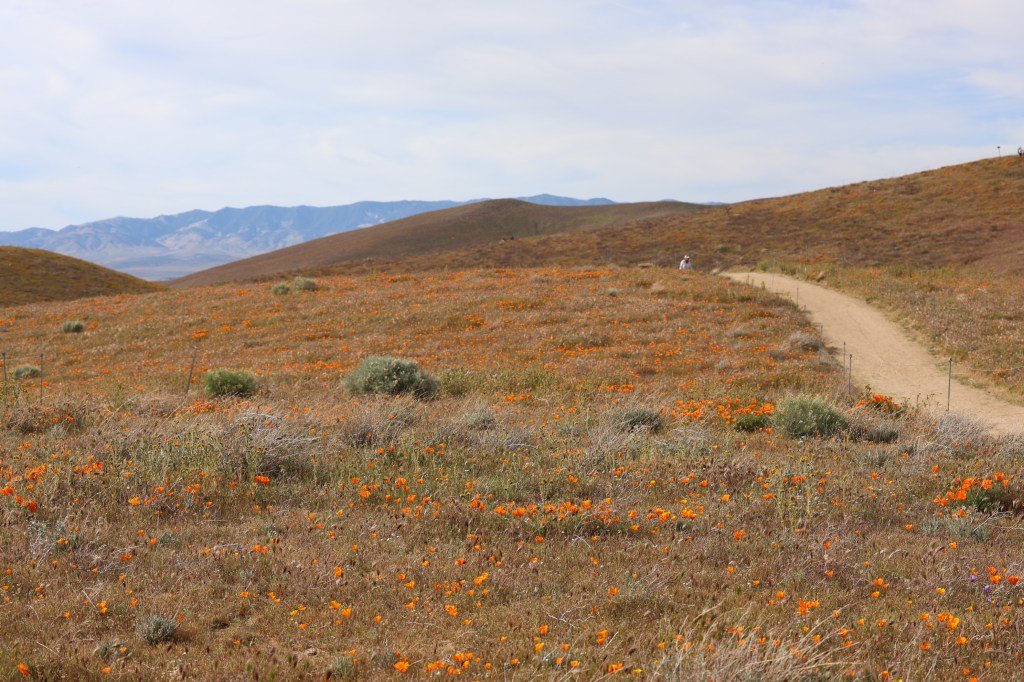
Floral “aficionados” know that the historical Antelope Valley is the absolute best place to see poppies. Even though the wildflowers didn’t fully bloom this year because of all the rain, there were tons to enjoy. Poppy season usually lasts from March to mid-April, but sadly, the Antelope Valley California Poppy Reserve announced on April 1 that the scorching weather in Antelope Valley had officially ended the poppy season. Poppies may be the defining symbol of our enduring and strong state, but even the most powerful elements of nature must live in tandem with the ebbs and flows of their environment. Poppies can sometimes be unpredictable. If it rains too much, the Antelope Valley California Flower Reserve will only have a moderate flower season. But thankfully, this spring’s weather has been even lovelyer than last year’s.
When to visit?:
If you can, plan your visit on a sunny midmorning for the finest view.
Where to look?:
There are eight miles of paths in the reserve. Most people only walk the 3.3-mile South and North Loop trails and make a quick stop at the Tehachapi Vista Point, but the best displays aren’t always there. Rhyne says that the best place to find out where the most flowers are blossoming is to stop by the visitor center, which normally opens in early March. People who come to the park may see how beautiful this reserve is and walk or ride their bikes on eight miles of paths that go through rolling hills and seasonal wildflower displays. There is also a paved path that is easiest for wheelchair users.
What to do?:
The Jane S. Pinheiro Interpretive Center has displays about the plants and animals that live in the area and a gallery of Pinheiro’s botanical paintings. The center is open from March 1 to Mother’s Day from 10 a.m. to 4 p.m. on weekdays and 9 a.m. to 5 p.m. on weekends. The non-profit Poppy Reserve Mojave Desert Interpretive Association runs an introduction film and a gift shop (who doesn’t like a gift shop?)
Lets Protect our Poppies!
During popular “super bloom” occurrences, tourists sadly harm California poppies greatly. Much damage has been done because of the large number of people who want to take pictures, especially in Southern California regions like Lake Elsinore and the Antelope Valley California Poppy Reserve. People often ignore notices and walk, sit, or lie right on the delicate poppy patches. “Flower angels” (lying down and moving their arms, akin to “snow angels”) is one example of popular “photo ops” that can cause (and inspire) the danger of our amazing California native flowers. In addition, walking off the assigned trail can harm plant roots, which ends up killing many wildflower types, leaving scars in the ecosystem for years. Illegal picking of flowers (outlawed in California Penal Code 384a) is still a widely held practice. Not to mention the sheer number of visitors (often more than 100,000 on weekends!) forces overcrowding responsible for habitat harm. So, if visiting, please remember the National Park Service’s leave-no-trace best practices. For example:
Take pictures responsibility
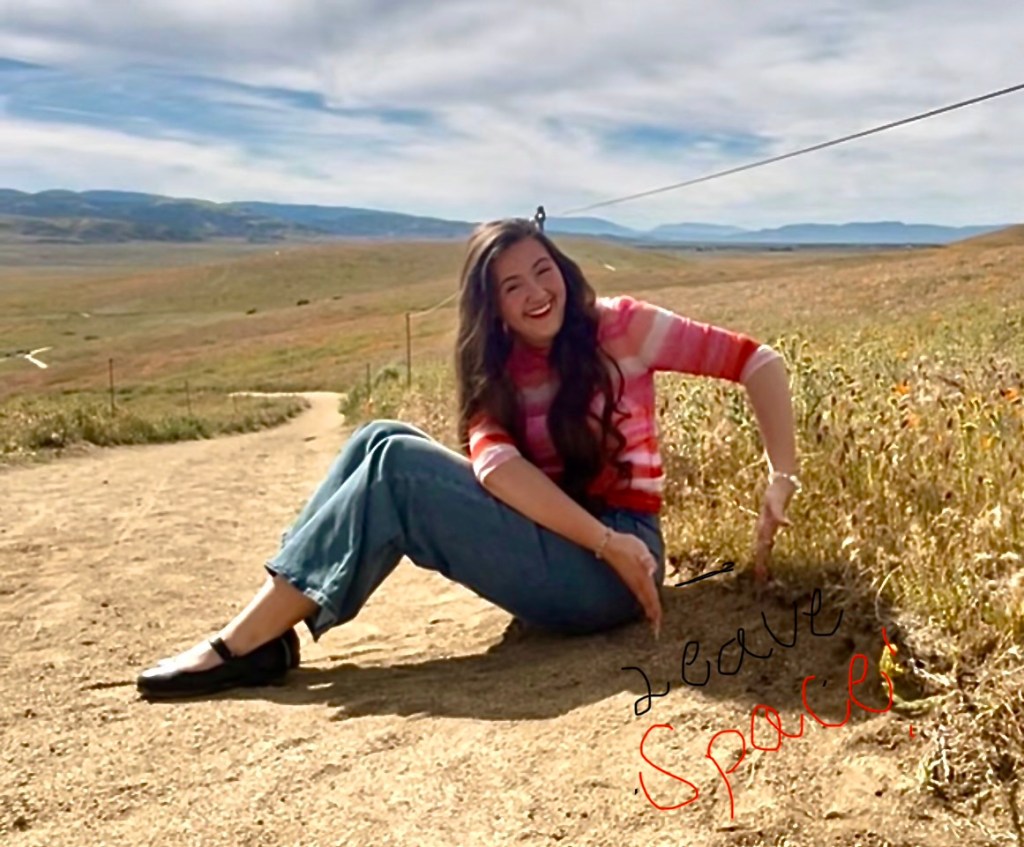
Look, but don’t touch
Respect trail listings and warnings
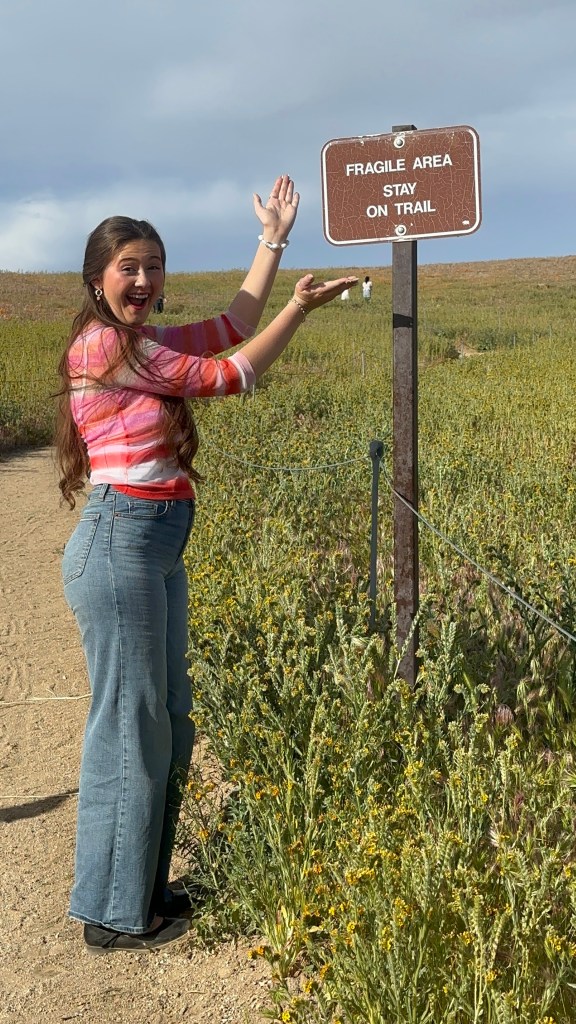
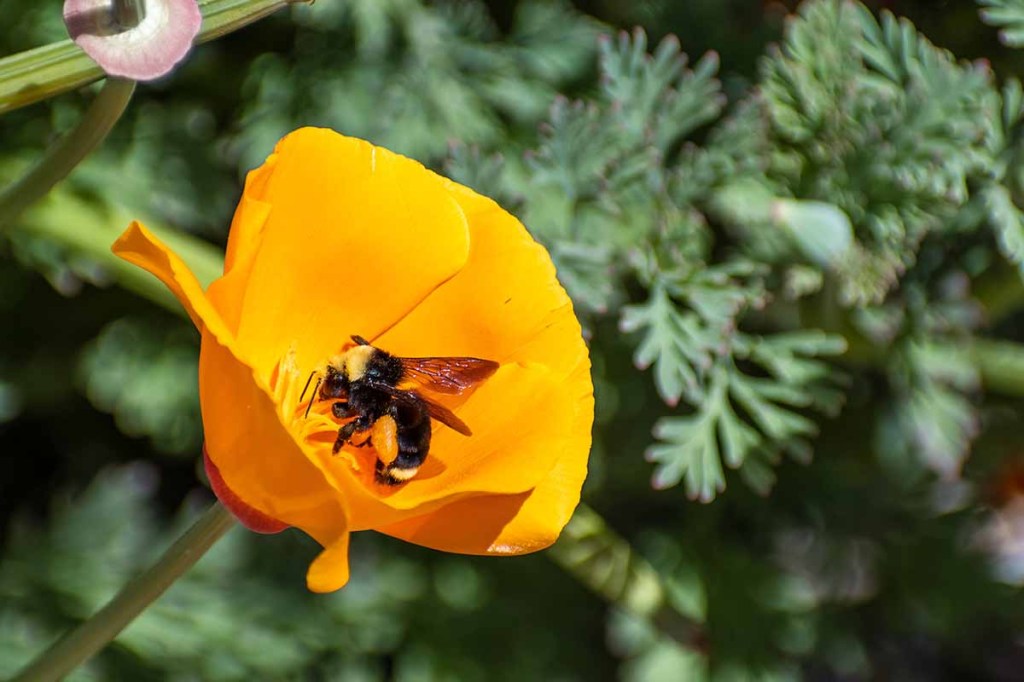
Protect the sustainability of pollinators that make California’s ecosystem as diverse as it is
And acknowledge the land
The Kitanemuk, Tataviam, and Tongva (or Kizh) peoples, often referred to as the Shoshonean bands, lived on and cared for the area where the Antelope Valley California Poppy Reserve is now located.
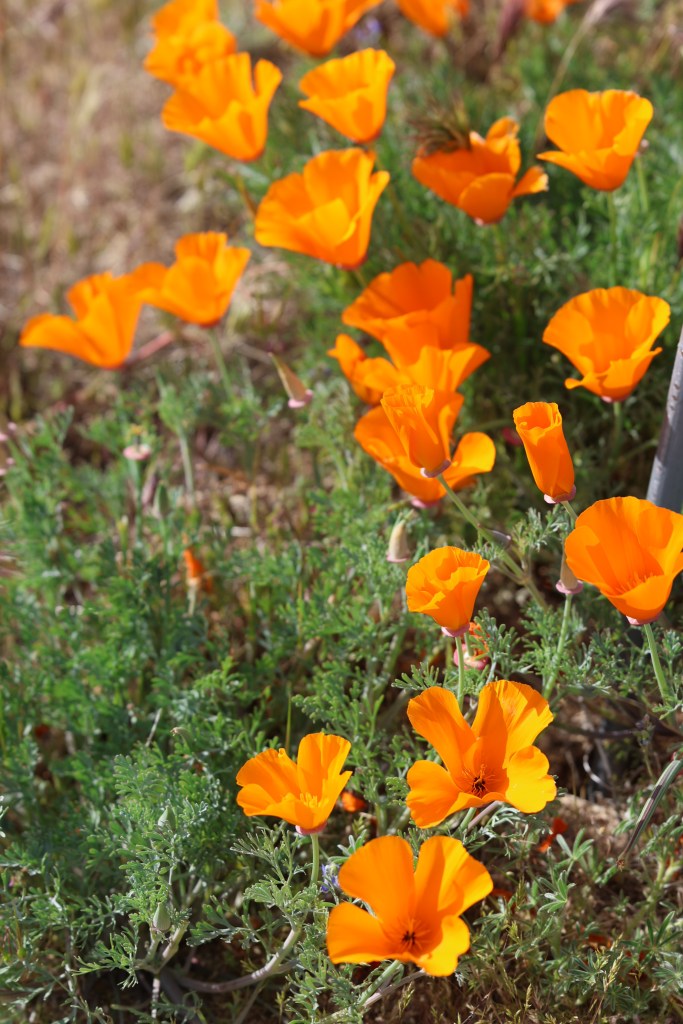
In conclusion, California is filled with many natural wonders for us to enjoy. Bearing in mind how to have a safe, productive, sustainable time while enjoying these wonders is essential. So please, get outside! Take a hike and enjoy our beautiful environment. Give back when you can and don’t forget to stop and smell the roses (or poppies, in this case.) Here’s to another beautiful 50 years of The Antelope Valley Poppy Reserve!