News

Air and Naval Power in WWII – What Were Its Effects and Was It Worth It?

by Emery Pugh

The 1900s were a period of military technological revolution. The airplane changed the scope of warfare and was constantly improved upon since its invention. Radar and sonar were introduced during WWII. Battleships gained more and more firepower and had cannons that could launch projectiles farther and farther. Aircraft carriers were emerging as an extremely important asset in naval tactics. So how did the airplane and the warship impact World War II?

Air forces and navies were used as auxiliaries to enhance ground operations. If you had naval or air parity with another country, it meant that neither country was able to destroy enough air or naval assets of the enemy to gain an advantage. Superiority meant that you could attack enemy ground troops with little worry of opposition, and supremacy meant total control – you could do whatever you intended in that realm with almost no resistance because you had destroyed all or nearly all of the enemy’s assets (planes or ships) in that realm and their industrial capability to produce more. Air power was used to target the enemy’s industrial capacity by using strategic bombers, such as the Boeing B-29 Superfortress (see image below). Tactical and attack bombers could provide valuable support to land operations, and fighters patrolled the skies to attempt to shoot down enemy bombers and other fighters. Naval power could be used to bombard coastal military bases and industrial factories. Each type of ship was generally specialized for one or two purposes. The main types of ships are: aircraft carriers, which were used as mobile airbases, battleships to counter surface threats with their immense firepower, battlecruisers as a lighter and more mobile version of a battleship, destroyers for scouting and neutralizing enemy submarines, cruisers mainly for anti-air with some surface combat elements, submarines for stealth and surprise, and support ships for resupplying oil, food, and other resources.

Image of a B-29 Superfortress strategic bomber

How did each military of the six major powers in World War II – the United States, Great Britain, the Soviet Union, Germany, Italy, and Japan – use air and naval power? The Germans had huge initial successes against its neighbors with its army-focused military, though they did have an air force and a navy. The German Luftwaffe, the name for the German air force, was highly lethal at the beginning of the war. The German Kriegsmarine (the German navy) consisted primarily of U-Boats, also called submarines. Despite how effective the Germans were against its neighbors like France, though, they couldn’t seem to dominate Great Britain or any of the other Allied powers the same way. That’s because the German military could only fight efficiently against enemies a short distance away. The German air force did not have very many long-ranged bombers like the United States or Great Britain. In fact, they did not build a single four-engine bomber throughout the entire war. Once they realized the importance of aircraft carriers and how far behind they were in the production of aircraft carriers, the Germans started mass-producing hundreds of submarines to compensate for the lack of aircraft carriers. Not the right move.

Image of a German U-Boat

Militarily, Italy usually took a back seat to Germany. For the Italians, the main battlefront was in North Africa against the British and later the Americans as well. Italy’s navy and air force didn’t play a major role, but the navy was mainly used to protect supply routes and maintain superiority in the Mediterranean. Both Italy’s navy and air force were outmatched by the British and Americans in technology and coordination. Italian officers were often overly cautious because of Italy’s limited resources available to produce military assets.

Japan’s naval strategy was aimed at one goal: to defeat the American Pacific Fleet as fast as possible. Japan knew that they would lose in a war of attrition against the United States, since the U.S. had far more industrial capacity. To begin with, Japan actually had a more powerful navy and air force, in terms of numbers. The Japanese not only had industrial shortcomings, but also the lack of the ability to train enough pilots. Japan used island bases as “unsinkable” yet immobile aircraft carriers. These islands created a ring of defense for the Home Islands. Yet they had a major problem: they could not supply their military with enough fuel and across such great distances between the Pacific islands and their sources of oil. However, American submarines intervened in Japanese shipping routes to disrupt their stratagem. Japan’s air strategy was built on surprise and quick yet sharp strikes, like at Pearl Harbor. Later in the war, Japan shifted to a more defensive stance and opted for kamikazes (suicide by crashing into enemy ships with planes). They hoped that enough people would be willing to sacrifice themselves for the survival of Japan and the kamikazes would be successful so as to sink a sufficient number of American ships to have a chance at winning the war.

The Soviet Union did not have a major air force or navy. About 80% of their military personnel were in the army. Russia did not have motivation to have a sizable navy or air force, since the only goal of their military was to stop Germany from taking Moscow. They were more likely to invest their resources into making an artillery unit or a tank than a strategic bomber or a battleship, for example.

Great Britain had the largest and most powerful navy going into World War II. The Royal Air Force (RAF) was also arguably superior to all other air forces. Britain’s approach to fighting the war was defensive for the first couple years. Its air force engaged the German Luftwaffe in the famous Battle of Britain, successfully preventing the Germans from launching an invasion of the British Isles. The RAF launched strategic bombing campaigns against the Axis Powers in Europe (primarily Germany) and provided intelligence on German troop movements. Elements of the RAF were stationed across the world (mostly in Europe), such as Norway and Greece, to help defend those countries from Germany and Italy. Their navy was critical in protecting transport ships from their colonies, such as Canada, Australia, and India. Near the end of the war, combined British and American naval forces gained naval supremacy (complete control over the seas) in relation to the European Axis powers, which allowed them to execute Operation Overlord, also known as the amphibious landing at Normandy or D-Day.

Last but certainly not least, we come to the United States of America. The United States entered World War II with a comparatively small constable force to the major European powers, since they had no reason to have a large military – it’s not like the U.S. was planning to invade Canada or Mexico, and we didn’t want to get involved in WWII, although we sympathized with the Allies. At the outset of the war, the United States had around 1.4 million active-duty troops. After WWII, that number increased to over 12 million, which was the largest mobilization ever performed in the history of warfare. America’s air force had only around fifteen hundred planes when they entered World War II in 1941. Four years later, they had a staggering 80,000 planes. Similarly, the American Navy also experienced rapid expansion in the extreme: in 1941, the United States had approximately 790 ships and 8 aircraft carriers. At the end of WWII, they had a mind-blowing 6,800 ships and over 100 aircraft carriers, an unimaginable industrial feat. The naval tonnage (how much the navy weighs) of the United States exceeded that of Great Britain, France, the Soviet Union, Germany, Italy, and Japan combined after 1945. Yet a highly productive economy was not the only reason why the United States was able to become such a great military power. While Japan’s admirals had vaunted reputations due to the empire Japan had established in the Pacific, they did not adapt to the new style of naval warfare that was taking hold. Admiral Yamamoto’s tactics were based on outdated and conventional teachings. He wished to engage the Americans in classic style with battleships. On the contrary, most American admirals, such as Chester A. Nimitz and later Arleigh Burke, recognized the importance of aircraft carriers and preferred more mobile ships such as destroyers over the clunky and slow battleship. In both the European and Pacific theaters, the United States supported ground operations (in the Pacific, U.S. Marines to take islands) and had strategic bombing campaigns to destroy the Axis Powers’ ability to produce enough naval and air assets to fight back.

Image of an Essex Class aircraft carrier

So, going back to one of our original questions, was air and naval power worth it? For the United States alone, approximately 90,000 airmen and 62,000 naval crewmen died. Hundreds of thousands of airmen and naval crewmen died from all countries engaged in World War II. More than 20,000 ships and submarines were sunk, and over 100,000 aircraft were destroyed. Accounting for modern day inflation, the budget for WWII was over $4.1 trillion for all countries combined. Air and naval power accounted for a significant portion of that amount. Despite all that, in my opinion, air and naval power was worth it. Because without it, the Allies would likely not have won World War II. Many lives were lost, but at the same time, many lives were saved. If air and naval power were not as preeminent as they were, ground forces would have to fight many more fierce battles, resulting in far more casualties than what actually happened.

You might be thinking: if air and naval power reduced casualties, why does World War II have the most casualties of any war, including World War I? That’s a good question. To explain the immense amount of death and injuries, you can turn to Germany and Japan. The German and Japanese armies were not just conventional armies; they were slaughtering machines, instructed to kill anyone in sight whether in a military uniform or not. Approximately nineteen million Russian civilians were killed by the Germans (excluding the 8 million military deaths), and around 15-20 million Chinese civilians were killed by the Japanese (this estimate varies: some say around 7 million, others as high as 50 million). Russia and China weren’t the only places of mass killing, though. Japan committed war crimes all around the Pacific, killing millions from whatever territory they happened to conquer. Germany had thousands of infamous concentration camps, where millions of people were sentenced to death (primarily Jews). As you can see, a major part of deaths in World War II were not caused by battles. Air and naval power, in the end, saved lives.

I’ll wrap it up with one of the most debated subjects in World War II: the droppings of the atomic bombs on Hiroshima and Nagasaki. Some think of it as an inhumane war crime. Others call it a show of power to scare the Soviet Union. Still others think it was used as a method to quickly end the war. Yet another viewpoint argues that it was a way of getting back at the Japanese for Pearl Harbor and the other atrocities the Japanese committed. There are countless different perspectives on this topic, but I don’t agree with any of those listed above. Japan had refused to surrender for months and stated that they would fight until the end. The United States had three options: execute a ground invasion of Japan, continue to fire-bomb the Home Islands, or drop nuclear weapons. A ground invasion of Japan could potentially cost tens of millions of lives (especially due to the suicidal nature of Japanese soldiers and civilians), and fire-bombing Japan would similarly cost millions of lives. The atomic bombs killed at most half a million people (accounting for deaths caused by aftereffects), which stands in sharp contrast when compared with the other two options. Nobody supports the use of nuclear weapons, and half a million lives is still a lot, but there was no other better option at the time. The U.S. dropped the second bomb only because Japan still refused to surrender. Based on this reasoning, I think the real motive of the United States dropping the atomic bombs on Hiroshima and Nagasaki was simply to save lives.

Arts and Culture, News, Student Life

An Interview With Author Millie Florence

by Meru S.

Millie Florence is the author of three middle-grade novels including Honey Butter, which she wrote and self-published at the age of thirteen.

Honey Butter is a simple yet vividly descriptive tale of joy and sorrow, lightheartedness and contemplation, anger and love. The storyline follows Jamie Johnson, a young girl with a passion for collecting paint cards, and her friend Laren Lark, who, at nearly thirteen, is several years older than Jamie. 

As I read this book, I did not notice a completely perceivable plot. Instead, I felt as though I had entered the lives of the characters and was observing the typical events of their days. Nevertheless, I was gently gripped by the book without the need for dramatic occurrences or twisted mysteries. 

Other novels by Millie Florence are Beyond Mulberry Glen, which will be released in early 2025 from Waxwings Books, and The Banter of Ashton Harper, published in 2023. 

Having read Honey Butter, I decided to interview the author of this book. I had heard that she was homeschooled, as am I, a fact that inspired me to email her with a few questions. 

What was your inspiration to write Honey Butter?

I got the idea for my first book, Honey Butter, while waiting for my parents in a paint store. Somewhat bored, I began reading the names of the paint cards.

Vivid jungle, cherry soda, bubble bath.

I was amazed how, with only two or three words, the titles painted a picture in my mind. I began to take the cards home with me until I had a small collection sitting on the edge of my bookshelf. Then I asked the first question:

“What if I wrote about a person who was obsessed with collecting paint cards?”

From this question, the character of Jamie Johnson began to take shape, and the story of Honey Butter slowly formed around her.

That’s how my ideas usually come about–a small spark of interest followed by a lot of questions. I find those sparks in paintings, overheard conversations, nature, history, the dictionary, antique shops, or a door-knocker on a house in Oxford that was shaped like a dragonfly.

I notice the world. I look carefully and pay attention to the things that interest me. Then I ask questions about them. A story is born from curiosity and good questions.

In Honey Butter, the protagonist, Jamie, has a hobby of collecting paint cards. Was that something you enjoyed doing when you were working on the book?

Yes! My collection got large enough that I kept it all in a shoebox, just like Jamie! The brand of the shoebox was “Piper”, and one day, while trying to think of a name for Erica’s friend, I looked over at the shoebox, which had “Piper” written across the top in big, pink letters, and I thought “That’s perfect!” 

Since the book has been published, people will often give me paint cards as gifts at author events. At one school visit a class gave me a box full of paint cards that they had all written on–thanking me for coming and telling me their favorite parts of the book. To this day it’s one of my favorite reader gifts.

After an idea for a storyline comes to you, what is the first step you take to begin writing a draft?

My writing process has changed slightly with every book. It’s always growing and evolving. I used to jump in headfirst as soon as I got an idea and write my first drafts without an outline. I felt as though outlines held me back and made my writing feel more unnatural. However, more recently I’ve discovered an outlining method that works well for me, developed by K. M. Weiland. It involves stream-of-consciousness journaling about your story idea, which I love, because it allows me the messy creative freedom I need, without requiring the massive structural rewrites to fix it later. I outlined the entire story of my current work in progress before I wrote a word of it, and it went very well!

So these days, the first step I take is to scribble down everything I know about the story so far, whether that’s a few disjointed scene ideas, a bit of funny dialogue, what I want the theme to be, or a long list of paint card names!

Do you have any techniques for overcoming writer’s block?

First of all, I don’t think writer’s block is as common as we writers would like to pretend. Much of the time, I think we can cry writer’s block when in reality we feel unmotivated or uninspired.

The trouble is, if I only ever wrote when I happened to feel inspired, I would write maybe five days a year.

Sometimes you need to take a break, especially when you’re tired or you’re genuinely not sure how to proceed with the story.

But a lot of the time, you won’t feel inspired until you actually start writing. There have been many, many days when I sat down to write, completely uninspired. But once I started writing, after about half an hour, suddenly I was excited about the project again. I started getting new ideas and really enjoying myself.

So what do I do when I feel uninspired? I write anyway. The act of writing in and of itself can be an inspiration.

That said, I did have major writer’s block for a year after my second novel came out. It sold more books in a month than Honey Butter had sold in a year. That was exciting but also terrifying. Suddenly, I was worried. None of my new ideas seemed nearly as good. What if I could never write something better than that? The thought was a bit irrational, looking back, but it’s hard not to get caught up in the emotions of the moment.

I harshly judged everything I came up with, writing drafts, and then discarding them. It was a very difficult time for me creatively. The way I finally found my way out was to stop putting so much pressure on myself and write because I loved it, not because of what other people might think–after all, that was why I started writing to begin with. That experience led me to write The Balter of Ashton Harper, which is all about finding joy in the act of creating.

The word Balter means “To dance artlessly, without particular grace or skill but usually with enjoyment.” But it applies to more than just dancing.

To fend off writer’s block, try to write artlessly, without particular grace or skill but usually with enjoyment.

When you publish a book, how do you celebrate?

Privately, the tradition has been to have a tea party with my family and friends! It’s no secret that I love tea, and baking, so I love to combine the two while spending time with the people I care about. Usually my family also buys me flowers.

I also celebrate with my readers all throughout the release with author events, live streams, giveaways… In many ways all the marketing I do for a release is just celebration!

I’ll be celebrating the release of my newest book, Beyond Mulberry Glen, on January 7th 2025. It’s already available for preorder, which means you can reserve a copy, along with some awesome pre-order goodies, inducing a signed bookplate. You can find out more on my website: millieflorence.com

News, Student Life

Kids Against Hunger – Let’s eradicate childhood hunger

by Ava Amara Salado

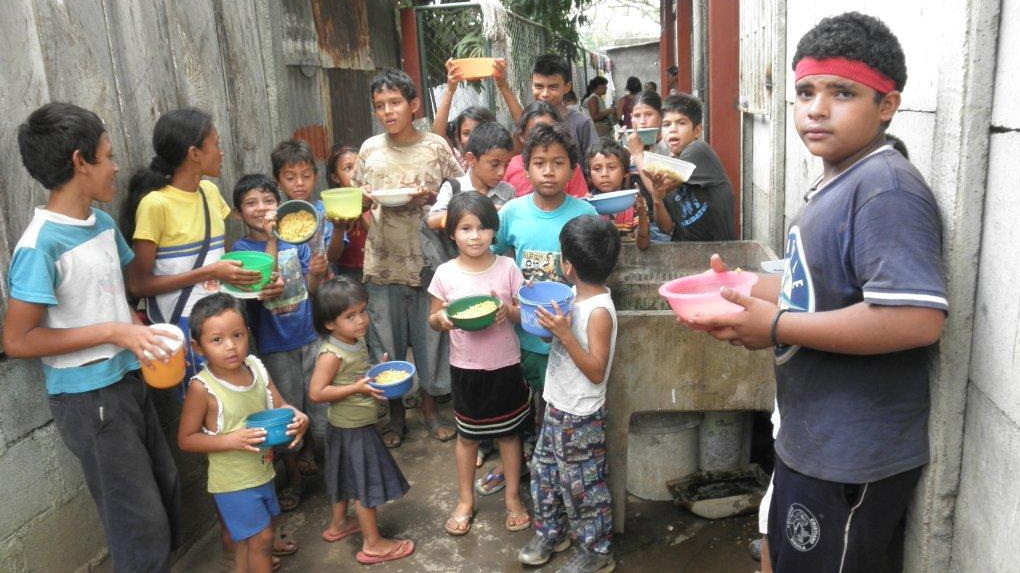
A non-profit humanitarian group called Kids Against Hunger works to feed underprivileged children and families locally and globally by providing them with wholesome meals. The group wants the meals to give recipient families a reliable nutritional foundation so they may transition from hunger or food insecurity to self-sufficiency.

Photo by the KAH website


The organization’s strategy for attaining its objective of ending world hunger entails having volunteers package highly nutrient-dense, vitamin-fortified meals at various locations in the United States and Canada. These meals are then distributed to starving children and their families in 70 countries by means of partnerships with international humanitarian organizations.

In order to fulfill the never-ending demand for food, Kids Against Hunger’s objective demands a large food packing capacity. This approach builds connections with organizations, schools, communities, and several faith-based groups of vast denominations while empowering individuals to understand they can contribute to the global effort to end famine. Additionally, by using this expansion model, the group is able to increase volunteerism and food packing capacity over time. Millions of meals have been given to children and their families in many, many countries since the founding of Kids Against Hunger. Hundreds and thousands of volunteers’ labor have been harnessed for good.

Photo by the KAH website

Recently, a group of TVE kids and families got the opportunity to go to the Pleasanton location and pack meals. It was a great learning experience for everybody. We started by sanitizing our hands and then entered the large warehouse where we got into groups of 10. We only worked for about an hour and a half and surprisingly packed 6,264 individual meals. It was so successful because of the organization accomplished by the assembly line. It was extremely impressive and motivating, we were all so very proud of the work we had done. This is a testament to the work of the foundation. Kids from five years old to grandparents can come together and work as a community to do something for the greater good, it felt so great to make a difference and share this experience with friends in our homeschool group. This could be you! At the bottom of the page there is more information on how you can set up an event for your own friend group or family.

Photo by the KAH website


According to predictions from the United Nations Food and Agriculture Organization, in 2021, one in nine people on the planet—roughly 821 million people—would be hungry, and one in three will be suffering from malnutrition.

A child dies from starvation and associated causes every ten seconds, or around 16,000 each day.

In the US, 16.2 million children under the age of 18 reside in homes where they do not regularly have access to the sufficient amounts of nutrient-rich food needed for a healthy existence.

Richard Proudfit traveled to Honduras in 1974 as a volunteer after the nation was devastated by a hurricane. He was deeply impacted by the famine he witnessed among the children in that nation and consciously chose to dedicate his life and financial resources to addressing the massive issue of world hunger.

Making use of his experience in production and distribution, Mr. Proudfit asked his business partners for assistance. Leading food experts were consulted in order to create a very nutritious meal that is rich in protein and enhanced with vitamins and minerals. When this meal is cooked with water, it can adequately feed hungry children in need. His unceasing efforts to cultivate relationships have yielded a global network of organizations capable of effectively distributing food even under the most challenging circumstances.

With the Kids Against Hunger network, Richard Proudfit’s legacy of eradicating world hunger continues to this day.

The volunteers that package the food for a large number of children, in addition to the physical food packing process, makes them happy and deeply involved with a sense of pride and responsibility. This is a perfect group activity for schools or children’s groups of any kind, to teach the younger generation in the United States about the global food crisis is very important not only for the now, but for the future as well.

Because they are a volunteer-driven organization, there are many ways to help. One way is to simply make a monetary contribution, and the other is to volunteer your time or resources. Some of their needs are great, some are much smaller or easier to fulfill, but every single one of them is needed for them to continue their fight against world hunger.

To meet the demands of current conditions (1 billion in our world are severely malnourished) they are looking to build a team of committed volunteers who can go out and harness as many resources as possible. If you are interested in any one of these positions, would like to volunteer at an event, or would like to host an event, please contact the Event Manager, Sherri Leal of the local Pleasanton location at (925) 400-7201 or email her at sherri@KAHBayArea.org.

There are also many other locations, click here to enquire and find which best suits you!

It is up to us to end the crisis. What will you do for the future?

Photo of TVE families volunteering. Taken by Sherri Leal
Arts and Culture, News, Student Life

A Night at The San Ramon Symphonic Band

by Meru S.

The evening was cold and windy—so unusual for a late Californian May—as we drove to the Dougherty Valley Performing Arts Center. A blanket of gray clouds obscured the sky. For just a few moments, a barely visible drizzle sprinkled our car’s windshield. When we pulled into the Dougherty Valley High School parking lot, I could see a trickle of audience members about to enter the theater

In the foyer, an usher offered us a program for the night’s concert. On the first page, printed in an elaborate design, was the title- San Ramon Symphonic Band Presents A Night at the Cinema. Below the title was an illustration of some popcorn, a drink, tickets, and other movie-themed objects surrounded by musical notations. Inside were the names of the Band members and a list of the music that was to be performed. Reading through them, I recognized many, including excerpts from the soundtracks of Marvel and Pixar films. On the back was a bio of the symphony’s conductor, Mr. Larry B. Colón, who has been their director for over ten years. 

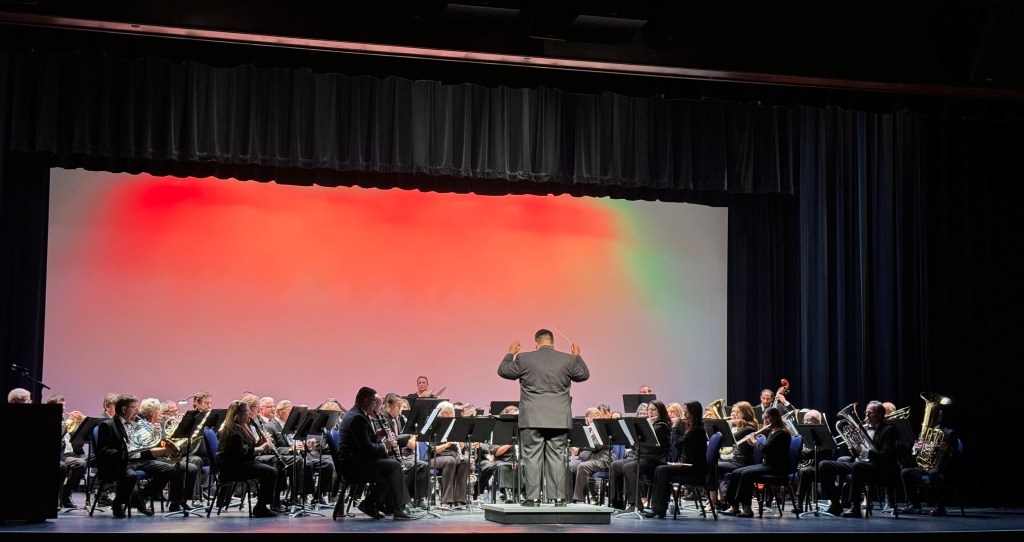
Once we had found ourselves seats in the center of the moderately crowded auditorium, we only had to wait for the show to begin. The sound of the instrumentalists warming up resonated throughout the hall. In about ten minutes, the lights dimmed, and the Master of Ceremonies (also a brass player for the band) stepped forward to welcome Mr. Colón onto the stage. After doing so, he proceeded to introduce their opening song- an epic and wild fanfare from the film Silverado.

A night at the Cinema courtesy of Meru S.

For their next piece, the band launched into a joyful and familiar selection of themes and songs from Pixar movies- Ratatouille, The Incredibles, Cars, and Toy Story. Following a cheerful and lighthearted finish to the collection, they went on to narrate the tale of The Lion King through the highlights of the cherished movie’s soundtrack.

The band began the medley with the jocund music of The Circle of Life, celebrating the marvels and beauty of nature. They expressed Simba’s excitement and anticipation at realizing his destiny as king in I Just Can’t Wait to be King, and navigated the malicious twists and turns of Be Prepared. Following Scar’s and the hyenas’ vengeful refrains, came the blithe and jazzy tunes of Hakuna Matata, which merged gracefully into the flowing, romantic melody of Can You Feel the Love Tonight. They concluded the first half of their concert with the triumphant King of Pride Rock

After a short intermission, the band transported us and our fellow audience to the interstellar travels of Peter Quill, Rocket Racoon, Gamora, Groot, Drax, and Mantis with the lively 80’s style music of The Guardians of the Galaxy. To continue the space travel theme were selections from Apollo 13. 

Next up were the melodious Celtic tunes from How to Train Your Dragon, and to bring to an end the concert, the band performed a march from “1941”. 

Following multiple rounds of applause and the return of the theater lights, we gathered our belongings and exited the theater. Once we were in the brightly lit lobby, we thanked the usher and stepped out into the biting air, the night’s music resounding in my mind.

Formed over thirty years ago, the San Ramon Symphonic Band is open to musicians ages fifteen and over. Past performances have been-

Song and Dance (March 2023)

Musical Playground (May 2023)

The Music of Star Wars (November 2023) 

The Spirit of Mexico (March 2024)

For more information on the San Ramon Symphonic Band and upcoming fall performances, please visit-

https://www.sanramon.ca.gov/our_city/departments_and_divisions/parks_community_services/arts_culture/community_performing_groups

Home, News, Student Life

Enchanted Forest – 2024 Teen Formal!

by Olive Pea

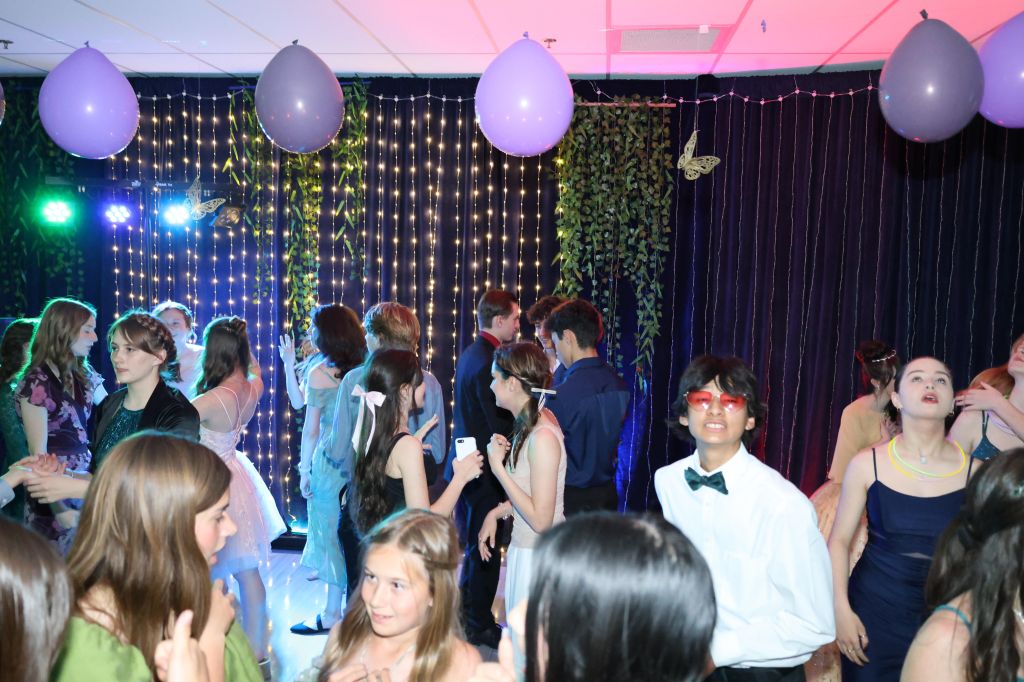
This year’s TVE Teen Formal took place in Rancho, San Ramon on a sunny Saturday. It started at 7:00, right at that time when sun began to set. The gentle sunlight filtered through the glass windows and onto the navy blue backdrop covered in a twinkling layer of lights that mimicked the night sky.

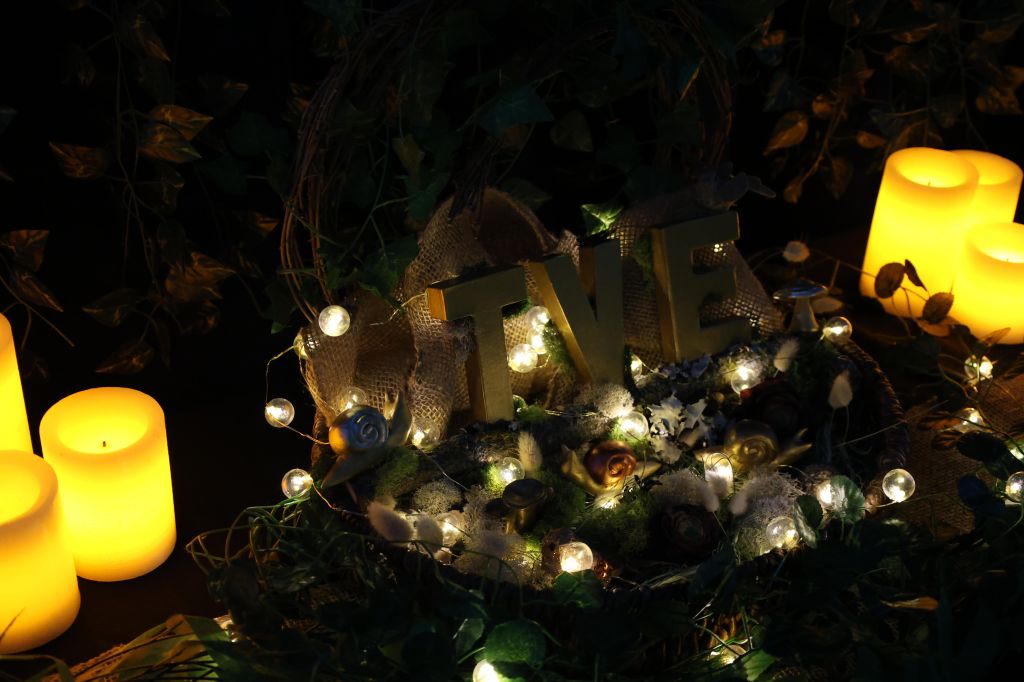
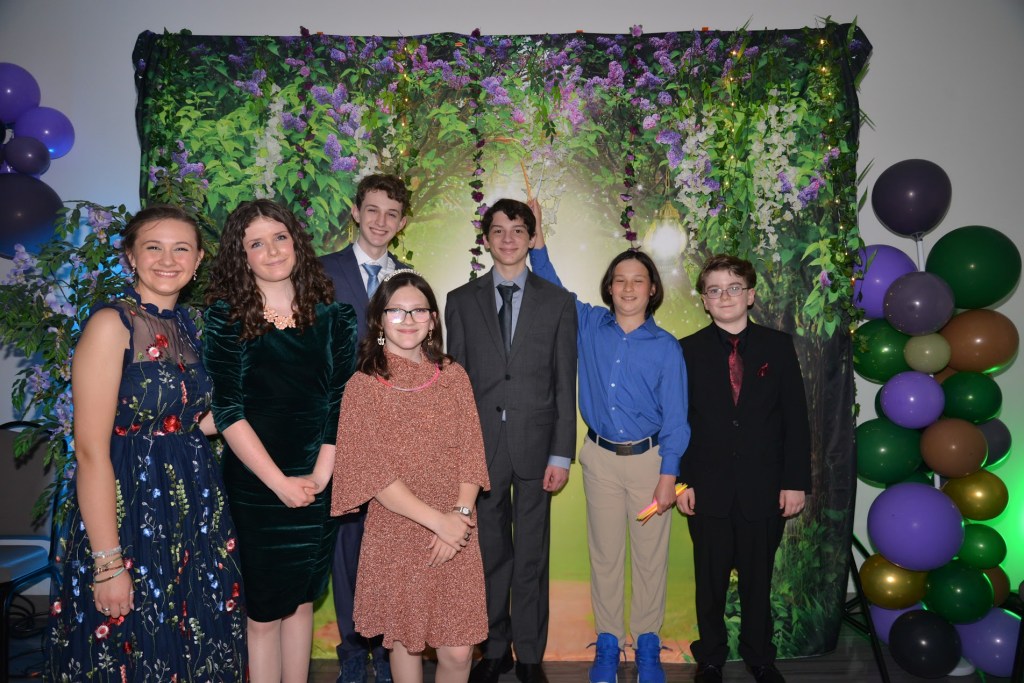
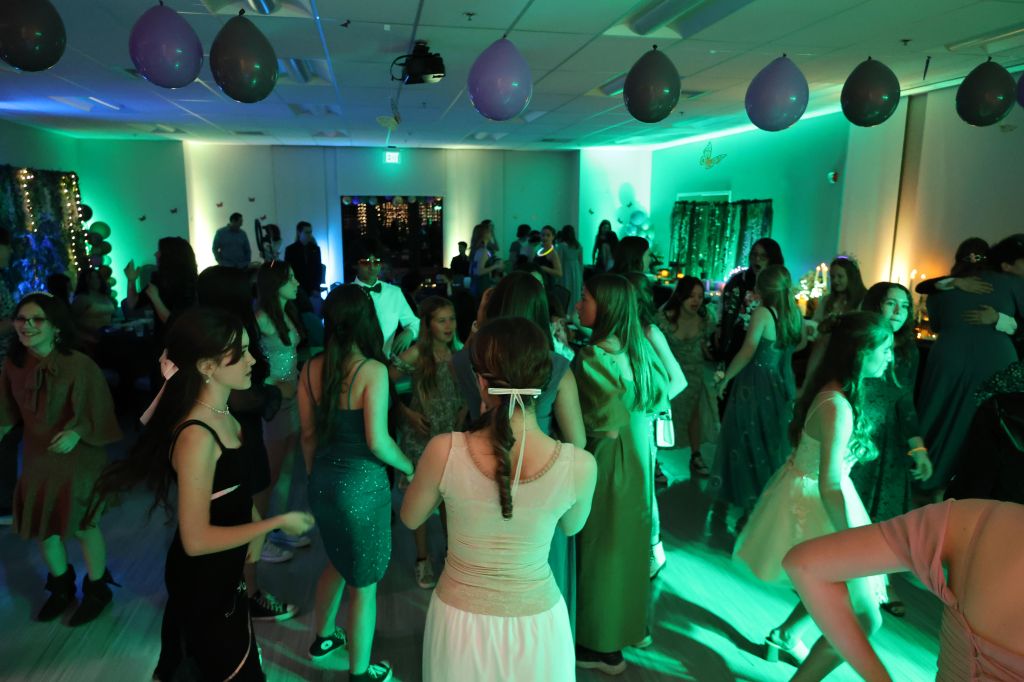
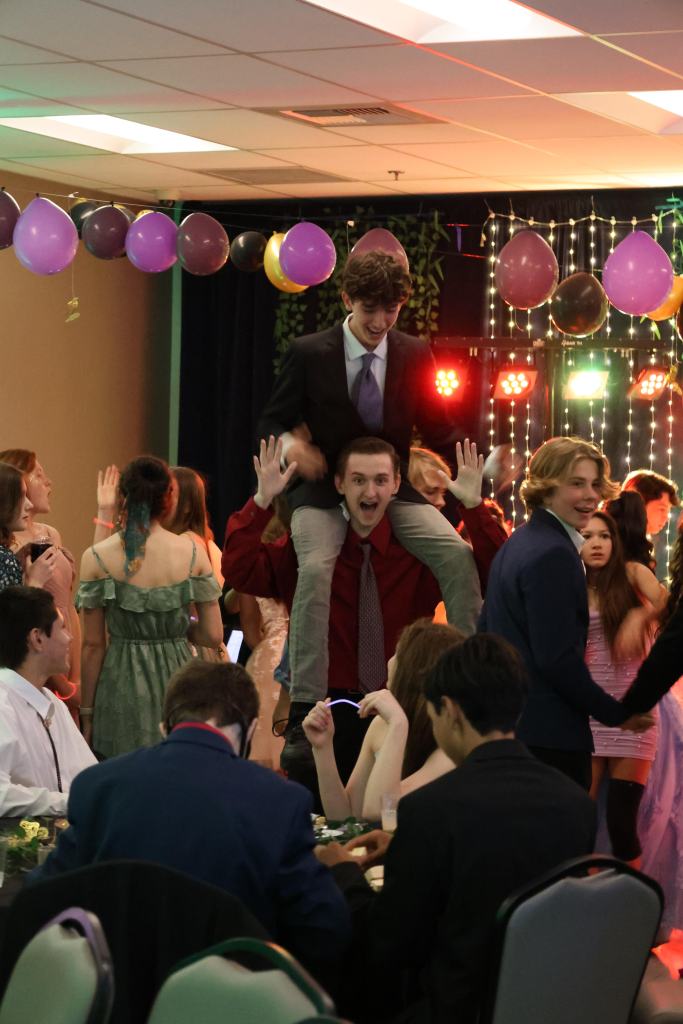
This year’s theme for the Teen Formal was “Enchanted Forest”. Guests were checked in at the registration table, and as soon as they walked through the entry, framed by balloons, they were instantly transported into an enchanted realm full of wonder and magic. From the ceiling hung strings of purple, green, gold, and black balloons. Dark blue curtains and strands of lights and ivy trailed down the walls. Woodland creatures, mushrooms, and butterflies could be found if you looked closely at the tables and walls. Lights danced all over the walls and ceiling as music played from the DJ booth. People had their pictures taken at the Photo Booth with a backdrop depicting a whimsical wisteria arch with hanging lanterns that faded into the distance. A wisteria tree stood in a pot next to it to add some dimensionality to the photos.

The snack tables were filled with trays stacked with cookies, chips, popcorn, crackers, salami, cheese, vibrant fruit punch and lemonade in glass dispensers. Sprinkled between the snacks were various woodland creatures, flower and plant cuttings, candelabras, and small trees with glowing flowers. Behind the snack tables rose a brown, silky backdrop with vines and dried purple flowers suspended across its length. Green up-lights added an atmospheric green glow.

The DJ booth was located at the back corner of the banquet room, off to the side of the dance floor. Over the black tablecloth on the booth there hung a curtain of white wisteria. In the center of the room, three large, round tables were surrounded by numerous chairs. Each table centerpiece gleamed with the light of the glowing water lilies which floated in a pool of water surrounded by mushroom-strewn moss.

On one side of the room, a table was situated with a variety of games such as Jenga, checkers, chess, Uno, and other card games. Serving as a backdrop for the table, there was a navy blue curtain with ivy weeping down in wavy strands. On the long wall backing the dance floor, a dramatic, deep blue curtain covered the entirety of the wall from floor to ceiling. Twinkling lights, bundles of flowers, and ivy trailed all the way down the curtains, adding a touch of magic to the dance floor. Disco lights cast streams of dancing color all over the walls and ceiling, and one could hear snippets of conversation and laughter over the music as you walked through the crowds of dancing people. 

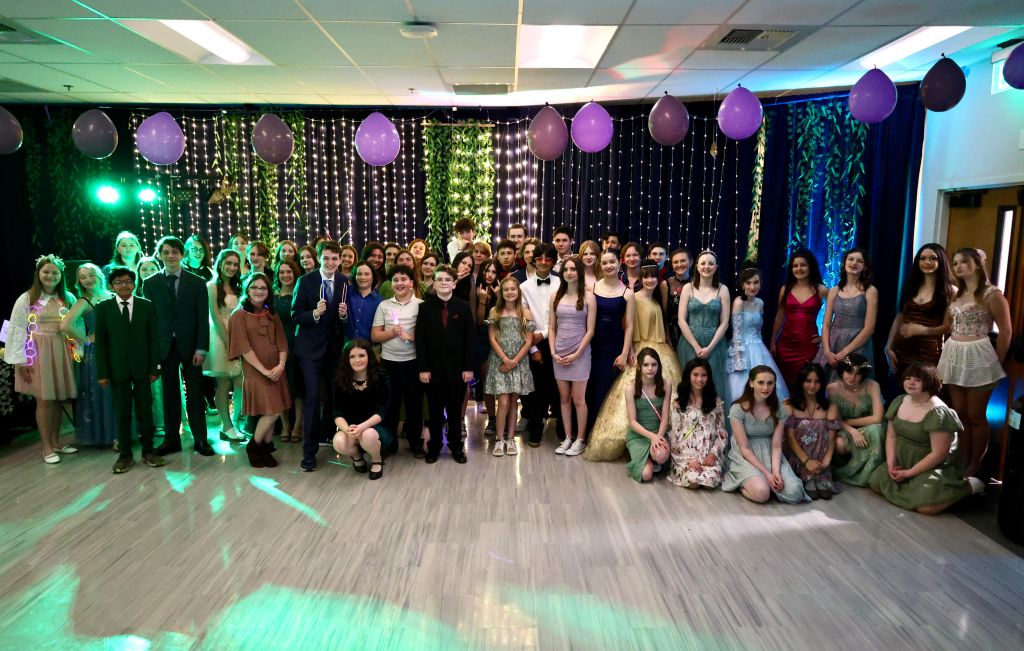
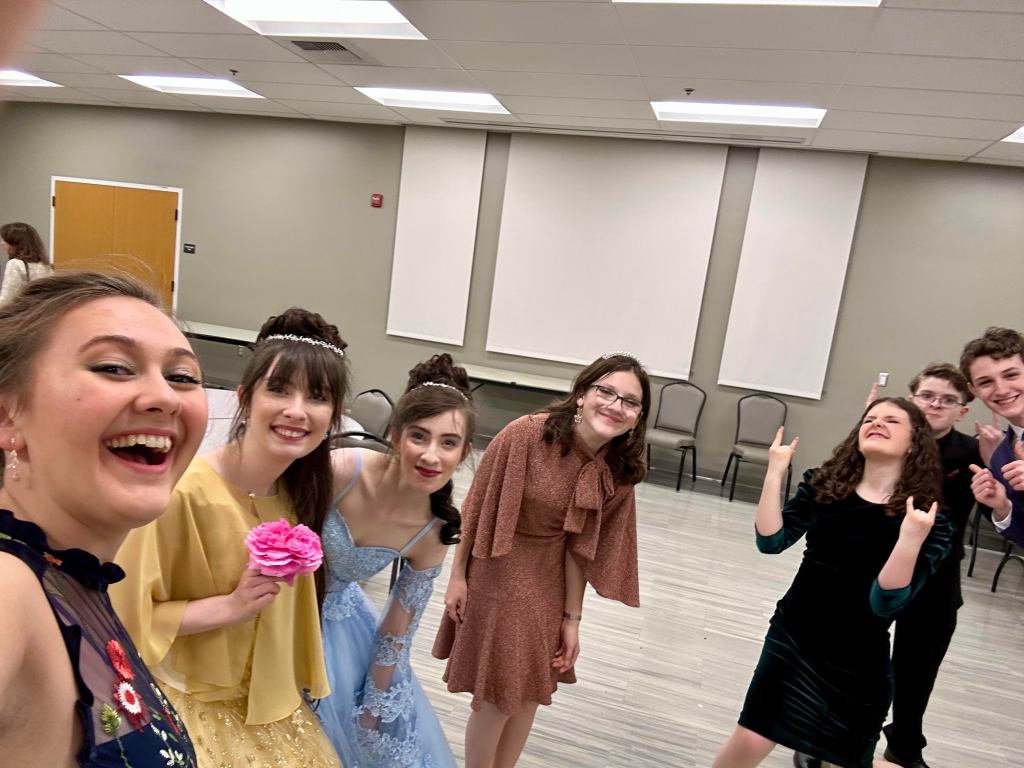
The whole night was filled with enchantment and dancing, music and magic. Sadly, as is the case with all parties, the night came to an end. Before the guests departed, a group photo was taken. 

This event will forever remain a treasured memory to us all, and this event would not have been possible without the efforts of the hard-working TVE leaders, as well as the many honorable volunteers. We are so grateful that you put in the time and effort to make this event come to life!

News, Science

Monarch Butterfly Life Cycles!

by guest author Ayah Haimor

Butterflies are amazing creatures. They do so much for the earth. Today I will be telling you about Monarch butterflies. Let’s get started! 

First I will tell you about one type, or species, of butterfly. There are many different kinds of  butterflies, but today I’ll tell you about the monarch butterfly. Monarch butterflies are so cool. They have cool designs and patterns on their wings.

Today, I will tell you about their life cycle. There are 4  steps. First, a monarch butterfly lays an egg on a milkweed leaf. Second, the monarch butterfly’s egg hatches into a caterpillar, which then eats the milkweed leaves of the plant that it’s on. Third, after it gets big enough, it comes out .  And it’s a beautiful butterfly! 

But wait, the wings on the butterfly are still wet! The moisture comes from the butterfly dries its wings in the sun. When the wings are done drying the butterfly flies away and goes to collect nectar from flowers. If you go close to a butterfly it will fly away. Fun fact you can get a monarch butterfly to come to your backyard if you plant a lot of flowers. Monarch  butterflies can’t fly that high like, for example a monarch butterfly  could not fly to space because  the monarch butterfly’s wings would freeze and it wouldn’t be able to fly because it’s freezing  up there.

I hope you enjoyed learning about butterflies! Bye!

News, Science

The Resent Total Solar Eclipse

by Lucas David

Last week, I flew to Texas to see the total solar eclipse, only to find the sky obstructed by heavy clouds that blanketed most of Texas. The forecast showed the possibility of blue sky in a couple different directions, hours away from us, but we couldn’t know for sure which of them (if any) would have a clear view of the eclipse. So that morning, my family and I picked one at random, and got very lucky. Only two or three clouds thick enough to obscure the sun actually passed over it during the eclipse, and none of them during totality. As the moon covered more and more of the sun, the sky darkened as though there was a sunset on all horizons, and the dazed and confused crickets began to chirp. 

Once the sun was completely obscured, we could take off our protective glasses and see the eclipse without any layers of separation. The sun was blotted from the sky, the dark cavity in its place haloed by the sun’s corona. The corona itself looked about two and a half times the diameter of the sun (864,575 miles) in length, which means that that halo was really about 2,161,439 miles of plasma flying from a ball of gas 333,000 times the size of the earth and into an endless void. 

Having tasted a total eclipse once, I’ve concluded that I’ll have no choice but to go to Egypt in seven years to witness the next one, hopefully with a recording device capable of giving a detailed view of the eclipse this time. 

News, Science

Solar Eclipse Facts!

by Layal Hilal

Have you ever seen a solar eclipse? Solar eclipses are amazing phenomena and are once-in-a-lifetime experiences…or twice-in-a-lifetime! In fact, during a time period of about four minutes, a solar eclipse will occur on April 8th, 2024. And in order to properly prepare for this eclipse, I will be sharing some facts about solar eclipses and warnings in general, and some specifically about the solar eclipse happening in April. 

  • There are two types of eclipses; lunar, which occur when the earth is positioned between the sun and moon and it gives the moon a reddish tint. Lunar eclipses are also known as “blood moons” and, honestly, the name definitely makes sense. The other type of eclipses are solar, which occur when the moon comes close to the earth and it completely or partially locks the sun from view for a few moments. 
Photo courtesy of Space.com
  • Solar and lunar eclipses follow a “path of totality”, and the only way to see a total eclipse is if you are along the path of totality. This year, the path of totality in America is in Texas, Mexico, and several states in the far eastern side of the U.S. The eclipse will still be viewable from states such as California, Oregon, Colorado, and Nevada, but it will only be viewable as a partial eclipse.
Total Solar Eclipse: Photo courtesy of NASA Science
Partial Solar Eclipse: Photo courtesy of WSTM

  • Although eclipses are beautiful and amazing, they are, like most things are, dangerous. Never look at a solar or lunar eclipse without special eclipse glasses unless the eclipse has entered the totality phase. If you do look at an eclipse that is not in totality with a naked eye, you may injure your eyes really badly. Make sure to be very careful!
  • In general, eclipses are pretty rare. But for a total solar eclipse to happen for a full four minutes? It is going to be amazing and you do not want to miss it. If you can’t visit a place that is in the path of totality, make sure you still get a good view of the eclipse from wherever you will be, and don’t forget to get solar eclipse glasses. Remember to only look at an eclipse with your naked eye if it has reached totality.
  • I’m pretty sure that by now, you’re wondering “What is a solar eclipse exactly and why is it so special?” Well, solar eclipses only occur when the moon’s orbit carries it close to the earth, so close that the moon actually seems to block the sun from view and it casts a shadow on a certain part of the earth.
  • Usually, the shadow—from the eclipse—falls onto an ocean, and, naturally, it is extremely difficult to get out onto the ocean to see an eclipse. So when an eclipse does fall onto land, it is very special. 

I hope you can see the eclipse, wherever you are, and I really hope you don’t look at the eclipse before it’s in totality! Remember, the solar eclipse is viewable all over the U.S., but only in totality from a few places. It occurs April 8th, and don’t forget to get some eclipse glasses. Have fun!

News, Student Life

What is Dundracon?

by Lucas David

DunDraCon, (short for Dungeons and Dragons Convention), is a four-day celebration of role playing games that has come every President’s Day weekend since 1976, and is still recurring today. For the past three years, they have utilized the Santa Clara Marriott, converting hotel rooms and meeting rooms into game rooms and Live Action Role Play arenas. DunDraCon allows visitors to pre-register for games through the month of February, which I highly advise, given how greatly it raises your chances of getting into the types of games you enjoy. 

One of the games includes Dungeons and Dragons, or DnD, often considered the first real Role Playing Games. It’s a collaborative storytelling game where 3 or more players each control a single character, and one person playing the Dungeon Master or DM runs the narrative. Another game often played at DunDraCon is Live Action Role Play, or LARP. LARP is much like DnD, but rather than rolling dice and moving tokens, players act out everything their character does. They use items similar to movie props as they improvise scenes, along with foam weapons to whack each other with. Last listed but not least, is the open gaming room, where you can take a board game to a table and, if you like, put up a “Players Wanted” sign as an invitation to conventioneers seeking a game. 

The hotel lodging works if you wish to spend money on a hotel, though Santa Clara is just a 1 hour drive away if you’d rather drive home at the end of the day. The hotel cafe is tasty, though their menu only consists of about 2 items most young children will enjoy, those being a hamburger and pizza. The Marriott breakfast diner was excellent however, as well as the local restaurants. One of my favorites was an Indian food place called the Indian Sizzler that had delicious chicken tikka masala and samosas, despite having limited options for choosy eaters. 

Despite my forewarnings at the beginning of this text, it’s relatively easy to find a game enjoyable to you even without pre-registering, so I highly recommend dropping in when DunDraCon returns next year.