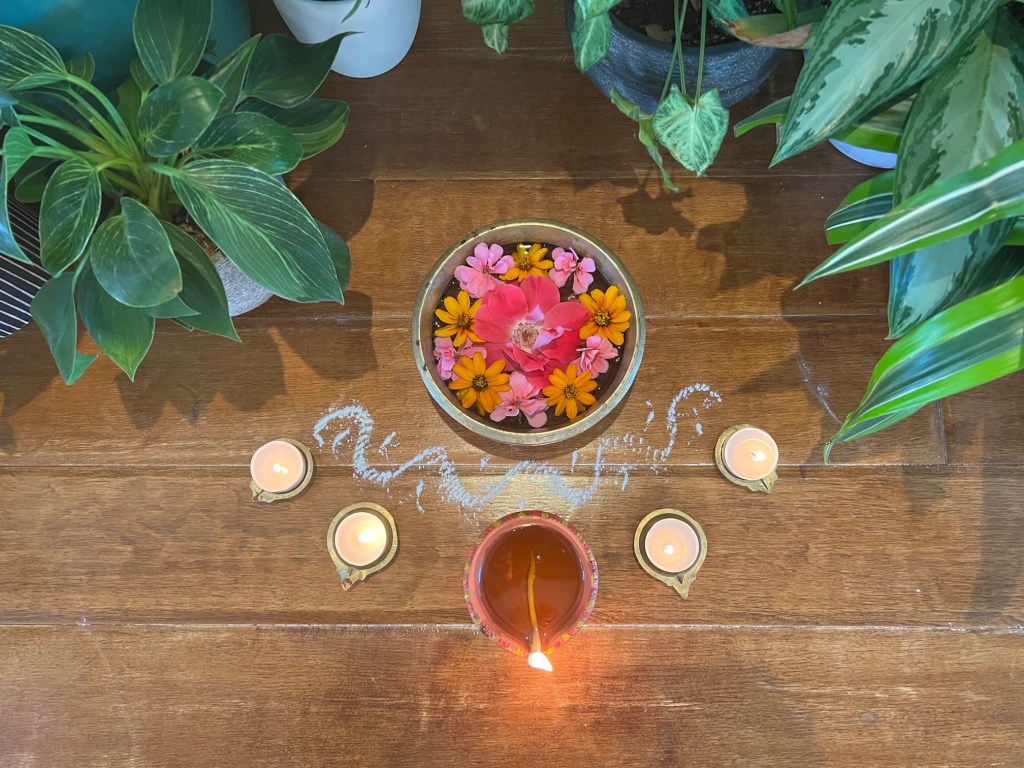
Deepavali (or Diwali) is the Hindu festival of lights. It is celebrated on the new moon that occurs between mid-October to mid-November, according to the Lunar Calendar. The word Deepavali is a combination of two Sanskrit words — Deepa, meaning lamp, and Avali, meaning rows or series. Therefore, Deepavali means rows of lamps.
In Southern India, Deepavali celebrates the defeat of the demon Naraka at the hands of Krishna, an incarnation of the god Vishnu. In Northern India, it celebrates the victorious return of Prince Rama, another incarnation of Vishnu, having defeated the demon Ravana. The demons represent the vices in human nature.
Deepavali symbolizes light over darkness, good over evil, and hope over despair. Families wake up as early as 4:00 AM and apply an herbal medicinal oil before bathing as a cleansing ritual. Hindus celebrate this bright and joyous festival by lighting oil lamps, cooking traditional sweet and savory treats, and, more recently, lighting sparklers or firecrackers.
This is a universal prayer in Sanskrit on the occasion of Deepavali
असतो मा सद्गमय |
तमसो मा ज्योतिर्गमय |
मृत्योर्मा अमृतं गमय |
ॐ शान्ति शान्ति शान्ति | |
Asatho ma sadgamaya,
Thamaso ma jyothirgamaya,
Mrithyorma amritham gamaya,
Om Shanthi, Shanthi, Shanthi.
Lead us from untruth to truth,
From darkness to light,
From death to immortality
Peace, Peace, Peace.
Here is a healthy, sweet recipe to celebrate with — Carrot Payasam
Ingredients:
4 large carrots
2 1/4 cups milk
1/4 cup water or reserved cooking liquid
1/4 cup sugar
1 tsp ground cardamom
4 whole cloves
saffron for garnish (optional)
Peel and cut carrots into two-inch pieces. Steam until thoroughly soft. If cooking on a stovetop, reserve cooking liquid for later use.
Combine the carrots, liquids, sugar, cardamom, and cloves in a blender and blend until smooth.
Adjust liquids for preferred consistency and sweetness for preferred taste.
“In baseball and in business, there are three types of people. Those who make it happen, those who watch it happen, and those who wonder what happened.”
-Tommy Lasorda
Tim Salado, whom I had the pleasure of interviewing, is without a doubt someone that makes it happen. From spending time as a professional baseball player to entrepreneuring his own start-up, Mr. Salado is an expert on both business and sports. When it comes down to it, many aspects of sports, such as performance under stress, are present in the business world as well. Mr. Salado was kind enough to share some of the connections and tips he discovered during his experience in these two fields.
The first question that I asked Mr. Salado was if there were any similarities he had noticed between business and professional sports. “When I was in professional sports, you were brought on to perform a certain skill, and they were banking on your performance in that skill. And just like in business where you would hire someone to come do something for you you’d expect that to be done, so it’s a very similar approach… What’s similar from a player’s perspective is that, uh and a business person is that you’re, let’s say that you’re the person delivering the service or the performance, uh, there’s that aspect of you must perform under potentially difficult conditions.” This is an interesting response because he highlights one of the most challenging aspects of business and sports. Stress, an ever-present element of both athletics and business, can be managed using various strategies. Competing in sports, especially at a high level, can provide practice for individuals that are also involved in business.
When Mr. Salado was in graduate school, he wrote his thesis paper on a trance-like state called “The Zone.” He describes The Zone as “an elusive, very temporary, and fleeting state of being that is usually defined by an extraordinary performance.” Mr. Salado further describes this state of mind, “You become very aware of the things that are going on, but only those things that are necessary for you to perform the task. All other extraneous things tend to melt away a bit so you don’t hear crowds, you don’t hear, you know, things going on you become very focused.” In the workplace, The Zone is more likely to be experienced when giving an important presentation or sales pitch but still has the same effect on office workers as it does on professional sports players.
Since Mr. Salado has a Master’s degree in sports psychology, my final question to him was, what is the most applicable thing to business you learned while getting this degree? ” Sports psychology taught me to have an awareness, you know, to make a scale, where am I on that scale, where am I normally on that scale one to ten, where would I normally perform the best? How can I get myself from where I’m at to that level?” This is an extremely valuable strategy to use in both business and sports. If mastered, this technique will be effective in daily life to perform at your maximum potential.
From stress management to The Zone, sports and business have many similarities. Unfortunately, not everyone that competes in athletics has a positive experience. A CEO co-worker of Mr. Salado jokingly said, “I don’t wish harm on anybody, only our competitors and my Little League baseball coach.” This shows that sadly, playing sports doesn’t translate into business skills for everyone. However, most people who have competed in some athletic endeavor and go into business have at least one advantage over non-sports players.
Thank you, Mr. Salado, for sharing your knowledge with us! I hope you all have learned as much as I have about the fascinating correlation between business and sports.
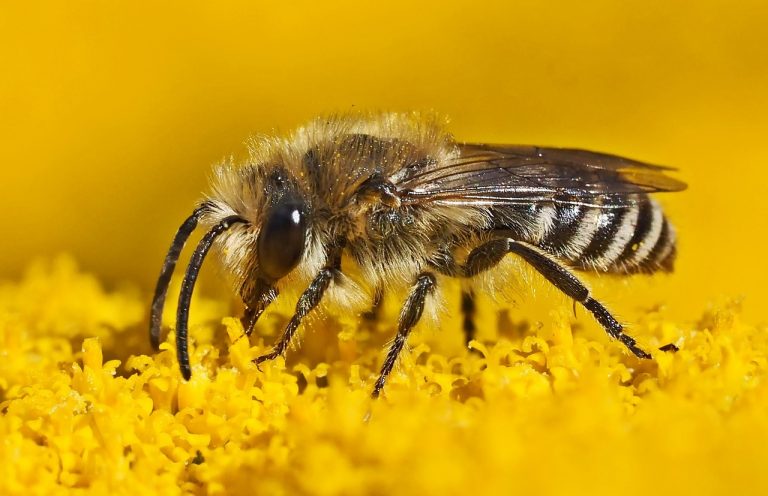
When you think of bees, most people think of hive dwelling, queen born, black and yellow little puff balls. But there’s actually much more than that! Not all bees live in hives, actually, out of 20,000 species, 90% are Solitary bees. 70% of all Solitary bees live underground, and only less than 10% of all species live in hives and make honey. You might be thinking “What in the world is solitary?”
Hive Bees ~ They live in hives, make honey, and are all born from one queen bee.
Solitary Bees ~ They do not live in a colony environment, they live as “solitary” creatures and have their own families. They are more efficient pollen gatherers, plus some live underground!
Photo by Beegrateful
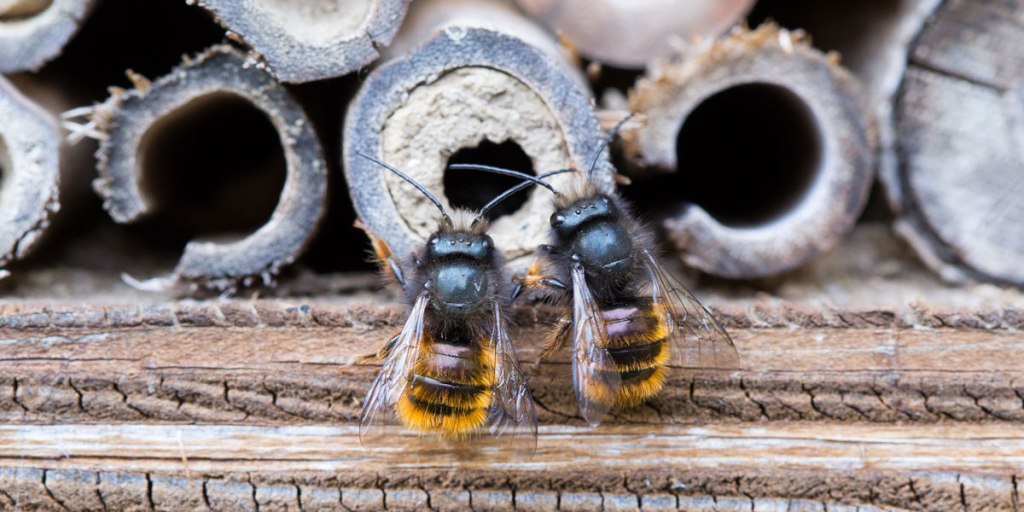
Of course, there is so much more to dig into than that but this is good for now. As with all of history, things happen and the world changes. Very sadly, we have seen a rapid decline in solitary bees in my area which can lead to insufficient pollination of our crops and gardens, and an over reliance on pesticides. “The plight of managed honeybees raised alarms that native bees might be facing similar challenges, says Neal Williams, a pollination ecologist at UC Davis. Although most native bees don’t live in colonies like honeybees do, they too are susceptible to poor diet and loss of habitat,” he says according to the California Native Plant Society article June 24, 2021. So what is leading to the decline? That’s what I wanted to find out and try my very hardest to stop. Over this two-part article, I will first explain why solitary bees are turning to the sad road of extinction, and second how we can stop it.
Photo by Ark Wildlife
But first, in order to help we must learn the why of the matter.
1. Pesticides
There was a study done by scientists in South Dakota to show if pesticides, like Neonicotinoids, could cause birth defects or even death in white-tailed deer. They laced the captive deer’s water with various amounts of this chemical. The study found what they expected, unfortunately and sad irregularities in the offspring and their parents. When the deer passed away, the scientists found scary amounts of Neonicotinoids. Some argued that because the deer were in captivity, the study was manipulated, so the scientists tried testing deceased deer born and raised in the wild and found more Neonicotinoids! My point is, if pesticides are affecting deer this horrifically, how do they affect other mammals, amphibians, humans and our precious pollinators? “Exposure to pesticides containing neonicotinoids and fipronil caused the deaths of more than 500 million bees in four Brazilian states between December 2018 and February 2019”, according to an investigation by Agência Pública. Keep in mind, this is just 4 states in just Brazil and in just 3 months. And this is just bees, what about the thousands of other pollinators? We have a state and country that has gained an over reliance on pesticides on our crops, especially in my community. I live in a farming community and have noticed many farms that no longer show a large “Organic” sign above their farm stands. “Beekeepers across the United States lost 48.2% of their managed honey bee colonies from April 2020 to April 2021” according to Auburn University. Pesticides are toxic to these little guys. Things like:
~Insecticides,
~Herbicides,
~Rodenticides,
~Fungicides,
~Neonicotinoids
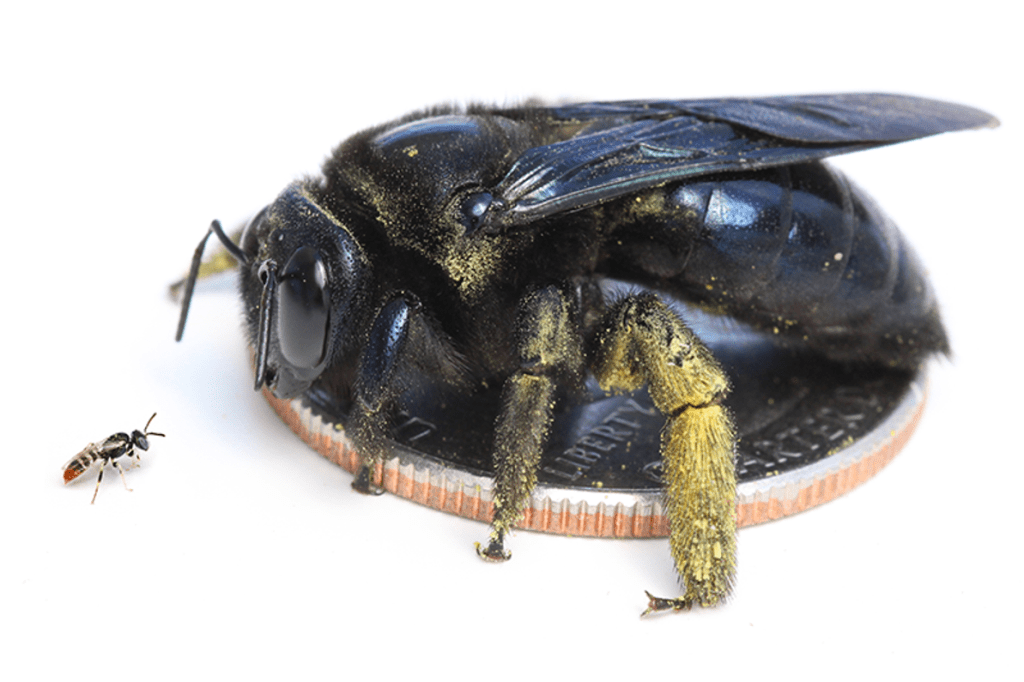
These are examples of chemicals that are, unfortunately, contaminating the water and pollen that bees use to survive. Bees will (with some varieties) die immediately upon touch. This has led to the sad death of too many bees in my area.
Photo by Crown Bees
2. Development
Over many years in California, our landscape has changed due to drought, fire, and an increase in alternatives to the traditional way of farming. In my area, I have seen more and more unnecessary building and construction projects which have destroyed the solitary bees natural place for the mothers to lay their larvae. The bees need a hollow “cave like” place to lay their larvae, and because of these irresponsible building practices in my community (killing of things like marshlands, old historic trees, and forests, which these bees use for nurseries) have caused an inevitable decline in solitary pollinators. Another issue contributing to the reduction in suitable habitat is the basic landscaping practices. Most local homeowners remove all foliage, dried brush, wood, as well as having highly manicured yards, thus removing all of the potential natural living spaces for solitary bees. In addition, I asked some of my friends, local kids, and even adults in my community about this topic and there was little to no knowledge of this issue amongst these people. We all must strive to inspire and educate our community on how to take care of solitary bees.
3. Climate Change
Plus, many more factors like climate change, in which pollinators are forced to make drastic and unforeseen changes in their daily lives.
I hope that helped us have a better understanding of why we should stop this unfortunate fate of solitary bees? Check back next month to see how you and your family can help protect our truly life saving tiny friends.
Hello, there! My name is Johnathan, but you can call me Johnny. I am a peacock! Now, you might wonder: What exactly is a normal day in the life of a peacock? Well, lucky for you, I am about to tell you!
I just woke up in a tree. I live in Africa, but a lot of peacocks live in India. I think it is about 7 o’clock. Yes, 7. That sounds about right. Time to sing my lovely morning tune. SCREECH! SCREECH! SQUACK! SCREECH! Doesn’t that sound wonderful? No? *sigh* I guess you’re right. Maybe I just need some practice. I can do that later. Anyways, I am an omnivore, so I eat everything including plants, insects and small creatures. For breakfast, I’m thinking of getting some fresh grasshoppers, perhaps, some tasty slugs or yummy worms.
Photo courtesy of biologydictionary.net
Yum! That was a wonderful breakfast. I found a super juicy snail! Next, let me tell you a little about myself. I am a peacock, meaning that I am a male peafowl. Peafowls are both peahens, (girls), and peacocks, (boys)…like me! Peacocks are big, bright, and colorful, and peahens are brownish and very attractive, if you ask me. I have long iridescent (that means the color changes depending on the angle you look from) tailfeathers that have eye patterns on them. I have a big blue broad chest, and small fan shaped feathers on my head.
Now I want to…wait a minute. It’s mating season! I see a lovely peahen over there. Time to open up my stunning 5 foot long tail. Watch this. “Hello, darlin’ would you like to grab a bite with me this evening?” Hey, wait! Who’s that? Oh, you’re taken. *sigh*. Perhaps I will find someone else to accompany me…later. Hey, look! It’s time for lunch!
Photo courtesy of differencebetween.net
I think that I’m going to have some delicious grasshoppers. I see one right there! Just a little closer, and…got it! Yummy! Crunch, crunch…This is delicious!…Munch, munch…Want some?…Munch, crunch…No?..Crunch…Okay, more for me. Gulp!
Photo courtesy of zoolity.com
I have an idea! Do you want me to tell you some fun facts about us peacocks? Okay. First, male peacocks, like myself, have 100 to 150 long tailfeathers. I have…um…I forgot. Give me a minute. One, two, skip a few, 132, 134. I have 134 long tailfeathers! Wanna know another fun fact? Our life span is 20 years in the wild! I am 10 years old. That means I am a middle aged man! I think we have time for 1 more fun fact before we go eat dinner. Ready? Okay. Did you know that peacocks are among the biggest birds who can fly? It’s true!
Photo courtesy of deccanherald.com
I want a big juicy dinner. Hmm. Hey, look! I’m just gonna fly to that very tasty looking snake over there! Wee! Gotcha! Yum! This is the tastiest snake I’ve ever had! It’s so good! Gulp! Why do you have that look on your face? Oh, I guess you’ve never tried a yummy snake before. You should! They are delicious.
Photo courtesy of birdfact.com
I’m really glad that you let me walk you through a day in the life of a peacock. I had a lot of fun with you! I guess I should probably get back to my party for the night. By the way, that’s what you call a group of peacocks. Before I go, I want to tell you one more fun fact. Did you know that peacocks are the national bird of India? That means I’m extra special there!
Hey, look, it’s my favorite spot! I’m gonna go snuggle up there. Ahh, there we go…nice and comfy. Yawn. Good Night…Snore.
Cy Bernardi is 15 years old and a sophomore in high school. He lives with his parents and has no pets or siblings. This is his first year at the Lighthouse, and he is looking forward to his position as Sports Editor. He has been homeschooled since 3rd grade, and his favorite subjects are math and history. When he’s older, he plans to go to Las Positas Community College and transfer to a UC in Southern California, but he’s not quite sure which one yet. After that, he plans to pursue a career in either business or engineering. Some of Cy’s favorite things to do in his free time are rock climbing, cooking, listening to music, playing board games, and participating in any kind of athletic endeavor that comes along. Some of the sports that he plays are soccer, ultimate frisbee, and parkour. He also enjoys watching TV with his parents at the end of the day.
What’s that smell? Wow! It sure smells good. Is that the smell of new paper, new pencils, and new notebooks with spines yet to be broken? Wait just a second! That means… (Drum roll) The beginning of the homeschool year has started! (Thunderous applause) And that means that the TVE Lighthouse is up and running again! The Lighthouse staff have put together a fun poetry challenge for all you TVE kids, to kick off this new and fantastic school year! But before I give you the poetry challenge guidelines, let me introduce you to The Lighthouse staff!
THE LIGHTHOUSE STAFF
The Lighthouse newspaper has been up and running, going on two years now, and as of last year, the lighthouse has welcomed new staff members into the group! Here is our new staff thus far!
Ava Salado – Editor-In-Chief
Meru S. – Fiction Section Editor / A&E Editor
Lydia I. Martinov – Science Editor
Liam P. – Photographer & Videographer
Olive Pea – Student Life Editor
Don’t forget to check for new articles! Our staff writes up awesome articles that are edited and uploaded to the Lighthouse Newspaper for you to read every other Thursday of the month.
Wait! Hold your horses! Don’t get too excited yet, I will tell you all about the poetry challenge in just a moment, I just need to give you a list of the upcoming events first. Ok, here it is.
UPCOMING EVENTS
All year long – Weekly Parkdays
October 2022 – The Harvest Dance
Spring 2023 – Knowledge Fair
Spring 2023 -The Teen Formal
May 2023 -Graduation and Promotion Ceremony
May 2023 – Not End of the School Year Picnic (NETSY)
TVE Leaders have also organized a fundraiser for the TVE events. The ID Fundraiser runs now through the end of September. You can participate by going onto the TVE Facebook page, where you can get the student and teacher ID form and instructions.
POETRY CHALLENGE TIME!
Alright. Time for the poetry challenge. First off, YOUR POETRY MUST COME OUT OF YOUR OWN CREATIVE MIND. No quoting Edger Allen Poe, people! Second off, NO EXPLICIT LANGUAGE. We will not accept any foul poetry submissions. Third off, WE ACCEPT ALL TYPES OF POETRY! We don’t hold grudges against haikus or anything. POETRY IS TO BE SUBMITTED ON THE 23rd OF SEPTEMBER. You can SUBMIT YOUR POEM AT: thelighthousetve@gmail.com. Our staff will decide who wins first place, and whoever gets first place will be messaged personally by a member of our staff to congratulate you for your hard work! ALL SUBMISSIONS WILL BE POSTED IN THE LIGHTHOUSE NEWSPAPER ON THE 29th OF SEPTEMBER.
Our staff is hoping to see some truly creative poetry pieces on the 23rd of September. Until then:
Hello future journalists! Have you ever wanted to write? Let me elaborate, not just write short ‘thank you’ notes for those gifts your friends gave you at your birthday party or long, drawn out essays about George Washington for school. I mean writing stuff that you are interested in! From Leaping Blennies, flatulence facts, to on-site coverage of Tri-Valley Explorers events. We pride ourselves on being a pretty versatile newspaper. Now, being back from summer break, we are inviting you to be a part of our staff! We accept students from ages 11-18 with a love, passion, and drive for creative writing. Contact us to find out where our bi-weekly meetings are located, when they start and end, and all those other lovely details! At these meeting we will discuss:
First, how to write interesting, engaging, and proper articles.
Second, our upcoming publishing. Are there any TVE events, world events, or just… cool stuff you would like to write about?
And sometimes we just mess around and play fun writing related games and activities!
These are the jobs we have open:
Copy Editor
In addition to writing for the publication, this person is responsible for editing all copies in the newspaper. This staff member is responsible for checking grammar, spelling (including names), and mechanics. Additionally, the copy editor will also be responsible for fact checking..
News Editor
In addition to writing for the publication, this person is responsible for making sure that all news stories are assigned and written on time. Each section editor is also responsible for keeping their section populated with new stories and properly updated with current events.
Sports Editor
In addition to writing for the publication, this person is responsible for making sure that all sports stories are assigned and written on time. Each section editor is also responsible for keeping their section populated with new stories and properly updated with current events.
Op/Ed Editor
In addition to writing for the publication, this person is responsible for making sure that all opinion and editorial stories are assigned and written on time. Each section editor is also responsible for keeping their section populated with new stories and properly updated with current events.
Just because you have a specific title like, let’s say “Op/Ed Editor” does not mean you can’t write something in the “Sports Section”. Your interests are the most important thing! For all jobs what we ask is that you:
Try your absolute hardest to produce good and clean work. Yes, we do have Copy Editors, but it is our job to do our best and reach our amazing potential.
Make sure you have at least one piece of work every month. We publish twice a month. This is not necessarily a “rule”, but we highly encourage it to keep your author juices flowing.
Stay respectful in all you say and do. Let’s always keep in mind that not everyone’s passion comes with immediate perfection, we are doing our best and no one will ever be put down, mocked, made fun of, or scrutinized. Also, we promise that we will never be asked to read, spell, or do anything on the spot. I know how hard it can be when you are asked a question you are not comfortable answering. This is a comfortable space!
In your writings, we ask to stay away from political or ethical “touchy” topics and, of course, refrain from using any profanities, inappropriate subjects, gory pictures and so on. But to be honest, I know you all are too cool for that!
We invite anyone who has any questions or who would like to join to come — and see a meeting in action! This club will be in session until June 1st, 2023. From the Lighthouse staff to you, “we hope to see you there!”
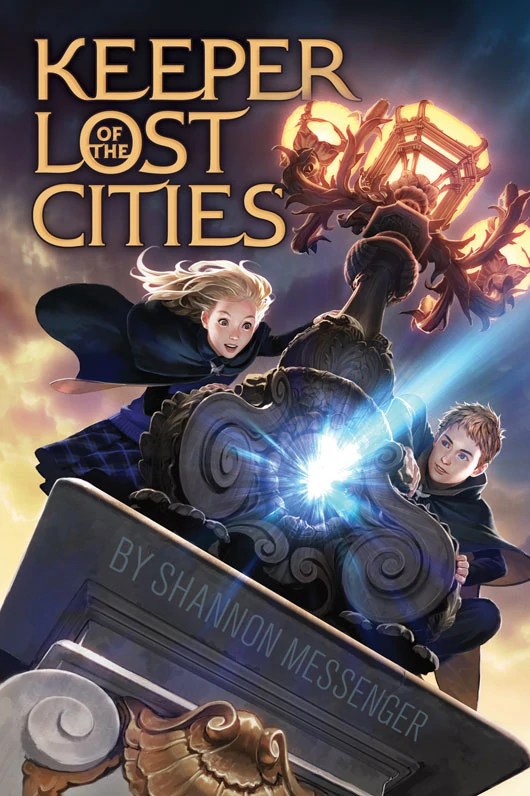
Keeper of the Lost Cities is an exciting fantasy series by author Shannon Messenger. Book one is suitable for ages 10+.
Sophie Foster is a Telepath, and she has been keeping it a secret for years. One day while wandering in a museum in San Diego, Sophie meets a mysterious boy named Fitz. He reveals to her the reason she can read minds. She is an elf. He then tells her that she must leave behind her human family and move to where the elves live — the Lost Cities.
Soon after she arrives at the Lost Cities, Sophie begins to attend an Elvin school called Foxfire. There she develops her telepathic abilities and other skills under the guidance of her mentors.
But, amongst her memories are secrets about herself and why she was born within the human world. Secrets that even she does not know or remember. And the secrets contain information that some people would do anything to acquire.
As Sophie’s control over her ability grows, she makes new friends who each possess an ability of their own, discovers who her foes are, and learns more about her new home and where she truly and finally belongs.
photo by Lac de Feuilles
Keeper of the Lost Cities is complete with memorable characters, complex strategies, and lots of humor! The story continues in the following seven books: Exile, Everblaze, Neverseen, Lodestar, Nightfall, Flashback, and Legacy. These should be available at your local library or bookstore.
This series also includes Book 8.5, titled Unlocked. It offers different perspectives, character profiles, quizzes, themed recipes, and more!
Stellarlune, the long-anticipated ninth book, is expected to be released on November 8th, 2022.
To follow the release of the book or to read about the author, please visit






 The Lighthouse