The T-Rex is without a doubt the most famous dinosaur in history, but there is much more to the Tyrant Lizard King than you might think.
Reconstruction of T-Rex at the Carnegie Museum of Natural History
In the year 1900, assistant curator of the American Museum of Natural History, Barnum Brown, found the first partial skeleton of T-Rex; two years later, he found another partial skeleton, consisting of 34 fossilized bones. In 1905, Henry Fairfield Osborn, the president of the same museum, named the second skeleton Tyrannosaurus rex, and later that same year, the first specimen Dynamosaurus imperiosus. Though in 1906, Osborn recognized that the two skeletons were from the same species and chose Tyrannosaurus as the preferred name.
T-Rex is part of a group of theropod dinosaurs called Tyrannosaurids. A few features that differentiate Tyrannosaurids from other theropod dinosaurs are their massive skulls and large, banana-shaped teeth, and comparatively very small arms with only 2 functioning digits. The majority of Tyrannosaurids were the apex predators of their ecosystems, such as Albertosaurus, Tarbosaurus, and of course T-Rex, to name a few. Them being apex predators allowed them to prey upon a wide variety of animals such as hadrosaurs, ankylosaurs, ceratopsians, and possibly sauropods, as well as scavenging.
The incredibly small arms of Tyrannosaurids allowed their necks to be strong enough to carry their large and robust skulls, as arms and the neck compete for muscle attachments. This evolution allowed for T-Rex to have the most powerful bite of any land animal that has ever lived; it could have produced over 12,000 pounds of force, which allowed it to break the bones of its prey!
Tyrannosaurus and Triceratops
Tyrannosaurids likely hunted different prey at different ages, with juveniles and subadults having comparatively longer legs than adults. So juveniles were likely much faster and hunted smaller and faster animals, and the adults were stronger and better suited to hunt large, and even some armored, dinosaurs. An adult T-Rex could only run on average about 17 miles per hour, so a person could possibly outrun one. A juvenile, on the other hand, could easily overtake you if you tried to run away.
Some studies show that Tyrannosaurids went through huge growth spurts, with Tyrannosaurus specifically tripling in weight in 4 years. Going from roughly 3,000 pounds at about 14 years of age to over 9,000 pounds at around age 18!
Several misconceptions about the T-Rex exist in pop culture, but none more prevalent than that about its vision. In Jurassic Park, the T-Rex couldn’t see you if you didn’t move. In reality, that was absolutely not the case. By applying perimetry to facial reconstructions of dinosaurs, including T-Rex, studies found that it had a binocular range of 55 degrees, which is more than that of a hawk. It is estimated that T-Rex had vision 13 times as sharp as humans, the farthest point at which it could visibly define objects is about 6 km or 3.7 miles away from its eyes!
Dinosaurs are truly fascinating animals, and Tyrannosaurs are no exception. For 30 million years leading up to the extinction of the Dinosaurs, Tyrannosaurids were the apex predators of the northern hemisphere. It’s no wonder that the King of the Tyrant Lizards is as famous as it is.
Brianna is a 15-year-old 9th grader who has been homeschooled all her life. She lives at home in five acres of forest with her parents and older brother in Castro Valley, California, where she likes to write, draw, read, sing, and participate in her friend’s livestreams. This is her first year working in journalism, though she has been writing fantasy and fiction since she was about 10 years old. She also loves animals and cloaks, and has been a part of Homeschooled Films as an actor, and the cinematographer in many movies with her friends.
Since the start of the Covid19 pandemic, live-action filmmaking has been drawn to a halt, with new restrictions and safety guidelines preventing many of the franchises we know and love today from being filmed. However, despite this unexpected stop in traditional production methods, many filmmakers have begun trying new mediums with which to tell their stories.
As a small independent filmmaker myself, I’ve spent much of my life creating live-action short films with friends in person, in a variety of locations and genres. Early 2020 found me in mid-production of a fantasy short film with a sizable crew. Unfortunately, in early March, I, like so many other filmmakers and production studios, had to put the short on hiatus given the implementation of quarantine. Some called the Coronavirus the end of traditional media, but filmmakers were not ready to give up so quickly.
A few weeks into the pandemic, an online film course I take as a student launched a virtual film challenge to anyone interested, providing a series of prompts to create a three-minute short from. Many others followed suit with their own challenges and film festivals with the goal of providing small-scale movie-making opportunities to those locked in their own homes. A fair number of popular YouTubers launched their own festivals to their fans, offering prizes for a variety of categories a short could fall into, and as a result, inspiring the massive community of independent filmmakers online to resume their craft.
Theatrical productions essentially came to a temporary close in the pandemic and gave center stage to the online filmmaker community, and with it came a number of new styles and methods of film production. Many creators made solo productions or collaborated with those within their social bubbles, while others found workarounds for their limited number of live-action casts, such as creating storytelling within recorded video games, using green screens, and some even using objects such as puppets as their main actors. Others still utilized the medium of animation to tell their stories. One YouTuber in particular, Joel Haver, kicked off an AI-assisted animation trend (fittingly called the Joel Haver Style) where live-action footage was animated over with the help of an application called EbSynth. These examples barely scratch the surface of the incredible determination of filmmakers to tell their stories in any way possible.
Similar to independent filmmakers, major production studios stayed strong despite the Coronavirus. Animation studios such as Pixar had an easier time of simply moving their animators from the studio to their homes to finish movies like Soul, while live-action studios went through the more rigorous task of having their actors and crewmembers all quarantine so they could record safely, on top of the mask requirements the entire rest of the world also was required to undergo. This seems to have worked, as a decent number of productions have both finished and started during the lockdown.
The Covid19 pandemic put a difficult obstacle in the path of filmmakers everywhere. With our primary method of production now unavailable, it seemed as if movie-making might cease until restrictions lifted. But filmmakers everywhere pressed on despite the trials put before us and gave rise to a whole new plethora of mediums and methods for storytelling. Whatever the world throws at us, we will persevere.
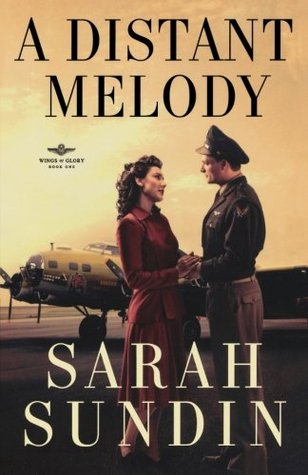
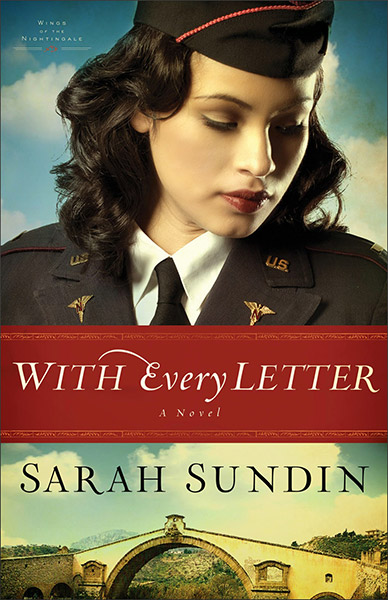
I had the pleasure of interviewing Sarah Sundin, a local, bestselling author of Christian Historical fiction (specifically WWII) and romance (http://www.sarahsundin.com/). She is the author of the Wings of Glory Series (2010, 2010, 2011), Wings of the Nightingale Series
Photo Courtesy of Goodreads
(2012, 2013, 2014), Waves of Freedom Series (2015, 2016, 2017), Sunrise at Normandy Series (2018, 2019, 2020) and When Twilight Breaks (2021). She graciously agreed to have a Zoom interview with me and homeschooler Sydney Shirley for a badge we were working on. We were working together on writing a story of our own and wanted to ask questions to a professional author.
When Shirley asked Sundin, “How did you become an author?” Sundin responded that she was originally a pharmacist with three little kids, majored in chemistry. She then says “and then I got hit with a story idea, and I just wrote it.” Sundin said that it took her ten years, and she spent a lot of time at writer’s conferences, reading books about writing, doing workshops from published authors, and attending writers groups. Sundin explained, “so I started writing in 2000, I was 34 years old, my first book came out in 2010.” Sundin then explained that “it was going to writer’s conferences that was huge because I was able to meet with editors and agents in person and um… submit my work to them and get some feedback,” Sundin then continues, “and meet with published authors and learn from them.” Sundin also said, “it did take me ten years and finally got my contract and um… been publishing a book every year ever since.”
When I asked her, “Why did you become an author?” Sundin laughed and said, “Because the story wouldn’t leave me alone, I did not plan on this, I mean I, as I said I was a chemistry major, I became a pharmacist, I like pharmacy a lot. Um… pharmacy had some really nice things because I was a stay-at-home mom with three little kids.” Sundin explained that the pharmacy lets you work only one day a week, and that’s what she did for a while. She said it was wonderful. Sundin states “and I was planning that as the kids got older that I’d be… that I’d take on some more hours at the hospital, I was working a Sutter Delta.” Sundin remarks that once the kids were in high school or college, she would work full-time, Sundin continues “that was always my plan, that was my husband’s plan and then um… God obviously had different ideas because I had this story idea, and it just would not let me go, I was, It was almost obsession right, I just had to write it, I couldn’t not write the story; it was just coming out of me so fast and um… and I didn’t know what to do with it… I… I was a chemistry major, I tested out of taking English in college, and I was really happy about that.”
She says the last time she had really taken English was in high school. “I couldn’t remember how to punctuate dialog,” Sundin said. Sundin remarked that she went in “kicking and screaming.” She continued, “I didn’t know what I was doing, I knew how hard it was to get published, and I didn’t want to waste my time just writing for me because I had three little kids at home, I had another career that I could be focusing on, and it seemed selfish for me to spend time on something… a lot of time on something like this that wasn’t going to go anywhere, and I decided from the beginning that I was either going to write seriously with the goal of being published or I wasn’t going to write at all.” She says that at her first writer’s conference it felt really “make or break,” she was really willing to say that if this wasn’t the right path “take me off of it now.” She said, “I submitted my work to some published authors, and their overwhelming feedback was, yes, you are writing at a publishable level, and you should be doing this.” Sundin said this helped her so much because she had five years of rejection letters. “All that time, just when I was ready to give up, God would give me a little something, you know something really positive, and even one of the agents who rejected my novel, she said I just love this story so much, she says I love the story, I love the characters, I love the writing, she says, um… at this time though World War Two fiction was not selling so she didn’t feel that she could find a home for it.” Sundin explained that the market eventually turned around, and historical fiction started selling again.
After this, we talked more about the book world specifically; we all know how hard it is to take on writing as your profession or even your job. You must go through months, and even years of writing, researching, and rewriting all over again. It takes hard work; we wanted to hear advice straight for a hard-working person with a lot of great knowledge in the field. I asked her, “what is the difference between self-publishing and going through a publisher?”
Sundin laughed and responded with, “there are entire books about this problem (laughs). Ok, so I am traditionally published um… this, this is the old fashion way, this has been done for hundreds of years, and that meant that I had finished my novel and then I had to send a query or a pitch which means to an editor or an agent usually, nowadays you go through an agent who then places your book with an editor, but the basic process is the same.” She then explains, “I would talk to them at writer’s conferences or send them an email, in the old days you wrote them a letter and say, I have written a book about such and such, it’s this, this genre and I think these people might be interested in it and this is why I’m a good person to write it, and then they say well that’s not for me, or that sounds interesting why don’t you send me more, that’s the query process.”
She continues, “the more is what they call a proposal, and that’s a little longer you go into some of the details about who you are and why you can write and some marketing stuff, and you send that in and if they like that they say, ok I will see your full manuscript now.” Sundin then explains that she turns her full manuscript to her editor, who is also her publisher, and she might say, ok, I like this, but the editor can’t give me a contract. So then the editor talks to the other editors, each of them have already looked at lots of novels, and then they see which of the novels fits best with their publishing houses. They then present them to their publication board; this is salespeople, vice presidents, marketers, and finance people for the company, then they all discuss what would be the best route to take. If they like it, then you get a contract, and after that, it is officially a partnership where they provide the book covers, all of the editing, and lots of marketing. Sundin says, “because I’m with a traditional publisher, I can get my books in Barnes & Noble and other book stores.” Sundin then explains more about self-publishing.
Photo Courtesy of sarahsundin.com
“Self-publishing has really grown in the past decade um… when I first started… when I first started going to writer’s conferences it was kind of the ugly stepchild, like, oh if you can’t get published then you publish it yourself.” She went on to add, “it’s really changed, a lot of authors have um… chosen to self-publish rather than traditionally publish, there are a lot of benefits to it, you don’t have to be approved by editors and publishing houses, and that’s really important if your story’s a little different because most publishing houses like thing that are going to sell and so there’s certain genres that sell well and others that don’t. So if your writing um… ok, actually I have a friend that wrote this book, so it’s Amish Vampires in Space, that’s the name of her book, Amish Vampires in Space and she self-published because no one going to, no publishers going to buy it, but it actually has kind of a cult following because it’s just kind of a quirky thing, and she was traditionally published beforehand. So a lot of my friends who are traditionally have chosen to self-publish in addition to traditional publishing.”
Sundin then describes that all of the traditional publishing process can take years and that rejection bothers everyone, including authors, and you have complete creative control if you self-publish; you won’t have an editor always telling you you must change this, take out this, and switch this. You can publish whatever you want to; the only disadvantage is that you must pay someone for editing, book covers, marketing, and that price can build up over time. Taking your time is very important so that you can learn what you really want to do; it took Sundin ten years to complete her first book, and she reports that that was good because it gave her time to grow and learn as an author. “ to authors who are interested in self-publishing I say, hey, make sure you, you take a deep breath, you take some time um… and learn, and learn, it’s ok to take time to learn. If you wanted to doctor, it would take you four years of college and four years of medical school, and a couple years of residency; you want to be a teacher, you gotta go to school, college for four years and a year for teaching school, so there’s, there, there’s things that you, that take time, and it takes some time to learn to be a writer to.”
With that, Shirley and I thank you, Ms. Sundin, for the amazing interview that you gave us. So many people love your books, and you inspire our community in every way. We thank you, and I hope all of you at home are also as inspired to hear what Ms. Sundin had to say as we were.
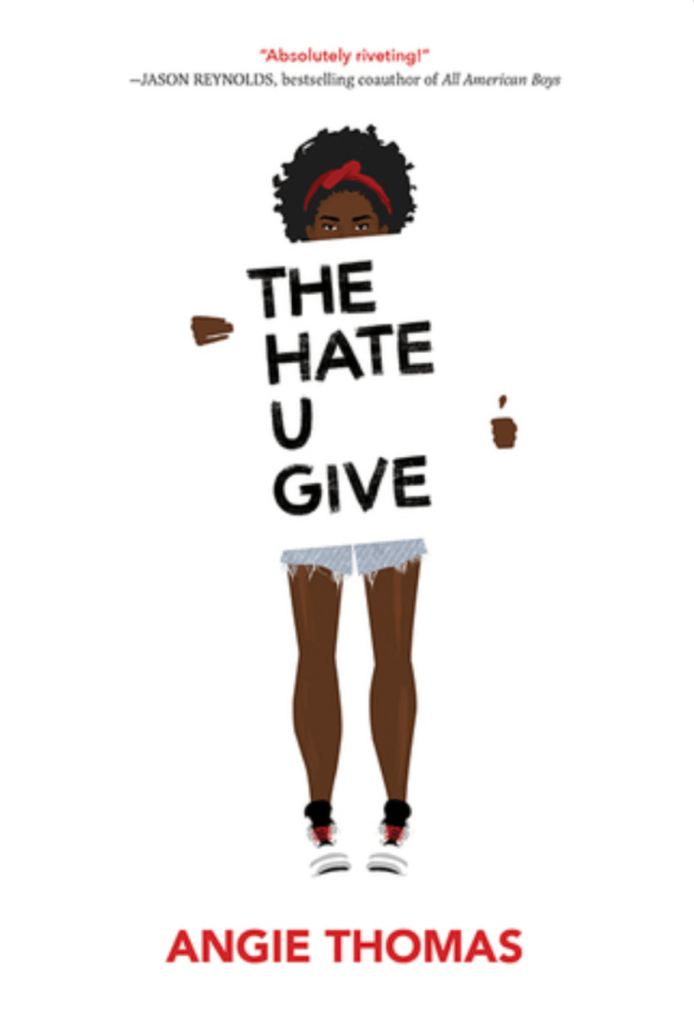
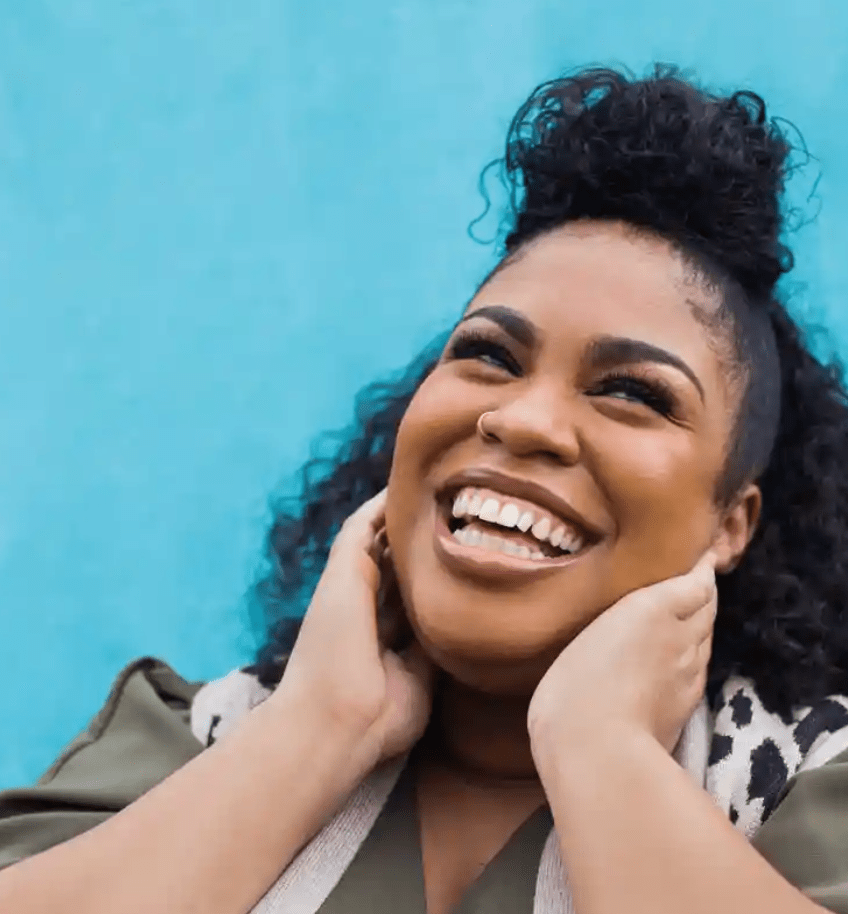
In her debut novel, author and activist Angie Thomas brings forth a compelling look into the life of a black teenage girl named Starr, who witnesses the murder of her friend at the hands of a white police officer. Starr’s life is one filled with challenges and loss as she learns to find her voice and stand up for herself, her friend, and her community. Angie Thomas has created a compelling story that is both honest and deeply moving, and Starr’s character comes through powerfully and shines a light on the challenges of being black.
Jacket Description:
“Sixteen-year-old Starr Carter moves between two worlds: the poor neighborhood where she lives and the fancy suburban prep school she attends. The uneasy balance between these worlds is shattered when Starr witnesses the fatal shooting of her childhood best friend Khalil at the hands of a police officer. Khalil was unarmed.
“Soon afterward, his death is a national headline. Some are calling him a thug, maybe even a drug dealer and a gangbanger. Protesters are taking to the streets in Khalil’s name. Some cops and the local drug lord try to intimidate Starr and her family. What everyone wants to know is: what really went down that night? And the only person alive who can answer that is Starr.
“But what Starr does—or does not—say could upend her community. It could also endanger her life.”
Reading Level: 14+
Age Range: 14+
Genre: Young Adult Fiction
Length: 444 pages
Awards:
Goodreads Choice Awards Best Young Adult Fiction
Goodreads Choice Awards Best Debut Goodreads Author
National Book Awards Longlist
William C. Morris Award
Michael L. Printz Honor Book
Coretta Scott King Honor Book
British Book Awards Children’s Book of the Year Shortlist
Goodreads Choice Awards Best of the Best
Carnegie Medal Shortlist
Edgar Award Nominee for Best Young Adult
Indies Choice Award for Young Adult Book of the Year
Boston Globe Horn Book Award
Image courtesy of The Guardian
About the Author: Angie Thomas
From her website:
“Angie Thomas was born, raised, and still resides in Jackson, Mississippi, as indicated by her accent. She is a former teen rapper whose greatest accomplishment was an article about her in Right-On Magazine. She holds a BFA in Creative Writing from Belhaven University and an unofficial degree in Hip Hop. She can also still rap if needed.
“Angie is an inaugural winner of the Walter Dean Myers Grant 2015, awarded by We Need Diverse Books. Her debut novel, THE HATE U GIVE, started as a senior project in college. It was later acquired by the Balzer+Bray imprint of HarperCollins Publishers in a 13-publisher auction and debuted at #1 on the New York Times bestseller list, winning the ALA’s William C. Morris Debut Award and the Boston Globe-Horn Book Award (USA), the Waterstones Children’s Book Prize (UK), and the Deutscher Jugendliterapreis (Germany). THE HATE U GIVE was adapted into a critically acclaimed film from Fox 2000, starring Amandla Stenberg and directed by George Tillman, Jr.
“Angie’s second novel, ON THE COME UP, is a #1 New York Times bestseller as well, and a film is in development with Paramount Pictures with Angie acting as a producer. In 2020, Angie released FIND YOUR VOICE: A Guided Journal to Writing Your Truth as a tool to help aspiring writers tell their stories. In 2021, Angie returned to the world of Garden Heights with CONCRETE ROSE, a prequel to THE HATE U GIVE focused on seventeen-year-old Maverick Carter that debuted at #1 on the New York Times bestseller list.”
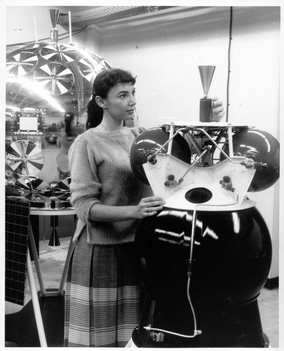
Here is the story of a woman who helped the world in so many ways and helped show that women deserve a place in the engineering space in her time (1950s and 1960s). Growing up in a time when it was almost impossible to find respect in the work she was in, she worked hard for her respect and eventually got it, blazing the trail for women all around. You may have never even heard of her, this woman’s name is Judith Love Cohen.
Photo Courtesy Of NFCC
Cohen’s life started in Brooklyn, New York. On August 16th, 1933, she was born to Sarah and Morris Bernard Cohen. Once her parents started putting her in school, they saw that she had a true thirst for knowledge, and soon after, kids started paying her to do their homework. Cohen’s best and favorite subject was math, and she soon realized that she wanted to be a math teacher when she grew up. She studied dance for the Metropolitan Opera Ballet company and got a scholarship to go to Brooklyn College to study engineering, and eventually got a major in math. Cohen later decided that she liked engineering better. She was usually the only girl in her math classes and was the only woman in her engineering classes in college. Cohen married a man named Bernard Seigle, who she had met at Brooklyn College as a classmate. They ended up having three children together, Neil, Howard, and Rachel. Cohen and Seigle divorced in the mid-’60s. Cohen then remarried Thomas “Tom” William Black; they had one child then divorced later on. After the divorce, she married David A. Katz, and they were married until Cohen’s death in 2016.
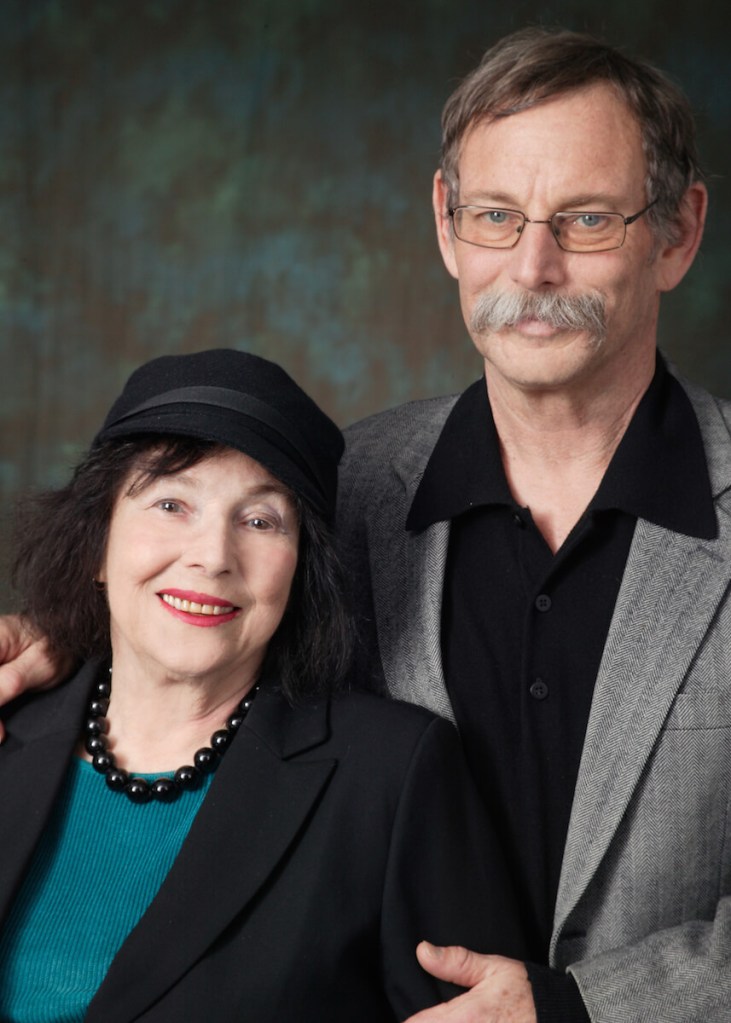
Photo Courtesy of USC Viterbi School of Engineering
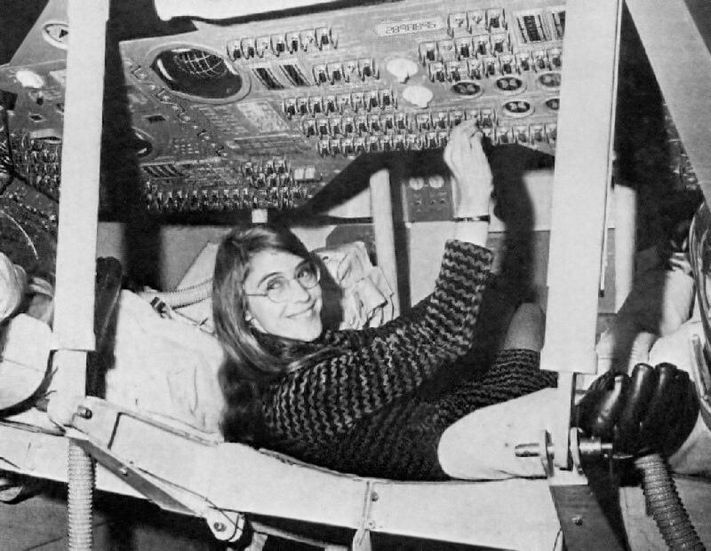
Her engineering work started in 1952 as a junior engineer for North American Aviation. She then graduated from USC Viterbi School of Engineering in 1957 and got a job at Space Technology Laboratories. Her extensive resume includes her work on the guidance computer for the Minuteman missile and the Abort-Guidance System in the Apollo Lunar Module. In fact, her Abort-Guidance System helped get the stranded astronauts back home on the tragic Apollo 13 mission. Cohen claimed this was the highlight of her career. The astronauts gave her a “thank you” at Redondo Beach once they returned. She loyally stayed with that company until 1990, when she retired. Once she retired, her work did not stop there. She started her own publishing company with her husband, David Katz, named Cascade Pass. Cohen published many books, and we have her to thank for writing and co-writing the “You can be a woman” series and so many others.
Photo Courtesy of Forbes
This incredible woman showed determination and hope when there was none, drive, and a deep love and appreciation for her work. This was shown on August 28th, 1969, when she was in the middle of solving a very important problem when she went into labor with her 4th child, the one I mentioned earlier. When she needed to go to the hospital, she made a stop at the office, did some work and grabbed her paperwork then headed out to finally go to the hospital. She worked the entirety of her labor, and right before she gave birth, she solved the problem! Right after, she called her boss, and according to Neil Seigle (her first child), he said“later that day, she called her boss and told him that she had solved the problem. And… oh, yes, the baby was born too.” The baby she gave birth to was, well, we know him as… Jack Black.
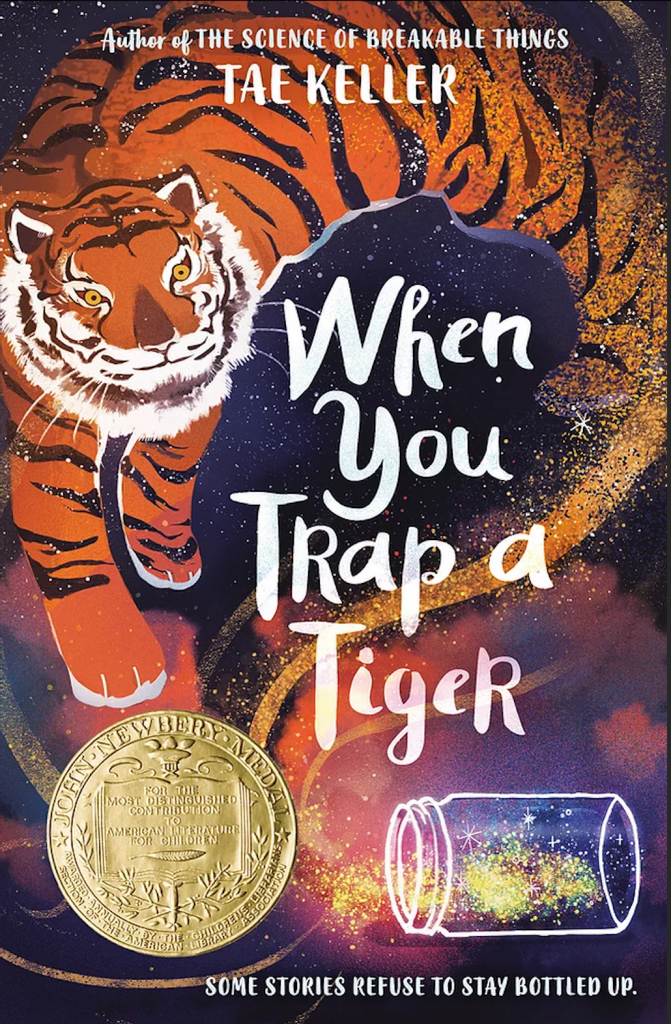
When You Trap a Tiger by Tae Keller is a lovely novel about the power of stories to connect with one’s past and the power of letting a little magic into your life. This book won the 2021 Newbery Medal and is a great middle-grade book. Keller opens a star jar of stories that will delight and immerse readers.
Jacket Description:
“When Lily and her family move in with her sick grandmother, a magical tiger straight out of her halmoni’s Korean folktales arrives, prompting Lily to unravel a secret family history. Long, long ago, Halmoni stole something from the tigers. Now, the tigers want it back. And when one of those tigers approaches Lily with a deal—return what Halmoni stole in exchange for Halmoni’s health—Lily is tempted to accept. But deals with tigers are never what they seem! With the help of her sister and her new friend Ricky, Lily must find her voice… and the courage to face a tiger.”
Reading Level: 8+ years
Age Range: 6+ years
Genre: Middle-Grade Fiction, Fantasy
Length: 304 pages
Awards: Newbery Medal (2021), Asian/Pacific American Award for Children’s Literature
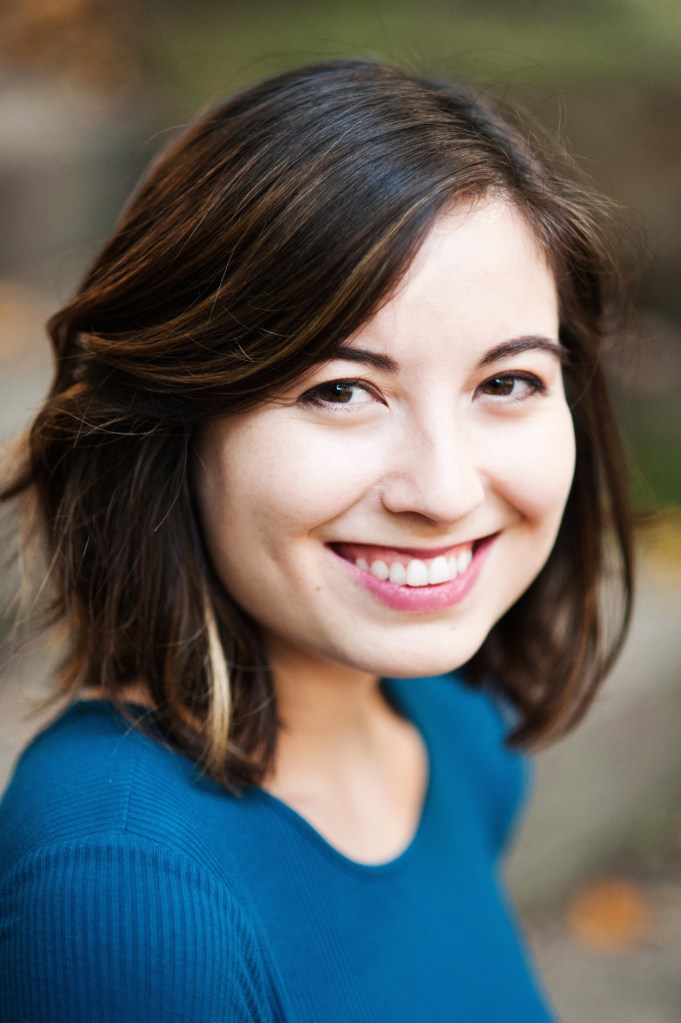
“Tae Keller grew up in Honolulu, Hawaii, where she subsisted on kimchi, purple rice, and stories. Now, she writes about biracial girls trying to find their voices, and lives in Seattle with her husband and a multitude of books.”
Most herbivorous dinosaurs kind of take a back seat when it comes to pop culture, especially sauropods. Sauropods often don’t get the spotlight they deserve, as they are usually dismissed as nothing more than gentle, long-necked giants.
Argentinosaurus
But what some don’t realize is the largest animals to have ever lived on land were sauropods! For example, scientists estimate that adult Argentinosaurus and Mamenchisaurus could have weighed up to 175,000 pounds!! To put that into perspective, the largest living land animal, the African elephant, only weighs 13,000 pounds. Even one of the smallest sauropods, the Ohmdenosaurus, weighed almost 2,500 pounds, which is more than a horse.
The long necks of sauropods are easily their most well-known physical feature. The necks of all sauropods were made up of hollow bones. These hollow bones were not only essential in supporting their immense weight but also allowed for greater efficiency in both eating and breathing.
Generally, most types of sauropods looked very similar. However, some did develop a variety of unique adaptations. Most of these adaptations are hypothesized to have been used for defense. For example, the Saltasaurus had osteoderms or boney deposits all over its body, similar to the armor of ankylosaurs. Shunosaurus had a tail club which was most likely used to fend off predators.
One of my favorite sauropods is the Amargasaurus. It was discovered in 1984 in Argentina, and the original fossil is one of the most complete sauropod skeletons ever found. What stands out about Amargasaurus are the two parallel rows of tall spines down its neck and back. These spines could have been used in display and/or defense. It is theorized that Amargasaurus could have bent its neck in order to point its spines forward. Although it was relatively small for a sauropod, it still reached lengths of 30 to 33 feet and could weigh over 5,700 pounds.
Although maybe not as exciting as other dinosaurs like Tyrannosaurus, from an evolutionary standpoint, sauropods were incredibly successful. They lasted longer than any other group of herbivorous dinosaurs. Sauropods were present from the Late Triassic all the way to the end of the Cretaceous with the extinction of the dinosaurs. That’s about 149 million years!
I’ve talked about the Jurassic Park and Jurassic World movies before because of my love for all things dinosaur. It’s always had an emotional impact on me to see dinosaurs brought to life like that. In fact, the first dinosaur we see in those movies is the Brachiosaurus, a sauropod. Even though the T. Rex and Velociraptors get so much more screen time, it’s like even the filmmakers had to acknowledge that nothing could beat the visual impact and majesty of a sauropod walking once more.
The scene from Jurassic Park recreated in the game Jurassic World: Evolution
When you hear the word ‘composer’, probably the first thing that pops into your head are names such as Beethoven, Mozart, or Bach. You may think of a man in a powdered wig sitting at a piano, candle burning through the night, playing wildly on the keys. But composers are not all dead, white men. Gasp! Really?
Indeed, dead, white men are the most prominent, well-known, and revered composers. This can leave one feeling as if there is no room for women in the composing world. But fear not! Women have been composing and creating great music for just as long as men. It’s high time we shine the spotlight on someone besides Mozart and Beethoven. Here are five talented female composers (past and present) to add to your repertoire.
…
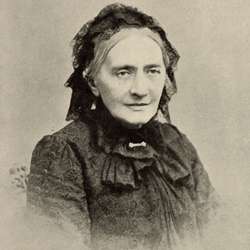
Clara Schumann (Image Courtesy of Encyclopedia Britannica)
Clara Schumann (1819-1896):
Composing gives me great pleasure… there is nothing that surpasses the joy of creation, if only because through it one wins hours of self-forgetfulness, when one lives in a world of sound.”
Clara Schumann
Clara Schumann was a German composer and pianist of the Romantic era. As a child, she was a piano prodigy. As an adult, she taught piano and toured frequently, performing 238 concerts with Joseph Joachim. Her husband, Robert Schumann, was also a composer and they sometimes composed together. Her career spanned over 60 years, and she composed 66 works, according to the Dallas Symphony Orchestra website. Playing piano in concerts by memory was pioneered by Schumann and it is now the standard to do so.
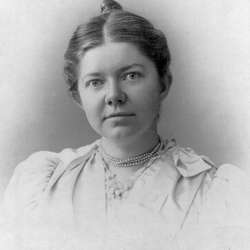
Amy Beach (Image Courtesy of Encyclopedia Britannica)
Amy Beach (1867-1944):
Music is the superlative expression of life experience, and woman by the very nature of her position is denied many of the experiences that color the life of man.”
Amy Beach
Amy Beach was an American composer and pianist. According to her biography on the Library of Congress website, “Young Amy was a true prodigy who memorized forty songs at the age of one and taught herself to read at age three”. Beach helped to found the Society of American Women Composers in 1925 and is credited as the first successful female American composer. She published over 100 works during her lifetime, with more being published in recent years.
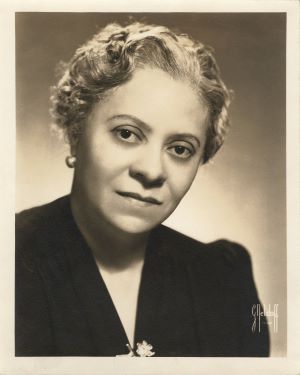
Florence Price (Image Courtesy of Aspen Music Festival and School, by G. Nelidoff)
Florence Price (1887-1953):
Florence Price was an American composer, pianist, organist, and music teacher. Her mother, a music teacher, taught Price, and by age four she was playing and composing on the piano. She went to school at the New England Conservatory and graduated at 19. After school, she moved back to Arkansas, where she married Thomas J. Price and had two children. However, racism and lynchings forced them to move to Chicago. There she began to flourish as a composer. She won two first-place Rodman Wanamaker Music Awards, one for her Symphony in E minor, and the second for her Piano Sonata in E minor. Although she still faced setbacks because of race and gender, she gained recognition for her music during her lifetime. According to the Encyclopedia of Arkansas, she composed over 300 pieces.
Xin Huguang (Image Courtesy of Primephonic)
Xin Huguang (1933-2011):
Xin Huguang was a Chinese composer and composition teacher. She was born in Shanghai on October 16, 1933. In 1951, she enrolled in the Beijing Central Conservatory of Music. Huguang is known for her famous symphonic poem Gada Meilin (also spelled Gada Meiren and Ka Ta Mei Ling), which she composed at 23. The Gada Meilin was her graduate work. After graduation, she moved to Mongolia with her husband, Bao Yu Shan, and taught composition at the Inner Mongolian Arts School until 1980. She then worked as a composer for the Beijing Music and Dance Company. In 1991, she moved to America.
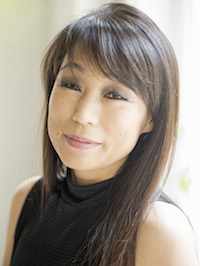
Unsuk Chin (1961- ):
Unsuk Chin (Image Courtesy of New York Philharmonic)
My music is a reflection of my dreams. I try to render into music the visions of immense light and of an incredible magnificence of colours that I see in all my dreams, a play of light and colours floating through the room and at the same time forming a fluid sound sculpture. Its beauty is very abstract and remote, but it is for these very qualities that it addresses the emotions and can communicate joy and warmth.”
Unsuk Chin
Unsuk Chin is a South Korean composer internationally renowned for her music. She started learning music theory at a young age and went on to Seoul National University, where she studied composition. Her music is in the contemporary classical genre and she has received numerous awards for her work.
…
These five composers created beautiful music, from symphonies to concertos. They created in ways no one thought of before. Did you know any of these composers before reading about them? If not, what does that say about who we champion in music? In the future, when you are listening to music, I encourage you to look for other female composers. Searching beyond the traditional horizon of “the greats” can lead to surprising, and often rewarding discoveries.
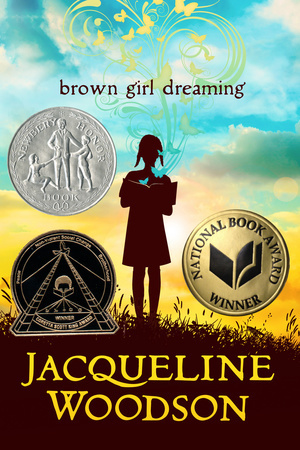
Both personal and universal, Brown Girl Dreaming is full of the bright happiness of childhood memories. Jacqueline Woodson’s poetic memoir is rich and layered like a buttered biscuit, melting on the tongue. Through the poetic eyes of young Jacqueline, we smell Dixie Peach Hair Grease on a Saturday night, taste Maria’s mother’s pasteles, and see the light of captured fireflies. Woodson’s poems display the little beauties and big sorrows of life, but are always infused with hope.
Jacket Description:
“Raised in South Carolina and New York, Woodson always felt halfway home in each place. In vivid poems, she shares what it was like to grow up as an African American in the 1960s and 1970s, living with the remnants of Jim Crow and her growing awareness of the Civil Rights movement. Touching and powerful, each poem is both accessible and emotionally charged, each line a glimpse into a child’s soul as she searches for her place in the world. Woodson’s eloquent poetry also reflects the joy of finding her voice through writing stories, despite the fact that she struggled with reading as a child. Her love of stories inspired her and stayed with her, creating the first sparks of the gifted writer she was to become.”
Reading Level: 10+ years
Age Range: 10+ years
Genre: Middle-Grade Poetry, Autobiography, Memoir
Length: 368 pages
Awards: Newbery Honor, National Book Award, NAACP Image Award, Coretta Scott King Award, Sibert Honor Award
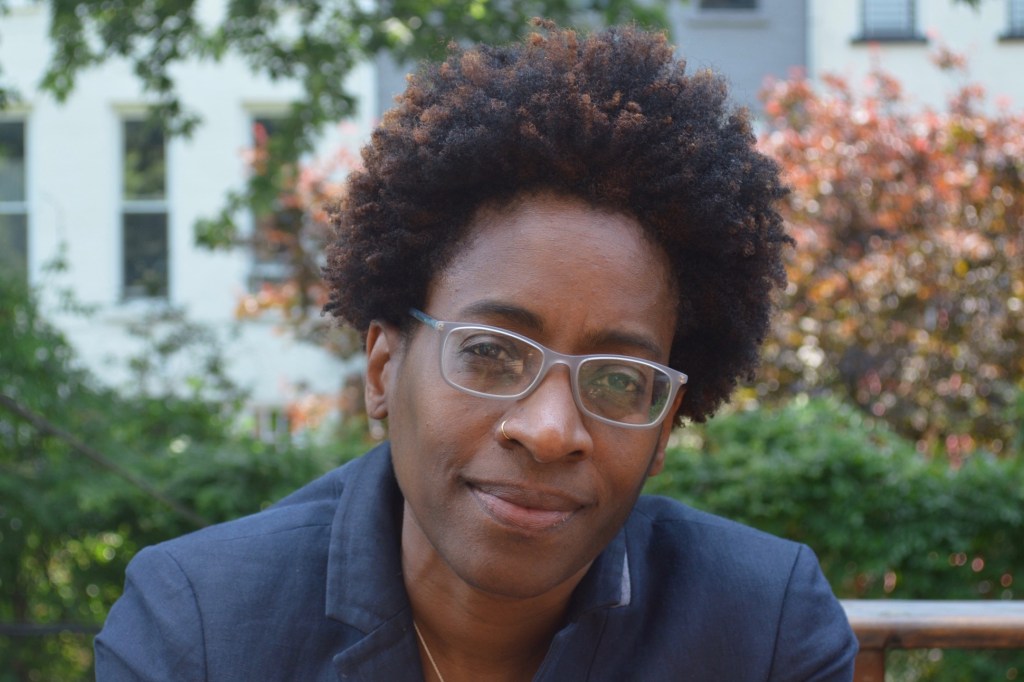
Image Courtesy of Poetry Foundation (by Toshi Widoff-Woodson)
Jacqueline Woodson’s Bio (from the back of the book):
“Jacqueline Woodson is the 2014 National Book Award Winner for her New York Times bestselling memoir Brown Girl Dreaming, which was also a recipient of the Coretta Scott King Award, a Newbery Honor Award, the NAACP Image Award, and Sibert Honor Award. Woodson was recently named the Young People’s Poet Laureate by the Poetry Foundation. She is the author of more than two dozen award-winning books for young adults, middle graders, and children; among her many accolades, she is a four-time Newbery Honor winner, a three-time National Book Award finalist, and a two-time Coretta Scott King Award winner. Her books include The Other Side; Each Kindness; the Caldecott Honor Book Coming on Home Soon; the Newbery Honor winners Feathers, Show Way, and After Tupac and D Foster; and Miracle’s Boys, which received the LA Times Book Prize and the Coretta Scott King Award and was adapted into a miniseries directed by Spike Lee. Jacqueline is also the recipient of the Margaret A. Edwards Award for lifetime achievement for her contributions to young adult literature, and the winner of the Jane Addams Children’s Book Award, and was the 2013 United States nominee for the Hans Christian Andersen Award. She lives with her family in Brooklyn, New York.”










 The Lighthouse