Science

All About Elephants

by guest author Mila Martinov

Elephants are interesting animals. I chose to write about them, because I find them truly magnificent. Check out these really cool facts about some of the most amazing creatures in the world, in my opinion.

African Elephants live in savannas and jungles, while Asian Elephants live in tropical forests and nice grasslands. They enjoy those places, because there is lots of food to eat and plenty of water to drink. I bet they love their habitat!

African Elephant (left). Asian Elephant (right). Courtesy of Elephants by James Maclaine and John Francis

All elephants have very large ears. They use their ears to cool themselves down by flapping their ears to fan their faces. Unfortunately, none of them have ears big enough to fly like Dumbo.

Elephants use their tusks by digging in the dirt to find underground water. They also use them to defend themselves against foes. Their tusks and ears are very useful!

They use their trunks as tools. To drink water, they suck some water inside the trunk and then squirt it into their mouth so they can drink. Of course, elephants are too big to kneel down and drink the water like cats, dogs and most other animals. Plus, why would they have their trunks anyway? Elephants also use their trunks as hands so that they can pick up their dinner.

Courtesy of Elephants by James Maclaine and John Francis

Elephants live in big, huge herds made up of their families and friends. Here are the facts of how the females take care of the herd: the oldest female guides the herd to find water and leads everyone through rivers and marshes. She also keeps watch while the herd is resting in the shade. Being a leader is hard work!

Courtesy of Elephants by James Maclaine and John Francis

Elephants often sleep when they are standing. To be comfortable, they lean and rest on trees. Other times, they like to lie down and rest their heads on bushes. Elephants sometimes snore while they are sleeping.

They are very, very big. In fact, they are the biggest land animals in the world! They can weigh the same amount as 60 people. Elephants like to eat a bunch of different things, including: grass and roots in the savanna, fruits in the jungle, and leaves in both. To get all of these foods, elephants bang their heads on trees for fruit to fall down. My theory is that elephants use their trunks to pull tasty roots out of the ground. They do the same thing with grass. They pull it out with their trunks. Elephants just use their mouths to eat leaves from bushes. 

Here is a question: How can you tell if they are a boy or a girl? Luckily, I have an answer. Look at the forehead of an elephant. A girl has a forehead that is angled. A boy has a round forehead.

Here is another question: How can you tell the difference between an Asian Elephant and an African Elephant? African Elephants have much larger ears that kind of look like the continent of Africa, and Asian Elephants have smaller and rounder ears. Also, African Elephants live in Africa, while Asian Elephants live in Asia.

Last question: When did the first elephants appear? The first elephant appeared over 50 million years ago.

They really like to eat grass and bamboo. So if you want to see elephants, bamboo forests and savannas are the place for you!

Science, Student Life

A Day in the Life of a Rattlesnake

by Lydia I. Martinov

Hey! Don’t be ssscared. I’m a nice sssnake. Welcome to northern Mexico. My name is Russ the Rattlesnake, or more formally, Russell the Western Diamondback Rattlesnake.

I live inside of a bunny burrow I found. I’m not sure if the bunny still lives here, but I find it cozy. I like it when it’s cold, so I’ll usually come out at night. Right now, it’s pretty late, so I am going to go outside. I’m very picky about the temperature, and us rattlesnakes prefer a warmer climate, but we come out at night when it is slightly cooler. We like it when it is 70 to 90 degrees outside. In other words, we like it when it’s hot, but not too hot. Sometimes, during cooler days, I’ll come out when it’s light.

Photo courtesy of National Geographic

There are many types of rattlesnakes, and that is why my name is so long. If you like science (and understand what this means), my scientific name is “Crotalus Adamanteus”. As a snake, I am classified as a reptile. I am a carnivore, meaning that I only eat meat. Some of our favorite meals include rodents, rabbits, squirrels, birds, lizards, and frogs. WAIT! I see a rat! Yummy! Shh! I need to sneak up on it slowly. Oops, it noticed me. I’ll catch another one later. After all, us rattlesnakes can live for about 2 weeks to 3 without food. Impressive, right? So far, it has been 1 week and 5 days. I believe it is time to treat myself to a tasty snack, even though that rat got away. Give me 2 shakes of a snake’s tail… Get it?

Luckily, I found another delicious rat. Don’t worry, there are some humans in a house nearby who have a rat problem, and I just fixed it. By the way, I am proud to say that I am shedding. That means that a layer of my skin will fall off. As I grow over time, my skin gets too small. It’s just like you humans getting too big for your clothes. When you grow, your clothes stay the same size, so you have to get new ones. I grow new skin underneath my old skin. Us rattlesnakes shed 1 to 4 times a year. Shedding also helps us get rid of any bacteria on our skin. One of the coolest parts about shedding is that each time it happens, we get a new rattle! Right now, I have 4 rattles, and when I finish shedding, I will have 5. The process of shedding takes a few days to a couple weeks. It has been a week and a half, so I think I am prepared to finish the process. I prefer shedding in private, so…um…Can you come back later? Just give me a few minutes to do my business.

OK! I’m done. Check out my shiny new skin! I really like it. I also got my fifth rattle. Also, I wouldn’t touch my old skin, because, as I said before, it has bacteria on it. 

Photo courtesy of Scholastic

As an Eastern Diamondback Rattlesnake, I have a lifespan of 15 to 20 years. Right now, I am 10 years old. You can tell by the amount of rattles we have. We get 2 or 3 new rattles every year, and, as you know, I have 5. I currently am about 5 and a half feet long, which is considered average for a rattlesnake.

Since I am a rattlesnake, I prefer to be alone, so I don’t know very much about baby rattlesnakes. If you need a babysitter, I do not recommend myself. I can tell you some of the things I do know. First of all, the momma rattlesnake does not lay eggs. Instead, she gives birth to 8 to 15 babies at a time. Each one is about 10 inches long. The mother stays with her newborns until they shed. That can take up to 2 weeks.

Photo courtesy of Sciencing

It’s getting pretty hot, so I think it’s time for me to return to my bunny burrow. Thank you so much for hanging out with me! I had a lot of fun. I’m generally not a big fan of humans, but you are pretty cool! See you!
____________________________________________________________________________

Thank you to whoever requested this article! If anybody wants to give another idea for a Day in the Life, then fill out this form: https://docs.google.com/forms/d/e/1FAIpQLSd_CiR1rjTqNmIFBhjuAKJ4-lUlTSKC3Ja4RyxnCS3VAwOsjA/viewform?usp=sf_link

Science

Fun Facts: What is Mitosis?

by Aleena Haimor

Mi·to·sis

/mīˈtōsəs/

Noun

Definition: 

A type of cell division that results in two daughter cells each having the same number and kind of chromosomes as the parent nucleus, typical of ordinary tissue growth.

The first step actually starts BEFORE mitosis. It is called interphase (G2) The G2 is the second part of growth in some cells. After G1 and the S (Synthesis) phases, the cell will enter G2, and then mitosis. During interphase, the DNA and centrosomes are duplicated.

The first ACTUAL step of mitosis is the prophase. During the prophase, the chromosomes start to condense, or get smaller. Miotic needles, which will help the cell divide later, start to form in this phase. By now, one chromosome has identical twin DNAs (sister chromatids).

After prophase comes the prometaphase.  The nuclear envelope or encasing fragments and explodes. Microtubules attach themselves to the chromosomes that are now free from the nucleus. 

The next part is the metaphase. There is an invisible line, called the metaphase plate, that is kind of like the equator of a cell. All of the chromosomes line up along the metaphase plate. This forms a straight line of chromosomes. The metaphase plate is one of the straightest things in nature.

Second to last is the anaphase. The sister chromatids are separated. Each sister chromatid is going to end up becoming it’s own cell in the next step, telophase and cytokinesis. 

Lastly, telophase and cytokinesis. Each of the separated sister chromatids will make up their own nuclei. The cell itself divides, creating two cells. Cleavage furrow forms in animal cells, and new cell walls form in plant cells. The microtubules divide equally between both cells, and the DNA unwraps, becoming no longer visible under a microscope.

News, Science

Current Sustainability Problems in the Bay Area

by Ava Salado

To shed some light on what pollutants exist in the San Francisco Bay area we have to take into consideration both the air and the water. Pollution such as home chemicals, gasoline, pesticides, fertilizers, rubbish, and legacy harmful pollutants are washed into the Bay untreated or unfiltered when it rains. Rainwater is directed into gutters and storm drains by paved concrete and asphalt surfaces found on buildings, parking lots, roads, roadways, and rooftops. This storm water is then discharged into creeks and sloughs that run into the Bay itself, carrying all the pollutants it gathers along the route. Rainfall in the Bay Area causes rainwater to overflow into the bay, carrying three primary forms of pollution: runoff from cities, sewage spills, and industrial discharges. More than 1,600 industrial sites are covered with water that conveys harmful chemicals into storm drains that go into the Bay and waterways. 

Photo courtesy of The Mercury News

Trash, construction debris, automobile fluids, industrial waste, petroleum residue, coal dust, soot, fertilizer, pesticides, and other materials that accumulate in cities and industrial facilities all combine to form stormwater runoff, a toxic mixture that flows into the Bay every time it rains, typically with little to no treatment.

On the other hand, a portion of the air pollution in the Bay Area is caused by industrial sources including power plants and refineries. However, a larger portion of dangerous air pollution originates from motor vehicles such as automobiles, trucks, and construction equipment.

Photo by Todo Fondos

In addition, smoke from neighboring wildfires has a significant influence on the Bay Area’s air quality during the fire season. It frequently results in dangerously high particle pollution levels and air quality advisories, such as Spare the Air alerts. The Bay Area air set a record in 2020 when it issued over 50 alerts, 46 of which had to do with wildfires.

San Francisco is ranked 101st out of all major cities by IQAirs Live. According to the American Lung Association’s annual “State of the Air” assessment, 11 of the 25 most polluted cities in America are located in California. Out of 200 cities nationwide, the Bay Area (San Jose, San Francisco, and Oakland region) was placed fourth for “Year Round Particle Pollution” and “Short-Term Particle Pollution.”) Based on a recent research by the American Lung Association, the Bay Area, Los Angeles, and Bakersfield are among the worst air-polluted urban regions in the country.

Photo by Ronan Furuta

Overall, since the Clean Air Act was amended in 1990, the Bay Area’s air pollution has decreased dramatically over the past 30 years, despite the region’s expanding population and industry. Regulations against industrial activity and associated pollution sources are going to get stricter. The foundation of sustainability is a straightforward idea: everything we require for life depends on the natural world, either directly or indirectly, for our survival and well-being. The goal of sustainability is to establish and preserve the circumstances that allow nature and people to coexist peacefully and productively for the benefit of both the present and the future generations. This long-term objective is supported by sustainable development, which puts structures and mechanisms in place and receives backing from international, national, and local organizations. To be sustainable means to meet the demands of the present without sacrificing those of future generations and to maintain a balance between social progress, environmental preservation, and economic expansion. The ability of a civilization to grow and prosper without exhausting all of the natural resources required for future generations to thrive is known as sustainability. Although the times we live in may look bleak, there are people striving for a brighter future. Could that person be you?

Photo by ParAllErg
News, Science

Contra Costa Water District: Behind the Scenes 

by Meru S.

Take a drink of water from your kitchen faucet. Have you ever wondered where that water is coming from? Clean water is essential for our everyday lives. We use it for drinking, showering, watering our gardens, cleaning our clothes, washing our dishes, and for many other daily tasks. 

Contra Costa Water District (CCWD) serves cities in central and eastern parts of Contra Costa County, particularly Concord, Port Costa, Clyde, Clayton, Brentwood, Pacheco, and certain parts of Martinez, Walnut Creek, and Pleasant Hill. CCWD draws water from areas in the Sacramento-San Joaquin Delta, which contain water originally from the snow melts of the Sierra mountain range.

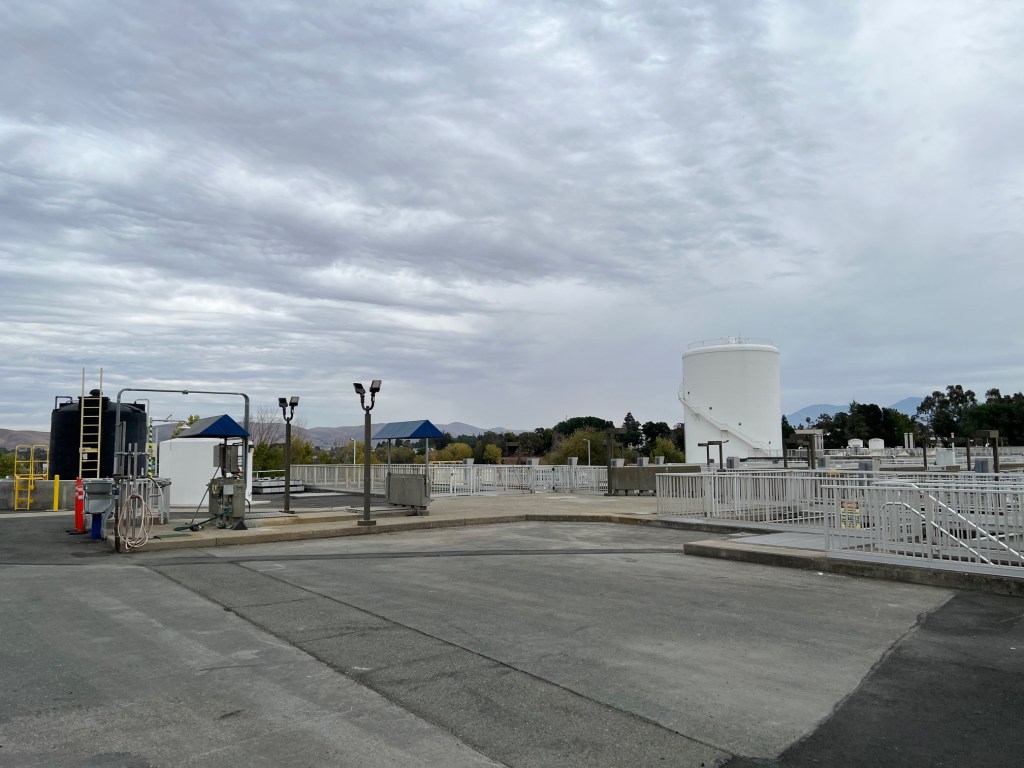
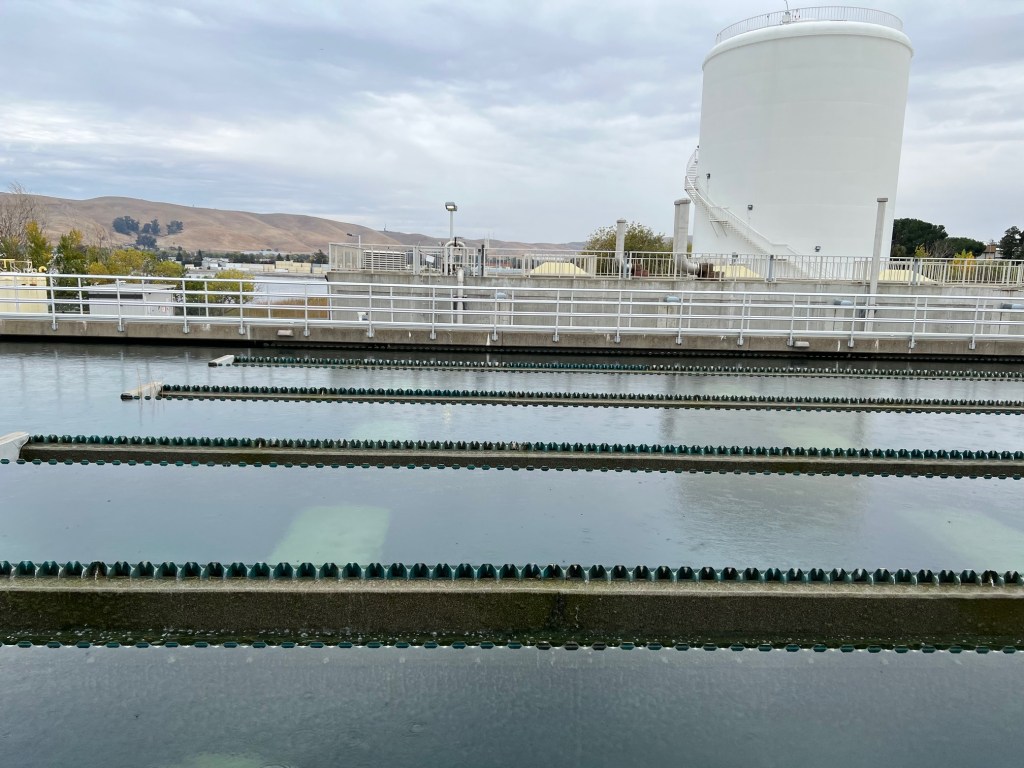
The Ralph D. Bollman Water Treatment Plant of CCWD
Photo Courtesy of Gayathri N.

The Process

The process of treating the water takes many steps but is completed within one and a half hours. 

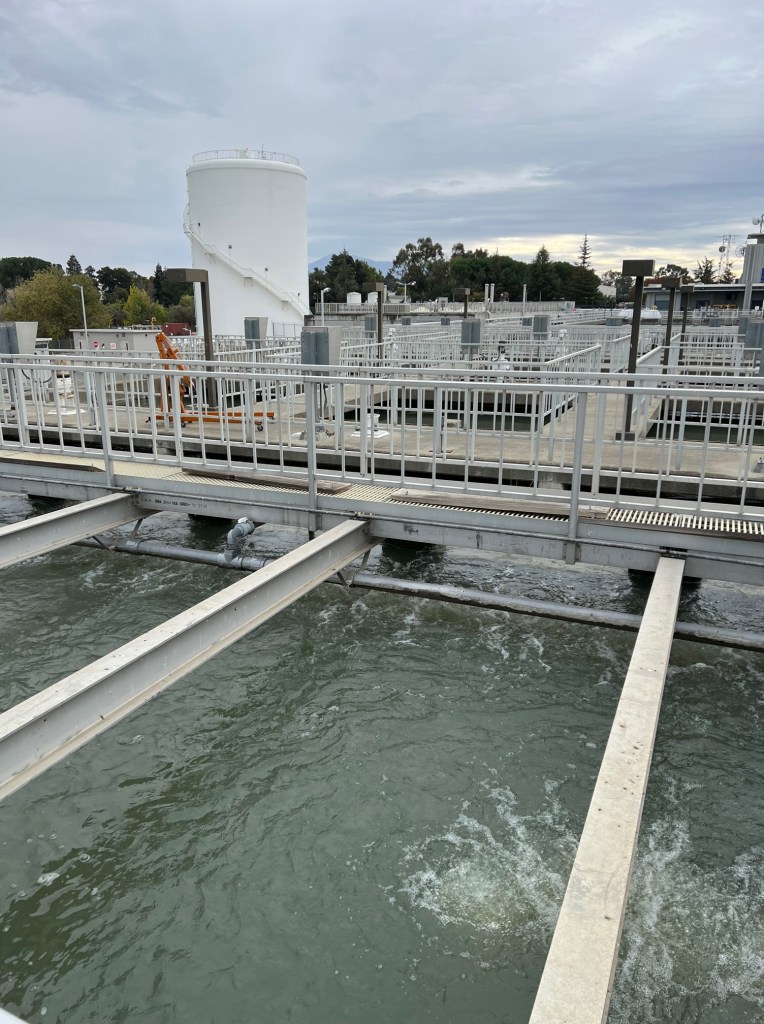
First, strong pumps draw just the top of the Delta water, which is the cleanest part, since most of the dirt sinks to the bottom. Liquid alum is then slowly poured in and mixed using ceiling fan-like machines that spin underwater at about six hundred miles per hour, gradually slowing down until they are almost still. 

Mixing the Alum
Photo Courtesy of Gayathri N.

Then, the sludge and floc (minuscule bits of dirt bound together into small clumps by the alum) are removed.

After the Dirt is Removed
Photo Courtesy of Gayathri N.

The water now looks clear and almost ready to drink, but there are still bacteria and germs that are invisible to the naked eye. These are killed by combining ozone with the water. Next, it goes through a layered filtration system that consists of granulated carbon at the top, coarse sand in the middle, and finally small rocks.

The Filtration System
Photo Courtesy of Gayathri N.
A Small Version of the Filtration System 
Photo Courtesy of Gayathri N.

Lastly, fluoride is added to prevent tooth decay, and ammonia to preserve it when it travels through pipes to thousands of homes.

The History

Contra Costa Water District was incorporated on May 9, 1936, and the construction of the Contra Costa Canal (a 48-mile-long canal which transports water to Clyde, Martinez, and Walnut Creek) started on October 19, 1937. The building of the Ralph D. Bollman Water Treatment Plant, CCWD’s first plant, began in 1966. It is named after one of CCWD’s first directors, and is located on Bates Ave, Concord. CCWD’s second plant was built in Oakley in 1992. Both of these water treatment facilities are still used today. During the winter months one facility is shut down for cleaning and repairs while the other takes over the treatment process for the county.

There are specific chemicals and gasses used in the process of water treatment. They are stored in tanks at CCWD’s water treatment plants. In the case of an emergency, responders refer to signs on the tanks for information on the chemical. You may have seen these signs on large trucks or tankers. Here is what they mean—

Photo Courtesy of Gayathri N.

On a scale of 0-4 (0 being extremely low and 4 being very high), the blue diamond is the health hazard, the red is the fire hazard, the yellow is the reactivity hazard, and the white is the type of chemical or gas. In this case, the chemical is liquid oxygen, the health and reactivity hazards are very high, and the flammability is very low.

Though the water treatment itself is done by machinery, numerous people work at these water treatment plants. A number of staff members are always on-site 24/7 to monitor the various processes such as water pH levels and to be prepared in the event of an emergency.

The next time you enjoy a warm shower or a glass of cool water, remember and appreciate its journey from the mountains, through rivers, canals, treatment machinery, pipes, and to your faucets! 

For further information, please visit Contra Costa Water District’s website—

https://www.ccwater.com/

Science

What is DNA?

by Aleena Haimor

Do you know what causes your eye, hair and skin color, etc? Well, you can thank your DNA! DNA are molecules that make you, well, you! 
DNA itself stands for deoxyribonucleic acid (ask your parents on how to pronounce that). The deoxy part means that DNA has one less (the de part stands for less) oxygen atom than RNA (Ribonucleic acid), which also carries genetic information. The ribo part stands for sugar ribose, which are chemical compounds.

DNA is built of nucleotide monomers (a molecule that can react with other monomers), hence the nucleic part. They are bound together with polynucleotides (Biopolymer molecules composed of nucleotide monomers).

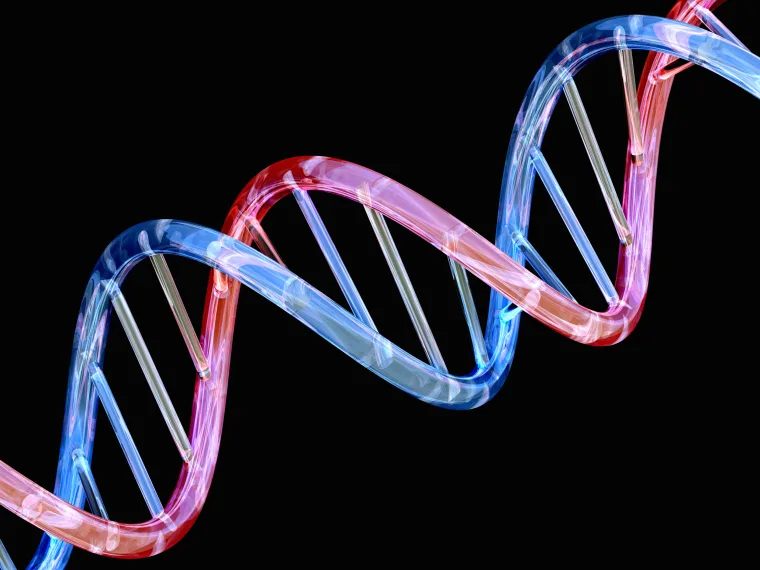
DNA – Courtesy of NBC News

The role of discovering the shape of DNA, the double helix shape, goes to Rosalind Franklin, an aspiring woman scientist who discovered lots of new things about DNA. Rosalind Franklin was a British woman, born in 1920. She and her colleagues (but mostly her) discovered DNA at King’s college in London, 1951.     

Franklin took her famous picture, Photo 51, using an x-ray. She used x-ray crystallography (when you use x-ray diffraction to find the shape of a crystalline structure) to take the picture, signifying a large milestone in the creation of modern science. 

ROSALIND FRANKLIN AND PHOTO 51 – Courtesy of Science Net

James Watson and Francis Crick figured out that Franklin had discovered DNA. They stole her ideas and published them as their own. Watson himself wrote a book, called The Double Helix, about the findings, and unfairly referred to Franklin as “autistic.” 

After publishing The Double Helix, James Watson, along with Francis Crick and Maurice Wilkins, was awarded ⅓ of the Nobel Prize in Physiology and Medicine in 1962. They were awarded “for their discoveries concerning the molecular structure of nucleic acids and its significance for information transfer in living material,” as said by the Nobel Prize awards, when really, the prize should have gone to Rosalind Franklin. 

DNA STRUCTURE – Courtesy of Britannica

There are two types of DNA bonds: AT/TA and GC/CG. Only T and A can connect, and only G and C can connect. If you put, let’s say, T and G together, it wouldn’t fit together. This is called a mutation. Think of when you put the wrong puzzle piece. It’s kind of like that. Mutations can be passed down, for example, cancer is a type of mutation caused by the wrong bonds going together. 

DNA BONDS – Courtesy of Blogspot

DNA strands are wound around proteins, to make something called a chromosome. There are two types of chromosomes: X and Y. Chromosomes come in pairs, and the type of pairs determines your gender. Girls and women have XX pairs. Boys and men have XY pairs. The nitrogen bases that make up DNA (which then make up chromosomes), are A (adenine), T (thymine), C (cytosine) and G (guanine), as we said earlier. 

MY DNA MODECourtesy of Karina Nukilina’s Science class (photo taken by Dr. Nukilina)

I hope you’re as fascinated with DNA as I am! DNA strands really are like the building blocks of cells (which are the building blocks of YOU). It’s super cool to learn about and I hope that this article gives you a better understanding of DNA.
Science

A Day in the Life of a Great White Shark

by Lydia I. Martinov

Hey there! My name is Todd, and I’m a Great White Shark. Don’t be shy, I had a big breakfast, so I won’t bite. 

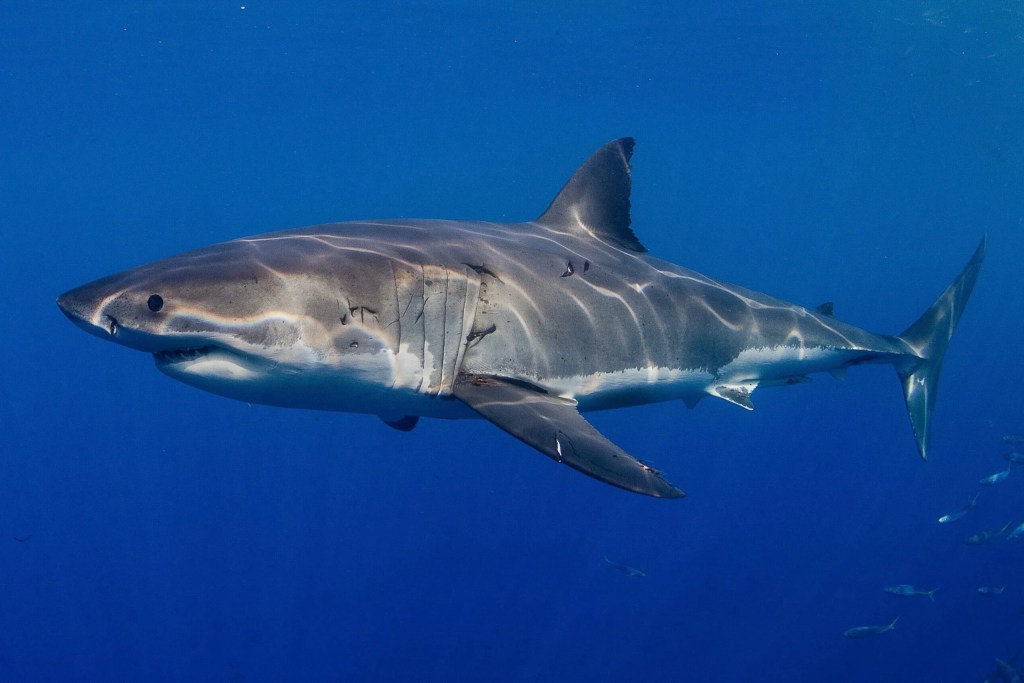
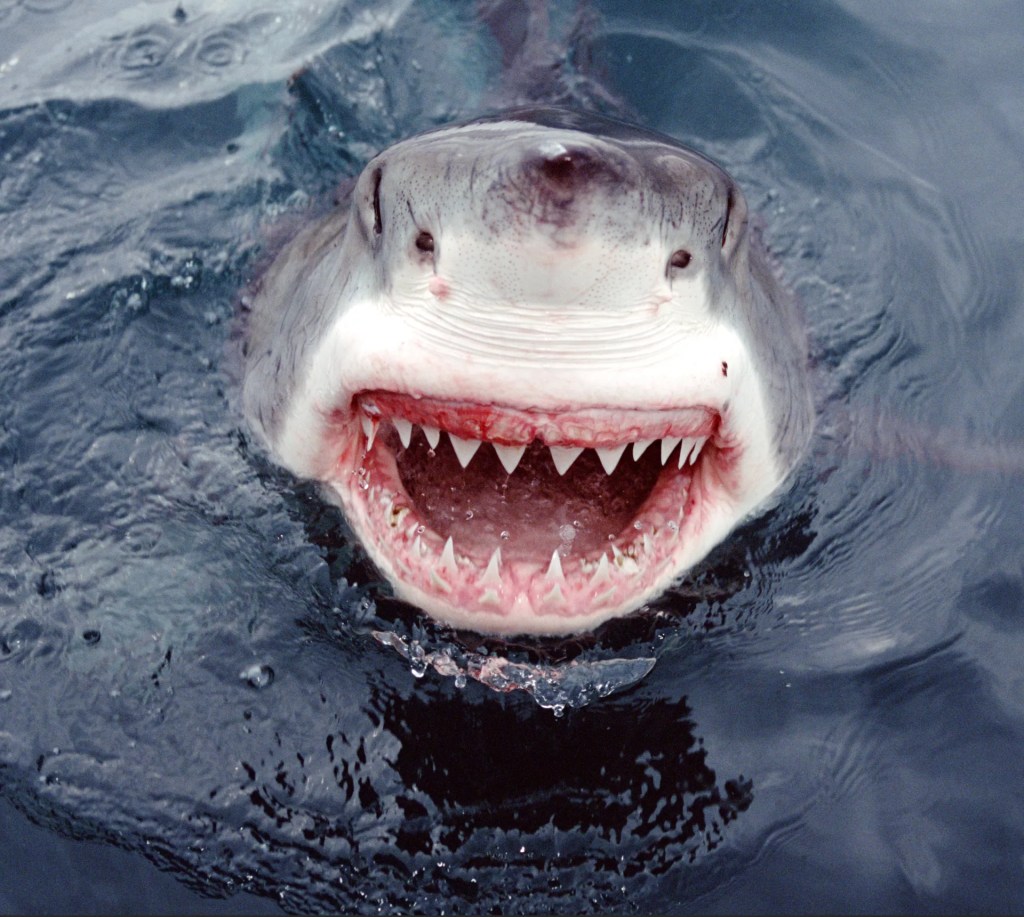
My scientific name is “Carcharodon carcharias” for those of you who like that kind of stuff. I am 35 years old, so technically, I can be considered middle aged, because most of us live for 70 years or more. I am 15 feet long, which is about the length of a car. I exercise regularly, and weigh 2,300 pounds, which is average for a Great White Shark like me. Some of my friends grow up to 21 feet, and can weigh up to 4,500 pounds. In my opinion, I think they should go swimming more, and lose a few hundred pounds *wink wink*.

Photo courtesy of Oceana

I live off the coast of Japan, and I’ll let you in on a little secret. I think Hello Kitty is adorable, and a lot of people here agree! Anyways, many of you may believe that I’m mean, and that if they meet me, then I’ll eat them. The truth is, shark attacks are quite rare. In fact, there are less than 10 per year. Uh, oh. Look at the time! I need to go get some lunch. Yum! There’s a school of fish over there. I’ll be right back.

Those fish were delicious! Now, where were we? Oh, yes! Let me tell you some interesting facts about us Great White Sharks. First of all, you may think that I am a mammal, but I am not. You see, I have gills just like a fish, unlike dolphins who are mammals. Next, check it out…aaah! 

Look at all of my teeth! I have about 3 hundred that are separated into 7 rows. Just like you, I lose and regrow my teeth. The only difference is that Great Whites (such as myself) can go through 20,000 teeth in a lifetime, because we lose and regrow each tooth multiple times.

Photo courtesy of DK Find Out!

I’m going to play a game. I will go from this rock to that coral over there as fast as I can, and see what’s the fastest speed I can reach. Ready, set, go! Boom! 54 miles per hour! That was probably one of my best speeds yet! The highest a shark can swim on average is about 60 miles per hour, so I was pretty close.

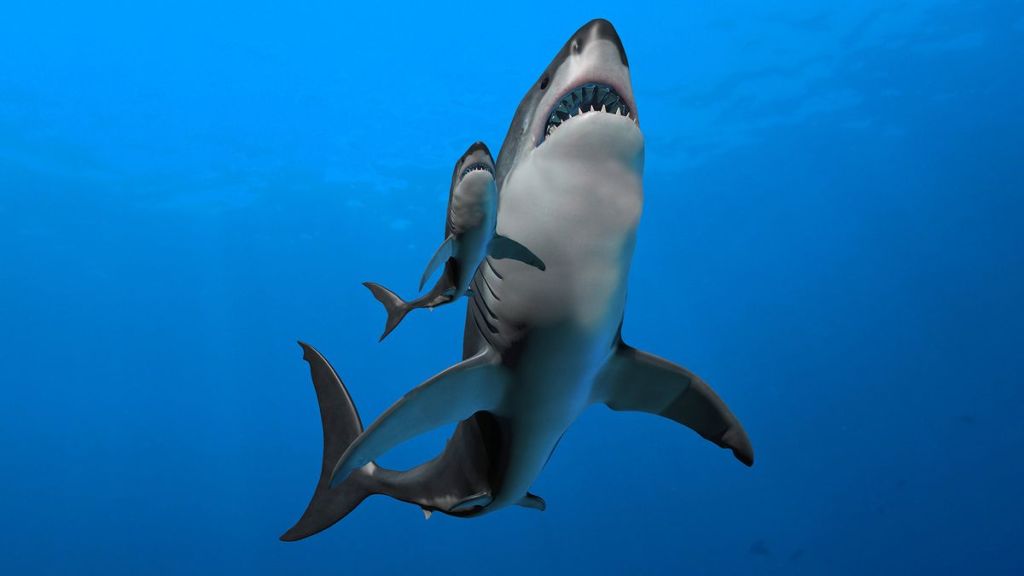
My neighbor’s cousin’s friend’s sister just had 6 pups! They are adorable. Each of them are currently about 5 feet long, and will most likely grow 4 times longer by the time they grow up. An average female shark has 2 to 12 pups at a time. That’s a lot of babies to take care of.

Photo courtesy of Live Science

Did you know that if you were to flip me upside down, it would cause me to become disoriented? That means that I would basically be hypnotized. I wouldn’t be able to move, but don’t worry, it only lasts up to 15 minutes. Please don’t flip me over.

Thanks so much for coming! I don’t get very many visitors around here, and I think you can figure out why. If you would like to learn more about us Great White Sharks, feel free to do some research. Well, that’s all for today! Ooh! It’s time for a snack! 

Photo courtesy of Imgur

____________________________________________________________________________

If you enjoy the “Day in the Life” series, and would like to learn about a specific animal, fill out this form:

https://docs.google.com/forms/d/e/1FAIpQLSd_CiR1rjTqNmIFBhjuAKJ4-lUlTSKC3Ja4RyxnCS3VAwOsjA/viewform?usp=sf_link 

We will do our best to get as many suggestions as possible.

Science, Student Life

All About Tigers

by guest author Mila Martinov

I decided to write about tigers because they are so cool. There are many awesome facts about them. Most important thing I can say is, “Don’t adopt a tiger!”! 

Tigers can jump really high, as high as an elephant’s head. That is 16 feet high! They are predators and are carnivores. They eat many kinds of animals, including deer, wild pigs, even people!  They hunt by sneaking up on animals they want to catch. They often hunt when it’s dark, so that the animal they are hunting can’t see them. Tigers have orange, black and white stripes to help them blend in with plants and shadows.

Tigers are very fierce. Watch out if you see a tiger nearby! Tigers are very good climbers. They have super sharp claws and teeth. A tiger’s biggest teeth are longer than human fingers! Tigers keep their claws safe inside their paws, but they push them out when they dig, fight or scratch (just like my cat).  

Tigers live in parts of Asia. They like to find a home that has lots of hiding places. They spend a large part of the day resting and sleeping. This seems lazy, but they need to rest to get ready for hunting. A tiger’s home is called their territory (territory means a homey place, where the tiger lives and hunts). There needs to be a lake or river nearby, so that the tiger can cool off and drink. There also must be plenty of animals for the tiger to eat. Tigers are very good swimmers, but they like to keep their head above the water. This fact might surprise you –  tigers are a type of a cat. They belong to the cat family (fancy name Felidae). I know what you are thinking right now, “Cats don’t like water! How can tigers swim if they are a type of a cat?!” I know my cat doesn’t.  I did not drop her in the bathtub, but I did check with the encyclopedia. So, no showers for her.

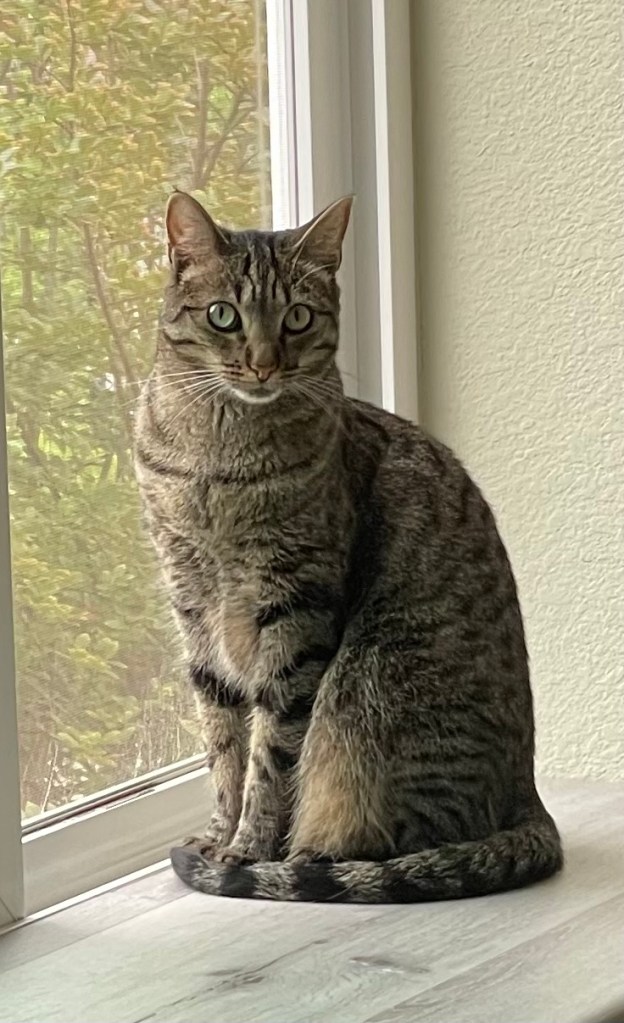
My tiger Katya, who doesn’t swim.

There used to be lots of tigers living in the wild. Now there are a lot fewer, because people hunted them and destroyed their territories. Today there are less than 4,000 tigers living in the wild worldwide. People are trying to protect them by creating safe territories, where they can live out of harm’s way. Go tigers!!!

Bibliography:

National Geographic Kids: Little Kids First Big Book of Animals by Catherine D. Hughes

Tigers by James Maclaine

Tiger Photo by National Geographic Kids

My cat Katya Photo by my mom Olga M.

Science, Student Life

Five Awesome Whales 

by Guest Author – Mila Martinov

I wrote this article because, as you know, I love sea creatures. They are so cool! I hope you like this article and enjoy the fun learning. Last time, I wrote about jellyfish. Today, I want to tell you about the coolest mammals in the sea.

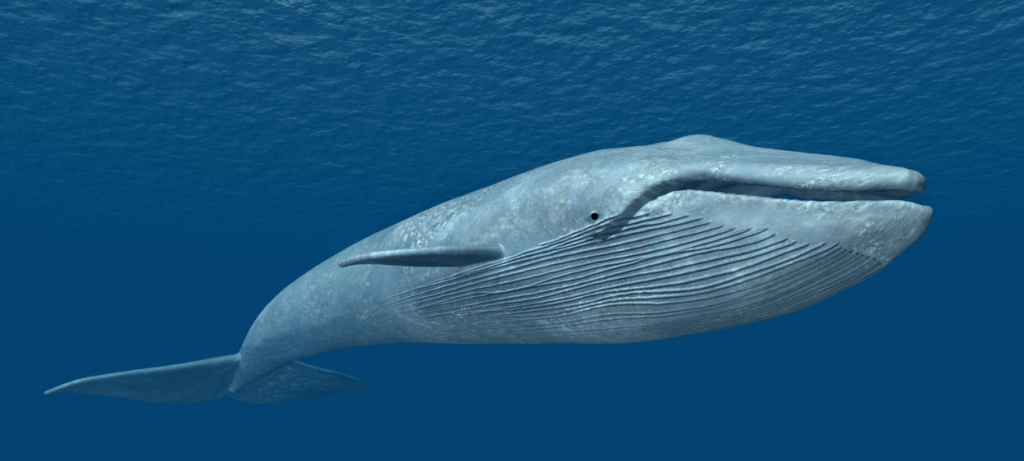
1. Blue whale (prettiest of them all)

This whale is the biggest animal ever. A Blue Whale is about the length of a medium-sized airplane. Despite its size, the whale eats tiny krill (krill is a small shrimp-like animal that is incredibly tiny). A Blue Whale eats millions of them per day. To catch its food, the Blue Whale goes through a large group of krill with its mouth open. The krill flows into it. As the whale closes it’s mouth, the water flows back out to the sea through the gills, but the krill stays inside.

Courtesy of Stanford Graduate School of Education YouCubed

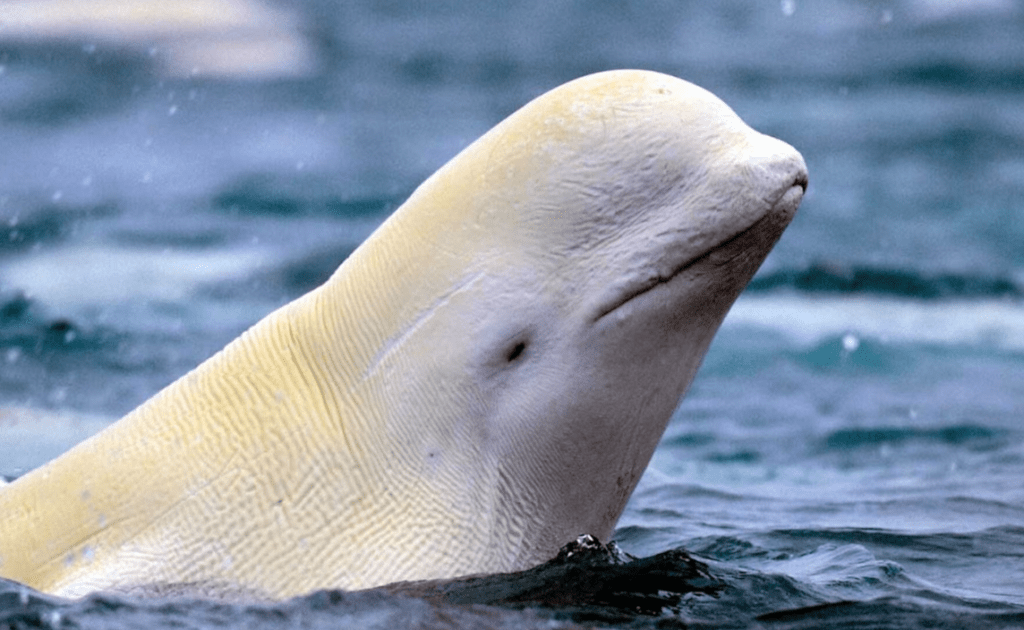
2. Beluga whale (my personal favorite)

Beluga calves (babies) are born gray in color. Belugas don’t turn white until they are a few years old. Beluga whales live in the Arctic (the coldest place on earth). Large pods of beluga whales travel south until they find open water. Since Belugas are mammals, and breathe air, they swim to the surface to take a breath. They can’t stay under the ice for too long, or they will drown. The Beluga whale is the length of two twin beds. They eat fish, crabs, squid, octopus and mussels.

Courtesy of National Geographic Kids

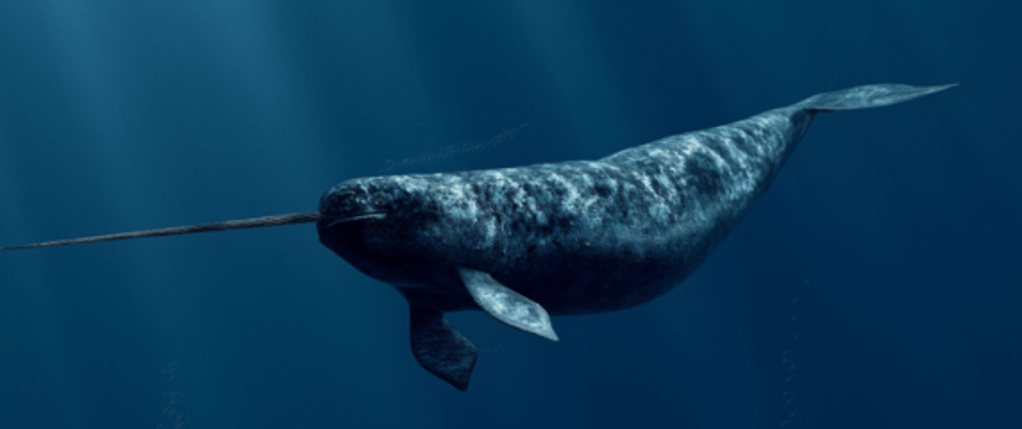
3. Narwhal (the unicorn of the sea)

A Narwhal sucks its food into its mouth. Since the narwhal has only two teeth, it can’t chew. One of those teeth is a long tusk that sticks out of the upper lip. It looks like a unicorn horn. A female narwhal can grow a tusk, but it is not very long. A male’s tusk is as long as three baseball bats put together. Two male narwhals sometimes use their tusks to “sword fight”. Some scientists think this helps narwhals find out who is the strongest.

Courtesy of Minnesota Public Radio

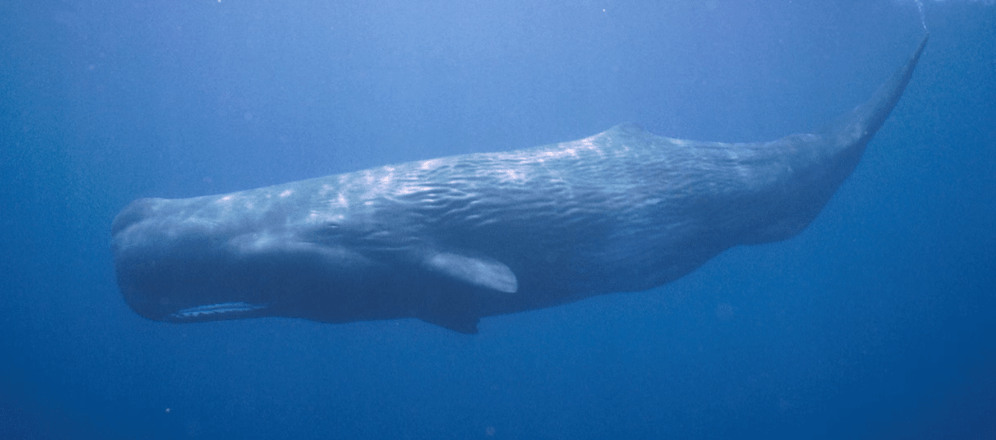
4. Sperm whale (the funny looking one)

Sperm whales live everywhere, except the freezing north and south poles. They are 65 feet long. With their very large teeth, sperm whales eat squid, sharks, and fish. They have very wrinkled skin too. Sperm whales can swim up to 9,800 feet deep below sea-level to find food. In fact, their habitat is located in deep water. A male sperm whale is longer than a female, and they have huge heads shaped like squares. 

Courtesy of National Geographic

5. Humpback whale (the bumpy one)

Humpback whales do not have teeth. They have baleen instead (baleen are little fluffy things that hang over the whale’s mouth). A humpback whale opens it’s mouth and small creatures flow in with the water. When the whale closes it’s mouth, Baleen blocks the exit. The humpback whale uses its tongue to push water out through the baleen. The baleen pulls the water out and the food stays inside. Then, the whale swallows.

Courtesy of BBC Wildlife Magazine

I love sea creatures, and am very happy to have shared these facts with you. I hope you enjoyed reading this. You should go whale watching someday. It’s very fun.

Sources:

“Ocean. The Definitive Visual Guide”, Fabien Cousteau, Rob Dunn, Isobel Comley

“National Geographic Kids: First Big Book of the Ocean”, Catherine D. Hughes

“National Geographic Kids: Little Kids First Big Book of Animals”, Catering D. Hughes