The Marine Mammal Center is the world’s largest marine mammal hospital, with Operations in Monterey Bay, San Luis Obispo, and Fort Bragg, California. The Center’s Main Hospital and Headquarters are located in Sausalito, California., They also have a hospital and visitor center in Kona, Hawaii — the Ke Kai Ola (The Healing Sea) Hawaiian Monk Seal Hospital, which opened in 2014 as part of the Center’s work to save the Hawaiian monk seals.
Photo Courtesy: Gayathri N.
The Center rescues marine mammals such as seals, dolphins, sea lions, sea otters, elephant seals, and more. The Center works 24 hours a day, 365 days a year, responds to more than 10,000 reports annually, and has rescued more than 24,000 animals to date!
When an Operation receives a report of an animal that may be diseased, injured, orphaned, or entangled in plastic or trash, a team of trained volunteers is dispatched as soon as possible to rescue and transport the animal to the nearest facility. After an animal is transported to the hospital, it undergoes an admission exam in which the veterinarians at the Center take blood samples, check vital signs, and look for injuries or illnesses. After being rehabilitated at the Center and once the veterinarians have ensured that the patient is thoroughly healed and has the necessary skills needed to survive on its own, the patient is released back into the wild, either close to the location where it was found, or on a quiet beach that has no public access. Sometimes patients will be released further out at sea, so they will have minimal contact with humans and not rely on them for food. Flipper tags are attached to the patients before they are released. This enables the Center to track them in the wild and recognize them if they are seen again or are in need of rescue again.
In Monterey Bay and San Luis Obispo, the operations provide space for the patients to be kept for a few days before being transported to the main hospital in Sausalito. In the Fort Bragg operation, patients are immediately transported to Sausalito.
Rehabilitation Pools– Photo Courtesy: Gayathri N.
The Center keeps a list of their current and previous patients on their website along with their species and gender. Every patient is given a name. You can sign up to get patient updates via email.
Here are the names and species of some of their current and past patients:
Taxi—Harbor Seal (male)
Posh—Harbor Seal (female)
Reuben—Northern Elephant Seal (male)
Salamander—Northern Elephant Seal (female)
Southpaw—California Sea Lion (female)
Pixy—California Sea Lion (male)
Mayhem—California Sea Lion (male)
Salta—Steller Sea Lion (female)
Makoa—Hawaiian Monk Seal (female)
Giant—Guadalupe Fur Seal (female)
Paddlewan—Southern Sea Otter (male)
The Marine Mammal Center offers a Youth Crew service-learning program for high school students aged 15-18 in the San Francisco Bay Area. The Youth Crew is a year-long opportunity where students can volunteer at the Center by helping out with tasks such as recording observations, cleaning animal pens and pools, washing equipment, weighing animals, sorting fish for feeding, and managing the animals in pens.
My family went on a homeschooling field trip to the Marine Mammal Center in Sausalito. We were taken on two guided tours led by staff members. First, we went on a tour of the hospital where the guide explained and demonstrated how the animals are rescued, fed, and cared for. The second tour was about the different jobs and careers at the Center. The guide of this tour talked about each job and showed us the areas where they are performed. We also got to see the rehabilitation pools in which the marine mammals are kept while being cared for. The animals are transported within the Center in ‘seal’ barrows. Every visitor is sure to be amused by the loud vocalizations of the seals. The guides shared that the way the seals move has a special term called ‘galumphing’.
If you ever notice a marine mammal in distress, please call the Center’s 24/7 hotline: 415-289-7325 (SEAL). For more information, please visit The Marine Mammal Center.
Have you ever wondered what your pet cat was trying to tell you? When your cat is rubbing on your legs, you probably have thought, “Does my little fur ball want food or pets?” It can be quite difficult to tell what they are trying to say, and sometimes misunderstandings can lead to a scratch or bite. For instance, if a cat rolls over and displays its belly to you, it kind of looks like it wants you to pet it. That fluffy belly is very tempting, but beware! If you try to even get close, you will probably end up putting bandages on your hand. It might be confusing to you, but to the cat, rolling over in front of you is a sign of friendship. Your cat is basically saying, “Hello! I’m sooo excited to see you!” It didn’t want you to pet its fluffy belly! Crazy, right?
Photo by Olive Pea
Cats understand us better than we understand them. Sure, they don’t speak our language, but they are still constantly trying to tell us things. They can only communicate with a few sounds, but mostly they use body language. Imagine that! Dogs don’t speak our language either, but we understand them a lot more than we do cats. One reason for this is that dogs have lived with humans for 12,000 years, whereas cats have lived as pets with humans for only 4,000 years. Cats only joined forces with humans when people started farming, because the grain from the crops attracted rodents. Dogs became pets 8,000 years before cats, and helped humans hunt for animals. This was more helpful at the time because then, humans didn’t have crops that needed to be defended from hungry rodents. Humans mostly hunted for meat, with dogs (wolves back then) at their side ment that catching their game would be quite a bit easier. This means that dogs have had more time to practice communicating with humans. Cats became a part of human lives much later, so they are still more “wild” than dogs are.
Cats are harder to read (and train) than dogs in general. But cats are very expressive. Even though they are always using body language, it can be pretty easy to miss! When trying to read a cat, you have to pay attention to the slightest twitch of the tail, or even the direction the whiskers are pointed. To get you closer to speaking cat, here are a few signs to look for:
IDENTIFYING CAT EXPRESSIONS
EARS
When the ears are perked up, the cat is alert.
When the ears are rotated 90o or 180o, the cat is annoyed. Watch out!
When the ears are flattened back, the cat is angry and might attack!
EYES
When the pupils are wide, the cat is either frightened or zeroing in on its target. Beware, it might be looking at you!
When the pupils are narrow, the cat is experiencing bright light. Like ours, a cat’s pupils contract in the light.
When the eyelids droop, the cat is either sleepy or just resting its eyes.
TAIL
When the tail is thrashing, the cat is annoyed and/or frustrated with something. Most likely, it sees a bird or squirrel it can’t reach.
When the tail is pointing upwards, the cat is happy. An upwards pointing tail is like saying, “hello!” in cat language.
When the tail is all puffed-out and bushy, something just startled the cat. A cat puffs out its tail to make itself look bigger to its enemy.
WHISKERS
When the whiskers are pointed forward, the cat is excited. Either it’s about to get pet, or it’s about to pounce on its prey.
When the whiskers are loosely fanned out to the side, the cat is feeling friendly and stress free.
When the whiskers are pointed backwards and pressed against the cat’s cheek, the cat is angry and about to attack. You better back up!
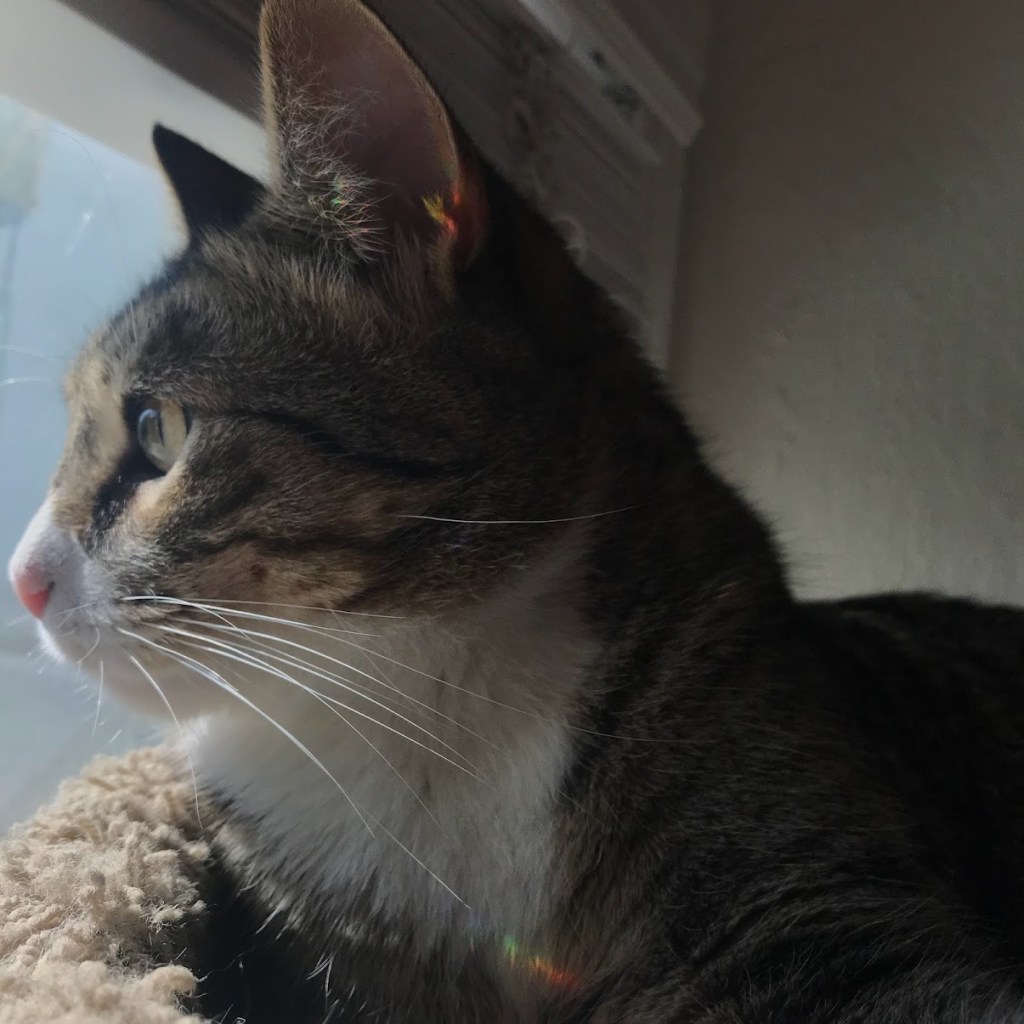
Photo by Nicole P.
Even though cats mostly use body language to communicate, they also use a few sounds! Cats almost exclusively use their voices for their mothers and us humans, but they can become quite vocal if fighting with another cat. Sometimes they even talk to themselves when they are agitated! Here are some common cat sounds to listen for:
IDENTIFYING CAT SOUNDS
HISS
A hiss lasts about one second. Snakes make this sound too, except a cat’s hiss is much harsher. A cat hisses to try and scare off predators. If a cat hisses at you, back up. The cat might feel scared and cornered.
CHATTER
A chatter sounds like a string of high pitched “eh”s, along with clicking sounds. When a cat chatters, it is frustrated. Most likely it sees a bird outside it can’t reach. Even though you might want to sooth your frustrated cat by petting it, don’t even try. It might take its frustration out on you!
MEOW
A meow literally sounds like “meow”. If your cat meows at you, it most likely is asking for something. Most likely the request is for food or to be let through some door, but sometimes the cat is just saying hello.
PURR
A purr sounds like one long, deep, voicelessly rolled “R”. When a cat purrs, it typically means the cat is deeply content. But sometimes a cat purrs to soothe itself when it is anxious.
CATERWAUL
A caterwaul sounds like “ahh-roo-ugh”. This sound either comes from two dueling cats that are about to attack, or a female cat in heat calling out for a potential mate.
TRILL
A trill lasts about half a second, and basically sounds like a meow and purr combined. When a cat trills, it is feeling very happy and friendly. If a cat trills at you, it is happy to see you!
GROWL
A growl varies in length, and sounds like a very low and almost inaudible “grrrrrrrrrrrrrrrrr”. When a cat growls it is very angry, and is warning that it will attack if its opponent gets any closer. If a cat is growling at you, back up and walk away.
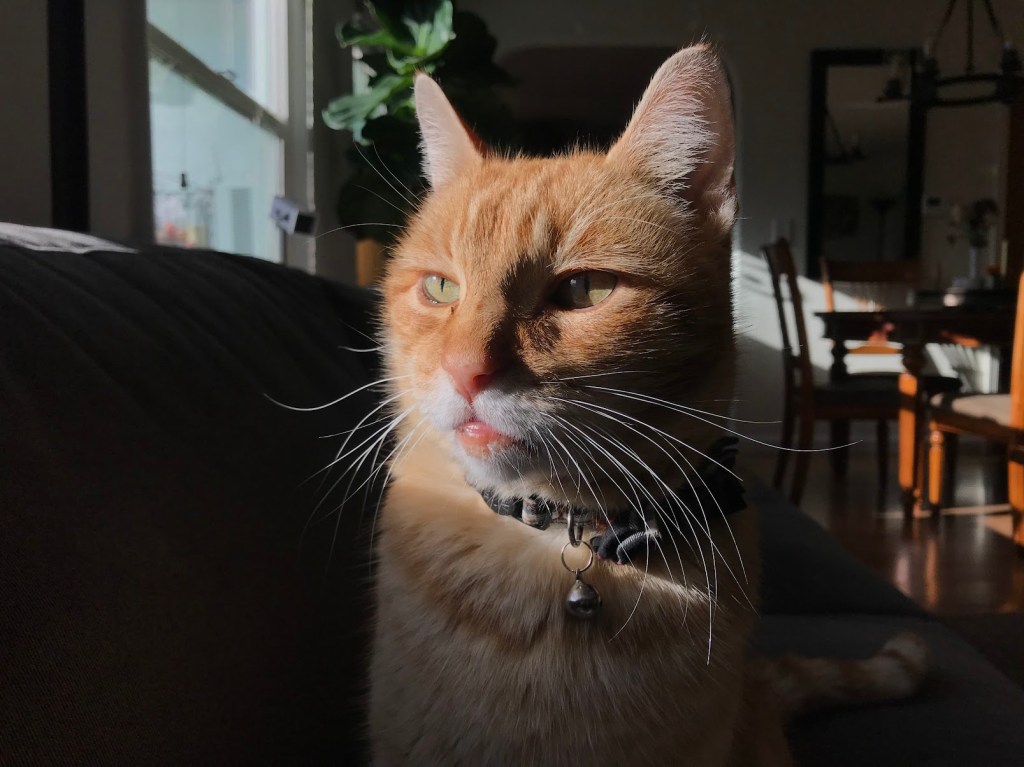
Photo by Nicole P.
Now that you are all up to date on cat language, it’s time for you to speak cat! Here are some ways to communicate with cats:
4 EASY WAYS TO COMMUNICATE WITH A CAT
SLOW BLINK
When a cat blinks slowly at you, it is basically the cat version of kissing you on the cheek. Often they will do a slow blink and then look away from you. This might seem rude, but this is a sign of trust. If they look away, it means that they trust you won’t do anything to scare or hurt them. Next time you see a cat or are hanging around your own cat, try blinking slowly at them. Make sure that they are looking at you, then once you make eye contact try blinking slowly at them. If they blink back, then they basically said “I love you too!”
CROUCH DOWN LOW
Before you pet a cat, especially an unfamiliar one, you should always crouch down first. If you are standing up, you might seem big and scary. Just imagine if a human the size of an oak tree reached down to touch you. Wouldn’t you jump out of the way? You probably would run screaming! Then imagine if that human was crouched down. They would seem a lot less intimidating because now it is closer to your size. If you crouch down, the cat will see that you are closer in size and might even walk over to you. Another reason why you shouldn’t be standing when you pet a cat is because in a cat’s mind, a hand reaching down from above is very similar to the talon of an eagle or hawk that is hoping to have cat for lunch.
RUB A CAT’S NOSE WITH YOUR FINGER
Cats rub noses with each other to say hello. However, they don’t rub their noses with any cat, dog, or human. Cats only rub their nose with animals and humans that they consider family. A nose rub doesn’t just mean hello, it also spreads the cat’s scent onto the animal or human that they rub on. This makes the cat recognize you easier, just as if it gave you a label that reads “family” in it. Next time you see your pet cat or the well known cat that visits your porch, try crouching down and gently touching the back of your finger on the cat’s nose. If it works and the cat rubs its nose back, then congratulations! You just gave the cat a proper hello in cat language!
PET BETWEEN THE EARS, BEHIND THE EARS, BY THE TAIL, AND UNDER THE CHIN
Start by gently scratching between the ears, then behind the ears. After that, rub one hand all the way down the back to the tail. Then, gently scratch under the chin. The cat will love this, and likely start to purr. The reason cats love being petted in these spots is because these spots have a special gland that releases a scent that only cats can smell. Cats use this to mark territory. When you pet a cat in one of these spots, it releases their scent and soothes them. Cats also have scent glands in between their toes and on their cheeks, but they don’t enjoy being pet there as much. It would tickle their toes and disturb their super sensitive whiskers.
Photo by Nicole P.
Now that you know these simple cat communications, try looking for them in the next cat you meet. It will be much easier to understand cats, and you might even be able to prevent a scratch or two! Cats are truly amazing creatures, and they are masters of communication. If you have a pet cat, let it know that the Lighthouse says hi!
Spring has almost sprung. And you know what that means… wildflowers! Yes, it also means debilitating allergies for some lucky folks but the beauty is worth it. Soon we will see oceans of lovely colors floating above our bay area fields. In fact, the northern California area has some very unique wildflowers. The bay area is very fortunate and special to have so many native plants still growing in such a metropolitan space. It seems everywhere you look you might be able to find a sprout reaching for life, like on the side of the highway, crack in the road, anywhere! The usual season for most wildflowers is the end of February and typically lasts until early May. So what wonderful varieties do we have to expect?
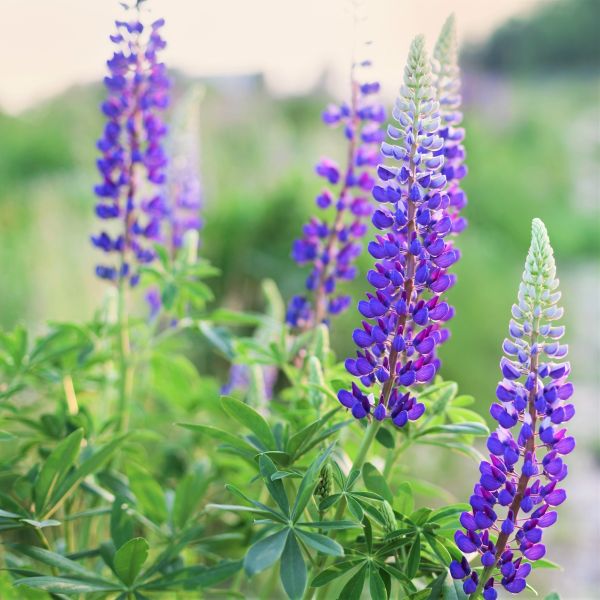
Photo by Nature Hills Nursery
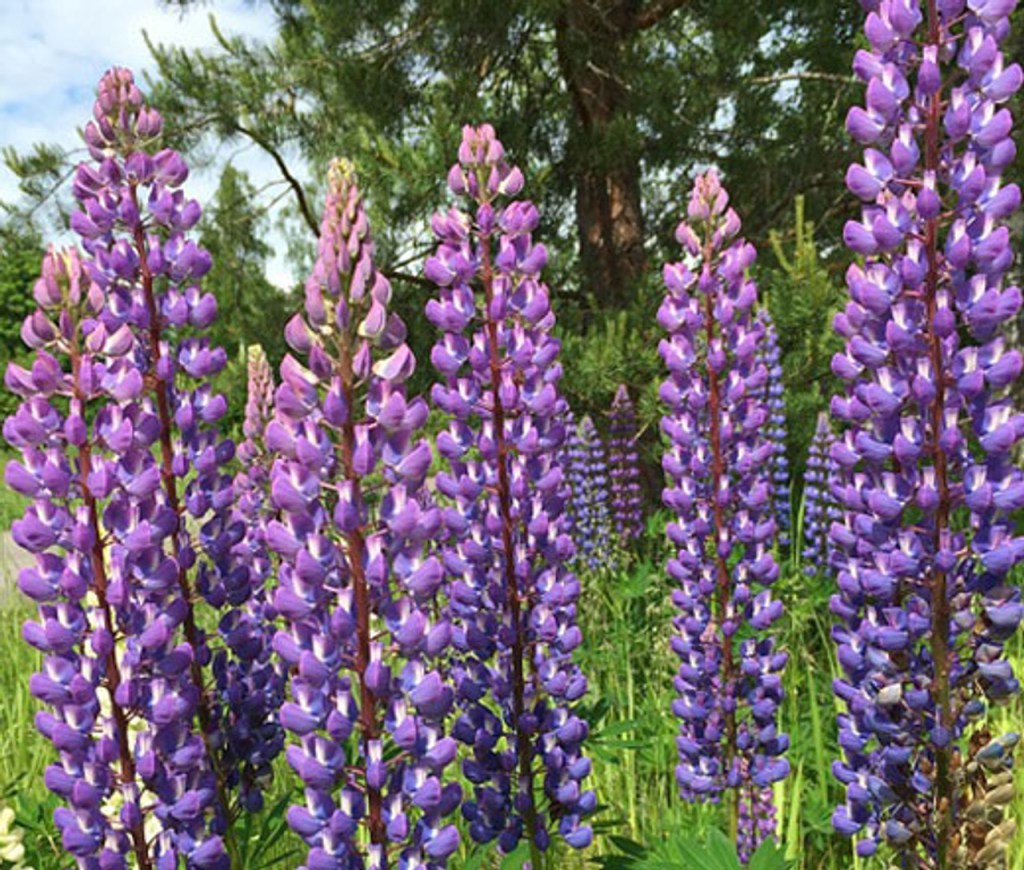
Photo by Seed Corner
Lupine
The lupine is a beautiful looking and smelling, herbaceous (and partly woody) wildflower that loves to pop up anywhere, even clay soils. If you live in the bay area you are bound to have seen one of these bluish-purple flowers sprouting about. They are a very versatile variety with over 200 different species. With their love of Mediterranean climates you know when you see them first pop up that warm, sunny, spring skies are ahead.
Photo by Annie’s Annuals and Perennials
Photo by iNaturalist
Franciscan Wallflower or San Francisco Wallflower
The Franciscan Wallflower or San Francisco Wallflower (or if you would like to be fancy the Erysimum franciscanum) is a biennial that is commonly found from the hills of Sonoma to the beaches of Santa Cruz going wherever it wishes. This flower is in the mustard family and can be seen from the end of winter to late spring.
Photo by California Native Plant Society
Photo by PictureThis
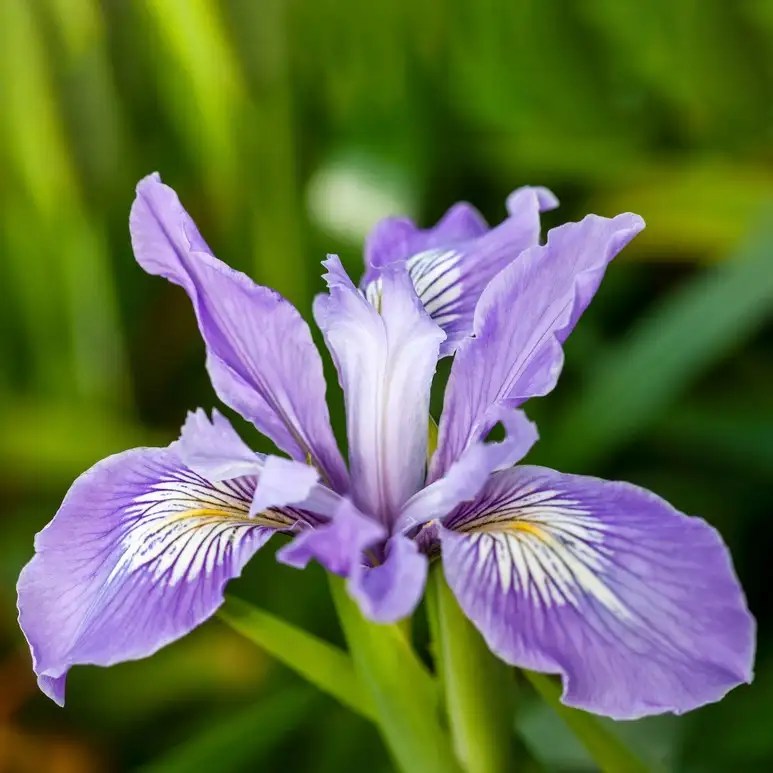
Douglas Iris
The Douglas Iris (or Iris Douglasiana) is a purple flower that can be found mostly in the coastal regions of California–or wherever has a lower elevation–but, if you are lucky, can sometimes be found at heights of up to 1,000 meters (3,300 ft). It can occasionally be considered a noxious weed in pastures because of its tendency to form clumps that hinder other vegetation, but when not found pasture it is regarded with fond looks and smiles for being an absolutely beautiful iris.
Photo by Ava Salado
Photo by The Bashful Botanist
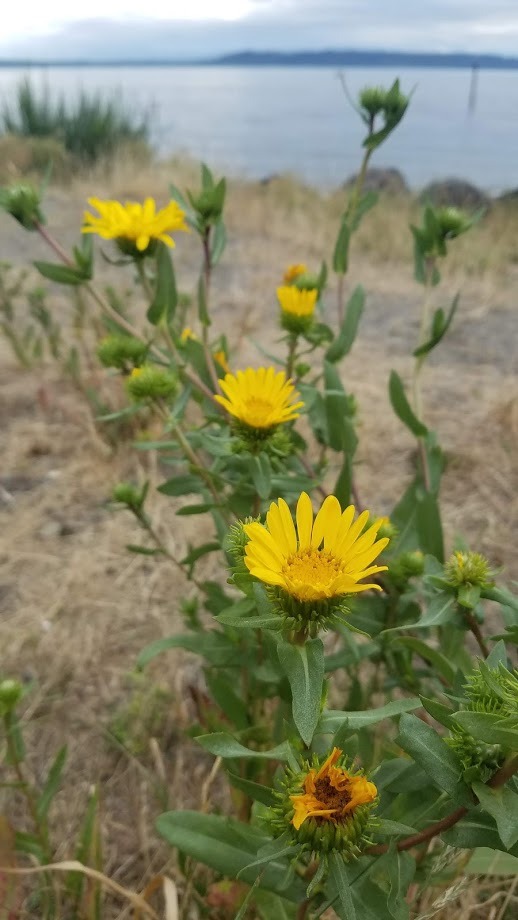
Puget Sound Gumweed (Grindelia Integrifolia)
If you find yourself walking around the beaches of the San Francisco bay in late spring/summer you might stumble upon the gorgeous Puget Sound Gumweed (Grindelia Integrifolia). A strong and rugged plant, being resistant to almost all diseases and pests and being delightful while doing it. Commonly found in meadows, marshes, beaches (anywhere that is wetter in climate) this flowering plant is sure to bring the pollinators–and the cameras–close.
Photo by The Valley Post
Photo by The Guardian
California Poppy
And finally, we must end with a classic…the California Poppy! If you have lived in the golden state for a while, you’re lying if you say you haven’t seen one of these pretty, deep orange flowers at least once. Once spring hits, they are everywhere! Some fighters even pop up in early-winter. The Antelope Valley California Poppy Reserve is a California state-protected poppy field found in northern Los Angeles County. It is extremely popular for expert and amateur photographers alike. But please, if you are going to go there for the breath-taking sights, don’t step on the flowers! Mother nature, park rangers–and the plants themselves–work very hard to grow and stay healthy and plentiful for generations, and the bottoms of your shoes aren’t helping. So please, admire at a safe distance. But most of all…enjoy! Take some allergy medicine and get out into nature. Wildflowers wait for no one so enjoy them while you can!
Take a hike such as:
Mount Burdell
Mount Diablo State Park
Coyote Ridge
And, if you are feeling rather inspired, create a picture of your favorite flower and submit it to The Lighthouse’s “competition” exhibition! Learn more here: Springtime Art Challenge!
Hello, there! My name is Percy Platypus. I can not wait to tell you what a day in my life looks like. I just woke up in my burrow, which is located on the shore near a beautiful river in Australia. It looks like it’s almost evening, so it’s time for breakfast! I am a carnivore, and I eat delicious crayfish, shrimp, worms, insects, fish, and pretty much anything I find tasty in the river. I am going to hop on into the water with my 20 inch long body (20 inches is almost 2 feet).
Photo courtesy of Animals San Diego Zoo
Hey! Look over there! I think I see some larvae, or maybe worms. I have to scrape them up with my bill (my beak- shaped mouth), with bits of gravel, and put it all in my cheek pouches. I can use the gravel to help me mash, or “chew” the food, since I do not have teeth. Us, platypuses, grow to weigh about 3 pounds. That’s lighter than an average house cat!
Photo courtesy of National Geographic Kids
Uh oh. I see a crocodile by the rocks. He’s coming this way! I need to swim away as fast as I can. But, look! He is catching up. What can I do? Well, us male platypuses have sharp stingers on the heels of our webbed feet to stay safe from foes. They have venom inside, which is toxic. Hi – Yah! I did it! I stabbed the crocodile, and now I am safe. Time to go back home.
Photo courtesy of National Geographic
My tummy is rumbling. Wait a minute… I don’t have a stomach! Oh, well. Either way, it’s time for lunch! I’ll be right back.
Munch, chomp, munch. Yum! Those shrimp were very filling. Now, what exactly do I do all day? I spend most of my time alone, and use this time mostly for eating and sleeping. I already ate, and I already slept, so it is time to do something else. Would you like to hear some fun facts about us platypuses? Well, here they are! First, the plural of platypus can be either platypuses, or platypodes. The English language has some interesting twists.
I am a mammal, despite the fact that female platypuses lay eggs. My mother had 2 eggs, so I have a sister. I haven’t seen her for a while, because platypuses don’t have family reunions. Mom fed us by sweating out milk, and my sister and I would suck it out of mom’s fur. I know that it doesn’t sound very appetizing, but that’s mother nature for you.
Photo courtesy of National Geographic
I am 10 years old, and will probably live up to about 12. My neighbor, Sandy, was found by some humans when she injured her left foot. Because she now lives in captivity, she will probably live up to 20 years old. I, personally, prefer living alone out here with a beautiful river that I can have all to myself. It is dinner time now, so I better go find some tasty worms. I’ll see you later!
Gulp! All done. It is early morning now, so I should probably get to bed. Thank you for visiting me, and you’re welcome to come see me whenever you want. YAWN! Good night. Um, I mean good morning. Well… bye!
My local 4-H club recently invited a guest speaker from the East Bay Municipal Utility District (EBMUD) to talk about water conservation. He spoke about the most common ways water is wasted in everyday life, and how we can use less water to conserve it. Even with the rain that we have been having during the past two to three months, we still need to continue to use water with awareness of the drought.
Here are some ways in which we can conserve water:
Fix water leaks. Leaks can waste up to two hundred gallons of water a day.
Take shorter showers. A ten-minute shower uses about twenty-five gallons.
Use the dishwasher instead of washing dishes by hand. Most dishwashers use only about six gallons per load.
Irrigate lawns efficiently or install a drip irrigation system. Many sprinklers spray water not only on the lawn but also on the sidewalks or driveways, which wastes a lot. Drip irrigation sends water directly to the roots and does not waste or overwater.
Plant drought-tolerant plants that require less water.
Make sure to turn off hoses and faucets when not in use.
We removed our lawn and replaced it with Kurapia, a water-wise alternative to grass. We have also planted California natives, which, once established, do not need as much water. Collecting rinsing or cooking water is something we have been doing for the past few months. We keep a watering can in the kitchen and pour the extra water from foods (such as pasta or soaked grains) into it. Then we later use it to water our plants.
Art and photo courtesy – Meru S.
March 22nd is World Water Day. Each year, World Water Day has a different theme. This year, the theme is about accelerating change to solve the water and sanitation crisis. The general goal of this celebration is to ensure that people worldwide have access to clean and safe water. The first World Water Day was held in 1993 and was created by the United Nations. East Bay Regional Park District (EBRPD) is celebrating World Water Day with a Day by the Water at Lake Del Valle in Livermore. With games and activities, you can learn more about water conservation and the different ways in which water is beneficial to us and wildlife.
I love sea animals. In fact, jellyfish are my favorite. I hope my article gets you to like them too. I find jellyfish to be very beautiful, because of their many bright colors, glowing in the dark, and cool shapes. They have been around for almost 600 million years, so they are extra interesting. Here are some facts about my favorite kinds of these fun creatures.
1. Moon Jellyfish (my most favorite of them all)
These jellyfish have bodies shaped like a saucer, with very short tentacles attached. They use these tentacles to catch plankton for dinner. The moon jellyfish can be found in most parts of the ocean, but not in very cold waters. They grow up to 12 inches (30 centimeters). A fun fact: they are the most popular (widespread) jellyfish.
Photo courtesy of Georgia Aquarium
2. Deep-sea Jellyfish
Deep-sea jellyfish have some tentacles that are held straight up. This creature belongs to a group called coronate jellyfish. They are shaped like a bell wearing a ballet tutu. This jellyfish can squirt out a big cloud of ink and grows up to 35 centimeters.
Photo courtesy of Alamy Images
3. Mauve Stinger
This jellyfish is gorgeous because of the beautiful bioluminescent light it emits, but it is also a mean stinger. (Bioluminescence is when a deep-sea animal glows). They have eight stinging tentacles and their sting is very painful, but not dangerous. This jellyfish grows up to 5 inches (13 centimeters) long. The Mauve Stinger lives near the surface, so be careful around it!
Courtesy of New York Post
4. Immortal Jellyfish (super cool and unusual, my sister’s favorite jellyfish)
This is the only creature on earth that can actually live forever! These jellyfish are able to reverse their life cycle. They live in oceans all around the world. The Immortal jellyfish eats plankton, and is tiny at about 4.5 millimeters or 0.18 inches long. Its predators are swordfish, penguins, sharks, tuna, sea turtles, sea anemones, and larger jellyfish. If an Immortal Jellyfish is frightened it turns back into a baby and restarts its life cycle. How unbelievable is that!?
Photo courtesy of The American Museum of Natural History
5. Lion’s Mane Jellyfish
The Lion’s Mane Jellyfish is the biggest jellyfish in the world. Its bell body can reach a diameter of almost 8 feet, and with tentacles, it can grow up to 100 feet long. That’s huge! It eats fish, larvae, eggs, and tiny crustaceans (crabs, lobsters, barnacles). This jellyfish only has one predator. Can you guess which one? A sea turtle! Don’t stand near this jellyfish, though, because the tentacles can sting you. The Lion’s Mane jellyfish lives in cold waters.
Photo courtesy of Monterey Bay Aquarium
I hope you liked my article and are more interested in these creatures now. Next time you’re swimming at the beach in the ocean, watch out for some of these guys!
Sources:
“Ocean. The Definitive Visual Guide”, Fabien Cousteau, Rob Dunn, Isobel Comley
Mt. Diablo Audubon Society (MDAS) announced the results of the 2022 Central and East Contra Costa County Christmas Bird Count on their Facebook page on January 16th, 2023. A total of 160 bird species were seen in Central County, one less than 2020’s record of 161. In East County, a total of 148 species were seen.
Every year MDAS participates in the National Audubon Christmas Bird Count. According to MDAS, this event has been occurring annually since 1900 and is the longest-running community science project in the world! Two Counts are conducted each year in Contra Costa County, one in Central County, and one in East County. MDAS sponsors both of these events.
The story behind the Christmas Bird Count (CBC) – In 1900, Frank M. Chapman, an Audubon Society member, started the first CBC as an alternative to the old traditional Christmas ‘Side Hunt’ in which hunters competed against each other to kill as many birds and mammals as possible. The data collected on the Bird Counts (which take place all across the U.S. between December 14th and January 5th) is used to monitor the population of the birds throughout North America.
My family and I participated in the Count led by East Bay Regional Parks for Central County at the Thurgood Marshall Regional Park on December 17th, 2022. The morning was crisp, cold, and clear when the walk began at 7:30 a.m. A naturalist from East Bay Regional Parks led and guided the group of around fifteen participants. We used birding scopes and binoculars to identify the different species, and kept track of the numbers. We were also given a checklist of species seen in Counts of previous years. We walked along the trails for about seven miles round-trip observing bird sightings. The event lasted for five hours.
Some of the birds we saw were:
Acorn Woodpecker
American Kestrel
Black Phoebe
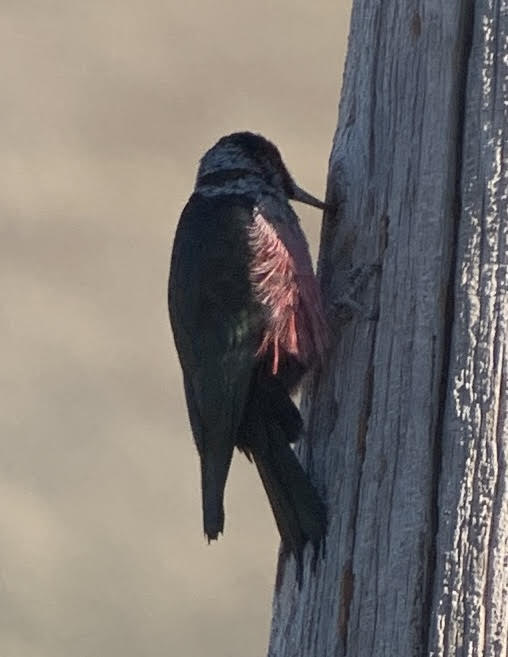
Lewis’s Woodpecker
Loggerhead Shrike
Mountain Bluebird
Mourning Dove
Northern Flicker
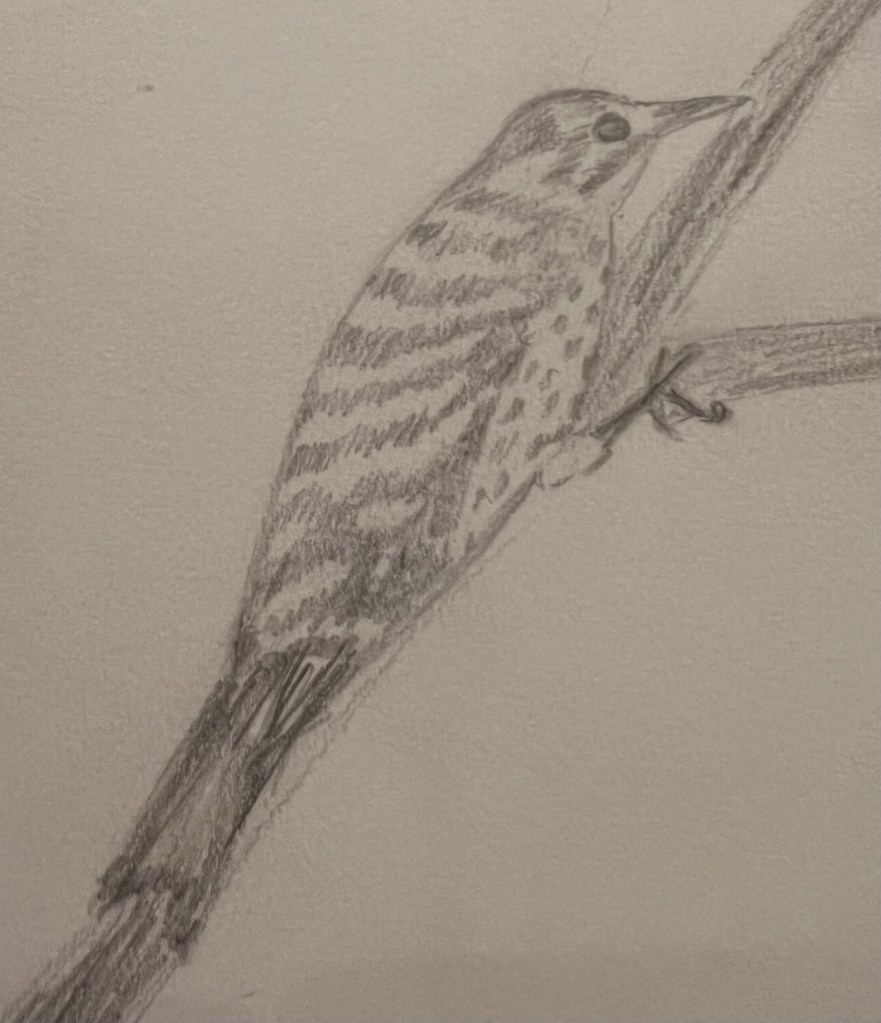
Nuttall’s Woodpecker
Pipit
Red-tailed Hawk
Red-winged Blackbird
Say’s Phoebe
Photo courtesy Sashi S.
A photograph of a Lewis’s Woodpecker that we took through a birding scope.
Sketch and photo by Meru S.
A sketch of a Nuttall’s Woodpecker from my nature journal.
The 2023 Central County Christmas Bird Count is tentatively scheduled for December 16th. The Count for East County is tentatively scheduled for December 20th. For further information on these and other events, please visit: Mt. Diablo Audubon Society.
The future is here! Elon Musk, the CEO of Tesla, has finally unveiled the Optimus (also known as the Tesla robot). This epic piece of machinery contains AI (Artificial Intelligence), meaning that it can perform tasks that usually require a human mind. The Optimus was unveiled by Elon Musk on September 30th, Tesla’s AI day. The event happened at the Tesla office in Palo Alto, California.
Photo Courtesy of CNBC
The unveiling started with a screen on stage depicting robot hands making a heart, and once everybody settled in their seats, Elon Musk, along with some of the engineers, who helped make the Optimus, took to the stage. One of the engineers explained that it will be the first time that the Optimus will be “without any support cranes, mechanical mechanisms, no cables, nothing.” With that, the robot’s heart hands opened to reveal the Optimus prototype.
The robot walked out and waved to the crowd, receiving thunderous applause. It performed a simple dance, and one of the engineers pointed out that the robot uses the “self-driving computer that runs in [our] Tesla cars”. The robot walked to the back of the stage, while a video was playing on the screen, showing the prototype connected to wires, and support cranes, performing tasks such as watering plants and bringing in packages. Then, the robot was attached to a small platform, and managed to squat. Optimus must be able to squat in order to pick things up and perform chores.
Photo courtesy of NBC News
Believe it or not, programming the robot to walk is not easy. In fact, it’s downright difficult. The engineers had to make sure that the robot is balanced, so that it doesn’t fall flat on its face. The Optimus prototype took its first steps in April 2022. Then, in July, the engineers were able to get its pelvis moving, as it walked. In August, they managed to get the robot’s arms to sway. Lastly, in September, they made the movement of its foot transfer from heel to toe, with every step.
Photo courtesy of Tesla
The materials that will be used when these bots are put into production include metal and plastic (less metal and more plastic makes the bot lighter). The battery life on the robot is 4 to 23 hours, and it uses the 2.3 kWh, 52V battery. It can pick up 20 pounds with each hand, and weighs 160 pounds. The Optimus is 5’ 8” tall, and can walk 5 mph (miles per hour). Its eyes are cameras, ears are microphones, and the voice is a speaker. The joints are inspired by the joints of a human.
Optimus is a humanoid, meaning that it is a robot resembling the body of a human in shape. Instead they were powered by a system of levers and pulleys.
It is expected that by 2027, this epic piece of machinery will be on sale for about $20,000. So, you better start saving up! Tesla’s Optimus is a truly magnificent item, and many people are very excited for it to become a selling product. I, for one, can definitely utilize this robot to clean my room.
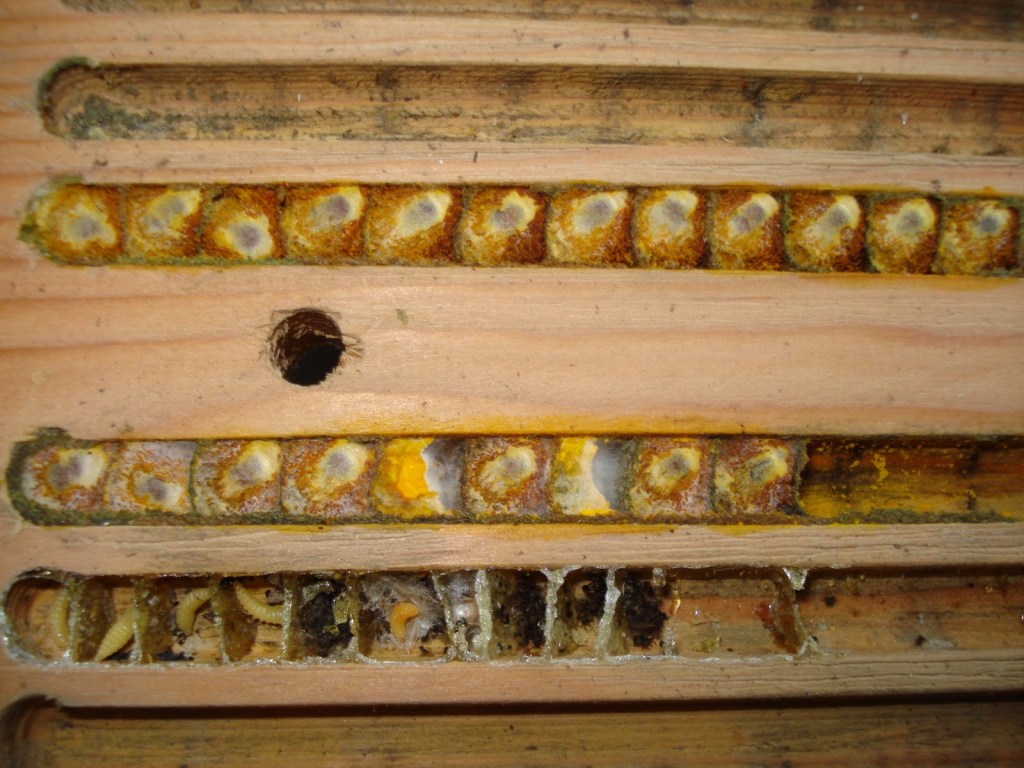
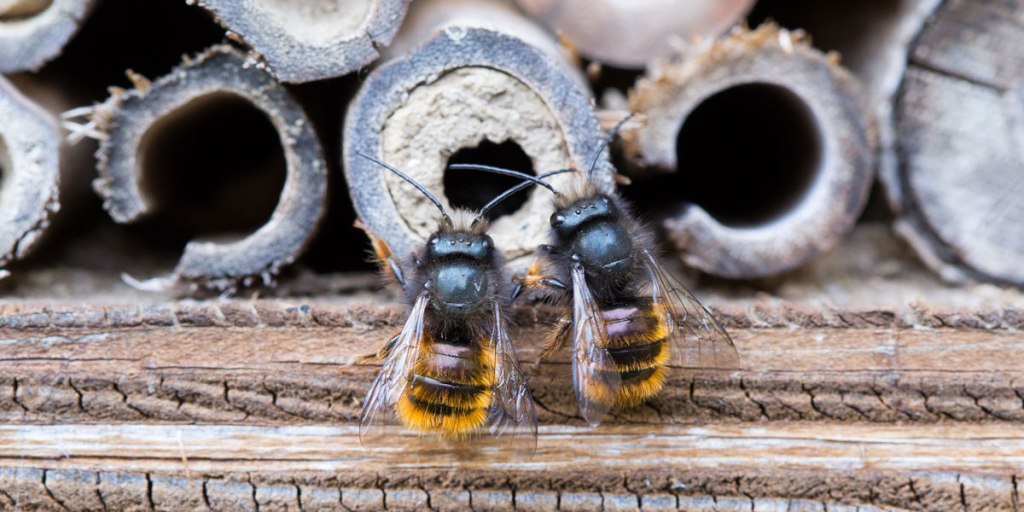
What is a bee hotel? Well, it’s basically a home where solitary bees can lay their eggs, these eggs can hatch into larvae, then emerge to pollinate your garden! Bee hotels are kind of a birdhouse but for bees. Solitary bees need a small, hollow “cave” like place to lay their eggs which will develop into babies. In a natural environment, the mama bee would find this perfect spot in downed trees, reeds, or any hole, nook or cranny a bee can fit in (and is the size to safely house their eggs). This bee hotel provides an “artificial” place to lay. They can also be known as bee condos, bee houses, or even nest blocks. Unfortunately, in today’s modern times and as we talked about in our last article, many of these resources are being taken away. So how can we all help? Make a bee hotel for your backyard. You can make a difference in your local area. Plus, you will bring local pollinators to your garden!
This sounds awesome but how do I make one? Well it is a simple, easy, and rewarding process and you don’t even need that many materials, let me show you.
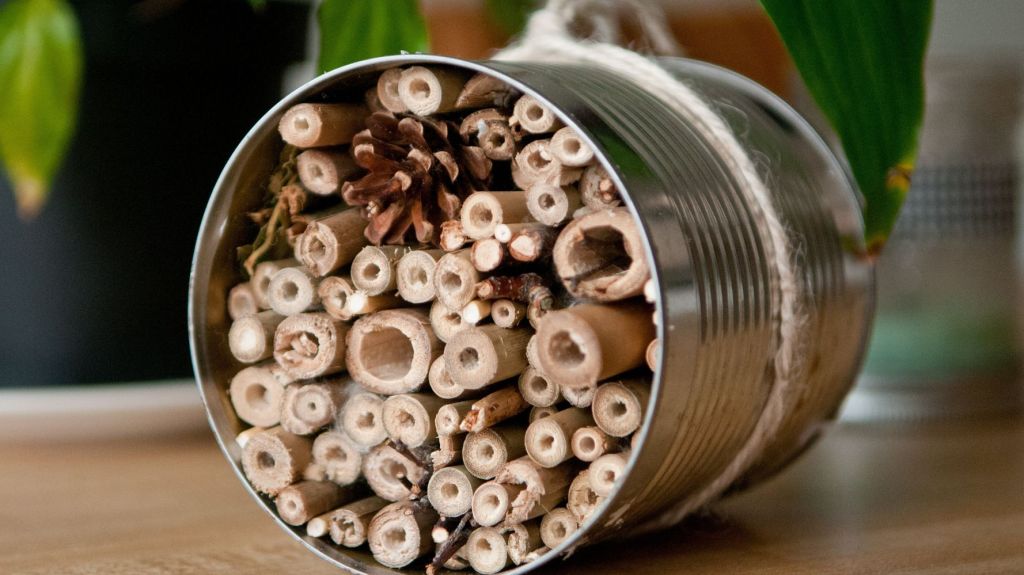
First you need a frame, you can use anything that is sturdy and waterproof. Such as a square wooden frame which can be easily created with some spare wood, or even (like the wonderful Larky parkday kids used) an empty, clean tin can.
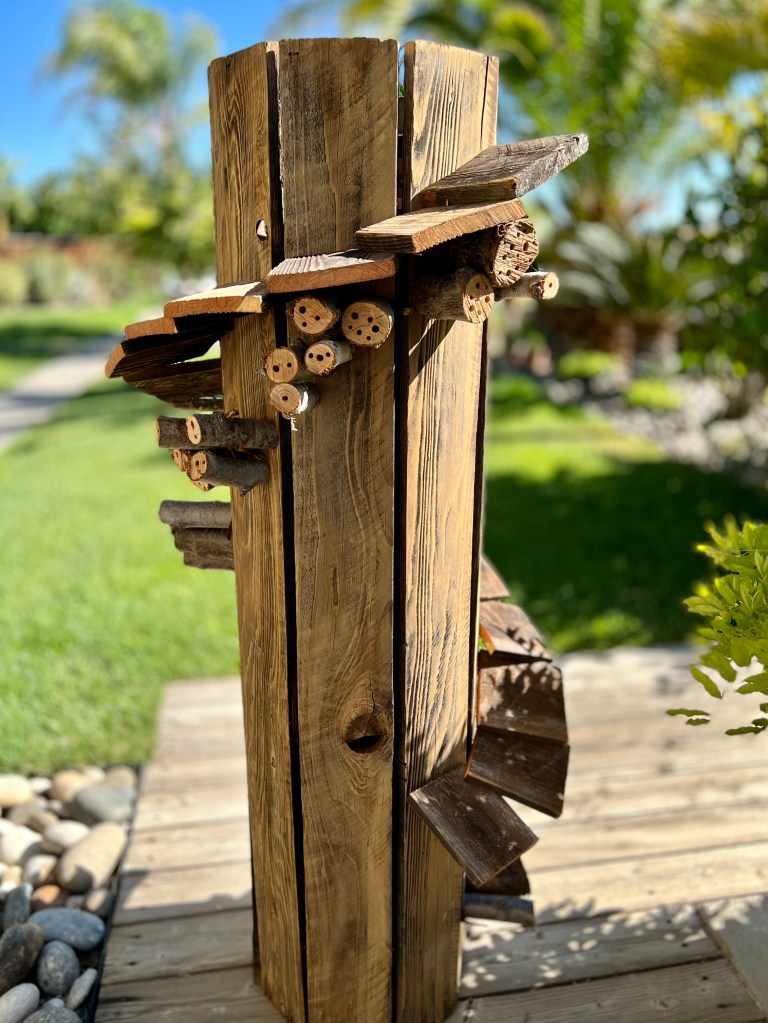
Photo by Sheri Salado. Bee Hotel made by student of UC Berkeley. Located at Blake Gardens, Kensington, California
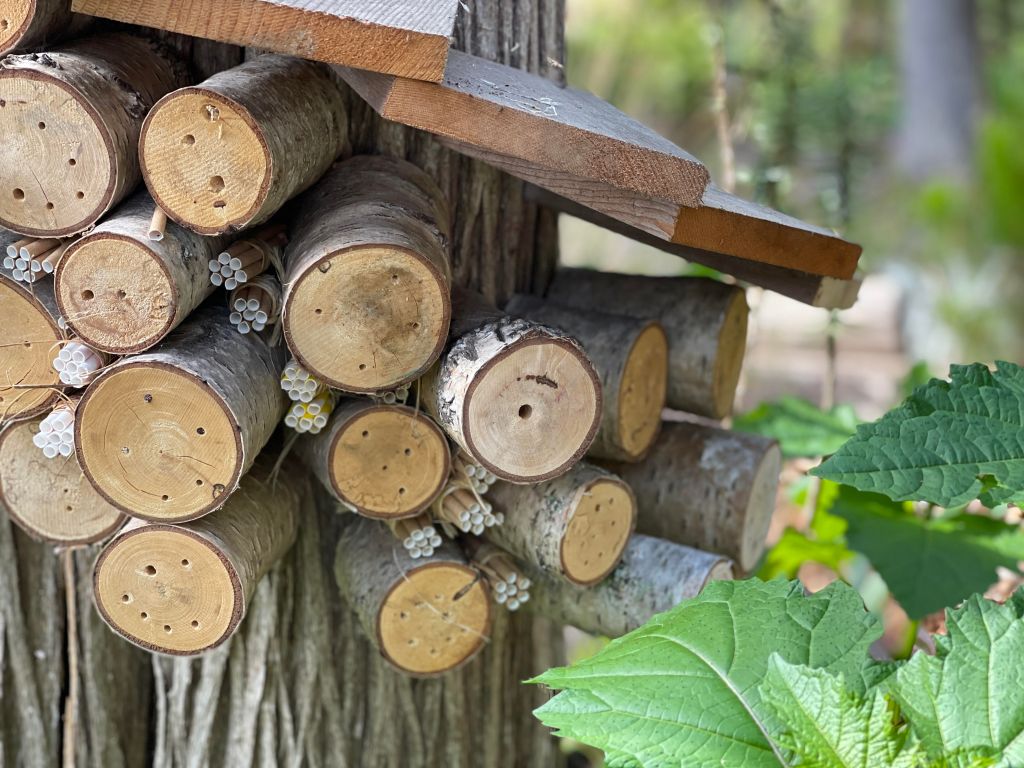
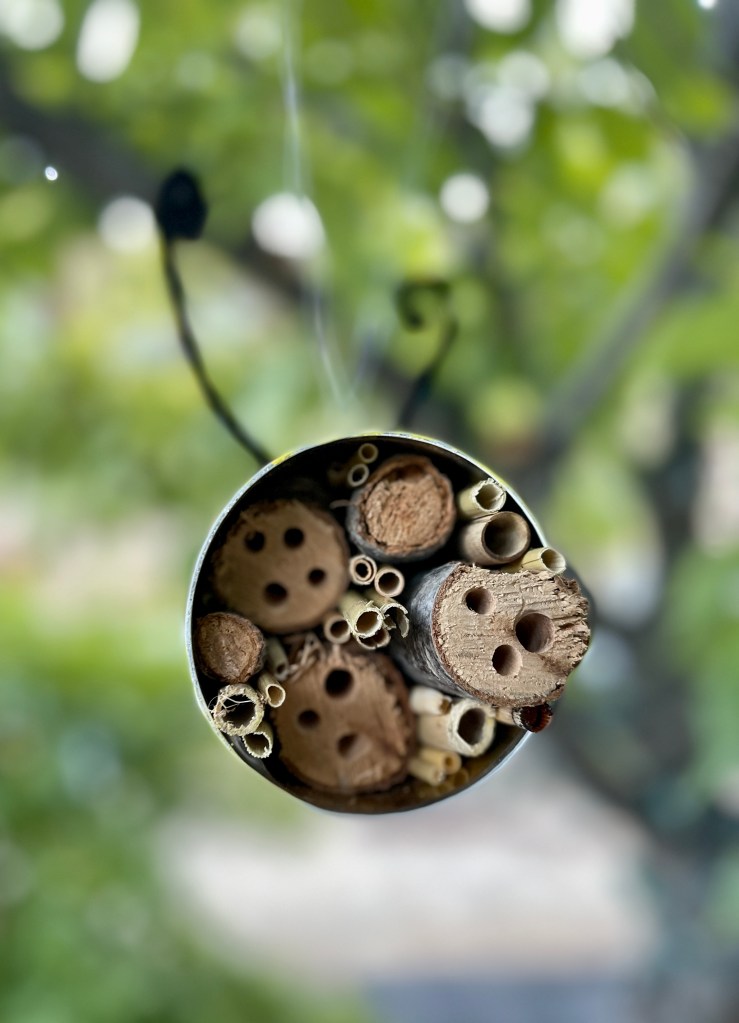
Now you need the insides (the actual place the bees will be staying). Bee hotels are supposed to mimic the natural nesting habitat of the bee, try giving a bundle of hollow reeds or stems, drill 2 mm to 10 mm diameter holes in a wooden block that are about 2 inches to 6 inches long, or even reusable paper straws. Keep in mind, if you choose using paper straws they can easily absorb moisture which is not good for the baby bee. So for their safety, retire the straws after each season once all of the babies have emerged. After that, get new straws for the next mama to find.)
Then simply attach the insides to the frame making sure they are sturdy and will not fall out or shake.
Now you have your own bee hotel. Attach at least 3 feet above the ground so that no crazy creatures get curious. And if you are having trouble with birds swooping in and pecking at the holes, consider putting chicken wire on the outside/entrances of the caves.
Photo by Beediverse
Here are some more essential tips:
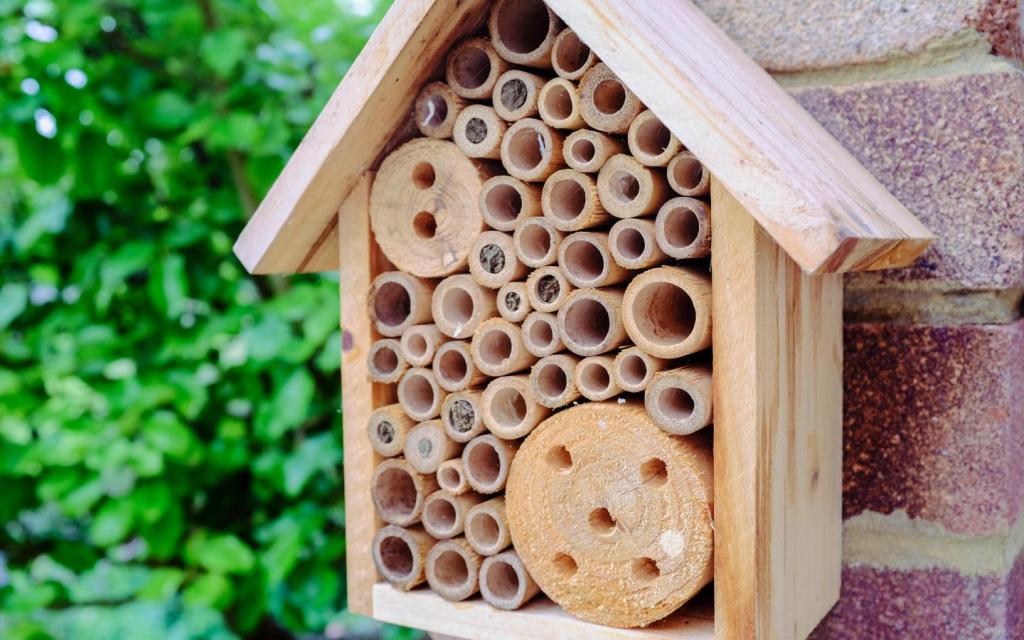
Have a nice roof so that the entrances to the cave are protected from rain or dew. This is very important because, as I said before, if the cave is exposed to water or mass moisture, it could lead to mold, disease, and many other bad things. So, in the rainy months, I suggest storing it in the garage, patio, dungeon or any other cold dark spot. You don’t have to worry about them emerging until spring.
Make sure your hotel is not swinging or swaying in the wind, this will lead to very uncomfortable baby bees. Keep it in a non-windy and stable place.
Photo by Woodland Trust
Always place your hotel in direct sunlight. Usually south or southeast facing. The babies like it warm in the spring and summertime.
Put your hotel out in early April-ish, that’s when most mamas will be looking for a place to lay. Then, by the following spring, all the babies should have all moved on to the big wide world. After they leave, clean the empty hole with a pipe cleaner or remove and replace the holes entirely.
Other than that, just be generally careful when placing and caring for your little friends. Share the care!
Photo by HuffPost
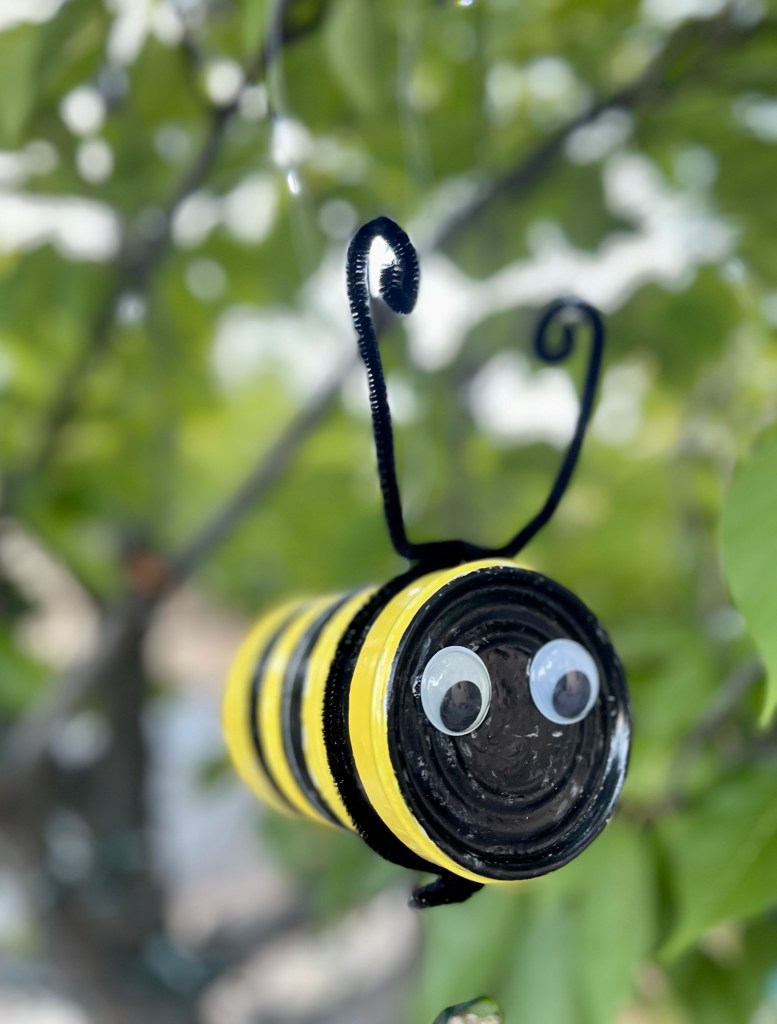
Now we must understand a few things. The answer for how to “Save the Bees” is much bigger and harder than just putting up bee hotels, this problem is much more complicated the world would assume. But don’t fear. By doing this you will be helping the bee population in your area. Especially if you live in a more urban space with few resources for their babies to be born. Plus, the hope that if we put bee hotels in public spaces, we could inspire anyone who sees it. The goal is to spark interest and curiosity, people will say “what is that thing?” This will inspire questions with important answers. The hope is that this fun project will inspire future generations to take further steps to save these wonderful creatures. My ask to whoever is reading this is to create as many bee hotels as possible using only recycled materials or things that you find in your backyard. Make it fun, art inspired, and creative.
My greatest hope is that by having bee hotels spread across the Bay Area, it will both restore the pollinators’ habitat, inspire kids to protect nature and inspire others to support this great cause with action to help them in the future. What steps will you take?
Photos by Sheri Salado. Made by kids of Larky Parkday.
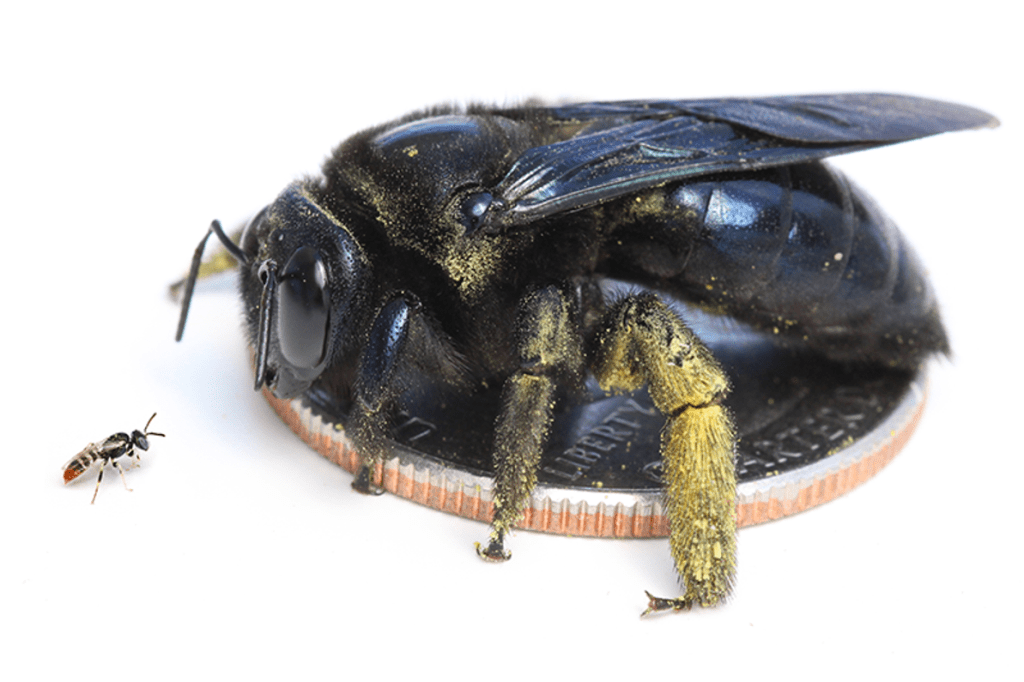
When you think of bees, most people think of hive dwelling, queen born, black and yellow little puff balls. But there’s actually much more than that! Not all bees live in hives, actually, out of 20,000 species, 90% are Solitary bees. 70% of all Solitary bees live underground, and only less than 10% of all species live in hives and make honey. You might be thinking “What in the world is solitary?”
Hive Bees ~ They live in hives, make honey, and are all born from one queen bee.
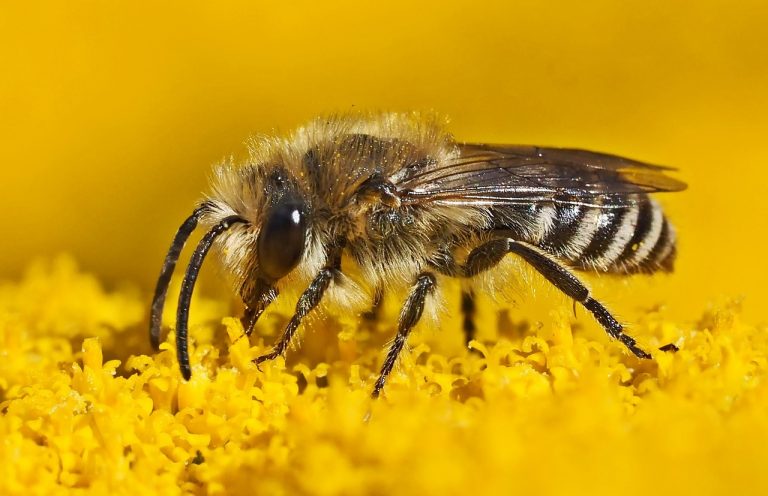
Solitary Bees ~ They do not live in a colony environment, they live as “solitary” creatures and have their own families. They are more efficient pollen gatherers, plus some live underground!
Photo by Beegrateful
Of course, there is so much more to dig into than that but this is good for now. As with all of history, things happen and the world changes. Very sadly, we have seen a rapid decline in solitary bees in my area which can lead to insufficient pollination of our crops and gardens, and an over reliance on pesticides. “The plight of managed honeybees raised alarms that native bees might be facing similar challenges, says Neal Williams, a pollination ecologist at UC Davis. Although most native bees don’t live in colonies like honeybees do, they too are susceptible to poor diet and loss of habitat,” he says according to the California Native Plant Society article June 24, 2021. So what is leading to the decline? That’s what I wanted to find out and try my very hardest to stop. Over this two-part article, I will first explain why solitary bees are turning to the sad road of extinction, and second how we can stop it.
Photo by Ark Wildlife
But first, in order to help we must learn the why of the matter.
1. Pesticides
There was a study done by scientists in South Dakota to show if pesticides, like Neonicotinoids, could cause birth defects or even death in white-tailed deer. They laced the captive deer’s water with various amounts of this chemical. The study found what they expected, unfortunately and sad irregularities in the offspring and their parents. When the deer passed away, the scientists found scary amounts of Neonicotinoids. Some argued that because the deer were in captivity, the study was manipulated, so the scientists tried testing deceased deer born and raised in the wild and found more Neonicotinoids! My point is, if pesticides are affecting deer this horrifically, how do they affect other mammals, amphibians, humans and our precious pollinators? “Exposure to pesticides containing neonicotinoids and fipronil caused the deaths of more than 500 million bees in four Brazilian states between December 2018 and February 2019”, according to an investigation by Agência Pública. Keep in mind, this is just 4 states in just Brazil and in just 3 months. And this is just bees, what about the thousands of other pollinators? We have a state and country that has gained an over reliance on pesticides on our crops, especially in my community. I live in a farming community and have noticed many farms that no longer show a large “Organic” sign above their farm stands. “Beekeepers across the United States lost 48.2% of their managed honey bee colonies from April 2020 to April 2021” according to Auburn University. Pesticides are toxic to these little guys. Things like:
~Insecticides,
~Herbicides,
~Rodenticides,
~Fungicides,
~Neonicotinoids
These are examples of chemicals that are, unfortunately, contaminating the water and pollen that bees use to survive. Bees will (with some varieties) die immediately upon touch. This has led to the sad death of too many bees in my area.
Photo by Crown Bees
2. Development
Over many years in California, our landscape has changed due to drought, fire, and an increase in alternatives to the traditional way of farming. In my area, I have seen more and more unnecessary building and construction projects which have destroyed the solitary bees natural place for the mothers to lay their larvae. The bees need a hollow “cave like” place to lay their larvae, and because of these irresponsible building practices in my community (killing of things like marshlands, old historic trees, and forests, which these bees use for nurseries) have caused an inevitable decline in solitary pollinators. Another issue contributing to the reduction in suitable habitat is the basic landscaping practices. Most local homeowners remove all foliage, dried brush, wood, as well as having highly manicured yards, thus removing all of the potential natural living spaces for solitary bees. In addition, I asked some of my friends, local kids, and even adults in my community about this topic and there was little to no knowledge of this issue amongst these people. We all must strive to inspire and educate our community on how to take care of solitary bees.
3. Climate Change
Plus, many more factors like climate change, in which pollinators are forced to make drastic and unforeseen changes in their daily lives.
I hope that helped us have a better understanding of why we should stop this unfortunate fate of solitary bees? Check back next month to see how you and your family can help protect our truly life saving tiny friends.
















 The Lighthouse