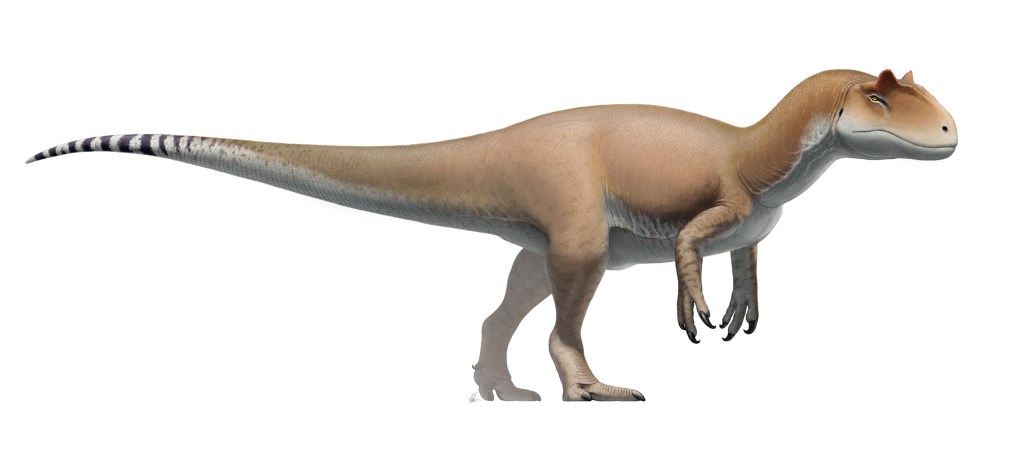
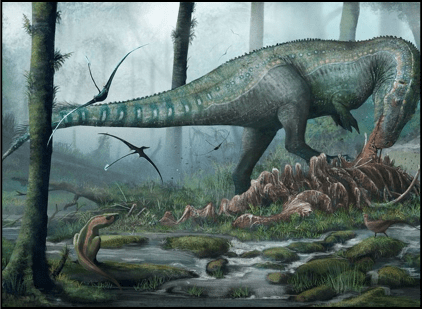
Allosaurus is a large, carnivorous theropod dinosaur that lived during the Jurassic period in North America around 155 to 145 million years ago. Fully-grown adults could be over 28 feet long and weigh more than 2 tons. It was named Allosaurus (meaning, different/other lizard) for its, at the time, unique, concave vertebrae. It has dozens of sharp, serrated teeth and a relatively light, but still strong, skull. The most well-known species of Allosaurus is called Allosaurus fragilis (meaning fragile). However, it is visibly very far from fragile, as several fossils show healed (or partially healed) puncture wounds that fit Stegosaurus tail spikes. Nearly all stages of Allosaurus life have been discovered as fossils, from possible eggs all the way to fully grown adults. As with some other large predatory dinosaurs, an interesting part of Allosaurus is that juveniles have comparatively longer legs than the adults and possibly hunted different prey.
The field of Paleontology is fascinating to me. It allows us to study extinct plants and animals to hypothesize what they would’ve been like when they were still alive. It’s amazing how much our understanding of these wonderful organisms can change as we discover and learn more about them. One of my absolute favorite examples of this change is exhibited in a popular dinosaur called Spinosaurus.
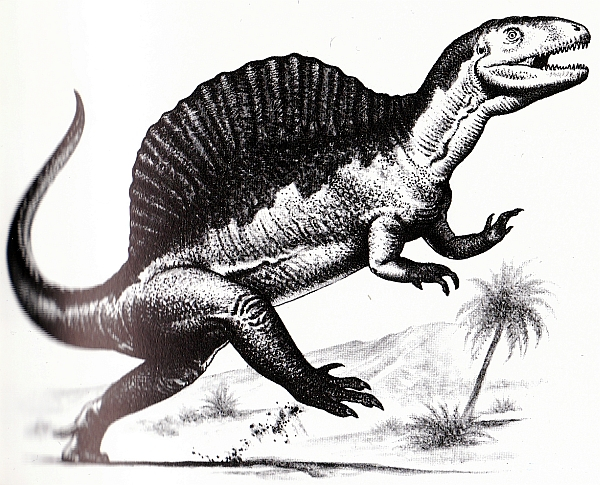
When Paleontologist Ernst Stromer first described spinosaurus in 1915, little material had been uncovered. Only a few ribs, gastralia (belly ribs), vertebrae, and teeth, along with small parts of the upper and lower jaws, and of course, some of the large neural spines that inspired this dinosaur’s name. In its original reconstruction, it looked like a Carnosaur with a large sail on its back as opposed to what we know it to look like now.
Early 1900’s Spinosaurus
As if Spinosaurus wasn’t hard enough to study, what with the little fossil information that had been discovered, the original fossils were destroyed in a bombing raid on Munich, Germany, during WWII. All that was left were detailed drawings of the original fossils. Studying Spinosaurus proved very difficult, so for most of the 1900s, it was inaccurately depicted as a sail-backed Carnosaur.
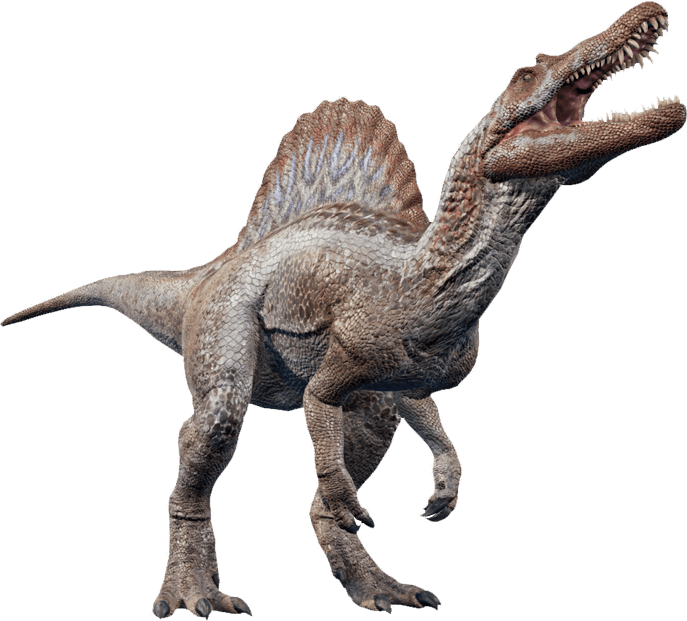
Fortunately, almost 40 years later, newer fossil material, along with the important discoveries of two other Spinosaurids, helped to improve our understanding of Spinosaurus significantly. The first was a dinosaur called Baryonyx, which was discovered in 1983, and over a decade later, in 1998, another Spinosaurid named Suchomimus was discovered. When material from Spinosaurus was compared with these two, more complete dinosaurs, it was easy to see how similar they were. Because of their long, slender, crocodile-like skulls, Paleontologists were able to determine the shape of Spinosaurus’s head.
Spinosaurus model from Jurassic World: Evolution
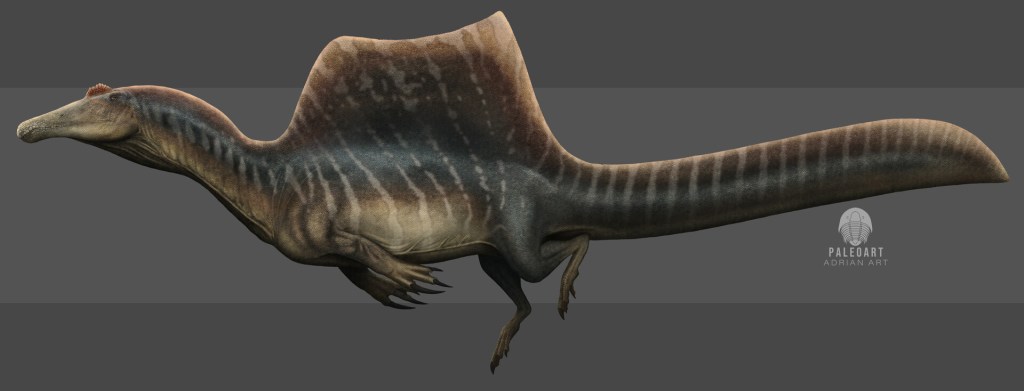
But our understanding of Spinosaurus wasn’t done changing just yet. In 2014, Paleontologist Nizar Ibrahim published a study featuring a full-size model reconstruction of a “new” Spinosaurus. It kept the crocodile-like skull and large sail on its back, but its body had drastically different proportions. For starters, the 2014 reconstruction has a smaller pelvis and much shorter legs than past reconstructions, and that because of these features, Spinosaurus was an obligatory quadruped. This study’s accuracy was highly questioned; the main issue that most people had was that this reconstruction was made up of several Spinosaurus individuals, along with gaps being filled in with closely related animals. This reconstruction can be proven accurate or inaccurate if more complete material of Spinosaurus is found.
As recently as 2020, a new paper was published describing a nearly complete tail of Spinosaurus. It showed that neural spines continued along the vertebrae of Spinosaurus all the way to the tip of the tail. The vertebrae also had long chevrons on their undersides. Plus, it was surprisingly flexible, meaning that Spinosaurus could propel itself through the water using its tail as a paddle. I doubt this will be the last drastic change, but it does bring us closer to fully understanding this amazing animal.
Our understanding changes greatly as new discoveries are made. And that is why Paleontology is so fascinating to me. As much as I’d love to see a living dinosaur, I would not want them to be brought back to life because, for me at least, it would spoil the magic and mystery of them. I’ve loved dinosaurs for as long as I can remember, and even though most people outgrow their interest in them, I’ve never lost mine. It’s fantastic to me that these awe-inspiring animals once lived on the same planet as I do.
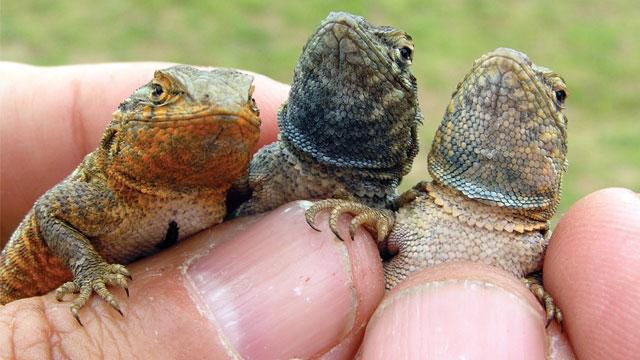
The common side-blotched lizard is a unique animal. The males behave in 3 different ways and also differ in the color of the scales on their throats. There are three different colors: blue, orange, and yellow. Certain behaviors correspond to each color. The different colors have a unique “Rock-Paper-Scissors” form of competition. The Blue-throated males form a group to protect one female. They are beaten by the slightly larger and more aggressive Orange throats, who have groups protecting multiple females. In turn, the Orange-throated males are beaten by the sneakier Yellow throats, who slip past their defense. However, the Blue throats groups are so tight that the yellow throats cannot sneak in. Blue beats Yellow, Yellow beats Orange, Orange beats Blue; Rock-Paper-Scissors.
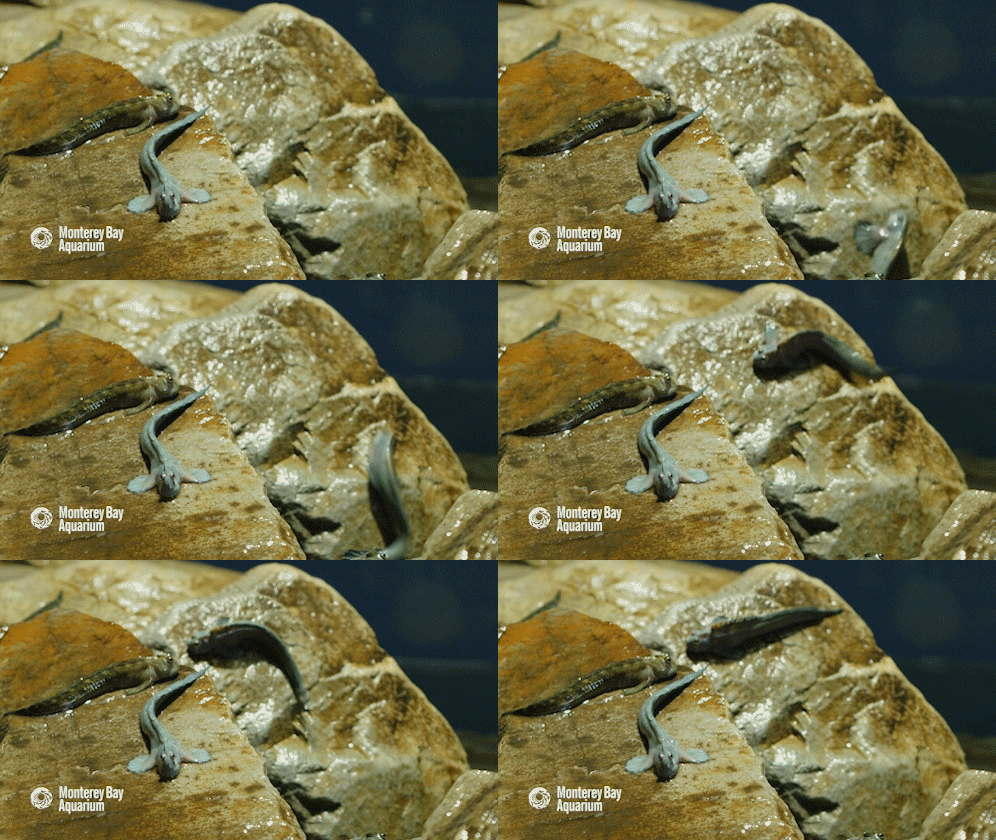
The Pacific Leaping Blenny (Alticus arnoldorum) is one of a limited number of amphibious fish, a kind of fish that can leave water for an extended period of time. What makes Pacific Leaping Blennies and other kinds of Leaping Blennies so interesting, besides their head crests and reddish-orange dorsal fins, is their ability to leap around their habitats using a flicking motion of their tails!
Image courtesy of Monterey Bay Aquarium
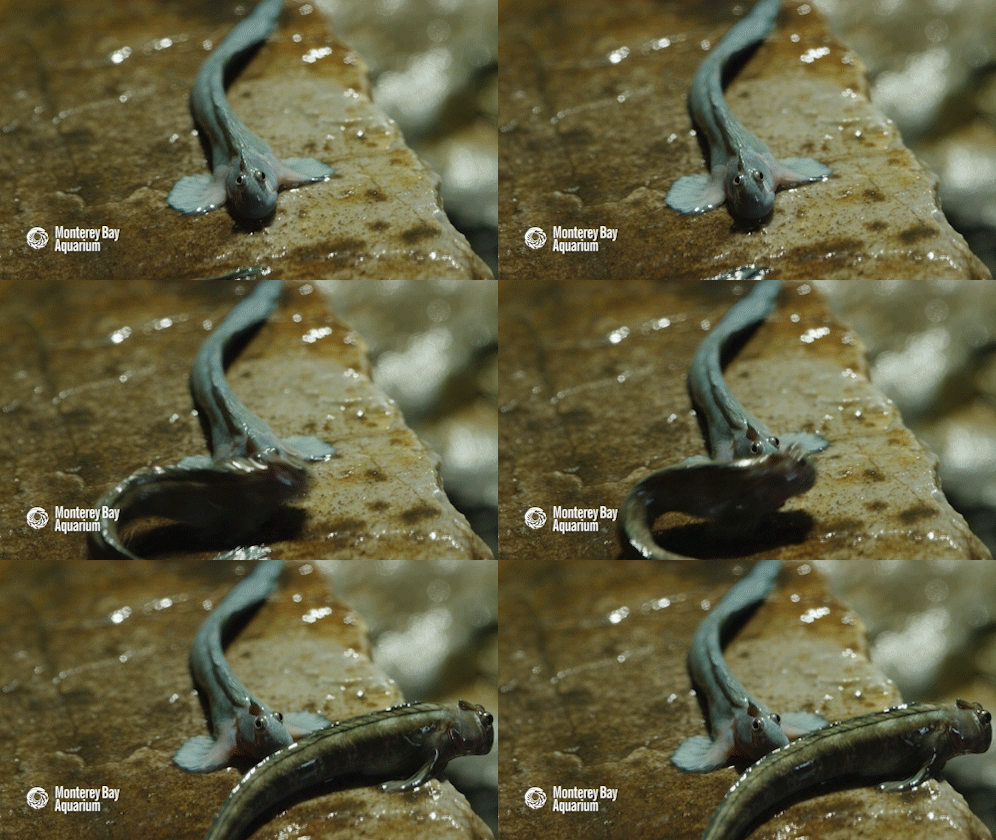
Their uncommon method of movement is especially unique, and only found in a couple of other species related to them. They are able to flick their tails up to 90° and can do so repeatedly and with a sufficient amount of strength to allow leaping several times their own body length, which is usually around eight centimeters. (or roughly three inches for us with a worse system of measurement.) They use this to leap from hole to hole in their limestone, and were likely named due to this.
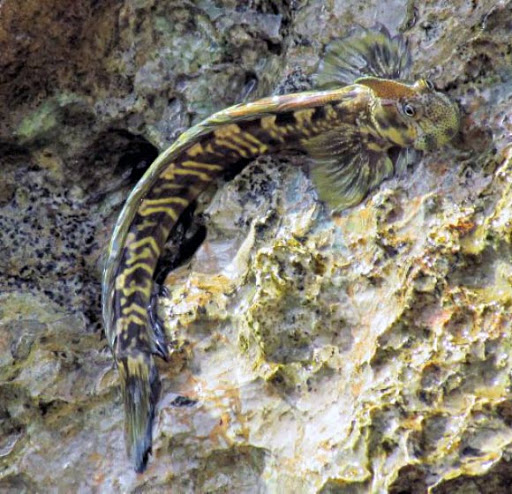
In combination with their leaping, they also have expanded pectoral and tail fins which allow them to cling to solid surfaces. The Blennies breathe through their porous skin when in the air, and their gills when in water, both of which they must keep moisturized. They are oviparous, and form distinct pairs when mating.
The habitat of Pacific Leaping Blennies is usually limestone rocks in reefs, which they are patterned to camouflage into, in such locations as Samoa, Guam, and the Marianas, Society and Cook Islands, which are in the western and southern Pacific Ocean. Blennies are most active during mid-tide, which usually lasts around two to four hours, and tend to hide in moist crevices in rocks to avoid drying out or being swept away by stronger tides during the rest of the day. When they are active, they tend not to intentionally go into the deep water and spend most of their time on the land. Their diet consists primarily of algae, which they scrape off of the rocks they live on.
Image courtesy of Monterey Bay Aquarium
Pacific Leaping Blennies are an incredibly unique and interesting animal, a complex mix of land and sea creature. If you live in the California area and want to see one up close, visit the Monterey Bay Aquarium, which houses a small habitat of this fantastic fish, as well as a plethora of other amazing sea creatures!
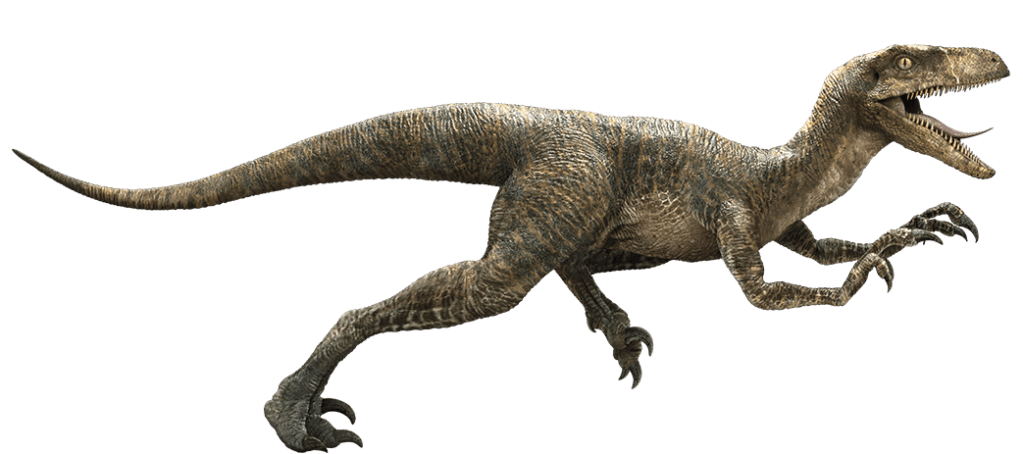
The Jurassic Park franchise is hands down the most popular piece of dinosaur media ever. Based on the 1990 novel by Michael Crichton, the first Jurassic Park movie cemented dinosaurs as pop-culture icons.
Image from Jurassic World
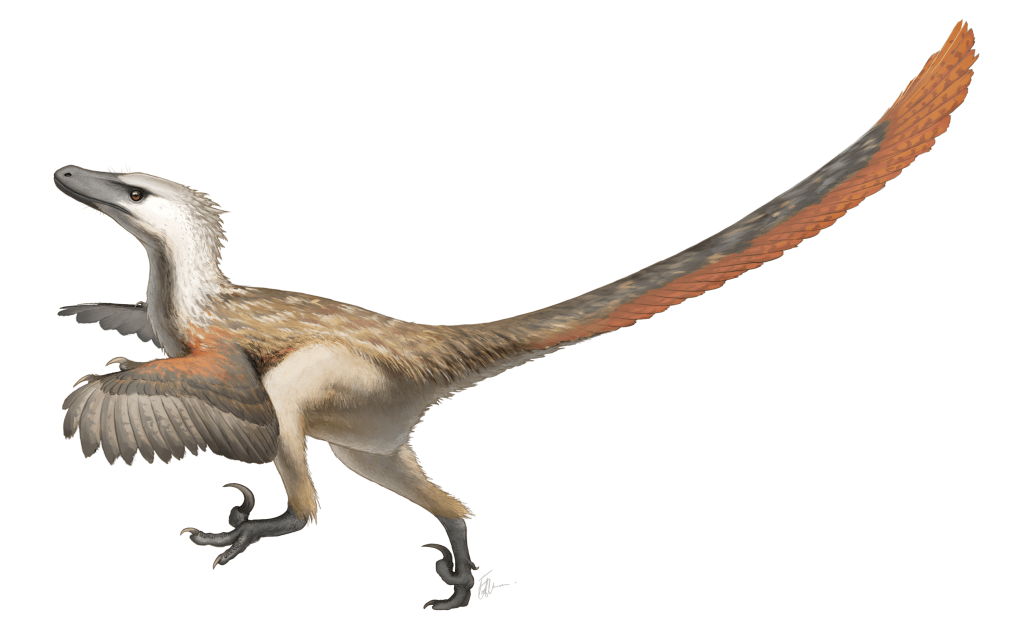
One of the most prominently featured dinosaurs in the franchise is the Velociraptor. However, its portrayal in that series is much different than real life. So much so that most people wouldn’t even recognize a true Velociraptor if they saw one.
The real Velociraptor was actually about the size of a turkey, approximately 1.5 feet tall. The Velociraptor more closely resembled a bird than a lizard, as it had feathers covering most of its body and even large, wing-like feathers on its forearms. In the Jurassic Park movies, the Velociraptor is shown to exhibit near-human intelligence. However, judging by the size of its brain cavity, the Velociraptor probably wasn’t even as smart as a parrot.
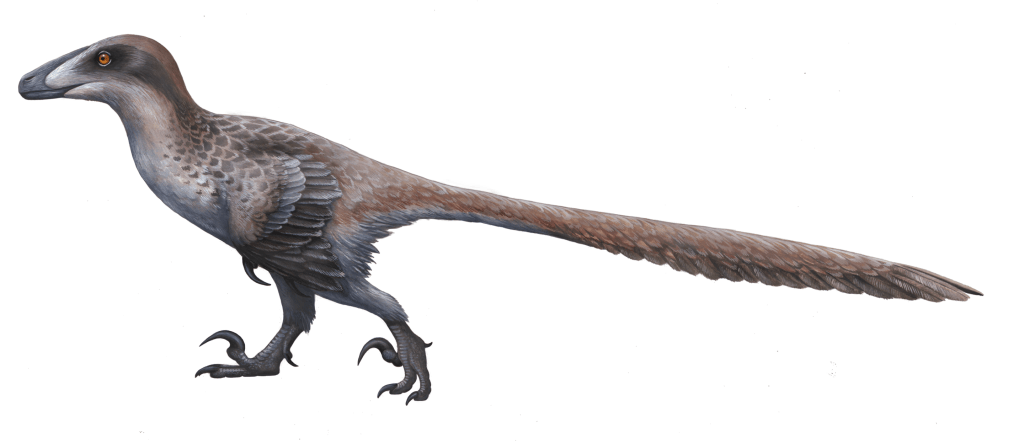
When Michael Crichton was writing his book, he based his Velociraptor on a different animal called Deinonychus. He called it Velociraptor because he decided its name needed to be “More dramatic.” While Crichton used the physical characteristics of Deinonychus almost exactly, he chose to depict them significantly larger. Although, at that time, there were no known raptors even close to that size.
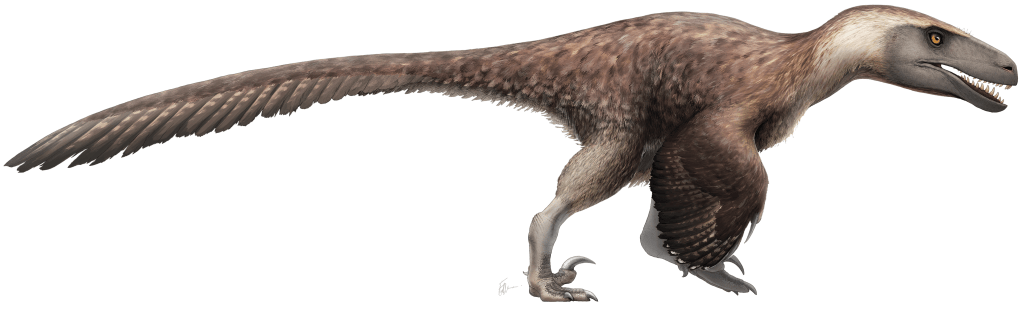
After the Velociraptor for the first Jurassic Park movie had been designed, the discovery of a new massive raptor was made public, called Utahraptor. Interestingly, Utahraptor matched the Jurassic Park Velociraptor’s appearance in almost all respects, the exceptions being that it was feathered and thought to be slightly larger.
Usually, art imitates life, but in this case, it seems to have been the other way around. To quote the Jurassic Park character Ian Malcolm, “Life uh… finds a way.”
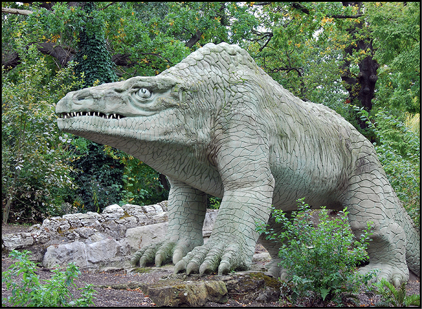
Megalosaurus was the first dinosaur to be discovered and scientifically named. From what little fossils they had at the time, Paleontologists thought Megalosaurus resembled a bulky, bear-like lizard. When in reality, its skeleton was more similarly structured to some birds, such as roadrunners.
When people think of flying dinosaurs, Pterosaurs are usually what they are referring to. However, while they are closely related, Pterosaurs are not Dinosaurs.
In the early days of Paleontology, “Dinosaur” was a catch-all term for most prehistoric, reptilian animals. As the fossil record grew it became easier to distinguish evolutionary differences in the bone structures of animals. By studying these differences, Paleontologists are able to determine more accurately where animals are placed on the evolutionary tree. For example modern birds evolved from Dinosaurs and not Pterosaurs as some may have assumed.
We now know that both Pterosaurs and Dinosaurs evolved from a group of animals called Avemetatarsalia during the Triassic period, around 230 million years ago. Avemetatarsalia split into two groups: Pterosauromorpha and Dinosauromorpha. Pterosaurs (meaning Wing Lizards in greek) belong to the Pterosauromorpha group, while Dinosaurs (meaning Terrible Lizards) belong to the Dinosauromorpha group. Meaning that although Pterosaurs and Dinosaurs inhabited the same environments and were tied to the same fate, they were part of separate and distinct animal groups.
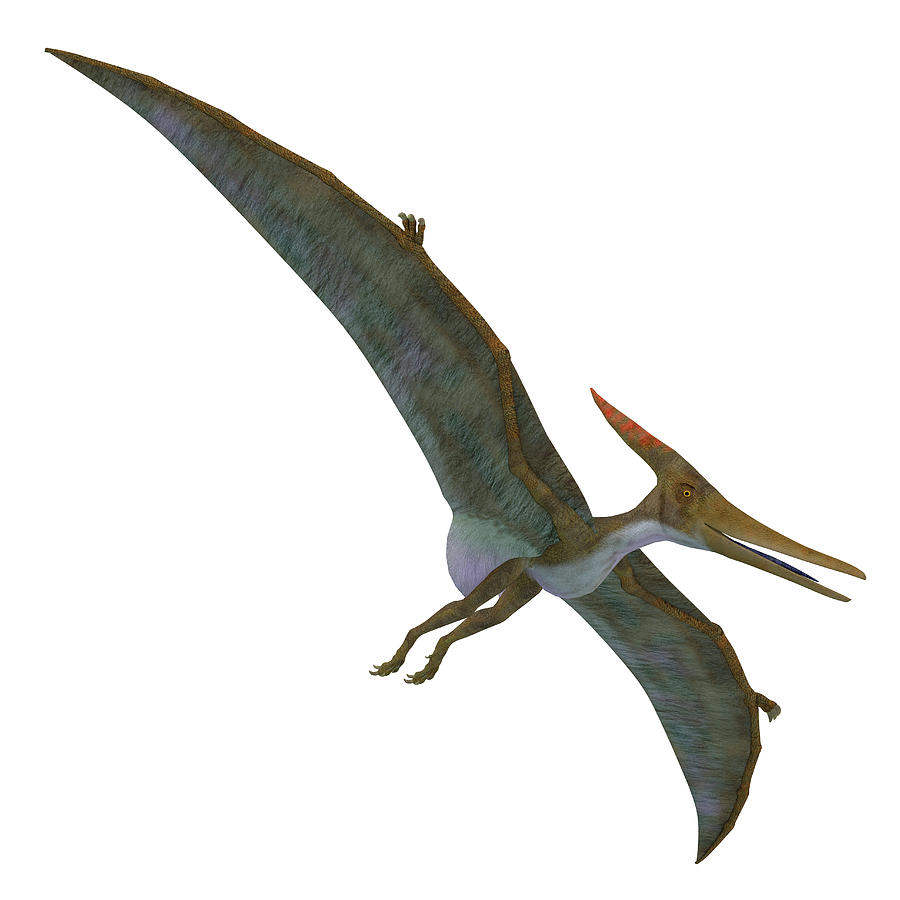
Illustration of Pteranodon longiceps by Mark Witton
The Pterosaur group was incredibly diverse, from the insect-eating Anurognathids that could fit in the palm of your hand, to the giraffe-sized Azhdarchids. The most famous Pterosaur by far is the Pteranodon, which is one of the only Pterosaurs to have been featured in the Jurassic Park movies. Pteranodon is one of the most well known Pterosaurs scientifically as well, with over 1000 fossil specimens documented. There are so many Pteranodon fossil specimens that Paleontologists were able to determine that it was sexually dimorphic, which means that males and females looked different. In the case of Pteranodon, the males were larger and had longer head crests than the females. Scientists can only guess as to the purposes of these different characteristics.
Pterosaurs were the first vertebrates on earth to evolve powered flight. Powered flight in animals means the ability to ascend without the aid of rising air, using their muscles to generate aerodynamic force. Only Insects, Bats, Birds, and Pterosaurs have developed this ability. This is incredibly impressive considering the massive number of animals that have existed on earth.
Illustration by Chase Stone
When they were first discovered, it was thought that Pterosaurs were only able to fly by jumping off of cliffs and gliding. That turned out to be very wrong. They could take off from the ground by vaulting themselves into the air with their powerful forelimbs. Pterosaurs developed flight in the Triassic period, and they would dominate the skies for almost 200 million years, until they, along with the Dinosaurs and 75% of all life on earth went extinct at the end of the Cretaceous period.
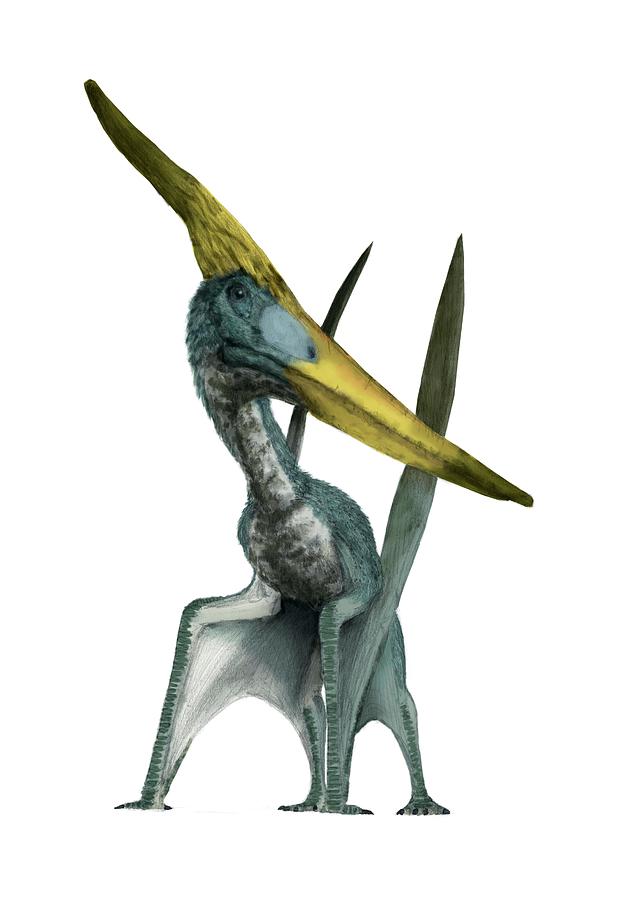
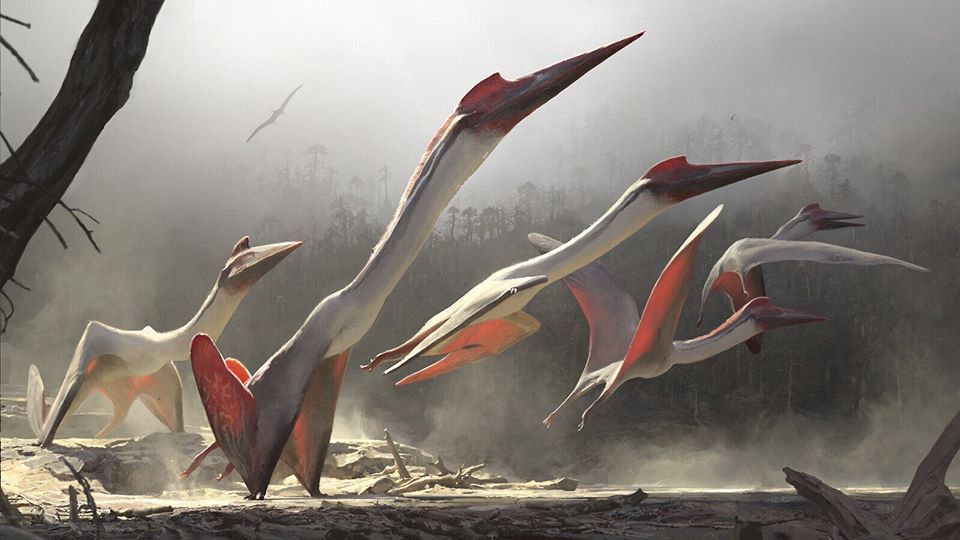
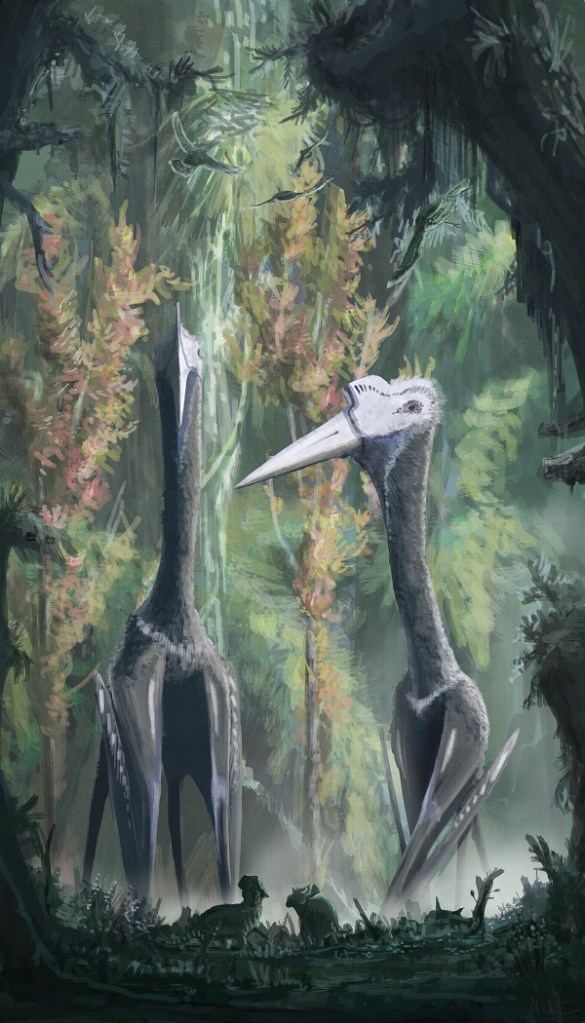
Illustration of Quetzalcoatlus by Mark Witton
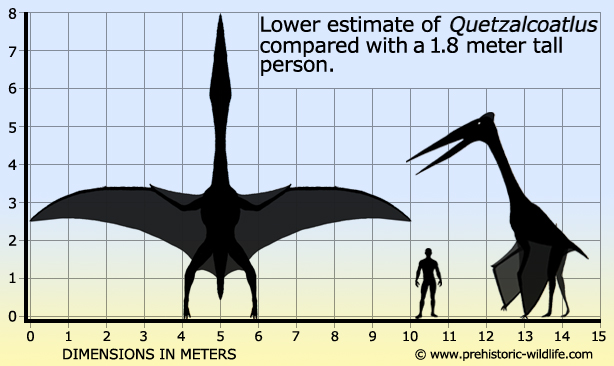
My favorite Pterosaur is an animal called Quetzalcoatlus which lived around 68 million years ago, during the late Cretaceous period. The first Quetzalcoatlus fossils were discovered at the Big Bend National Park in Texas. The Quetzalcoatlus is named after the Aztec feathered serpent god Quetzalcoatl. At the size of a light aircraft and with a wingspan of more than 30 feet, it was one of the largest flying animals to ever live.
I think Pterosaurs are some of the most extraordinary animals that have ever existed. All of the animals that connected Dinosaurs and Pterosaurs went extinct because Dinosaurs evolved characteristics that allowed them to dominate the world around them. By taking to the skies as early as they did, Pterosaurs were able to not only survive, but thrive at a time when Dinosaurs ruled the Earth.
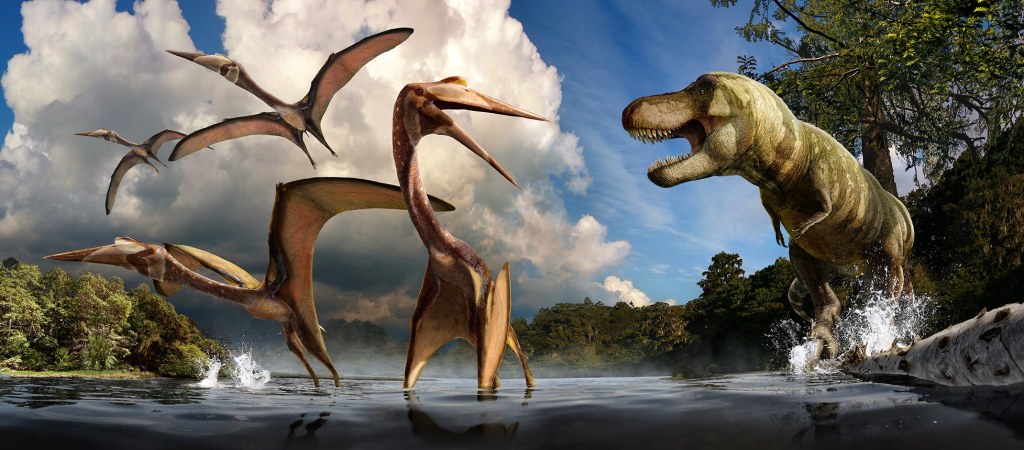
Illustration of Quetzalcoatlus and Tyrannosaurus by Julius Csotonyi and Alexandra Lefort





 The Lighthouse