Arts and Culture, Stories, Student Life

A Collection of Art & Poetry for Winter

Poetry by Johnathan David

The Fire

As the thunder roared and the wind howled,
We see the light in the distance.
And as the fire raged and burned,
Comes the instance,
Where temper is unleashed, and thoughts are telled.
But the assistance is come,
Yet the cries are yelled,
And the mental resistance is held.

Where the Wind Walks

Come, we must go
To where the wind walks.
For there we can know,
To where it stalks,
And to where it blows.
For where the wind walks,
The leaves follow.
And don’t talk,
Until tomorrow.
But keep moving
Past the racks and stacks,
Through the trees,
And under the breeze.
On the seas,
But around the bees.
Because where the wind walks,
The seeds will follow.
And we need the seeds,
To feed our hungry,
Because our trades south have failed,
After we bailed,
And sailed,
To new land,
And in this land, We stand,
Hand in hand.
So come, lets find
Where the leaves follow,
And the seeds go.
Where the weeds sway,
In dying light of day,
To find what to say.
Lets go,
Where the wind walks
The night away.

Today

What are you feeling today?
Or would you rather not say?
I myself am feeling a bit under the hay.
So could you stay?
Because I may.
And I don’t know where to go anyway.

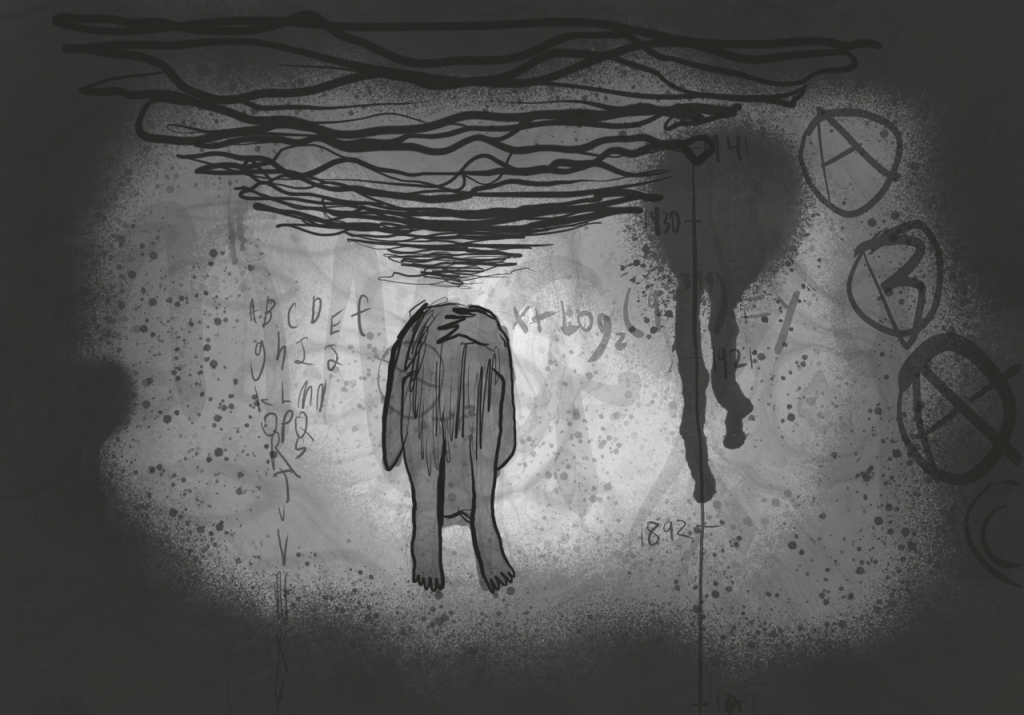
Art by Camden S.

Arts and Culture, Student Life

The Song of Our Hearts: Why Does Music Make Us Feel?

by Harper Smith

Music has existed in human culture since very nearly the dawn of time. The earliest known instrument was a 60,000 year old bone flute, made from a bear femur and discovered in the caves of Slovenia in 1995. Percussion (music produced by striking something to create sound, better defined by modern instruments like drums and the tambourine) has been around for almost as long, and by the time civilizations like Greece and Egypt had emerged, the use of music for storytelling and cultural connection was hardly a new idea. Music became a craft, an art, and because of this, there was more thought devoted to the why and how of it all. Theory (the study of the principles and elements of song) was created and developed, and things like melody, harmony, rhythm and structure were conceptualized and studied. Musical notation (the way in which instrumental music is read, or “sheet music”–have you ever seen those little pointy blob things? This means those) was developed as well, and evolved over time. Through the inventions of records, radio, CDs, and eventually streaming services like Spotify and Apple Music, music is now a part of most of our daily lives. It is used for relaxation, education, worship, or just to dance and have a good time! 

But because the influence of it all has spread so far, it means most of us have now experienced the same thing. The feeling of listening to a song–maybe your favorite song, or maybe just something on the radio–and letting it wash over you, filling you up with emotion, with thoughts and pictures in your head, until…are you crying? Okay, for a lot of you out there it’s probably not that extreme, but there’s a near-universal experience of having a song affect you in some way. Whether it’s in the form of sadness, joy or even anger, that’s the power music can have on us. And given how long it all dates back, it’s safe to assume that this power has existed since ancient times. But why? Why does this happen, and why can almost everyone relate? Why can one person think a song is the saddest thing they’ve ever heard, and another say it’s their go-to for a dance routine? 

There are a lot of theories, and their basis varies. Some use psychology, some use music theory, some use a combination of both, and still others go off emotional analysis or just, in formal terms, “straight-up vibes.” I’ll go through two of these now, and you can decide for yourself which best represents how you think of the phenomena. Note, however, that each and every one has a scientific basis behind them, and a framework supporting evidence and studies. I will link sources below for further reading–they’re very interesting, and provide deeper information than my brief overviews. 

Theory 1: Music composition and psychology. 

Here I’ve combined the content of several articles regarding the more scientific side of things related to music. Namely, the brain. Your brain (hopefully, at least) has several distinct areas, each for different purposes. When these areas are triggered, certain hormones are released, or certain reactions are triggered, that make us feel things like pleasure, fear, and fatigue. Scientists have found that nearly all of these systems light up when we perceive musical sound. The amygdala, the hippocampus, the limbic system and more all have expressed intense reactions to harmonic sound–and they are all centers of the brain associated with pleasure and reward. Music makes us happy on a psychology and physiological level. Being able to predict or anticipate the tempo, rhythm, and changes sends a positive charge to our brains when our expectations are met or surprisingly exceeded, and releases dopamine. Additionally, songs or sounds associated with certain memories (or even just songs we recognize) in our brains light up the reward system as well. 

(Sources: one, two, three, four.)

Theory 2: Empathy and connection. 

Another idea is less quantitative in the realms of physical biology, but has very real basis in history, psychology and human experience. In fact, that is the theory: that human experience is what leads us to connect and relate to music. I’m sure we all have songs, or even whole playlists of songs, that remind us of ourselves (I’m sure I do–looking at you, indie artist Searows and your songs that make me ugly cry.) But why can we still feel things at songs that have nothing to do with us? Some say that it really is that simple: empathy. The concept and practice of being able to share emotions with other people is one of the most important skills for us to have in life, and one that most everyone is able to cultivate over their lifetime. This skill is exactly what may cause us to experience emotional sensations when we hear certain songs. In fact, scientific studies have shown that more sensitive people show higher levels of connection when listening to “sad” instrumentals, and even find music more pleasurable in general than someone with lower levels. There are even studies that show that listening to music helps us grow our own empathy in general. Emoting at instrumental changes and lyrics can develop an individual’s sensitivity and enhance their ability to relate to others. This is because music is a highly personal art form that conveys a very intimate look at the artist’s feelings. As a songwriter and composer myself, I can say for certain that the process of writing songs is definitely one of the most soul-bearing activities I’ve engaged in. Artists communicate their pain, anger, frustration, love or joy in their songs, with the intention of their listeners coming to understand what they’ve experienced by the end of the track.  And despite what you may think if you’re only familiar with lyrical songs (as most people usually are), the same is true for classical or instrumental pieces. The act of creating music and using instruments and composition to reflect a theme or feeling is incredibly personal and unique, and sometimes can have even more depth to them than lyrical pieces. Either way, when someone’s heart is presented proudly in their art, we can see it. And in terms of music, we can feel it ourselves, too. 

(Sources: one, two, three, four.)

Now that you’ve read through both of these different ideas, which one do you think is true? Which one is the real reason behind this universal phenomena? Well, the answer is both! Both theories have accurate scientific groundwork in the scientific community, and are widely accepted as true. And there are even more reasons you may feel things at certain songs: your culture, background, past experiences, or even your music taste, all affect the ways you view the things you listen to! Every human on this earth is unique and has lived a unique life compared to every other, and we are all bound to see things differently. Maybe Shape of You is your favorite song because you think it’s romantic. Or you like the music. Or it reminds you of your traumatic childhood. Or maybe you hate it! (I wouldn’t blame you.) For each scenario there is someone here that can relate, and for each and every song, it is someone’s favorite and least favorite. Humans are so diverse and no two of us are the same, but the power of song has united us throughout the ages and continues to have an almost mystical effect in our daily lives. And for a species that can hardly ever see eye-to-eye–I think that’s pretty beautiful. Don’t you? 

Recommendations from the Lighthouse Staff and Friends! 

Olive Pea recommends the song ‘Wild’ by Woodkid! It makes her feel determined and motivated, like she can accomplish anything. The drums are like a military march, and the strings feel like looking at the clouds. 

Lydia Martinov suggests ‘7 Years’ by Luke Graham and ‘Time in a Bottle’ by Jim Croce. They make her think about the passage of time, and its effect on us all. 

Lucas David puts his stamp of approval on  ‘We’ll See You, Opal (Reprise)’ from the Jack Stauber musical short film “Opal.” It’s a claymation indie film that’s very cool and free on YouTube, go check it out! 

Aleena Hamior enjoys the songs  ‘Hellbent’ and ‘Royal We’ by Janani K. Jha. 

Kieran Smith said the song ‘Rule #4’ by Fish in a Birdcage is epic, and then said he thought epic wasn’t a fancy enough word. I told him it was, but we’ve agreed to disagree. Maybe he meant extraordinary? Inspiring? Monumental? Either way, this song makes him feel it. 

Fincher Smith, age six, tells us that ‘Bodies’ by Drowning Pool makes him feel “dance.” Who could argue with that? 
Harper Smith (that’s me!) recommends the song ‘Never Love An Anchor’ by the Crane Wives  for its lyrics and guitar style, and vibes that perfectly encapsulate fall. This song is one of their all-time favorites and always makes them cry, and they would love to have you suffer with them.

News, Student Life

Interview with DGC Director Ken Abrams

by Lydia I. Matinov

Lights? Check. Audience? Check. Voices? Check! Next is the conductor! I had the pleasure of interviewing Mr. Ken Abrams, the artistic director of the Danville Girls Chorus. Since 1992, Mr. Abrams has been conducting singers of all ages, and has won multiple awards, as well as, competitions. I am very excited to share his inspiring story.

Why did you choose choral conducting and performing arts as your career?

I didn’t choose it at first. I chose to be a music major, and then, after I graduated, somebody said, “Hey, you’ve worked with my high school choirs, and you did really well. You should consider being a teacher.” That’s when I said, “Maybe”. Right after college is when I made the choice to do that.

What is your favorite part about your job?

My favorite part is getting the students prepared and working through rehearsals. Then, watching them soar in a concert.

What challenges have you faced throughout your career?

Many challenges. Financial is the first one. Not getting any money for my program, or my accompanist, and having to sell candy, and do everything possible to have a choir to direct. That was one of the hardest things. There’s been a lot of cutbacks in the schools over the years. They’re facing more this year.  That was always difficult, when they were laying people off, or told me they do not have a job. And three, sometimes just having a rotten-egg student can be a real pain. It’s the good ones that make it all worthwhile.

What was the most valuable thing you learned while studying choral conducting?

One of the things somebody said was “Expect, and communicate, and you will not be disappointed.”, and I’ve always remembered that. If you give them the expectation; tell them what you want, how to do it, and what you’re expecting, more often than not, they will come through with flying colors.

What advice can you give to anyone who would like to pursue a career in musical arts?

Just make sure you have all the training you can get. Musical arts is a big field, but if you want to be a teacher, learning how to play piano helps a lot. If you’re in musical arts, then you must try singing the absolute best you can and learning to read music. And, if you’re going to be in musical theater, add dancing to that, as well.

You have received many prestigious awards, and your choirs have won numerous competitions. Can you comment on your incredible success and have you ever imagined that you would be such a highly sought after artistic director?

Never. Never imagined that. It just kind of happened, and I got better and better the older I got, and I got Teacher of the Year for California. Two years ago, my choirs won many-many awards and competitions, but they had to work really hard to do that.

Can you share a funny or interesting story that happened sometime during your career?

There were a lot of funny stories. We did musicals every other year, and there was lots of fun stuff that would happen: a lot of silly things with kids falling off the risers, or sneezing, or fainting in the middle of a song.

Is there anything else you would like people to know?

What’s wonderful about being in a choir is that singing is something you can do your whole life. It’s something that you don’t have to have an instrument for. You can just do it by virtue of your body helping you accomplish singing. I hope that my singers with Danville Girls Chorus and the ones that I had in high school use it, value it, and continue exercising it their whole life long.

For more information regarding the Danville Girls Chorus, visit danvillegirlschorus.org.

The Danville Girls Chorus

Science, Student Life

The Psychology of Stress

by Lucas David

Understanding stress is very important for a number of reasons, especially for teens, who experience comparatively high amounts of stress in their daily lives. For one, stress has a direct impact on your mental wellbeing, as it can cause you to feel overwhelmed or anxious, as well as causing difficulty concentrating, memory problems, and sleep changes. For another, it can affect your physical health by damaging your heart’s functionality, causing digestive issues, weakening your immune system, making it more difficult to sleep, and much more. It is also important to understand stress because it helps allow you to identify stressors in your life, recognize your bodies reactions to them, and develop methods to cope with them and manage your stress levels before they begin to affect your physical and mental health. Recognizing stress early on can help prevent you from developing health issues, and make them significantly easier to manage if they arise. This can lead to improved mental wellbeing, enhanced decision making, healthier relationships, greater productivity, and an increase in happiness overall.

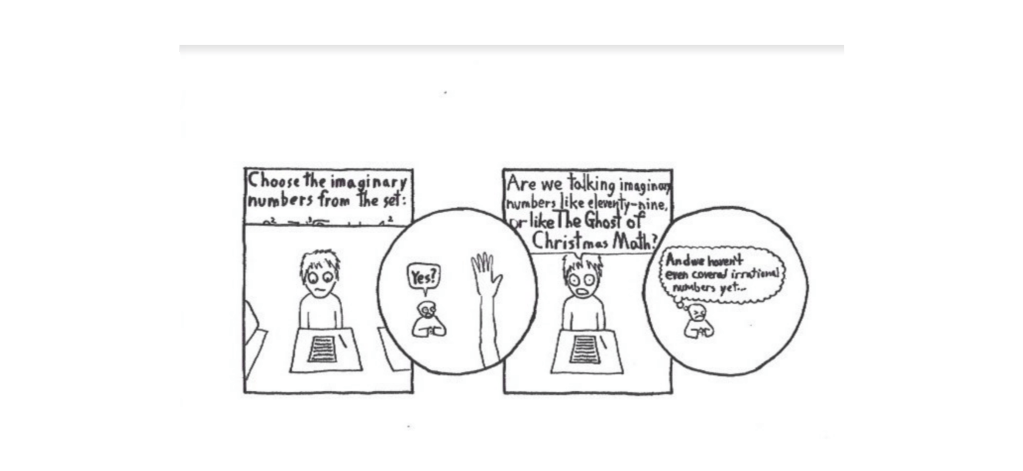
Image made by Lucas David

So far we’ve talked a lot about what stress does, but what is stress, anyways? Stress is a natural response to threats or challenges that involves both the mind and the body. It can help prepare you for the future, but too much of it can negatively affect your health. Stress is caused by significant events such as moving to a new home, beginning a new job, going through trauma or an onslaught of homework or illness. Very often, it is helped along by a perceived lack of control, a feeling of social isolation, negative thoughts or beliefs or poor coping mechanisms.

However, not all stress is bad for you. Good stress, or eustress, is a short term challenge that can motivate you to succeed and help you develop as a person by building resilience, developing life skills, helping to focus your energy, improving your performance and enhancing your sense of accomplishment. Bad stress, also called distress, is long term and can damage your health by creating anxiety, confusion, worsening your concentration and lessening your performance. To help monitor your stress to make sure that the majority of it starts with an eu, we need to talk about stressors. Simply put, stressors are stimuli that trigger a stress response in an organism. By monitoring which stressors cause distress, and which cause eustress, we can develop coping mechanisms to help alter our stimuli to suit our needs.

Coping mechanisms are behaviors or strategies individuals use to manage the negative effects of spending time in stressful situations. Some common examples of coping mechanisms include exercise, relaxation techniques such as deep breaths or meditation, social support, positive thinking, journaling, and focusing on what you can control. Most types of coping mechanisms can be sorted into one of two categories: Problem based coping, which involves trying to sort out the real-life source of the stressor, and emotion based coping, which involves focusing on dealing with the emotions that spring from the situation. Perceived control can also have a huge impact on a person’s ability to cope with stress because when a person believes they have agency, or the ability to affect a situation, their ability to cope with stress from that situation increases significantly.

Managing our stress is one way that we, as humans, attempt to chase happiness. What is happiness? Happiness is a feeling of joy, contentedness, satisfaction or well being. It is a complex, multi-faceted emotion that is influenced by many factors, including social and cultural norms, and is highly subjective, meaning that what makes one person happy may not make another person happy. Flow, and whether or not a person regularly enters what could be considered flow, can also have an influence on a person’s happiness because it is a state of mind in which a person is fully immersed in an activity, and highly focused and enjoyable.

For teens, Psychology Today offers some tips to keep stress levels low. For one, it states that having smooth communication with parents can make a large difference. That means being open and honest with your parents about your life and emotions. It’s also important to set realistic expectations for yourself, knowing that not only is it ok to fail at things, but it in fact provides opportunity for growth. Personally, I suggest setting and enforcing your personal boundaries with yourself and others, to help keep you from being pushed too far from your comfort zone.s

In conclusion, we covered a range of topics relating to stress and mental wellbeing, including stress itself, good stress versus bad stress, flow and the pursuit of happiness. We also learned that managing stress and understanding your stressors can be vital to helping to keep from becoming overwhelmed, as well as how our use of various coping mechanisms can have a significant impact on our daily lives. Many of us, as teens, are often heavily exposed to all kinds of stressors, from social situations to academics to family issues, and we must be self-aware to stay happy and healthy.

Arts and Culture, Student Life

As We Walk Through the Woods – A Poem

As we walk through the woods,
we try with all our might
to make memory of this beautiful night.
For we stand under the stars of the sky.
We talk til day has come,
and sun has risen.
As we walk through the woods,
I can’t help but grieve.
For it is a time of sorrow,
a time of loss,
a time of death,
a time to mourn with what’s left.
But the war is over,
the war is won.
We have battled the last battle
and we have won!
Peace has fallen, ground is regained.
Plants regrown,
buildings rebuilt,
as we walk through the woods

By guest author Jonathan David

Arts and Culture, News, Student Life

An Interview With Author Millie Florence

by Meru S.

Millie Florence is the author of three middle-grade novels including Honey Butter, which she wrote and self-published at the age of thirteen.

Honey Butter is a simple yet vividly descriptive tale of joy and sorrow, lightheartedness and contemplation, anger and love. The storyline follows Jamie Johnson, a young girl with a passion for collecting paint cards, and her friend Laren Lark, who, at nearly thirteen, is several years older than Jamie. 

As I read this book, I did not notice a completely perceivable plot. Instead, I felt as though I had entered the lives of the characters and was observing the typical events of their days. Nevertheless, I was gently gripped by the book without the need for dramatic occurrences or twisted mysteries. 

Other novels by Millie Florence are Beyond Mulberry Glen, which will be released in early 2025 from Waxwings Books, and The Banter of Ashton Harper, published in 2023. 

Having read Honey Butter, I decided to interview the author of this book. I had heard that she was homeschooled, as am I, a fact that inspired me to email her with a few questions. 

What was your inspiration to write Honey Butter?

I got the idea for my first book, Honey Butter, while waiting for my parents in a paint store. Somewhat bored, I began reading the names of the paint cards.

Vivid jungle, cherry soda, bubble bath.

I was amazed how, with only two or three words, the titles painted a picture in my mind. I began to take the cards home with me until I had a small collection sitting on the edge of my bookshelf. Then I asked the first question:

“What if I wrote about a person who was obsessed with collecting paint cards?”

From this question, the character of Jamie Johnson began to take shape, and the story of Honey Butter slowly formed around her.

That’s how my ideas usually come about–a small spark of interest followed by a lot of questions. I find those sparks in paintings, overheard conversations, nature, history, the dictionary, antique shops, or a door-knocker on a house in Oxford that was shaped like a dragonfly.

I notice the world. I look carefully and pay attention to the things that interest me. Then I ask questions about them. A story is born from curiosity and good questions.

In Honey Butter, the protagonist, Jamie, has a hobby of collecting paint cards. Was that something you enjoyed doing when you were working on the book?

Yes! My collection got large enough that I kept it all in a shoebox, just like Jamie! The brand of the shoebox was “Piper”, and one day, while trying to think of a name for Erica’s friend, I looked over at the shoebox, which had “Piper” written across the top in big, pink letters, and I thought “That’s perfect!” 

Since the book has been published, people will often give me paint cards as gifts at author events. At one school visit a class gave me a box full of paint cards that they had all written on–thanking me for coming and telling me their favorite parts of the book. To this day it’s one of my favorite reader gifts.

After an idea for a storyline comes to you, what is the first step you take to begin writing a draft?

My writing process has changed slightly with every book. It’s always growing and evolving. I used to jump in headfirst as soon as I got an idea and write my first drafts without an outline. I felt as though outlines held me back and made my writing feel more unnatural. However, more recently I’ve discovered an outlining method that works well for me, developed by K. M. Weiland. It involves stream-of-consciousness journaling about your story idea, which I love, because it allows me the messy creative freedom I need, without requiring the massive structural rewrites to fix it later. I outlined the entire story of my current work in progress before I wrote a word of it, and it went very well!

So these days, the first step I take is to scribble down everything I know about the story so far, whether that’s a few disjointed scene ideas, a bit of funny dialogue, what I want the theme to be, or a long list of paint card names!

Do you have any techniques for overcoming writer’s block?

First of all, I don’t think writer’s block is as common as we writers would like to pretend. Much of the time, I think we can cry writer’s block when in reality we feel unmotivated or uninspired.

The trouble is, if I only ever wrote when I happened to feel inspired, I would write maybe five days a year.

Sometimes you need to take a break, especially when you’re tired or you’re genuinely not sure how to proceed with the story.

But a lot of the time, you won’t feel inspired until you actually start writing. There have been many, many days when I sat down to write, completely uninspired. But once I started writing, after about half an hour, suddenly I was excited about the project again. I started getting new ideas and really enjoying myself.

So what do I do when I feel uninspired? I write anyway. The act of writing in and of itself can be an inspiration.

That said, I did have major writer’s block for a year after my second novel came out. It sold more books in a month than Honey Butter had sold in a year. That was exciting but also terrifying. Suddenly, I was worried. None of my new ideas seemed nearly as good. What if I could never write something better than that? The thought was a bit irrational, looking back, but it’s hard not to get caught up in the emotions of the moment.

I harshly judged everything I came up with, writing drafts, and then discarding them. It was a very difficult time for me creatively. The way I finally found my way out was to stop putting so much pressure on myself and write because I loved it, not because of what other people might think–after all, that was why I started writing to begin with. That experience led me to write The Balter of Ashton Harper, which is all about finding joy in the act of creating.

The word Balter means “To dance artlessly, without particular grace or skill but usually with enjoyment.” But it applies to more than just dancing.

To fend off writer’s block, try to write artlessly, without particular grace or skill but usually with enjoyment.

When you publish a book, how do you celebrate?

Privately, the tradition has been to have a tea party with my family and friends! It’s no secret that I love tea, and baking, so I love to combine the two while spending time with the people I care about. Usually my family also buys me flowers.

I also celebrate with my readers all throughout the release with author events, live streams, giveaways… In many ways all the marketing I do for a release is just celebration!

I’ll be celebrating the release of my newest book, Beyond Mulberry Glen, on January 7th 2025. It’s already available for preorder, which means you can reserve a copy, along with some awesome pre-order goodies, inducing a signed bookplate. You can find out more on my website: millieflorence.com

News, Student Life

TVE Promotion & Graduation Ceremony 2024

by Olive Pea & Lydia I. Martinov

This year’s Graduation and Promotion ceremony was fantastic. We had many promotions, and 5 seniors! It took place at the San Ramon Community Center in the elegant fountain room. A green patch of Central Park, and the Community Center fountains, were visible through the windows. The crescent shape of the room provided great acoustics. There were numerous rows of seats with an aisle for the walk that ran straight through the center of the floor. The stage was large with a screen for the projector, and the back wall of the stage was illuminated by bright, colorful lights. In the back of the room was a snack table with various cookies, delectable muffins, and palatable drinks.

Some people arrived early to set up at 1:45. An hour later, our awesome graduates arrived to rehearse their walk. At 3:30 the doors opened, and families and friends entered the room and took their seats. Lovely classical music played in the background. Once everybody was seated, the music changed, and the graduates walked down the aisle, and sat down in their assigned seats. The sound of conversations echoed through the room.

Once everybody was seated, the promotees and graduates walked gracefully down the aisle to lovely graduation-worthy music. Then, each of the kindergarteners received their certificates. The 2nd and 3rd 5th graders were next. Before the middle school graduates received their certificates, 2 wonderful musical performances took place. First was Meru S., who played Fantaisie Pastorale Hongroise, Op. 26, Mvt .I. on the flute. After her was Olivia P., who played Consolation No. 3 in D Flat., S. 172 by Franz Liszt on the piano. Both performances set a tranquil tone to the atmosphere of the room. Once the 8th graders’ performances were finished, the middle schoolers received their certificates and were promoted to high school. Seniors Amelie and Isabella sang “For Good” from their favorite musical: Wicked. The audience adored their delightful performance. Finally, the high schoolers’ graduation began. Each graduate’s slide show took the audience through their school journey with a montage of childhood photos. Their parents each said a heartfelt speech to their grown-up children, and many sentimental tears were shed. At 4:50, the turn of the tassel began. The graduates turned the tassels on their hats from the right to the left with smiles on their faces. They threw the hats in the air, and officially ended the first chapter of their stories.

Here are the amazing graduates and promotions:

Kindergarten:

Spencer C.

Kaylee R.

2nd:

Summer A.

Mila M.

3rd:

Skye C.

5th:

Amber A.

August G.

Jacob P.

Evan S.

8th:

Olivia P.

Meru S.

Yeshua P.

Camden S.

And finally, our wonderful seniors:

Amelia D.

Isabella D.

Pierce E.

Miles P.

Elizabeth S.

The Lighthouse gives a special thank you to our TVE leaders and volunteers for making this event happen, as well as the promotees and seniors in attendance! A special congratulations for the special seniors, we hope that the closing of this chapter in your lives is followed by many exciting and wonderful adventures.

News, Student Life

Kids Against Hunger – Let’s eradicate childhood hunger

by Ava Amara Salado

A non-profit humanitarian group called Kids Against Hunger works to feed underprivileged children and families locally and globally by providing them with wholesome meals. The group wants the meals to give recipient families a reliable nutritional foundation so they may transition from hunger or food insecurity to self-sufficiency.

Photo by the KAH website


The organization’s strategy for attaining its objective of ending world hunger entails having volunteers package highly nutrient-dense, vitamin-fortified meals at various locations in the United States and Canada. These meals are then distributed to starving children and their families in 70 countries by means of partnerships with international humanitarian organizations.

In order to fulfill the never-ending demand for food, Kids Against Hunger’s objective demands a large food packing capacity. This approach builds connections with organizations, schools, communities, and several faith-based groups of vast denominations while empowering individuals to understand they can contribute to the global effort to end famine. Additionally, by using this expansion model, the group is able to increase volunteerism and food packing capacity over time. Millions of meals have been given to children and their families in many, many countries since the founding of Kids Against Hunger. Hundreds and thousands of volunteers’ labor have been harnessed for good.

Photo by the KAH website

Recently, a group of TVE kids and families got the opportunity to go to the Pleasanton location and pack meals. It was a great learning experience for everybody. We started by sanitizing our hands and then entered the large warehouse where we got into groups of 10. We only worked for about an hour and a half and surprisingly packed 6,264 individual meals. It was so successful because of the organization accomplished by the assembly line. It was extremely impressive and motivating, we were all so very proud of the work we had done. This is a testament to the work of the foundation. Kids from five years old to grandparents can come together and work as a community to do something for the greater good, it felt so great to make a difference and share this experience with friends in our homeschool group. This could be you! At the bottom of the page there is more information on how you can set up an event for your own friend group or family.

Photo by the KAH website


According to predictions from the United Nations Food and Agriculture Organization, in 2021, one in nine people on the planet—roughly 821 million people—would be hungry, and one in three will be suffering from malnutrition.

A child dies from starvation and associated causes every ten seconds, or around 16,000 each day.

In the US, 16.2 million children under the age of 18 reside in homes where they do not regularly have access to the sufficient amounts of nutrient-rich food needed for a healthy existence.

Richard Proudfit traveled to Honduras in 1974 as a volunteer after the nation was devastated by a hurricane. He was deeply impacted by the famine he witnessed among the children in that nation and consciously chose to dedicate his life and financial resources to addressing the massive issue of world hunger.

Making use of his experience in production and distribution, Mr. Proudfit asked his business partners for assistance. Leading food experts were consulted in order to create a very nutritious meal that is rich in protein and enhanced with vitamins and minerals. When this meal is cooked with water, it can adequately feed hungry children in need. His unceasing efforts to cultivate relationships have yielded a global network of organizations capable of effectively distributing food even under the most challenging circumstances.

With the Kids Against Hunger network, Richard Proudfit’s legacy of eradicating world hunger continues to this day.

The volunteers that package the food for a large number of children, in addition to the physical food packing process, makes them happy and deeply involved with a sense of pride and responsibility. This is a perfect group activity for schools or children’s groups of any kind, to teach the younger generation in the United States about the global food crisis is very important not only for the now, but for the future as well.

Because they are a volunteer-driven organization, there are many ways to help. One way is to simply make a monetary contribution, and the other is to volunteer your time or resources. Some of their needs are great, some are much smaller or easier to fulfill, but every single one of them is needed for them to continue their fight against world hunger.

To meet the demands of current conditions (1 billion in our world are severely malnourished) they are looking to build a team of committed volunteers who can go out and harness as many resources as possible. If you are interested in any one of these positions, would like to volunteer at an event, or would like to host an event, please contact the Event Manager, Sherri Leal of the local Pleasanton location at (925) 400-7201 or email her at sherri@KAHBayArea.org.

There are also many other locations, click here to enquire and find which best suits you!

It is up to us to end the crisis. What will you do for the future?

Photo of TVE families volunteering. Taken by Sherri Leal
Stories, Student Life

The Midgard Serpent – Percy Jackson Fanfiction ~ Ch. 6. & 7.

by Emery Pugh

SPOILER ALERT: The following content may reveal parts of the plot of the Percy Jackson book series. There may also be spoilers about the Heroes of Olympus book series, which is a five-book sequel to the Percy Jackson series. The Trials of Apollo series, the sequel to Heroes of Olympus, will be mentioned. It is highly recommended that you read at least the Percy Jackson series AND the first book of the Heroes of Olympus series. If you don’t mind the spoilers, then read on. Don’t say I didn’t warn you.

Chapter 6

Godric

I whistled to summon my teammates. I told them of my encounter with Clarisse, and we headed for Zeus’s fist to capture the Hecate cabin.

On the way, we discovered the decoy party, led by Sanderson, all tied up as prisoners. After freeing them, I informed them of our plan.

“Alright,” Sanderson said. “But I can’t come with you. Our flag is about to be captured.”

As we neared the pile of rocks, I summoned several small lightning strikes and hit each guard with one. They fell to the ground, howling in pain and their clothes steaming.

To my delight, Clarisse was one of the people I had struck with lightning. “Ow! Ow, ow, ow! Godric, I’ll get you back for this!”

I pressed a small blue triangle in between the rocks, which is how you enter the Labyrinth. (WARNING: do not try this at home if you value your sanity. If you don’t value your sanity, still don’t try it.)

The floor underneath us unexpectedly disappeared. If not for me using a gust of wind to slow our 30-foot fall, some of us probably would’ve broken a bone or two.

The Hecate cabin was about half a dozen in number. They all looked pretty tired and drowsy, probably from having to keep the trap above in working order. They were chatting quietly around a small fire.

A few moments after we landed, we had them surrounded with swords to their necks and their hands tied behind their backs. This capture the flag game has really gotten forceful and somewhat more violent than usual.

“What do you want with us?” said a Hecate girl named Paris, meekly. “We haven’t been doing anything.”

“You haven’t been doing anything,” I agreed. “Except one little thing. There’s this magic trap above.”

“We don’t know anything about it,” Paris said. “We’re down here because it’s too hot on the surface. It’s nice and cool down here.”

I snorted. “A bad excuse is worse than no excuse.”

“We’re simply talking,” the girl said softly. “You’re completely mistaken if you think we are involved with the – what’s that?” She pointed behind me and took on an expression of horror. Unfortunately for her, I knew that trick. I didn’t even blink.

I continued to stare at her as she sat frozen in place, looking behind me. After a few seconds, her expression was so comical, I couldn’t hold in a laugh. A titter went around, and even Paris had to smile.

“Disable the trap,” I said sharply. “Now.

“But –”

“No buts.”

“But –”

“No buts,” I repeated.

She slumped her shoulders and reluctantly said, “Fine. But I can’t do it with my hands tied, and it takes all of us to disable it. But –”

“No buts,” I said, struggling to maintain a straight face. “I’ll untie your hands, but no magic other than disabling the trap.”

“You said no buts,” Paris said quietly.

I stared at her blankly. “I did. What about it?”

“You just used a but.”

I ignored her comment.

I gave the signal to untie the ropes. Once they were liberated from their bonds, they began to chant in ancient Greek. I could feel the aura of the trap above us fade. A few shards of metal that were upholstered by the magic trap clattered to the rocks.

A snarl sounded right behind me.

I wheeled around to meet a pair of glowing red eyes. The body of the creature was covered in fur, which was pitch black with streaks of silver, blending in perfectly with the darkness of the Labyrinth.

AROOOO! The wolf lifted its head skyward and bayed loudly. From the depths of the tunnels, I heard several response calls. The rest of the pack was coming.

Slight problem here: the way out of the Labyrinth, which is the opening above from where we dropped, was closed. I couldn’t summon a wind gust to fly us up there. And the wolf was blocking my way to a wall, which is where you’re supposed to find a glowing blue triangle to find a passageway out.

By now, dozens of wolves had surrounded us. All of them looked at us with hungry eyes.

With a howl, the entire pack charged.

***********************************************************************************

I loved the fairness here. It was about 15 of us versus 50 of them.

Three wolves pounced on me as I drew my sword. I gave the first one a slash he was not likely to forget. The second was sent to Tartarus. I pounded the hilt of my sword into the third wolf’s forehead, which made him go cross-eyed.

A faint blue triangle – the Greek letter delta – glowed on the wall about fifteen feet away from me. I knew that was the way out of the Labyrinth.

I hacked my way through a bunch of wolves and pressed the blue triangle. A humming sound filled the chamber and a staircase emerged. I stabbed another wolf in the gut and turned around to help the others.

In the next instant, everything became absolutely silent. The wolves and campers froze in place. A powerful aura filled the Labyrinth.

Come to me. Your precious little camp cannot keep you safe.

It was the same mysterious whisper I had heard last night.

Chapter 7

Hector

I woke up almost as soon as I passed out.

Garret was back to his old habits – chewing on things. He was gnawing on his shirt and slowly tearing the seat leather to shreds. All of a sudden, Coach Hedge pulled over. “Get out of the car! Now!”

Satyrs clambered out of the trunk and jumped to the ground as fast as a half mountain-goat could, which was pretty fast – at least, faster than I could.

Wondering what the sudden warning was about, I jumped out of the car and sneaked into the middle of the group of satyrs. Call me a coward, but to me, it’s a reasonable action based on what’s happened today.

Coach Hedge led the way into a nearby grove of trees and stopped in front of a tumbled-down old hut. He beckoned to me and pointed to the door.

I grabbed the handle and tried to open it, but it was bolted shut. It didn’t budge an inch.

“Touch the blue triangle.” Hedge pointed to a glowing blue symbol in the shape of the Greek letter delta: Δ.

I did so, and the door swung open. A steep staircase led into the darkness. It didn’t look like much of a friendly place, but Coach Hedge marched straight down anyway.

We emerged into a dim corridor. Hedge muttered something about “killing” and “whacking people on the head” as he lit a match.

For the next ten minutes, all I did was follow the crowd of satyrs. Suddenly, a satyr put up his hand.

“Don’t make a noise!”

A slight breeze washed over us from behind. As quickly as it came, it disappeared. I didn’t take that as a good sign.

“AHHHH!” A high-pitched scream echoed through the tunnels behind us. I was liking this place less and less.

“We need to move fast.” Garret jogged down the corridor, the opposite direction from the scream. A most reasonable choice of direction.

As soon as he said that, roots sprouted from the ground and wrapped around my legs. My entire body was quickly bound by roots. I opened my mouth to call out, but a handful of berries were shoved into my mouth. All that came out was, “Mmmph! Mmmph!”

I was glad I could make any noise at all, because Garret turned around as I started to sink into the earth. Without a word, he quickly whipped out his knife and cut the roots. I pulled myself out, gasping.

“Coach!” Garret called quietly. “Watch out for traps!”

Coach Hedge wheeled around. “Is there anyone to kill?”

“Um… maybe?” Garret replied uncertainly.

“Then don’t waste time,” Hedge snapped. “If there’s nobody to kill, or if it’s not related to Chuck Norris, then it’s probably not worth your attention.” This guy… I mean satyr… was getting weirder and weirder the more I knew him.

Covered in muck, I continued to follow them through the twisting corridors. The satyrs were getting more jittery with each step.

Grrrr, a guttural noise echoed behind me. I whirled around, but nobody was there. The satyrs didn’t seem to notice the sound.

Another breeze washed over us. A wolf’s howl echoed through the corridors, and the next thing I knew, a creature was upon me.

The satyrs were in total disarray.

Garret played on his reed pipes, but a wolf knocked him down. Another satyr was kicked in the stomach and bowled over in pain. Several others were fighting a losing battle against a few wolves.

I didn’t see much else, as I had my own case to attend to. The wolf hovering over me opened his jaws wide. Unfortunately for him, he never got to get a taste of me.

“DIE!” Coach Hedge raised his baseball bat (the first one broke – where does he get so many?) and slammed it on the wolf’s head. The wolf moaned and fell to the floor.

“Um… thanks,” I said. Coach Hedge didn’t hear me. He had already ran off.

Suddenly, I remembered the bronze knife Garret gave to me when we were fighting Kane, the monster-bully. I pulled it out and stared at my reflection for a moment.

The reflection began to swirl. Replaced by my reflection was a beach with a tropical forest on one side and a vast ocean on the other. From the waters, a massive serpent arose. Looking around, I realized that everyone had frozen. There were no clashes of weapons. The satyrs were frozen in place, their lips to their reed pipes and wooden clubs in hand. Some of the wolves were suspended in mid-air.

I looked back at the reflection in the knife. The serpent whispered, Come to me. Your precious little camp cannot keep you safe.

The serpent grew larger, and the tip of a tooth poked out of the bronze knife. In desperation, I threw the knife onto the floor, and it shattered like glass. The serpent’s presence dissipated, and an angry roar echoed around the chamber.