Before you read this, here is a glossary of Arabic words:

It’s time for Ramadan! This is the holiest month for Muslims because it is a time to reflect and be conscious of our actions through fasting, prayer, charity, and remembrance of Allah (Arabic for God). My family does so many things around this time of year. Fasting, or sawm, is one of the five pillars of Islam, which are mandatory actions that Muslims must follow. You can see more about fasting below. The word Ramadan means “The Holy Month” in Arabic. Muslims follow the Lunar calendar which does not align with the Gregorian calendar. Because of this, Ramadan does not start on on the same day every year, but instead slips back ten days every year. Ramadan lasts for 29 or 30 days, depending on the year, and at the end of it, we have a huge celebration called Eid-ul-Fitr (Festival of Breaking Fast)! Here are some of the things we do:
1. During the holy month of Ramadan, we fast during the day.
Basically, we have a pre-dawn meal, called suhoor, before the sun comes up. This year, we wake up around 4:30am. After our meal, we perform the first prayer of the day, the morning prayers, and then we go back to sleep. To us, sawm means no food OR water during the day, and it helps us learn self-control. When the sun goes down, around 7:30pm, we break our fast with a date, water and a meal. Afterwards, we pray the fourth prayer of the day, the sunset prayer. Fasting helps us connect with Allah and by not worrying about meals, we can reflect on those that are less fortunate than us, as well as gratefulness for what we do have.
2. We do special nightly prayers, called Taraweeh.
One of the five pillars of Islam is praying five times a day, but during Ramadan, there is a special evening prayer performed every single night, called Taraweeh which starts around 9:30pm and lasts about two hours! This is not obligatory, but we gain so much reward from Allah for performing them. They are held at the mosque (our holy place of worship), and hundreds, if not thousands, of worshippers congregate and pray together. Last year I was able to pray with my friend, and this year I was able to join my mom and sister!
3. We decorate!
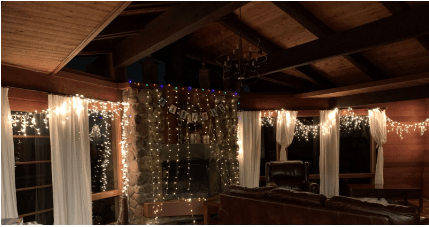
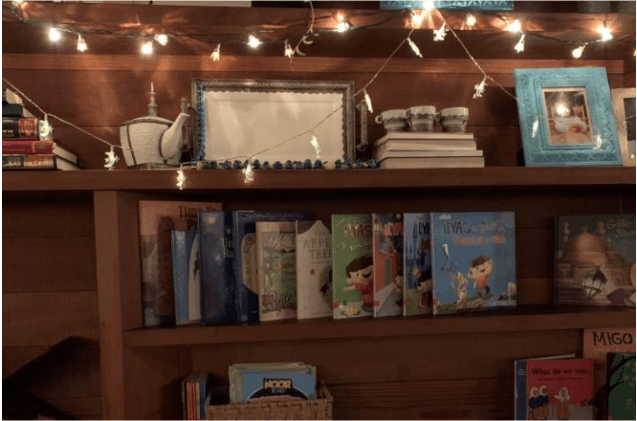
You know how they always bring out trees and lights for Christmas? Well, we do similar things for Ramadan and Eid! We set up lots of pretty lights, and put out our favorite Islamic story books. We bring out a garland that says ‘Ramadan’ and change it out to one that says ‘Eid Mubarak’ when the time comes. Adults gift children money, called Eidi. My family personally decorates not just for Eid, but for Ramadan, too!
4. Good Deeds and Charity.
In Ramadan, we gain more rewards for all of the good deeds and charity that we do. Some examples of good deeds are volunteering, picking up litter, visiting the sick, being generous, feeding others, being kind to others, even smiling at someone else is considered a good deed! Charity falls under good deeds as well. We are asked to give whatever we can to the poor and needy. For Eid, each Muslim family must give Zakat-ul-Fitr, about $15 for each member of your immediate family. Zakat-up-Fitr goes to help the poor and the needy, to give them the ability to buy necessities they need to survive.
Ramadan began during the time of our last Prophet, Muhammad. The Quran (our holy book) was revealed to him during this month. We believe that through the angel Jibreel (Gabriel), Allah commanded that Muhammad and his followers fast for the entire month of Ramadan. It was revealed in Makkah and Medina. Over 23 years, 114 surahs, or 6,348 ayat, were revealed.
Jidu
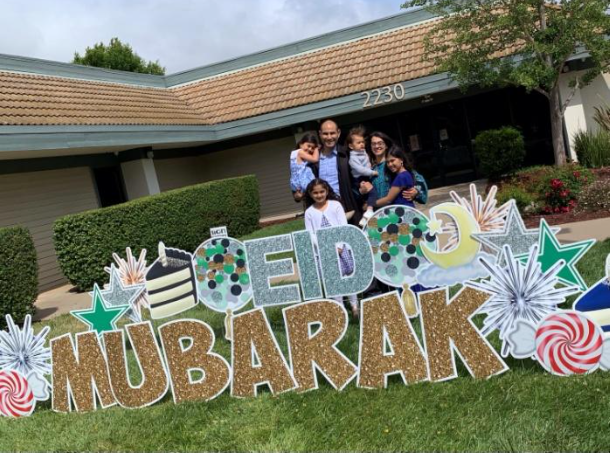
Did you know that there are actually two Eids? One is at the end of Ramadan (Eid-ul-Fitr), and the other is later in the year (Eid-ul-Adha). Eid-ul-Fitr usually takes place at a mosque, and after prayers, we play games and have fun!
Ramadan Kareem, and Eid Mubarak!!!
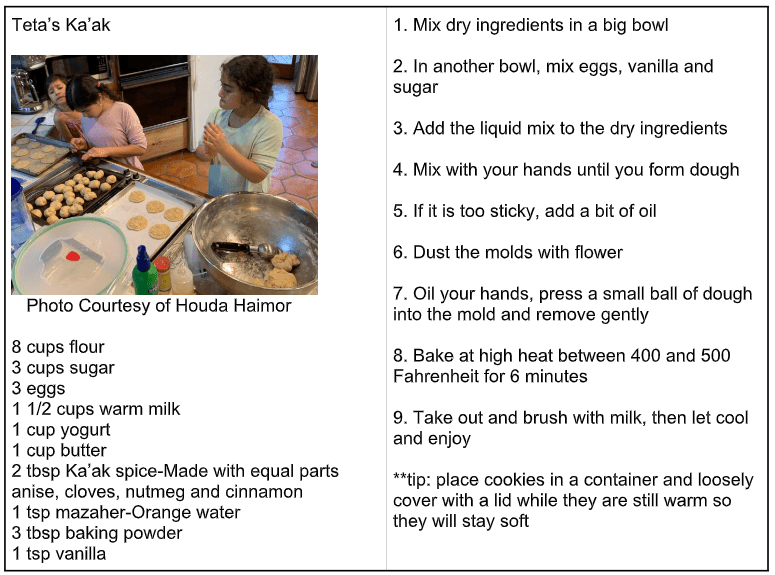
Here’s my Teta’s recipe for a special treat, Ka’ak. It’s a cookie that we make often during
Ramadan!


Great article!! I learned a lot!
LikeLike