
There are 118 elements on the periodic table, but oxygen is arguably one of the most important ones. It is obvious that we couldn’t live without it in our lives. This mixture of three isotopes (oxygen-16, oxygen-17, and oxygen-18) is an important part of substances and mixtures that we need to survive, such as air and water. It is also the most abundant substance in the Earth’s crust.
The Swedish chemist Carl Wilhelm Scheele obtained oxygen in Sweden by heating potassium nitrate with mercuric oxide, along with other substances. Priestly, an Englishman, discovered it separately in England by the thermic decomposition of mercuric oxide. He later published his findings, three years before Scheele ended up publishing his own. Most of the oxygen we breathe comes from plants and plankton through photosynthesis.
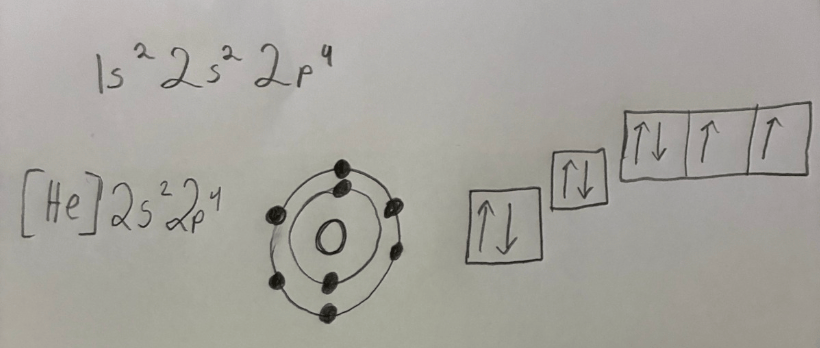
Some of the properties of oxygen include:
Physical Properties: colorless, odorless, and tasteless gas (gas at room temperature)
Chemical Properties: high electronegativity, high electron affinity, nonmetallic
Reactivity: Highly reactive, reacts with metals to form metal oxides, and with nonmetals to form covalent oxides. It is the definitive oxidizing agent.
The melting point of oxygen is -218.4°C, while the boiling point is -183.0°C, and the density is 1.429 grams per litre.
Some famous uses for oxygen are water and air. Oxygen, along with two hydrogen atoms, makes up the most important liquid in our daily lives. Without water, we would only last about a week before we would die of dehydration. And in Earth’s atmosphere, the proportion of oxygen is about 21% by volume. Without this magical element, we wouldn’t be able to breathe, and therefore wouldn’t be able to survive. The average human can rarely survive without oxygen for more than five or six minutes. Around 60% of an adult human’s body is made up of water, which in turn is made up of about 88.8% oxygen by mass and 33.3% (1/3) in ratio to the hydrogen atom count. And as stated before, it is rare to survive more than six minutes without oxygen without medical intervention. Of course, as with anything, there are consequences to too much oxygen intake, but the pros to the element’s uses itself far outweigh them. It is clear that we could not survive without this incredible element!
Sources:
https://www.britannica.com/science/oxygen
https://chem.libretexts.org/Bookshelves/Inorganic_Chemistry/Supplemental_Modules_and_Websites_(Inorganic_Chemistry)/Descriptive_Chemistry/Main_Group_Reactions/Reactions_of_Main_Group_Elements_with_Oxygen

