The Marine Mammal Center is the world’s largest marine mammal hospital, with Operations in Monterey Bay, San Luis Obispo, and Fort Bragg, California. The Center’s Main Hospital and Headquarters are located in Sausalito, California., They also have a hospital and visitor center in Kona, Hawaii — the Ke Kai Ola (The Healing Sea) Hawaiian Monk Seal Hospital, which opened in 2014 as part of the Center’s work to save the Hawaiian monk seals.
Photo Courtesy: Gayathri N.
The Center rescues marine mammals such as seals, dolphins, sea lions, sea otters, elephant seals, and more. The Center works 24 hours a day, 365 days a year, responds to more than 10,000 reports annually, and has rescued more than 24,000 animals to date!
When an Operation receives a report of an animal that may be diseased, injured, orphaned, or entangled in plastic or trash, a team of trained volunteers is dispatched as soon as possible to rescue and transport the animal to the nearest facility. After an animal is transported to the hospital, it undergoes an admission exam in which the veterinarians at the Center take blood samples, check vital signs, and look for injuries or illnesses. After being rehabilitated at the Center and once the veterinarians have ensured that the patient is thoroughly healed and has the necessary skills needed to survive on its own, the patient is released back into the wild, either close to the location where it was found, or on a quiet beach that has no public access. Sometimes patients will be released further out at sea, so they will have minimal contact with humans and not rely on them for food. Flipper tags are attached to the patients before they are released. This enables the Center to track them in the wild and recognize them if they are seen again or are in need of rescue again.
In Monterey Bay and San Luis Obispo, the operations provide space for the patients to be kept for a few days before being transported to the main hospital in Sausalito. In the Fort Bragg operation, patients are immediately transported to Sausalito.
Rehabilitation Pools– Photo Courtesy: Gayathri N.
The Center keeps a list of their current and previous patients on their website along with their species and gender. Every patient is given a name. You can sign up to get patient updates via email.
Here are the names and species of some of their current and past patients:
Taxi—Harbor Seal (male)
Posh—Harbor Seal (female)
Reuben—Northern Elephant Seal (male)
Salamander—Northern Elephant Seal (female)
Southpaw—California Sea Lion (female)
Pixy—California Sea Lion (male)
Mayhem—California Sea Lion (male)
Salta—Steller Sea Lion (female)
Makoa—Hawaiian Monk Seal (female)
Giant—Guadalupe Fur Seal (female)
Paddlewan—Southern Sea Otter (male)
The Marine Mammal Center offers a Youth Crew service-learning program for high school students aged 15-18 in the San Francisco Bay Area. The Youth Crew is a year-long opportunity where students can volunteer at the Center by helping out with tasks such as recording observations, cleaning animal pens and pools, washing equipment, weighing animals, sorting fish for feeding, and managing the animals in pens.
My family went on a homeschooling field trip to the Marine Mammal Center in Sausalito. We were taken on two guided tours led by staff members. First, we went on a tour of the hospital where the guide explained and demonstrated how the animals are rescued, fed, and cared for. The second tour was about the different jobs and careers at the Center. The guide of this tour talked about each job and showed us the areas where they are performed. We also got to see the rehabilitation pools in which the marine mammals are kept while being cared for. The animals are transported within the Center in ‘seal’ barrows. Every visitor is sure to be amused by the loud vocalizations of the seals. The guides shared that the way the seals move has a special term called ‘galumphing’.
If you ever notice a marine mammal in distress, please call the Center’s 24/7 hotline: 415-289-7325 (SEAL). For more information, please visit The Marine Mammal Center.
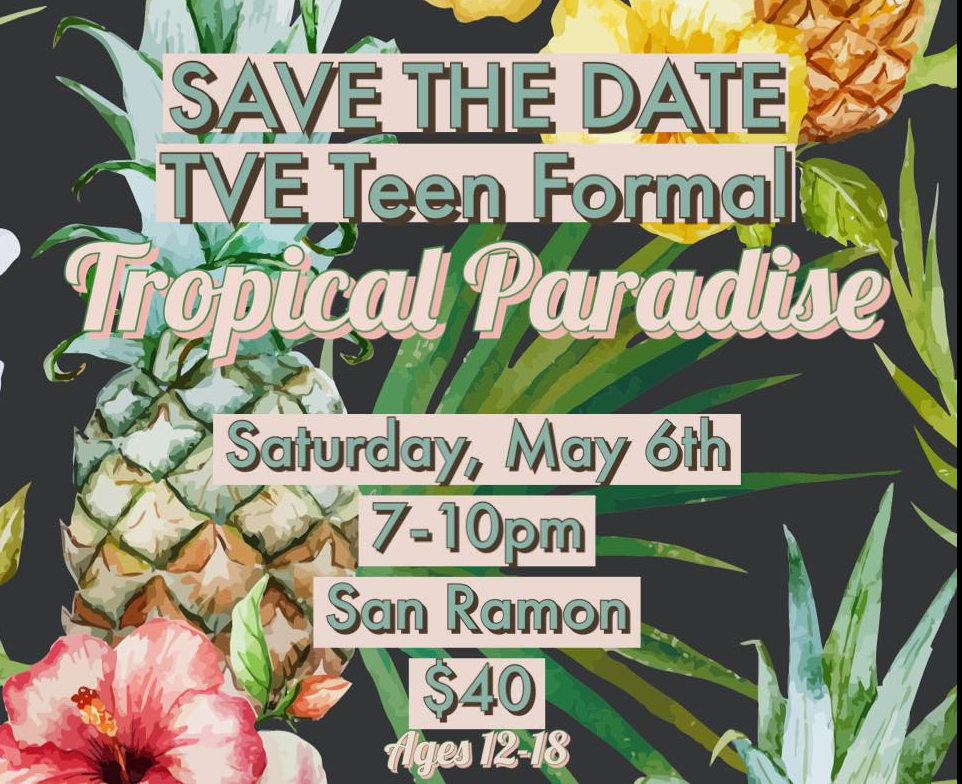
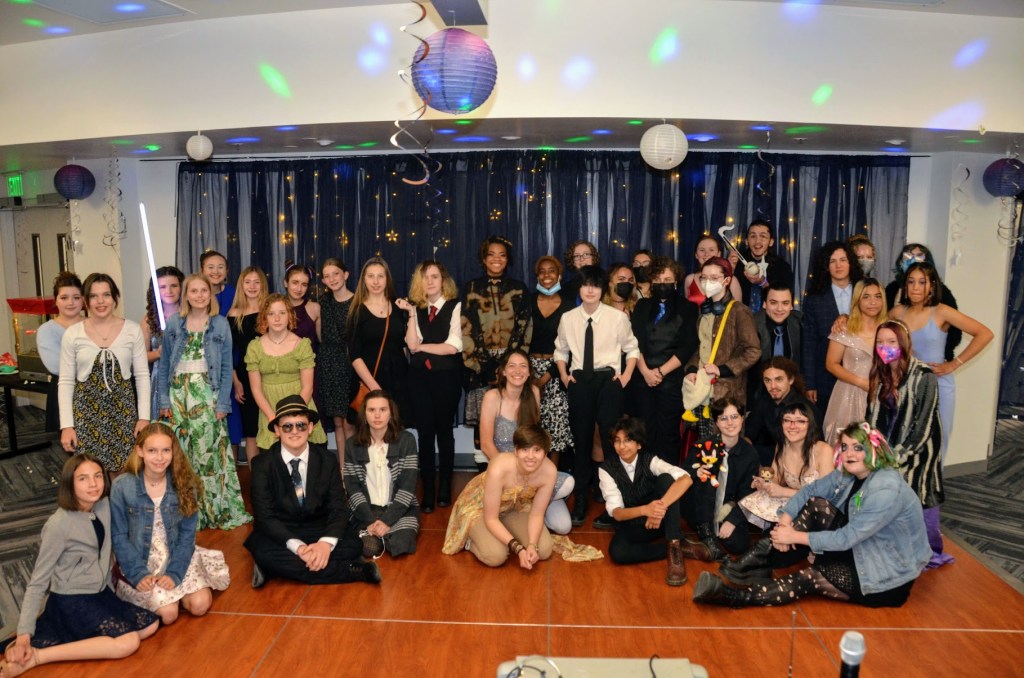
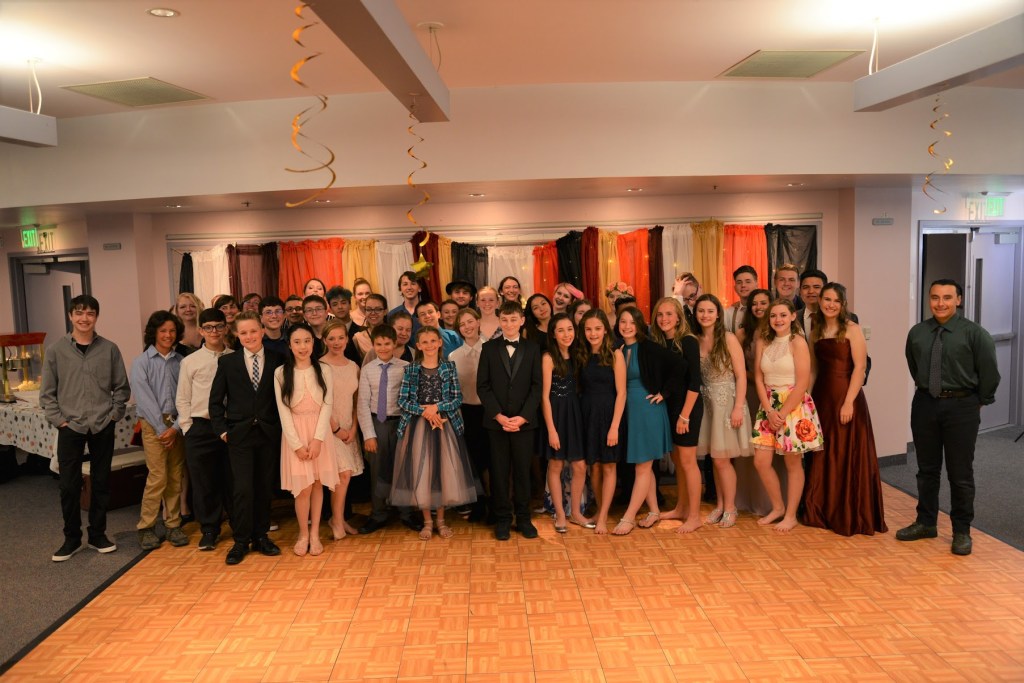
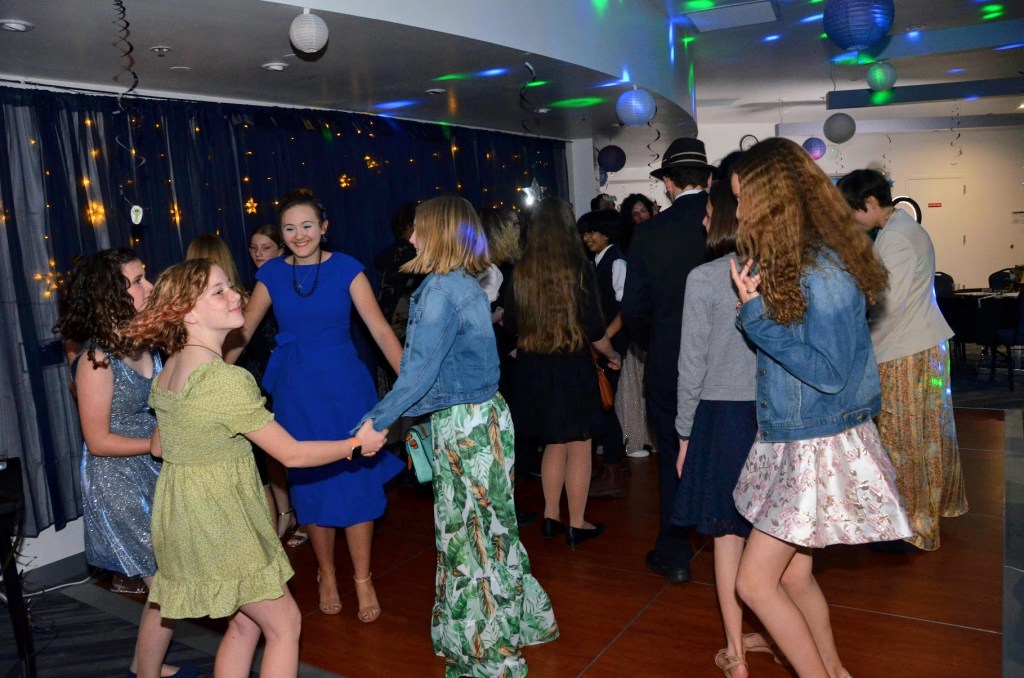
It’s that time of year again! Prom season! A very common misconception about homeschoolers is that we don’t have proms or formals, but this couldn’t be farther from the truth. Every year, TVE hosts its annual Teen Formal! If you are a homeschool student, aged 12 to 19, then you are formally, cordially, and sincerely invited to this year’s event. If desired, each student may invite a homeschooled or non-homeschooled guest. But this event is unlike your other ‘proms’, students do not need to come with a ‘special someone’. Many guests will be coming alone or with a group of friends. This is not a ‘date night,’ but instead, a celebration of friendship, the school year, and our homeschool community! (But, of course, if there is a ‘special someone’ we do not discourage shooting your shot) and welcome guests.
The Event Planning Committee is proud to announce that this year’s theme is Tropical Paradise.
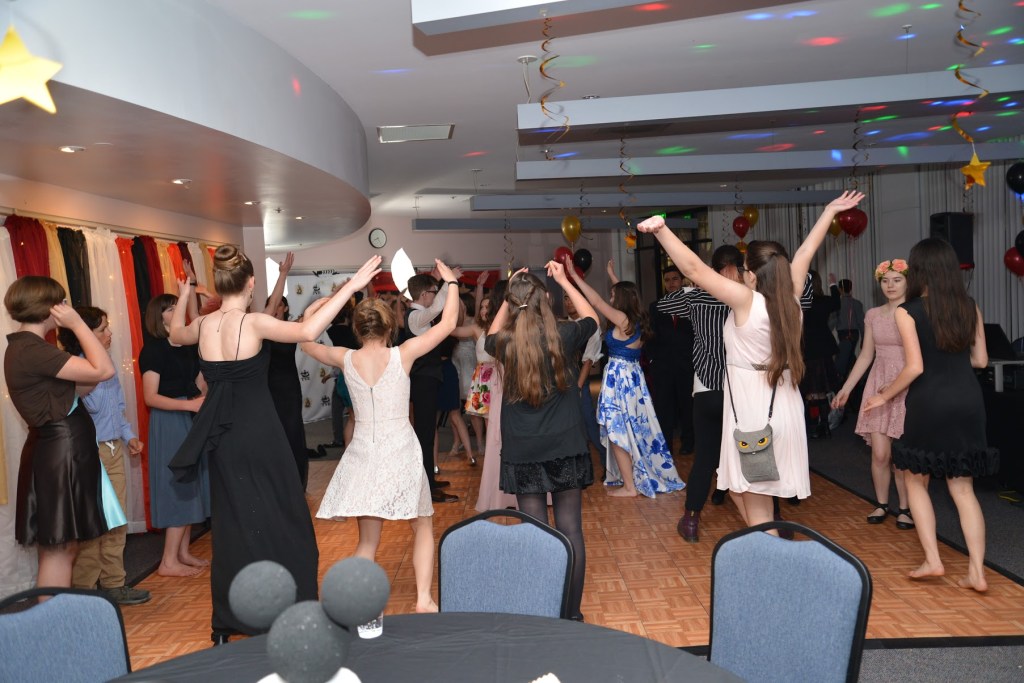
Photo made by Nicole P.
We ask that you “Dress to Impress” with fancy attire or your best threads, but dressing to the theme is not required. (No bathing suits, trunks, snorkel gear, etc.) Clothing should be appropriately fitted and modest. This is your chance to ‘strut your style’. Although these are the comfiest options, no jeans, shorts, sweats, or t-shirts.
Got a favorite jam? Awesome, (we do too) you may request up to two dance songs. Please include song title and artist. This doesn’t guarantee placement on the playlist, but we will try to accommodate all requests. But don’t worry, the absolute, classic dance-tunes will always make their way onto TVEs playlist. You can submit your song(s) request on the ‘Registration Form‘ of the Formal. No explicit lyrics, please.
Here are all the details:
Date: May 6, 2023
Time: 7pm – 10pm
Location: San Ramon, CA. (full location and address can be found on the TVE facebook page.)
Age: 12-19
$40 per teen
Refunds:
100% before April 7th,
50% between April 7th and April 21st.
No refunds after April 21st.
Fun time: Assured
Smiles: Required
The guest must be registered to attend and purchase their own ticket. Go to the TVE Facebook page for the registration form and for more information. Make sure you read the form carefully with your teen(s) and any guest.
You can contact TVE Leadership with any questions here: tve.membership@gmail.com
Before you read this, here is a glossary of Arabic words:
It’s time for Ramadan! This is the holiest month for Muslims because it is a time to reflect and be conscious of our actions through fasting, prayer, charity, and remembrance of Allah (Arabic for God). My family does so many things around this time of year. Fasting, or sawm, is one of the five pillars of Islam, which are mandatory actions that Muslims must follow. You can see more about fasting below. The word Ramadan means “The Holy Month” in Arabic. Muslims follow the Lunar calendar which does not align with the Gregorian calendar. Because of this, Ramadan does not start on on the same day every year, but instead slips back ten days every year. Ramadan lasts for 29 or 30 days, depending on the year, and at the end of it, we have a huge celebration called Eid-ul-Fitr (Festival of Breaking Fast)! Here are some of the things we do:
1. During the holy month of Ramadan, we fast during the day.
Basically, we have a pre-dawn meal, called suhoor, before the sun comes up. This year, we wake up around 4:30am. After our meal, we perform the first prayer of the day, the morning prayers, and then we go back to sleep. To us, sawm means no food OR water during the day, and it helps us learn self-control. When the sun goes down, around 7:30pm, we break our fast with a date, water and a meal. Afterwards, we pray the fourth prayer of the day, the sunset prayer. Fasting helps us connect with Allah and by not worrying about meals, we can reflect on those that are less fortunate than us, as well as gratefulness for what we do have.
2. We do special nightly prayers, called Taraweeh.
One of the five pillars of Islam is praying five times a day, but during Ramadan, there is a special evening prayer performed every single night, called Taraweeh which starts around 9:30pm and lasts about two hours! This is not obligatory, but we gain so much reward from Allah for performing them. They are held at the mosque (our holy place of worship), and hundreds, if not thousands, of worshippers congregate and pray together. Last year I was able to pray with my friend, and this year I was able to join my mom and sister!
3. We decorate!
Photo Courtesy of Aleena Haimor
You know how they always bring out trees and lights for Christmas? Well, we do similar things for Ramadan and Eid! We set up lots of pretty lights, and put out our favorite Islamic story books. We bring out a garland that says ‘Ramadan’ and change it out to one that says ‘Eid Mubarak’ when the time comes. Adults gift children money, called Eidi. My family personally decorates not just for Eid, but for Ramadan, too!
4. Good Deeds and Charity.
Photo Courtesy of Aleena Haimor
In Ramadan, we gain more rewards for all of the good deeds and charity that we do. Some examples of good deeds are volunteering, picking up litter, visiting the sick, being generous, feeding others, being kind to others, even smiling at someone else is considered a good deed! Charity falls under good deeds as well. We are asked to give whatever we can to the poor and needy. For Eid, each Muslim family must give Zakat-ul-Fitr, about $15 for each member of your immediate family. Zakat-up-Fitr goes to help the poor and the needy, to give them the ability to buy necessities they need to survive.
Ramadan began during the time of our last Prophet, Muhammad. The Quran (our holy book) was revealed to him during this month. We believe that through the angel Jibreel (Gabriel), Allah commanded that Muhammad and his followers fast for the entire month of Ramadan. It was revealed in Makkah and Medina. Over 23 years, 114 surahs, or 6,348 ayat, were revealed.
Photo Courtesy of Said Haimor, my Jidu
Did you know that there are actually two Eids? One is at the end of Ramadan (Eid-ul-Fitr), and the other is later in the year (Eid-ul-Adha). Eid-ul-Fitr usually takes place at a mosque, and after prayers, we play games and have fun!
Ramadan Kareem, and Eid Mubarak!!!
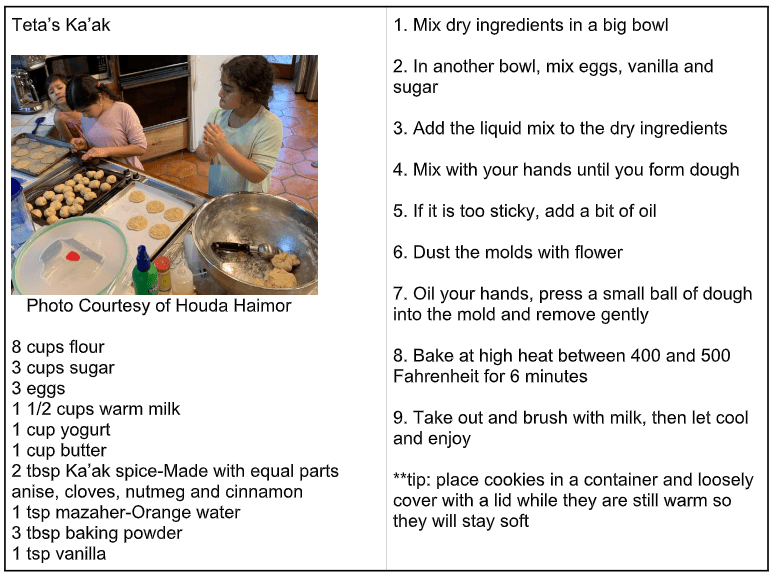
Here’s my Teta’s recipe for a special treat, Ka’ak. It’s a cookie that we make often during Ramadan!
Have you ever wondered what your pet cat was trying to tell you? When your cat is rubbing on your legs, you probably have thought, “Does my little fur ball want food or pets?” It can be quite difficult to tell what they are trying to say, and sometimes misunderstandings can lead to a scratch or bite. For instance, if a cat rolls over and displays its belly to you, it kind of looks like it wants you to pet it. That fluffy belly is very tempting, but beware! If you try to even get close, you will probably end up putting bandages on your hand. It might be confusing to you, but to the cat, rolling over in front of you is a sign of friendship. Your cat is basically saying, “Hello! I’m sooo excited to see you!” It didn’t want you to pet its fluffy belly! Crazy, right?
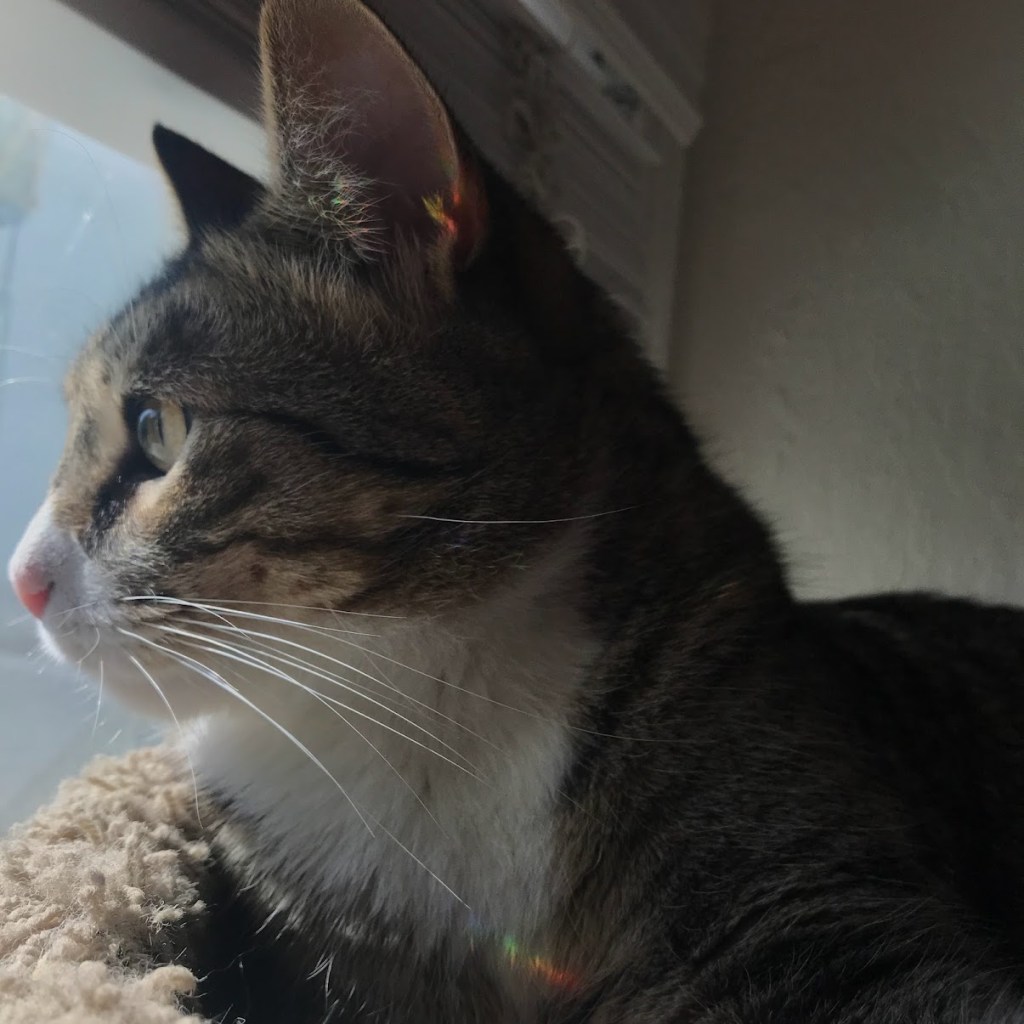
Photo by Olive Pea
Cats understand us better than we understand them. Sure, they don’t speak our language, but they are still constantly trying to tell us things. They can only communicate with a few sounds, but mostly they use body language. Imagine that! Dogs don’t speak our language either, but we understand them a lot more than we do cats. One reason for this is that dogs have lived with humans for 12,000 years, whereas cats have lived as pets with humans for only 4,000 years. Cats only joined forces with humans when people started farming, because the grain from the crops attracted rodents. Dogs became pets 8,000 years before cats, and helped humans hunt for animals. This was more helpful at the time because then, humans didn’t have crops that needed to be defended from hungry rodents. Humans mostly hunted for meat, with dogs (wolves back then) at their side ment that catching their game would be quite a bit easier. This means that dogs have had more time to practice communicating with humans. Cats became a part of human lives much later, so they are still more “wild” than dogs are.
Cats are harder to read (and train) than dogs in general. But cats are very expressive. Even though they are always using body language, it can be pretty easy to miss! When trying to read a cat, you have to pay attention to the slightest twitch of the tail, or even the direction the whiskers are pointed. To get you closer to speaking cat, here are a few signs to look for:
IDENTIFYING CAT EXPRESSIONS
EARS
When the ears are perked up, the cat is alert.
When the ears are rotated 90o or 180o, the cat is annoyed. Watch out!
When the ears are flattened back, the cat is angry and might attack!
EYES
When the pupils are wide, the cat is either frightened or zeroing in on its target. Beware, it might be looking at you!
When the pupils are narrow, the cat is experiencing bright light. Like ours, a cat’s pupils contract in the light.
When the eyelids droop, the cat is either sleepy or just resting its eyes.
TAIL
When the tail is thrashing, the cat is annoyed and/or frustrated with something. Most likely, it sees a bird or squirrel it can’t reach.
When the tail is pointing upwards, the cat is happy. An upwards pointing tail is like saying, “hello!” in cat language.
When the tail is all puffed-out and bushy, something just startled the cat. A cat puffs out its tail to make itself look bigger to its enemy.
WHISKERS
When the whiskers are pointed forward, the cat is excited. Either it’s about to get pet, or it’s about to pounce on its prey.
When the whiskers are loosely fanned out to the side, the cat is feeling friendly and stress free.
When the whiskers are pointed backwards and pressed against the cat’s cheek, the cat is angry and about to attack. You better back up!
Photo by Nicole P.
Even though cats mostly use body language to communicate, they also use a few sounds! Cats almost exclusively use their voices for their mothers and us humans, but they can become quite vocal if fighting with another cat. Sometimes they even talk to themselves when they are agitated! Here are some common cat sounds to listen for:
IDENTIFYING CAT SOUNDS
HISS
A hiss lasts about one second. Snakes make this sound too, except a cat’s hiss is much harsher. A cat hisses to try and scare off predators. If a cat hisses at you, back up. The cat might feel scared and cornered.
CHATTER
A chatter sounds like a string of high pitched “eh”s, along with clicking sounds. When a cat chatters, it is frustrated. Most likely it sees a bird outside it can’t reach. Even though you might want to sooth your frustrated cat by petting it, don’t even try. It might take its frustration out on you!
MEOW
A meow literally sounds like “meow”. If your cat meows at you, it most likely is asking for something. Most likely the request is for food or to be let through some door, but sometimes the cat is just saying hello.
PURR
A purr sounds like one long, deep, voicelessly rolled “R”. When a cat purrs, it typically means the cat is deeply content. But sometimes a cat purrs to soothe itself when it is anxious.
CATERWAUL
A caterwaul sounds like “ahh-roo-ugh”. This sound either comes from two dueling cats that are about to attack, or a female cat in heat calling out for a potential mate.
TRILL
A trill lasts about half a second, and basically sounds like a meow and purr combined. When a cat trills, it is feeling very happy and friendly. If a cat trills at you, it is happy to see you!
GROWL
A growl varies in length, and sounds like a very low and almost inaudible “grrrrrrrrrrrrrrrrr”. When a cat growls it is very angry, and is warning that it will attack if its opponent gets any closer. If a cat is growling at you, back up and walk away.
Photo by Nicole P.
Now that you are all up to date on cat language, it’s time for you to speak cat! Here are some ways to communicate with cats:
4 EASY WAYS TO COMMUNICATE WITH A CAT
SLOW BLINK
When a cat blinks slowly at you, it is basically the cat version of kissing you on the cheek. Often they will do a slow blink and then look away from you. This might seem rude, but this is a sign of trust. If they look away, it means that they trust you won’t do anything to scare or hurt them. Next time you see a cat or are hanging around your own cat, try blinking slowly at them. Make sure that they are looking at you, then once you make eye contact try blinking slowly at them. If they blink back, then they basically said “I love you too!”
CROUCH DOWN LOW
Before you pet a cat, especially an unfamiliar one, you should always crouch down first. If you are standing up, you might seem big and scary. Just imagine if a human the size of an oak tree reached down to touch you. Wouldn’t you jump out of the way? You probably would run screaming! Then imagine if that human was crouched down. They would seem a lot less intimidating because now it is closer to your size. If you crouch down, the cat will see that you are closer in size and might even walk over to you. Another reason why you shouldn’t be standing when you pet a cat is because in a cat’s mind, a hand reaching down from above is very similar to the talon of an eagle or hawk that is hoping to have cat for lunch.
RUB A CAT’S NOSE WITH YOUR FINGER
Cats rub noses with each other to say hello. However, they don’t rub their noses with any cat, dog, or human. Cats only rub their nose with animals and humans that they consider family. A nose rub doesn’t just mean hello, it also spreads the cat’s scent onto the animal or human that they rub on. This makes the cat recognize you easier, just as if it gave you a label that reads “family” in it. Next time you see your pet cat or the well known cat that visits your porch, try crouching down and gently touching the back of your finger on the cat’s nose. If it works and the cat rubs its nose back, then congratulations! You just gave the cat a proper hello in cat language!
PET BETWEEN THE EARS, BEHIND THE EARS, BY THE TAIL, AND UNDER THE CHIN
Start by gently scratching between the ears, then behind the ears. After that, rub one hand all the way down the back to the tail. Then, gently scratch under the chin. The cat will love this, and likely start to purr. The reason cats love being petted in these spots is because these spots have a special gland that releases a scent that only cats can smell. Cats use this to mark territory. When you pet a cat in one of these spots, it releases their scent and soothes them. Cats also have scent glands in between their toes and on their cheeks, but they don’t enjoy being pet there as much. It would tickle their toes and disturb their super sensitive whiskers.
Photo by Nicole P.
Now that you know these simple cat communications, try looking for them in the next cat you meet. It will be much easier to understand cats, and you might even be able to prevent a scratch or two! Cats are truly amazing creatures, and they are masters of communication. If you have a pet cat, let it know that the Lighthouse says hi!
Aleena Haimor is a 15-year-old aspiring author (and nurse) in the 10th grade who is currently a Staff Writer for the Lighthouse. She is an avid reader and (of course) writer, and she is currently working on her debut novel, which she hopes to publish in the future. A hard-core music and book lover, Aleena has many hobbies. She plays both piano and guitar, sings, and acts, having been in two productions with ICDT! In Danville, California and two films with Park Day Productions. Her favorite music artists include Avril Lavigne and TROY, but above all, she is a die-hard Olivia Rodrigo fan. She also enjoys musicals, her favorites including Hamilton, EPIC, and Wicked. Aleena’s favorite book series include The Hunger Games, The Prison Healer, The Inheritance Games, Percy Jackson, A Good Girl’s Guide To Murder, and Harry Potter. She loves to write short stories and fun informative articles for The Lighthouse, and hopes to continue for many more years!
Spring is right around the corner! The days are getting longer, and the sun is shining brighter. The birds are singing, the bees are buzzing, and everything is becoming more vibrant and alive! One of the most exciting parts of spring is watching the flowers bloom. They come in such a variety of thrilling colors and shapes, that you could never find two that look alike! Flowers bring joy and interest to a landscape or garden that has been asleep for the winter. Sometimes it looks as though a giant has spilled its paint all over the green foliage. For this colorful time of year, the Lighthouse has put together a drawing challenge for you! You can probably guess what the theme is by now… flowers!
ABOUT THE CHALLENGE
The flowers that you will be drawing can be drawn with any medium of your choosing! Pencils, paint, oils or charcoal, just to name a few. You can draw any type of flower you want! Some common spring flowers include Tulips, Daffodils, Daisies, and Roses. You can even draw a flower that you came up with yourself! You can get as creative as you like. This is a non-competitive challenge, and all art submissions will be included in the next publishing in the Arts and Culture section.
HOW TO SUBMIT YOUR ART
All art should be submitted byMay 1st, and you will see your artwork when articles are published on May 5th. We accept kids of all ages, and ask that you please give us your age and first name. You may include your last name, or last initial. We value your privacy! You can submit your art to us by taking a picture and emailing it to us at thelighthousetve@gmail.com.
We hope to see your artwork! Remember, you can get as creative as you like.
Spring has almost sprung. And you know what that means… wildflowers! Yes, it also means debilitating allergies for some lucky folks but the beauty is worth it. Soon we will see oceans of lovely colors floating above our bay area fields. In fact, the northern California area has some very unique wildflowers. The bay area is very fortunate and special to have so many native plants still growing in such a metropolitan space. It seems everywhere you look you might be able to find a sprout reaching for life, like on the side of the highway, crack in the road, anywhere! The usual season for most wildflowers is the end of February and typically lasts until early May. So what wonderful varieties do we have to expect?
Photo by Nature Hills Nursery
Photo by Seed Corner
Lupine
The lupine is a beautiful looking and smelling, herbaceous (and partly woody) wildflower that loves to pop up anywhere, even clay soils. If you live in the bay area you are bound to have seen one of these bluish-purple flowers sprouting about. They are a very versatile variety with over 200 different species. With their love of Mediterranean climates you know when you see them first pop up that warm, sunny, spring skies are ahead.
Photo by Annie’s Annuals and Perennials
Photo by iNaturalist
Franciscan Wallflower or San Francisco Wallflower
The Franciscan Wallflower or San Francisco Wallflower (or if you would like to be fancy the Erysimum franciscanum) is a biennial that is commonly found from the hills of Sonoma to the beaches of Santa Cruz going wherever it wishes. This flower is in the mustard family and can be seen from the end of winter to late spring.
Photo by California Native Plant Society
Photo by PictureThis
Douglas Iris
The Douglas Iris (or Iris Douglasiana) is a purple flower that can be found mostly in the coastal regions of California–or wherever has a lower elevation–but, if you are lucky, can sometimes be found at heights of up to 1,000 meters (3,300 ft). It can occasionally be considered a noxious weed in pastures because of its tendency to form clumps that hinder other vegetation, but when not found pasture it is regarded with fond looks and smiles for being an absolutely beautiful iris.
Photo by Ava Salado
Photo by The Bashful Botanist
Puget Sound Gumweed (Grindelia Integrifolia)
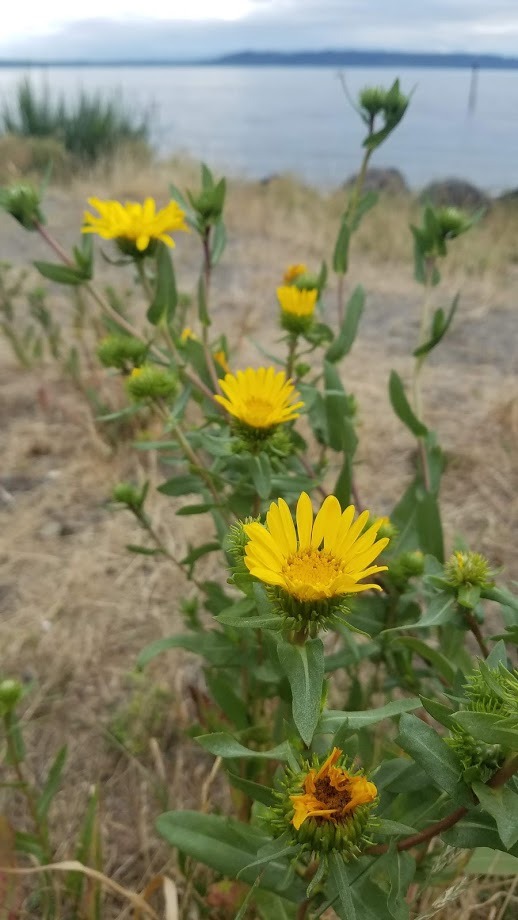
If you find yourself walking around the beaches of the San Francisco bay in late spring/summer you might stumble upon the gorgeous Puget Sound Gumweed (Grindelia Integrifolia). A strong and rugged plant, being resistant to almost all diseases and pests and being delightful while doing it. Commonly found in meadows, marshes, beaches (anywhere that is wetter in climate) this flowering plant is sure to bring the pollinators–and the cameras–close.
Photo by The Valley Post
Photo by The Guardian
California Poppy
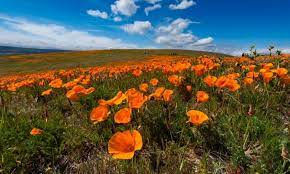
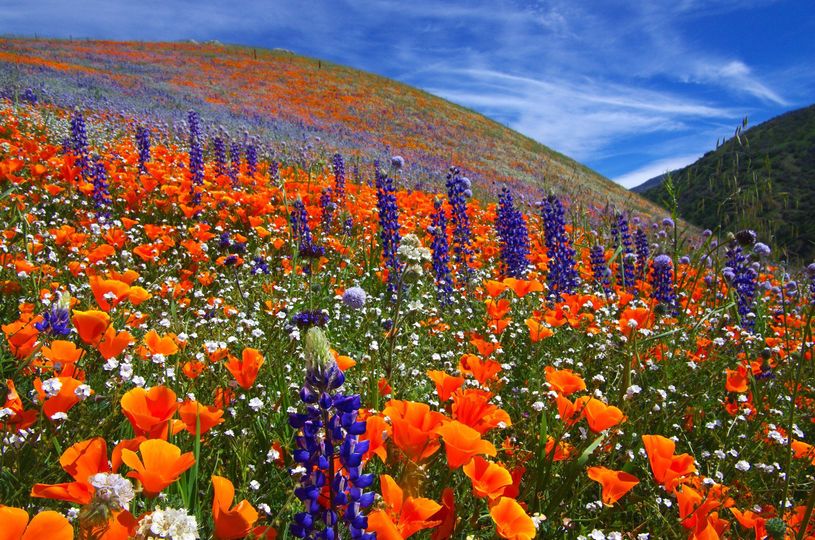
And finally, we must end with a classic…the California Poppy! If you have lived in the golden state for a while, you’re lying if you say you haven’t seen one of these pretty, deep orange flowers at least once. Once spring hits, they are everywhere! Some fighters even pop up in early-winter. The Antelope Valley California Poppy Reserve is a California state-protected poppy field found in northern Los Angeles County. It is extremely popular for expert and amateur photographers alike. But please, if you are going to go there for the breath-taking sights, don’t step on the flowers! Mother nature, park rangers–and the plants themselves–work very hard to grow and stay healthy and plentiful for generations, and the bottoms of your shoes aren’t helping. So please, admire at a safe distance. But most of all…enjoy! Take some allergy medicine and get out into nature. Wildflowers wait for no one so enjoy them while you can!
Take a hike such as:
Mount Burdell
Mount Diablo State Park
Coyote Ridge
And, if you are feeling rather inspired, create a picture of your favorite flower and submit it to The Lighthouse’s “competition” exhibition! Learn more here: Springtime Art Challenge!
Two hundred fifty million people play soccer every year. This is 50,000,000 more than the population of Western Europe. To put that in perspective, imagine every single person living in that region getting out and playing soccer all at once! For thousands of years, some form of the sport has been played in almost every culture across the globe. In the ancient Americas, a combination of soccer and basketball was played to please the gods, who we can assume were very entertained by this new human creation. Although these games are not exactly the same as modern soccer, very similar forms of the sport were played in ancient Greece, China, Australia, and Japan. Shockingly, soccer didn’t evolve in Western Europe until the twelfth century. Even more surprising, rules weren’t created for the sport until the mid-1800s. It is truly amazing that so many different versions of the same basic idea could coalesce into the beautiful game we know today.
The first recorded organized ball game was played in Ancient Mesoamerica around 3,000 years ago. During this period, many of the most powerful rulers in Central and South America were devoutly religious and worshiped their gods without question, despite their violent and warlike depictions. Many high priests in these ancient empires devised various sacrificial ceremonies to please the more bloodthirsty deities. One of these rituals was a ball game called Tchatali. This sport was played on a pitch similar to a basketball court with hoops at each end. The goal was to kick the ball, which was made of rubber, through the opposing team’s hoop without using your hands, which were not allowed to touch the ball. It was a brutal game. In some cases, if the match were of particular significance, the losing team’s captain would be sacrificed to the gods. In second or third century Ancient China, a form of soccer was played on a square stone court with a spherical ball.
In other cultures, ball games have been recorded in Aboriginal Australia, Ancient Greece, and Ancient Japan for thousands of years. Although all of these games are different from soccer, with them, the sport could evolve into the form that we know today.
Unsurprisingly, soccer in Europe was first played in England in the 12th century. At this time, it was barely recognizable as a sport. Medieval soccer was played in fields and meadows and was so violent that many participants, who were mainly peasants, died while playing. In large spaces such as towns, huge groups of people, sometimes numbering in the hundreds, would attempt to carry the ball from one side of the “field” to the other, similar to rugby or American football. There were no rules. Oftentimes, the game would get so rowdy that severe damage would be caused to the towns and villages that were being used as the pitch. Because of the dangerously high injury rate among young men, the king banned soccer from being played because so many men were hurt playing that there were not enough uninjured soldiers fit for military service. Because of this law, soccer faded from the public eye for several centuries.
In the eyes of many, modern soccer was officially created in the mid-1800s when the first campaign to create a proper set of rules was launched. Although there were many ball games in different parts of the world, the English were the first to try and create an organized sport with a defined set of rules. The first order of business was to divide the old version of soccer into rugby and what was to become the game we know and love today. The division made the game safer. However, even after this was done, there were still two very different styles of play. The English charged the opposing team and tried to score using rushing tactics. Meanwhile, the Scottish, eager to take this chance to devise their own style of play, one completely different from the English, created a shocking new strategy. The Scotts passed the ball from player to player up the field until they were close enough to the goal to shoot and, hopefully, score. This was a radical tactic at the time. The Scottish way of playing soccer gradually emerged as dominant, rendering the English rugby strategy obsolete. In the wake of the rapidly growing popularity of this new sport, the first club, London, was formed in 1863, paving the way for the rise of the most played sports in history.
“The rules of soccer are very simple, basically it is this; If it moves, kick it. If it doesn’t move, kick it until it does.” As Phil Woosnam points out here, soccer is not a complex sport. There is something in human nature that yearns to kick objects like rocks, sticks, or whatever else lands at one’s feet. This is the simple base that soccer is built on. From Australia to Europe to Far Asia and the Americas, some form of soccer has been played at nearly every point in time. It is only natural that this passion has evolved into the most played game in history. Surprisingly, rules for the sport have only been created relatively recently compared to the amount of time ball games similar to soccer have been played. Several decades ago, Pele, one of the most famous players of all time, popularized the term “the beautiful game” to describe soccer. This phrase is still used today because, even in all its forms, soccer truly is a beautiful game.
Hello, there! My name is Percy Platypus. I can not wait to tell you what a day in my life looks like. I just woke up in my burrow, which is located on the shore near a beautiful river in Australia. It looks like it’s almost evening, so it’s time for breakfast! I am a carnivore, and I eat delicious crayfish, shrimp, worms, insects, fish, and pretty much anything I find tasty in the river. I am going to hop on into the water with my 20 inch long body (20 inches is almost 2 feet).
Photo courtesy of Animals San Diego Zoo
Hey! Look over there! I think I see some larvae, or maybe worms. I have to scrape them up with my bill (my beak- shaped mouth), with bits of gravel, and put it all in my cheek pouches. I can use the gravel to help me mash, or “chew” the food, since I do not have teeth. Us, platypuses, grow to weigh about 3 pounds. That’s lighter than an average house cat!
Photo courtesy of National Geographic Kids
Uh oh. I see a crocodile by the rocks. He’s coming this way! I need to swim away as fast as I can. But, look! He is catching up. What can I do? Well, us male platypuses have sharp stingers on the heels of our webbed feet to stay safe from foes. They have venom inside, which is toxic. Hi – Yah! I did it! I stabbed the crocodile, and now I am safe. Time to go back home.
Photo courtesy of National Geographic
My tummy is rumbling. Wait a minute… I don’t have a stomach! Oh, well. Either way, it’s time for lunch! I’ll be right back.
Munch, chomp, munch. Yum! Those shrimp were very filling. Now, what exactly do I do all day? I spend most of my time alone, and use this time mostly for eating and sleeping. I already ate, and I already slept, so it is time to do something else. Would you like to hear some fun facts about us platypuses? Well, here they are! First, the plural of platypus can be either platypuses, or platypodes. The English language has some interesting twists.
I am a mammal, despite the fact that female platypuses lay eggs. My mother had 2 eggs, so I have a sister. I haven’t seen her for a while, because platypuses don’t have family reunions. Mom fed us by sweating out milk, and my sister and I would suck it out of mom’s fur. I know that it doesn’t sound very appetizing, but that’s mother nature for you.
Photo courtesy of National Geographic
I am 10 years old, and will probably live up to about 12. My neighbor, Sandy, was found by some humans when she injured her left foot. Because she now lives in captivity, she will probably live up to 20 years old. I, personally, prefer living alone out here with a beautiful river that I can have all to myself. It is dinner time now, so I better go find some tasty worms. I’ll see you later!
Gulp! All done. It is early morning now, so I should probably get to bed. Thank you for visiting me, and you’re welcome to come see me whenever you want. YAWN! Good night. Um, I mean good morning. Well… bye!