Arts and Culture, News

The Beginning of The Great Dickens Christmas Fair

by Ava Amara Salado

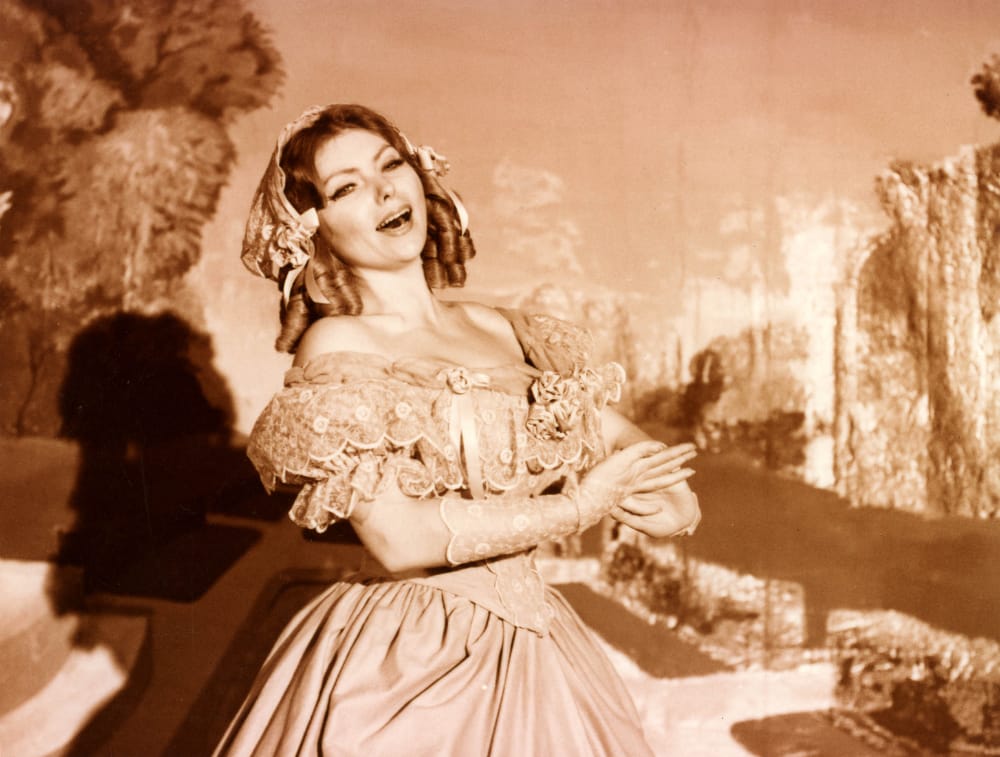
The Great Dickens Christmas Fair is taking Bay Area locals and tourists alike on a journey back to the heart of Victorian London. For just five weekends every holiday season, they graciously bring back the sights, sounds, and even scents of that beautiful period to history.

Image by San Francisco Chronicle

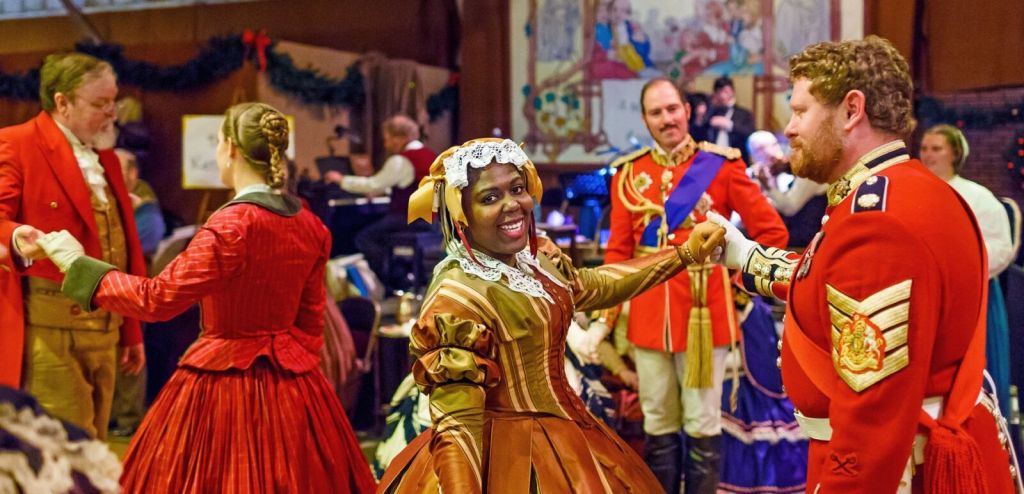
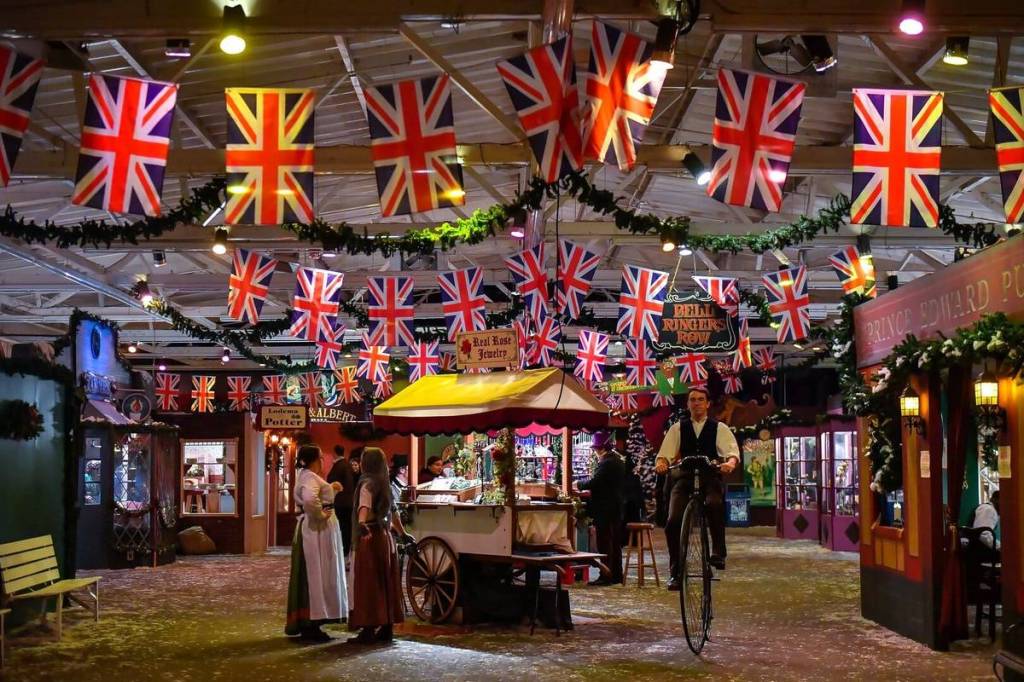
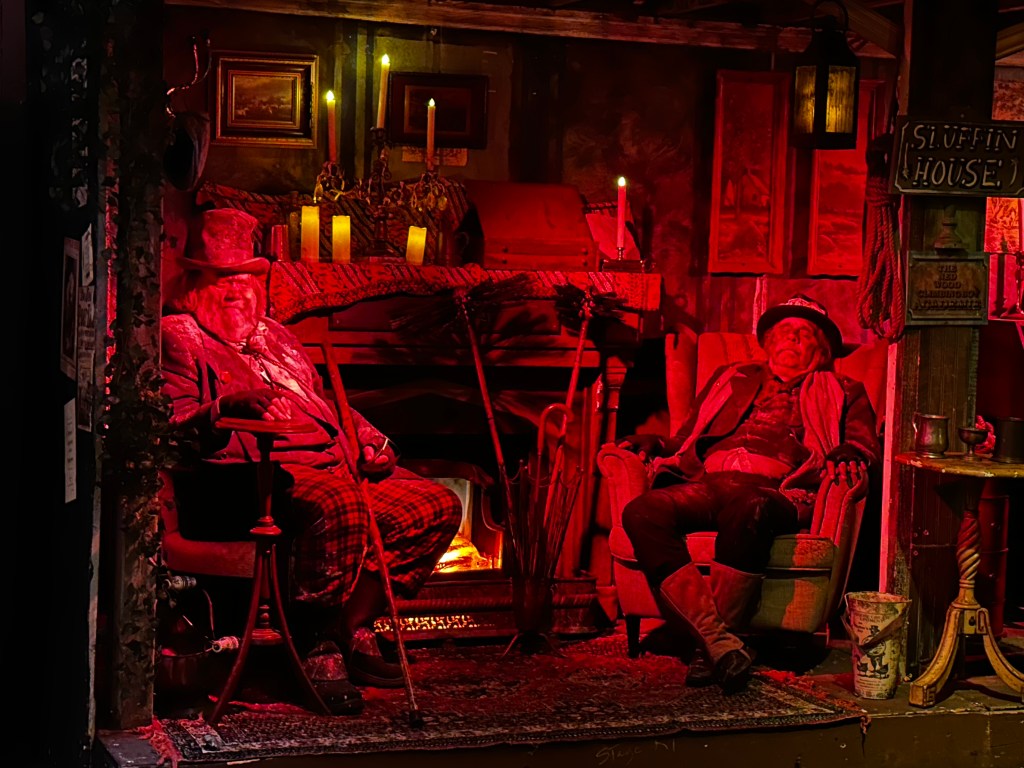
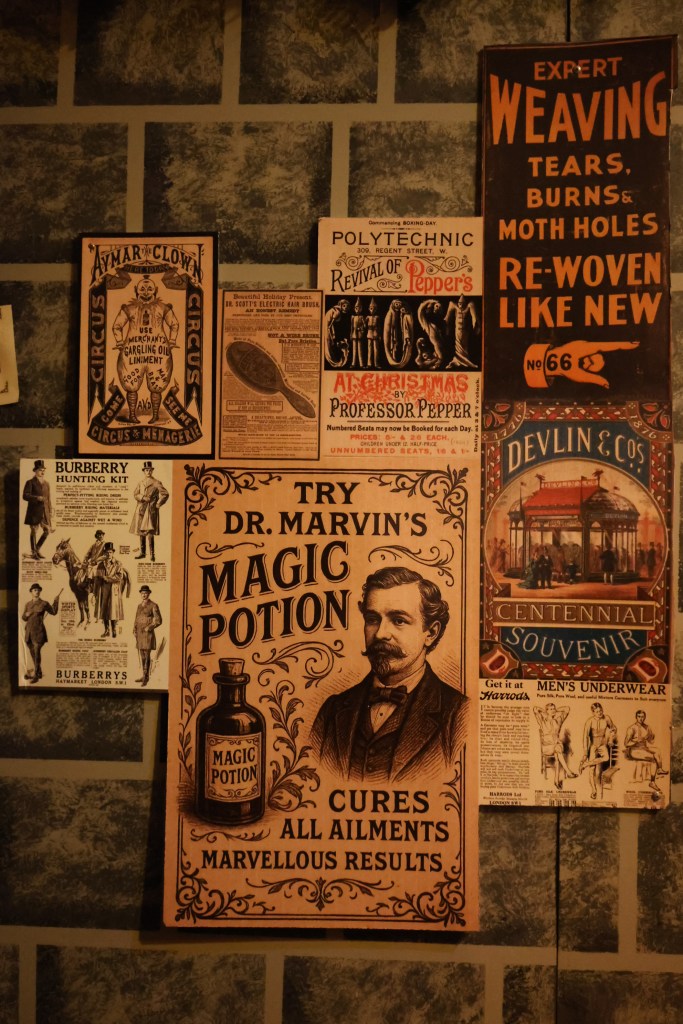
Imagine this, you stroll down narrow streets dotted with unique and authentic carnival games, English pubs with heaps of hot food being made before your eyes, and specialty shops selling handmade goods from all over. From street sellers and chimney sweepers singing carols, to characters like Ebenezer Scrooge, Bob Cratchit, Tiny Tim, the Ghosts of Christmas Past, Present, & Future, and even Mr. Dickens himself, will wander the alleys. The streets of the fair are crowded and bustling with people dressed in elaborate 1800s costumes, including sailors and seamen, businessmen, suffragists, thieves, and nobility. Numerous stores filled with presents, books, jewelry, textiles, artwork, and apparel pass by as you wind through neighborhoods and roads that have been meticulously recreated. You can smell hot, candied cinnamon almonds, pine and burnt wood, hot toddies, and musk. All of this, and just in the heart of the Bay Area, San Francisco.

Image by Fifty Grande

The fair, which has been a much beloved Bay Area institution for now 55 years, is still one of the most intricate and detailed Victorian Christmas events in the world. The Cow Palace is the site of The Great Dickens Christmas Fair, a long-standing Daly City facility that holds a variety of events, including concerts and even rodeos. It has opened its doors to the public since 1941, being the site of many of the historic conventions and moments for California. But once you enter during the holiday season, you time-travel back to Victorian London, completely forgetting that only 20 minutes ago you were struggling through thick 101 traffic.

The History

But where did this incredible tradition start? The majority of visitors to Dickens London are likely unaware of its unique origin at a very different kind of fair in Los Angeles in the 1960s; Renaissance Faires. The birth of wide spread Renaissance Faires in America were arguable all thanks to the work of Ron and Phyllis Patterson. The Pattersons, still on the high of their successes in early “novelty themed” fairs made the decision to throw a small but special holiday party at their Hollywood Hills home in the winter of 1968, for their closest friends and family.

Image by Marin Mommies

They moved away from their tried-and-true Renaissance roots for this occasion and looked to Charles Dickens’ works and late 19th-century history for inspiration. The occasion’s costumes, food, décor, and activities were so enjoyable to the Pattersons and their guests that they proposed holding the event annually, possibly on an even larger scale.

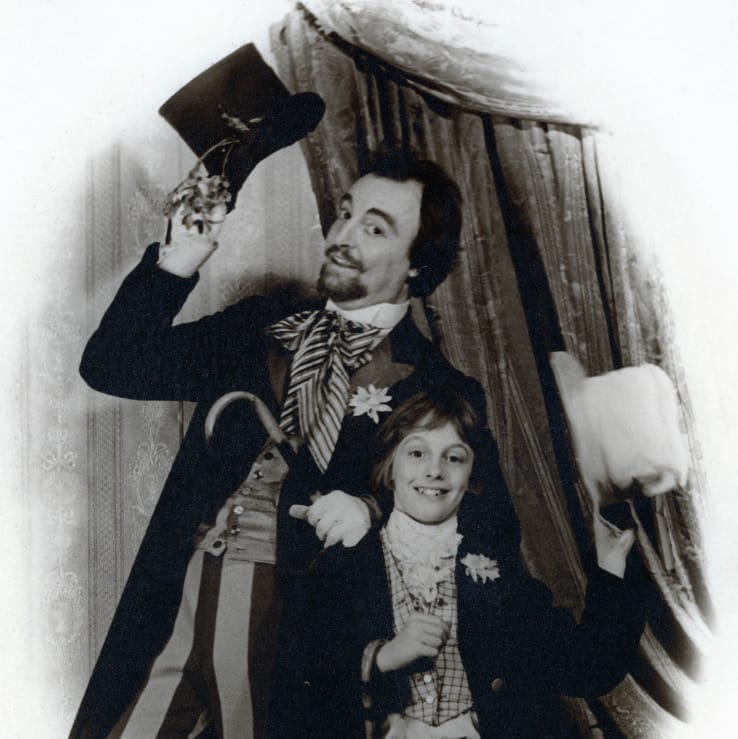
In the meantime, the Pattersons had extended their Renaissance Faire productions to Marin County in Northern California, hosting it in the historic brick warehouses along Fisherman’s Wharf in nearby San Francisco. The scenery was reminiscent of the covered marketplaces of Victorian London, and the experience served as the inspiration for an extravagant Victorian Christmas Fair open for the public to enjoy. What started out as a house party was transformed into a large indoor fair for the Bay Area community. The Great Dickens Christmas Fair (or Pickwick Comic Annual, as it was once known) soon was born. In December 1970, the Anchor Works, a historic warehouse next to San Francisco’s waterfront Embarcadero neighborhood, hosted the first Dickens Fair for only three weekends. At the time, a newspaper article poignantly compared the Fair experience to walking onto a movie set. 

Image by Marin Mommies
Image by San Francisco Chronicle

The Great Dickens Christmas Fair has changed over the course of its over 50 year run because of the participation of three generations of the original Patterson family, a big multi-talented ensemble of performers and artists, and thousands of loyal patrons and visitors. The only festival of its sort in the entire globe, it has grown to be one of the most cherished and eagerly awaited yearly events in the San Francisco Bay Area! 

What to Look Forward to

From traditional English pantomimes and juggling acts to music hall concerts, sea shanties, and scenes performed from “A Christmas Carol” across the venue, there is always something to see. With numerous stages and activities, you can never really be bored. You can sing along with boisterous performers at Mad Sal’s Dockside Alehouse, learn a new dance at Fezziwig’s Warehouse, or even just listen in on the goings-on of the streets. The hand-powered Adventure Carousel, “Punch and Judy” puppet shows, Victorian fairy home crafting, and, of course, a visit from Father Christmas are just a few of the magical moments that await at the fair. And you are welcome to dress the part too. Costumes that are appropriate for the time period are not necessary, but they are highly encouraged. 

Image by Secret San Francisco

By inspiring the resurgence of local art, food, community, and music, the idea of living history fairs give back greatly to our beautiful Bay Area culture. We find connection in creation, and that cannot be lost. So, if you need a break from the hustle and complications of today’s world, take a trip to somewhere that brings you joy and warmth, for many that is The Great Dickens Christmas Fair. They offer a chance for playfulness, an opportunity to be both a performer and the audience, a reason for coming together to, just for a moment, emphasize the true spirit of the holiday season; connection.

Below a collage of photos by Sheri Salado

News, Science

Brownfields: Brown is the Next Green!

by Meru S.

A Brownfield – Courtesy of University of Illinois Chicago

A property can be considered a brownfield and not just an abandoned building when the local city detects contaminants underground beneath the property. Additionally, it can be regarded as a brownfield even if there is only a possibility of pollutants, since in both circumstances, it would be unsafe for prolonged human activity or residence. Brownfields are generally previously occupied plots that are no longer in use.

Sites that may possibly become brownfields in the future include gas stations, industrial buildings, and older houses. Leakages in subterranean gas pipes can toxify the land around gas pumps. Similarly, chemicals can seep into the area around factories, resulting in spaces that are hazardous to residences. Homes that were built before 1978 are more likely to contain lead, particularly in the paint. Therefore, when these houses dilapidate over time and layers of paint peel and decay, it releases lead into the surrounding yards. We can prevent brownfields by repairing gas and chemical leaks, and safely renovating old homes.

         Once remedied, brownfields can be redeveloped, providing environmental, aesthetic, and security benefits. After toxins are identified and eliminated, the site can be transformed into parks, shops, and other functioning premises. The decontamination contributes to the health of the environment. When new buildings are constructed, preexisting structures and roads can be incorporated into the new development, inhibiting sprawl. This process of including prior derelicts is called infill-development. Finally, brownfields are often neglected and unattractive, instigating higher crime rates in the local neighborhood and dissuading people from moving to the area, so restoring these plots restores the city’s status as well. 

Redeveloped Beacon – Courtesy of Commonwealth Beacon
News, Science

Oldest Active Astronaut Returns Home from 220-Day Mission

by guest author Jonathan David

Don Petit, the current oldest active astronaut, returned to Earth on his 70th birthday from
a 220-day mission on the International Space Station. He spent many hours on scientific
research in the areas of 3D printing in space, water sanitation, plant growth and fire behavior in
microgravity. This was his fourth mission, totaling 590 days of space time. His main job on the
team is flight engineer.
In an April 28th interview at Johnson Space Center he concluded by sharing, “ I could
look out the window and just enjoy the view. But, when I’m looking out the window just enjoying,
its like, ‘Oh, Wow. A meteor. Oh, wow, look at that. Man, there’s a flasher. What’s that? And, oh,
look at that. A volcano going off? It’s like, okay, where’s my camera? I got to record that. And
part of this drive for me is when your mission is over, it’s photographs and memories.’”
Thank you for reading this article. Stay tuned for more NASA news! Special thanks to
ABC News for interview information.

News, Student Life

Interview with DGC Director Ken Abrams

by Lydia I. Matinov

Lights? Check. Audience? Check. Voices? Check! Next is the conductor! I had the pleasure of interviewing Mr. Ken Abrams, the artistic director of the Danville Girls Chorus. Since 1992, Mr. Abrams has been conducting singers of all ages, and has won multiple awards, as well as, competitions. I am very excited to share his inspiring story.

Why did you choose choral conducting and performing arts as your career?

I didn’t choose it at first. I chose to be a music major, and then, after I graduated, somebody said, “Hey, you’ve worked with my high school choirs, and you did really well. You should consider being a teacher.” That’s when I said, “Maybe”. Right after college is when I made the choice to do that.

What is your favorite part about your job?

My favorite part is getting the students prepared and working through rehearsals. Then, watching them soar in a concert.

What challenges have you faced throughout your career?

Many challenges. Financial is the first one. Not getting any money for my program, or my accompanist, and having to sell candy, and do everything possible to have a choir to direct. That was one of the hardest things. There’s been a lot of cutbacks in the schools over the years. They’re facing more this year.  That was always difficult, when they were laying people off, or told me they do not have a job. And three, sometimes just having a rotten-egg student can be a real pain. It’s the good ones that make it all worthwhile.

What was the most valuable thing you learned while studying choral conducting?

One of the things somebody said was “Expect, and communicate, and you will not be disappointed.”, and I’ve always remembered that. If you give them the expectation; tell them what you want, how to do it, and what you’re expecting, more often than not, they will come through with flying colors.

What advice can you give to anyone who would like to pursue a career in musical arts?

Just make sure you have all the training you can get. Musical arts is a big field, but if you want to be a teacher, learning how to play piano helps a lot. If you’re in musical arts, then you must try singing the absolute best you can and learning to read music. And, if you’re going to be in musical theater, add dancing to that, as well.

You have received many prestigious awards, and your choirs have won numerous competitions. Can you comment on your incredible success and have you ever imagined that you would be such a highly sought after artistic director?

Never. Never imagined that. It just kind of happened, and I got better and better the older I got, and I got Teacher of the Year for California. Two years ago, my choirs won many-many awards and competitions, but they had to work really hard to do that.

Can you share a funny or interesting story that happened sometime during your career?

There were a lot of funny stories. We did musicals every other year, and there was lots of fun stuff that would happen: a lot of silly things with kids falling off the risers, or sneezing, or fainting in the middle of a song.

Is there anything else you would like people to know?

What’s wonderful about being in a choir is that singing is something you can do your whole life. It’s something that you don’t have to have an instrument for. You can just do it by virtue of your body helping you accomplish singing. I hope that my singers with Danville Girls Chorus and the ones that I had in high school use it, value it, and continue exercising it their whole life long.

For more information regarding the Danville Girls Chorus, visit danvillegirlschorus.org.

The Danville Girls Chorus

News, Science

Yosemite’s Fall of Fire

by Layal Hilal

Have you ever seen a waterfall on fire? If you have, you’ve probably been to Yosemite and seen Horsetail Falls in February, where the waterfall “lights on fire” a few times every year. The illusion of it becoming a literal “river of lava” is caused by the sun setting at the right time in the right place, and it has attracted hundreds of visitors across the country, including me and my family! 

Facts about Yosemite’s Horsetail Waterfall Firefall:

  • Horsetail Falls, a waterfall on the eastern side of El Capitan, literally attracts thousands of visitors from all over the country coming to see the fake “volcano eruption”. Of course, the waterfall doesn’t actually light on fire; it’s just the sun’s rays hitting the falls from the perfect angle at the perfect time that causes the illusion. 
  • From mid to late February, this amazing phenomenon occurs in Yosemite National Park about ten minutes before sunset every day. 
  • It is known as the ‘firefall” and visitors travel thousands of miles to capture it on camera.  
  • The first person to ever take a picture of this was a man named Galen Rowell, who happened to be driving through Yosemite Valley in 1973, glanced up, and saw a lava waterfall.
    • Galen Rowell was born in 1940 and died in 2002.
    • He was a well-renowned American photographer, climber, and mountaineer and took the first shot of the firefall occuring, becoming the man who made it famous. 
  • For the firefall to happen, the water has to be rushing down the cliff, there has to be a clear or mostly clear sky with few clouds, the sun has to set at just the right angle, and, of course, it only takes place in about the last two weeks of February.
  •  If you decide to visit this waterfall in the last few days when you can (or you can just do it next year!), try to go on a weekday, since you need reservations on the weekend, get there really early, bring a lot of snacks, have a plan for what to do before sunset, bring a really good camera or your phone if you don’t have one, do your research to try and get the best viewing spot, and set up your blankets, chairs, and camera where you’re viewing the falls about two to three hours before it starts, because yes, people come that early
  • DISCLAIMER: No matter how many videos and photos you see, nothing will prepare you for a tiny, almost invisible waterfall to turn bright orange in the time before sunset. Your breath will still be taken away, you will still scream, ooh, and ahh, you will still take millions of photos in the hope at least one will do it justice, you will find yourself scared to blink, for fear that it will end in the moment you close your eyes, and you will be filled with a consuming disappointment as it returns to its normal color. 

Go to Horsetail Falls. Watch it turn orange. Take a million videos. Revisit the memory in your dreams. Wish it lasted longer. If you can’t go this year, go next year. Even if you watch it from your car, parked illegally on the side of the road because you came too late, starving because you forgot all your food, with trees and clouds partially blocking your view and your camera forgotten at home, you won’t regret it. And if you do…keep going until you don’t. 

News

Julie Packard Retires

by guest author Jonathan David

Julie Packard, head of the Monterey Bay Aquarium in Monterey, California, has
announced her retirement. She is now a head on the board of trustees, so she continues
contributing to the Monterey Aquarium, while she “hands over the reins” as CEO. Here are a
few facts about Ms. Packard: Her favorite organism in the ocean is Giant Kelp. The reason for
this is that she researched seaweed ecology for her Master’s degree. She and the aquarium are
famous for taking care of orphaned sea otter pups.


“Early on, we got involved in rescuing and caring for orphaned sea otter pups, but it was
very difficult to keep them alive,” she shared with New York Times journalist, Franz Lidz. Under
Ms. Packard’s leadership, the aquarium is famous for allowing fully grown surrogate mom otters
to teach the pups. Ms. Packard further explained, “This was a breakthrough because, no
surprise, the female otter is a much better mom than a human trying to show an otter what to
do.”

As I wrap up this discussion, I will suggest that you be sure to watch the movie at the
aquarium theater, Luna: A Sea Otter’s Story. It will teach you all about the rescue of the orphan
pup otter, Luna. Please visit the aquarium and see its wondrous displays, from jellyfish that float
around the surface, to mysterious creatures that haven’t even been named yet! I’m thankful for
Ms. Packard’s work to conserve our oceans.

News

Air and Naval Power in WWII – What Were Its Effects and Was It Worth It?

by Emery Pugh

The 1900s were a period of military technological revolution. The airplane changed the scope of warfare and was constantly improved upon since its invention. Radar and sonar were introduced during WWII. Battleships gained more and more firepower and had cannons that could launch projectiles farther and farther. Aircraft carriers were emerging as an extremely important asset in naval tactics. So how did the airplane and the warship impact World War II?

Air forces and navies were used as auxiliaries to enhance ground operations. If you had naval or air parity with another country, it meant that neither country was able to destroy enough air or naval assets of the enemy to gain an advantage. Superiority meant that you could attack enemy ground troops with little worry of opposition, and supremacy meant total control – you could do whatever you intended in that realm with almost no resistance because you had destroyed all or nearly all of the enemy’s assets (planes or ships) in that realm and their industrial capability to produce more. Air power was used to target the enemy’s industrial capacity by using strategic bombers, such as the Boeing B-29 Superfortress (see image below). Tactical and attack bombers could provide valuable support to land operations, and fighters patrolled the skies to attempt to shoot down enemy bombers and other fighters. Naval power could be used to bombard coastal military bases and industrial factories. Each type of ship was generally specialized for one or two purposes. The main types of ships are: aircraft carriers, which were used as mobile airbases, battleships to counter surface threats with their immense firepower, battlecruisers as a lighter and more mobile version of a battleship, destroyers for scouting and neutralizing enemy submarines, cruisers mainly for anti-air with some surface combat elements, submarines for stealth and surprise, and support ships for resupplying oil, food, and other resources.

Image of a B-29 Superfortress strategic bomber

How did each military of the six major powers in World War II – the United States, Great Britain, the Soviet Union, Germany, Italy, and Japan – use air and naval power? The Germans had huge initial successes against its neighbors with its army-focused military, though they did have an air force and a navy. The German Luftwaffe, the name for the German air force, was highly lethal at the beginning of the war. The German Kriegsmarine (the German navy) consisted primarily of U-Boats, also called submarines. Despite how effective the Germans were against its neighbors like France, though, they couldn’t seem to dominate Great Britain or any of the other Allied powers the same way. That’s because the German military could only fight efficiently against enemies a short distance away. The German air force did not have very many long-ranged bombers like the United States or Great Britain. In fact, they did not build a single four-engine bomber throughout the entire war. Once they realized the importance of aircraft carriers and how far behind they were in the production of aircraft carriers, the Germans started mass-producing hundreds of submarines to compensate for the lack of aircraft carriers. Not the right move.

Image of a German U-Boat

Militarily, Italy usually took a back seat to Germany. For the Italians, the main battlefront was in North Africa against the British and later the Americans as well. Italy’s navy and air force didn’t play a major role, but the navy was mainly used to protect supply routes and maintain superiority in the Mediterranean. Both Italy’s navy and air force were outmatched by the British and Americans in technology and coordination. Italian officers were often overly cautious because of Italy’s limited resources available to produce military assets.

Japan’s naval strategy was aimed at one goal: to defeat the American Pacific Fleet as fast as possible. Japan knew that they would lose in a war of attrition against the United States, since the U.S. had far more industrial capacity. To begin with, Japan actually had a more powerful navy and air force, in terms of numbers. The Japanese not only had industrial shortcomings, but also the lack of the ability to train enough pilots. Japan used island bases as “unsinkable” yet immobile aircraft carriers. These islands created a ring of defense for the Home Islands. Yet they had a major problem: they could not supply their military with enough fuel and across such great distances between the Pacific islands and their sources of oil. However, American submarines intervened in Japanese shipping routes to disrupt their stratagem. Japan’s air strategy was built on surprise and quick yet sharp strikes, like at Pearl Harbor. Later in the war, Japan shifted to a more defensive stance and opted for kamikazes (suicide by crashing into enemy ships with planes). They hoped that enough people would be willing to sacrifice themselves for the survival of Japan and the kamikazes would be successful so as to sink a sufficient number of American ships to have a chance at winning the war.

The Soviet Union did not have a major air force or navy. About 80% of their military personnel were in the army. Russia did not have motivation to have a sizable navy or air force, since the only goal of their military was to stop Germany from taking Moscow. They were more likely to invest their resources into making an artillery unit or a tank than a strategic bomber or a battleship, for example.

Great Britain had the largest and most powerful navy going into World War II. The Royal Air Force (RAF) was also arguably superior to all other air forces. Britain’s approach to fighting the war was defensive for the first couple years. Its air force engaged the German Luftwaffe in the famous Battle of Britain, successfully preventing the Germans from launching an invasion of the British Isles. The RAF launched strategic bombing campaigns against the Axis Powers in Europe (primarily Germany) and provided intelligence on German troop movements. Elements of the RAF were stationed across the world (mostly in Europe), such as Norway and Greece, to help defend those countries from Germany and Italy. Their navy was critical in protecting transport ships from their colonies, such as Canada, Australia, and India. Near the end of the war, combined British and American naval forces gained naval supremacy (complete control over the seas) in relation to the European Axis powers, which allowed them to execute Operation Overlord, also known as the amphibious landing at Normandy or D-Day.

Last but certainly not least, we come to the United States of America. The United States entered World War II with a comparatively small constable force to the major European powers, since they had no reason to have a large military – it’s not like the U.S. was planning to invade Canada or Mexico, and we didn’t want to get involved in WWII, although we sympathized with the Allies. At the outset of the war, the United States had around 1.4 million active-duty troops. After WWII, that number increased to over 12 million, which was the largest mobilization ever performed in the history of warfare. America’s air force had only around fifteen hundred planes when they entered World War II in 1941. Four years later, they had a staggering 80,000 planes. Similarly, the American Navy also experienced rapid expansion in the extreme: in 1941, the United States had approximately 790 ships and 8 aircraft carriers. At the end of WWII, they had a mind-blowing 6,800 ships and over 100 aircraft carriers, an unimaginable industrial feat. The naval tonnage (how much the navy weighs) of the United States exceeded that of Great Britain, France, the Soviet Union, Germany, Italy, and Japan combined after 1945. Yet a highly productive economy was not the only reason why the United States was able to become such a great military power. While Japan’s admirals had vaunted reputations due to the empire Japan had established in the Pacific, they did not adapt to the new style of naval warfare that was taking hold. Admiral Yamamoto’s tactics were based on outdated and conventional teachings. He wished to engage the Americans in classic style with battleships. On the contrary, most American admirals, such as Chester A. Nimitz and later Arleigh Burke, recognized the importance of aircraft carriers and preferred more mobile ships such as destroyers over the clunky and slow battleship. In both the European and Pacific theaters, the United States supported ground operations (in the Pacific, U.S. Marines to take islands) and had strategic bombing campaigns to destroy the Axis Powers’ ability to produce enough naval and air assets to fight back.

Image of an Essex Class aircraft carrier

So, going back to one of our original questions, was air and naval power worth it? For the United States alone, approximately 90,000 airmen and 62,000 naval crewmen died. Hundreds of thousands of airmen and naval crewmen died from all countries engaged in World War II. More than 20,000 ships and submarines were sunk, and over 100,000 aircraft were destroyed. Accounting for modern day inflation, the budget for WWII was over $4.1 trillion for all countries combined. Air and naval power accounted for a significant portion of that amount. Despite all that, in my opinion, air and naval power was worth it. Because without it, the Allies would likely not have won World War II. Many lives were lost, but at the same time, many lives were saved. If air and naval power were not as preeminent as they were, ground forces would have to fight many more fierce battles, resulting in far more casualties than what actually happened.

You might be thinking: if air and naval power reduced casualties, why does World War II have the most casualties of any war, including World War I? That’s a good question. To explain the immense amount of death and injuries, you can turn to Germany and Japan. The German and Japanese armies were not just conventional armies; they were slaughtering machines, instructed to kill anyone in sight whether in a military uniform or not. Approximately nineteen million Russian civilians were killed by the Germans (excluding the 8 million military deaths), and around 15-20 million Chinese civilians were killed by the Japanese (this estimate varies: some say around 7 million, others as high as 50 million). Russia and China weren’t the only places of mass killing, though. Japan committed war crimes all around the Pacific, killing millions from whatever territory they happened to conquer. Germany had thousands of infamous concentration camps, where millions of people were sentenced to death (primarily Jews). As you can see, a major part of deaths in World War II were not caused by battles. Air and naval power, in the end, saved lives.

I’ll wrap it up with one of the most debated subjects in World War II: the droppings of the atomic bombs on Hiroshima and Nagasaki. Some think of it as an inhumane war crime. Others call it a show of power to scare the Soviet Union. Still others think it was used as a method to quickly end the war. Yet another viewpoint argues that it was a way of getting back at the Japanese for Pearl Harbor and the other atrocities the Japanese committed. There are countless different perspectives on this topic, but I don’t agree with any of those listed above. Japan had refused to surrender for months and stated that they would fight until the end. The United States had three options: execute a ground invasion of Japan, continue to fire-bomb the Home Islands, or drop nuclear weapons. A ground invasion of Japan could potentially cost tens of millions of lives (especially due to the suicidal nature of Japanese soldiers and civilians), and fire-bombing Japan would similarly cost millions of lives. The atomic bombs killed at most half a million people (accounting for deaths caused by aftereffects), which stands in sharp contrast when compared with the other two options. Nobody supports the use of nuclear weapons, and half a million lives is still a lot, but there was no other better option at the time. The U.S. dropped the second bomb only because Japan still refused to surrender. Based on this reasoning, I think the real motive of the United States dropping the atomic bombs on Hiroshima and Nagasaki was simply to save lives.

Arts and Culture, News, Student Life

An Interview With Author Millie Florence

by Meru S.

Millie Florence is the author of three middle-grade novels including Honey Butter, which she wrote and self-published at the age of thirteen.

Honey Butter is a simple yet vividly descriptive tale of joy and sorrow, lightheartedness and contemplation, anger and love. The storyline follows Jamie Johnson, a young girl with a passion for collecting paint cards, and her friend Laren Lark, who, at nearly thirteen, is several years older than Jamie. 

As I read this book, I did not notice a completely perceivable plot. Instead, I felt as though I had entered the lives of the characters and was observing the typical events of their days. Nevertheless, I was gently gripped by the book without the need for dramatic occurrences or twisted mysteries. 

Other novels by Millie Florence are Beyond Mulberry Glen, which will be released in early 2025 from Waxwings Books, and The Banter of Ashton Harper, published in 2023. 

Having read Honey Butter, I decided to interview the author of this book. I had heard that she was homeschooled, as am I, a fact that inspired me to email her with a few questions. 

What was your inspiration to write Honey Butter?

I got the idea for my first book, Honey Butter, while waiting for my parents in a paint store. Somewhat bored, I began reading the names of the paint cards.

Vivid jungle, cherry soda, bubble bath.

I was amazed how, with only two or three words, the titles painted a picture in my mind. I began to take the cards home with me until I had a small collection sitting on the edge of my bookshelf. Then I asked the first question:

“What if I wrote about a person who was obsessed with collecting paint cards?”

From this question, the character of Jamie Johnson began to take shape, and the story of Honey Butter slowly formed around her.

That’s how my ideas usually come about–a small spark of interest followed by a lot of questions. I find those sparks in paintings, overheard conversations, nature, history, the dictionary, antique shops, or a door-knocker on a house in Oxford that was shaped like a dragonfly.

I notice the world. I look carefully and pay attention to the things that interest me. Then I ask questions about them. A story is born from curiosity and good questions.

In Honey Butter, the protagonist, Jamie, has a hobby of collecting paint cards. Was that something you enjoyed doing when you were working on the book?

Yes! My collection got large enough that I kept it all in a shoebox, just like Jamie! The brand of the shoebox was “Piper”, and one day, while trying to think of a name for Erica’s friend, I looked over at the shoebox, which had “Piper” written across the top in big, pink letters, and I thought “That’s perfect!” 

Since the book has been published, people will often give me paint cards as gifts at author events. At one school visit a class gave me a box full of paint cards that they had all written on–thanking me for coming and telling me their favorite parts of the book. To this day it’s one of my favorite reader gifts.

After an idea for a storyline comes to you, what is the first step you take to begin writing a draft?

My writing process has changed slightly with every book. It’s always growing and evolving. I used to jump in headfirst as soon as I got an idea and write my first drafts without an outline. I felt as though outlines held me back and made my writing feel more unnatural. However, more recently I’ve discovered an outlining method that works well for me, developed by K. M. Weiland. It involves stream-of-consciousness journaling about your story idea, which I love, because it allows me the messy creative freedom I need, without requiring the massive structural rewrites to fix it later. I outlined the entire story of my current work in progress before I wrote a word of it, and it went very well!

So these days, the first step I take is to scribble down everything I know about the story so far, whether that’s a few disjointed scene ideas, a bit of funny dialogue, what I want the theme to be, or a long list of paint card names!

Do you have any techniques for overcoming writer’s block?

First of all, I don’t think writer’s block is as common as we writers would like to pretend. Much of the time, I think we can cry writer’s block when in reality we feel unmotivated or uninspired.

The trouble is, if I only ever wrote when I happened to feel inspired, I would write maybe five days a year.

Sometimes you need to take a break, especially when you’re tired or you’re genuinely not sure how to proceed with the story.

But a lot of the time, you won’t feel inspired until you actually start writing. There have been many, many days when I sat down to write, completely uninspired. But once I started writing, after about half an hour, suddenly I was excited about the project again. I started getting new ideas and really enjoying myself.

So what do I do when I feel uninspired? I write anyway. The act of writing in and of itself can be an inspiration.

That said, I did have major writer’s block for a year after my second novel came out. It sold more books in a month than Honey Butter had sold in a year. That was exciting but also terrifying. Suddenly, I was worried. None of my new ideas seemed nearly as good. What if I could never write something better than that? The thought was a bit irrational, looking back, but it’s hard not to get caught up in the emotions of the moment.

I harshly judged everything I came up with, writing drafts, and then discarding them. It was a very difficult time for me creatively. The way I finally found my way out was to stop putting so much pressure on myself and write because I loved it, not because of what other people might think–after all, that was why I started writing to begin with. That experience led me to write The Balter of Ashton Harper, which is all about finding joy in the act of creating.

The word Balter means “To dance artlessly, without particular grace or skill but usually with enjoyment.” But it applies to more than just dancing.

To fend off writer’s block, try to write artlessly, without particular grace or skill but usually with enjoyment.

When you publish a book, how do you celebrate?

Privately, the tradition has been to have a tea party with my family and friends! It’s no secret that I love tea, and baking, so I love to combine the two while spending time with the people I care about. Usually my family also buys me flowers.

I also celebrate with my readers all throughout the release with author events, live streams, giveaways… In many ways all the marketing I do for a release is just celebration!

I’ll be celebrating the release of my newest book, Beyond Mulberry Glen, on January 7th 2025. It’s already available for preorder, which means you can reserve a copy, along with some awesome pre-order goodies, inducing a signed bookplate. You can find out more on my website: millieflorence.com

News, Student Life

TVE Promotion & Graduation Ceremony 2024

by Olive Pea & Lydia I. Martinov

This year’s Graduation and Promotion ceremony was fantastic. We had many promotions, and 5 seniors! It took place at the San Ramon Community Center in the elegant fountain room. A green patch of Central Park, and the Community Center fountains, were visible through the windows. The crescent shape of the room provided great acoustics. There were numerous rows of seats with an aisle for the walk that ran straight through the center of the floor. The stage was large with a screen for the projector, and the back wall of the stage was illuminated by bright, colorful lights. In the back of the room was a snack table with various cookies, delectable muffins, and palatable drinks.

Some people arrived early to set up at 1:45. An hour later, our awesome graduates arrived to rehearse their walk. At 3:30 the doors opened, and families and friends entered the room and took their seats. Lovely classical music played in the background. Once everybody was seated, the music changed, and the graduates walked down the aisle, and sat down in their assigned seats. The sound of conversations echoed through the room.

Once everybody was seated, the promotees and graduates walked gracefully down the aisle to lovely graduation-worthy music. Then, each of the kindergarteners received their certificates. The 2nd and 3rd 5th graders were next. Before the middle school graduates received their certificates, 2 wonderful musical performances took place. First was Meru S., who played Fantaisie Pastorale Hongroise, Op. 26, Mvt .I. on the flute. After her was Olivia P., who played Consolation No. 3 in D Flat., S. 172 by Franz Liszt on the piano. Both performances set a tranquil tone to the atmosphere of the room. Once the 8th graders’ performances were finished, the middle schoolers received their certificates and were promoted to high school. Seniors Amelie and Isabella sang “For Good” from their favorite musical: Wicked. The audience adored their delightful performance. Finally, the high schoolers’ graduation began. Each graduate’s slide show took the audience through their school journey with a montage of childhood photos. Their parents each said a heartfelt speech to their grown-up children, and many sentimental tears were shed. At 4:50, the turn of the tassel began. The graduates turned the tassels on their hats from the right to the left with smiles on their faces. They threw the hats in the air, and officially ended the first chapter of their stories.

Here are the amazing graduates and promotions:

Kindergarten:

Spencer C.

Kaylee R.

2nd:

Summer A.

Mila M.

3rd:

Skye C.

5th:

Amber A.

August G.

Jacob P.

Evan S.

8th:

Olivia P.

Meru S.

Yeshua P.

Camden S.

And finally, our wonderful seniors:

Amelia D.

Isabella D.

Pierce E.

Miles P.

Elizabeth S.

The Lighthouse gives a special thank you to our TVE leaders and volunteers for making this event happen, as well as the promotees and seniors in attendance! A special congratulations for the special seniors, we hope that the closing of this chapter in your lives is followed by many exciting and wonderful adventures.

News, Student Life

Kids Against Hunger – Let’s eradicate childhood hunger

by Ava Amara Salado

A non-profit humanitarian group called Kids Against Hunger works to feed underprivileged children and families locally and globally by providing them with wholesome meals. The group wants the meals to give recipient families a reliable nutritional foundation so they may transition from hunger or food insecurity to self-sufficiency.

Photo by the KAH website


The organization’s strategy for attaining its objective of ending world hunger entails having volunteers package highly nutrient-dense, vitamin-fortified meals at various locations in the United States and Canada. These meals are then distributed to starving children and their families in 70 countries by means of partnerships with international humanitarian organizations.

In order to fulfill the never-ending demand for food, Kids Against Hunger’s objective demands a large food packing capacity. This approach builds connections with organizations, schools, communities, and several faith-based groups of vast denominations while empowering individuals to understand they can contribute to the global effort to end famine. Additionally, by using this expansion model, the group is able to increase volunteerism and food packing capacity over time. Millions of meals have been given to children and their families in many, many countries since the founding of Kids Against Hunger. Hundreds and thousands of volunteers’ labor have been harnessed for good.

Photo by the KAH website

Recently, a group of TVE kids and families got the opportunity to go to the Pleasanton location and pack meals. It was a great learning experience for everybody. We started by sanitizing our hands and then entered the large warehouse where we got into groups of 10. We only worked for about an hour and a half and surprisingly packed 6,264 individual meals. It was so successful because of the organization accomplished by the assembly line. It was extremely impressive and motivating, we were all so very proud of the work we had done. This is a testament to the work of the foundation. Kids from five years old to grandparents can come together and work as a community to do something for the greater good, it felt so great to make a difference and share this experience with friends in our homeschool group. This could be you! At the bottom of the page there is more information on how you can set up an event for your own friend group or family.

Photo by the KAH website


According to predictions from the United Nations Food and Agriculture Organization, in 2021, one in nine people on the planet—roughly 821 million people—would be hungry, and one in three will be suffering from malnutrition.

A child dies from starvation and associated causes every ten seconds, or around 16,000 each day.

In the US, 16.2 million children under the age of 18 reside in homes where they do not regularly have access to the sufficient amounts of nutrient-rich food needed for a healthy existence.

Richard Proudfit traveled to Honduras in 1974 as a volunteer after the nation was devastated by a hurricane. He was deeply impacted by the famine he witnessed among the children in that nation and consciously chose to dedicate his life and financial resources to addressing the massive issue of world hunger.

Making use of his experience in production and distribution, Mr. Proudfit asked his business partners for assistance. Leading food experts were consulted in order to create a very nutritious meal that is rich in protein and enhanced with vitamins and minerals. When this meal is cooked with water, it can adequately feed hungry children in need. His unceasing efforts to cultivate relationships have yielded a global network of organizations capable of effectively distributing food even under the most challenging circumstances.

With the Kids Against Hunger network, Richard Proudfit’s legacy of eradicating world hunger continues to this day.

The volunteers that package the food for a large number of children, in addition to the physical food packing process, makes them happy and deeply involved with a sense of pride and responsibility. This is a perfect group activity for schools or children’s groups of any kind, to teach the younger generation in the United States about the global food crisis is very important not only for the now, but for the future as well.

Because they are a volunteer-driven organization, there are many ways to help. One way is to simply make a monetary contribution, and the other is to volunteer your time or resources. Some of their needs are great, some are much smaller or easier to fulfill, but every single one of them is needed for them to continue their fight against world hunger.

To meet the demands of current conditions (1 billion in our world are severely malnourished) they are looking to build a team of committed volunteers who can go out and harness as many resources as possible. If you are interested in any one of these positions, would like to volunteer at an event, or would like to host an event, please contact the Event Manager, Sherri Leal of the local Pleasanton location at (925) 400-7201 or email her at sherri@KAHBayArea.org.

There are also many other locations, click here to enquire and find which best suits you!

It is up to us to end the crisis. What will you do for the future?

Photo of TVE families volunteering. Taken by Sherri Leal