A beautiful painting encapsulating the feeling of fall.
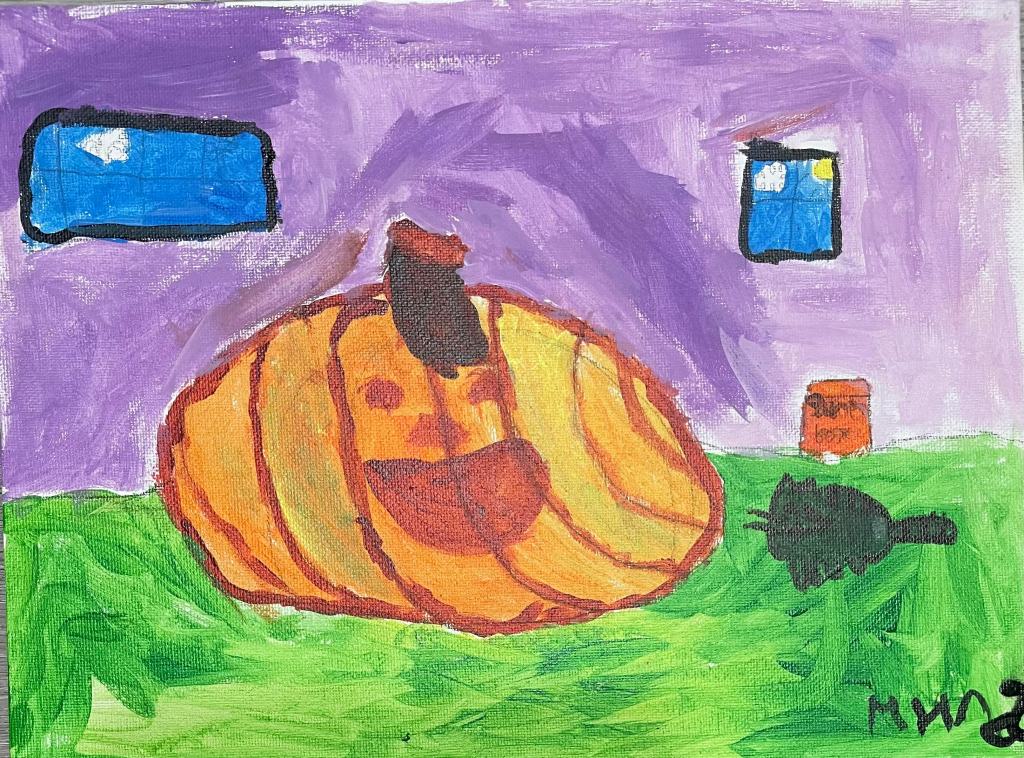
A beautiful painting encapsulating the feeling of fall.
Emery Pugh is currently in his last year of middle school. This is his second year of being a Lighthouse member. He was always an avid reader and writer, with most affinity towards fiction. Emery is also enthusiastic about science, engineering, and programming. His passion led him to found the Odyssey STEM Club in the summer of 2024. In his leisure time, he enjoys playing a variety of sports and creating his own board and card games.
Layal Hilal is 12 years old and is half Palestinian half Syrian. She has been homeschooled since kindergarten and she loved it and still does. She loves to read, sing, write her novels, play piano, and hike, and she’s hoping to pursue writing as a career. Layal also really wants to be an actor when she grows up. Actually, she’d prefer it if that could happen very soon! Reading is definitely her favorite subject, which you’d probably get right away if you stepped inside her bedroom. It has turned into something of a bookstore, only nobody is allowed to buy or borrow anything. Her favorite book series are the Sky Fall series, Keeper of the Lost Cities, Harry Potter, Percy Jackson, The Baby Sitters Club, and Wings of Fire. She also desperately wants to read the Hunger Games. Layal is also working on three novels at once, two with her best friend and one by herself. (Titles to be revealed!) She started reading and writing when she was two years old though, so it’s not too much of a challenge. (That’s not true). She joined the Lighthouse out of her love for writing and wanting to be part of a community of writers. She has two adorable kittens, Dua’a (Layal’s kitten) and Zainab (Her sister’s kitten) that she got six months ago, and she loves them more than she ever thought she could! Except when they claw her when she squeezes them too tight. (Accidently! Accidently!) Layal plays the piano, sings every moment she can, and hates talking to people she doesn’t know on the phone (She gets tongue twisted). Her main passion since discovering how much she enjoyed writing has been writing for and about freedom in every oppressed country she knows about.
Quick Fun Fact: In 2022, Layal was given an assignment in school to write a short fantasy story, about two to three pages long. That assignment was never submitted. It is, in fact, one of her novels and it has reached nearly one hundred twenty pages! She really hopes the teacher will accept a novel for the assignment…she will, right?
A long time ago, in a galaxy far, far away, there was a town called Danville, and in a house in that town there was a boy named Lucas… Lucas is 13 years old, and when he isn’t playing Dungeons and Dragons, he is probably designing 2D animation or reading Hunger Games and Harry Potter. He’s happy to be working with TVE, and eager to keep writing.

Subscribe to get access to the rest of this post and other subscriber-only content.
by Olive Pea
The Lighthouse has an art challenge for you! Even though Halloween has just passed, the fall spirit is still here! The leaves in the trees are still painted with fall colors, and the invisible wind sweeps away those that have fallen. The moon shines brighter than ever, only to be blocked by the silhouette of a black cat sitting on a fence. In my opinion, this time of year is the most inspirational for creating art. Speaking of creating art, here is your Fall Art Challenge!
INSTRUCTIONS:
Your art can be made in any shape or form! You can use any medium you wish; just make sure you can take a photo of your creation. The challenge is to include a pumpkin and a cat in your art.
SUBMITTING YOUR ART:
Make sure you have your art completed so that it can be submitted by Friday, the 24th of November. To submit your art, take a photo of it and send it to thelighthousetve@gmail.com.
NOTE:
Your artwork will be included in the next article and published in the Arts and Culture section on Friday, the 1st of December. However, if your artwork contains any inappropriate content, it will not be included.
We hope to see your artwork soon, and we wish you a happy fall!
by Aleena Haimor and Layal Hilal
August 4th, 2020-5:35 P.M.
“Zainab! Dinner time!” I look up to Iman’s firm and slightly excited voice. I groan.
“One more minute?” I ask, wanting to finish this chapter in the story I’m writing. Before I even hear anything, I know what the answer will be. I pause the music playing through my turquoise iPod.
“Yalla, get down here!” Great, Huda has joined Iman in the attempt to get me up. I moan and end up hitting my head on the table. Owwwwwww. Seriously, guys? Right now?!
After another call from my sisters, I know my time is up. I sigh and get off my desk. The chair squeaks as I hop off, tie my hair up and slip on my sky blue hijab and darker blue abaya. The beads around the cuff of my sleeves tinkle as I open the door. I walk downstairs and the smell of za’atar, kibbeh, and suma’a hits my nose. I breathe in the spicy scent of strong Arabic coffee as well. My Bayi, Amain, is sitting in the leather armchair reading about some Greek philosopher.
“Hello, Eyeni,” Bayi says.
“Hi Bayi!” I smile, kiss him on the cheek, and give him a giant hug.
“Zainab! Are you done yet?” Iman yells.
“Yes,” I say.
“Then come help with dinner please,” she says. Sara comes into the room just as I’m about to leave it. She’s still wearing her nightclothes and is only wearing a umtah instead of her hijab. I cock my head curiously.
“Good evening,” says Sara. She catches sight of my face and laughs. “Don’t worry, I’m just tired.” Sara yawns for extra measure and hugs me. We haven’t gone out at all today, so no one really changed.
I should probably introduce myself now. Well, my name is Zainab Salim. I live in Beirut, Lubnan and I am twelve years old. I have three older sisters: 25-year-old Sara, 20-year-old Huda, and 18-year-old Iman. My Mama and Bayi are both easy, outgoing parents and I love them and the rest of my family dearly.
My Mama, Fayrouz, walks in, smiling at us all. Her beautiful, shining face takes my breath away every time I see her. After hugging me and kissing my older sisters, she ties her hair back and gets to work.
Mama hasn’t put on her hijab, but is wearing a honey-colored abaya studded with jewels. As I see her without a hijab on, I realize I am getting hot in my scarf, so I take off my hijab like the rest of the family. I was wearing it wrong anyway, so I’ll ask Sara to help me later.
I guess I should start helping with dinner, too. After all, we’re supposed to go to the Maghrib prayer today. I know that I have a part in this household and I need to help. I chop up tomatoes and olives in the kitchen, letting the scent fill the kitchen, and then set up the table. Finally, we all sit down, and pull a plate to ourselves. Before I eat, I bless my food with one word.
“Bismillah,” I say.
We begin to eat. Bayi tells jokes and we all laugh. Many Arab families tell their children to be seen and not heard. My parents don’t do this and I am grateful for that. I rip apart a piece of khubz Arabie and scoop up some warat enib on it. I take a bite. Mmmmmmm. Mama’s mujadara is the BEST!
“Tobrini, Inshallah,” Mama says as we dig in.
After finishing up and clearing the dishes, Mama starts singing. I join in and my sisters and Bayi do the same.
Suddenly there is a knock at the door.
“Shh! Be quiet, ya habibi,” Mama and Bayi say simultaneously. Baba slips to the door and cautiously opens it as us girls quickly throw on our hijabs. With the wars in Lubnan, opening the door can be a death sentence. And with the new Covid virus going on, no one wants to leave their homes.
However, Bayi has no reason to worry. Mama’s brother, Khalo Fouad, stands there, grinning. Mama gasps and runs to him. He wraps his arms around her and kisses her head.
Khalo is Mama’s older brother by seven years. He has always been her favorite brother out of her three brothers. Mama also has two sisters, but we haven’t seen them in a while. We haven’t seen Khalo in over a year, since he and his family live in Halba, about one and a half hours away.
I run too. Khalo is my favorite uncle. He dips down and receives me with open arms. My feet lift off the ground as I am spun around.
“Khalo!” I squeal in delight as he sets me down.
“Hi, Eyeni. I missed you, my Zainab.”
“Ahlan, Khalo!”
“Sara! Huda! Iman! You are taller than last year!” my uncle jokes. My sisters smile as he kisses each one on the forehead.
“Are Samira and Aisha here?” I miss my older cousins a lot. I look at the clock while Khalo chats with my family. Right now, its 6:07 P.M.
“They wanted to come see you, but were busy with college. They…”
Suddenly, a loud boom sounds. The room rumbles and fills with a dusty haze. I cough hard, half blinded, and feel around me.
“Mama?”
“Bayi?”
“Khalo?”
As the smoke clears and my eyes adjust, I see a figure laying on the ground. Mama and Bayi see it as well, but they gasp. Mama runs and tears rain down on the body.
Panic grips my heart. I see a ray of sun and the face is clear. I fall to my knees and cry to Allah as my family clutches each other.
This isn’t real.
It can’t be.
It can’t be true.
As Khalo’s tears fall to the ground and the truth hits me like a bomb, my mind drowns in a black hole of sorrow.
Arabic Glossary:
Yalla: Come on
Hijab: A headscarf that some Muslim women wear
Abaya: A cloth long-sleeved type of dress, sometimes worn by Arab women
Za’atar: An Arabic spice
Kibbeh: A type of “meatball” made in the middle east
Suma’a: Sumac
Bayi: Dad, in the slang Levantine dialect of Arabic
Eyeni: My eye, kind of like “apple of my eye”
Umrah: An undercover for securing hair under a hijab
Lubnan: Lebanon
Maghrib: One of the five Islamic daily prayers; the evening prayer
Bismillah: In the name of God
Khubz Arabie: Arabic bread/pita bread
Warat enib: Stuffed grape leaves, a very popular dish in the Middle East
Tobrini, Inshallah: I hope that I die before you; an oddly popular thing to say in Lebanon
Ya habibi: My darling
Khalo: Maternal uncle
Ahlan: Hello
Allah: God
by Lucas David
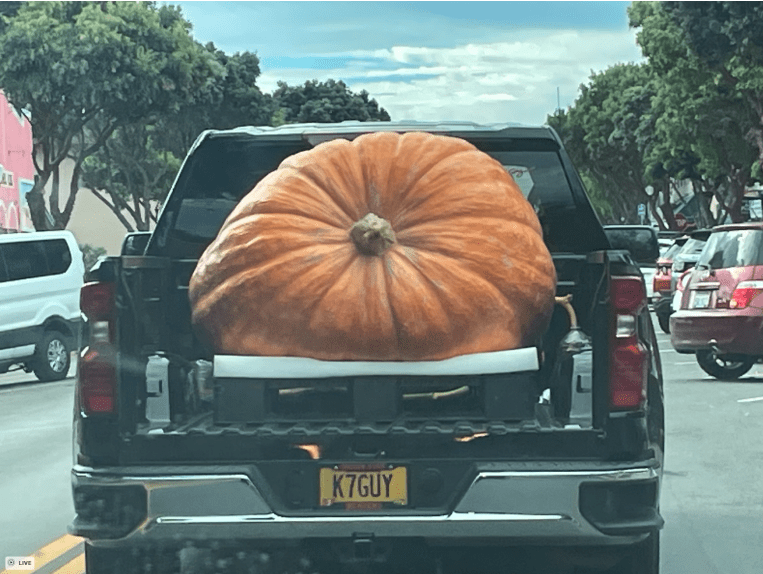
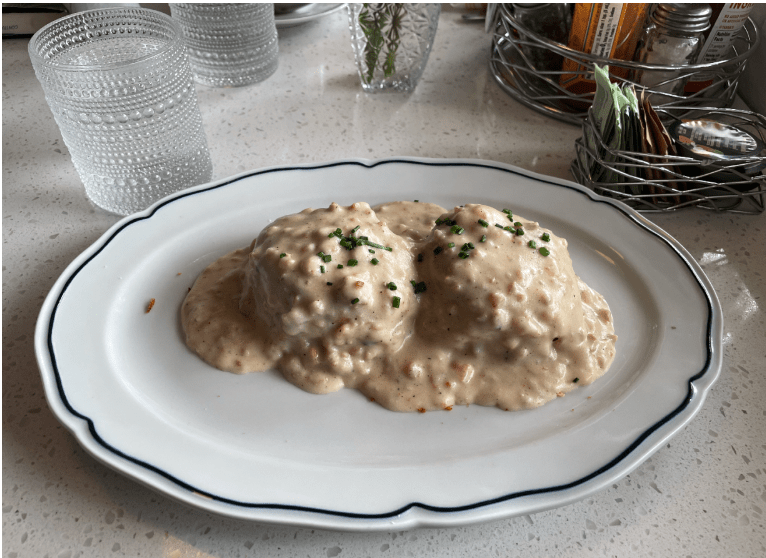
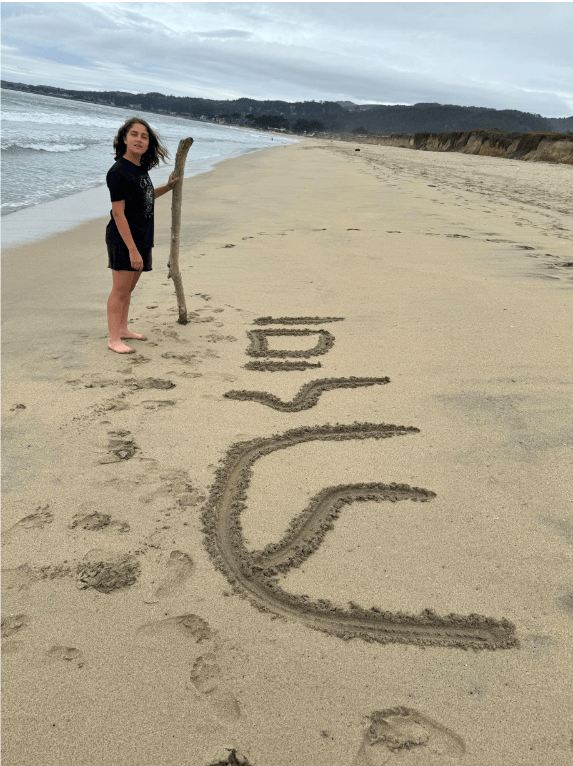
The Great Pumpkin Weigh-Off is a competition hosted in Half Moon Bay on Indigenous People’s Day. Competitors travel from all around to have their pumpkins weighed for a chance at first place, where the pumpkin is purchased at nine dollars per pound. The record-setting pumpkin receives an additional 30k, and immortalization as a pumpkin record breaker. The last record set was broken by Travis Grienger, with his monstrous 2,749 pound gourd. Each pumpkin is carted onto a scale, weighed, lifted into the air on a crane and carefully inspected for cracks, chemicals or rot. If any of these are found, the pumpkin is disqualified, but they still weigh it anyway. There’s also a great deal to do in the area: there’s a brunch place named “Johnny’s”. Johnny’s is admittedly pricey, but tasty, and it boasts an authentic breakfast diner atmosphere. The biscuits are delicious and drowned in gravy, and the tater tots are filling and plentiful. Ice cream scoops (chocolate, vanilla, and strawberry) are only three dollars each, if you’re on a budget or just looking for a snack.
All of this is right by Half Moon Beach, a sandy coast surrounded by fields of succulent plants and pathways. A 10-foot drop-off marks the border between the sand and succulents, with the layers of rock sediment displayed like a science exhibit. Getting down to the beach looks tricky at first, since most obvious paths lead to edges that would be difficult to descend, but following the succulents will bring you to a wider path. On your way home, there are many pumpkin patches to pick from if you’d like to drop by and snag one, or get lost in a corn maze and never return. To summarize, next year on Indigenous Peoples’ Day, consider a trip to The Great Pumpkin Weigh-Off in Half Moon Bay. It’s
definitely worth the drive!
by Meru S.
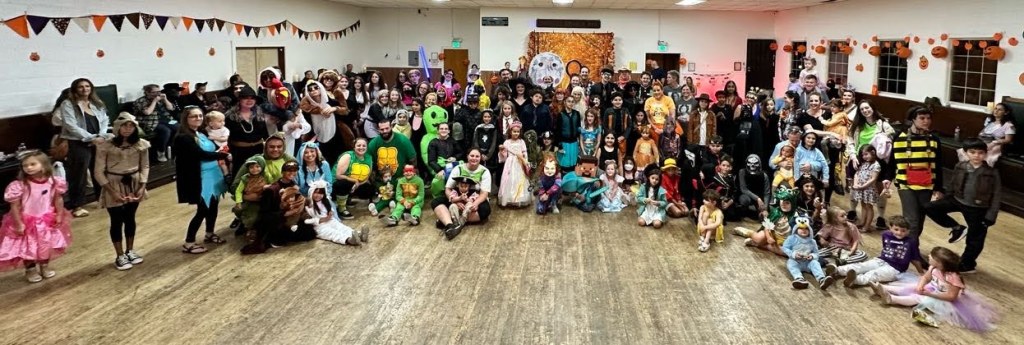
You may have been to the annual TVE Harvest Dance that took place just a few weeks ago. You might have even participated in the Knowledge Fair this spring, but have you ever wondered about the history of the building in which these events take place?
This year, on October 25th, the Danville Grange Hall celebrated its 150th anniversary. Many of us TVE members may know the Grange from all of the TVE events that happen there.
The Grange Hall that we see today was opened in 1952, though the story of its past purpose goes back to the late 1860s and the early 1870s, when the Civil War had just ended. On the national level, Oliver Hudson Kelley of Minnesota wanted to start a farmer’s society, in hopes of improving the situation of agriculture across the northern and southern states. As a result of his determined efforts, the National Grange was created in 1868 to support the welfare of farmers. On April 16th of that year, Mr. Kelley founded the Fredonia Grange in New York. It became the first Grange in the country. In 1868, Robert Baldwin from Danville and George McCamly from San Ramon learned about the National Grange and created the California State Grange. The Danville Grange was organized on October 1st, 1873. Throughout the country, farmers would gather at Granges to discuss farming techniques for the benefit of agriculture.
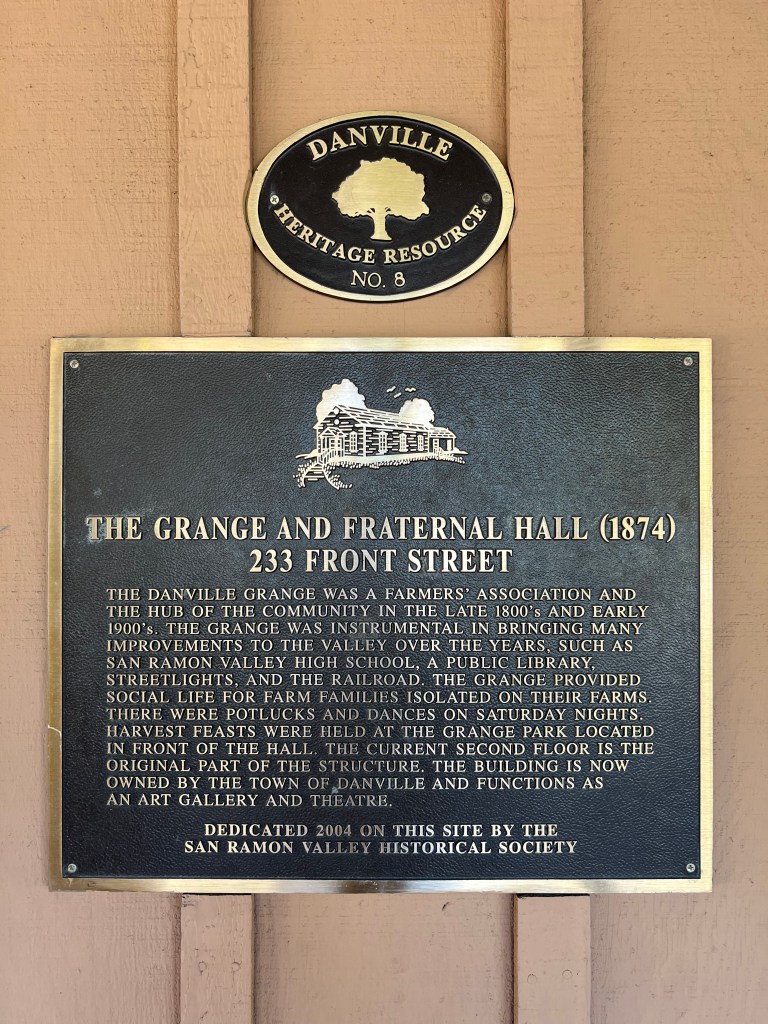
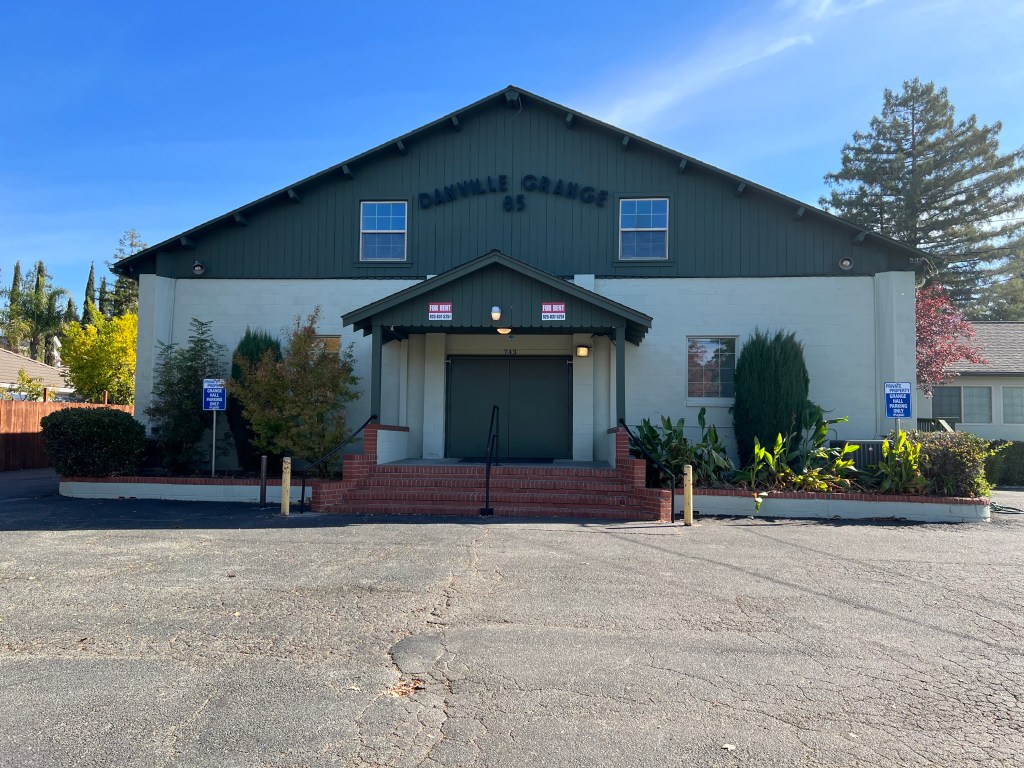
The Danville Grange was the eighty-fifth in California and the third Grange in Contra Costa County. It is now located at 743 Diablo Road in Danville. The original Grange was on the second floor of Danville’s Village Theater at 233 Front Street.
The Grange Hall is now rented for various public and private events, including the monthly Tassajara 4-H club community meetings and, of course, TVE events. The next time you are at the Danville Grange Hall, take a moment to reflect upon its century-and-a-half-old history!
For more information and facts about the Grange, please visit the San Ramon Valley Museum’s website:
To rent the Grange Hall for events, you can call this number: 925-837-5251.
Do you know what causes your eye, hair and skin color, etc? Well, you can thank your DNA! DNA are molecules that make you, well, you!
DNA itself stands for deoxyribonucleic acid (ask your parents on how to pronounce that). The deoxy part means that DNA has one less (the de part stands for less) oxygen atom than RNA (Ribonucleic acid), which also carries genetic information. The ribo part stands for sugar ribose, which are chemical compounds.
DNA is built of nucleotide monomers (a molecule that can react with other monomers), hence the nucleic part. They are bound together with polynucleotides (Biopolymer molecules composed of nucleotide monomers).

The role of discovering the shape of DNA, the double helix shape, goes to Rosalind Franklin, an aspiring woman scientist who discovered lots of new things about DNA. Rosalind Franklin was a British woman, born in 1920. She and her colleagues (but mostly her) discovered DNA at King’s college in London, 1951.
Franklin took her famous picture, Photo 51, using an x-ray. She used x-ray crystallography (when you use x-ray diffraction to find the shape of a crystalline structure) to take the picture, signifying a large milestone in the creation of modern science.

James Watson and Francis Crick figured out that Franklin had discovered DNA. They stole her ideas and published them as their own. Watson himself wrote a book, called The Double Helix, about the findings, and unfairly referred to Franklin as “autistic.”
After publishing The Double Helix, James Watson, along with Francis Crick and Maurice Wilkins, was awarded ⅓ of the Nobel Prize in Physiology and Medicine in 1962. They were awarded “for their discoveries concerning the molecular structure of nucleic acids and its significance for information transfer in living material,” as said by the Nobel Prize awards, when really, the prize should have gone to Rosalind Franklin.

There are two types of DNA bonds: AT/TA and GC/CG. Only T and A can connect, and only G and C can connect. If you put, let’s say, T and G together, it wouldn’t fit together. This is called a mutation. Think of when you put the wrong puzzle piece. It’s kind of like that. Mutations can be passed down, for example, cancer is a type of mutation caused by the wrong bonds going together.

DNA strands are wound around proteins, to make something called a chromosome. There are two types of chromosomes: X and Y. Chromosomes come in pairs, and the type of pairs determines your gender. Girls and women have XX pairs. Boys and men have XY pairs. The nitrogen bases that make up DNA (which then make up chromosomes), are A (adenine), T (thymine), C (cytosine) and G (guanine), as we said earlier.

I hope you’re as fascinated with DNA as I am! DNA strands really are like the building blocks of cells (which are the building blocks of YOU). It’s super cool to learn about and I hope that this article gives you a better understanding of DNA.
 The Lighthouse