Science

A Day in the Life of a Great White Shark

by Lydia I. Martinov

Hey there! My name is Todd, and I’m a Great White Shark. Don’t be shy, I had a big breakfast, so I won’t bite. 

My scientific name is “Carcharodon carcharias” for those of you who like that kind of stuff. I am 35 years old, so technically, I can be considered middle aged, because most of us live for 70 years or more. I am 15 feet long, which is about the length of a car. I exercise regularly, and weigh 2,300 pounds, which is average for a Great White Shark like me. Some of my friends grow up to 21 feet, and can weigh up to 4,500 pounds. In my opinion, I think they should go swimming more, and lose a few hundred pounds *wink wink*.

Photo courtesy of Oceana

I live off the coast of Japan, and I’ll let you in on a little secret. I think Hello Kitty is adorable, and a lot of people here agree! Anyways, many of you may believe that I’m mean, and that if they meet me, then I’ll eat them. The truth is, shark attacks are quite rare. In fact, there are less than 10 per year. Uh, oh. Look at the time! I need to go get some lunch. Yum! There’s a school of fish over there. I’ll be right back.

Those fish were delicious! Now, where were we? Oh, yes! Let me tell you some interesting facts about us Great White Sharks. First of all, you may think that I am a mammal, but I am not. You see, I have gills just like a fish, unlike dolphins who are mammals. Next, check it out…aaah! 

Look at all of my teeth! I have about 3 hundred that are separated into 7 rows. Just like you, I lose and regrow my teeth. The only difference is that Great Whites (such as myself) can go through 20,000 teeth in a lifetime, because we lose and regrow each tooth multiple times.

Photo courtesy of DK Find Out!

I’m going to play a game. I will go from this rock to that coral over there as fast as I can, and see what’s the fastest speed I can reach. Ready, set, go! Boom! 54 miles per hour! That was probably one of my best speeds yet! The highest a shark can swim on average is about 60 miles per hour, so I was pretty close.

My neighbor’s cousin’s friend’s sister just had 6 pups! They are adorable. Each of them are currently about 5 feet long, and will most likely grow 4 times longer by the time they grow up. An average female shark has 2 to 12 pups at a time. That’s a lot of babies to take care of.

Photo courtesy of Live Science

Did you know that if you were to flip me upside down, it would cause me to become disoriented? That means that I would basically be hypnotized. I wouldn’t be able to move, but don’t worry, it only lasts up to 15 minutes. Please don’t flip me over.

Thanks so much for coming! I don’t get very many visitors around here, and I think you can figure out why. If you would like to learn more about us Great White Sharks, feel free to do some research. Well, that’s all for today! Ooh! It’s time for a snack! 

Photo courtesy of Imgur

____________________________________________________________________________

If you enjoy the “Day in the Life” series, and would like to learn about a specific animal, fill out this form:

https://docs.google.com/forms/d/e/1FAIpQLSd_CiR1rjTqNmIFBhjuAKJ4-lUlTSKC3Ja4RyxnCS3VAwOsjA/viewform?usp=sf_link 

We will do our best to get as many suggestions as possible.
Arts and Culture, News, Student Life

Get Ready for the Harvest Dance! – 2023

by Ava Salado

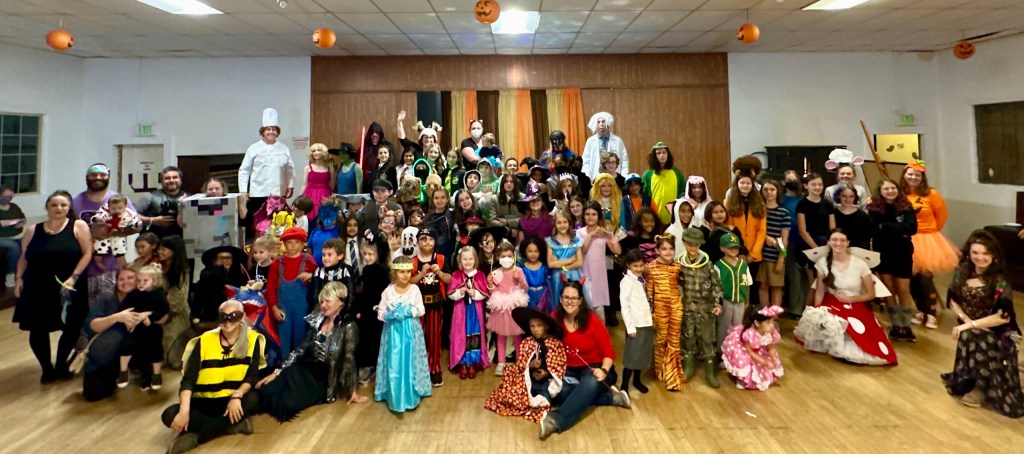
Hello TVE Community! I think it is safe to say the fall has officially…fallen. Isn’t it wonderful? Leaves of all shades of orange line the streets and the tidemark smell of autumn is finally out. So you know what that means? TVE’s  Harvest Dance is here! Join us for our annual Family Harvest Dance! This event is for the whole family and promises to be a fantastic night! There will be music, dancing, a photo booth, a variety of snacks, games, a costume parade, arts & crafts and more! It is truly a TVE tradition that is a favorite for many. 

Costumes are highly encouraged, but please be sure to wear family friendly costumes so the little ones aren’t frightened. You can sign up for what you can bring to the snack potluck!

It will be held on October 21st, 2023 from 6-10 pm. Check the TVE official Facebook page for the location, who is going, and much more information! To cover the expense of the venue we kindly ask for 8$ per person/guest and 25$ for a household of 3 or more. 

We sincerely hope to see you at this year’s Harvest Dance!

Arts and Culture, News, Student Life

Navarathri — The Festival of Nine Nights

by Meru S.

The Hindu festival of Navarathri begins on the new moon during mid-September to mid-October. In the ancient Indian language of Sanskrit, nava means nine and rathri means night, so Navarathri translates to Nine Nights. It is also called Dussara, or Ten Days, in Hindi. During these nine nights, three legendary goddesses of Hinduism are honored. 

The first three nights of Navarathri celebrate the warrior goddess Durga, who destroys the demons of greed, anger, jealousy, and ego. Goddess Durga’s victory over the demon Mahishasura, after a nine-day-long battle, is one of the reasons why Navarathri is celebrated. The next three nights are dedicated to Lakshmi, who is the goddess of prosperity and abundance in spirituality, courage, material wealth, victory, agriculture, and wisdom. During the last three nights, Saraswathi, the goddess of knowledge and learning is worshiped.

Here is a short prayer to Goddess Saraswathi in Sanskrit:

सरस्वति नमस्तुभ्यं वरदे कामरूपिणि ।

विद्यारंभं करिष्यामि सिद्धिर्भवतु मे सदा ॥

Saraswathi namasthubhyam varade kamarupini

vidyarambham karishyami siddhirbhavathu me sada 

Translation:

Salutations to you, O Goddess Saraswathi, who is the giver of boons and who has a
beautiful form! I now begin my studies. Let there always be success for me. 

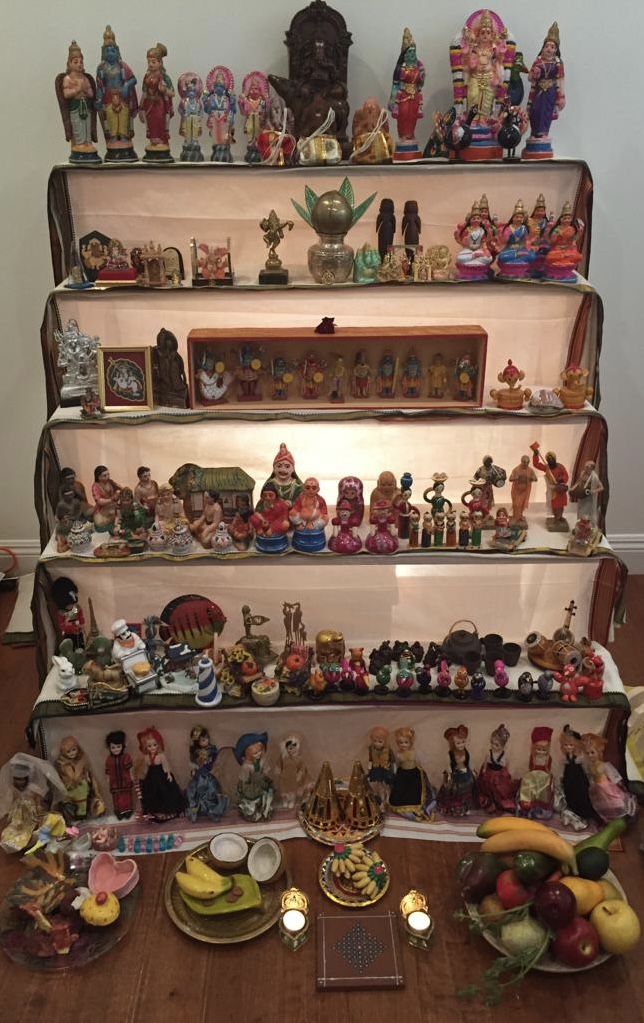
In southern India, each family builds a beautifully and elaborately decorated set of steps on which dolls made of clay, wood, or ceramic are arranged. Dolls are often passed down for generations and are many years old. The god and goddess images are placed on the higher steps, while human and animal dolls are set on the lower steps. These displays (known as golu in the South Indian language, Tamil) commonly depict weddings, rituals, ceremonies, or stories from the scriptures. Families dress up and visit each other, sing songs, and chant prayers. 

Photo Courtesy of Gayathri N.

In northern India, families and devotees celebrate Navarathri by visiting temples, performing traditional dances, and enacting legends of the three Goddesses. The tenth day, called Vijaya Dasami, is believed (in north India) to be the day on which Prince Rama defeated the ten-headed demon, Ravana. 

This is a recipe for Sundal, a traditional savory dish made with garbanzo beans:

Ingredients:

1 cup uncooked or 1 can of garbanzo beans

1 tbsp oil

1 tsp mustard seeds

1 tsp fennel seeds

⅛ tsp turmeric powder

1 tsp sugar

1 tsp salt

1 diced green chili or 1/4 tsp red pepper flakes.

1 small pinch of asafoetida (optional)

1 sprig of curry leaves (optional)

chopped cilantro (optional)

1.  Soak the garbanzo beans in water for at least six hours, then cook them. If you are using canned garbanzo, drain them and skip this step.

2. Heat the oil in a saucepan, add the mustard seeds, and let them splutter.

3.  Add the fennel seeds, green chilies or red pepper flakes, turmeric powder, asafoetida, and curry leaves. Stir, then add the garbanzo beans, salt and sugar. Mix until well combined.

4. Garnish with cilantro, serve warm, and enjoy!

Photo Courtesy of Meru S.
Arts and Culture, News, Student Life

What is El Día de los Muertos?

by Ava Salado

Photo by National Geographic
Photo by PBS SoCal

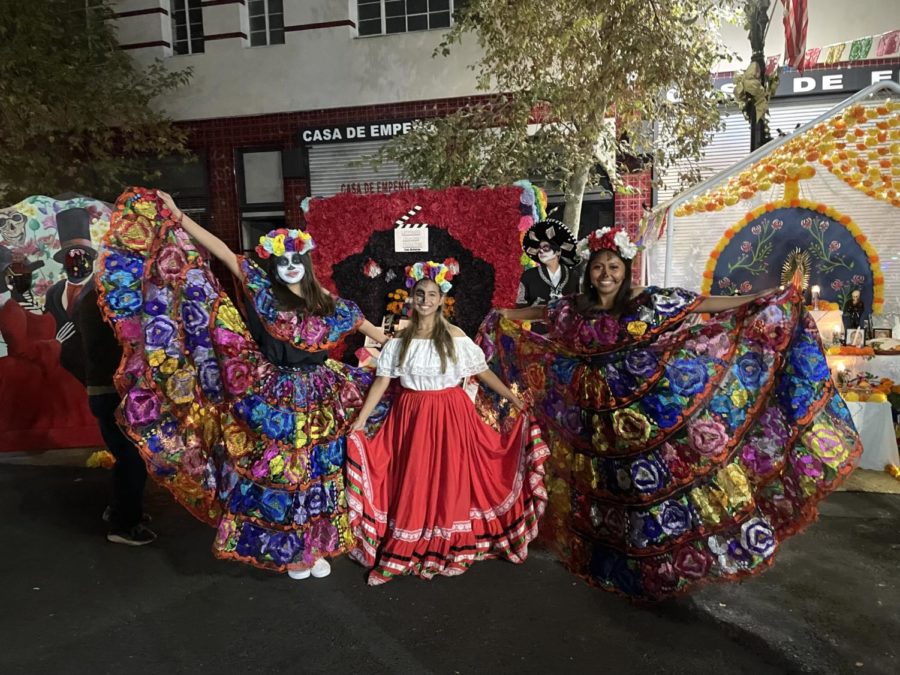
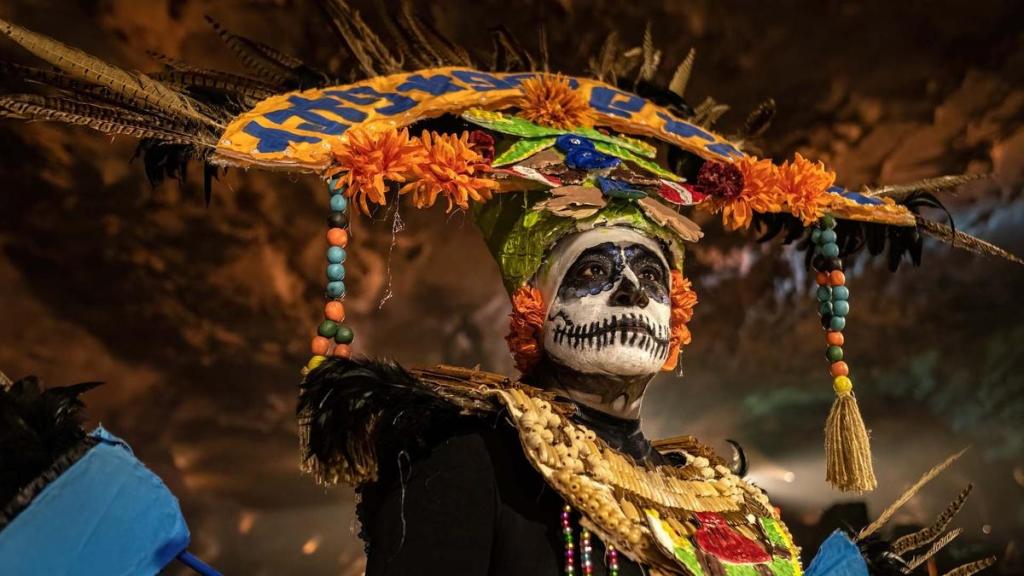
What is the Day of the Dead? We have probably all heard of it once or twice, especially around Halloween. Well, it’s actually a traditionally Mexican holiday where families welcome back the spirits of their deceased relatives for a short reunion. The festivities can include food, drinks, partying and celebration, singing, dancing, and much more

The Day of the Dead or el Día de los Muertos celebrations, usually held in modern-day Mexico and among people of Mexican origin in the United States and other countries, has its roots in pre-Columbian Mesoamerica (which dates back around 3,000 years.) The Nahua people who lived in what is now central Mexico–including the Aztecs–had a, one might say, unique outlook of the world and the cosmos. They considered death as a necessary and constant aspect of existence. It was believed that after death a person traveled to Chicunamictlán, the land of the dead. Only after nine difficult levels and stages, and a journey lasting several years, could the human soul finally reach Mictlán, its final resting place. The occasion is observed every year from October 31 to November 2. It incorporates Spanish culture, European religion, and Mesoamerican ritual. While Halloween occurs on October 31, November 2 is All Souls Day or, in other words, The Day of the Dead. According to ancient tradition, the gates of heaven will open up at exactly midnight on October 31 and the spirits of niños (children) can rejoin their families for 24 hours. The spirits of adults, like abuelas, abuelos, tías, tíos, or really anyone can do the same on November 2. (Abuela and abuelo are grandma and grandpa. Tía and tío are aunt and uncle.)

Photo by YMCA of Greater Seattle

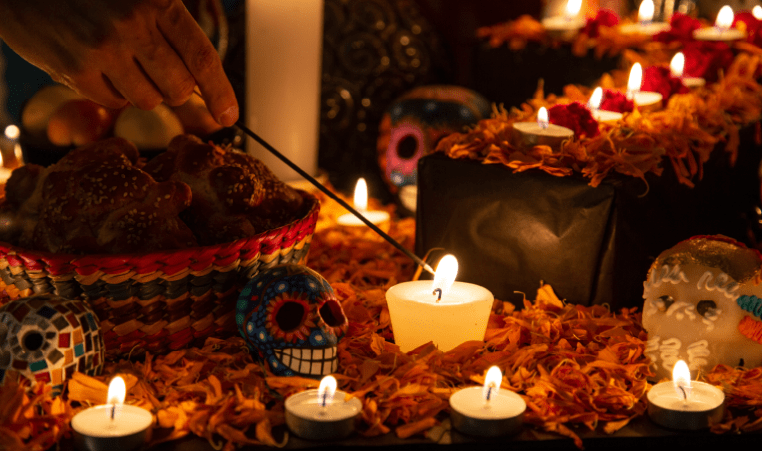
To help spirits return to their loved ones, people first construct an altar illuminated by candles or outside of their houses. Additionally, some of the deceased’s favorite foods are placed on the altar in case they grow hungry. On the altar, families also put things that were significant to the ancestors while they were living, such as a cherished book, musical instrument, heirloom, or even a child’s toy.

A huge party is then held in the cemetery. Families bring a substantial meal to consume as they sing songs, polish and repair tombstones, and communicate with their ancestors. 

Even grandparents who have passed away before a baby was born could be introduced to the newborn by their parents.

Photo by The Royal Reporter

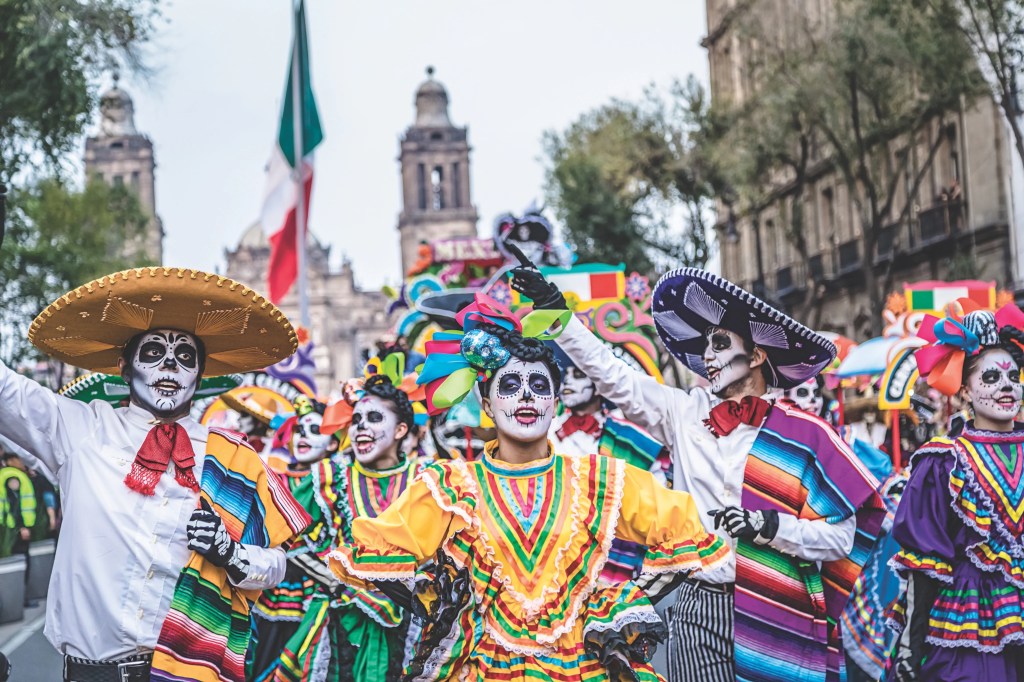
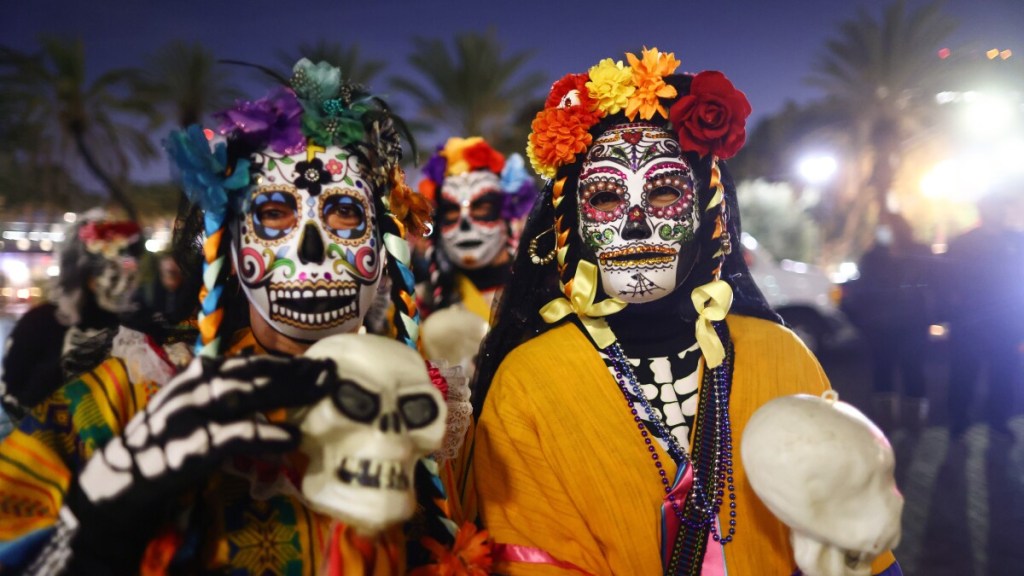
You may have seen festive photos of people dressed up in colorful dresses, suits, and make up. This is a very sacred tradition. You can get el Día de los Muertos-themed jewelry, clothes, leggings, make-up, decor, t-shirts, flower crowns and sugar skulls at basically any big box store. But however, let’s make one thing clear: el Día de los Muertos is not “Mexicans version of Halloween.” Rather, it seems to have been absorbed into the retail Halloween fixation and obsession, and has been reduced to an ‘aesthetic’ instead of a sacred Mexican cultural celebration. It should be respected as something that has been celebrated for many, many years and has so much cultural significance and importance to thousands of people (and ancestors). While the trademark colorful dresses and accessories can appear to be flamboyant fashion statements, in reality they are parts of habits and practices that date back to the time of the Aztecs over 3,000 years ago. Now, that’s not to say you should not celebrate and honor el Día de los Muertos, anyone can! But if you are wanting to buy and decorate your home with themed-decor this season, I would suggest buying from a family or personal-owned store. You can find these wonderful, authentic businesses on sites like Etsy or even at your local farmers market. 

Photo by Thirteen.org

So, from me and my ancestors to you and yours, happy el Día de los Muertos! 

Arts and Culture, News, Student Life

The Legion of Honor

by Lydia I. Martinov

Do you love art? Well be sure to visit the Legion of Honor museum in San Francisco, CA. It is filled with stunning pieces of art that are sure to catch your eye.

Artists in need of inspiration can treat themselves, and their families, to a field trip at the Legion of Honor. From paintings to sculptures, and even Faberge eggs, this stunning museum is a place to remember. Each gallery includes beautiful artwork with distinct techniques.

Some of the most beautiful artworks in the Legion of Honor are tapestries. They are huge, woven pictures. One example is the Triumph of Justice from the Triumph of the Seven Virtues series. It is woven from wool.

Triumph of Justice
Photo by Lydia Matinov

Another stunning piece of art to look out for if you visit is “The Russian Bride’s Attire”.

It was painted by Konstantin Makovsky in the late 1800’s. The painting depicts a woman getting ready for her wedding, and is unhappy about it. She knows that it will end up a loveless marriage, and the man she will marry is significantly older. This true masterpiece shows great emotion. If you find yourself at the Legion of Honor, be sure to just sit down for a few minutes, and take a nice long look at “The Russian Bride’s Attire” to take in the wonderful detail.

The Russian Bride’s Attire
Photo by Lydia Martinov

Right in front of the Legion is the “Holocaust Memorial”. If you are driving by, then make sure you check it out. It is a sculpture of a concentration camp from the Holocaust. It is free to look at, and very interesting to see. 

The Legion of Honor actually has a pretty cool history. It was founded (or for those of you who love fancy words: established) by Alma de Bretteville Spreckels and her husband, Adolph B. Spreckels in 1924. That was 99 years ago. 2024 will be the 100th birthday of the Legion! That will be quite a grand event. Anyways, all those years ago, this incredible museum was a gift to San Francisco. That is a pretty big gift. Today, it’s one of the greatest treasures in San Francisco. For Alma de Bretteville and Adolph B. Spreckels, that is a very cool way to be remembered. The Legion of Honor’s “grand opening” was on November 11, 1924 (Armistice day). It was dedicated to the Californians of World War I. 

The Legion of Honor is an incredibly fascinating place. For those who want to see the unusual artwork, and be flabbergasted by the Legion’s beauty, it is encouraged that they visit.

The Legion of Honor
Photo by Lydia Martinov

Science, Student Life

All About Tigers

by guest author Mila Martinov

I decided to write about tigers because they are so cool. There are many awesome facts about them. Most important thing I can say is, “Don’t adopt a tiger!”! 

Tigers can jump really high, as high as an elephant’s head. That is 16 feet high! They are predators and are carnivores. They eat many kinds of animals, including deer, wild pigs, even people!  They hunt by sneaking up on animals they want to catch. They often hunt when it’s dark, so that the animal they are hunting can’t see them. Tigers have orange, black and white stripes to help them blend in with plants and shadows.

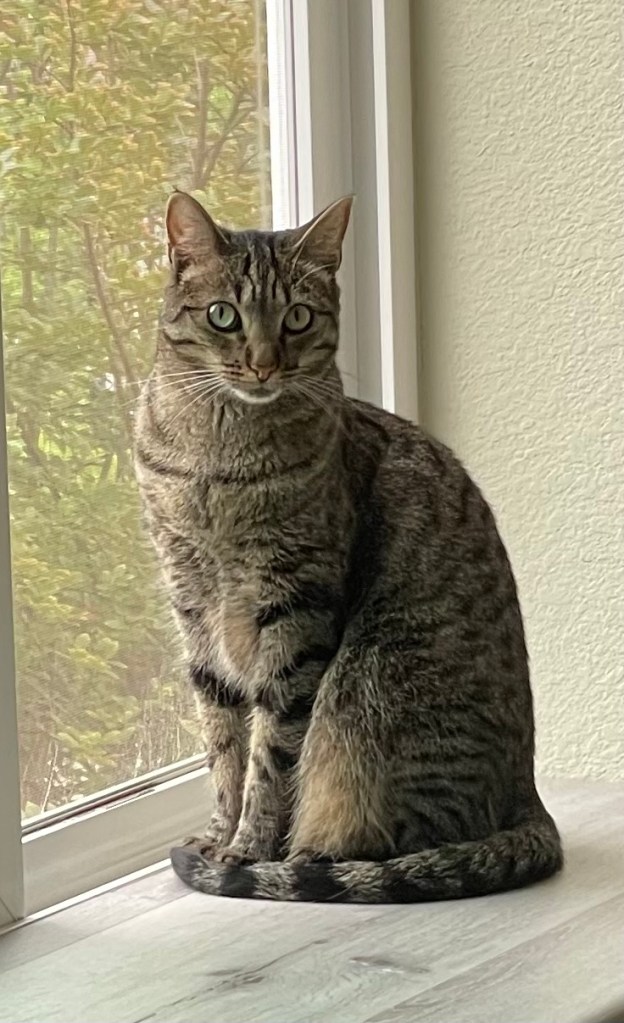
Tigers are very fierce. Watch out if you see a tiger nearby! Tigers are very good climbers. They have super sharp claws and teeth. A tiger’s biggest teeth are longer than human fingers! Tigers keep their claws safe inside their paws, but they push them out when they dig, fight or scratch (just like my cat).  

Tigers live in parts of Asia. They like to find a home that has lots of hiding places. They spend a large part of the day resting and sleeping. This seems lazy, but they need to rest to get ready for hunting. A tiger’s home is called their territory (territory means a homey place, where the tiger lives and hunts). There needs to be a lake or river nearby, so that the tiger can cool off and drink. There also must be plenty of animals for the tiger to eat. Tigers are very good swimmers, but they like to keep their head above the water. This fact might surprise you –  tigers are a type of a cat. They belong to the cat family (fancy name Felidae). I know what you are thinking right now, “Cats don’t like water! How can tigers swim if they are a type of a cat?!” I know my cat doesn’t.  I did not drop her in the bathtub, but I did check with the encyclopedia. So, no showers for her.

My tiger Katya, who doesn’t swim.

There used to be lots of tigers living in the wild. Now there are a lot fewer, because people hunted them and destroyed their territories. Today there are less than 4,000 tigers living in the wild worldwide. People are trying to protect them by creating safe territories, where they can live out of harm’s way. Go tigers!!!

Bibliography:

National Geographic Kids: Little Kids First Big Book of Animals by Catherine D. Hughes

Tigers by James Maclaine

Tiger Photo by National Geographic Kids

My cat Katya Photo by my mom Olga M.

Arts and Culture, Home, News

The History of Halloween

by Aleena Haimor

Boo! It’s that time of year again: Halloween! Halloween is one of my favorite days of the year. It’s a lot of fun to dress up, eat candy and have fun with your friends. This year, I’ll be dressing up as Sophie Foster from Keeper of the Lost Cities by Shannon Messenger. What about you?                 

Photo by The Old Farmers Almanac

Halloween has an incredible history. It all started with a Celtic festival called Samhain (pronounced Sah-win). The Celtics believed that at the end of Summer (when Samhain happened), the ghosts of the dead came back to Earth.

Scared of the haunting spirits, the Celtics would dress up in scary costumes to ward off the ghosts. They would light bonfires, and wear costumes for protection. In the 700s (8th Century AD), All Saints Day was declared by Pope Gregory lll. On November 1st, everyone would honor saints.  

The day before All Saints’ Day was called All Hallows Eve. This name was chosen, because All Saints Day was also known as All Hallows Day. The night before, or the “eve” before, was called All Hallows Eve.

Photo by Crystal Canvas Art Designs

Nowadays, kids dress up in all kinds of fun costumes and go from door to door, shouting “Trick-or-Treat!” all night long. This Halloween, let’s all get ready to have some fun.

Happy Halloween!

Photo by Peapx