Arts and Culture

Virgil’s Aeneid: How the Behavior of the Gods Reflects Human Qualities

by Lucas David

Human desire to project themselves onto the divine is highlighted by how the most honorable roles in society are often connected to godlike qualities. Virgil’s Aeneid, written as a Roman epic for Emperor Augustus, subtly explores politics while highlighting these divine ideals. The gods are more powerful than humans, yet their behavior often mirrors mortal traits. By showing the divine as flawed reflections of humans, Virgil helps explain why people act as they do. This connection between human ambition and divine example allows readers to see their own values and flaws amplified in immortal beings.

The gods’ human-like motives are evident in their emotions and actions. Juno’s relentless pursuit of Aeneas reflects stubbornness, jealousy, and personal grudge-holding that are all too human. She acts out of emotion rather than justice, demonstrating that even the powerful can be petty or vengeful. By giving the gods these traits, Virgil emphasizes that desire, anger, and pride are universal across mortal and immortal beings. The gods, then, act as mirrors that reveal human passions in an exaggerated and enduring way.

The gods also reflect political ambition and human manipulation. Jupiter, for instance, balances the ambitions of other gods, acting like a ruler managing competing factions. Minor deities, such as Allecto and Iris, carry out secretive schemes that resemble human tactics of propaganda and covert influence. Through these examples, Virgil shows how pursuit of power often involves deception, strategy, and ethical compromise. The epic suggests that ambition is inseparable from the challenges of moral and social responsibility.

Moral inconsistency and emotional volatility further link the gods to humanity. Juno and other gods often justify their actions while breaking their own laws, showing hypocrisy and moral relativity. Their feelings can shift quickly, from rage to protection or favoritism, much like human mood swings. Neptune’s sudden change from stormy anger to calm guidance illustrates this emotional unpredictability. By portraying the gods this way, Virgil highlights the complexity of morality and the struggle to act ethically, even for the powerful.

Ultimately, the gods in the Aeneid reveal human nature on a grand scale. Their passions, grudges, and ambitions make the epic relatable, even its immortal cast members. By exaggerating human traits in immortal beings, Virgil explores timeless themes of conflict, loyalty, and moral struggle. The divine challenges Aeneas, emphasizing that heroism comes from navigating both fate and human flaws. Virgil’s brilliance lies in using the gods to humanize his epic, showing that understanding human behavior is as important as understanding the world itself.

Arts and Culture, News

The Beginning of The Great Dickens Christmas Fair

by Ava Amara Salado

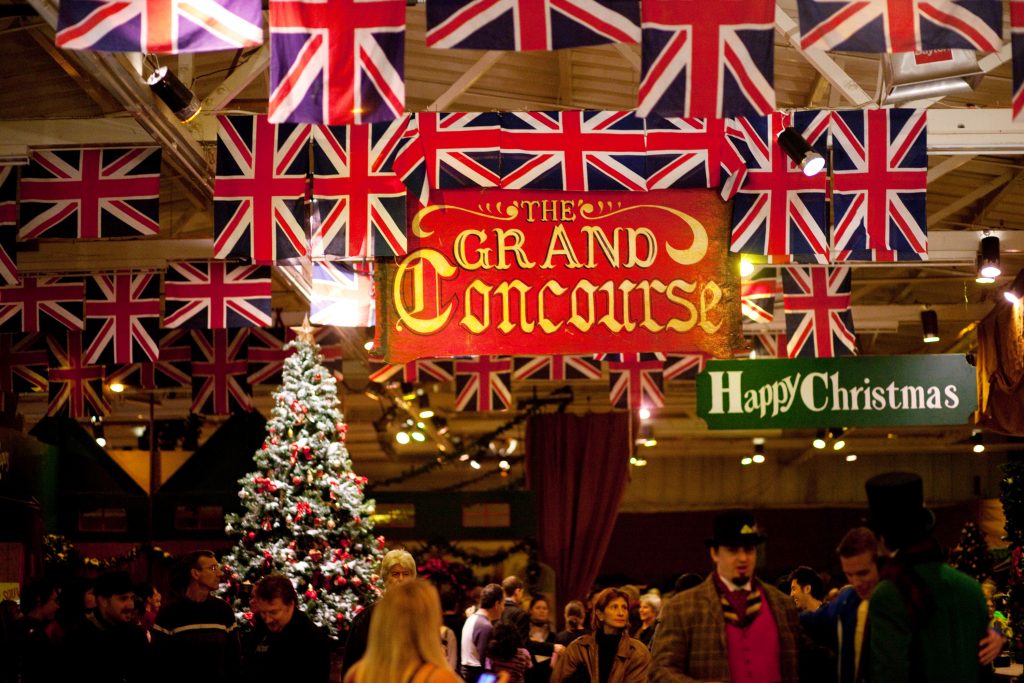
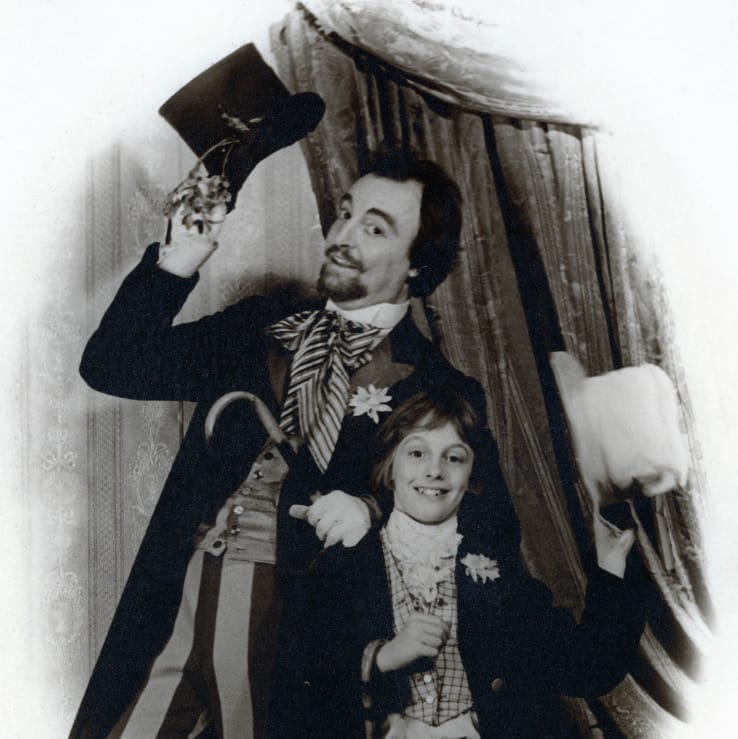
The Great Dickens Christmas Fair is taking Bay Area locals and tourists alike on a journey back to the heart of Victorian London. For just five weekends every holiday season, they graciously bring back the sights, sounds, and even scents of that beautiful period to history.

Image by San Francisco Chronicle

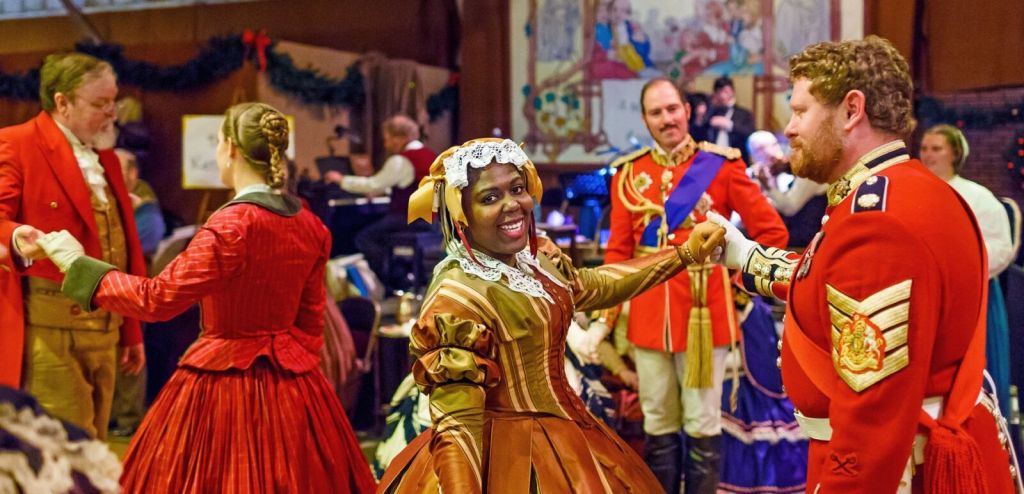
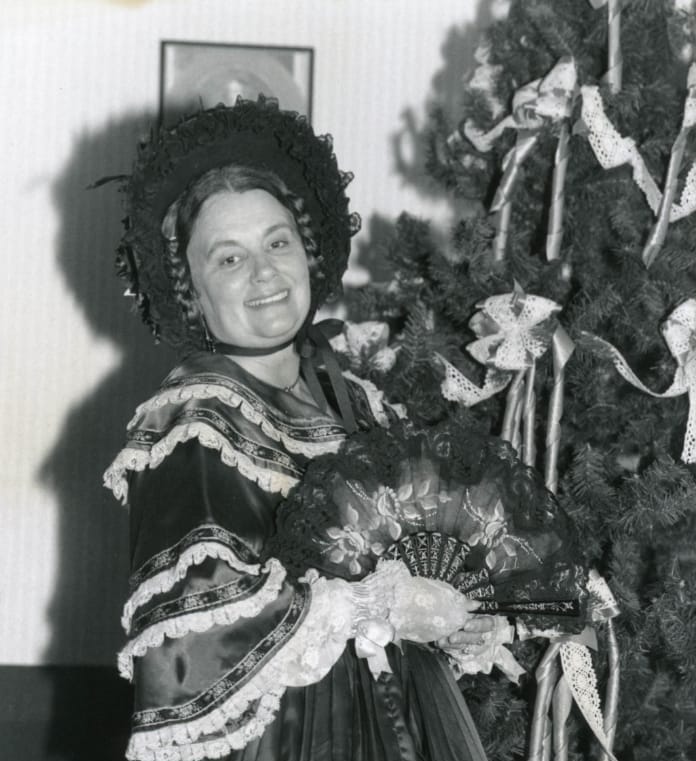
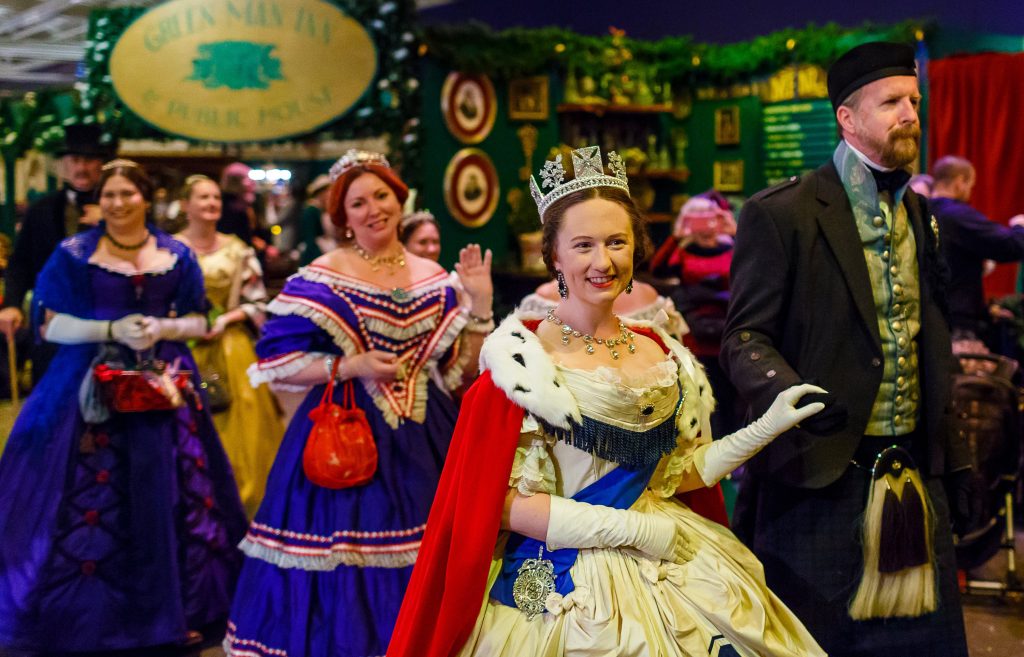
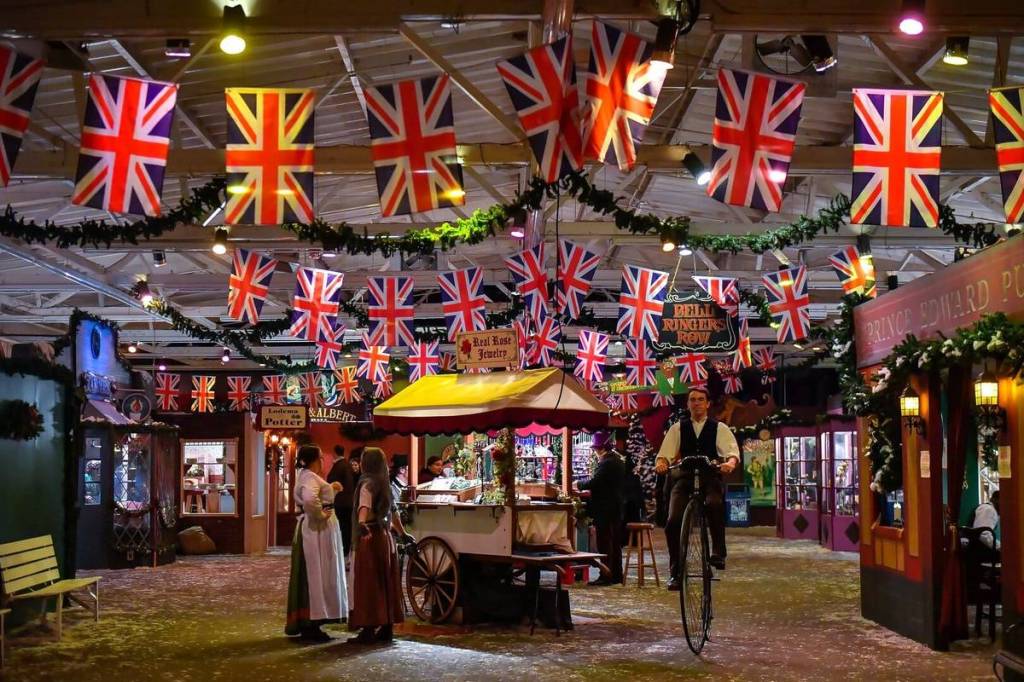
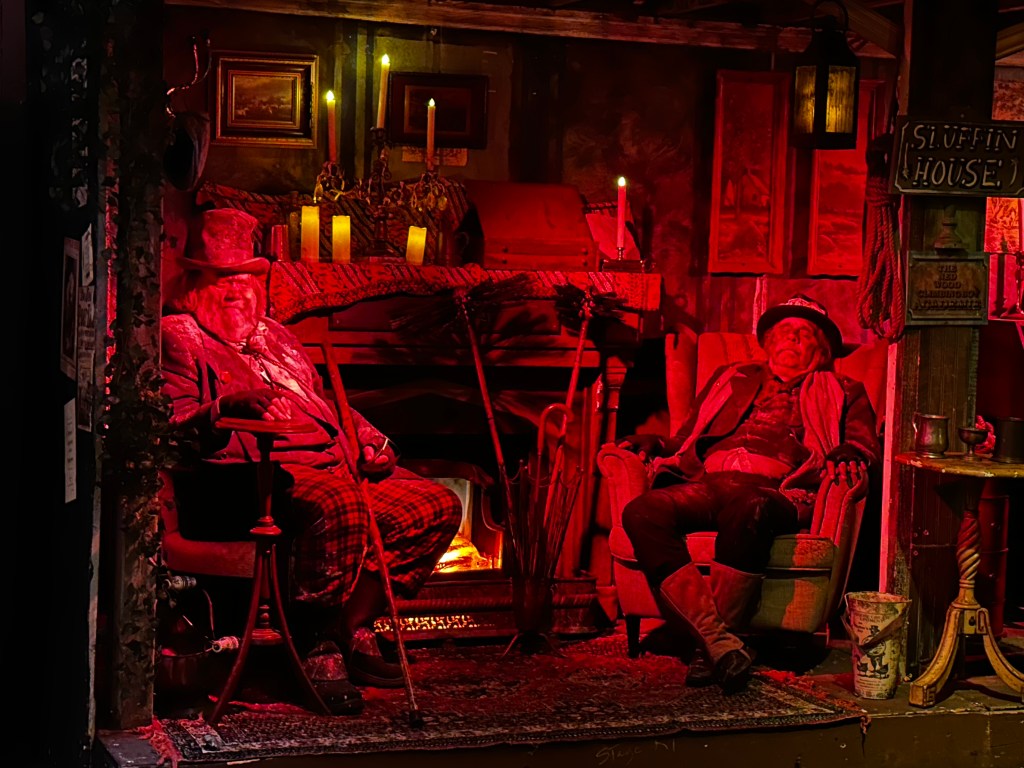
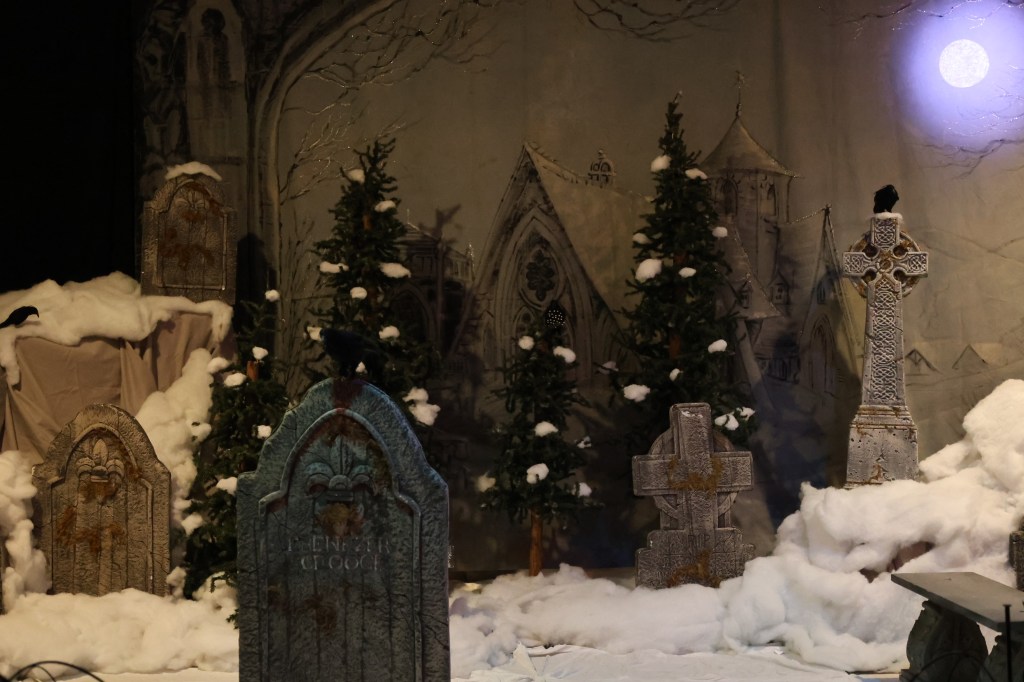
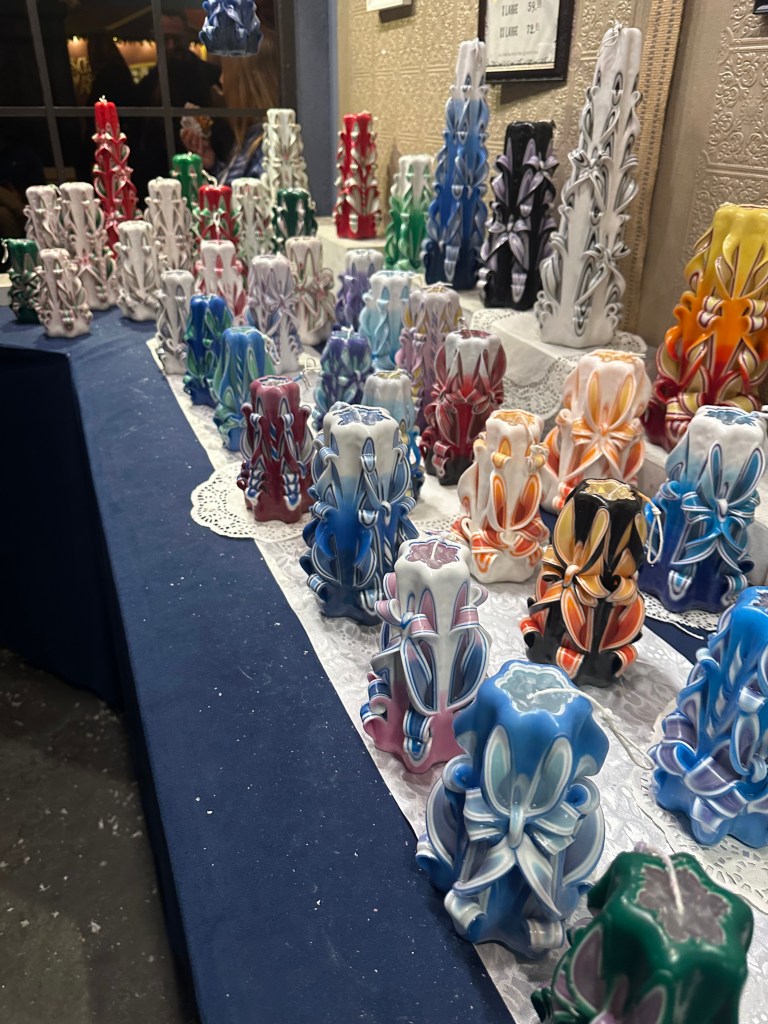
Imagine this, you stroll down narrow streets dotted with unique and authentic carnival games, English pubs with heaps of hot food being made before your eyes, and specialty shops selling handmade goods from all over. From street sellers and chimney sweepers singing carols, to characters like Ebenezer Scrooge, Bob Cratchit, Tiny Tim, the Ghosts of Christmas Past, Present, & Future, and even Mr. Dickens himself, will wander the alleys. The streets of the fair are crowded and bustling with people dressed in elaborate 1800s costumes, including sailors and seamen, businessmen, suffragists, thieves, and nobility. Numerous stores filled with presents, books, jewelry, textiles, artwork, and apparel pass by as you wind through neighborhoods and roads that have been meticulously recreated. You can smell hot, candied cinnamon almonds, pine and burnt wood, hot toddies, and musk. All of this, and just in the heart of the Bay Area, San Francisco.

Image by Fifty Grande

The fair, which has been a much beloved Bay Area institution for now 55 years, is still one of the most intricate and detailed Victorian Christmas events in the world. The Cow Palace is the site of The Great Dickens Christmas Fair, a long-standing Daly City facility that holds a variety of events, including concerts and even rodeos. It has opened its doors to the public since 1941, being the site of many of the historic conventions and moments for California. But once you enter during the holiday season, you time-travel back to Victorian London, completely forgetting that only 20 minutes ago you were struggling through thick 101 traffic.

The History

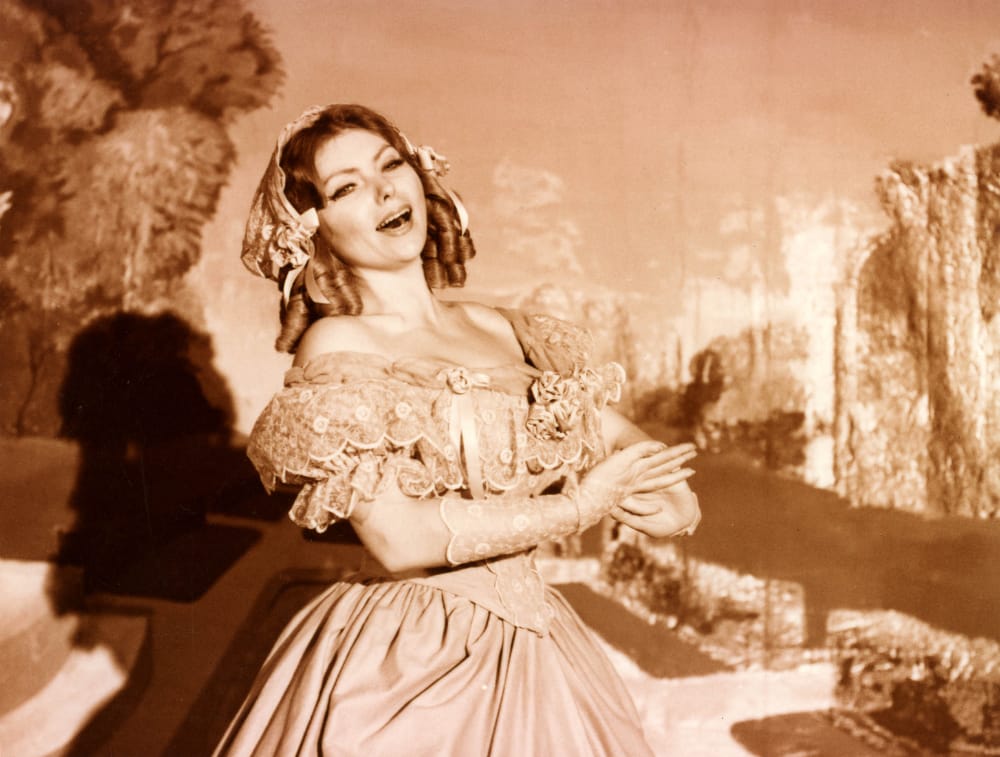
But where did this incredible tradition start? The majority of visitors to Dickens London are likely unaware of its unique origin at a very different kind of fair in Los Angeles in the 1960s; Renaissance Faires. The birth of wide spread Renaissance Faires in America were arguable all thanks to the work of Ron and Phyllis Patterson. The Pattersons, still on the high of their successes in early “novelty themed” fairs made the decision to throw a small but special holiday party at their Hollywood Hills home in the winter of 1968, for their closest friends and family.

Image by Marin Mommies

They moved away from their tried-and-true Renaissance roots for this occasion and looked to Charles Dickens’ works and late 19th-century history for inspiration. The occasion’s costumes, food, décor, and activities were so enjoyable to the Pattersons and their guests that they proposed holding the event annually, possibly on an even larger scale.

In the meantime, the Pattersons had extended their Renaissance Faire productions to Marin County in Northern California, hosting it in the historic brick warehouses along Fisherman’s Wharf in nearby San Francisco. The scenery was reminiscent of the covered marketplaces of Victorian London, and the experience served as the inspiration for an extravagant Victorian Christmas Fair open for the public to enjoy. What started out as a house party was transformed into a large indoor fair for the Bay Area community. The Great Dickens Christmas Fair (or Pickwick Comic Annual, as it was once known) soon was born. In December 1970, the Anchor Works, a historic warehouse next to San Francisco’s waterfront Embarcadero neighborhood, hosted the first Dickens Fair for only three weekends. At the time, a newspaper article poignantly compared the Fair experience to walking onto a movie set. 

Image by Marin Mommies
Image by San Francisco Chronicle

The Great Dickens Christmas Fair has changed over the course of its over 50 year run because of the participation of three generations of the original Patterson family, a big multi-talented ensemble of performers and artists, and thousands of loyal patrons and visitors. The only festival of its sort in the entire globe, it has grown to be one of the most cherished and eagerly awaited yearly events in the San Francisco Bay Area! 

What to Look Forward to

From traditional English pantomimes and juggling acts to music hall concerts, sea shanties, and scenes performed from “A Christmas Carol” across the venue, there is always something to see. With numerous stages and activities, you can never really be bored. You can sing along with boisterous performers at Mad Sal’s Dockside Alehouse, learn a new dance at Fezziwig’s Warehouse, or even just listen in on the goings-on of the streets. The hand-powered Adventure Carousel, “Punch and Judy” puppet shows, Victorian fairy home crafting, and, of course, a visit from Father Christmas are just a few of the magical moments that await at the fair. And you are welcome to dress the part too. Costumes that are appropriate for the time period are not necessary, but they are highly encouraged. 

Image by Secret San Francisco

By inspiring the resurgence of local art, food, community, and music, the idea of living history fairs give back greatly to our beautiful Bay Area culture. We find connection in creation, and that cannot be lost. So, if you need a break from the hustle and complications of today’s world, take a trip to somewhere that brings you joy and warmth, for many that is The Great Dickens Christmas Fair. They offer a chance for playfulness, an opportunity to be both a performer and the audience, a reason for coming together to, just for a moment, emphasize the true spirit of the holiday season; connection.

Below a collage of photos by Sheri Salado

Arts and Culture, Stories, Student Life

A Collection of Art & Poetry for Winter

Poetry by Johnathan David

The Fire

As the thunder roared and the wind howled,
We see the light in the distance.
And as the fire raged and burned,
Comes the instance,
Where temper is unleashed, and thoughts are telled.
But the assistance is come,
Yet the cries are yelled,
And the mental resistance is held.

Where the Wind Walks

Come, we must go
To where the wind walks.
For there we can know,
To where it stalks,
And to where it blows.
For where the wind walks,
The leaves follow.
And don’t talk,
Until tomorrow.
But keep moving
Past the racks and stacks,
Through the trees,
And under the breeze.
On the seas,
But around the bees.
Because where the wind walks,
The seeds will follow.
And we need the seeds,
To feed our hungry,
Because our trades south have failed,
After we bailed,
And sailed,
To new land,
And in this land, We stand,
Hand in hand.
So come, lets find
Where the leaves follow,
And the seeds go.
Where the weeds sway,
In dying light of day,
To find what to say.
Lets go,
Where the wind walks
The night away.

Today

What are you feeling today?
Or would you rather not say?
I myself am feeling a bit under the hay.
So could you stay?
Because I may.
And I don’t know where to go anyway.

Art by Camden S.

Arts and Culture

How an Opera Comes Together – Part 2

by Aleena Haimor

Stage Directing:

Soon after the actors and actresses first came together, staging rehearsals began. That was where they started setting the stage and working on choreography. A wonderful stage director, Omer Ben Seadia, and amazing choreographer, Gina Cerimele-Mechley, worked together at staging, setting out props and objects to really make the story come to life. 

Ms. Ben Seadia, whom I had the pleasure of talking to, came in from Oakland to Bloomington for the opera. She is a world-famous director who has done numerous operas, and is also an incredible person. Her interview was so fun to do!


Aleena Haimor: What is the largest responsibility that comes with directing an opera?

Omer Ben Seadia: The biggest responsibility is to build the artistic world where the story takes place, and setting the tone of the rehearsal process, which you share with the conductor.

AH: What’s your favorite part?

OBS: My favorite part is when I convince a singer that they can do something they never imagined they could do.

AH: Any advice for young stage directors or actors?

OBS: You can make as many performances as you want. You don’t need to wait for someone to give you an opportunity. 

Thank you so much, Ms. Ben Seadia!!


As you can see, directing an opera is a huge responsibility. The director is in charge of everything the audience sees on stage!


Orchestra Rehearsals:

Actors and actresses aren’t the only part of an opera. The orchestra plays a huge role in shaping the opera’s story! 

Alongside the staging rehearsals with the stage director (and the conductor), there are orchestra rehearsals as well. The musicians, like the actors, first discovered they were playing for the opera around May. There are five student orchestras with IU, and the one playing for both shows was the fourth one. 

At rehearsals, my dad, Fawzi Haimor, stood at the front of the room at a podium. They would start the rehearsal by reviewing notes and tuning instruments, then move on to doing a run-through of certain parts of the pieces. Since the opera was only 45 minutes long, they performed another piece, Bolero (also by Maurice Ravel) before the opera. Overall, the show was only about an hour and five minutes. 

After playing certain parts of Bolero and the opera and making notes, the orchestra would do run-throughs of the entire show.

My dad agreed to speak with me about his experiences conducting where he went to school.


Aleena Haimor: What has been the most difficult thing about working on this show? What was the most nostalgic thing for you, being back at IU?

Fawzi Haimor: I wouldn’t say that anything was particularly difficult, but I’d probably say that the most challenging part is getting to the point where you’re putting all the pieces together: staging, set design, and of course the music.  When you work with incredibly talented people, like I did at IU, the whole process actually went rather smoothly.

AH: You’ve conducted many orchestras over your career, what particularly stood out to you about this student orchestra at IU.

FH: I was so impressed by the level of talent these students had at such a young age. They were so hungry to play music at the highest level.  They genuinely were enjoying every moment of this experience and I had so much fun working with them over the month-long project.

AH: Okay, now for a general question. What is the best piece of advice you’ve received over your career? 

FH: The best advice I ever received was from my father.  He said “You were born with two ears and one mouth, try to listen more than speak.”


Thank you to these incredible people for enabling me to write this article!

Actors/Actresses: Sarai Burgos, Leah Nykaza, Chloe Hopson, Kathleen Simunek, Natalie Vong, Pelagia Pamel, Maggie Stall, Kathrine Barbour, Jisoo Choi, Morgan Feeney-Davies, Brynn Jacobs, Nate Paul, Jeremiah Angel, Evan Gunter, Cody Horne, Andreas Psillos, Molly Singer, Cathrine Tamayo, Ana Ambartsumian, Ambriehl Ivy, Nina Royston, Kirsten Tierney, Yixin Yang, and Langelihle Mngxati.

Chorus: Julianna Banfe, Emma DiSanto, Savanna Holley, Laura Looper, Ruby Miller, Sabrina Schubert, Lauren Smedberg, Brittany Weinstock, Issana Yaguda, Simo Brea, Tynan Butler, Robbie Erickson, Lane Harden, Gannon Hays, Xiang Li, Preston Rogers, Stephen Stavnicky, and Tyler Whitney.

Production: Fawzi Haimor, Omer Ben Seadia, Walter Huff, Lydia Spellman, Russell Long, Gina Cerimele-Mechley, Olivia Essebaggers, Virgil Fok, Katrina Keat, Rachel Rock, Jennifer Hong, Miles Swaminathan, Shuichi Umeyama, Chuck Prestinari, Janice Kim, and Elsa Quéron.

Sources: 

https://www.eno.org/discover-opera/articles/the-beginners-guide-to-opera/

https://www.glyndebourne.com/opera-archive/explore-our-operas/explore-lenfant-et-les-sortileges/lenfant-et-les-sortileges-synopsis/

https://operaballet.indiana.edu/events/lenfant-et-les-sortileges.html

Arts and Culture

Amari And The Despicable Wonders – a book review

by guest author Johnathan David

Amari And The Despicable Wonders, by B.B. Alston was a fun read. It had an interesting plot, intriguing twists, and there was well done balance between the highs and lows. For example, there are times in the book laden with suspense. But, there are also points that are straightforward and clear. The book showed good story design, with a solid start, great build up, amazing conclusion and a bitter-sweet finish. Set in a modern time, you follow teen girl Amari as she races to get “the wonders” before the villain, Dylan Van Helsing finds them. It is recommended for ages 8-12. I don’t want to give away too much information, but if you’re a fan of adventure and mystery, you might enjoy this book.

Arts and Culture

Animation Tips – Part 2

by Lucas David

If you’ve ever made an animation yourself, or have watched a decent amount of animation yourself, you will have noticed that some animations look more lifelike than others, especially in different art styles. In this essay, I will be breaking down one of the components of an animation that makes such a difference in its believability.

I call this aspect of creating a convincing 2D illusion “slow ins and slow outs”. To help explain it, I will compare two iconic pieces of animation. One is of a character from the cartoon Steamboat Willie

In the video above, you saw Pete the Cat turning from Mickey Mouse to the wheel of the ship. You probably also saw that Pete’s body moves completely evenly through the entire motion. When you are making an animation, this can often feel like a good idea, but in reality it creates a very machine-like movement. In real life, we have the most energy in the middle of a movement, because we have the most momentum, and we have to slow down at the end of each movement to stop. Even movements that stop suddenly slow down at the end as your muscles stop your momentum.

Above is an example of an animation with a slow in and a slow out, which is noticeably more natural than the one before it. This is because it is an animation of a living creature, and therefore should imitate the behaviors of a living creature. There are exceptions to the slow ins and slow outs rule, such as a motion being interrupted un-naturally, or a mechanical creature that moves robotically, but more often than not, successful use of slow ins and outs are key to creating a convincing animation.

Overall, animation is like acting with drawings. Every movement says something to the audience, especially with the movements of a living creature. To create convincing animation, you not only need an ability to draw, but also an understanding of what we expect movement to look like. Hopefully, this information will help you bring your animated stories to life.

Arts and Culture

Book Review – Erin Bowman’s Dustborn

by Meru S.

Far across the desolate sands lies the Verdant, rumored to be a lush land filled with what the Wastes’ deserts lack. And the only map to this idyll is branded onto the backs of Delta and her friend Asher, who has been missing for years. Delta must keep her back concealed, as many in the Wastes would go to any lengths for the map. Her life is already arduous, but when her mother and fellow villagers are captured in a raid during a storm, and her village burned to cinders, she must undertake the perilous journey across the Wastes to find her family.

In Erin Bowman’s captivating and thrilling novel, Dustborn, Delta braves travails only to find that she can trust nearly none in the Waste. Daring escapes lead to the unveiling of mysteries—the most unforeseen of them all hidden at the Verdant.

Published in 2021 by Clarion Books, Dustborn has been recognized as a Young Adult Library Services Association (YALSA) “2022 Best Fiction for Young Adults title,” a New York Public Library “2021 Best Teen Books” title, and is a 2022 Bank Street selection for “Best Children’s Books of the Year.”

Kirkus Reviews has commended the novel as “intense, gritty, and propulsive . . . Will keep readers turning the pages,” and the Publishers Weekly praises the plot as “absorbing world-building [that] propels this fast-paced adventure.” 

A perfect read for enthusiasts of The Hunger Games, Dustborn follows a post-apocalyptic and dystopian plot. Delta’s initial callous temperament evolves into caring determination; her character arc will, no doubt, have readers cheering her on, wishing her success on a journey that will tickle your funny bone and set your heart beating. Erin Bowman wields her words to seamlessly weld together action, romance, loss, and adventure, forging a tale that will leave bibliophiles eager to peruse its pages yet again.

Dustborn is available at Barnes and Nobles, Indie Bound, and on Amazon.

Erin Bowman is a New Hampshire-based author. Her teen and young adult fiction includes the Contagion duology, the Taken trilogy, the Vengeance series, The Girl and the Witches Garden, and In the Dead of Night. Additionally, she has contributed to an historical anthology titled Radical Elements, which features tales of young women who stood up against society’s will. Visit her website at embowman.com.

Arts and Culture

Pompeii’s Sister City

by Elaina David

I have always been fascinated by the ancient city of Pompeii and the horrible disaster that so well preserved its past. For those who are unaware of what Pompeii is and was, I will take a moment to explain. Pompeii was a Roman city that was famously destroyed in 79 AD by the volcanic eruption of Mt. Vesuvius, a volcano that is still active today. I watched documentaries, read books, and annoyed many people with my incessant tales of the death and doom that took place there. After years of being completely obsessed with the place, I discovered that there was a whole other story that I had been missing. That was when I found out about Herculaneum.

Herculaneum is a city located in Campania, Italy, roughly 5 miles southeast of Naples.

          As is depicted in the map to the left, the placement of Herculaneum is noticeably closer to Mt. Vesuvius than Pompeii. You’ll also notice that Pompeii is south of Mt. Vesuvius whereas Herculaneum is to the west. Both of these observations will play key roles in the fate of Herculaneum.

Herculaneum is actually, believe it or not, better preserved than Pompeii in many ways. One example of this is that in Pompeii there is no preserved wood or actual skeletons. Yes, there are plaster casts that are really cool, but they can only tell us so much about the citizens of Pompeii’s last moments. In Herculaneum, there are hundreds of skeletons, 300 in the boathouses alone. The Herculaneum boathouses provide so much insight into the lives of Herculaneum’s residents.

One such insight is a look at the people’s diets. Archaeologists have used an archaeological technique known as Compound-Specific Isotope Analysis, or Stable Isotope Analysis. This basically means that a bunch of people in white coats ran tests on some bones to identify specific isotopes from different plants and animals that may have been eaten in that time period. The results showed that females in Herculaneum ate more terrestrial animals, and males ate more fish and marine life.

Another insight is through the aforementioned preserved wood. As I’ve said, there is no wood left in Pompeii. In Herculaneum, the wood and paper were carbonized, leaving behind exact carbon replicas of beds, chairs, tables, and even scrolls! This is where the positioning of Herculaneum comes into play. Pompeii was downwind, to the south of Mt. Vesuvius, so huge clouds of ash and pumice (a light, porous type of rock common at volcanic sites) covered the city. The pumice fell from these clouds, piling on and destroying the roofs of houses. This crushed the civilians sheltering underneath them, although some people survived. This meant that the wood was surrounded by porous rock, which allowed the wood to slowly rot away.

When volcanoes erupt, they spew hot magma onto the surface, which is terrifying to see if you’re too close. In reality though, the reason eruptions are so deadly is not the lava. It’s the superheated pyroclastic flows and surges that do the most damage. These are floods of volcanic ash and hot gases from an eruption. They suck oxygen from the air, cause terrible burns, and block out all sunlight. In Herculaneum, there was no pumice, just hot ash encasing everything, leaving no air to rot the wood.​ The superheated gases caused the wood to carbonate, protecting the wood against erosion. In Pompeii, the flows and surges had lost some heat and the wood had already been buried in pumice.

I mentioned in an above paragraph the Herculaneum boathouses. These were arched, beachside rooms where citizens waited for boats. When Mt. Vesuvius erupted, hundreds of people took shelter there. You may wonder, Why didn’t they leave the city? Why stay? The answer lies in history. A few years before the eruption, Herculaneum was struck by a terrible earthquake that destroyed much of the city. The boathouses were the perfect shelter during that natural disaster. In the days preceding Mt. Vesuvius’ eruption, there were also earthquakes as is common before eruptions. Many people hid in the boathouses under the assumption that this was another earthquake.

There is one final amazing artifact from Herculaneum that I’m going to share about. The artifact in question was found in a temple devoted to Augustus called the Collegium Augustalium. A forensic archaeologist named Dr. Pierpaolo Partone discovered the only example of a vitrified human brain there. (Vitrified means turned to glass.) The superheated temperatures, followed by a sudden decrease in temperature, turned a man’s brain to glass. He was found lying in his bed. No where else has there ever been found a vitrified human brain. This is one of the things that make Herculaneum such an important archaeological site.

Herculaneum is a treasure trove of history, and new technologies are helping to uncover more and more about this ancient city’s past. I hope that this article has imbued in you a want for more.

Sources:

Britannica. Herculaneum. 23 August, 25.

https://www.britannica.com/place/Herculaneum

Giordano, G., Pensa, A., Vona, A. et al. Unique formation of organic glass from a human brain in the Vesuvius eruption of 79 CE. Sci Rep 15, 5955 (2025). 

https://doi.org/10.1038/s41598-025-88894-5

National Geographic. Lost Treasures Of Rome. 24 August, 25.

https://www.natgeotv.com/za/shows/natgeo/lost-treasures-of-rome#episodes-t3

Piercy, L. BREAKTHROUGH: Discovery made from within 2,000 year-old Herculaneum scrolls. 13 October, 23.

https://uknow.uky.edu/research/breakthrough-discovery-made-within-2000-year-old-herculaneum-scrolls

Research Gate. Herculaneum victims of Vesuvius in AD 79. 24 August, 25.

https://www.researchgate.net/profile/Pierpaolo-Petrone

Science Advances. High-resolution dietary reconstruction of victims of the 79 CE Vesuvius eruption at Herculaneum by compound-specific isotope analysis. 25 August, 21.

https://www.science.org/doi/10.1126/sciadv.abg5791

The Past. Wooden Wonders Of Herculaneum. 24 August, 25.

https://the-past.com/feature/wooden-wonders-of-herculaneum/

Arts and Culture, Student Life

The Song of Our Hearts: Why Does Music Make Us Feel?

by Harper Smith

Music has existed in human culture since very nearly the dawn of time. The earliest known instrument was a 60,000 year old bone flute, made from a bear femur and discovered in the caves of Slovenia in 1995. Percussion (music produced by striking something to create sound, better defined by modern instruments like drums and the tambourine) has been around for almost as long, and by the time civilizations like Greece and Egypt had emerged, the use of music for storytelling and cultural connection was hardly a new idea. Music became a craft, an art, and because of this, there was more thought devoted to the why and how of it all. Theory (the study of the principles and elements of song) was created and developed, and things like melody, harmony, rhythm and structure were conceptualized and studied. Musical notation (the way in which instrumental music is read, or “sheet music”–have you ever seen those little pointy blob things? This means those) was developed as well, and evolved over time. Through the inventions of records, radio, CDs, and eventually streaming services like Spotify and Apple Music, music is now a part of most of our daily lives. It is used for relaxation, education, worship, or just to dance and have a good time! 

But because the influence of it all has spread so far, it means most of us have now experienced the same thing. The feeling of listening to a song–maybe your favorite song, or maybe just something on the radio–and letting it wash over you, filling you up with emotion, with thoughts and pictures in your head, until…are you crying? Okay, for a lot of you out there it’s probably not that extreme, but there’s a near-universal experience of having a song affect you in some way. Whether it’s in the form of sadness, joy or even anger, that’s the power music can have on us. And given how long it all dates back, it’s safe to assume that this power has existed since ancient times. But why? Why does this happen, and why can almost everyone relate? Why can one person think a song is the saddest thing they’ve ever heard, and another say it’s their go-to for a dance routine? 

There are a lot of theories, and their basis varies. Some use psychology, some use music theory, some use a combination of both, and still others go off emotional analysis or just, in formal terms, “straight-up vibes.” I’ll go through two of these now, and you can decide for yourself which best represents how you think of the phenomena. Note, however, that each and every one has a scientific basis behind them, and a framework supporting evidence and studies. I will link sources below for further reading–they’re very interesting, and provide deeper information than my brief overviews. 

Theory 1: Music composition and psychology. 

Here I’ve combined the content of several articles regarding the more scientific side of things related to music. Namely, the brain. Your brain (hopefully, at least) has several distinct areas, each for different purposes. When these areas are triggered, certain hormones are released, or certain reactions are triggered, that make us feel things like pleasure, fear, and fatigue. Scientists have found that nearly all of these systems light up when we perceive musical sound. The amygdala, the hippocampus, the limbic system and more all have expressed intense reactions to harmonic sound–and they are all centers of the brain associated with pleasure and reward. Music makes us happy on a psychology and physiological level. Being able to predict or anticipate the tempo, rhythm, and changes sends a positive charge to our brains when our expectations are met or surprisingly exceeded, and releases dopamine. Additionally, songs or sounds associated with certain memories (or even just songs we recognize) in our brains light up the reward system as well. 

(Sources: one, two, three, four.)

Theory 2: Empathy and connection. 

Another idea is less quantitative in the realms of physical biology, but has very real basis in history, psychology and human experience. In fact, that is the theory: that human experience is what leads us to connect and relate to music. I’m sure we all have songs, or even whole playlists of songs, that remind us of ourselves (I’m sure I do–looking at you, indie artist Searows and your songs that make me ugly cry.) But why can we still feel things at songs that have nothing to do with us? Some say that it really is that simple: empathy. The concept and practice of being able to share emotions with other people is one of the most important skills for us to have in life, and one that most everyone is able to cultivate over their lifetime. This skill is exactly what may cause us to experience emotional sensations when we hear certain songs. In fact, scientific studies have shown that more sensitive people show higher levels of connection when listening to “sad” instrumentals, and even find music more pleasurable in general than someone with lower levels. There are even studies that show that listening to music helps us grow our own empathy in general. Emoting at instrumental changes and lyrics can develop an individual’s sensitivity and enhance their ability to relate to others. This is because music is a highly personal art form that conveys a very intimate look at the artist’s feelings. As a songwriter and composer myself, I can say for certain that the process of writing songs is definitely one of the most soul-bearing activities I’ve engaged in. Artists communicate their pain, anger, frustration, love or joy in their songs, with the intention of their listeners coming to understand what they’ve experienced by the end of the track.  And despite what you may think if you’re only familiar with lyrical songs (as most people usually are), the same is true for classical or instrumental pieces. The act of creating music and using instruments and composition to reflect a theme or feeling is incredibly personal and unique, and sometimes can have even more depth to them than lyrical pieces. Either way, when someone’s heart is presented proudly in their art, we can see it. And in terms of music, we can feel it ourselves, too. 

(Sources: one, two, three, four.)

Now that you’ve read through both of these different ideas, which one do you think is true? Which one is the real reason behind this universal phenomena? Well, the answer is both! Both theories have accurate scientific groundwork in the scientific community, and are widely accepted as true. And there are even more reasons you may feel things at certain songs: your culture, background, past experiences, or even your music taste, all affect the ways you view the things you listen to! Every human on this earth is unique and has lived a unique life compared to every other, and we are all bound to see things differently. Maybe Shape of You is your favorite song because you think it’s romantic. Or you like the music. Or it reminds you of your traumatic childhood. Or maybe you hate it! (I wouldn’t blame you.) For each scenario there is someone here that can relate, and for each and every song, it is someone’s favorite and least favorite. Humans are so diverse and no two of us are the same, but the power of song has united us throughout the ages and continues to have an almost mystical effect in our daily lives. And for a species that can hardly ever see eye-to-eye–I think that’s pretty beautiful. Don’t you? 

Recommendations from the Lighthouse Staff and Friends! 

Olive Pea recommends the song ‘Wild’ by Woodkid! It makes her feel determined and motivated, like she can accomplish anything. The drums are like a military march, and the strings feel like looking at the clouds. 

Lydia Martinov suggests ‘7 Years’ by Luke Graham and ‘Time in a Bottle’ by Jim Croce. They make her think about the passage of time, and its effect on us all. 

Lucas David puts his stamp of approval on  ‘We’ll See You, Opal (Reprise)’ from the Jack Stauber musical short film “Opal.” It’s a claymation indie film that’s very cool and free on YouTube, go check it out! 

Aleena Hamior enjoys the songs  ‘Hellbent’ and ‘Royal We’ by Janani K. Jha. 

Kieran Smith said the song ‘Rule #4’ by Fish in a Birdcage is epic, and then said he thought epic wasn’t a fancy enough word. I told him it was, but we’ve agreed to disagree. Maybe he meant extraordinary? Inspiring? Monumental? Either way, this song makes him feel it. 

Fincher Smith, age six, tells us that ‘Bodies’ by Drowning Pool makes him feel “dance.” Who could argue with that? 
Harper Smith (that’s me!) recommends the song ‘Never Love An Anchor’ by the Crane Wives  for its lyrics and guitar style, and vibes that perfectly encapsulate fall. This song is one of their all-time favorites and always makes them cry, and they would love to have you suffer with them.