Arts and Culture, News, Student Life

A Night at The San Ramon Symphonic Band

by Meru S.

The evening was cold and windy—so unusual for a late Californian May—as we drove to the Dougherty Valley Performing Arts Center. A blanket of gray clouds obscured the sky. For just a few moments, a barely visible drizzle sprinkled our car’s windshield. When we pulled into the Dougherty Valley High School parking lot, I could see a trickle of audience members about to enter the theater

In the foyer, an usher offered us a program for the night’s concert. On the first page, printed in an elaborate design, was the title- San Ramon Symphonic Band Presents A Night at the Cinema. Below the title was an illustration of some popcorn, a drink, tickets, and other movie-themed objects surrounded by musical notations. Inside were the names of the Band members and a list of the music that was to be performed. Reading through them, I recognized many, including excerpts from the soundtracks of Marvel and Pixar films. On the back was a bio of the symphony’s conductor, Mr. Larry B. Colón, who has been their director for over ten years. 

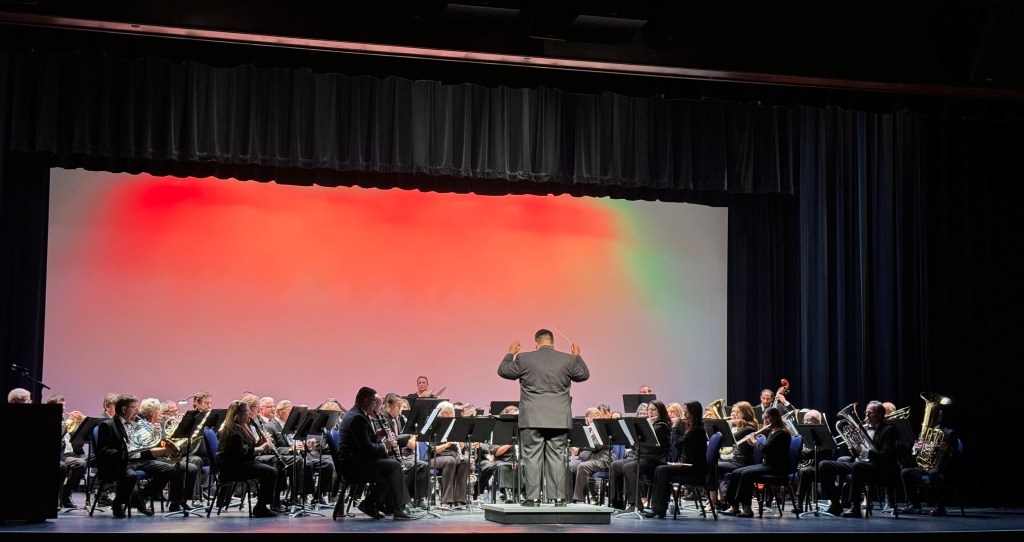
Once we had found ourselves seats in the center of the moderately crowded auditorium, we only had to wait for the show to begin. The sound of the instrumentalists warming up resonated throughout the hall. In about ten minutes, the lights dimmed, and the Master of Ceremonies (also a brass player for the band) stepped forward to welcome Mr. Colón onto the stage. After doing so, he proceeded to introduce their opening song- an epic and wild fanfare from the film Silverado.

A night at the Cinema courtesy of Meru S.

For their next piece, the band launched into a joyful and familiar selection of themes and songs from Pixar movies- Ratatouille, The Incredibles, Cars, and Toy Story. Following a cheerful and lighthearted finish to the collection, they went on to narrate the tale of The Lion King through the highlights of the cherished movie’s soundtrack.

The band began the medley with the jocund music of The Circle of Life, celebrating the marvels and beauty of nature. They expressed Simba’s excitement and anticipation at realizing his destiny as king in I Just Can’t Wait to be King, and navigated the malicious twists and turns of Be Prepared. Following Scar’s and the hyenas’ vengeful refrains, came the blithe and jazzy tunes of Hakuna Matata, which merged gracefully into the flowing, romantic melody of Can You Feel the Love Tonight. They concluded the first half of their concert with the triumphant King of Pride Rock

After a short intermission, the band transported us and our fellow audience to the interstellar travels of Peter Quill, Rocket Racoon, Gamora, Groot, Drax, and Mantis with the lively 80’s style music of The Guardians of the Galaxy. To continue the space travel theme were selections from Apollo 13. 

Next up were the melodious Celtic tunes from How to Train Your Dragon, and to bring to an end the concert, the band performed a march from “1941”. 

Following multiple rounds of applause and the return of the theater lights, we gathered our belongings and exited the theater. Once we were in the brightly lit lobby, we thanked the usher and stepped out into the biting air, the night’s music resounding in my mind.

Formed over thirty years ago, the San Ramon Symphonic Band is open to musicians ages fifteen and over. Past performances have been-

Song and Dance (March 2023)

Musical Playground (May 2023)

The Music of Star Wars (November 2023) 

The Spirit of Mexico (March 2024)

For more information on the San Ramon Symphonic Band and upcoming fall performances, please visit-

https://www.sanramon.ca.gov/our_city/departments_and_divisions/parks_community_services/arts_culture/community_performing_groups

Arts and Culture, Stories

The Wonders of Nature – A Collection of Haiku for Spring

by Meru S.

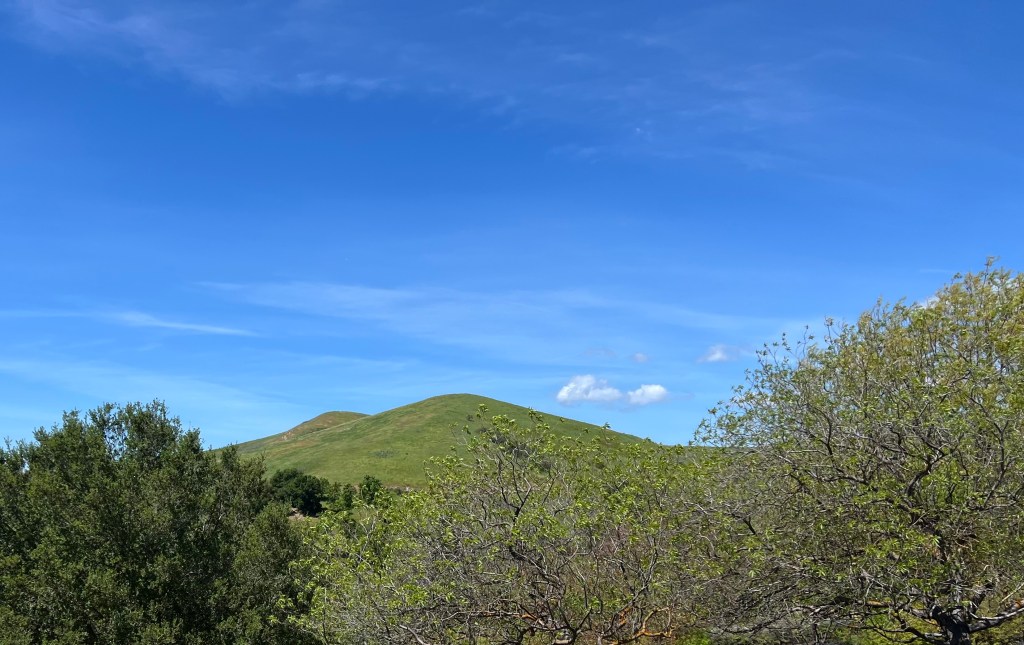
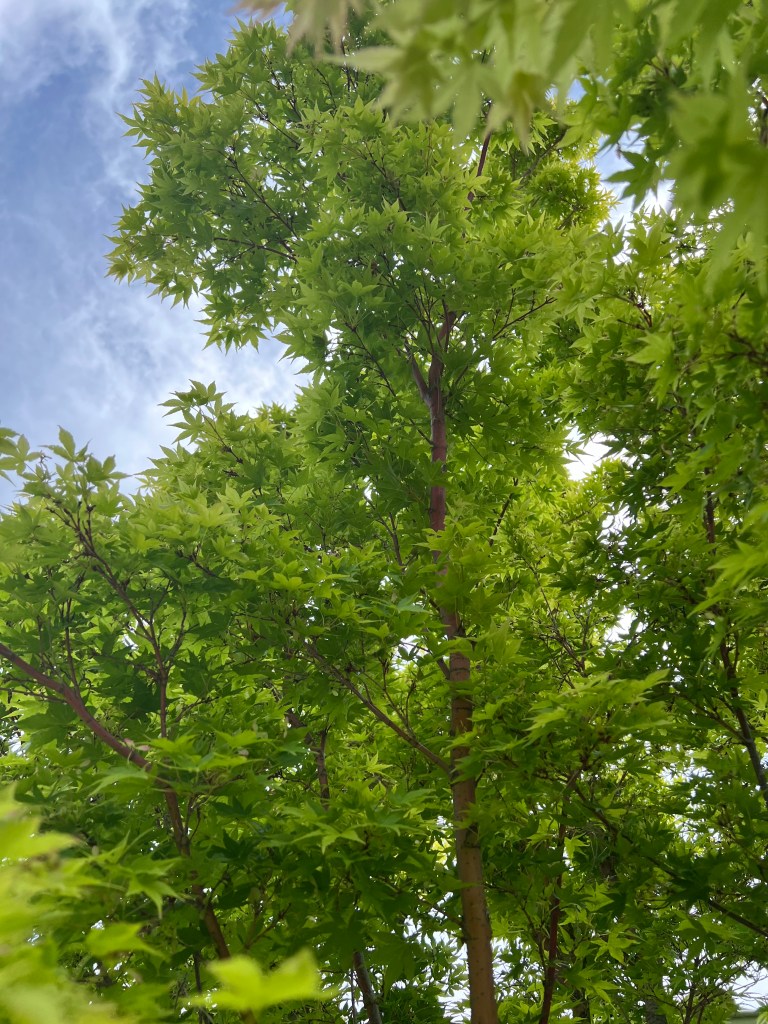
Green grass-covered hills,

Trees decorated with buds,

Gently welcome Spring

Photo Courtesy of Meru S.

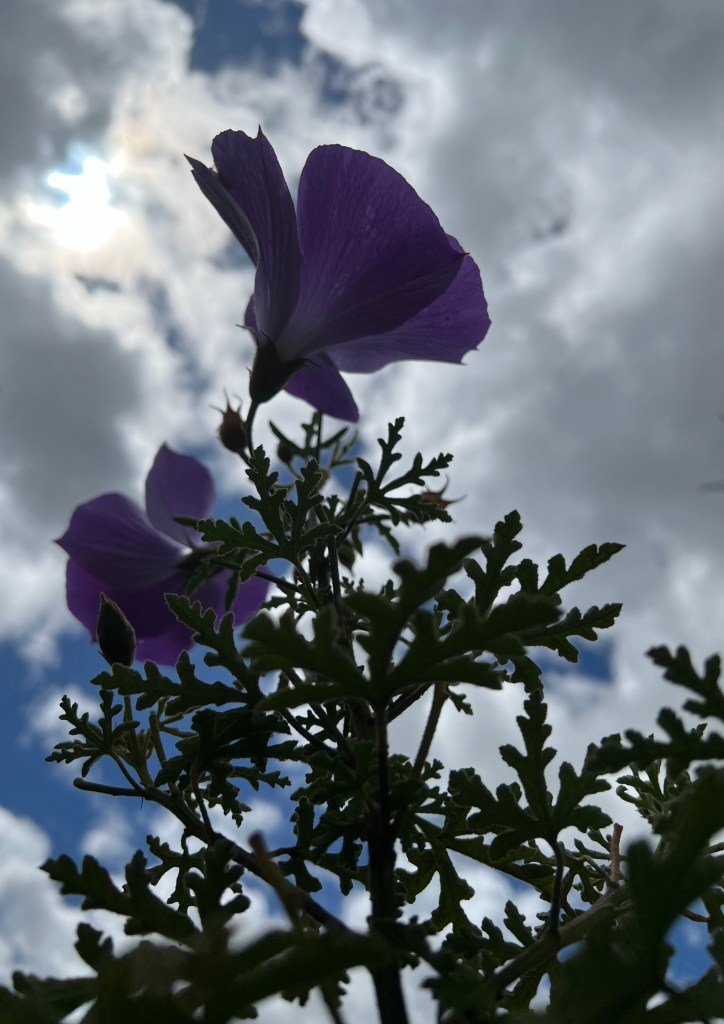
A light splattering

Of drops against the window

Are left unnoticed 

Photo Courtesy of Meru S.

Gliding flawlessly

Over valley and mountain,

The sound of soft wings

Photo Courtesy of Meru S.

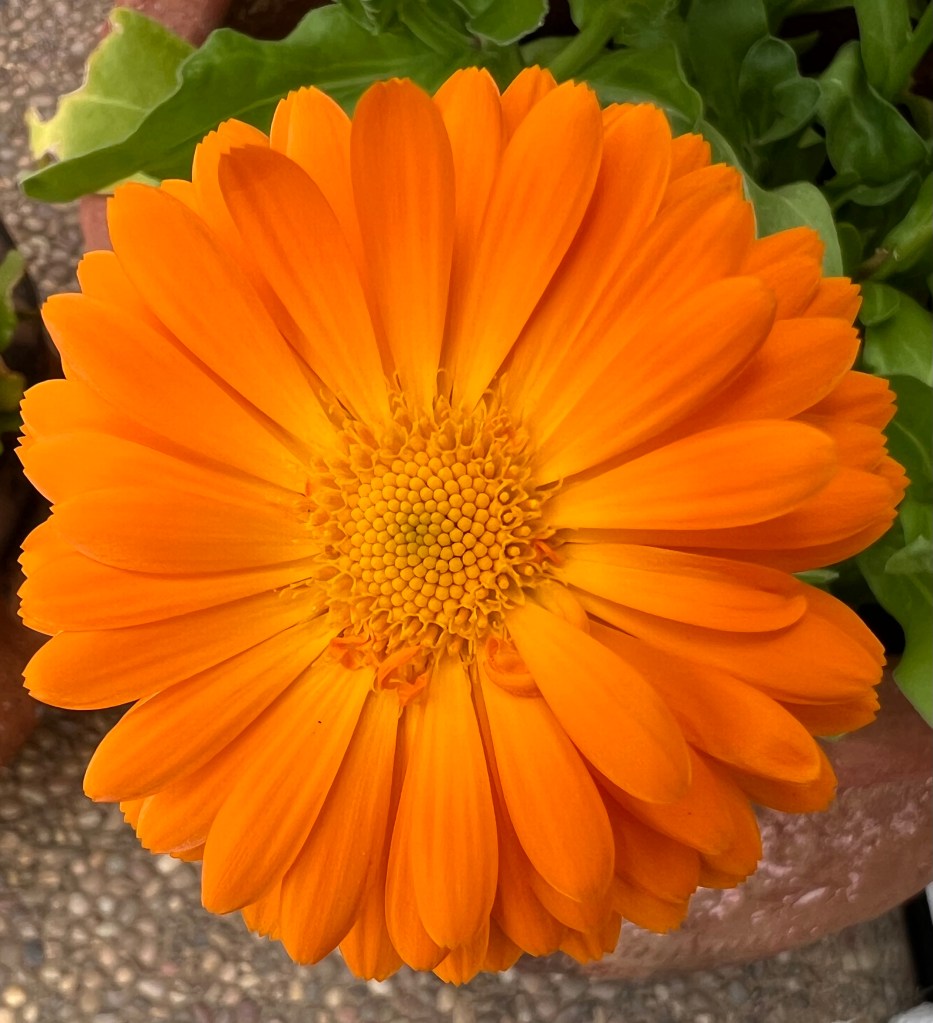
Joyfully sprouting,

Unaware of April’s blues

Rejoice in Spring’s tears

Photo Courtesy of Meru S.

Tortured by the wind

Lost amongst the high branches

Hangs a tattered kite

Photo Courtesy of Meru S.

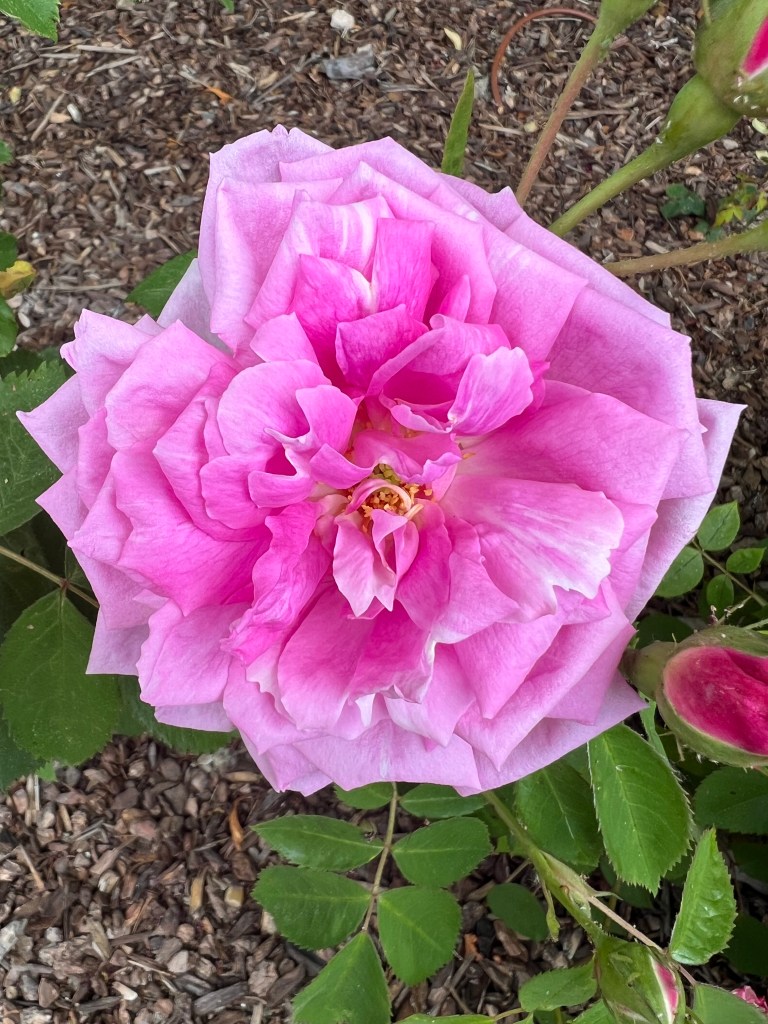
A gust of warm air

This morning floats serenely

  Through colors of May

Photo Courtesy of Meru S.

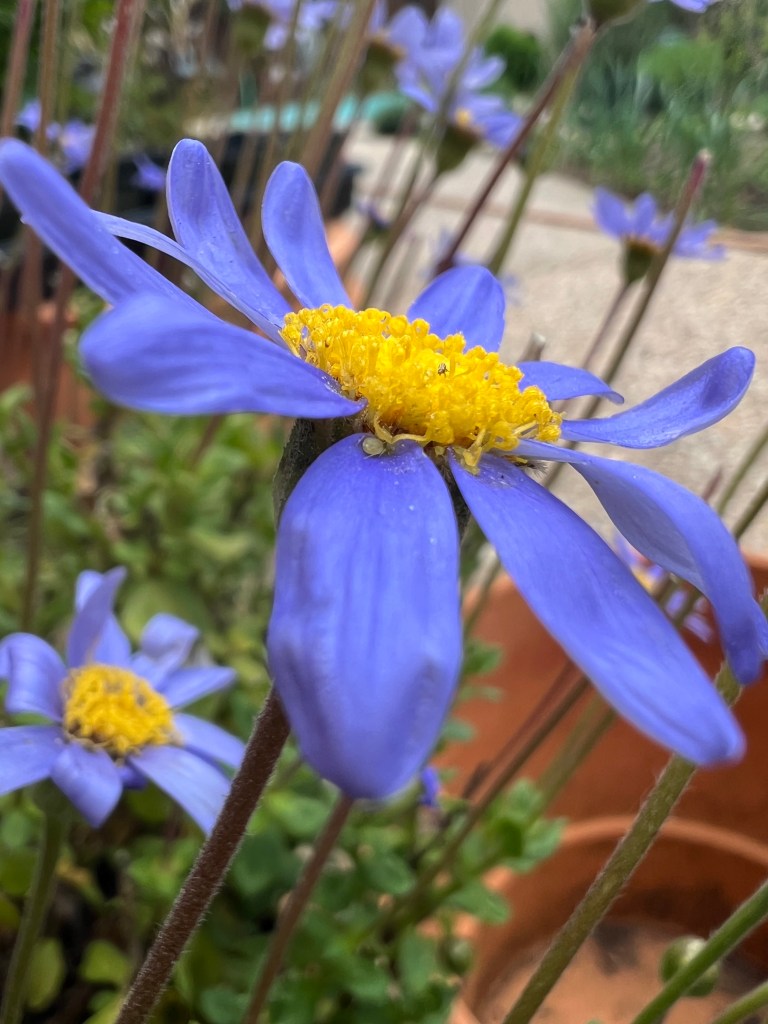
Sapphire skies; blossoms-

Crimson, golden, emerald-

Swaying in the breeze

Photo Courtesy: Meru S.

Arts and Culture, Science

Lise Meitner and her Scientific Discoveries

by Olive Pea

“Life need not be easy, provided only that it is not empty” stated Lise Meitner. Despite being at a disadvantage in many ways, Lise Meitner earned the impressive title “Mother of the Atomic Bomb”. She was a determined physicist who made many discoveries such as the radioactive element protactinium, and nuclear fission. She has paved the way for women in all science research fields.

Lise Meitner has a captivating life story. She was born the year 1878 to a well-off family in Vienna, Austria. Lise got a tutor for school in physics, and at the age of 27 in the year 1906 she earned a PHD in physics at the University of Vienna. Lise was the second woman to do so. In 1907 she moved to Germany to work with chemist Otto Hahn. Her laboratory was at the University of Berlin, and since she was a woman she received no pay for her work. Not to mention her workspace was a damp, converted carpenter’s shop! Since she could not get a paying job, she lived off of a small allowance from her parents.Together, Lise and Otto Hahn discovered many Beta emitters. In 1914, she helped wounded soldiers of WWI by taking their X-Rays. In the same year, Otto Hahn started working on developing chemical weaponry for Germany. 

When Lise concluded helping with the wounded soldiers and Otto finished working on Germany’s chemical weapons, they both went back to studying physics. They discovered the highly radioactive element, protactinium (element 91), while studying the mineral pitchblende in the years 1917-1918.

In the summer of 1938, Lise had to flee Nazi Germany because she was Jewish. Otto tried to get her a passport, but it was rejected. She packed only two suitcases, and had to leave her life’s work behind. Dirk Coster, a friend of Lise, assisted with her escape to Sweden. Lise could now only secretly communicate with Otto Hahn via letter, which slowed everything down in their research. During Christmas in 1938, Lise and her nephew, Otto Robert Frisch, discovered nuclear fission. Nephew Frisch later wrote, “We took a walk up and down in the snow, I on skis, and she on foot, and gradually, the idea took shape.” In 1942, Lise was invited to work on the Manhattan Project, and rejected. She said, “I will have nothing to do with a bomb!”. 

In 1939, Otto Hahn took all credit for the discovery of nuclear fission, even though he and his collaborator, chemist Fritz Strassmann, only provided the evidence for it. He stated, “In all our work, we absolutely never touched on Physics. Instead, we only did chemical separations, over and over again.” In 1944, he won the Nobel Prize and at the time, most of the credit for Lise’s discovery. He probably did this due to political danger in Germany, with Lise being a Jewish exile, and his illegal communication with her. This put a lot of strain in their friendship, but they still remained friends somehow. She did not speak against him publicly, but she would express her view to him in letters. Lise once wrote to Otto, “You all worked for Nazi Germany, and you did not even try passive resistance. And millions of innocent people were murdered, and there was no protest. You first betrayed your friends, then your men, and your children, in that you let them give their lives in a criminal war, and you betrayed Germany itself. Perhaps you will remember that while I was still in Germany, I often said to you, as long as only we have sleepless nights, and not you, things will not get better in Germany. But you had no sleepless nights. You did not want to see. It was too uncomfortable.” Lise settled in England and remained there till the end of her days.

Lise Meitner’s hard work, determination, and discoveries have greatly impacted science today. Her fascinating, even empowering against-the-odds story has inspired and paved the way for many scientists, especially women, to this day. In fact, element 109, first discovered in Germany the year 1982, was named Meitnerium in her honor.

Arts and Culture, Student Life

Crochet 2: Simple Stitches

by Lydia I. Matinov

Welcome to the second part of my Crochet series! Previously, I wrote about starting out, and what is needed to begin. I also wrote about how to crochet a braid (chain). This time, I am going to teach you how to make some simple stitches, and practice them.

Before we begin, there is a VERY IMPORTANT thing I need to point out. There should always be at least one loop on your hook. You cannot do a stitch without it. If you don’t have a loop on your hook, it probably fell off.

First off, we have the most common stitch: the single crochet. Abbreviations are used very often in crochet, so I will refer to this stitch as “sc”. If you need to remember what an abbreviation means, there is a chart at the end of the article. Once you learn sc, then you will be able to learn all the other stitches. 

Now, remember the braid we made in the previous article? Well, we need to make another one that’s 10 stitches long. If you need help, find “Crochet: The Beginning” in the Arts and Culture tab, or search it on the home page. Let’s get started!

1.

Insert the hook into the second to last stitch in the braid. (The one right next to your hook)

2.

Yarn over, and pull through the stitch. Leave the loop.

3.

Yarn over, and pull through both loops.

Continue these steps into the next stitch, and then again in the next, and so on. This is IMPORTANT: If you are NOT on the first row, or are crocheting in a circle, insert the hook into 2 loops in the stitch. They will be right next to each other:

Photo courtesy of the Woobles

Every time you reach the end of a row, do a chain stitch (1 braid stitch), turn, and start a new row. Eventually, you’ll have a perfect square that can be used as a coaster. This square is a very nice way to practice stitches.

Photo courtesy of Spruce crafts

Next, let’s learn a half double crochet (hdc). This one is pretty easy once you get the hang of it. 

Half Double Crochet (hdc):

1.

Yarn over.

2.

Insert the tip of your hook into the next stitch.

3.

Yarn over, and pull through the stitch.

4.

Now there should be three loops on your stitch. Yarn over again, and pull through all three.

Great! This stitch is used to make your round taller. Practice it a few times, and let’s learn a double crochet (dc).

Double Crochet (dc):

1.

Yarn over. (2 loops on hook)

2. 

Insert the tip of your hook into the next stitch. (3 loops on hook)

3.

Yarn over and pull through the stitch. (3 loops on hook)

4.

Yarn over and pull through 2 loops. Leave the last one. (2 loops on hook)

5.

Yarn over and pull through both of the loops on your hook. (1 loop)

Fantastic work! The next stitch we will learn has 2 names: Treble Crochet, and Triple Crochet. The abbreviation for both is “trc”, so that is how I will refer to it.

Triple/Treble Crochet (trc):

1.

Yarn over twice.

2.

Insert tip of hook into next stitch.

3.

Yarn over, and pull through the stitch. (4 loops)

4.

Yarn over, and pull through 2 loops. (3 loops)

5.

Yarn over, and pull through 2 loops. (2 loops)

6.

Yarn over, and pull through both loops on the hook.

Yay! This stitch is very easy to master after learning a dc. 

Next time, we will learn the basics of amigurumi, which is crocheting stuffed animals. You can purchase stuffing at Joanns, Michaels, Amazon, or any craft store. If you want, you can also stuff your projects with yarn scraps. Anyways, before we begin stuffies, there are 2 very important stitches to learn: increase (inc) and decrease (dec).

To increase, you simply make 2 sc in the same stitch. Decreases are a little bit harder.

Decrease:

1.

Insert hook into the front loop only(flo) of the next stitch.

2.

Insert hook into front loop only(flo) of the stitch after that.

3.

Yarn over, and pull through both of the front loops.

4.

Yarn over, and pull through both of the loops on your hook.

Make sure to practice all of these stitches, and you will become the crocheting master! Can I have an autograph before you become famous?

Arts and Culture

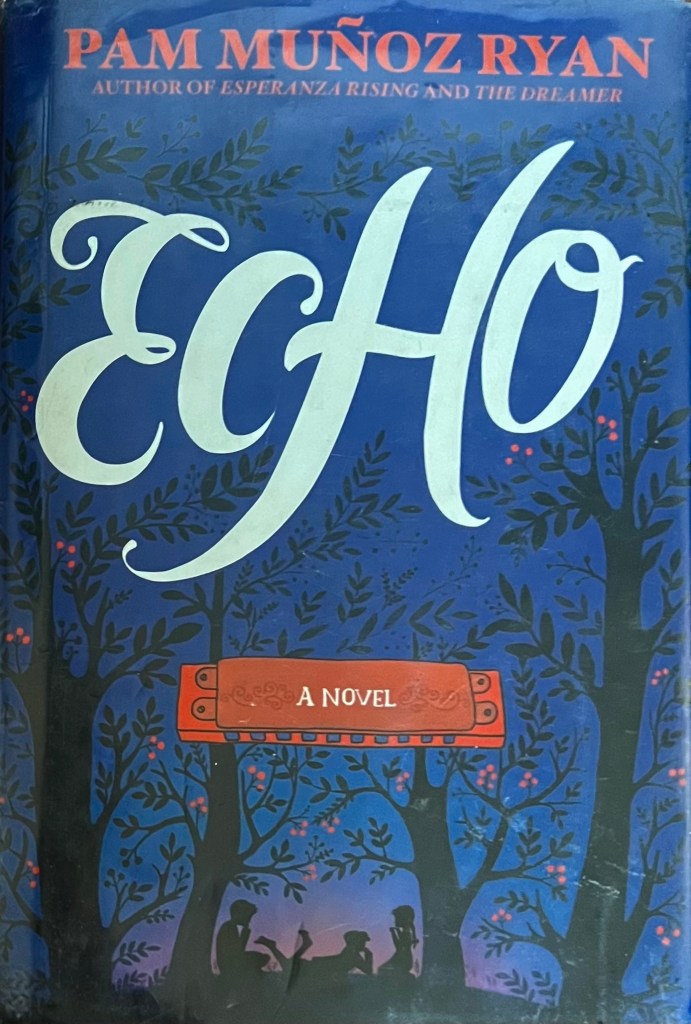
Book Recommendation: Echo by Pam Muñoz Ryan

by Meru S.

Destinies merge in Pam Muñoz Ryan’s lyrically written novel, Echo. And it all begins with a harmonica. 

One fateful day, while playing a game of hide-and-seek with his friends, a young boy by the name of Otto loses his way in a forest where he is hiding. With him, he has only a harmonica, and a book that he discovers is strangely unfinished. Wandering astray amongst the trees, Otto injures himself and falls unconscious. When he wakes, he encounters three young women whom he recognizes as characters from his book. 

A cruel witch had enchanted these sisters, Ains, Zwei, and Drei away to a world where time did not pass even though the sun would rise and set. When the witch had cast the spell, she had spitefully called the sisters her ‘little piccolos’ owing to their beautiful voices. Therefore, the only way they could escape was if their spirits were transported from that world by a woodwind instrument. In her spell, she proclaimed that they must also save a soul from death to be completely free. So Ains, Zwei, and Drei, each in turn, play a melody on Otto’s harmonica, their spirits entering into its depth, and bid him to pass it on to another when the time was right.

photo courtesy of Meru S.

Decades later, Friedrich, a German boy living with his father in the town of Trossingen, discovers the harmonica in a machine junkyard. Its smooth sound captivates and comforts him during the early years of World War II. When he and his uncle hatch a plan to rescue Friedrich’s father from the Nazi soldiers, the harmonica gives him the courage to withstand hardship and brave the dangers. 

It is the summer of the year 1935. Eleven-year-old Mike and his younger brother Frankie have been living in an orphanage in Pennsylvania since their loving grandmother grew too old to care for them any longer. Though they both want to stay together, they know that it may come to pass that they may be adopted into separate families. Aware that his brother would be upset to leave him, Mike is determined to prevent this from happening. One day, a kindly friend buys two harmonicas for the siblings to replace the ones confiscated at their arrival at the orphanage. As Mike breathes into his instrument, all his worries melt away. 

Ivy is a young girl living in Southern California. She eagerly awaits the day when her class will perform together on the radio with harmonicas. But then her father is offered the job of a farm supervisor in Orange County, hours away from their home in La Colonia. Ivy’s mother regretfully informs her that they must move the very next day. Though she is utterly dismayed to miss the performance and leave her close friend, Araceli, Ivy cannot but submit to the opportunity. As she and her parents adjust to their new home, the cheerful sound that her harmonica produces brings back happy memories of past years before her brother enlisted in the military and her family was whole.

Author Pam Muñoz Ryan has mixed the perfect amount of sadness, joy, and love into Echo. Readers will be engrossed by this flowing tale of music, fantasy, and even slight touches of mystery combined.

For more information, please visit-

Arts and Culture

Facts about Asia!

by Aleena Haimor

Asia is one of the world’s seven continents, and it’s also the largest. It has an area of 44,579,000 km², and it would take ages to see it all! However, Asia shares the landmass of Eurasia with Europe, as well as Afro-Asia with both Europe and Africa. Nevertheless, Asia has a population of about 4,694,576,167 people. Among them all, the most common religion is Islam, with about 1.3 billion followers, as of 2022. The second most common religion is Hinduism.

There are many interesting areas in Asia, and some invented really cool things. For example, Japan invented sushi and the Middle East invented hummus. Each area/country has made its own contribution to the world, in one way or another. 

Lots of people enjoy touring new places. Asia is an awesome place to tour because of all the sights. Road trips are perfect, and you can travel all the way from the Middle East to the Philippines, though you’ll have to take a plane to get to the latter! There are many things to do when touring Asia. Some cool tourist sites are:

The Great Wall (China):

The Great Wall was built around 220 BC. It was built to prevent attacks from foreigners.

The Taj Mahal (India):

The Taj Mahal was designed by Indian Emperor, Shah Jahan, in honor of his dead wife. It was constructed by Ustaz Ahmad Lahori.

Mount Fuji (Japan):

Mount Fuji is a stratovolcano (composite cone volcano) in Japan. It is 12,388 ft tall at its highest peak.

Petra (Jordan):

Petra is a structure carved out of the Jordanian rocks. It is truly a unique experience to see it.

These are some but not all of the amazing things Asia has to offer.

Well, I hope you enjoyed learning about Asia as much as I loved writing about it. Who knows? Maybe you’ll tour it one day!

Arts and Culture

Book Recommendation: Nura and the Immortal Palace

by Layal Hilal

Nura and the Immortal Palace is a capturing and stunning book by M.T. Khan. It was published in 2022 and is a detailed well-written novel about hope, danger, and greed.

It follows a twelve-year-old girl named Nura who has to mine mica, which are minerals that can be dangerous and even fatal. Mica is used for makeup. Nura works in underground caves with a variety of other kids, some as young as five years old. The caves are dangerous and Nura doesn’t want to work all day, just like the others, but she has three younger siblings and her mom all struggling at home, and mica mining is the only way to support them at least a little. 

When Nura first started working in the mines, she didn’t have any friends but gradually became close to a boy named Faisal. Nura and Faisal, her only friend, both work in the caves to support their families, but they couldn’t be more different. Faisal tries to mine as many little pieces of mica as possible, hoping it will amount to something bigger. Nura, on the other hand, always gets the biggest pieces of mica, the ones that will get the most money for her family. 

photo by Barns and Noble

One day, Nura learns that her mom wants to put her in school and stop her from mining. But Nura knows that if she stops working in the caves, she won’t be able to support her family and they will crumble. So she works harder than ever, trying to find the famed legend, the Demon’s Tongue. It’s rumored to be worth more than an emperor’s riches and kingdom. If she finds it, it won’t matter if she stops mining mica. But Nura digs too deep. The tunnels collapse, and Faisal, Nura, and five other kids fall into a world of purple skies, pink seas, and jinn. Jinn are tricksters and they will go to any lengths to imprison humans like Nura and her friends. 

It doesn’t help that they land in the Sijj Palace, the number one hotel for jinn and where humans are slaves. But in this world, Nura finds more than evil Jinn. She discovers what loyalty is, what danger means, and how greed is much more than wanting something. It’s wanting things until you don’t remember why you wanted it in the first place. As she starts to realize the true meaning of friendship and hope, she also discovers a way out. 

Nura and the Immortal Palace will captivate readers ten and up and will send them spinning into a whirlwind world of jinn and humans and what happens when two worlds collide. M.T. Khan truly captures the beauty of trust and the danger of greed. This novel will engrave itself in your heart and mind for the rest of eternity.

For information about the author, please visit:

https://www.mtkhan.com/about

For information on the book, please visit:

https://www.mtkhan.com/nura

Thank you!

Arts and Culture

Book Recommendation: A Rover’s Story

by Meru S.

A Rover’s Story is a ruminative and hopeful tale by author Jasmine Warga. Published in 2022, this simple but well-written book is narrated by a Mars rover known as Resilience.

Though he is a machine, Resilience (Res for short) gradually begins to understand and even feel human emotions as he observes the scientists at the NASA lab where he is developed. He forms an unspoken but close connection with two scientists, Rania and Xander.

Meanwhile, an eleven-year-old girl, Sophia, who is the daughter of Rania, is incredibly hopeful about Res’s expedition to Mars. She writes letters to him, describing her everyday life and expressing her emotions about his future, whether it is worry, fear, or excitement. Though Res does not see her letters, she continues to write to him occasionally over the more than two-decade-long timeline of the story.

Photo by Meru S.

Res’s mission is to find Courage, a rover previously sent to Mars by NASA. Caught in a dust storm, Courage had lost all connection with Earth, and Res must attempt to bring him back online. 

Once on Mars, accompanied by his talkative and friendly drone, Fly, and guided by a bossy but wise satellite named Guardian, Res explores the uneven surface. As he searches for Courage, he collects samples of the dirt and sand and takes photos of the rocky landscape. A single thought fuels his determination; the cost of bringing him back to earth is extremely expensive. Res is resolved to discover something—anything that will be worthy enough to ensure his return.

However, Mars’s rough terrain can be dangerous even for a rover. Res has to be exceedingly cautious and avoid deep holes and dust storms. But Res is brave—one of the many ‘human’ words he learned from listening to the scientists at the lab—and there is little that he fears. With the constant companionship of Fly and Guardian, the coded instructions from NASA, and the intuition he unexpectedly has, he does not give up easily.

In this quiet and observant narrative, Warga beautifully captures the minds and thoughts of machines, giving each character, whether robot or human, a perfectly fitting personality. Readers ages eleven and up are sure to forever hold this not-too-long, not-too-short book in their hearts.

For more information, please visit:

https://jasminewarga.com

Arts and Culture, News, Student Life

Poetry Challenge! – February

by Olive Pea

POETRY CHALLENGE!

The Lighthouse hopes everyone had a wonderful winter break! I don’t know about you, but I’m still getting back into the groove of things. New year, new articles, school (for those who took winter break), and… NEW POETRY!! Surprise! It’s poetry challenge time, people! 

In this February poetry challenge, you can create any type of poetry you want! It could be about nature, winter, school, a person, historical event, or an animal, just to give you a few ideas. 

First off, YOUR POETRY MUST COME OUT OF YOUR OWN CREATIVE MIND. No quoting Edger Allen Poe! Second off, NO EXPLICIT LANGUAGE OR CONTROVERSIAL TOPICS. We will not accept any foul poetry submissions. Third off, WE ACCEPT ALL TYPES OF POETRY! We don’t hold grudges against haikus or anything. Please submit your fantastic poems by the 24th of February. We will be waiting!

HOW TO SUBMIT:

Once you finish your poem, you can submit it by emailing us at: thelighthousetve@gmail.com 

DETAILS:

Your poems, once submitted, will be included in the next poetry article. If you submit your poem and do not want us to post it in the article, please let us know before the 26th of February.

We hope you all have fun writing your poems, and can’t wait to see what you have created!

Have Fun Haiku!

We can’t wait to see

Your wonderful poetry

We hope you have fun!

-Sincerely, The Lighthouse