Home, Student Life

How Students are Celebrating Thanksgiving During COVID-19

by Emma Ruggiero

Thanksgiving is almost here, and people are getting ready to celebrate this cozy holiday with their families and friends and, of course, their favorite food. Everyone has their unique preferences regarding Thanksgiving dishes, and some families have special traditions that they look forward to each year. COVID-19 has interrupted many social activities this year, and Thanksgiving is no exception. Despite the current circumstances, there are many wonderful things to be grateful for this year.

I interviewed four different students about how they celebrate this holiday, what they are most thankful for, and whether or not the COVID-19 pandemic has uprooted their usual Thanksgiving plans. For reasons of privacy, we will withhold the last names of the students interviewed.

Question: Who will you be celebrating Thanksgiving with this year?

Miles: I will be celebrating Thanksgiving with my family.

Kiera: I’m going to celebrate Thanksgiving with my aunt, uncle, grandparents, family friend, my parents, brother, two cats and five dogs. 

Gaia: I believe I will be celebrating Thanksgiving with my mother. 

Ava: I’ll be celebrating Thanksgiving with my immediate family this year. 

Question: Does your family have any special traditions?

Miles: No.

Kiera: We like to spend time together for the week of Thanksgiving and go on adventures (like hikes and escape rooms) and play games, (like Jenga and Catchphrase) as a family. 

Gaia: A tradition I have had for a couple of years has been spending Thanksgiving with some family friends. We play games and other pleasant things, and sometimes my grandmother brings me and my mom Salvadorian Tamales. 

Ava: My family always has the traditional Thanksgiving meal of turkey, stuffing, mashed potatoes, gravy, cranberry sauce, etc., and we all go around the table talking about what we’re thankful for during the meal. 

Question: Has the COVID-19 pandemic affected your usual Thanksgiving plans in any way?

Miles: The pandemic will affect what family members can attend our dinner, and as we get closer to Thanksgiving more limitations may arise. 

Kiera: The pandemic affected our celebrations for sure, unfortunately. Our original plans included spending a week with lots of our extended family, but because of the pandemic, we had to modify our gathering. 

Gaia: Yes. 

Ava: The COVID-19 pandemic has not affected our usual Thanksgivings [sic] plans in a significant way. 

Question: What is your favorite Thanksgiving dish?

Miles: I would most definitely have to go with mashed potatoes. 

Kiera: Pecan pie and sweet potatoes. Turkey and cranberry sauce are definitely a close second! 

Gaia: My favorite dish would probably be Turkey with potatoes and the Salvadorian tamales my family eats. 

Ava: My favorite Thanksgiving dish is cranberry sauce – homemade is the best! 

Question: What are you thankful for?

Miles: I believe I am most thankful for the fact that none of my family members have been harmed by Covid-19. 

Kiera: I am thankful for the opportunities I have been given this year particularly, to spend time with family and explore my passions. 

Gaia: I am thankful for the life I have been given, and the opportunities that have presented themselves during confusing times. 

Ava: I’m thankful for the many opportunities I’ve been given to pursue my passions, and for being blessed with such an incredible family that supports me in all my ventures. 

Thanksgiving is a holiday for spending quality time with your family, your friends, and other important people in your life. Students look forward to the unique ways they enjoy Thanksgiving, from celebrating the traditional way, taking hikes and playing family games, or enjoying special foods. This year, for some students, COVID-19 has mildly impacted their Thanksgiving plans, but that doesn’t mean the holiday will be less enjoyable. When it comes to Thanksgiving foods, some common favorites include turkey, cranberry sauce, and potatoes. There is a lot to be thankful for, and the students express their gratitude for their families and the opportunities they have been gifted with this year.
Student Life

2020 – Virtual Games to Enjoy During COVID-19

By Ava Salado

There is no hiding that 2020 has not been the best overall. The COVID-19 pandemic has been, for most students, the most significant and most life-altering thing that has ever happened to them. It has been challenging, but we need to get through it safely. Unfortunately, the TVE community has not been able to do its regular events, such as Park Days, Seminars, Science Fairs, classes, and dances. Although these things can’t take place at the current moment, there are activities you can do to pass this time, and our job as writers is to make this time just a little more enjoyable.

TVE will hopefully get back to regular scheduling in the future, with the Teen Formal still scheduled for Sat, May 8th, 2021, safety guidelines permitting. The beloved Harvest dance may be taking place in late October 2021, but we are still waiting for further notice for both of these. In the meantime, you and your family can do lots of things, such as taking an exploration through your bookcase to uncover your new favorite story. Maybe an adventure on your couch to discover a brand new movie; or a journey past your favorite music app to find a song you haven’t heard before. Maybe take an online class to learn more about something you love.

 Other activities you could enjoy with friends and family are virtual games played over zoom. These are fun, easy games that take minimal prep. Very simple to understand games are quite fun with younger children. Consider having a virtual game championship by playing all the games, and in the end, whoever has the most points total wins.

Learn more about your friends on Zoom – This is a fun virtual game you can play with your friends on Zoom. You select one person to be the reader, and all others write in the Zoom chat three things they like and three things they dislike. The reader then reads each person’s likes and dislikes aloud, without saying their name, and the others have to guess who it is. 

Memory game over Zoom – Choose one person to be the leader. This person sets out some random items on a table in front of their computer camera. If you do not have a computer camera that points down, try to use a phone camera and point it towards the table. In the first round, the rest of the players have a 7 second period to write down and remember all of the items before they turn the camera off. After that, the leader turns their camera back on and announces all the items. If you get them right, you get a point. In the second round, the leader selects a new group of items for the table. The players get 7 seconds without writing anything down. You can talk amongst the other players to try and remember better. If you remember them correctly, you get a point. The only difference in round three is that the players must remember the new set of items with their microphones off and attempt to remember the items independently. Afterward, you add up all of your points, whoever has the most points, wins! 

Guess that Picture on Zoom – One person selects several photos. First, they share their screen, very zoomed in on the picture. Then, they slowly zoom out. The players write what they think the image is in a private chat with the person who selected the photos. If they guess right, they get a point. Then the process is repeated with multiple different pictures, and whoever has the most points wins!

Virtual Movie night on Zoom – It’s so much fun to watch your favorite movies with your friends. You can achieve this with Zoom or any video chat website. Collaborate with your friends, so you start your favorite movie or show at the same time.

While 2020 has brought up some unexpected challenges, we are committed to making it the best we can. Not seeing friends and family has been one of the hardest parts for most students. These virtual games provide a simple solution, an easy way to connect safely. Hopefully, we will be able to interact in-person again in the future, but for now, we can make do with fun activities like these.

Home, News

How has this Election Affected Students?

by Ava Salado

Given the current times, does this 2020 election affect non-voting age students? More specifically, how has this election affected these youth? Could someone under 18 years old even really care about these things, let alone be affected by it? I interviewed a 16-year-old, named Zephyr Depew, to see what she thinks in hopes of answering these questions.

Depew describes the election as being nerve-racking but reports no unhappiness within her family. One of the biggest questions is if students really care about the election. When asked this, she replied with “I do care but sadly I can’t vote because I’m underage so I care about it a decent amount but I can’t care about it as much as some adults.” When I asked her if her opinion has been swayed by her family members opinion, Depew replied with “A little bit, because of me being raised with people that have this opinion, but I feel I would end up voting for the Democratic party even if I was raised in a Republican household.” Most have seen every Prop XYZ commercial imaginable so it is understandable when Depew answered the question if any commercial or ads have affected her opinion, Depew answered by talking about candidates ad videos. She said “It gives me a bit of a chuckle that it looks like a 12-year-old Fortnite thumbnail, but it hasn’t swayed me to a different side.”

The internet is a place with lots of information, especially every 4 years when the election holiday season comes around. No, we do not get gifted with holiday cheer, but instead with a lot of debates and opinions. Most people get all of their political information from the internet. We wanted to see if the students that are interested in the election get most of their information and opinion from the internet. Depew stated “not really because the part of the internet that I’m on are people that share my opinion, so I haven’t seen any videos that have swapped my opinion around.” If you did not have the internet and just word of mouth and the news, do you think that your political view would be different? Depew’s response was “Maybe, but also with the fact of where I live in California, so close to San Francisco, it’s most likely that I would still have the same opinions of the more democratic leaning side even without the internet.” Now we get to the last question which was, did the prior election leave you with any feelings or opinions different than this year’s election? Depew answers with “No, my opinion is the same, the prior election was not as stressful because I was younger but I still like…so I wasn’t thinking about it as much but I’m about in the same spot that I was last time except a little more pessimistic about the world.”

Arts and Culture

Watercolor Painting: History and Techniques

by Lucie Ruggiero

If you hear a voice within you say you cannot paint, then by all means paint and that voice will be silenced.”

Vincent van Gogh

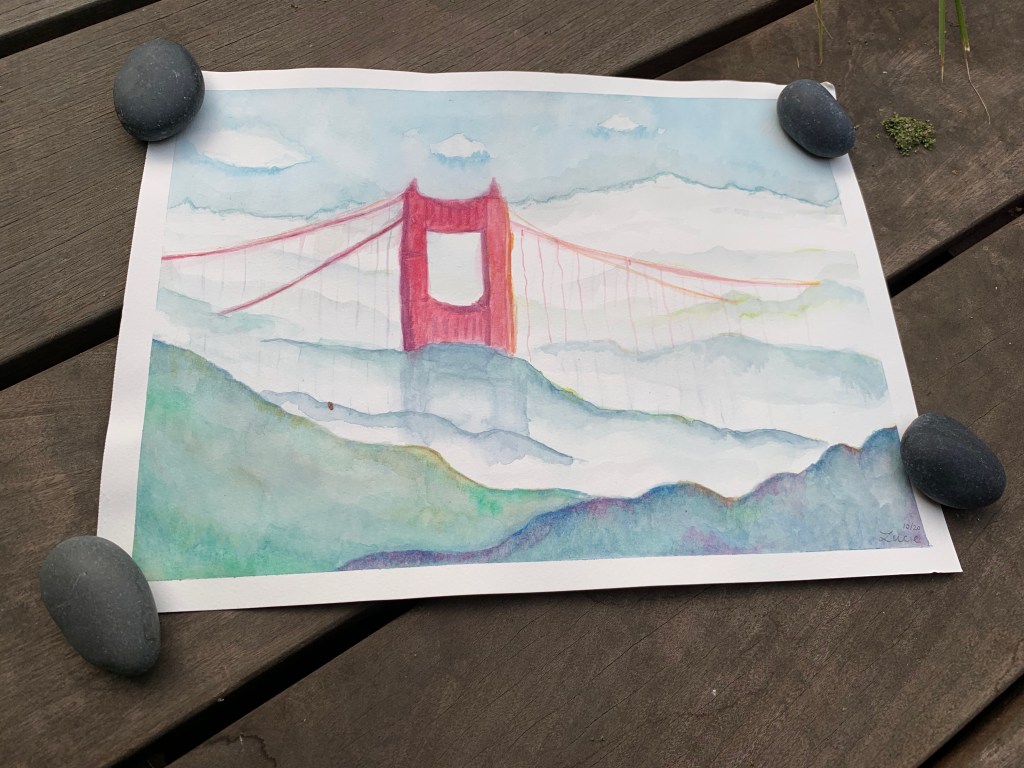
Any person can become a watercolor artist if they wish. The only requirements are a joy in color and expressing with it, and the patience to let the paint dry.  

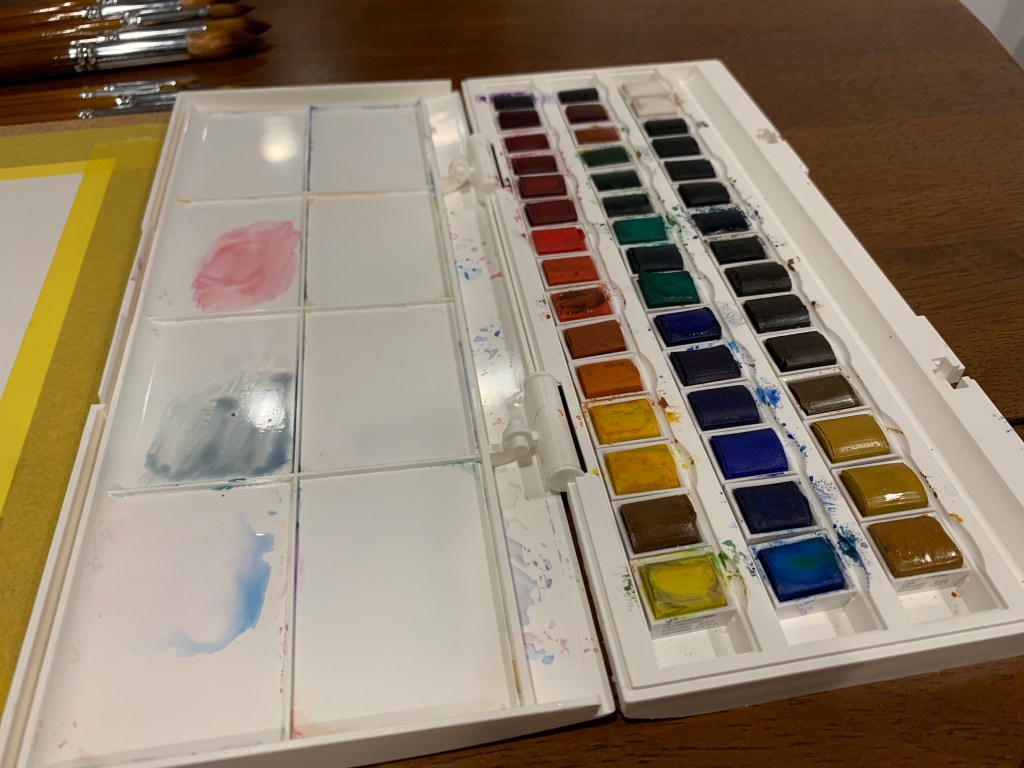
Watercolor pans (photo: Lucie Ruggiero)

Watercolor paints commonly come in pans or tubes, and both work well for beginners. It may simply come down to what the artist has on hand. Watercolor pans are common today in kids’ watercolors. A predecessor of these pans was invented in 1780 by William Reeves, who created cakes of solid watercolor pigment. Previously, watercolor artists made their own paints or bought it in liquid form. In 1846, Winsor and Newton, an English art supply company, brought tubed watercolor paint into the mix, following the design of tubed oil paint.

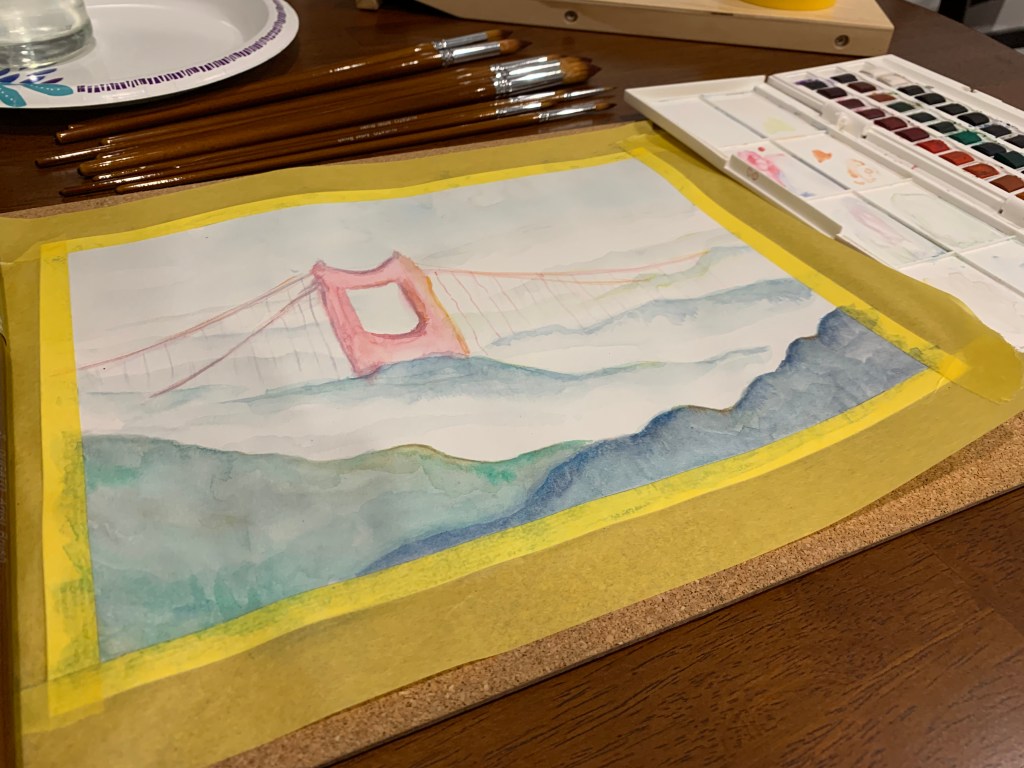
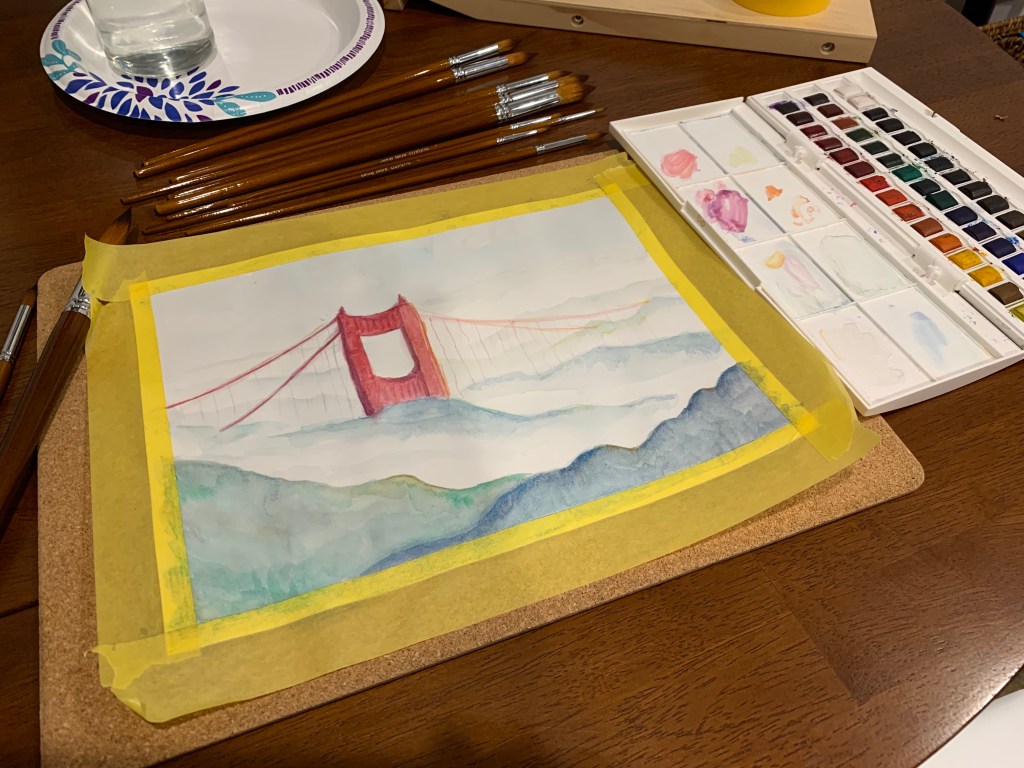
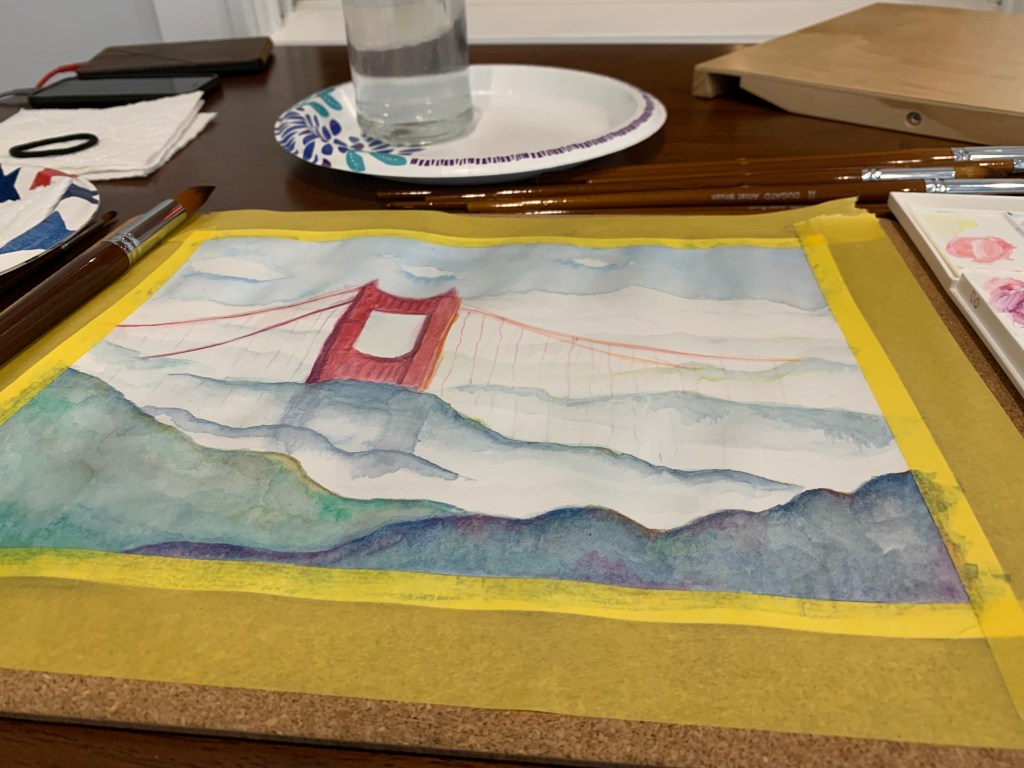
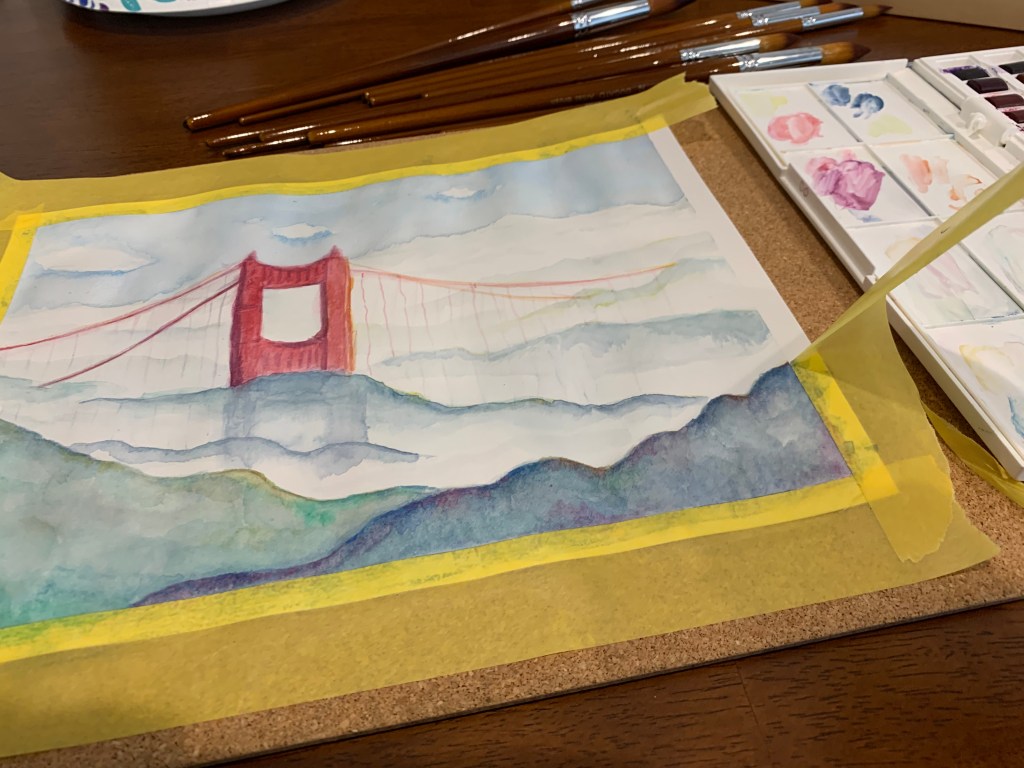
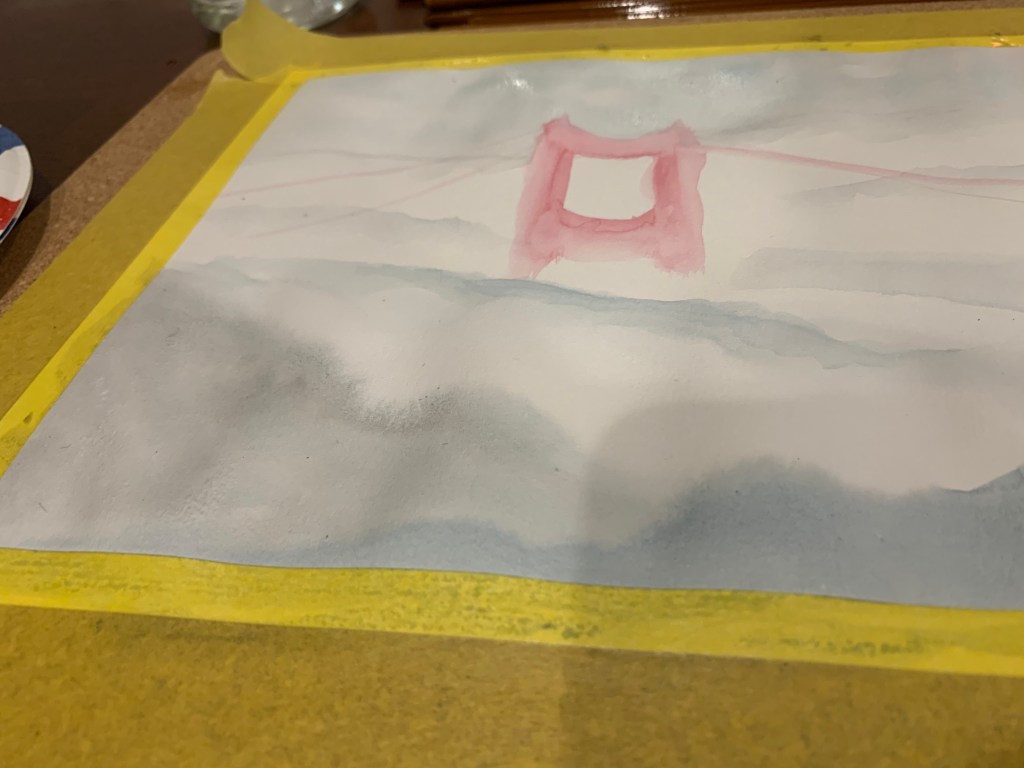
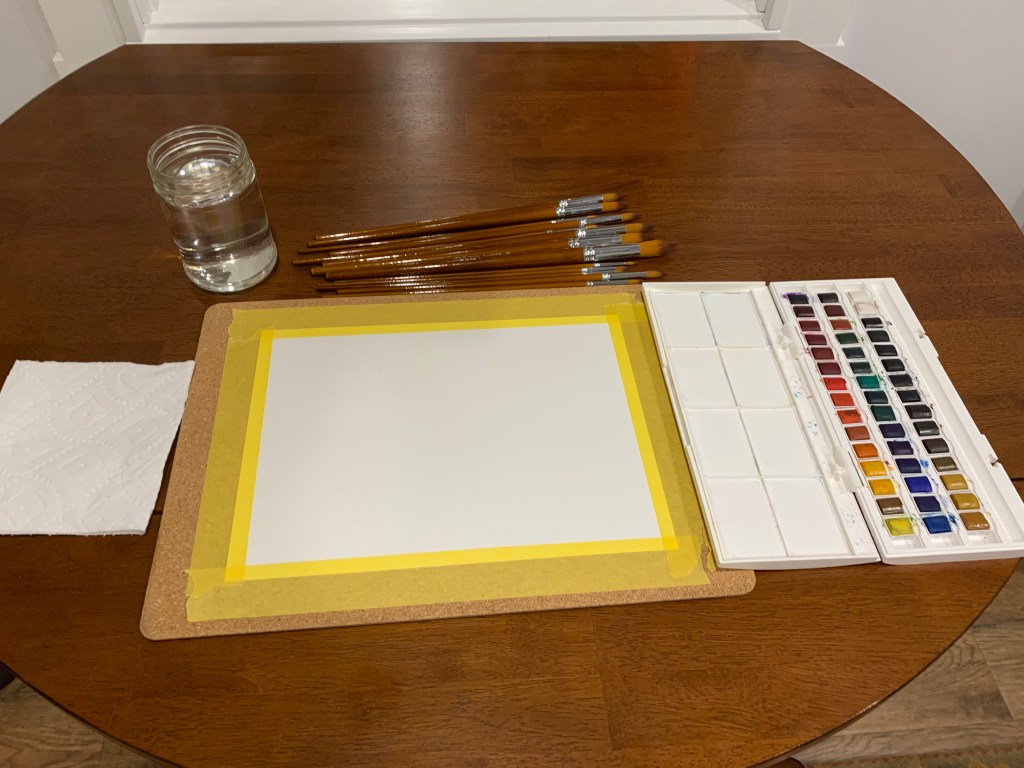
Watercolors are mostly done on paper. Watercolor paper is thick and sturdy with a rough surface to hold the paint. When wet, paper stretches. Taping down the paper helps keep it from warping when dry. Generally, the thicker the paper, the less it warps. The watercolor paper needs to be thick to hold up to repeated wetting and drying when building up layers.

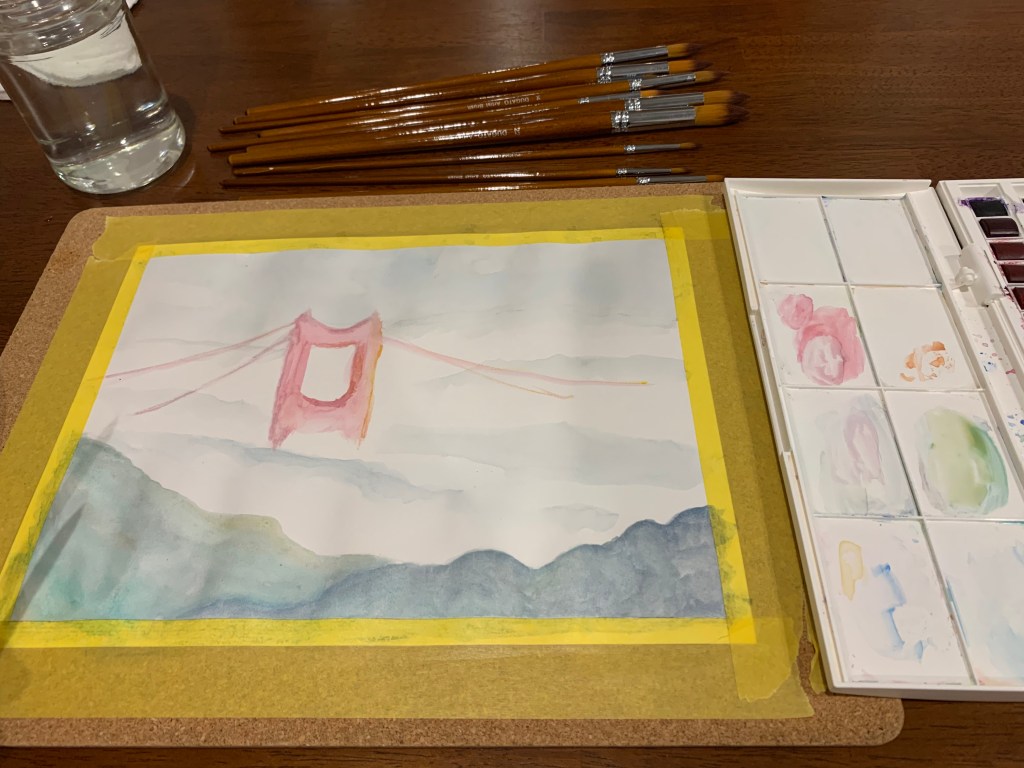
Layering is essential in watercolor painting. Each layer must dry before the next can be added. For every new layer, less paint is added, until only the darkest areas are being developed.

The first layer of a watercolor is left almost colorless. The artist then paints around them, building up the color in darker areas. This takes time and thought if the artist wishes for a specific outcome. Because white cannot be added once the paint has dried, for artists who are used to other methods, watercolor can feel counterintuitive.

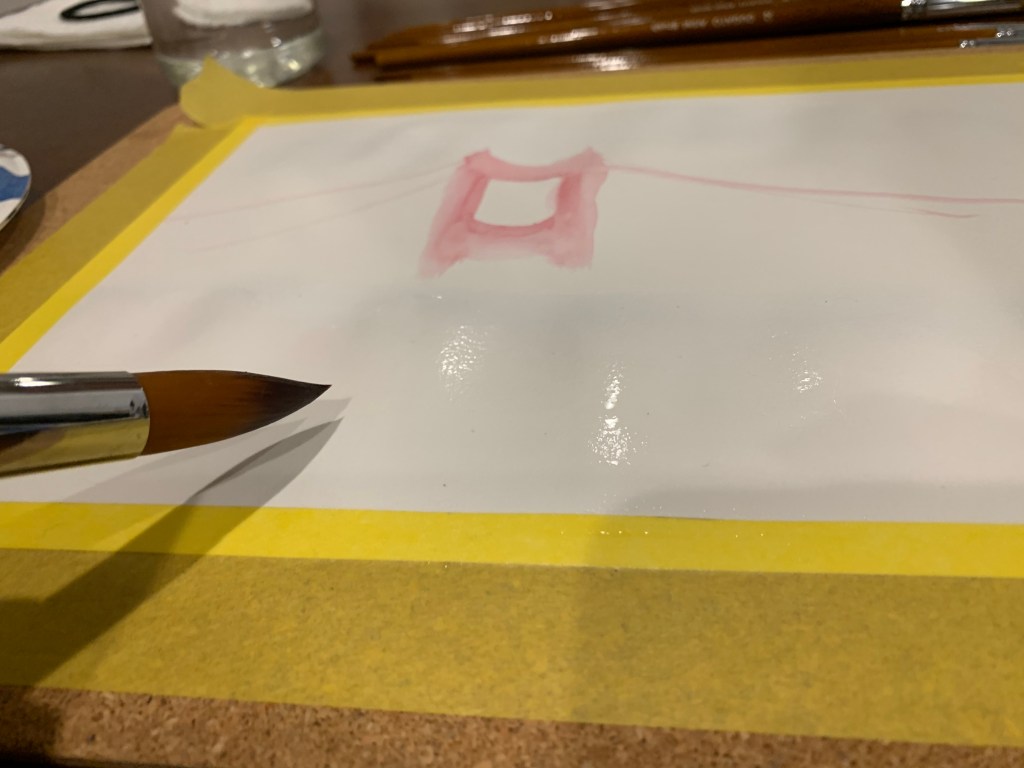
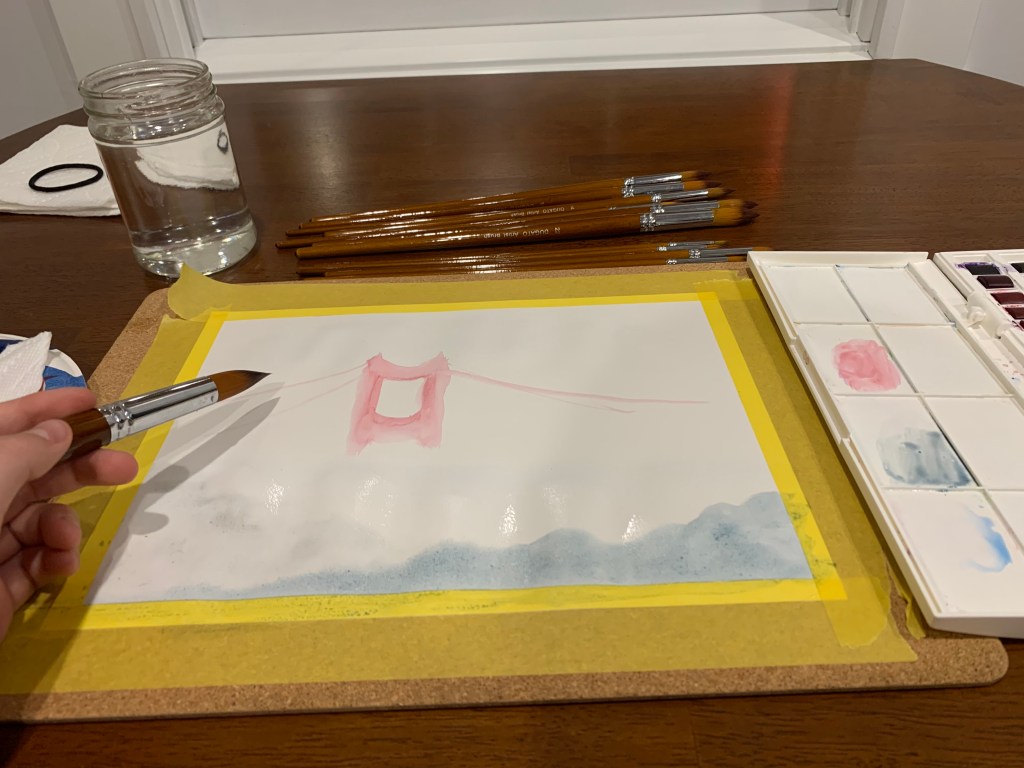
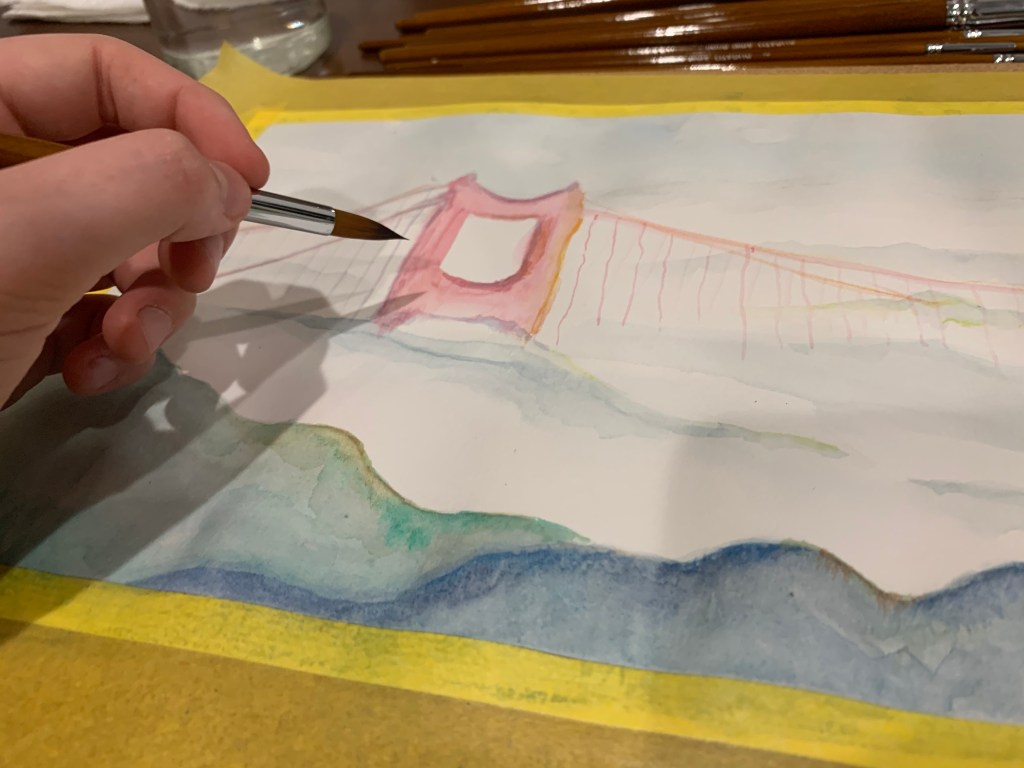
Example of wet on wet in lower half of painting (photo: Lucie Ruggiero)

When learning to paint with watercolors, two techniques are useful to start, wet on dry and wet on wet. Wet on dry involves wet paint brushed on a dry surface, while wet on wet is paint applied to a wet area of the painting or a completely wet page. Wet on dry is useful for realistic paintings. It provides clean lines and control over paint flow. Wet on wet works well for large washes of color or abstract paintings without hard edges. Wet on wet is a more loose style of watercolor, as the flow of paint is difficult to control. Both techniques can be used to produce beautiful paintings. 

Georgia O’Keefe, “Sunrise,” 1916. (photo: Public Domain) via My Modern Met

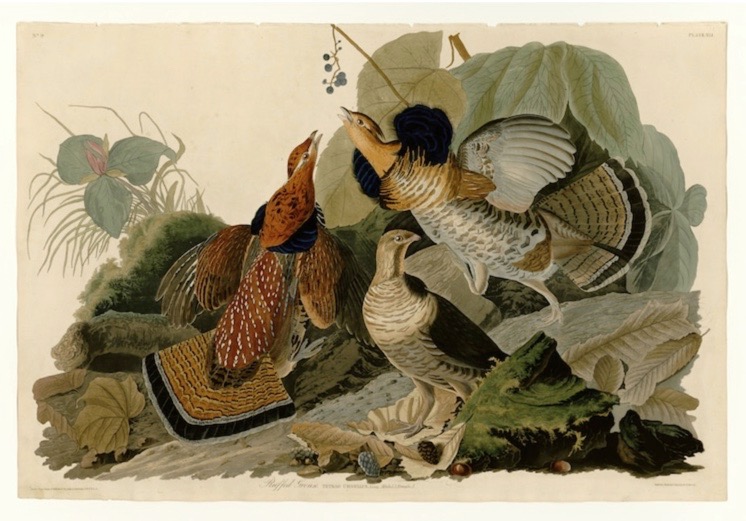
Famous examples of wet on wet and dry on wet include Georgia O’Keefe’s early watercolors and John James Audobon’s paintings. On O’Keefe’s watercolors, Sara Barnes writes, “the abstracted watercolors chronicle her artistic journey to becoming comfortable working in a less representational style.” While O’Keefe’s watercolors were abstract and loose with vibrant colors, Audubon’s paintings were highly naturalistic with a more muted palette.  

John James Audubon, “Birds of America.” (photo: Public Domain) via My Modern Met

Colors create the mood and emotion of a watercolor painting. A pop of unexpected color can add dimension and flair. Sometimes colors seem to clash or give the wrong emotion, but take a step back, there may be something wonderful in what felt like a mistake. Give it time to rest. A break for both the artist and the painting helps ease the tension. 

Art has changed and grown through history, given varied meanings through time and place. Perspectives on art from the past paint how people see and think of art today. Watercolor is no exception. In an essay for the Met museum, Elizabeth E. Barker writes, “The technique of water-based painting dates to ancient times, and belongs to the history of many cultures in the world.” Although the subjects and purposes of watercolors have changed over time, watercolor history is similar to the way an artist paints with it—many layers of the same thing. Each layer has the knowledge and skill of the layers behind it, slowly building to become the watercolor we know today.

Home, Science

Pterosaurs

by Lucas Garcia

The “P” is silent!

When people think of flying dinosaurs, Pterosaurs are usually what they are referring to. However, while they are closely related, Pterosaurs are not Dinosaurs.

In the early days of Paleontology, “Dinosaur” was a catch-all term for most prehistoric, reptilian animals. As the fossil record grew it became easier to distinguish evolutionary differences in the bone structures of animals. By studying these differences, Paleontologists are able to determine more accurately where animals are placed on the evolutionary tree. For example modern birds evolved from Dinosaurs and not Pterosaurs as some may have assumed.

We now know that both Pterosaurs and Dinosaurs evolved from a group of animals called Avemetatarsalia during the Triassic period, around 230 million years ago. Avemetatarsalia split into two groups: Pterosauromorpha and Dinosauromorpha. Pterosaurs (meaning Wing Lizards in greek) belong to the Pterosauromorpha group, while Dinosaurs (meaning Terrible Lizards) belong to the Dinosauromorpha group. Meaning that although Pterosaurs and Dinosaurs inhabited the same environments and were tied to the same fate, they were part of separate and distinct animal groups.

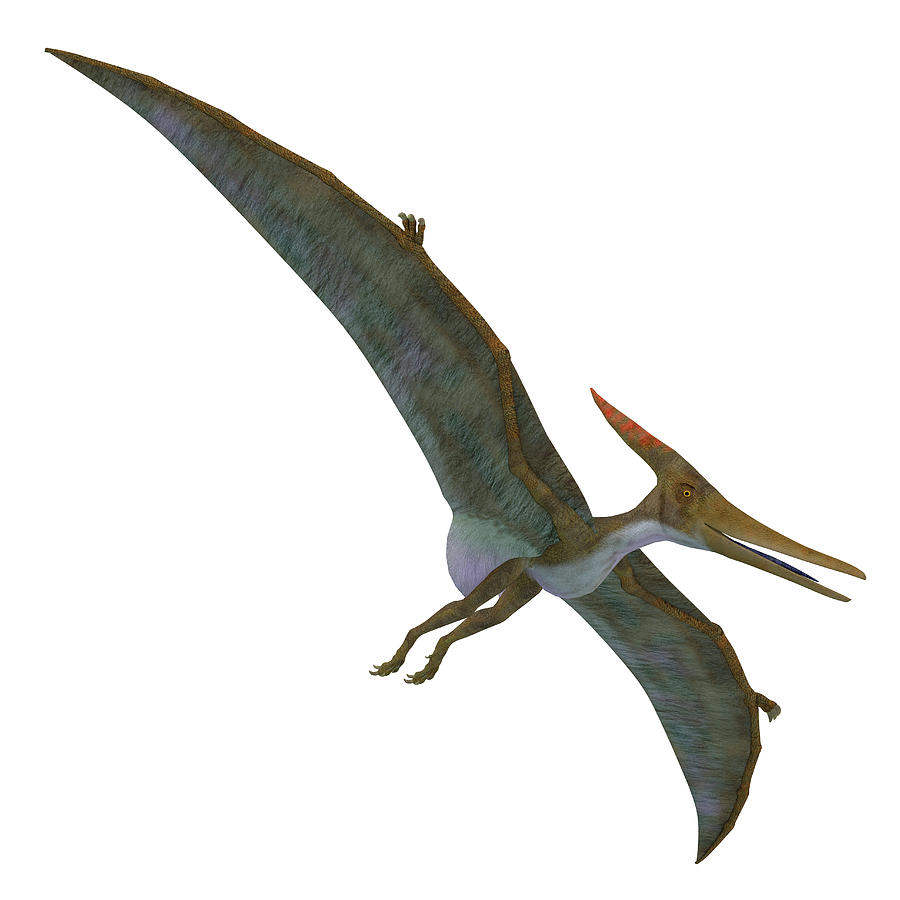
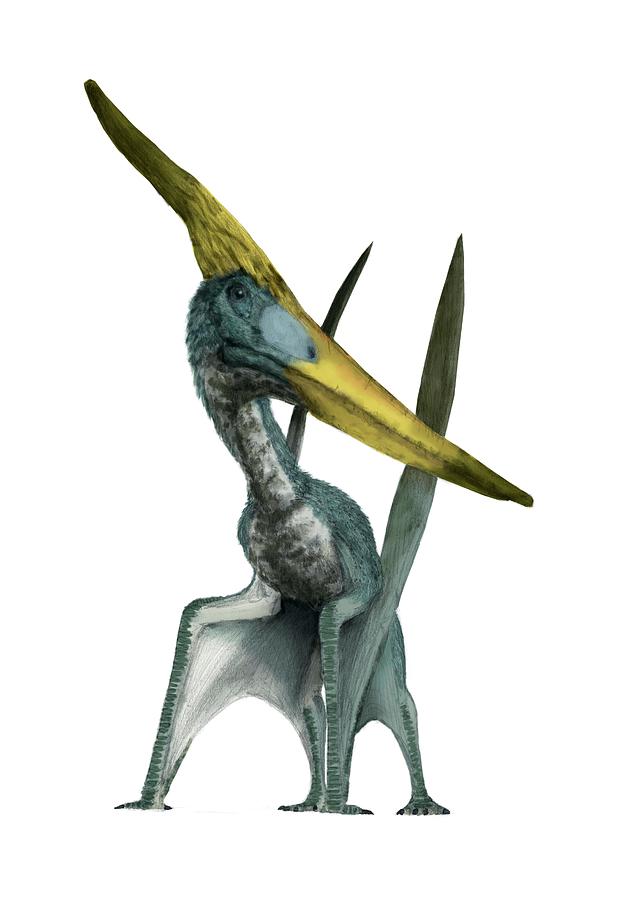
Illustration of Pteranodon longiceps by Mark Witton

The Pterosaur group was incredibly diverse, from the insect-eating Anurognathids that could fit in the palm of your hand, to the giraffe-sized Azhdarchids. The most famous Pterosaur by far is the Pteranodon, which is one of the only Pterosaurs to have been featured in the Jurassic Park movies. Pteranodon is one of the most well known Pterosaurs scientifically as well, with over 1000 fossil specimens documented. There are so many Pteranodon fossil specimens that Paleontologists were able to determine that it was sexually dimorphic, which means that males and females looked different. In the case of Pteranodon, the males were larger and had longer head crests than the females. Scientists can only guess as to the purposes of these different characteristics.

Pterosaurs were the first vertebrates on earth to evolve powered flight. Powered flight in animals means the ability to ascend without the aid of rising air, using their muscles to generate aerodynamic force. Only Insects, Bats, Birds, and Pterosaurs have developed this ability. This is incredibly impressive considering the massive number of animals that have existed on earth.

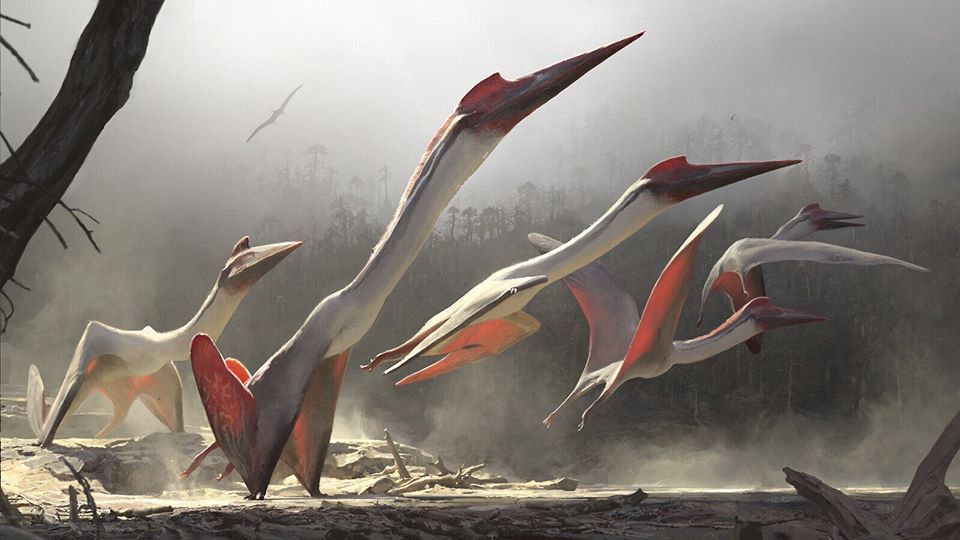
Illustration by Chase Stone

When they were first discovered, it was thought that Pterosaurs were only able to fly by jumping off of cliffs and gliding. That turned out to be very wrong. They could take off from the ground by vaulting themselves into the air with their powerful forelimbs. Pterosaurs developed flight in the Triassic period, and they would dominate the skies for almost 200 million years, until they, along with the Dinosaurs and 75% of all life on earth went extinct at the end of the Cretaceous period.

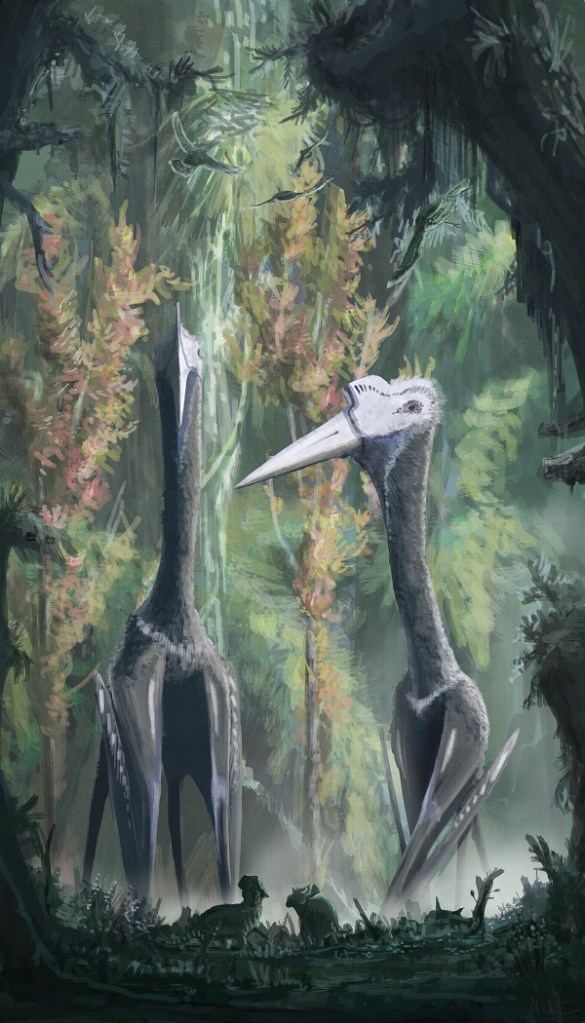
Illustration of Quetzalcoatlus by Mark Witton

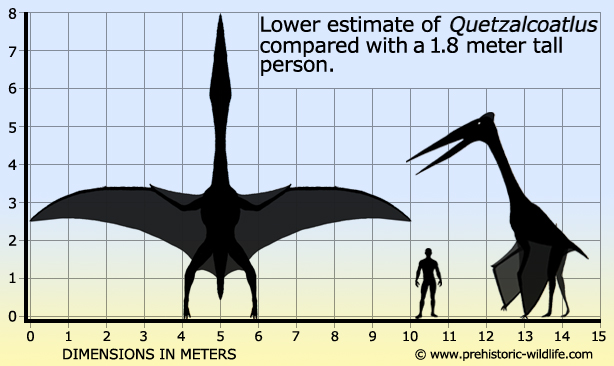
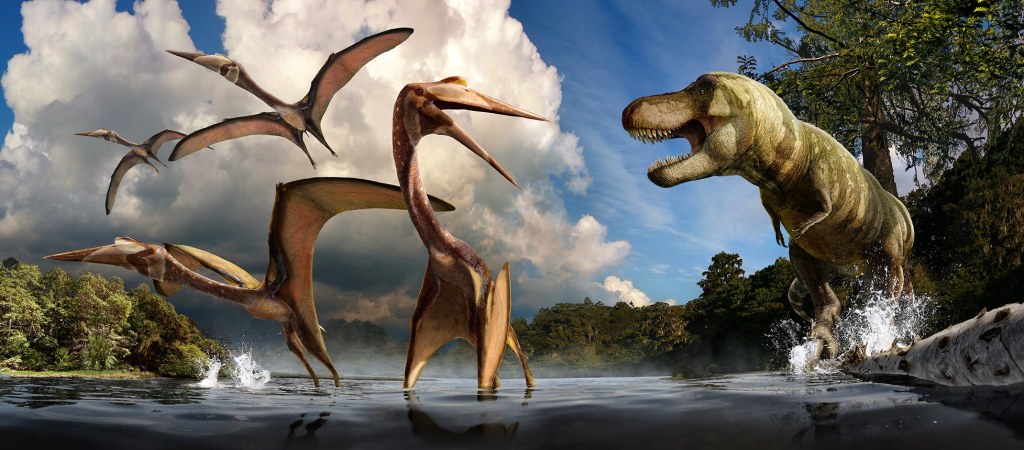
My favorite Pterosaur is an animal called Quetzalcoatlus which lived around 68 million years ago, during the late Cretaceous period. The first Quetzalcoatlus fossils were discovered at the Big Bend National Park in Texas. The Quetzalcoatlus is named after the Aztec feathered serpent god Quetzalcoatl. At the size of a light aircraft and with a wingspan of more than 30 feet, it was one of the largest flying animals to ever live.

I think Pterosaurs are some of the most extraordinary animals that have ever existed. All of the animals that connected Dinosaurs and Pterosaurs went extinct because Dinosaurs evolved characteristics that allowed them to dominate the world around them. By taking to the skies as early as they did, Pterosaurs were able to not only survive, but thrive at a time when Dinosaurs ruled the Earth.

Illustration of Quetzalcoatlus and Tyrannosaurus by Julius Csotonyi and Alexandra Lefort

News

Insights From a First Time Voter

by Blake Killion

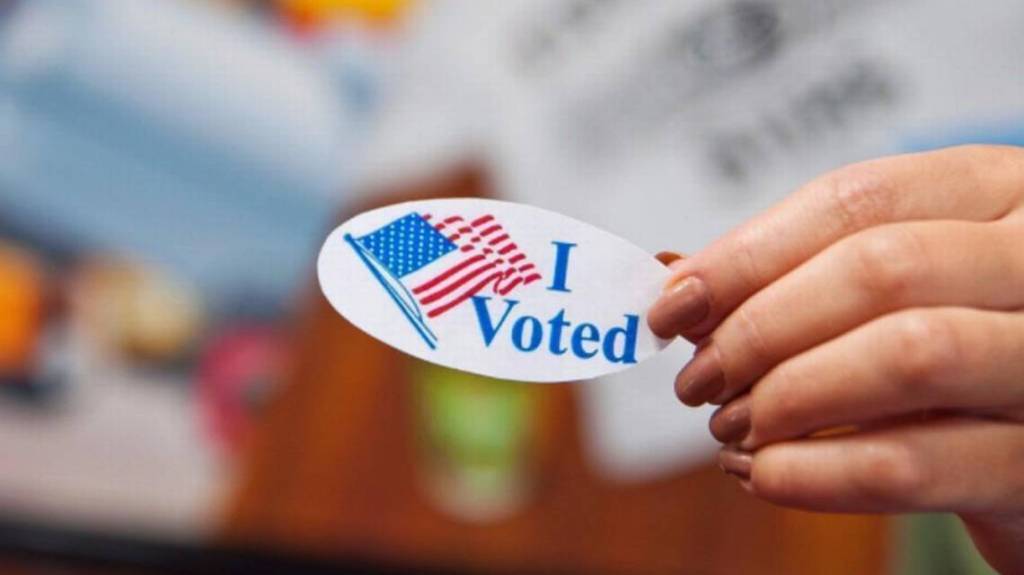
Every election cycle is a pivotal moment in American history, to help the country decide who will become the next president, to elect officials for different government positions, and to cement in new laws and propositions. This year especially has had special significance with what appears to be a major voter turnout and a much greater interest and perceived importance in politics among the citizens of our country. It is also an opportunity for members of Gen Z, who have been directly impacted by politically driven decisions made about the COVID-19 pandemic. 

On October 31st 2020, I decided to contact a first time voter, Isabella Miranda, to get her insights on the voting situation this year. We spoke over FaceTime, accidentally timed during a likely unintentional fire drill on her college campus. During our call, some honking from a golf cart could be heard blaring by. Sounds like an interesting Halloween.

Blake Killion: This is Blake Killion from The Lighthouse. Thanks for talking today. How old are you?

Isabella Miranda: Eighteen. 

And where do you live? General area, not really specifics.

Riverside, California.

Got it. So this is your first time voting?

Yes.

And what inspired you to vote?

Um, what inspired me to vote was just being able to have a say in who our elected officials are gonna be.

Nice! That’s a good reason. What method did you use to vote? Like ballot box, or mail-

A mail-in ballot.

And what method do you usually prefer to use? Or would you prefer to use.

In person. 

Did you do your research before voting?

Yes.

What would you say influenced your vote the most? Like parent influence, research or peer opinion, etc

Uh, research.

And do you think your vote makes a difference? 

Yes.

Awesome, thank you!

No problem.

Alumni

Elise Brazier – Copy Editor

Elise is a fourteen-year-old in eighth grade and has been homeschooling since first grade. This is her first year working in journalism, though she has been writing fantasy and fiction since she was about eight years old. She has written and edited the manuscript for one novel and is working on editing her second. Once she graduates college, she hopes to be an author and work for a publishing house as an editor. 

Elise was in an Odyssey of the Mind team for three years, qualifying for the world championships twice and being thwarted by coronavirus once. Elise is currently doing acrobatic gymnastics, studying Latin, and trying desperately to beat a rouge-like video game that has consumed her life. Other hobbies she enjoys are drawing, painting, and eating delicious food. 

Alumni

Lucie Ruggiero – Videography, Visual Storytelling

Lucie Ruggiero is in Visual Storytelling for the Videography section of The Lighthouse. She is 16 years old and in the 10th scholastic year. She has been doing journalism (yearbook committee) for three years. Lucie is in journalism because she loves telling stories and discussing world issues. When she is not doing schoolwork, Lucie can be found exploring outside or working on art projects, which can range between and beyond knitting a sweater or painting with watercolors. If it can be made, she is probably making it. Some of her favorite activities include baking, crafting, writing, and drawing, and she would spend most of her time on explorations outdoors if it weren’t for homework. Anything can become a story, or an adventure as far as she is concerned. You just need to be looking for it. 

Alumni

Emma Ruggiero – Arts and Culture Editor

Emma Ruggiero is 17 years old and is in her junior year of high school. Her job as part of the Lighthouse Staff is the position of Arts and Entertainment Editor. She was part of the TVE Yearbook Club for the past two years, and this is her first year as part of the TVE Journalism Club. Her favorite classes this year are her art classes, her Shakespeare class, and her art history class. She loves to create art, especially drawings and watercolor paintings, and sometimes makes digital art as well. In her spare time, she enjoys yoga, reading, listening to music, or working on a new art project.